E. B. White House // 1795

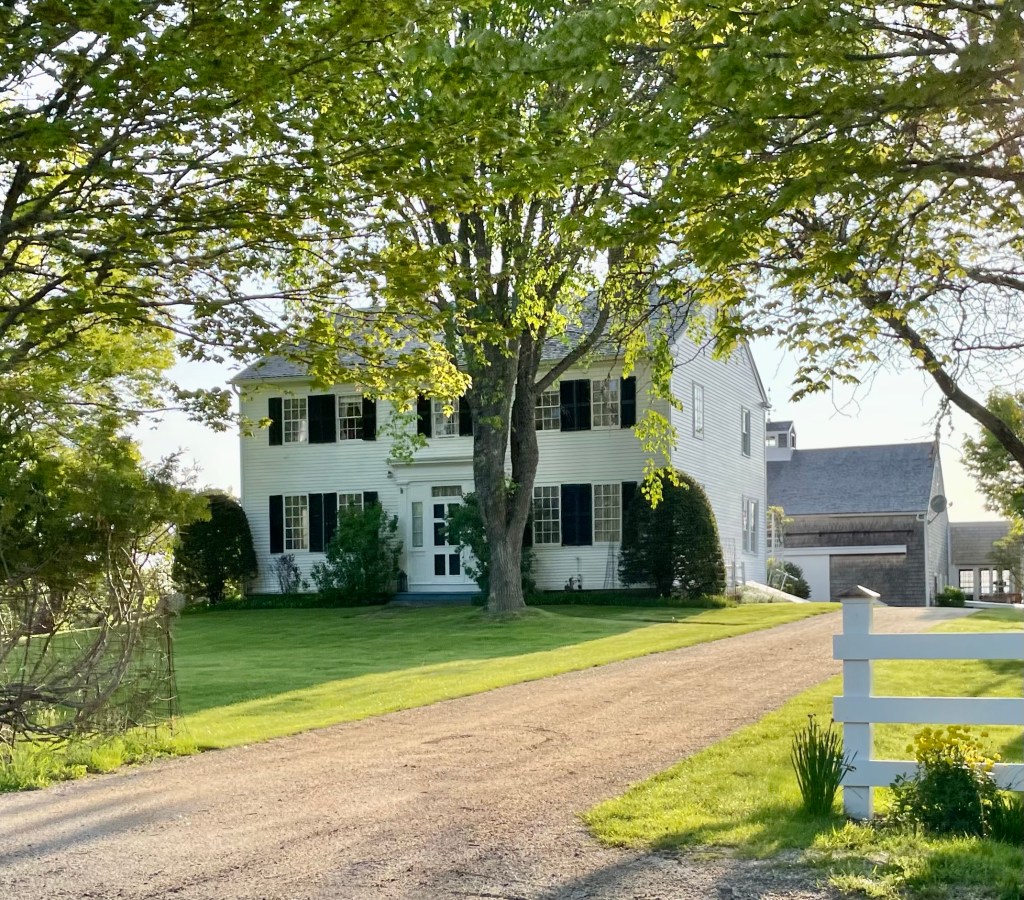
The coast of Maine has long been a refuge for those looking for an easier way of life and access to natural splendor. One of the more well-known residents of Maine was author E.B. White, who lived on this farm in Maine for 48 years. The estate sits on 44-acres and was built in 1795 for William Holden by Captain Richard Allen, a local housewright. The property was purchased by E. B. White in 1933 as a summer residence, but it became a full-time home where he and his wife, New Yorker editor Katharine Angell, raised sheep, geese, chickens, pigs, even spiders all with a historic barn and tire swing. Sound familiar? It is from this house that he wrote the iconic children’s book, Charlotte’s Web (and Stuart Little) among others. White was a private person, and despite his internationally famous books, he did not advertise the location of his home while he was alive. In 1977, he convinced an interviewer to report that “he lives in ‘a New England coastal town’, somewhere between Nova Scotia and Cuba“. Katharine died in 1977, and E. B. in 1985. The property was inherited by their son, who summered there for years. The most recent owners, Robert and Mary Gallant of South Carolina, who have summered there for the past 30 years and preserved the house immaculately, selling it a few years ago.
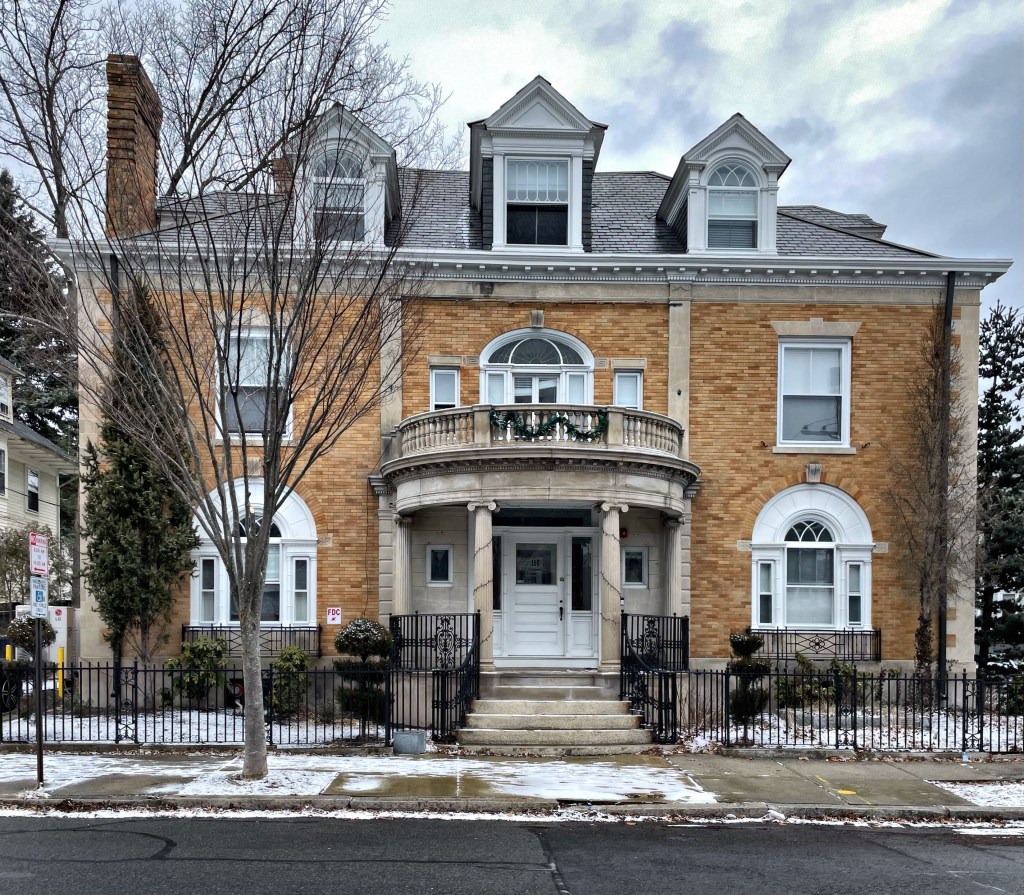
Sarah and John Tillinghast House // 1904

This stately yellow brick Colonial Revival sits on the edge of the College Hill neighborhood of Providence, and I couldn’t help but to take a few photos! This residence was completed in 1904 for Sarah and John Tillinghast in the later years of John’s life (he died less than two years of moving into this home). The house exhibits a large semi-circular portico with balustrade above, the portico is flanked and surmounted by Palladian windows with elliptical reveals. The house was recently proposed to serve as a suboxone clinic, but that was shut down by neighbors. It appears to be divided into residential units now.

Woods-Gerry House // 1860

There are always those houses that just stop you in your tracks… For my last post (for the time being) on Providence, I wanted to share this significant property, known as the Woods-Gerry House, perched atop College Hill. Owner Marshall Woods, who married into the Brown family and was active in the affairs of Brown University. Locally he was also involved on the building committee for St. Stephen’s Church where he was a factor in selecting renowned architect Richard Upjohn to design the church. He must have liked Upjohn so much (or got a good deal) that he hired Richard Upjohn to design his new home on Prospect Street. The exterior of the three-story brick building stands out amongst the other Italianate mansions built in the same decade nearby, but is elevated design-wise with a bowed centerpiece on its east elevation with the handsome new front entrance renovated in 1931 by then-owner, Senator Peter Gerry, who was a great-grandson of Elbridge Gerry, the fifth Vice President of the United States (who had given his name to the term gerrymandering). Today, this significant building is owned by the Rhode Island School of Design and houses the Woods Gerry Gallery. The grounds are also very well designed.

Dutton Farmhouse // c.1840

Another one of the Landmark Trust USA properties in Dummerston, Vermont is the Dutton Farmhouse, a meticulously restored Greek Revival farmhouse from around 1840. The gable-roof farmhouse was possibly an addition to an earlier dwelling built decades earlier as a one-and-a-half-story center-chimney home, seen at the rear today. The first known owner of the farmhouse was Asa Dutton who farmed off the large orchards. Generations later, the farmhouse served as a dormitory for migrant laborers who worked nearby, with the interior being altered. The property was eventually gifted to the Landmark Trust USA, who began a massive restoration project on the home, uncovering original detailing and even historic wallpaper! The house has since been meticulously restored and preserved and is available for short-term rentals! The charming interiors and near silence outside is a perfect getaway from city life.

King Mansion // 1894

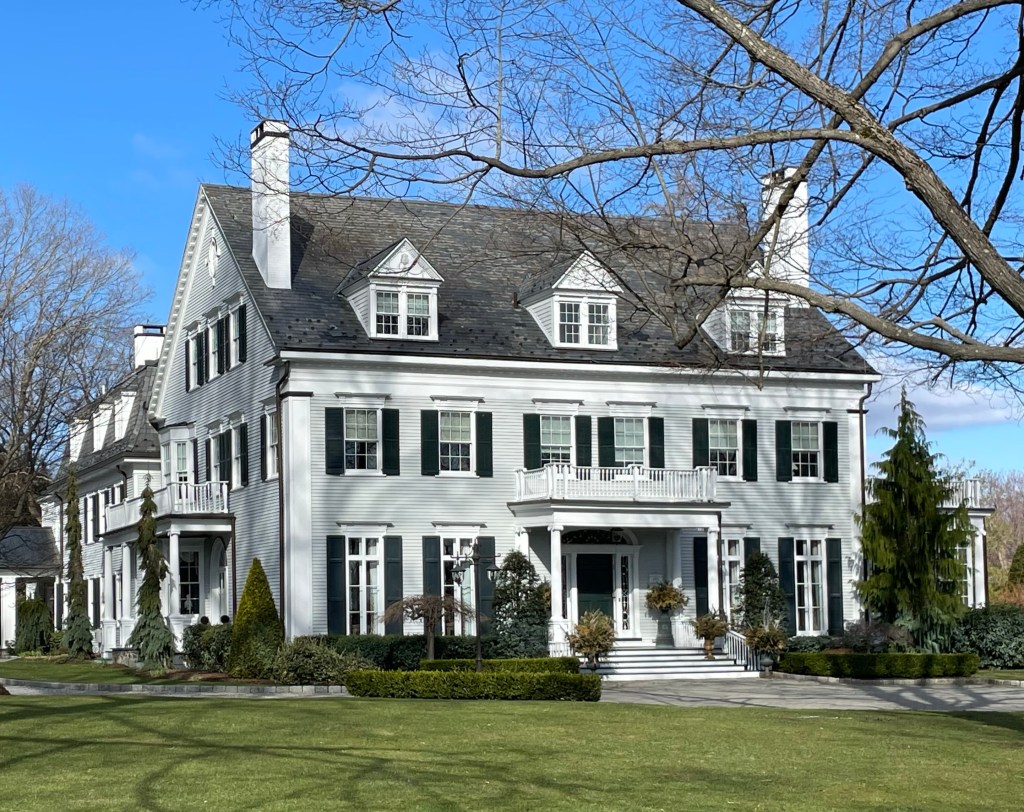
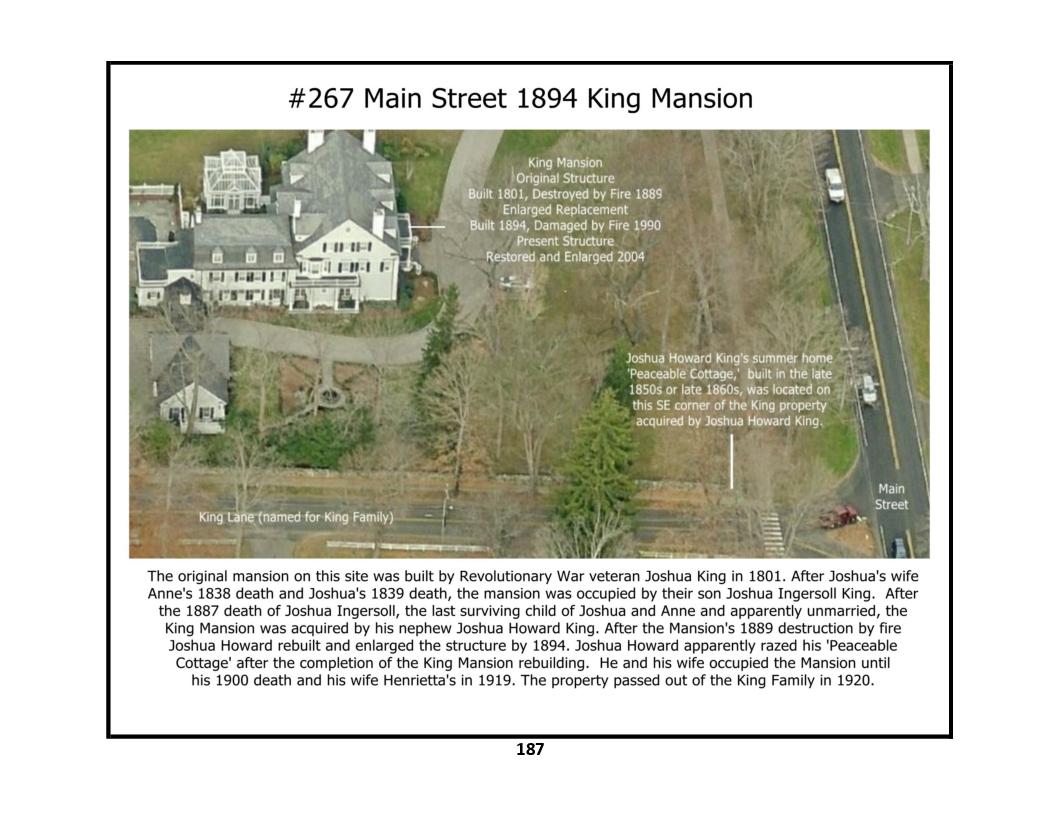
After the American Revolution, Lt. Joshua King settled in Ridgefield and built the King Mansion in 1801, a Federal style home that commanded the Main Street lot. King was born in Bridgewater, Massachusetts and fought in the Revolutionary War near the border of Connecticut and New York. After the war, he settled in Ridgefield and married one of the most eligible bachelorettes in town Anne Ingersoll. Anne was the daughter of the Rev. Jonathan Ingersoll, pastor of the Congregational Church of Ridgefield. After a long life running a store and raising a family, Joshua died in 1839, a year after his wife. The mansion was inherited by their son Joshua Jr. until his death in 1887. In 1889, a fire destroyed much of the house. When it burned down, The New York Times described it as “the grandest old mansion in the village.” It was quickly replaced by the current house, modeled after the original but larger, which was placed much farther back from the road in the Colonial Revival style. Fire damaged the house again in the 1990s, and the present structure was restored and enlarged from 2002-2004, its HUGE!

Charles Loomis House // 1862

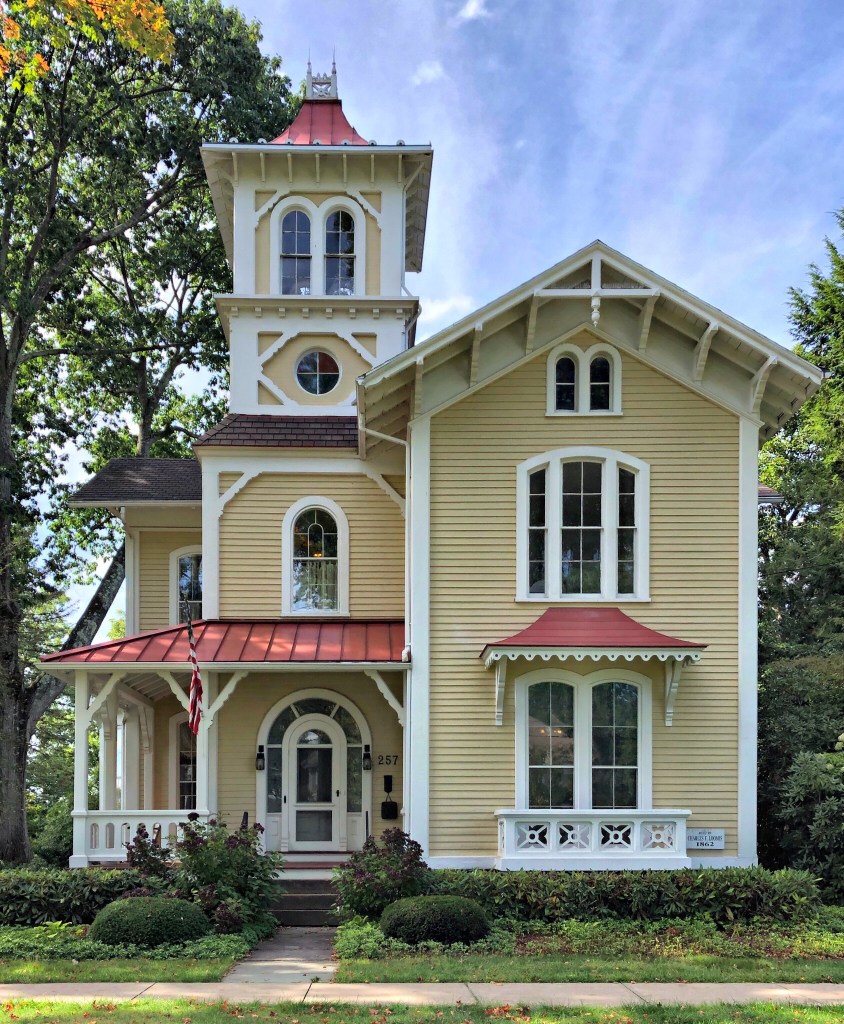
This home was built for Charles Loomis of the Loomis Family, who made their fortune in the tobacco farming and rolling industry in Suffield, Connecticut. Charles F. Loomis used his tobacco money to have this asymmetrical Italianate Villa constructed in 1862. The home features a prominent three-story tower capped with iron cresting, broad overhanging eaves with brackets and some stickwork, and a gorgeous door with arched transom and sidelights. There are almost too many architectural details to list. What is your favorite?