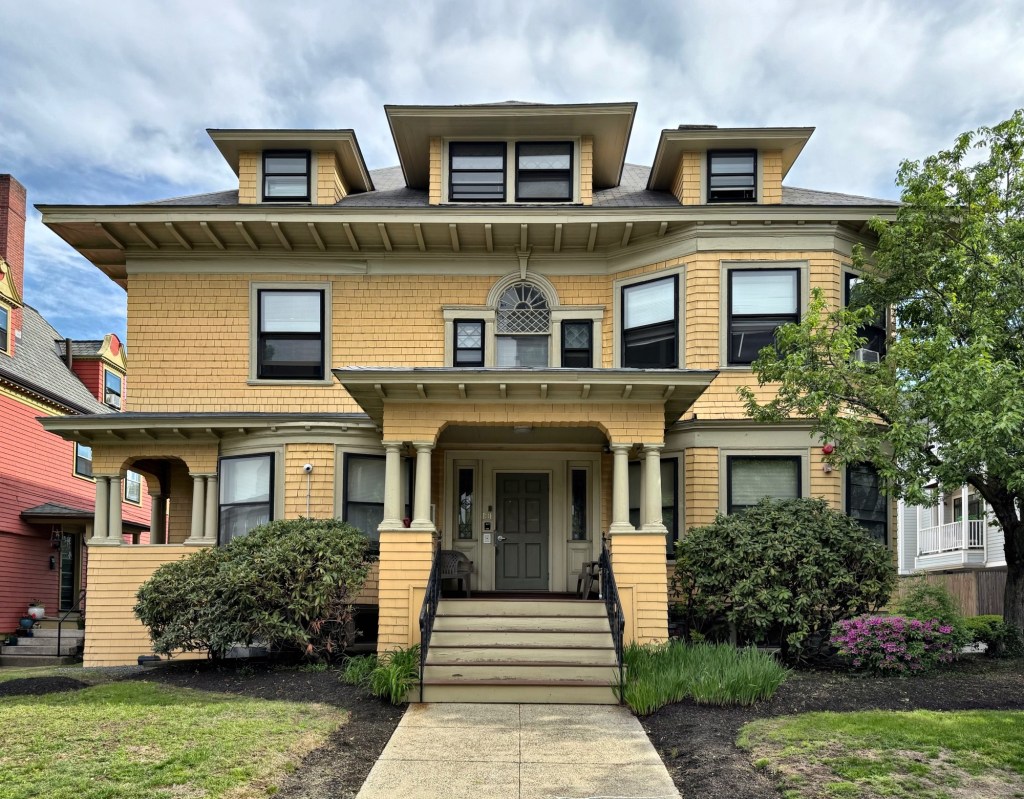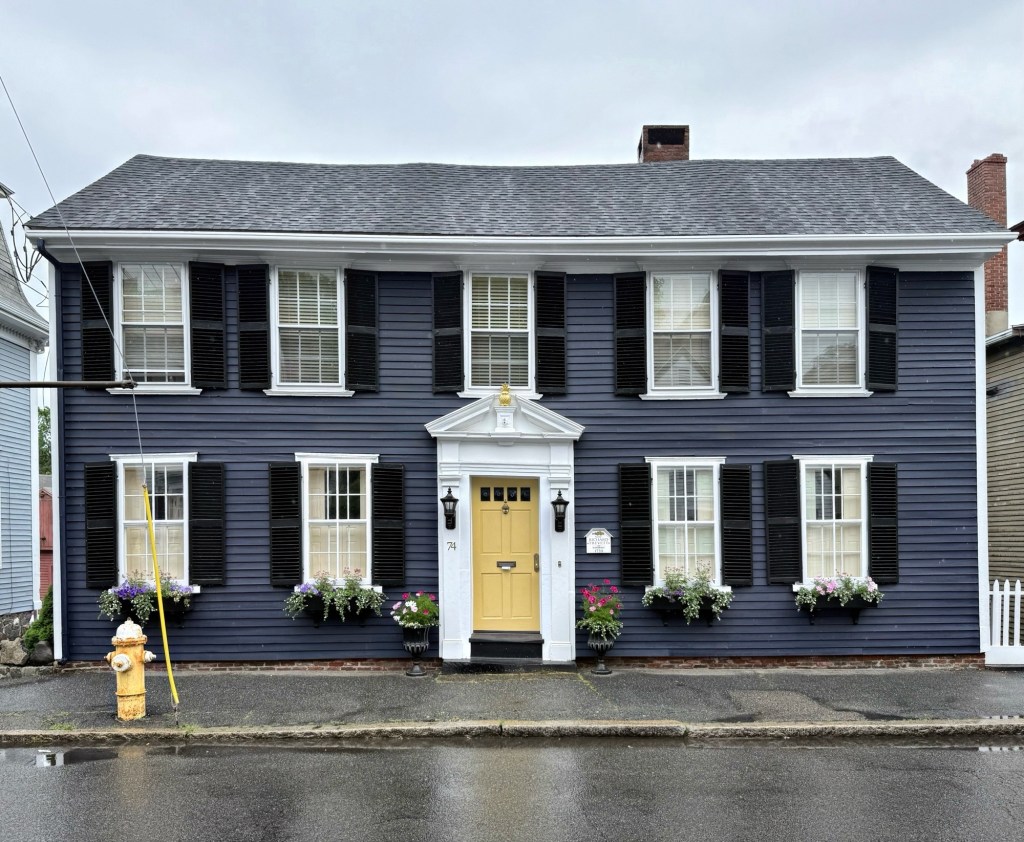
Joseph and Jane Cotton House // c.1905

As the heirs of Amos A. Lawrence began subdividing and selling off desirable house lots in the Cottage Farm neighborhood of Brookline in the 20th century, we can see a visual representation as to the ever-changing architectural tastes of wealthy residents, from Colonial Revival to Tudor Revival. This residence, the Joseph and Jane Cotton House, was built adjacent to the Amos A. Lawrence Cottage, and is an excellent example of a Colonial Revival style brick home. The property was built for Joseph Hall Cotton (1869-1919), treasurer of the American Tube Works, and his wife, Jane Eaton Cotton. The couple remained in the home for about a decade until they relocated to the Back Bay neighborhood of Boston. The architectural firm of Chapman & Frazer, esteemed suburban architects, designed the house as an elongated rectangle with projecting columned porches on the first floor, pilastered entrance and window above, and hipped roof with overhanging eaves and shed dormers, a nod to the Arts and Crafts style.

Almy-Palfrey House // c.1858

The area was developed thanks to Amos A. Lawrence (1814-1886), a wealthy second-generation Bostonian, who provided much of the capital and enthusiasm for the growth of the cotton industry in New England prior to the Civil War. Lawrence’s involvement in the industry aided the development of the Massachusetts mill towns of Lowell and Lawrence, whom the city was named after. In 1851, Amos Lawrence purchased 200 acres of land from David Sears, who himself developed the equally beautiful Longwood neighborhood of Brookline on the other side of Beacon Street. Amos began to subdivide the land, working with the architect George Minot Dexter and landscape architect and surveyor, Alexander Wadsworth, who designed Mount Auburn Cemetery in Cambridge, to create an early picturesque residential suburb. With houses designed in the newly popular Gothic Revival and Mansard styles and several small parks, the area became known as Cottage Farm. This house was built for Amos Lawrence as an early, brick Mansard home, and rented out to Frederick Almy, a wealthy Boston attorney. The property was sold out of the Lawrence Family and later purchased by John Gorham Palfrey (1875-1945) a lawyer, who modified the house by removing the mansard roof and replacing it with a full third story with a brick veneer to match the walls below to give it a more Colonial Revival design.

Amos A. Lawrence House // 1851

Cottage Farm area of Brookline is one of the finest neighborhoods in all of New England. The area was developed thanks to Amos A. Lawrence (1814-1886), a wealthy second-generation Bostonian, who provided much of the capital and enthusiasm for the growth of the cotton industry in New England prior to the Civil War. Lawrence’s involvement in the industry aided the development of the Massachusetts mill towns of Lowell and Lawrence, whom the city was named after. In 1851, Amos Lawrence purchased 200 acres of land from David Sears, who himself developed the equally beautiful Longwood neighborhood of Brookline on the other side of Beacon Street. Amos began to subdivide the land, working with the architect George Minot Dexter and landscape architect and surveyor, Alexander Wadsworth, who designed Mount Auburn Cemetery in Cambridge, to create an early picturesque residential suburb. With houses designed in the newly popular Gothic Revival and Mansard styles and several small parks, the area became known as Cottage Farm. This stone house was designed by George M. Dexter and was the country residence of Amos Lawrence, who had other homes built nearby and rented out to wealthy friends and family. By 1888, the property was owned by Amos’ daughter, Hettie S. Cunningham, who later, subdivided the estate into five house lots, and moved this stone house to the corner of Ivy and Carleton streets. Expressive of English architectural traditions over the more ornate Gothic Revival popularized by Andrew Jackson Downing, the Lawrence House is one of the finest residences in the Boston area. Built of granite with limestone trim and set behind landscaping and a perimeter fence, the mansion is surprisingly hard to get decent photos of, but it is a stunner. Today, the house is owned by Boston University and is known as Sloane House.

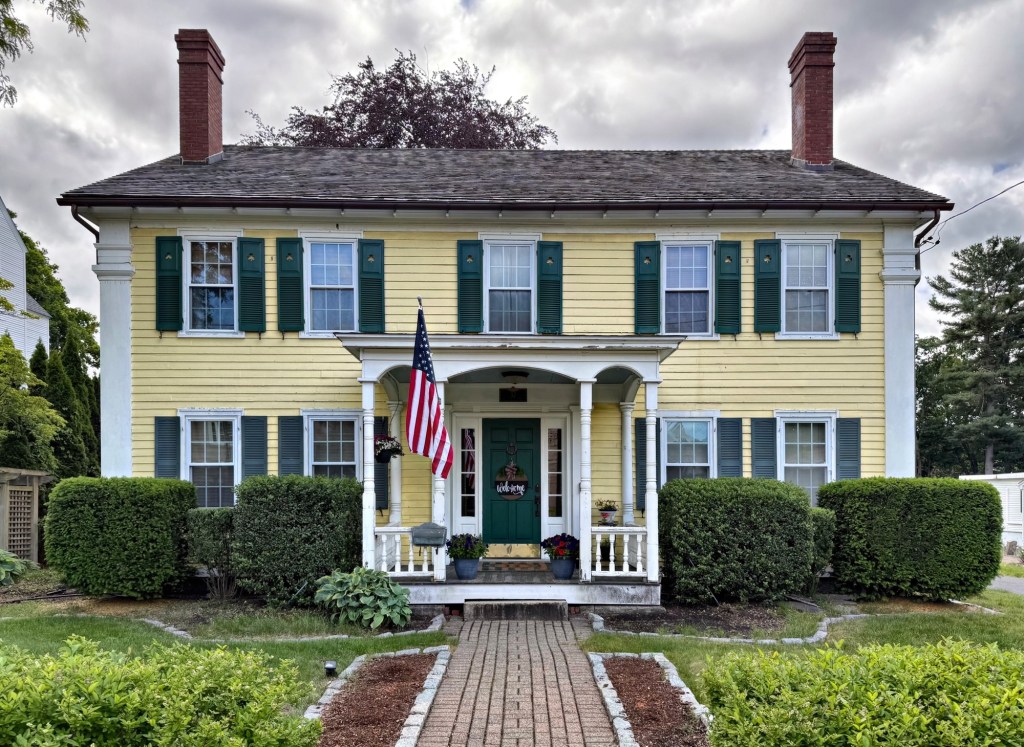
John L. Sullivan House // c.1812

This modified Federal style cottage in Abington, Massachusetts, is known locally as the last home of World Heavyweight Champion bare knuckle boxer, John L. Sullivan. John Sullivan (1858-1918) died in this house on February 2, 1918, of heart disease, but left behind a legacy that will last forever. The house was originally constructed around 1812 for Jacob Cobb, a Deacon of a local church and after successive ownership, the house was purchased by boxer John Sullivan, to celebrate his retirement. As a professional fighter Sullivan was nicknamed The Boston Strongboy, and was one of the first great American boxers and was the last world champion bare-knuckle boxer. He had a record of 47 wins, 1 loss and 2 draws, with 38 wins by knockout in his career. Sullivan’s blustering personality and fabled strength gained him a great following, and he would be inducted into the International Boxing Hall of Fame as part of its original class. As champion he earned more than $1 million but squandered it. A hard drinker during his ring career, he later became an advocate of prohibition and delivered many lectures on the subject. His brick Federal house in Abington was modernized by him, adding the dormer and full-length front porch supported by rubblestone columns.

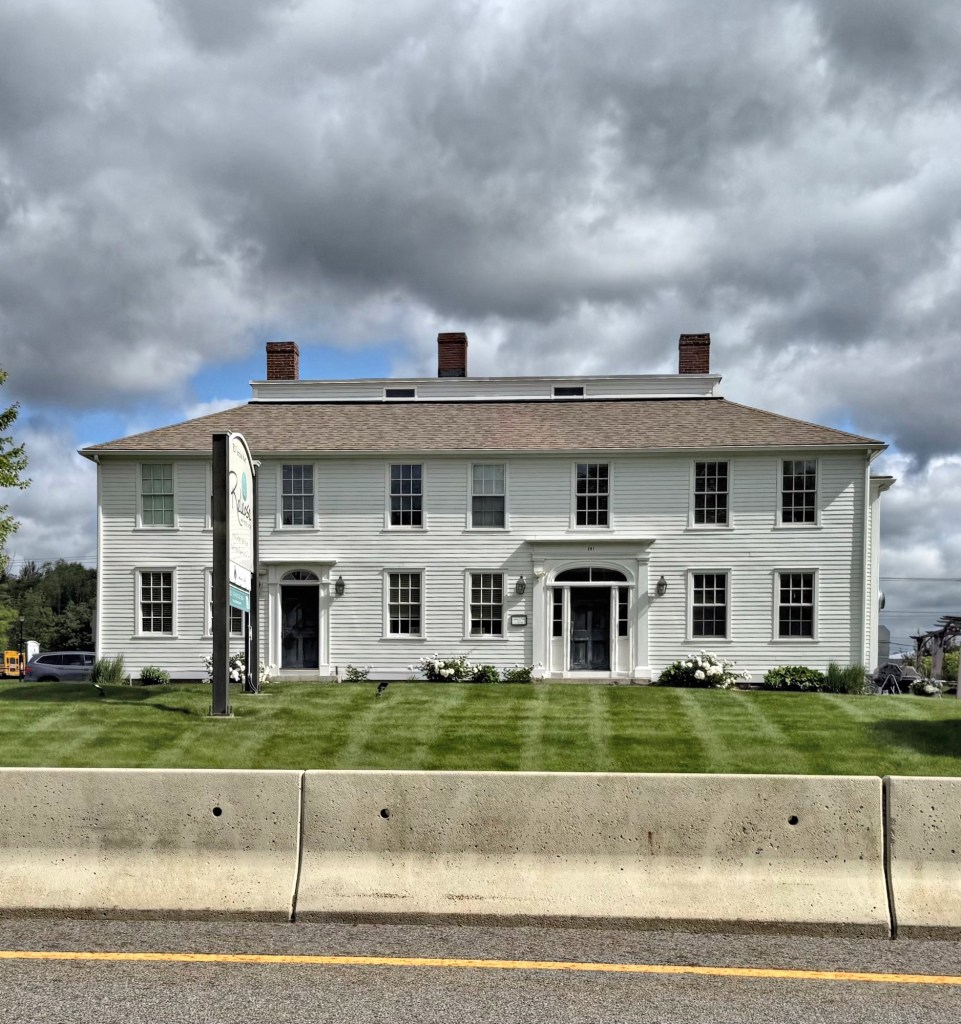
Dr. Gridley Thaxter House // 1798

The Dr. Gridley Thaxter House on Washington Street in Abington, Massachusetts, is one of the most significant properties in the South Shore town, not only for its architecture, but also its owners. The house was built in 1798 for Dr. Gridley Thaxter (1756-1845), a ship’s surgeon in the Navy during the American Revolution. He married Sarah Lincoln (1761-1810), the daughter of Benjamin Lincoln of Hingham, a Major General in the Revolution and served from 1781 to 1783 as the first United States Secretary of War. Dr. Thaxter and his new bride acquired land in Abington, and moved there where he would serve as the town’s doctor. After his death, the property was inherited by Elizabeth Thaxter Hunt, the couple’s daughter, and her husband, Joseph Hunt. It was Elizabeth, who added the Italianate window hoods and a cupola (since removed) at the roof, “modernizing” the family homestead.

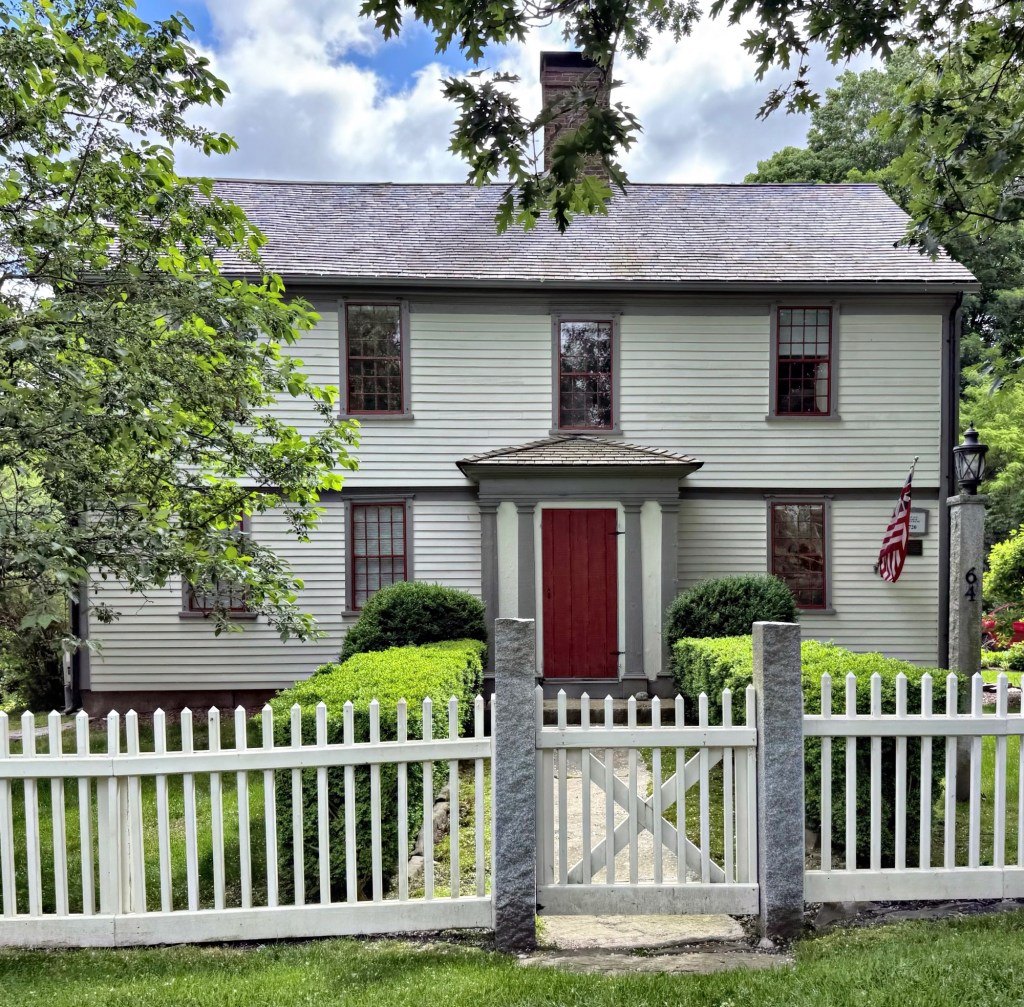
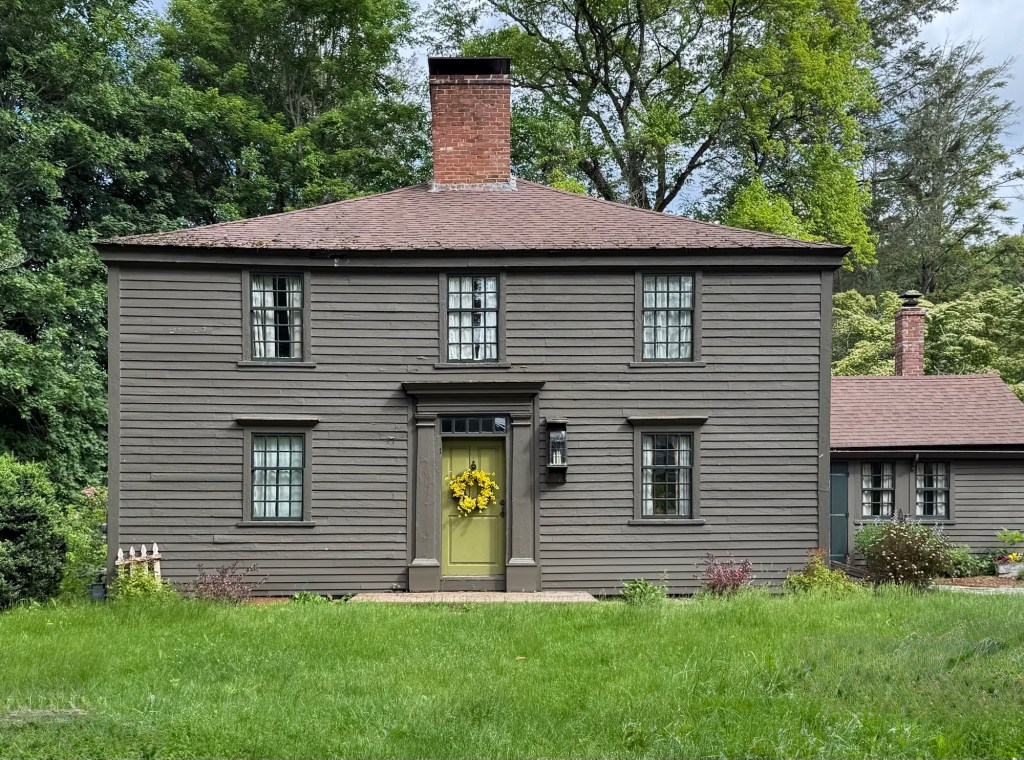
Orcutt-Ford Homestead // c.1751

In about 1751, Emerson Orcutt (1713-1777) purchased land in North Abington, Massachusetts, and built a half cape for his family. In 1762, Orcutt sold some of the land to John Ford, who was later a Lieutenant in the Continental Army, and according to local tradition, Ford added the other half of this current Georgian Cape house, giving it the current configuration. Character defining architectural details include an entry surround with fluted pilasters, and dentil cornice band on the main facade, 12-over-12 sash windows, and the central chimney, which would have heated both sides of the house. The property remained in the Ford family for over 100 years, and has since been converted back to a single family residence. Today, the charming pre-Revolutionary cottage is one of the oldest extant houses in Abington.

Harry W. Cotton House // 1905

In 1905, George H. Cotton and his wife, Cora S. Cotton, purchased a house lot on Amory Street in Brookline and hired famed architect, William Gibbons Rantoul, to design this home for their son and daughter-in-law. George Cotton was a manufacturer of brass tubing and also the founder of the Belmont Springs Water Company and maintained homes in the Back Bay of Boston and in Belmont. His son, Harry W. Cotton, also worked for the American Tube Works and lived in this home with his family. The Cotton House is an architectural blending of Dutch Renaissance Revival and Arts & Crafts styles. The stucco siding and entry portico are in the Craftsman style, while the prominent Flemish gable on the central pavilion and round arched pediments for the dormers are in the Flemish mode.

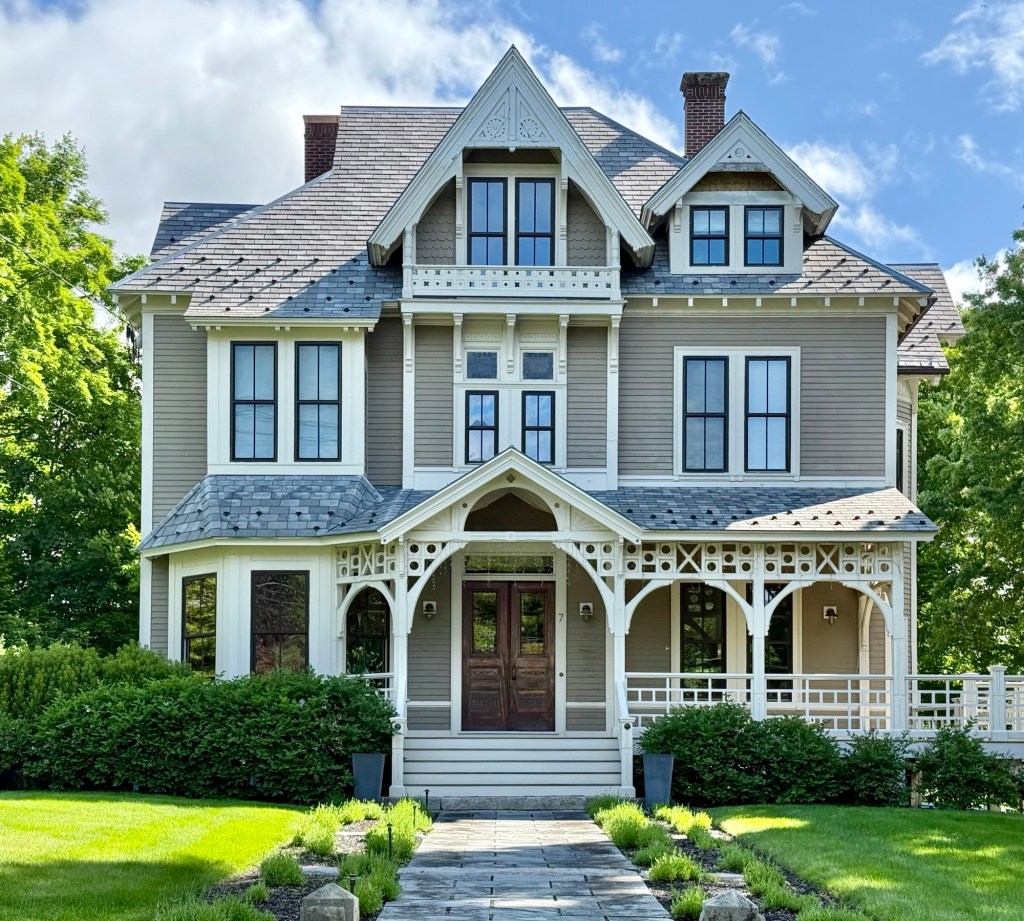
Moseley-Widger House // 1906

One of the many houses in the Cottage Farm-adjacent neighborhoods of Brookline, Massachusetts, is this great blending of the Tudor Revival and Arts and Crafts styles of architecture, which dominated residential architecture in the Boston suburbs in the early 20th century. This residence was built in 1906 for Mr. Frank Moseley and his wife, Martha Hawes Moseley from plans by architect Robert C. Coit. Covered in stucco siding and half timbering, the charming house evokes the countryside of England, right here in Brookline. After WWI, the house was owned by Ms. Lizzie Widger, a water color artist and member of Copley Society of Boston, and her husband, Samuel Widger, a cotton broker. The Moseley-Widger House looks as it did 120 years ago and is in a great state of preservation, thanks to generations of loving stewards.

Edward and Lillian Norton House // 1905

Edward Russell Norton (1871-1960) and his wife, Lillian (1870-1968) got married in 1904 and immediately began planning their dream home. They purchased a building lot on Powell Street in Brookline, Massachusetts, and hired architect, Robert Coit, to furnish plans for the new home which was completed by the next year. The house blends Arts and Crafts and Tudor Revival styles with a pleasing design and architecturally appropriate paint scheme.

John R. Perry House // 1904

This lovely Colonial Revival style house on Powell Street in Brookline was built in 1904 for Charles H. Owens, Jr., an interior designer who just two years later, built another home next door that he would reside in with his own family. This house was rented to John R. Perry, who was also listed as a “decorator” in city directories and president of Perry, Lewis & Whitney, a design firm. The house (like its neighbor built two years later), was designed by the architectural firm of Loring and Phipps and was oriented southward to face the side yard. The Perry House features small projecting oriel windows, a broad gambrel roof, and an entrance portico supported by Tuscan columns.