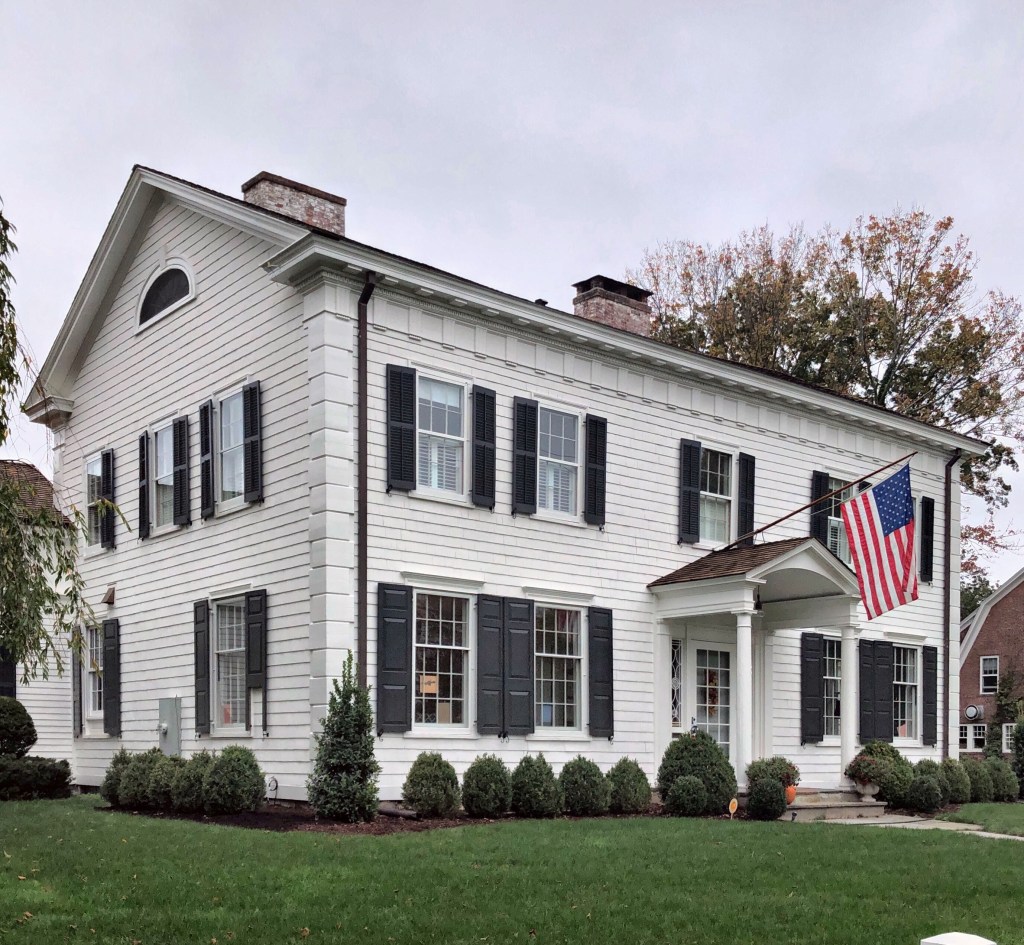
At the beginning of the 19th century, Fairfield, Connecticut was slowly recovering from its destruction by the British at the end of the Revolution. By around 1800, a member of the DeForest family appears to have built this home, across from the Town Common, overlooking the recently completed Fairfield County Courthouse. Before the American Civil War, the home was significantly altered, with a central pavilion, new round arch windows, and a full-length front porch, showcasing early Victorian-era desire for detail. The house changed hands several times over the next century, at one point becoming a boy’s school from 1891 to about 1909. In 1930, the house was renovated by architect Walter Bradnee Kirby, who restored the home back to its Colonial past, showing how the pendulum of architectural tastes can change back-and-forth with every passing generation.
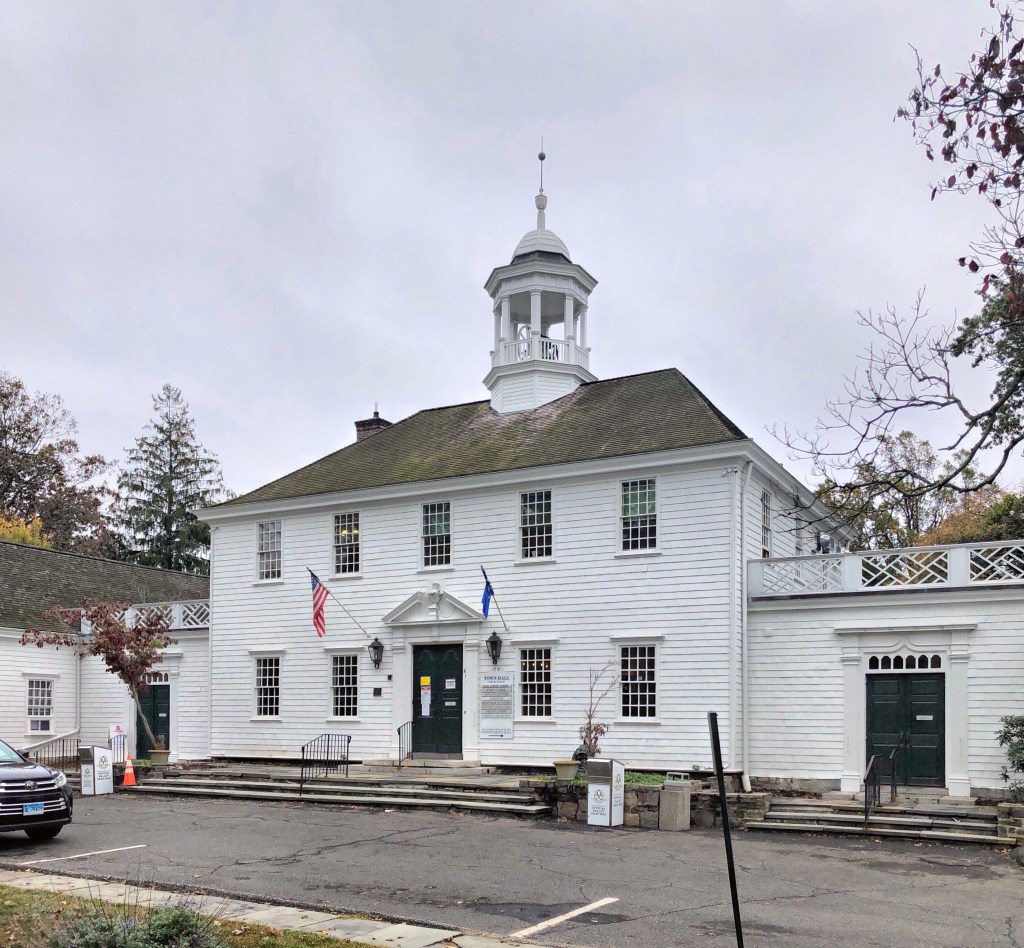
Located at the Fairfield Town Green, the Georgian-style Fairfield County Courthouse stands as a reminder on the town of Fairfield’s Colonial-era history. The first courthouse at the site was built in 1720. After a fire destroyed the first (which housed the jail as well), a second structure was built in 1767. That second courthouse was the center of a thriving, wealthy village with a port just blocks away. In July 1779, the British landed in Fairfield and destroyed much of the town, harming its prosperity for decades to come (though it has clearly recovered since). In 1794, a new courthouse was built, also housing town offices. In 1870, it became solely a town hall (the County Court moved to Bridgeport years before) modified and altered in the Second Empire style to ‘modernize’ the building. As Colonial Revival resurged in popularity in the late 19th and early 20th- centuries, the town sought to bring back the Georgian style Town Hall building, in 1936 hiring architect Cameron Clark, to restore the building.
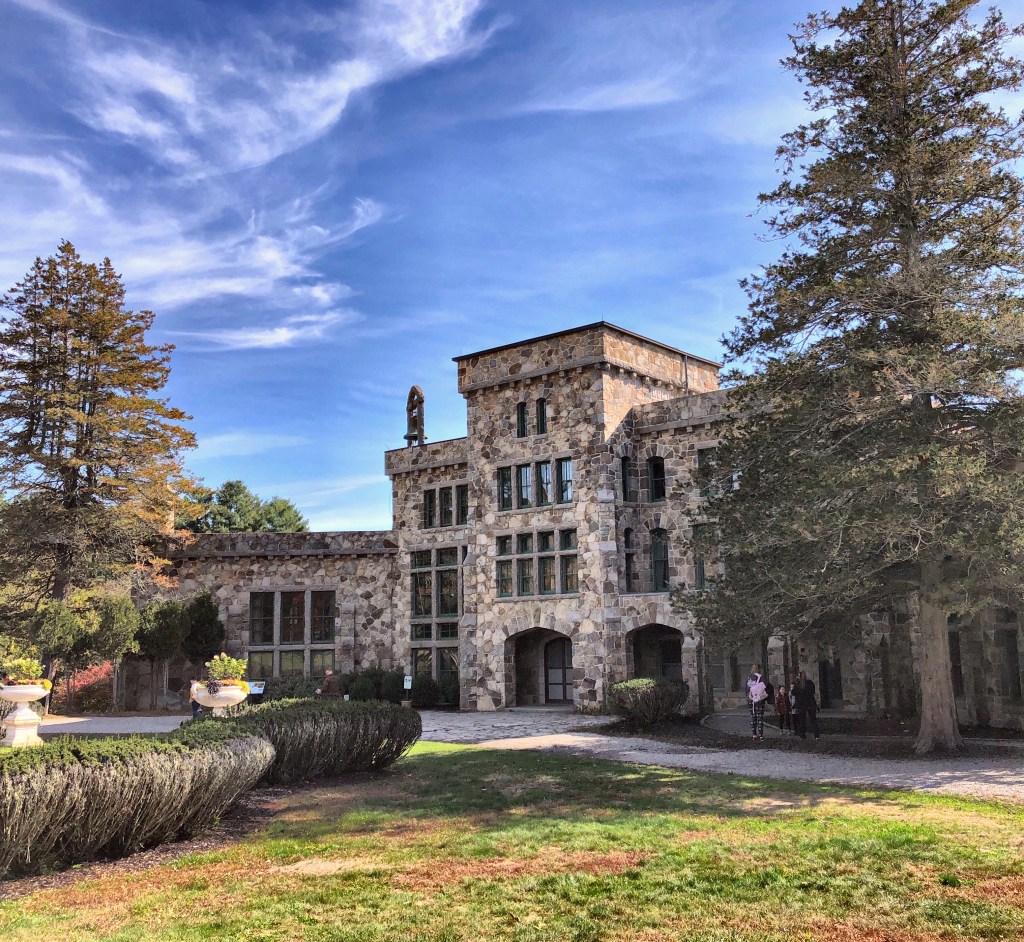
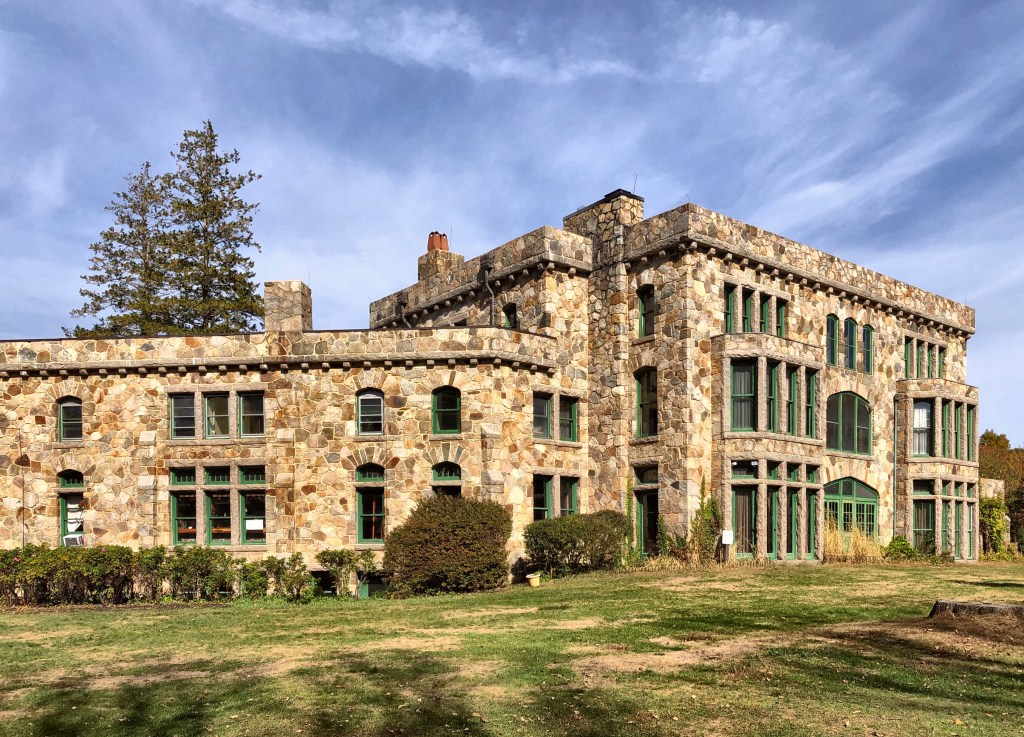
One of the more stunning homes and parks in Massachusetts is located in Easton, known as the Borderland State Park. Borderland was the 1,200-acre estate of Blanche Ames Ames, an artist, political activist, inventor, writer, and prominent supporter of women’s suffrage and birth control. Blanche Ames’ husband, Oakes Ames (of the Ames Family of Easton), came from a wealthy Massachusetts family that owned the Ames Shovel Works. Marrying in 1900, Blanche and Oakes (who were not related even though they had the same last name) constructed their stone mansion in 1910 and created a system of ponds and dams on their property. Blanche and Oakes, who wanted a fireproof house, became displeased with the work of their architect because of the challenges he faced with their design and engineering requirements. Dismissing the architect, Blanche took over the design and construction management of the mansion and hired the Concrete Engineering Company to draw plans according to her specifications. Also on the grounds is a hunting lodge with fireplace, overlooking the large pond on the estate.
Once the mansion was completed, Blanche set up a studio on in the house and developed a scientific color system for mixing paints. She became the sole illustrator of her husband’s botanical books (Oakes was a renowned authority on orchids and taught botany at Harvard from 1900 until his retirement in 1941). Later in life, Blanche became the co-founder of the Birth Control League of Massachusetts and the Treasurer of the League of Women Voters from 1915 to 1918. She also gained notoriety for her political cartoons depicting the struggle for women’s suffrage. In addition to these many accomplishments, Blanche was an inventor who, in 1939, designed a hexagonal lumber cutter. During World War II she designed, tested and patented a method for ensnaring enemy airplanes in wires hung from balloons. Remaining active her entire life, Blanche received a patent for a water anti-pollution device in 1969, a year before her death.
The Ames Free Libraryfirst opened its doors in 1883. Under the terms of the will of Oliver Ames II, $50,000, in trust, was left for the construction and support of a library for the benefit of the inhabitants Easton. The library was designed by Henry Hobson Richardson in 1877 and opened in 1883, becoming one of the finest public libraries in the region. The library is built of Milford granite with the same Longmeadow trim used on his famous Trinity Church in Boston. The very low cavernous arch over the doorway was used here by Richardson for the first time and became one of the most prominent and widely imitated characteristics of his style.
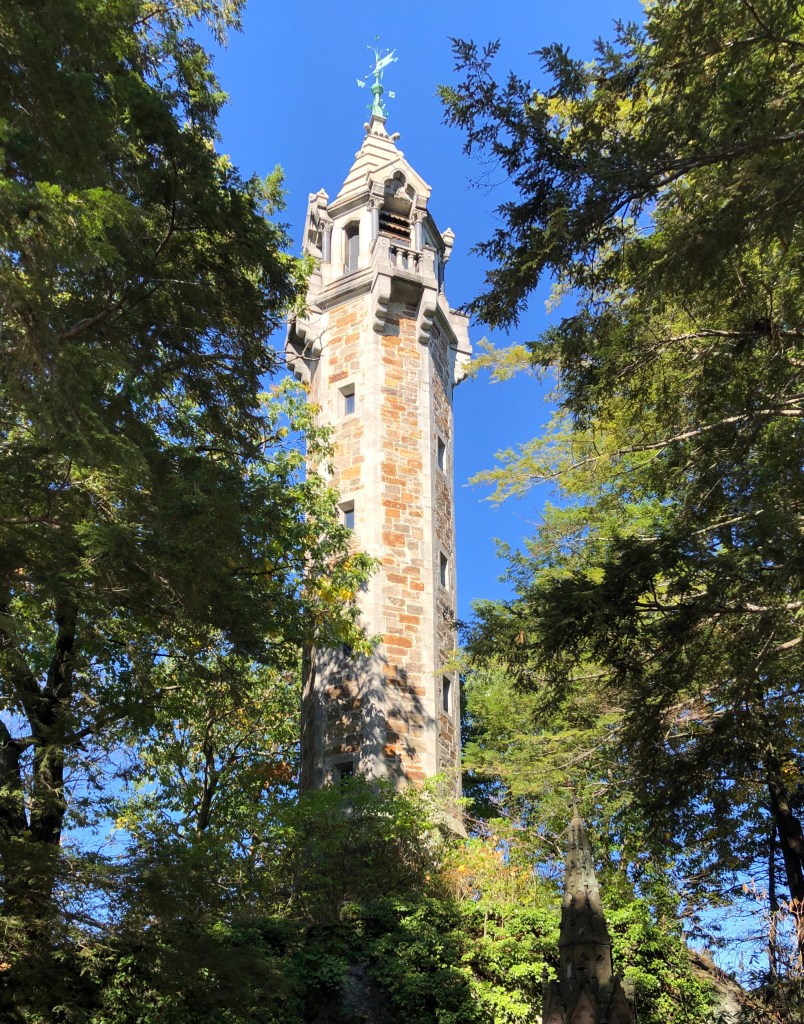
The bell tower at Forest Hills Cemetery is an octagonal Gothic revival structure located on Snowflake Hill just past the entrance gate and administration building and was completed in 1876. The 100-foot tower is constructed of Roxbury puddingstone and trimmed with granite. The roof is clad with granite tiles and topped with an ornate copper weathervane. Originally its swinging bell tolled, but it has since been replaced with an electronic carillon. The bell tower rises dramatically from massive outcrop of Roxbury puddingstone known as Snowflake Hill which is offset by smooth lawns and Victorian planting beds. While the large trees surrounding partly obscure the tower, it truly is a stunning building.
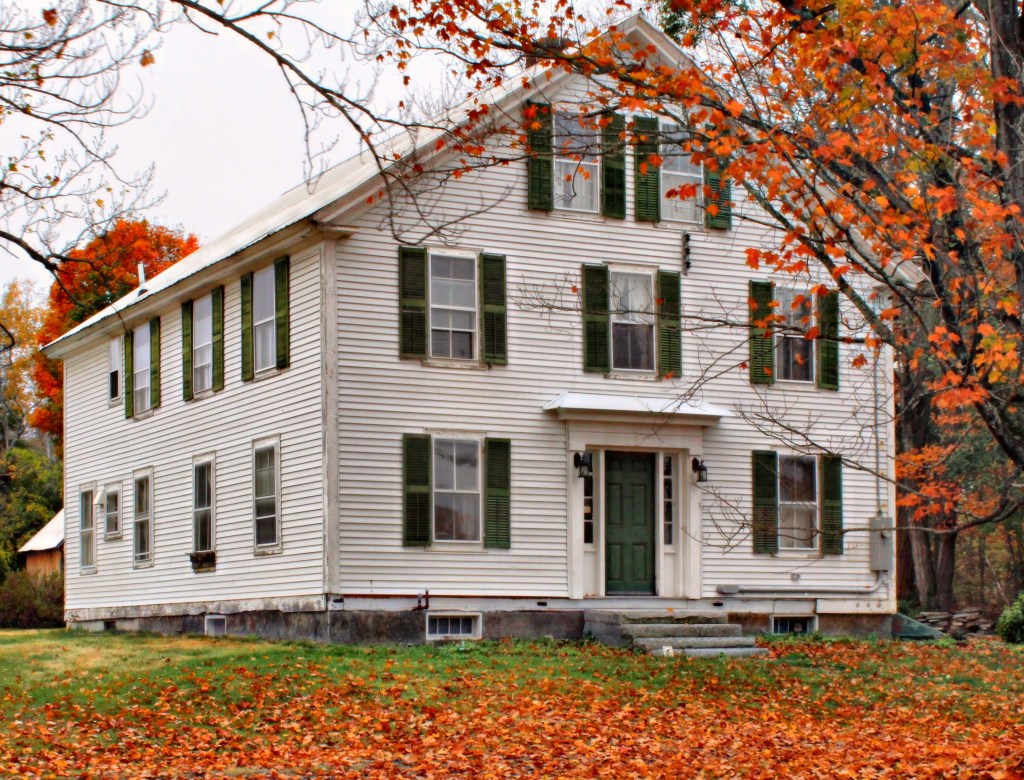
Burton Hall was constructed in 1845 as a boy’s dormitory for Thetford Academy on a lot given by Orange Heaton (who lived nearby), just north of the original Academy Building. The structure was named Burton Hall in memory of Asa Burton, one of the Academy’s founders. The structure was sold by the Academy by about 1860 for $200, to a J.H. Huntington, who moved it across the street to its present site to replace his house which had burned the year prior. In the late 1930’s, Dwight Goddard, the owner of the home at the time, gifted the building back to the Academy since which time it has been known as Goddard Hall.
Fun Fact: Buildings historically were much more likely to be moved than demolished as the cost of building materials was much more than labor. Today, the opposite is true so many developers and owners prefer to demolish.
On the rural back roads of Suffield, CT, it is amazing how many historic farmhouses you can stumble upon. This is the Lewis-Zukowski Farmhouse, built in 1781, as one of the earliest brick homes built in this part of the state. When Hezekiah Lewis (?-1805) built his house in 1781, he was a farmer of modest prosperity. By the time of his death in 1805, he was somewhat wealthier, perhaps because of his second marriage in 1794 to widow Ruth Phelps, as his 91-acre farm. His estate indicates he was a traditional farmer of the period: he had a yoke of oxen, 2 horses, 2 cows, and 2 pigs, suggesting that he was primarily raising sustenance for his family, not products for market. Michael Zukowski arrived in Suffield in 1888 with his family as an immigrant from Poland. Zukowski worked on a farm in town for $8.00 a month plus board for local tobacco farmer Calvin Spencer. He had saved enough by 1905 to pay Hiram Knox (then the owner of the former Lewis Farm) $2,800 in cash, purchasing the property. Zukowski worked the farm until the 1920s, when his son took it over and he moved to another farm nearby. The house remained in the family one more generation until it was sold out of the family. It remains as an architecturally and culturally significant farm in Suffield.
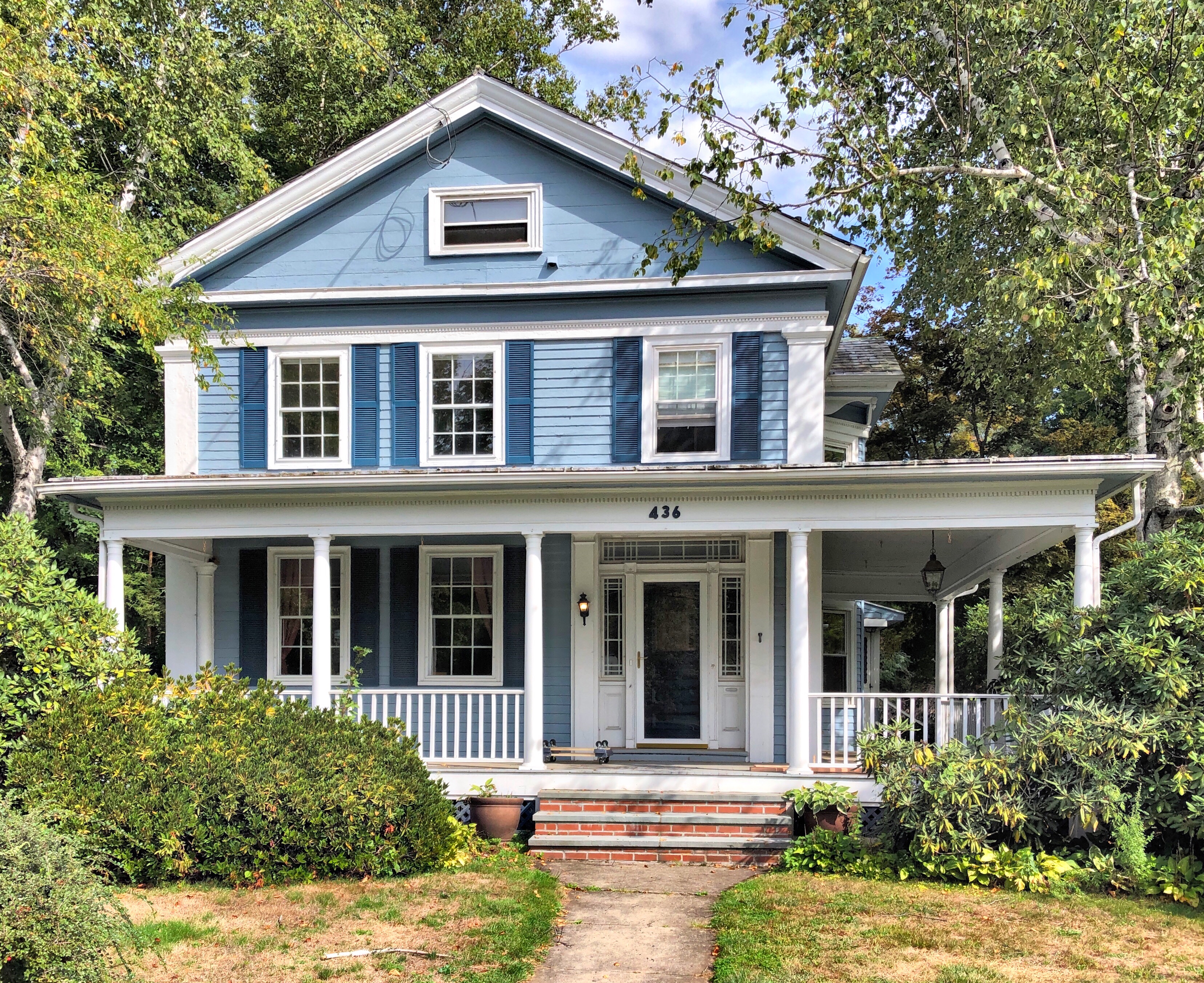
Located on Main Street in Suffield, this Greek Revival home stands out for its perfect proportions, entry detailing, and the large 20th century porch. The home was likely built around 1840 for Milo Milton Owen (1811-1886), within a year of his marriage to Martha Alderman in 1839.
Built by the Boylston Market Association, replacing the former Boylston Market (1810-1887) in Downtown Boston, the Boylston Building is a great example of late 19th-century commercial design in Boston. The Association hired German-born architect Carl Fehmer (who alsodesigned the amazing Beaconsfield Terrace housing in Brookline) to design a structure that would stand up to the architectural landmarks along Boylston and Washington Streets nearby. Fehmer’s design exhibits many features of the emerging Commercial style (also known as Chicago school style) of architecture which promoted new technologies of steel-frame construction in commercial buildings with masonry cladding, while clearly showcasing the Romanesque round arch windows. In the mid-20th century, this area of Downtown Boston became known as the ‘Combat Zone‘, Boston’s Red Light District, flooded with prostitution, drugs, and adult video stores. The Boylston Building was occupied by an adult video store and dive pizza shop. The building and area surrounding are different today, but you can always find some characters nearby!
It is impossible to overstate the significance of the railroad in the 19th century to the industrial growth and economy of New England and American cities. In order to connect Boston and its ports to the Hudson Valley in New York, a western rail line was constructed in the southern part of Massachusetts but was not an ideal route. In response, businessmen and politicians began to envision a more direct rail line across Massachusetts, but with one problem: trains hate climbing mountains! Instead of going around Hoosac Mountain, a massive detour, engineers thought they could tunnel through it, and that’s what they did, creating the Hoosac Tunnel. The tunnel through Hoosac Mountain is just under 5 miles long. Its active construction period consumed roughly a quarter-century and cost at least $17 million in 1870s dollars – an enormous sum. The cost was paid in dollars and the lives of nearly 200 miners (many of whom suffered terrible deaths as you can imagine). The first train passed through the tunnel in 1875, with the eastern portal wall constructed in 1877 (seen here). By 1895, roughly 60% of Boston’s exports traveled through the tunnel. Since then, some small collapses and deferred maintenance have left their mark on the tunnel, though it is still in operation today!




 Buildings of New England

