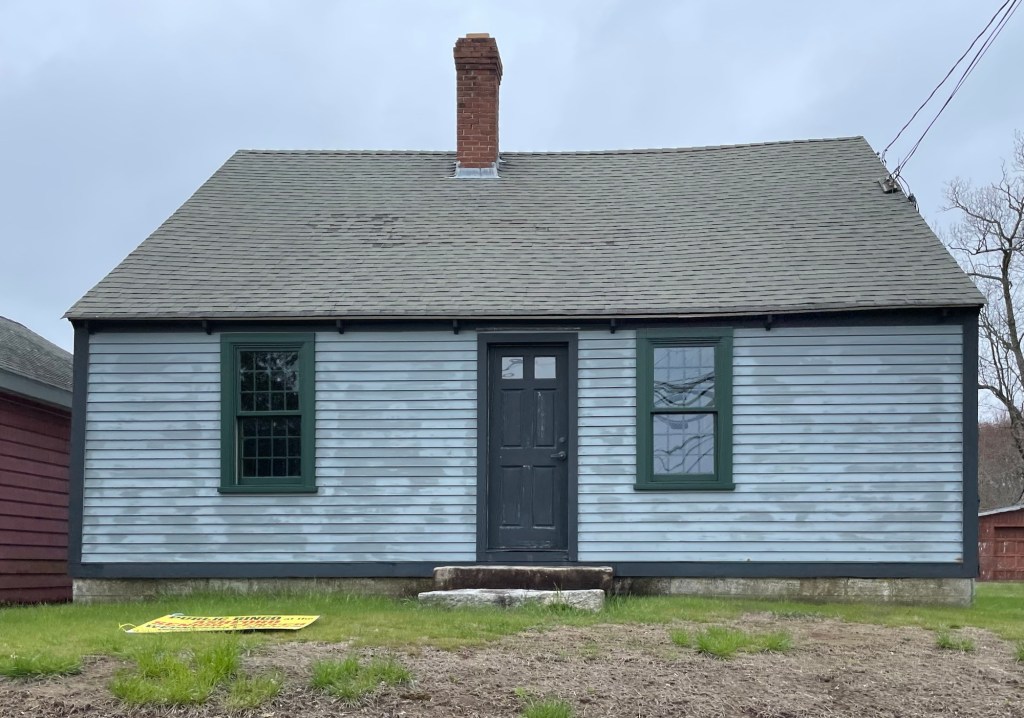
Gott House // 1702

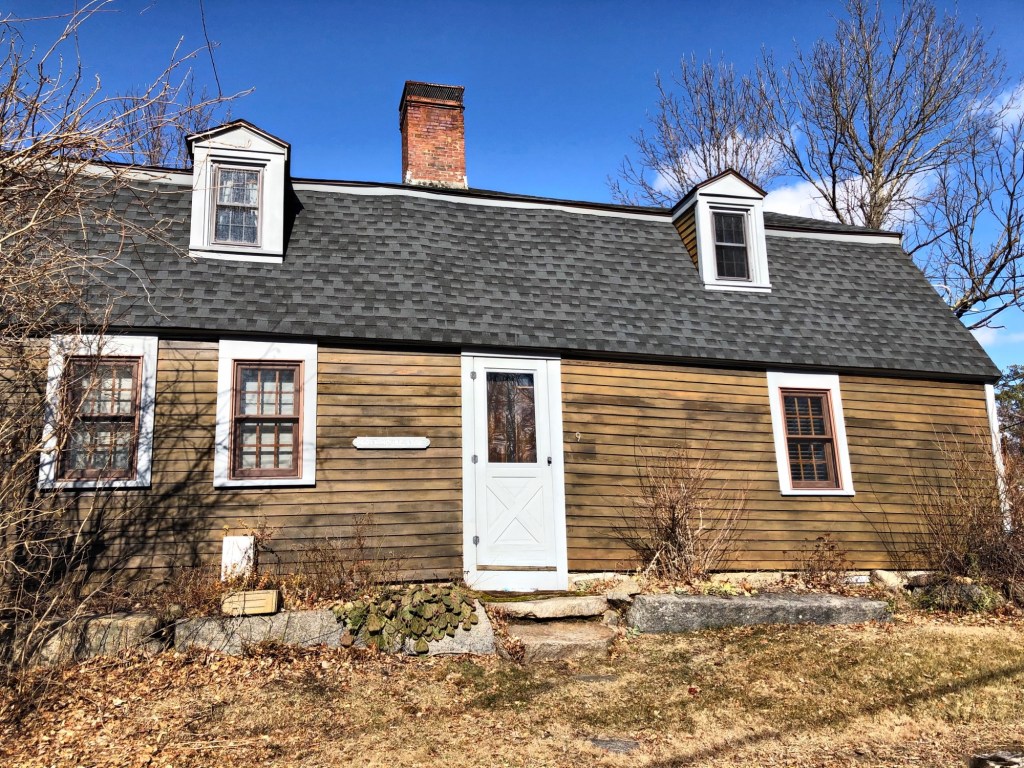
Halibut Point State Park in Rockport is one of the most enchanting places in Massachusetts and it has so many layers of history! Before white settlement, Halibut Point was used seasonally by the Pawtucket people who came to harvest its wild fruits, fish and game on the land. In 1702, Samuel Gott (1677-1748) purchased eight of the 6-acre lots on Halibut Point. At the time, there were no roads to Halibut Point, but Samuel built this house on the land, and he began to farm here. The property passed down the family line and was later owned by Joshua (1754-1846), who came of age just as the War for Independence began. Joshua enlisted with the Revolutionary Army as it was being formed in Boston, and in 1776, he joined General Washington’s forces in the unsuccessful defense of New York. He returned home to lead a long and useful life as farmer and fisherman and was known as Captain Gott. As of the 2010s, the property remained in the same family, handed down through the generations from Samuel Gott over 320 years to today. How cool!

Whelen Cottage // c.1891

For the last cottage on Grindstone Neck, I present the stunning Whelen Cottage. Charles S. Whelen (1850-1910), a banker and philanthropist who served as one of the directors of the Gouldsboro Land Improvement Company and as one of several of its stock agents in Philadelphia, purchased a house lot for him and his wife Migonette Violett. The couple did not hire Lindley Johnson, like so many other cottage-holders did, but they worked with esteemed architect Wilson Eyre to design the home. The Whelens were typical of the type of person who chose to summer on Grindstone. While comfortably well off, they were not in a financial position to commission the sort of cottages built on an ever increasing scale in Bar Harbor. The property left the Whelen’s ownership in 1897, and the house was altered and enlarged in 1900. The large porte cochere, porch, and additional rooms added at this time by William Winthrop Kent, an alumni of H. H. Richardson’s office.

Simon Bradstreet House // 1723

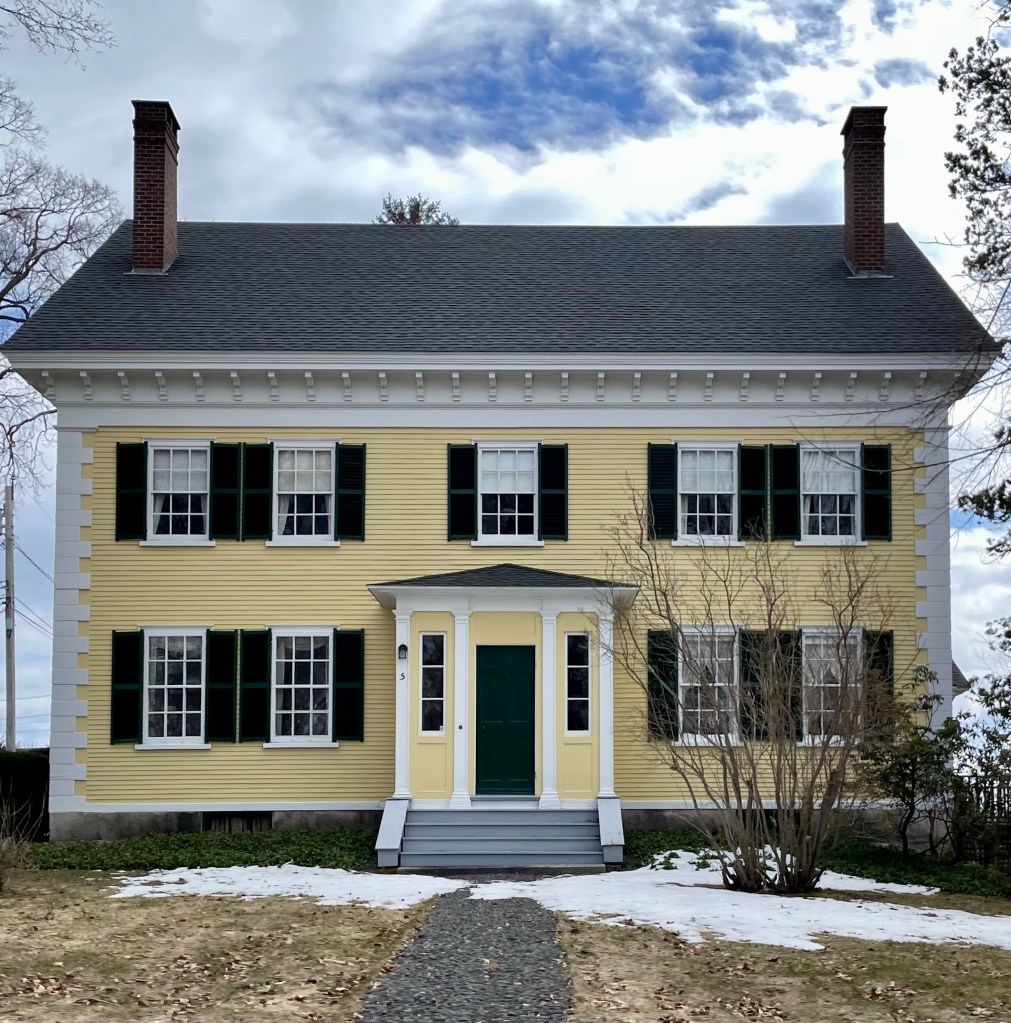
Walking the warren of tight streets and hidden alleys of Marblehead, Massachusetts, you are taken back centuries to a simple time, and of a town that has largely maintained its pre-automobile urban fabric. Many pre-Revolution homes still stand in town and have survived cycles of the coastal town’s prosperity and economic hardship, and the increased pressure of gentrification in more recent years! The Simon Bradstreet House sits right in the village and is a well-preserved Georgian-period home. The house was built in 1723 (earlier reports said in 1738) and it was later owned by Rev. Simon Bradstreet (1709-1771), who arrived to Marblehead to serve as the second minister of the Second Congregational Church a year prior. Reverend Bradstreet was the great-grandson of the last Bay Colony Governor of the same name. Chance Bradstreet, an enslaved African that was a subject of the “within these walls” exhibit at the National Museum of American History was born in this home in 1762. He was later sold to Abraham Dodge of Ipswich by Isaac Story, the third minister of the Second Congregational Church. Stories like this are necessary for us to remember that slavery was a huge part of New England’s economy historically.

The Dome Home // 2003

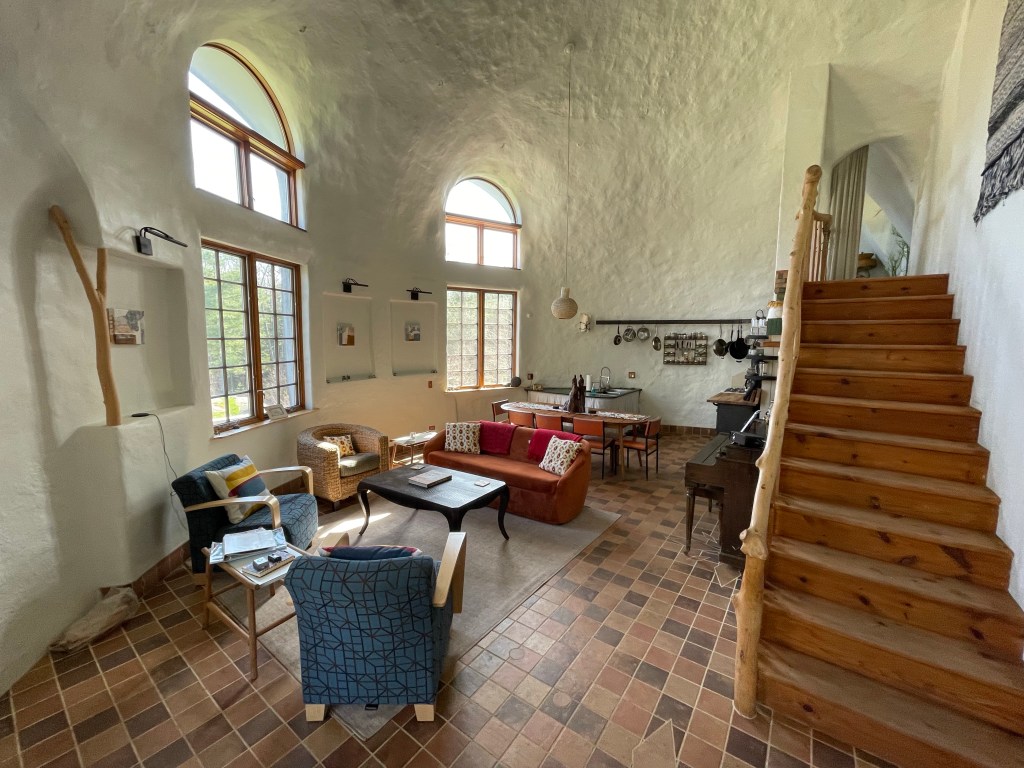
This past weekend, I was lucky enough to stay at one of the most unique Airbnb’s in New England, the Dome Home in idyllic Kennebunkport, Maine! The house itself was hand-built in 2003 by trained architect and sculptor Daphne Pulsifer with her husband Daniel Bates, on 43-acres of forest just miles from the iconic Maine beaches. Inside, the house features numerous custom touches designed and built by the original owners, including light fixtures, floor tiling, hand-built oak doors, wall tiling, woodwork — much of it claimed from the property itself. The Dome Home is completely sustainable with solar panels providing all the power needed, making the property completely off-the-grid. The original owners sold the property in 2022 to the new owners who have lovingly updated the spaces, keeping the charm and unique qualities of the Dome. If you are ever in Kennebunkport and are looking for a unique, off-the-grid stay with all of the amenities of modern living, definitely check out the Dome!

Oliver Walker House // c.1809

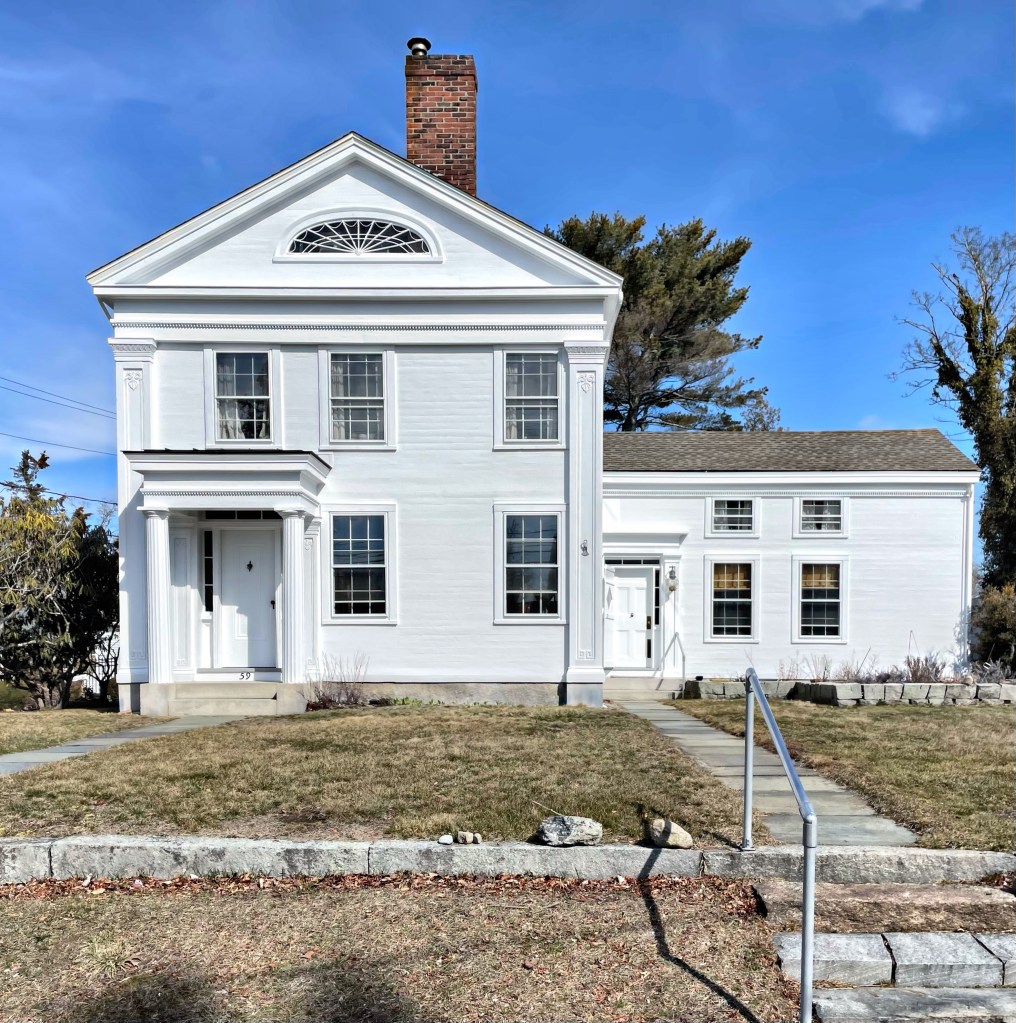
The Oliver Walker House in Kennebunkport Village is one of the better examples that shows how overlapping architectural styles can work really well on an old house (when done right)! The original house was constructed around 1809 for Oliver Walker (1788-1851), a sea captain who later accepted the call and became a deacon for the South Congregational Church in Kennebunkport. Walker died in 1851 and the Federal style property was inherited by his only surviving child, daughter Susan, who had married Portland native, Captain John Lowell Little. Under their ownership, the traditionally designed Federal house was modernized with fashionable Italianate style modifications of the decorative brackets and an enclosed round arched window in the side gable. A later Colonial Revival projecting vestibule adds to the complex, yet pleasing design. I have a feeling the interiors of this house are just as spectacular as the exterior.

Moses Latham House // c.1845

Noank is a charming seaside village within the town of Groton that is centered on a peninsula at the mouth of the Mystic River where it spills out into the Long Island Sound. Historically, the area was known as Nauyang (meaning “point of land”) and was a summer camping ground of the Pequot people, but they were driven out in 1655 following the Pequot War. White settlement was slow here until the mid-19th century, when the shipbuilding and fishing economy took off here. As a result, houses, stores, churches and industries were built, and an entire village was formed. Most extant homes here were constructed starting in the 1840s as the village (and nearby Mystic) saw economic growth from the maritime trades. This house, the Moses Latham House, was constructed for Mr. Latham in about 1845. The house is Greek Revival in style with flush-board siding, a fan light in the gable which reads as a pediment, and a simple portico supported by fluted Doric columns.

Rose and Howard K. Hilton House // 1900

Tudor Revivals may just be my favorite style of house. The interesting roof forms and gables, the use of stone, brick or stucco, and the presence of garrisoning and half-timbering in designs are always so charming. This enchanting Tudor Revival home in Providence, Rhode Island, was built in 1900 by local architect Howard K. Hilton (1867-1909) as his personal residence with wife Rose. He first worked in the office of H. W. Colwell and continued his training under Ellis Jackson joining him in partnership (Jackson & Hilton) and under the firm name was identified with the design of several churches, schools, hospitals and various other buildings in his native city before he retired in his final years. This home is very unique for its site on a narrow urban lot with the door at the side, brick first floor with jettying at the second floor of wood construction with half-timbering. While writing this, I noticed that there are also projecting gargoyles which serve as water spouts to send water away from the structure during rainfall events. Tudors are really the best!

Bacon-Sampson House // 1814

Rufus Bacon, a lawyer, moved to Assonet in 1814 and built a modest Federal Cape house on the town’s Main Street. Rufus worked in town at a law office for over a decade until he moved to New York, selling his property in 1828 to Earl Sampson, who ran a profitable corner store just down the street. Sampson completely modernized the home, adding the Greek Revival doorway, chimneys, and south-facing veranda. After Sampson died, the home was either purchased or gifted to the Assonet Congregational Church, and occupied as a parsonage. The property has since been deaccessioned by the church and is a private home.

Chaffee House // 1931

Herbert Almon Chaffee and Irma Chaffee had this Tudor home built by 1931 for their family in Fairfield, Connecticut. Mr. Chaffee was the Vice President and Assistant Treasurer of the City Savings Bank of nearby Bridgeport. Chaffee also at that time worked as Vice President of the A.W. Burritt Company, a lumber mill that produced building supplies and also operated as a real estate company that bought land and constructed on it. The home he had built clearly showcased the company’s work and features hallmarks of the English Tudor Revival style, with half-timbering, slate roof, and jettying (upper floor slightly overhanging the first).

Wilkinson House // c.1895

At the end of the 19th century, many homes built were a hybrid of architectural styles. The Wilkinson House on Church Street in North Adams, MA is one of these examples. The term Eclectic can often be used to describe the phenomena when many architects of the 19th and early 20th centuries designed buildings in a variety of styles according to the wishes of their clients, or their own, blending features and styles which in the past may have been reserved for a single style. This home exhibits features of the Queen Anne and Colonial Revival styles.