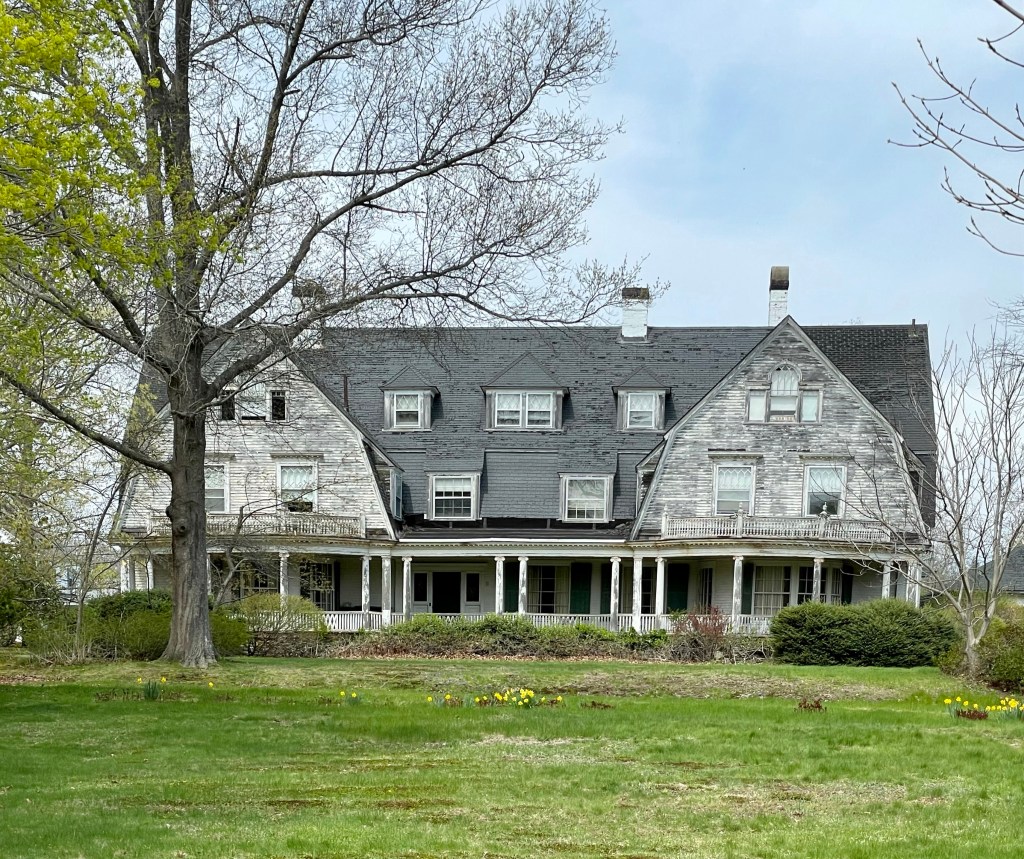
George L. Allen Summer Residence // c.1895

This massive summer “cottage” in Rye Beach, NH, was built around 1895 for St. Louis businessman George L. Allen. The massive Colonial Revival home features a gambrel roof with a series of gabled, hipped and shed dormers to break it up. A circular driveway would have allowed visitors for Great Gatsby-esque parties to get dropped off by their driver and enter right into the home’s large stair-hall. The most stunning facade is the rear, which faces a lawn with views out to the Atlantic Ocean. A full-length porch on the first floor sits recessed under the floor above to provide shelter from the harsh summer sun. Sadly, the mansion has seen better days and appears to be a shadow of its former self. Luckily, almost all of the historic windows remain and the home can definitely be saved. Fingers and toes are crossed to see this beauty preserved.

Susan Lord House // 1913

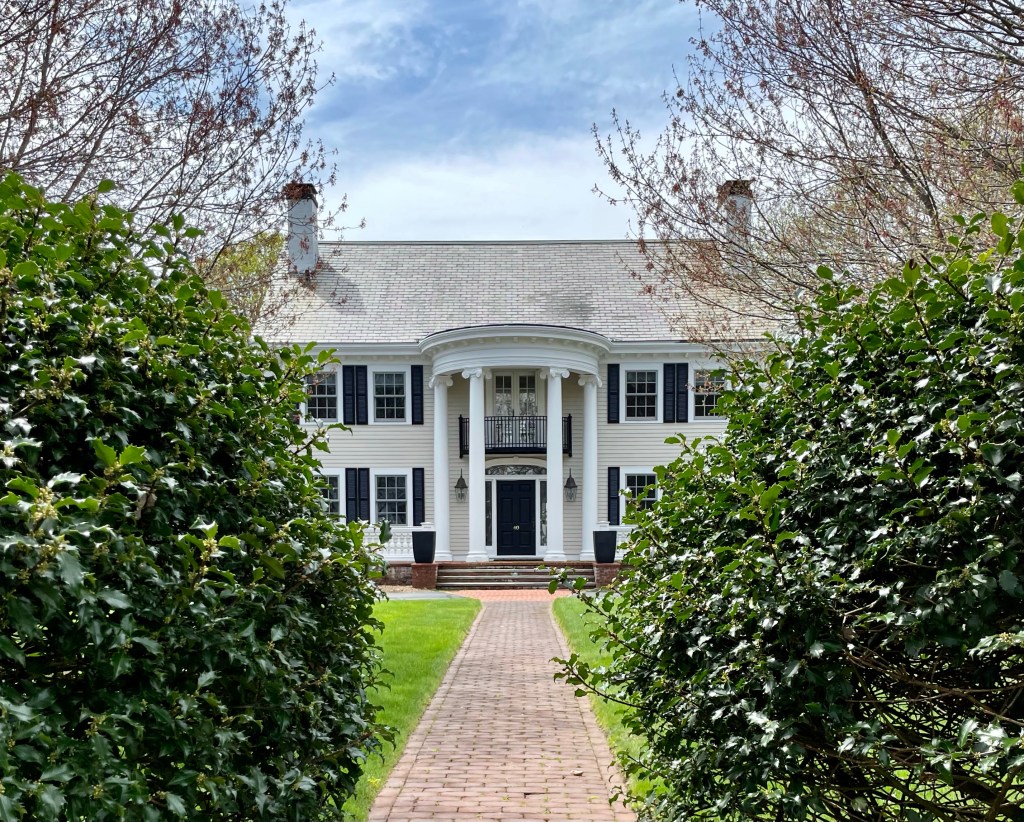
This home was built in 1913 and is a high-style Neo-Classical example of a “beach cottage”. The home is located in the fashionable Rye Beach colony in New Hampshire, which developed in the mid 19th century through the first half of the 20th century as an exclusive enclave for vacationing elite. The home was purchased by Susan Bailey Lord just years after its completion as a summer retreat from her home in Malden, MA, just outside Boston. She purchased the home just years after the death of her husband, who was thirty years her senior. It’s safe to say that Susan let loose up on the beach and had a “hot girl summer”.

Tower Cottage // c.1880

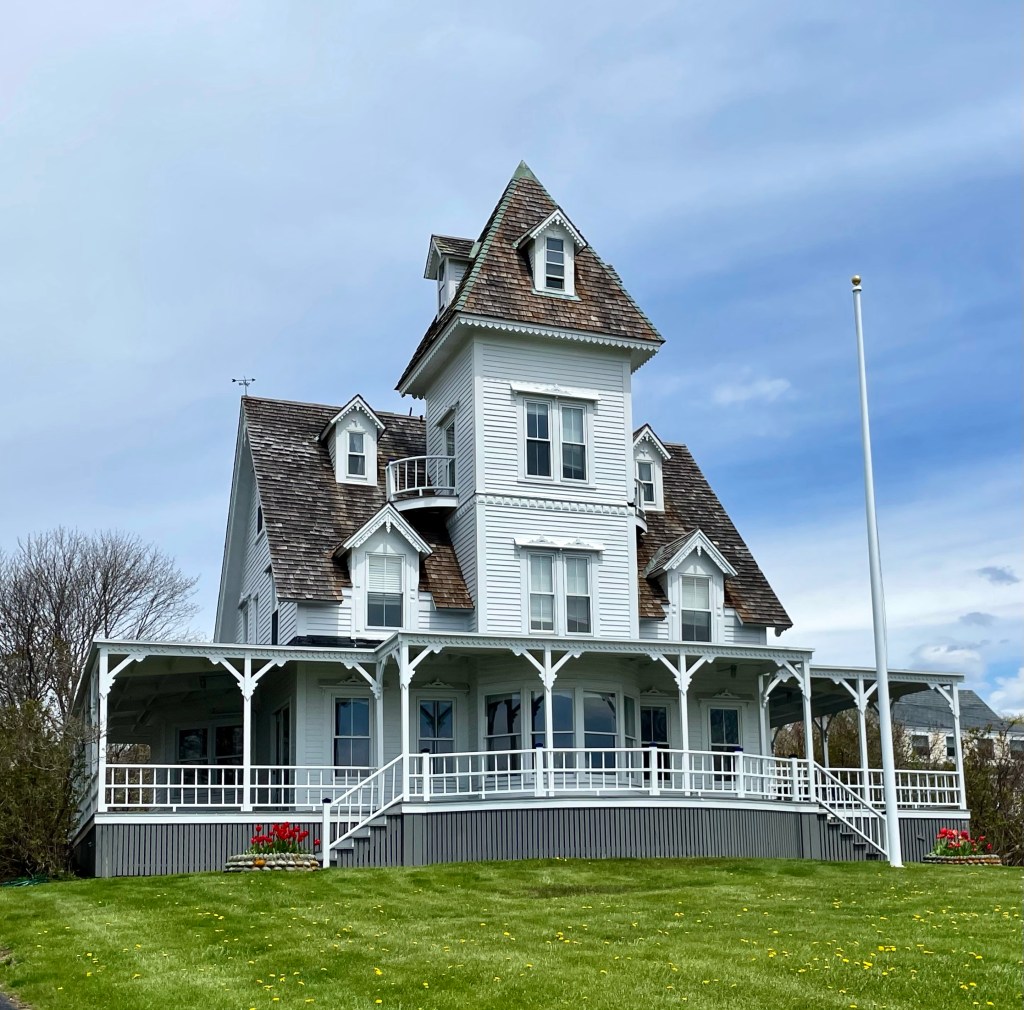
Located in the Foss Beach section of Rye, NH, this Victorian summer cottage stands out among the later new construction of lesser detailed and quality late 20th century homes seen here lately. The home, known as “Tower Cottage” was built at the end of the 19th century and exhibits Victorian Gothic elements with a massive center tower. The steep wood shingle roof is punctuated by two rows of delicate dormers which add detail and views to the ocean. The massive wrap-around porch is also a must for such a prime location fronting the Atlantic Ocean!

Moses L. Garland House // c.1845

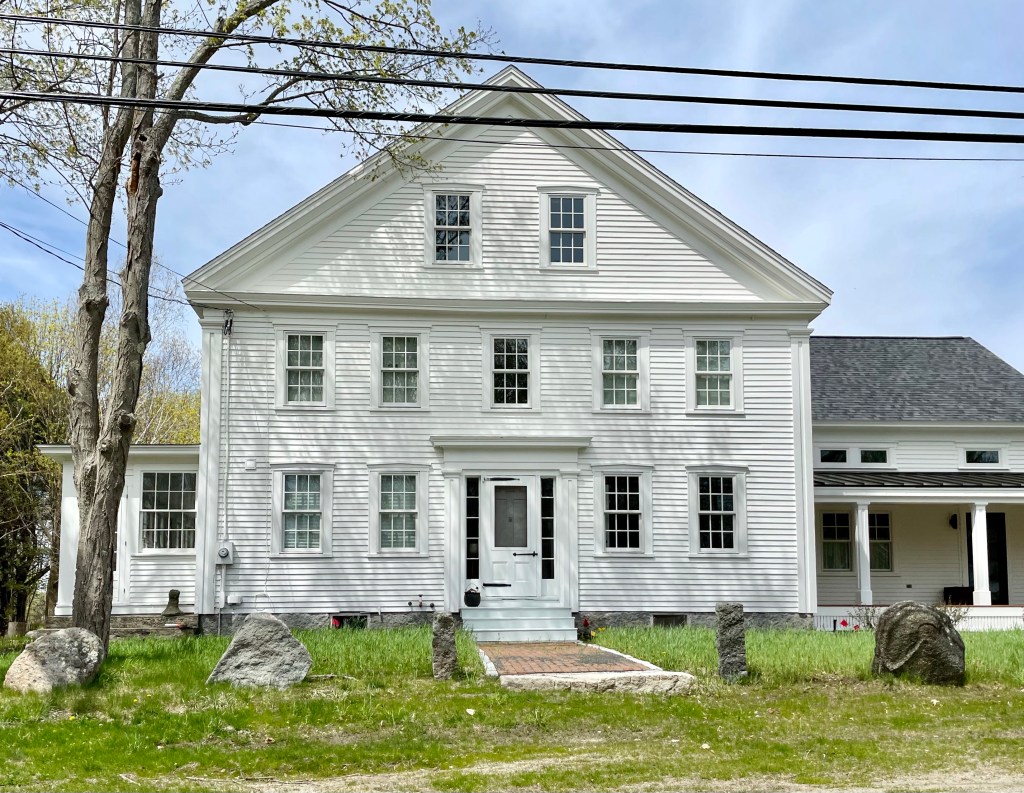
Located a stone’s throw from the Elijah Locke Homestead (last post) in Rye, New Hampshire, this mid-19th century home stopped me in my tracks when driving by. According to old maps, the home was owned by Moses Leavitt Garland, who married Lucretia Locke, a descendant of Elijah. The home shows strong Greek Revival features including the large gable end facing the street serving as a pediment and pilaster at the corners and entry with entablature above. The house recently sold, and the owners demolished the ell connecting the home to the large barn (not pictured) and replaced it with a historically appropriate addition.

Bernard Jenney House // 1908

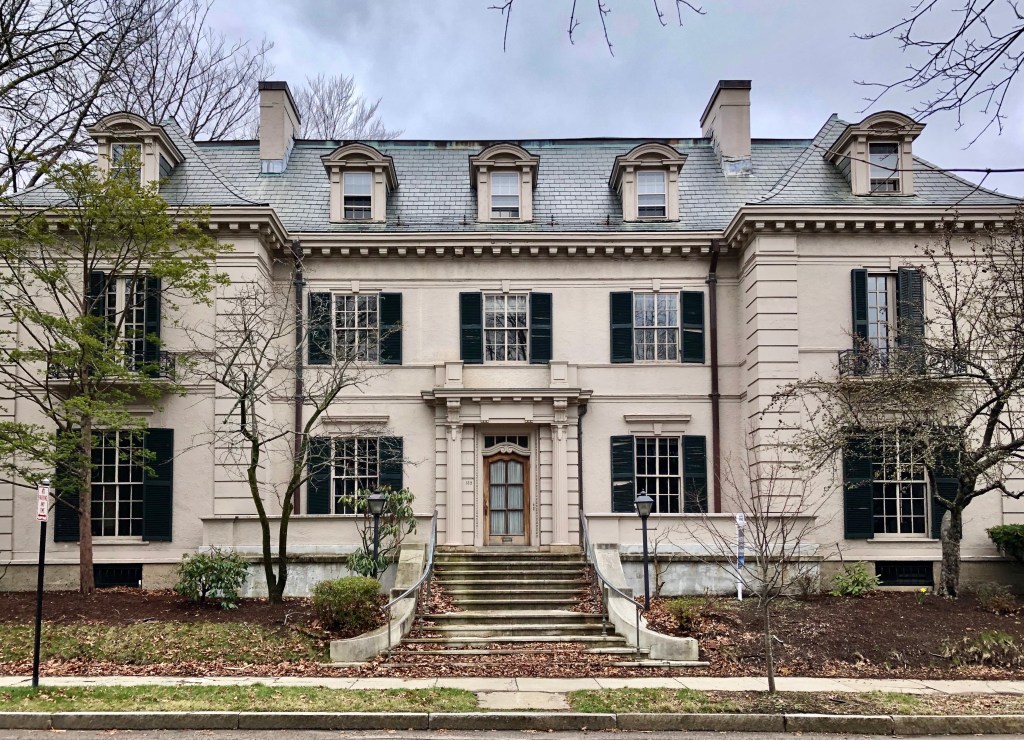
This stunning home in Brookline’s Cottage Farm neighborhood was built in 1908 for Bernard Jenney, the assistant treasurer of the Jenney Oil Company. Stephen Jenney, had founded Jenney Oil Company in Boston in 1812, as a kerosene, coal and whale oil producer. By the 1860s, Bernard Sr. and his brother Francis took over the company which became known as the Jenney Manufacturing Company. The newly established company focused primarily on production and distribution of petroleum products for factories and businesses. The Jenney Manufacturing Company took off in the early 1900s due to the proliferation of personal automobiles in Boston and they expanded a new manufacturing center in City Point, South Boston, which had a capacity of 500 barrels of oil a day. Jenney auto oil and gasoline became a major supplier and after Bernard Sr.’s death in 1918, under Bernard Jr.’s leadership, the company began to develop gas stations in New England. The company continued into the 1960s when it was acquired by Cities Service, later rebranding as Citgo. Jenney resided here until his death in 1939. According to the 1935 Brookline street list, the occupants included his daughter’s family Mary & Francis Brewer, three maids and a laundress. The house was acquired by Boston University in 1963 and has long served as the home of former president John Silber.

The architectural firm of Kilham & Hopkins was hired to design the home, which is French Renaissance Revival in style. The home itself is an architectural landmark. When it was published in ‘The American Architect’ in 1910, the house was described as, “A Study in French design of the Louis XVI period”. Additionally, the home (of course) featured a vehicle garage as the family must have had some cars based on the line of work. The home is now listed for sale for a cool $4,888,000 price tag!

Stoneymeade Farm // c.1773

This stunning Georgian farmhouse in Acton, Massachusetts, was built around 1773 for Seth Brooks (1740-1831) and his wife Molly Conant Brooks, on land that had belonged to her father, William Conant of Concord (part of which was later annexed to Acton). Seth Brooks fought under Captain Isaac Davis on April 19th, 1775 at the Battle of Concord, who was among the first killed and was the first American officer to die in the Revolution. It was Brooks who ordered Davis’ body carried from the field after he fell, so he could be buried with honor. After the war, the family suffered an unfathomable tragedy. Seth and his wife, all their nine children, and all but one of their grandchildren died of the same type of tuberculosis, “slow consumption.” The family “curse” appears to have been broken by grandson Nathan Brooks, Jr., (1799-1881,) who inherited the property. According to local legend, a room beside the center chimney sheltered runaway slaves, as Nathan Brooks was an avid abolitionist. At the turn of the 20th century, the farm was purchased by Brookline timber merchant Benjamin Pope, owner of the Pope and Cottle Company of Boston. For many years, the Pope family used the house as a summer residence, with managers working the property as a dairy farm. It was Pope who named the farm “Stoneymeade,” and added greenhouses, an icehouse, and had an elaborate water system installed. Stoneymeade Farm continues to this day as an equestrian farm with boarding space for horses.

Hosmer House // 1760

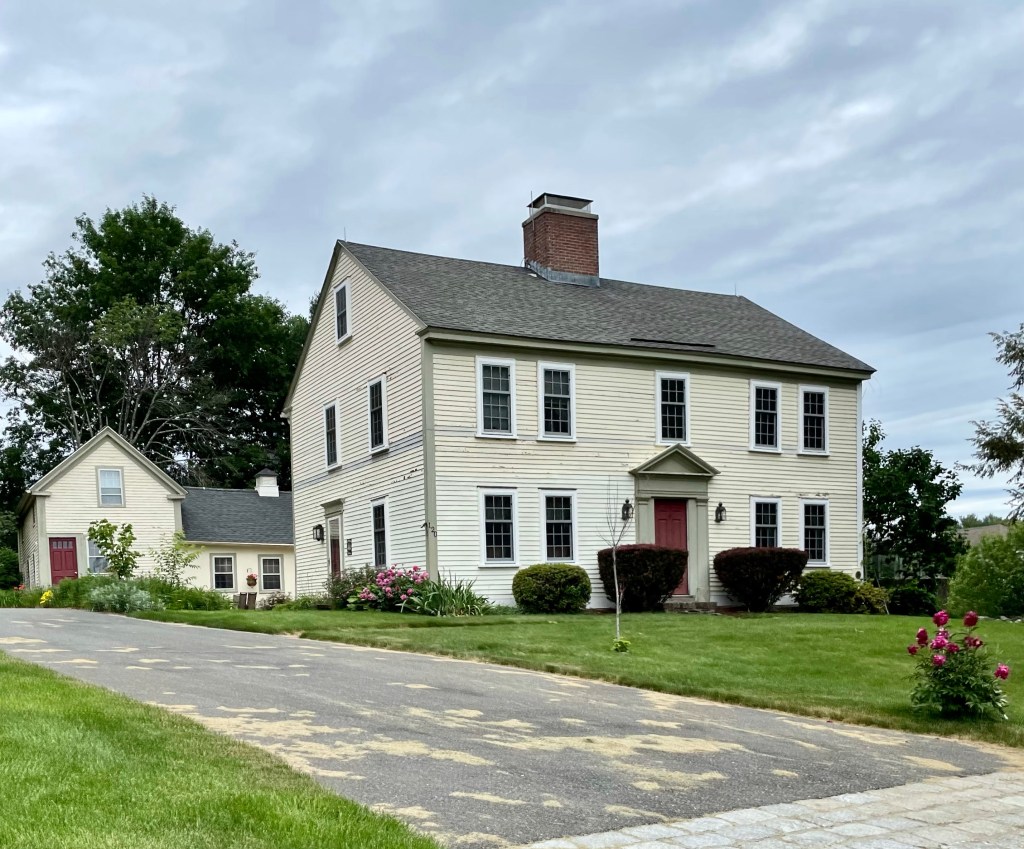
This 2-1/2 story wood frame house in Acton, Massachusetts was built in 1760, and is one of the town’s best-preserved colonial-era houses. It is an unusual double house, consisting of one section with a square plan, and the other with a typical colonial “half house” plan, having three bays and an off-center chimney. The house was built by Jonathan Hosmer, Jr., a bricklayer whose workmanship is evident in the house’s many fireplaces. Hosmer was also prominent in civic and military affairs; he served (along with his son, who was killed at 17 years old) in the 1777 Battle of Bennington. The home was later owned by Jonathan’s son Simon, who may have added the attached dwelling, creating the double-house form we see today. In 1974 the property was acquired by the Acton Historical Society, which rents one of the units, and operates the rest of the property as a museum. The home is a great example of a Georgian double-house with a saltbox roof.

Faulkner Homestead // 1707

One of three pre-1725 houses in South Acton, the Faulkner Homestead is the best preserved First Period house in the area and displays elements from its First Period construction date of 1707 and from the later Georgian period. The home was built for Ephraim Jones, who was one of the first millers starting what was to become the Faulkner mills located near the old homestead. The home was known as a Garrison House, built as a refuge for the settlers in times of Indian raids, but there is no record that it was ever used for that purpose. In the 1730s, the home was rented by Ammi R. Faulkner (1692-1756), who purchased it years after he moved in. The Faulkner Homestead remained in the Faulkner Family for over 300 years, when it sold our of the family in the 1940s.

Old Acton Parsonage // c.1740

Not far off Main Street in Acton Center, this stunning old Georgian home was built around 1740 for Jacob Hooker a tailor and later served as the home of James Dudley, a blacksmith in the village. After the American Revolution, Acton called on Reverend Moses Adams (1749-1819) to be the minister for the Acton Meetinghouse. The town acquired the old Dudley House for Reverend Adams to reside in with his family. In 1780, the home was enlarged, and possibly given the raised foundation we see today. Mrs. Adams ran a store out of the basement, accessed by the doorway in the brick foundation. After Adams’ death in 1819, the property went to the next reverend in town, until his death decades later. In 1889, a carpenter, Moses Taylor, purchased the home, restored much of the woodwork, and replaced the historic windows with 2-over-1 windows, popular at the time. Moses moved a house on Main Street to make way for the new Acton Memorial Library, and was active in building and renovating homes in Acton until his death.

Jones Tavern // 1732

Settlement of South Acton (by colonialists) was begun in 1701 when the Jones and Knight families purchased 600 acres of a private land grant. Over the next 26 years, members of the two families established and operated mills near the Fort Pond Brook, which provided running water for operations. Samuel Jones built a home here in 1732, which as originally built, was a simple, four room central entry Georgian home with gable roof, typical of many eastern Massachusetts homes at the time. In 1750, Jones opened a tavern and general store in his house, enlarging it with a two story addition now visible on the left side. Samuel’s son Aaron Jones, a Harvard graduate and soldier who fought at the Battle of Concord nearby, took over the tavern from his father. In 1818, Aaron more than doubled the size of his establishment when he built a large, 5-bay extension and rear kitchen ell directly behind the existing structure. In addition to enlarging his property, Aaron also had it “modernized”, inserting sash windows (replacing the casement windows) throughout and adding fashionable Federal style door and window surrounds. The additions gave the building two major entries, as well as secondary access to the communal taproom. The property was then willed to his son Elnathan Jones, who operated the establishment until 1845 as both a tavern and hotel. The building remained in the Jones family until it was sold in 1946, and divided inside into multi-family use. The house was sold for salvage in 1964 after years of neglect, but was saved by Iron Work Farm, Inc., a non-profit who maintain the property to this day.