Dwight Manufacturing Company Complex // 1841+

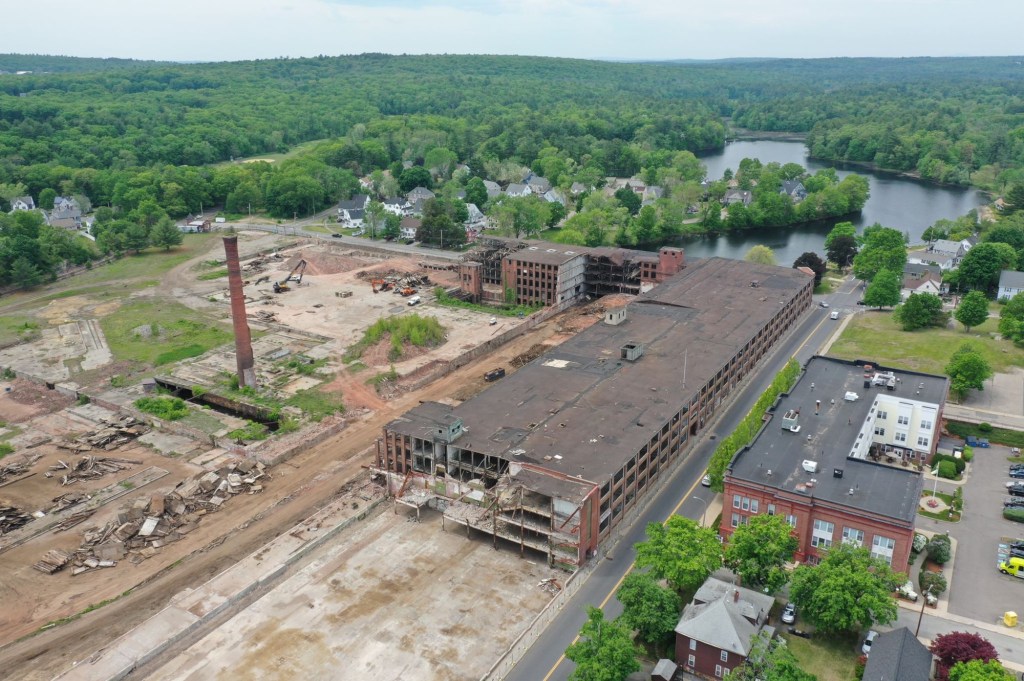
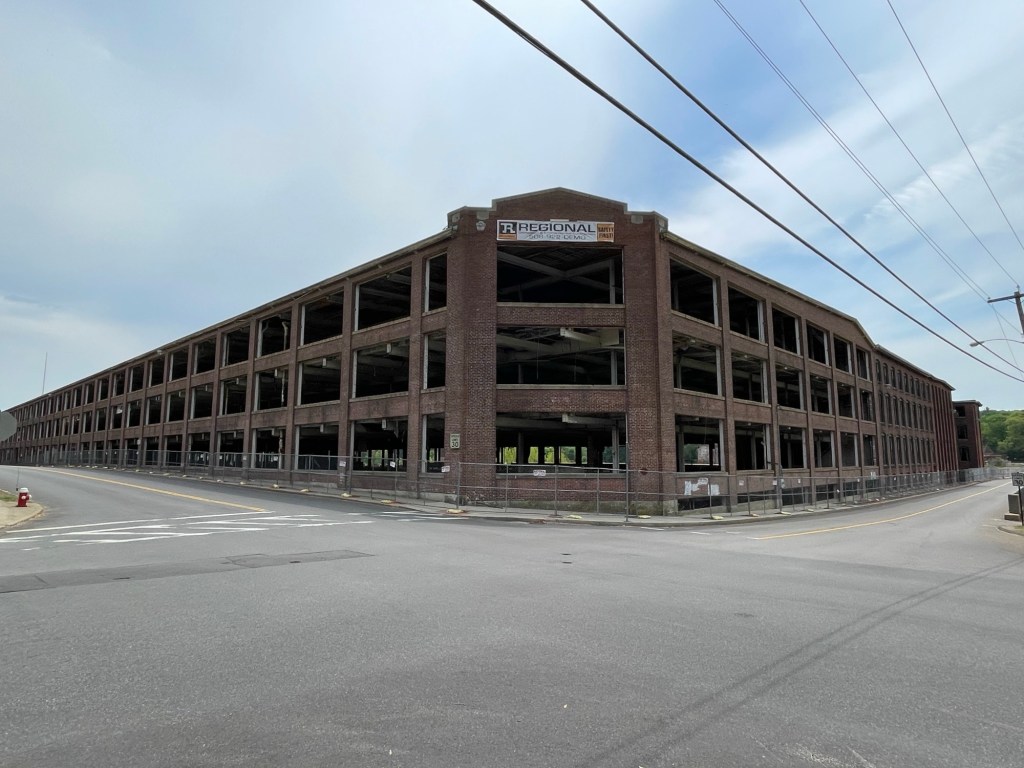
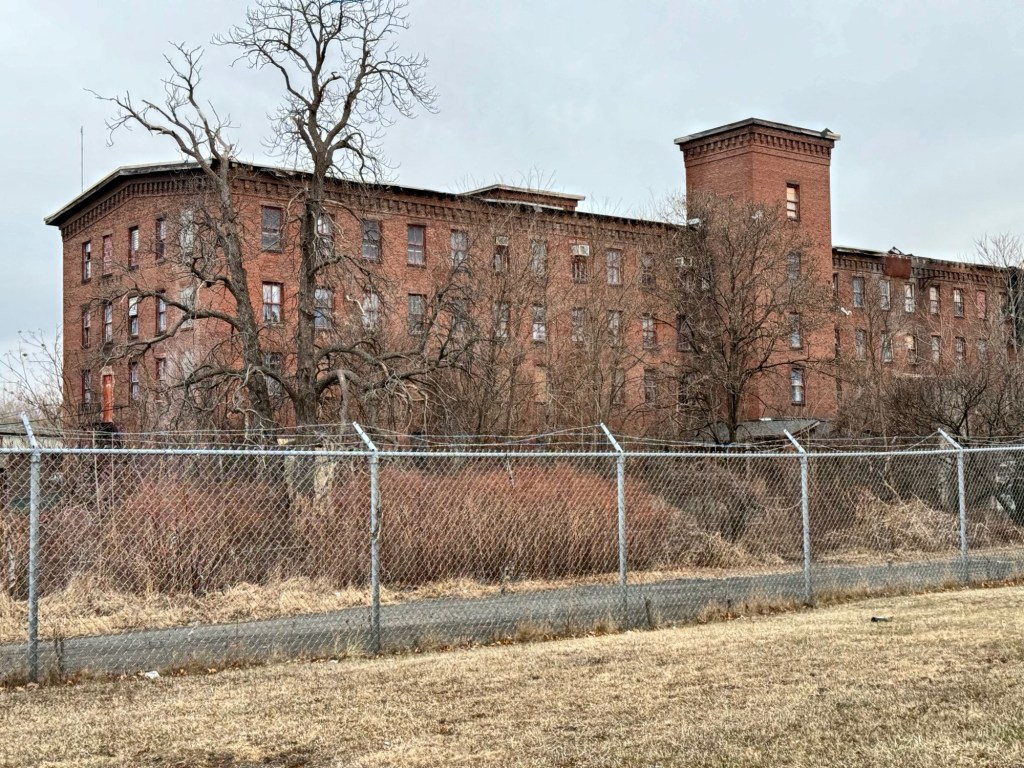
The Dwight Manufacturing Company is named for Edmund Dwight (1780-1849) of Boston, an industrialist who envisioned an industrial town on the Chicopee River. Dwight, having a country home in Chicopee, had begun a venture with his brother, Jonathan, at Chicopee Falls creating the Chicopee Manufacturing Company, to produce cotton cloth. Due to the company’s immediate success, the Dwights along with other investors formed the Springfield Canal Company in 1831, with the goal to create the “new Lowell”, an industrial community in what is now Chicopee Center. In 1856, the Dwight Mills purchased some earlier mill complexes, creating the Dwight Manufacturing Company and consolidating all their cotton cloth manufacturing into one organization. In addition to the mills, the Company also built employee housing
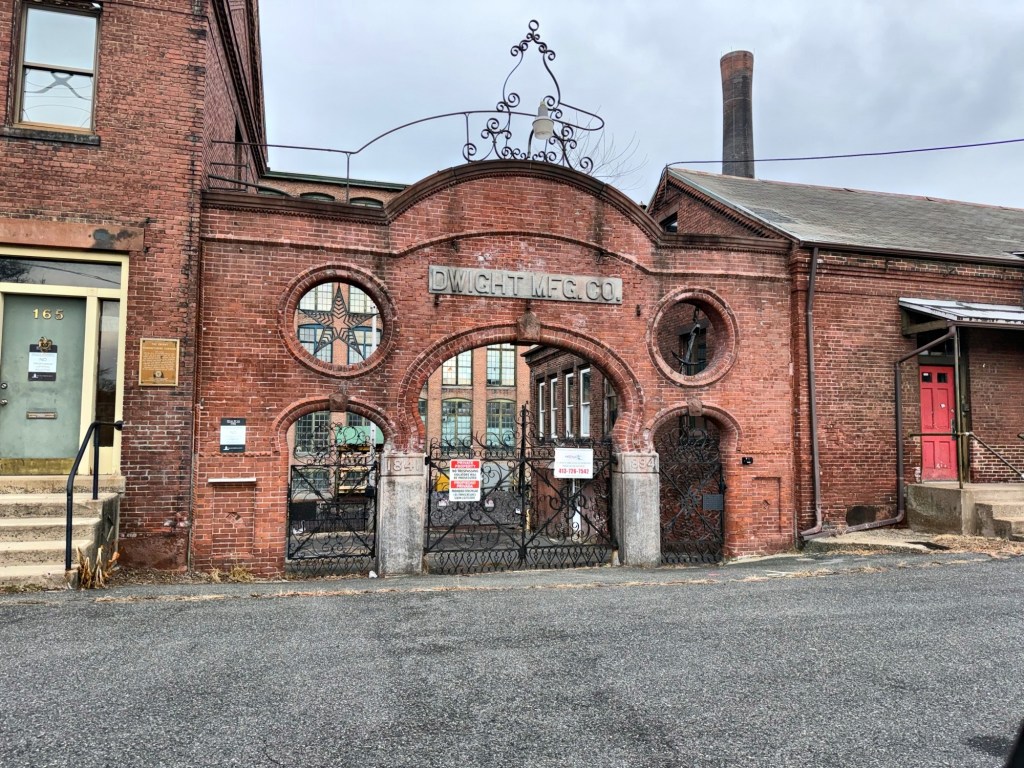
along Depot and Dwight Streets, a stone’s throw from the mills. The creation of employee housing allowed the Company to attract new employees in particular women and children, nearly all immigrants, who could be housed together. My favorite part of the complex is the entrance gate, built in 1894, connecting the Office and Cloth Building. It is amazing to think of all of the people who passed through this portal, working long hours for a better life. Overtime as production methods changed and technology evolved, nearly all the original mills would be replaced or retrofitted. Despite the changes, the Company could not remain profitable and shut down production in 1927 and ultimately selling the land and equipment in 1930. Some smaller manufacturing has since occupied some of these buildings, but they remain largely (if not entirely) vacant, awaiting a new life.

Alvord School // 1894

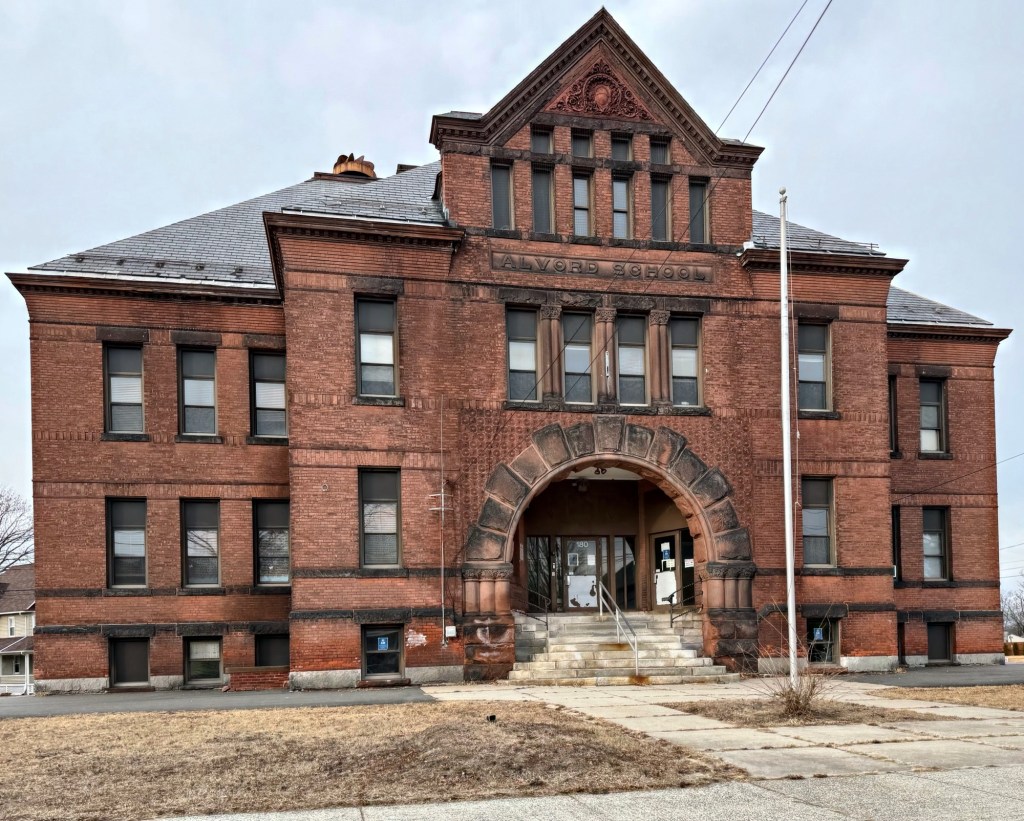
When the old Broadway school in Chicopee Falls became neighbors with the Overman Wheel Company, an early bicycle manufacturing company, there was so much noise and distraction that the Chicopee School Committee voted to sell the school and build a new school building down the street. A triangular lot on Broadway was purchased and Springfield architect, Francis R. Richmond, was chosen to design the new building in 1894. The school was dedicated to Dr. Samuel Alvord, a Chicopee Falls resident who was first principal of the local high school and local doctor that died in 1892. The Alvord School is a great example of a Richardsonian Romanesque school building of brick and brownstone, with recessed entry within a Syrian arch and decorative terracotta tiles. The school would close in the second half of the 20th century, and today is known as the Helen A. O’Connell Administration Building, a municipal office building.

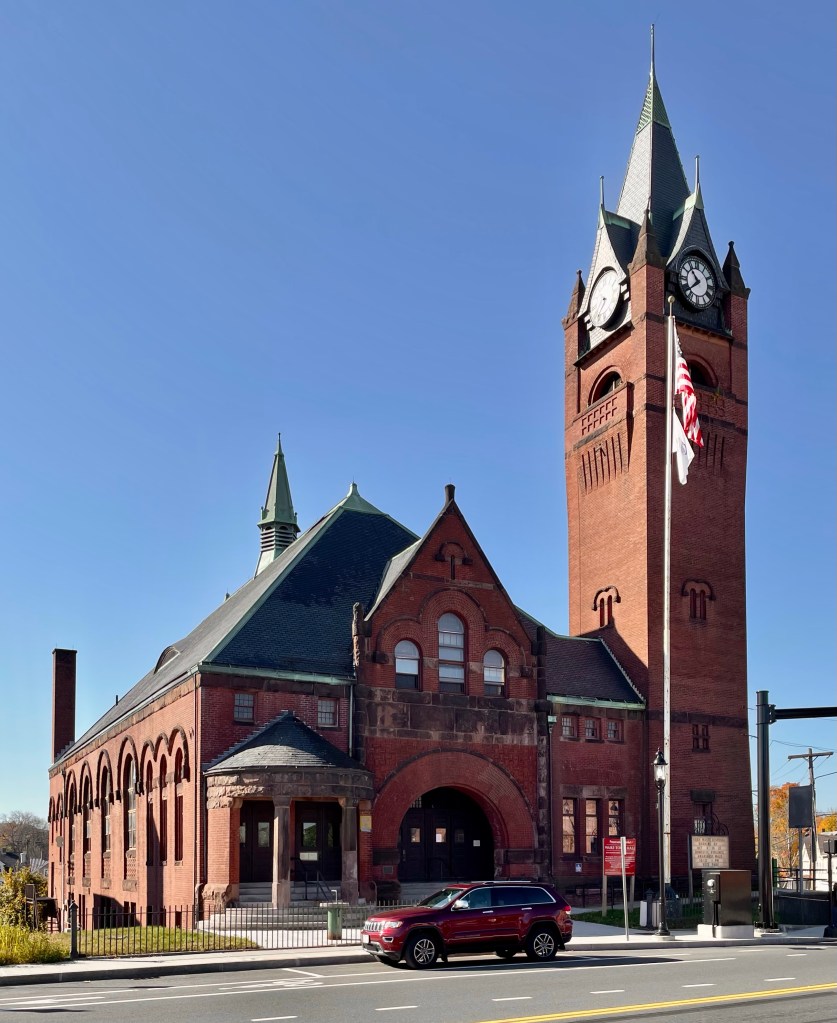
Chicopee City Hall // 1871

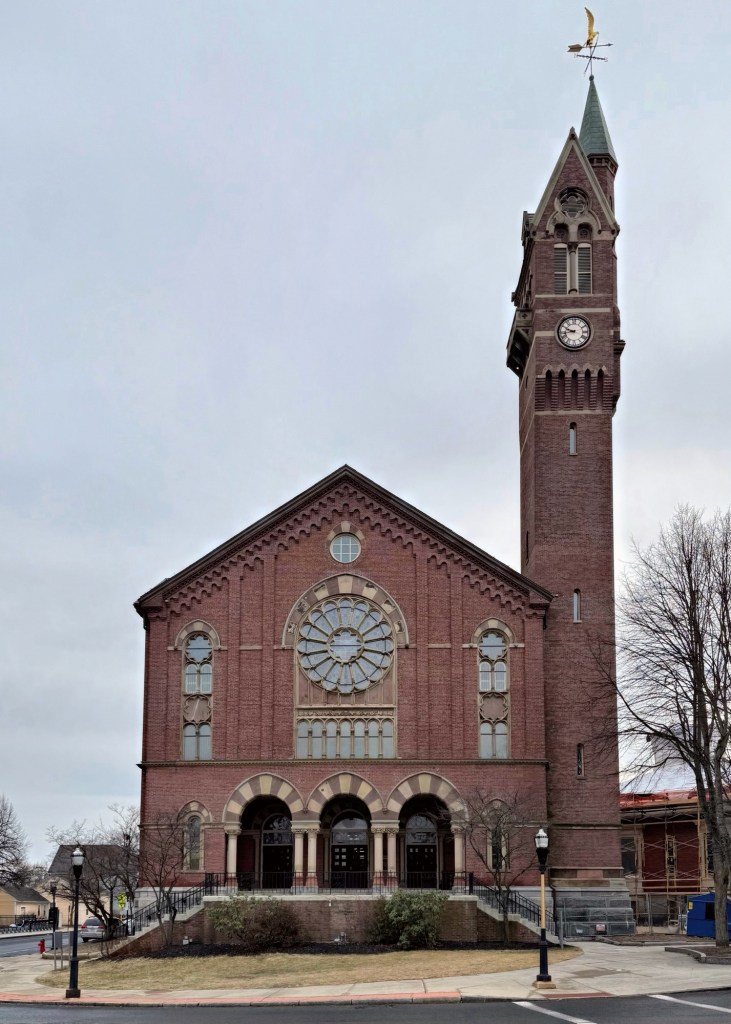
Chicopee, Massachusetts, was first settled in the early 17th century and incorporated as a town in 1848. Originally part of Springfield, Chicopee grew rapidly in the 19th century, fueled by industrialization and following immigrants arriving to the city to work in factories there. Many of these ethnic groups established cultural centers and built churches, creating the diverse and architecturally unique city we see today. Sadly, like many other 19th century industrial cities, many of the factories closed or relocated in the mid-late 20th century. While the loss of industry harmed the local economy, Chicopee is poised for growth and rebirth as the second largest city in Western Massachusetts, and anchored by its great architecture. The Chicopee City Hall, built in 1871, is one of the region’s finest buildings and one of a handful built in the Romanesque Revival style. The present building was constructed on land the City purchased in 1869 from the Ames Manufacturing Company, a major employer in town with mill buildings nearby along the river. Architect, Charles E. Parker of Boston, was hired to design the new building which is said to have been loosely modelled after the Palazzo Vecchio, the historic town hall of Florence, Italy. The City of Chicopee have been great stewards to their historic City Hall, undergoing numerous restoration projects in the past decades.

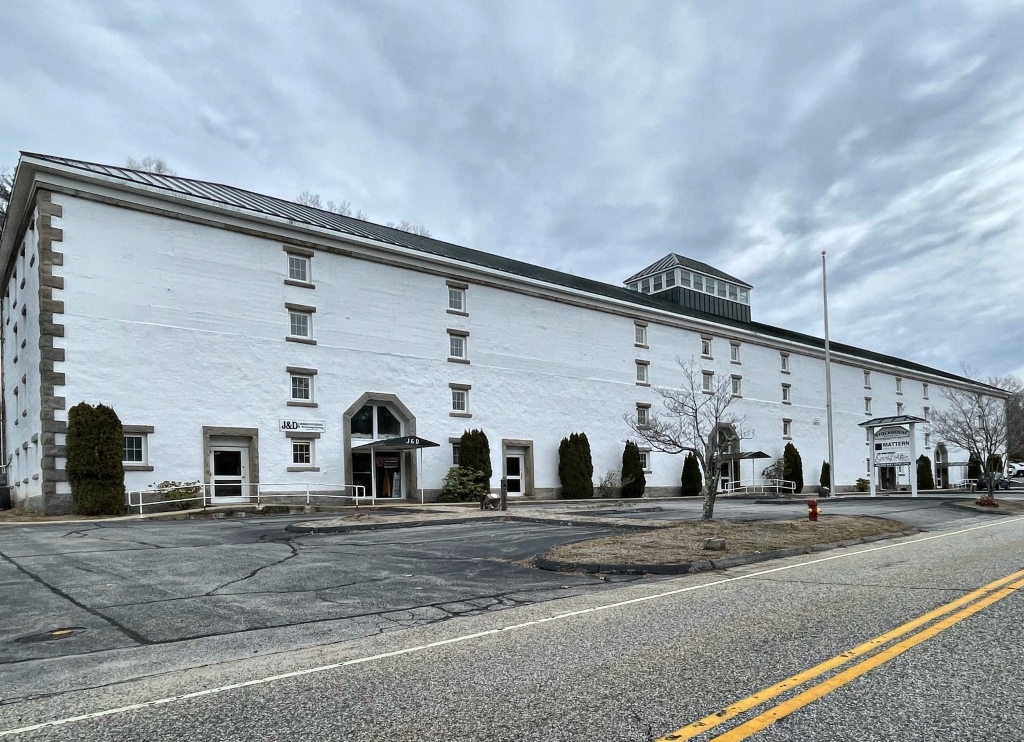
Baltic Mill Warehouse // c.1890

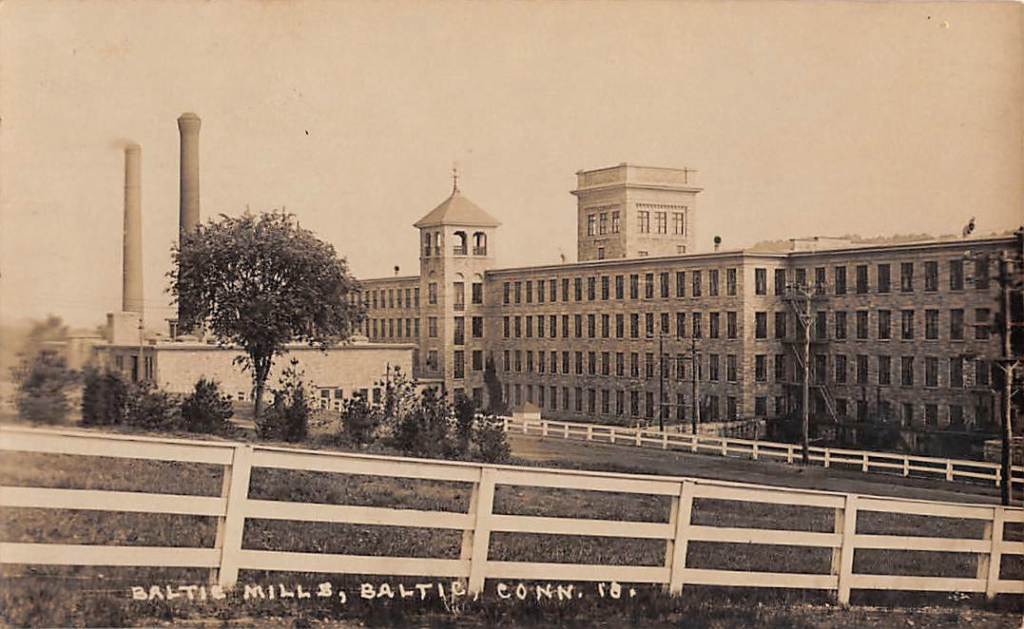
Situated along the Shetucket River in Sprague, Connecticut, lies the remains of what was once the nation’s largest textile mill. At its peak, over 1,000 employees operated 1,750 looms and 70,000 spindles to produce some of the country’s finest cotton. The Baltic Mill (as it became known) not only helped reshape Connecticut’s economic and cultural landscape, but its geographic one as well, giving rise to the founding of an entirely new village. The Baltic Mill did very well until the economic Panic of 1873 set in, decimating the company’s finances. The mill was forced to scale back their operations. Then, in 1877, a fire destroyed the interior of the mill, bringing an end to the complex for decades. At the turn of the 20th century, a businessman from Pawtucket, Rhode Island, named Frederick Sayles purchased the property with an eye toward revitalizing the local textile industry. He founded the Baltic Mills Company and set about making extensive repairs and upgrades to the property, including this c.1890 storage building for materials and finished textiles. Unfortunately for Sayles, the New England textile industry had already begun to decline and it wasn’t long before the company’s depleted finances forced Sayles to sell off much of its assets. The company did survive long enough to produce uniforms, parachutes, and life rafts for soldiers in World War II, but the mill’s operations ultimately came to a halt in 1966. The large 19th century mill would eventually be demolished, but this old Warehouse (a fraction of the size of the mill) is one of the last industrial pieces of the former sprawling complex and is now occupied by local businesses.

Otis Company Mill #3 // 1856

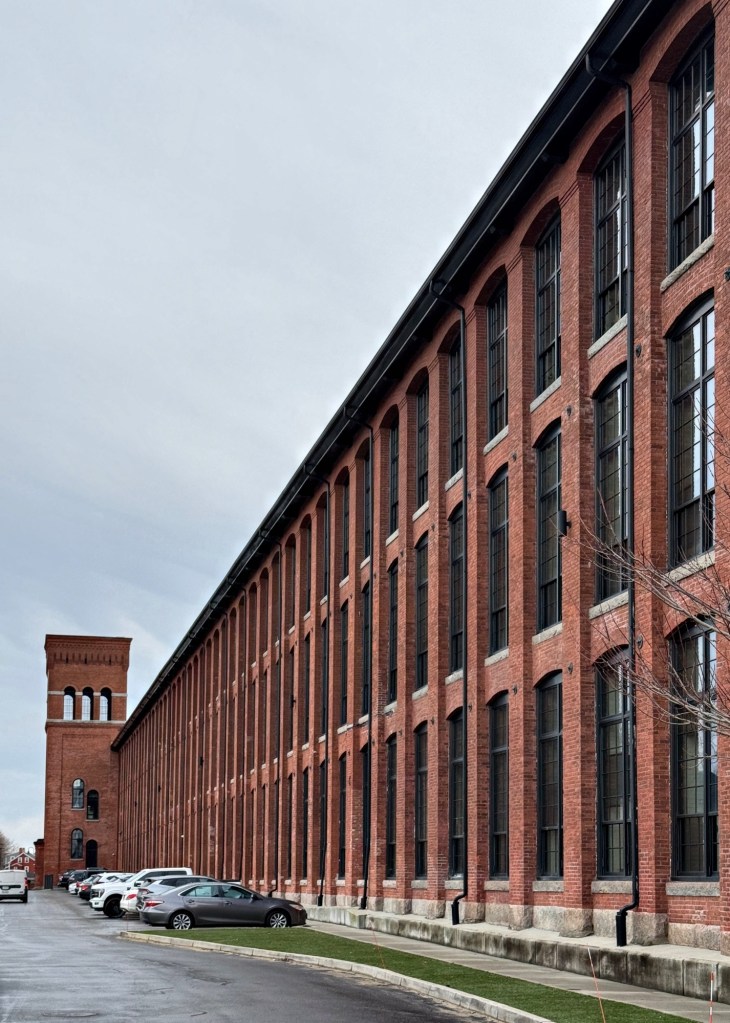
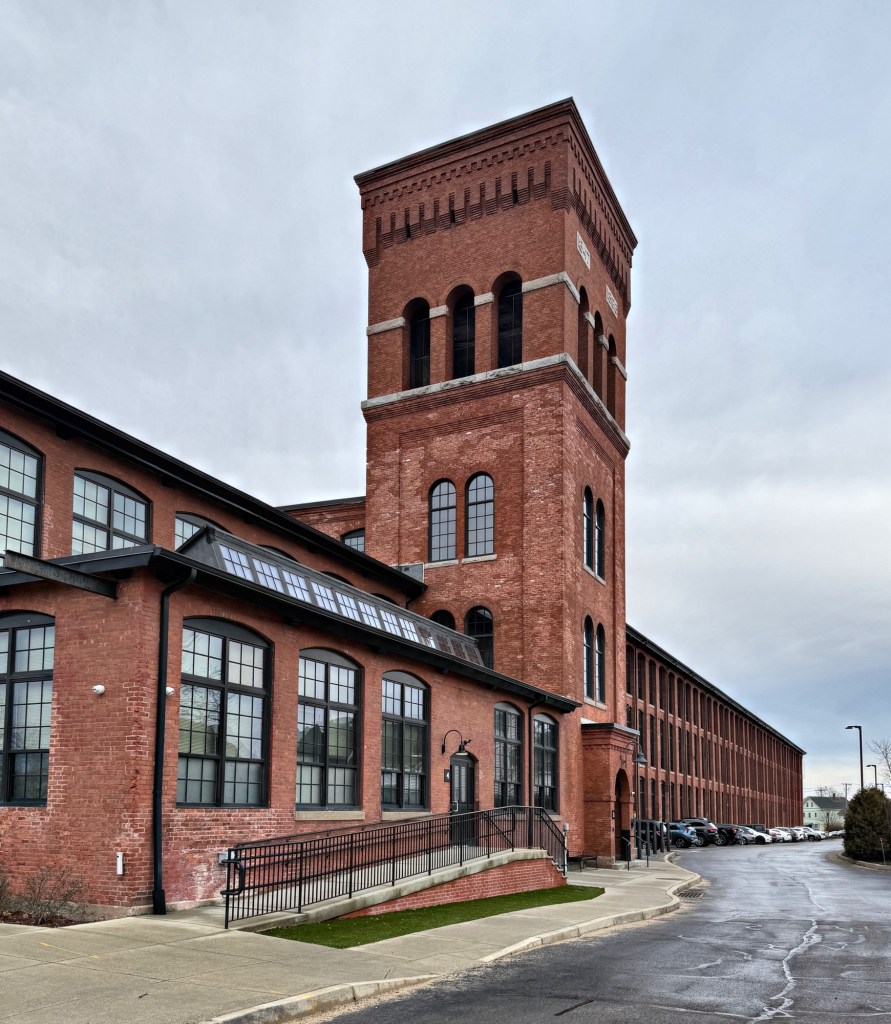
One of the later mill buildings constructed in the mid-19th century for the Otis Company is this brick building which contributes to the rich industrial heritage of the town. Built in at least three stages, this long industrial building probably grew from a middle section dating 1856, expanded in both directions over the next several decades and but was largely completed by 1869. The building was a major manufacturer, supplying thousands of jobs for the town until it closed after WWII. In 1945, the top two stories of this building along with their towers were removed in 1945, which echoes the history of many similar mills all over New England (but hey, at least this one is occupied today!)

Ware Town Hall // 1885

After learning a little about some of the buildings in Dorset, Vermont, which were saved and relocated to the town from land flooded for the Quabbin Reservoir, I wanted to visit one of the surviving towns there to see it for myself. I found myself in Ware, Massachusetts, a town with a history that parallels many in central and northern Massachusetts. The town was first settled by white European colonists by 1717, and incorporated in 1775. The town was named after the English town of Ware in Hertfordshire. The Town of Ware began as a sleepy farming town with inns and taverns dotting the landscape until industrial sites were developed on the banks of the Weir River. The post Civil War era (1860s–1900s) brought a new prosperity to the now established textile mill town. “Ware Factory Village” sprang up overnight and formed the basis for new growth and development, to the east of the former town center. From this, a new Town Hall was needed, and where better to locate it, than the economic and population center of town?! The Ware Town Hall was built in 1885-1886 from plans by the prominent Boston firm of Hartwell & Richardson. Sadly, a fire gutted much of the building in 1935, but the shell remains (though needing much repair). The town, like many former industrial centers, has struggled to re-invent itself, but a growing population is a great indicator of good things to come!