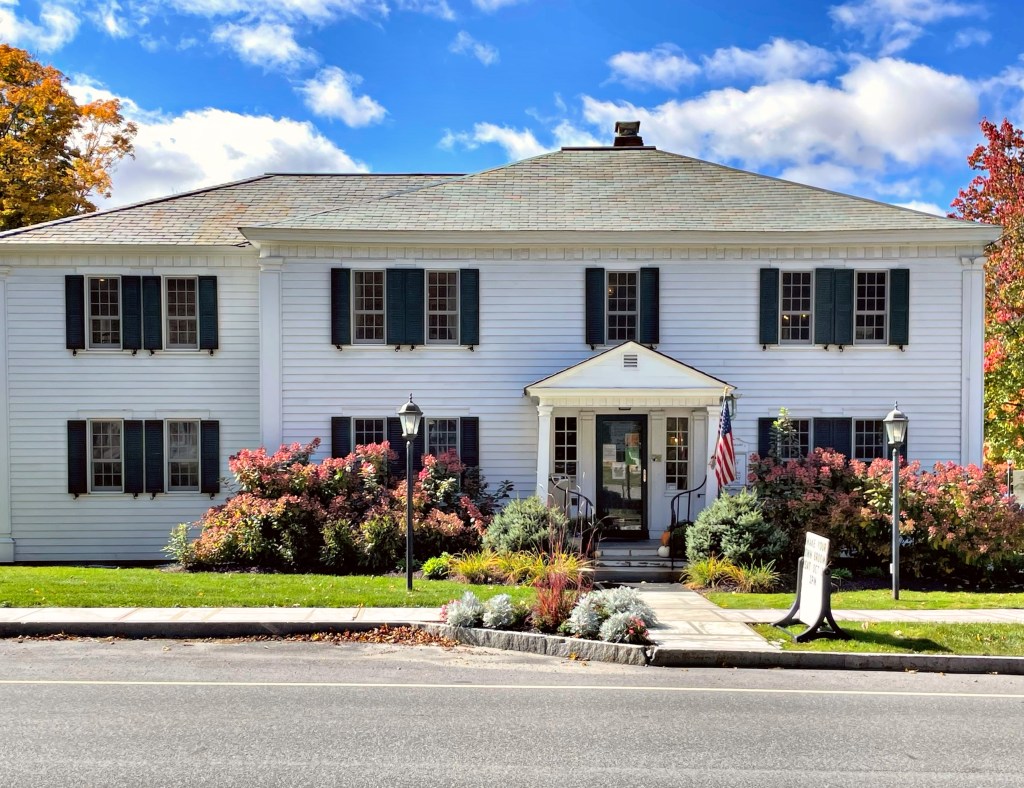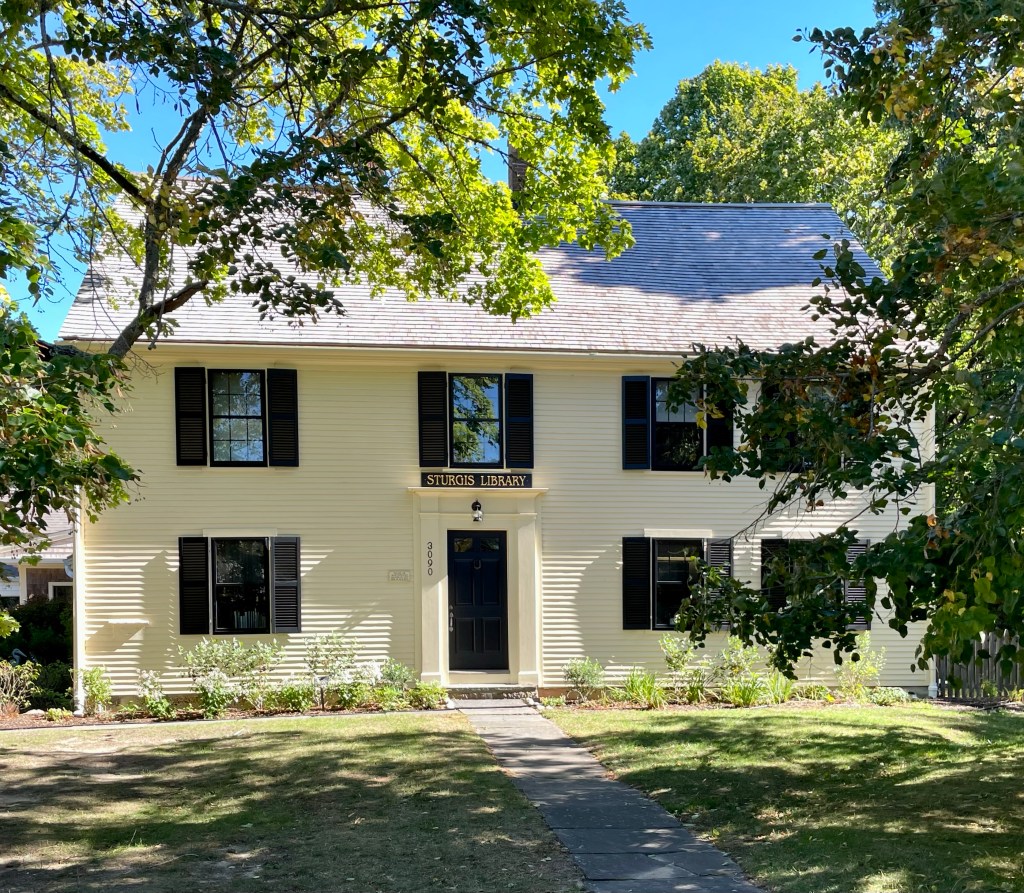
Gregg Free Library // 1907

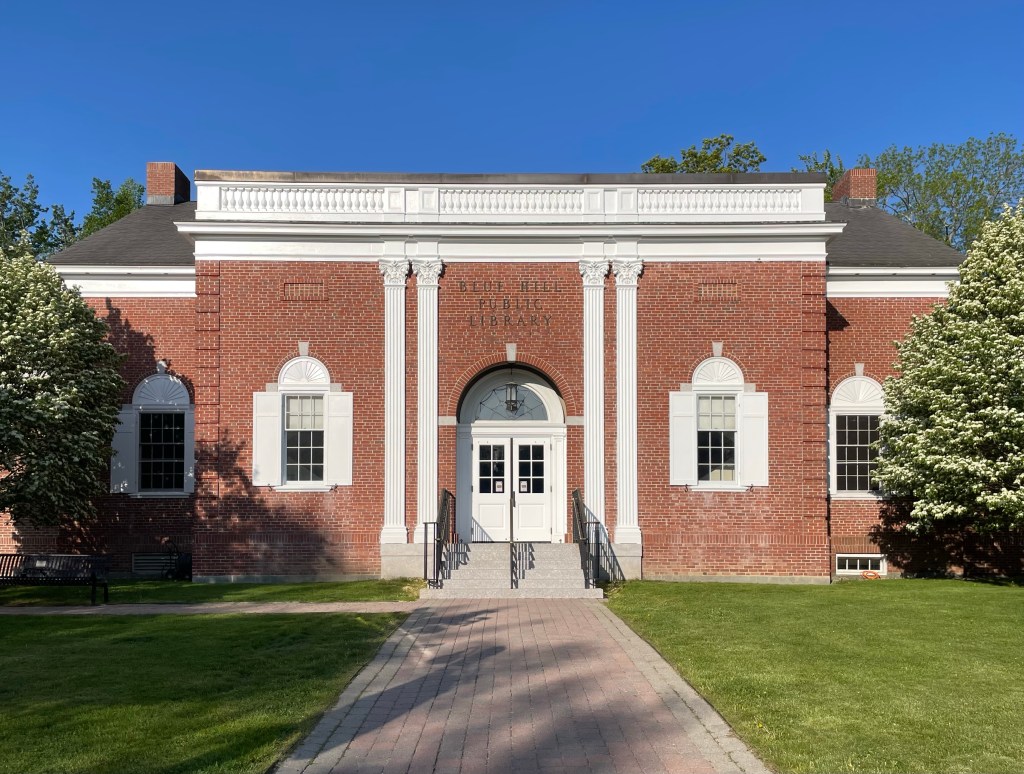
The Wilton Public and Gregg Free Library is the public library for the town of Wilton, New Hampshire and is among the town’s most grand architectural designs. The library was the gift of David Almus Gregg (1841-1928), a native of Wilton who owned a successful building parts business in Nashua manufacturing doors, window blinds, and window sashes with his father, David Sr., who lived in the home featured previously. Gregg was significantly involved in the design and construction of the building, providing the highest quality building materials and contractors to the project, which was estimated to cost $100,000 when completed in 1907. The architectural firm of McLean and Wright was commissioned to design the building, who completed it in the Classical Revival style, like many of their other library designs in New England.

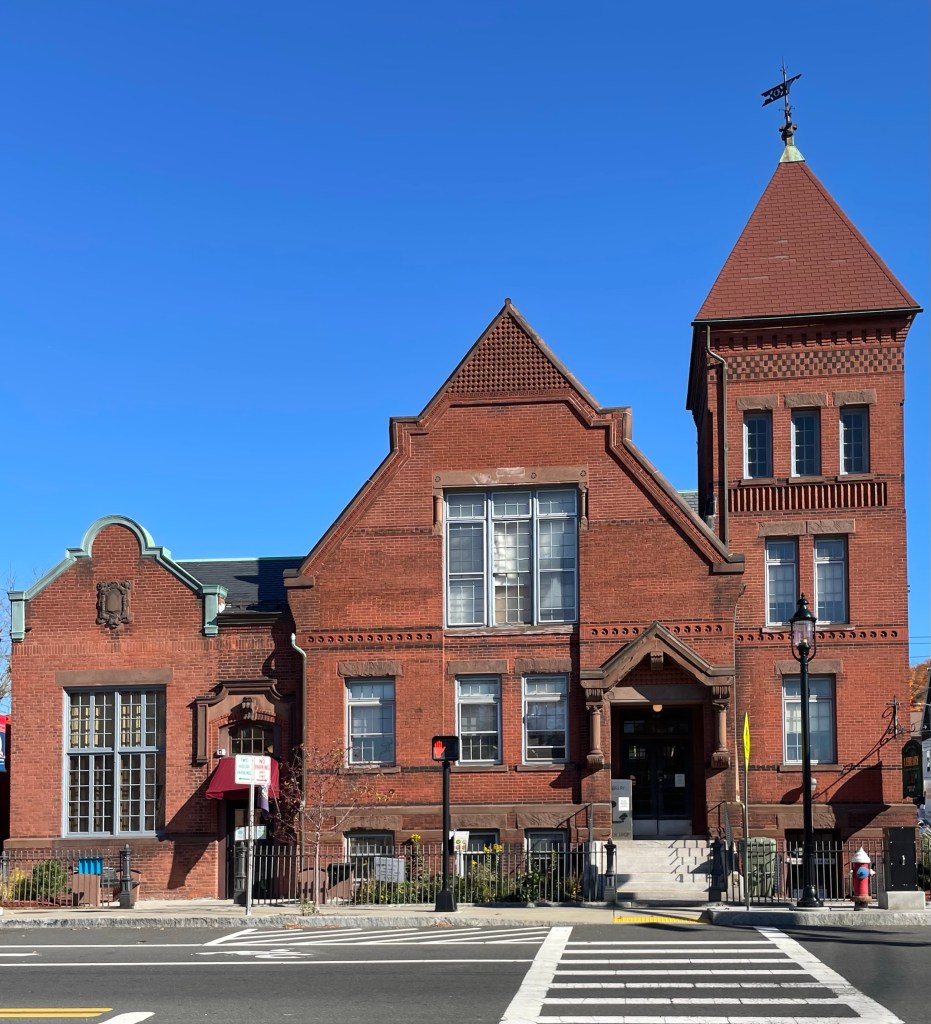
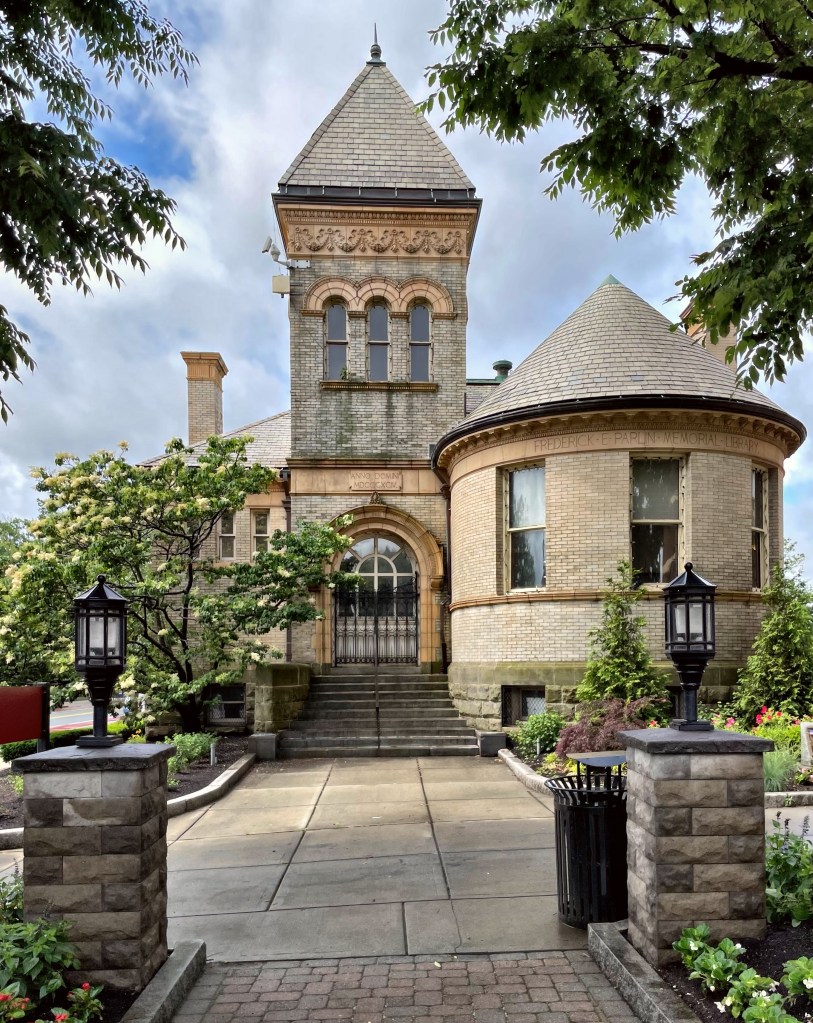
Frederick E. Parlin Memorial Library // 1894

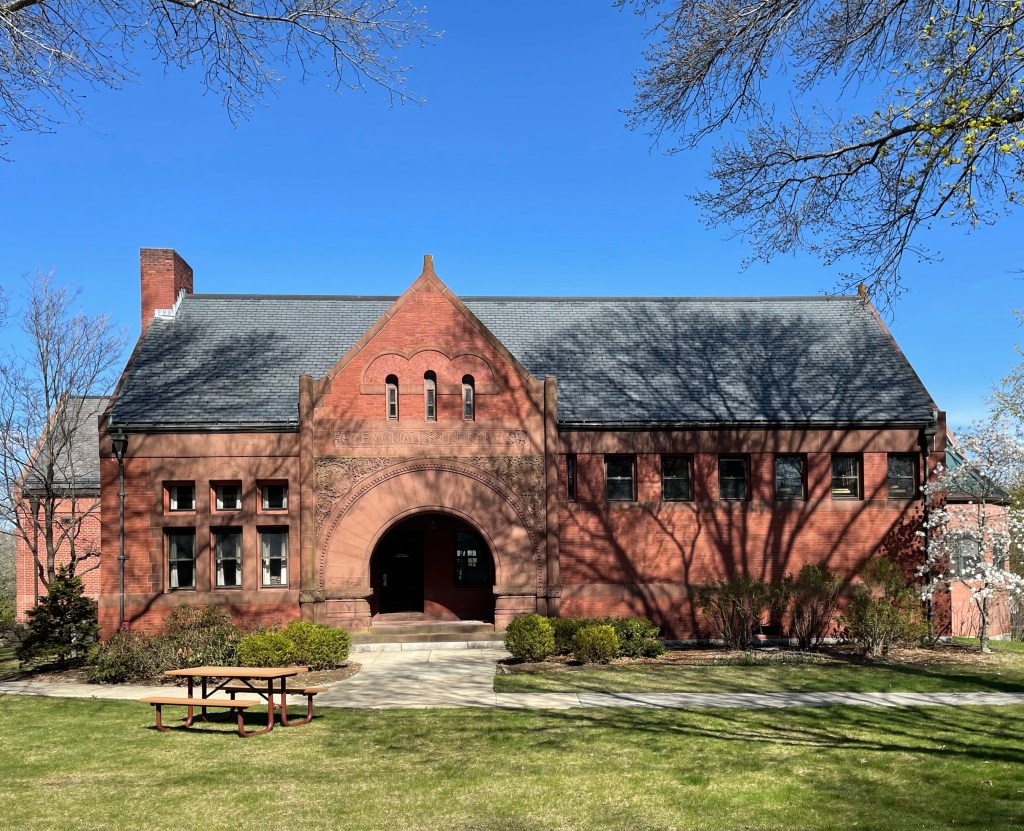
The Frederick E. Parlin Memorial Library is arguably the most architecturally significant building in the City of Everett, Massachusetts. Constructed of buff brick, sandstone and terracotta, it displays characteristics of the Richardsonian Romanesque style including the main entrance set within a recessed arch at the base of a square tower with arched openings. In 1892, Albert Norton Parlin, a local businessman, donated to the City of Everett the Pickering Estate, his birthplace and familial home, to be torn down and a library erected on the parcel in memory of his son, Frederick E. Parlin, who died in 1890 at the age of eighteen. Albert Parlin gave to the City an additional $5,000 to aid in the building of the Frederick E. Parlin Memorial Library. The original 1894 library as well as a 1911-1912 addition were designed by local architect John Calvin Spofford who positioned the building to face a small triangular park. By the 1940’s, the building was outgrown, but it wasn’t until 1982 that a plan was set in motion to renovate the original building and to construct an addition. Childs, Bertman, Tseckares was chosen to draw up the architectural plans, and ground was finally broken in the spring of 1990. With construction of the new addition, the building is almost three times its original size and handicapped accessible, all with an appropriate, Post-Modern design.

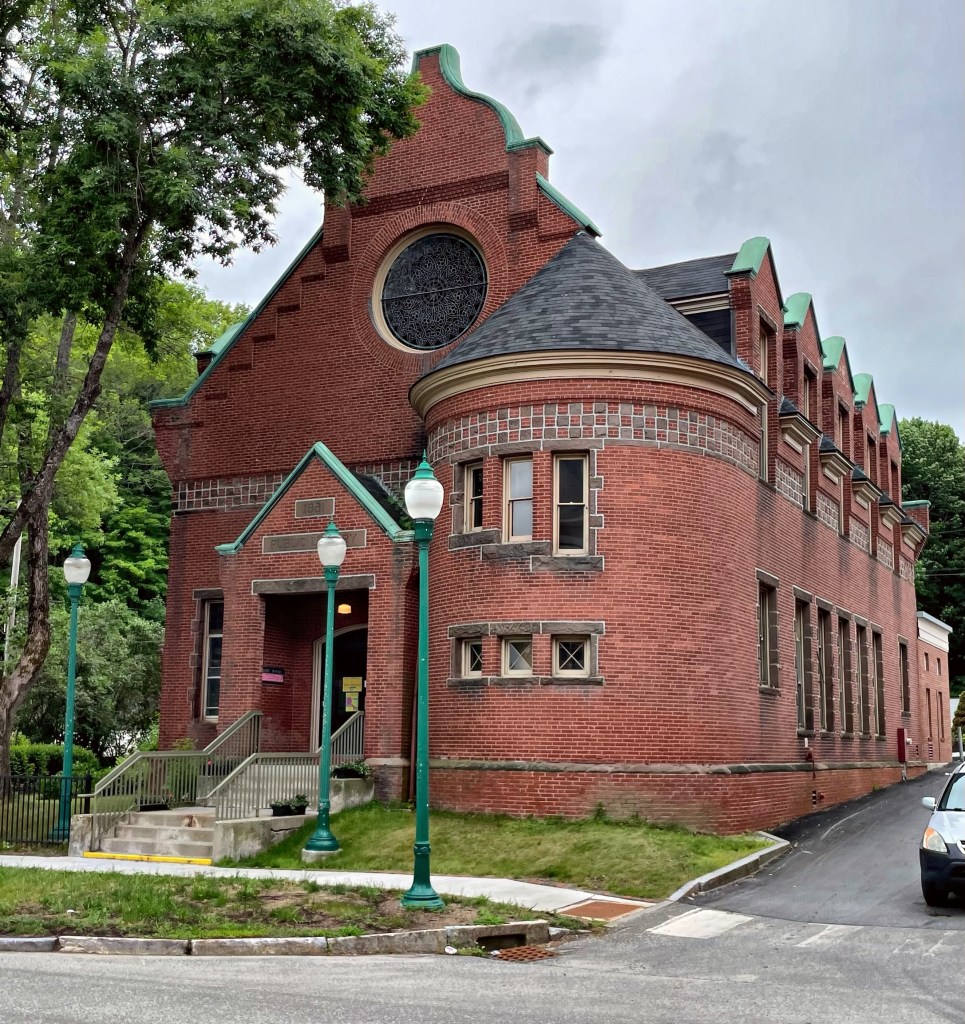
Knight Library // 1912

Prior to 1899, the Ladies Sewing Circle of Waterford carried on a lending library at the Ambrose Knight store, run by Sarah and Carrie Knight. Interest in the library grew and more room was needed for books. The Knight sisters began construction of a stone building, but both died only a few weeks apart in August 1911 during its construction. The building was completed in 1912. On Oct. 1, 1937 a fire destroyed parts of the library and other nearby buildings. In early 1938, the library’s second floor was reconstructed in the new Dutch Colonial style, giving the library a very different look.

Jesup Memorial Library // 1910

Bar Harbor’s first library is believed to have been organized in 1875 by a group of summer residents. This collection of 176 volumes was assembled for the use of Mt. Desert’s permanent residents and made available to them for two nights per week. A small frame library was built in 1877. In 1883, the growing collection was turned into a subscription library with borrowing privileges charged at the rate of $1.00 per family, but the fee was dropped three years later. By the late 19th century, the village’s population boomed, especially in the summer months when wealthy families descended upon the sleepy town every year to take in the cooler climate and sweeping scenery of Mount Desert Island. Acknowledging the need for a more suitable library, Maria Van Antwerp DeWitt Jesup, the widow of Morris K. Jesup (1830-1908), a New York financier and long-time summer resident of Bar Harbor, gifted the town funds to erect a new building as a memorial to her late husband. The Colonial Revival style library was designed by the New York firm of Delano & Aldrich, and exhibits a beautiful centered entrance recessed in a limestone arch.

Dr. Ellis House – Sippican Historical Society // 1839

This house was built in 1839 Dr. Walton Nye Ellis (1808-1867), who served as physician in Marion in the second quarter of the 19th century. Born in Wareham, Ellis moved to Marion, and married Susan Delano (1809-
1840) after her death, within the year, he married Lucy Clark Allen (1820-1885); he had a daughter with his first wife and four daughters and three sons with his second. By 1838, he purchased a lot in Sippican Village for the price was $225. In 1855, Dr. Ellis organized a meeting of prosperous Village men, mostly sea captains, with the purpose of planning a library for the town. They pooled resources and funded a library which was located in a large closet on the second floor of his home seen here. The library’s books could be borrowed for a few cents a week. Subsequent funding from Elizabeth Taber helped create the Taber Library just decades later. In the 1960s, the home was gifted to the Sippican Historical Society, who remain in the building to this day.

Elizabeth Taber Library // 1872

The first of many generous gifts by Elizabeth Taber to the town of Marion, Massachusetts was this gorgeous Italianate style library building. Elizabeth Taber (1791-1888) was educated in the Sippican Village School, immediately giving back, teaching school in Marion while still in her teens. At 33, she married Stephen Taber, a clockmaker, and they had three children, none living to adulthood. They eventually settled in New Bedford, where Stephen made much more money in his trade, paired with investments in whaling excursions leaving the town. In 1870, eight years after the death of her husband, Elizabeth Taber turned her attentions to engaging in projects for the benefit of her hometown, Marion. In 1870, she bequeathed over $20,000 for the design, construction and furnishing of a new library in town that would also house a natural history museum. The natural history museum component of the building had been eclipsed in importance by the library which was expanded by side wings during the mid-20th century. Encompassing a collection of rocks, minerals, stuffed birds and other curiosities, the second floor museum was designed to complement the first floor’s book-learning activities. By the late 1870s, the Taber Library and Natural History Museum had become a key component of the Tabor Academy campus, founded just years later.

Gardiner Public Library // 1881

Possibly my favorite building type, the local town library buildings of New England, always amaze me with their small scale, yet architectural variety and intrigue. The library in Gardiner, Maine is no exception! This library building was constructed in 1881 from plans by Henry Richards, who was actually born in town in 1848. Henry graduated from Harvard in 1869, and soon after, took a post-graduate course in architecture at MIT. After completing schooling, he was a draftsman with Ware and Van Brunt. Soon after, he was a draftsman with Peabody and Stearns from 1872 to 1876, and then practiced architecture briefly on his own in Boston. During this time he married Laura Elizabeth Howe, daughter of Samuel Gridley and Julia Ward Howe. They moved to Gardiner, Maine and settled in a Federal house (featured previously), to learn more about Laura Richards and their house, check out the last post. Henry lived to be 100 years old! The library building is Queen Anne and Romanesque in style with a round corner tower with conical roof, brownstone and brick construction, and a stained glass ocular window with ogee parapet at the gable end roof. The small local library was added onto numerous times to hold a growing collection which includes works from Laura E. Richards, and Edwin Arlington Robinson, both Pulitzer Prize winning authors who lived in town.

Langdon Library // 1892

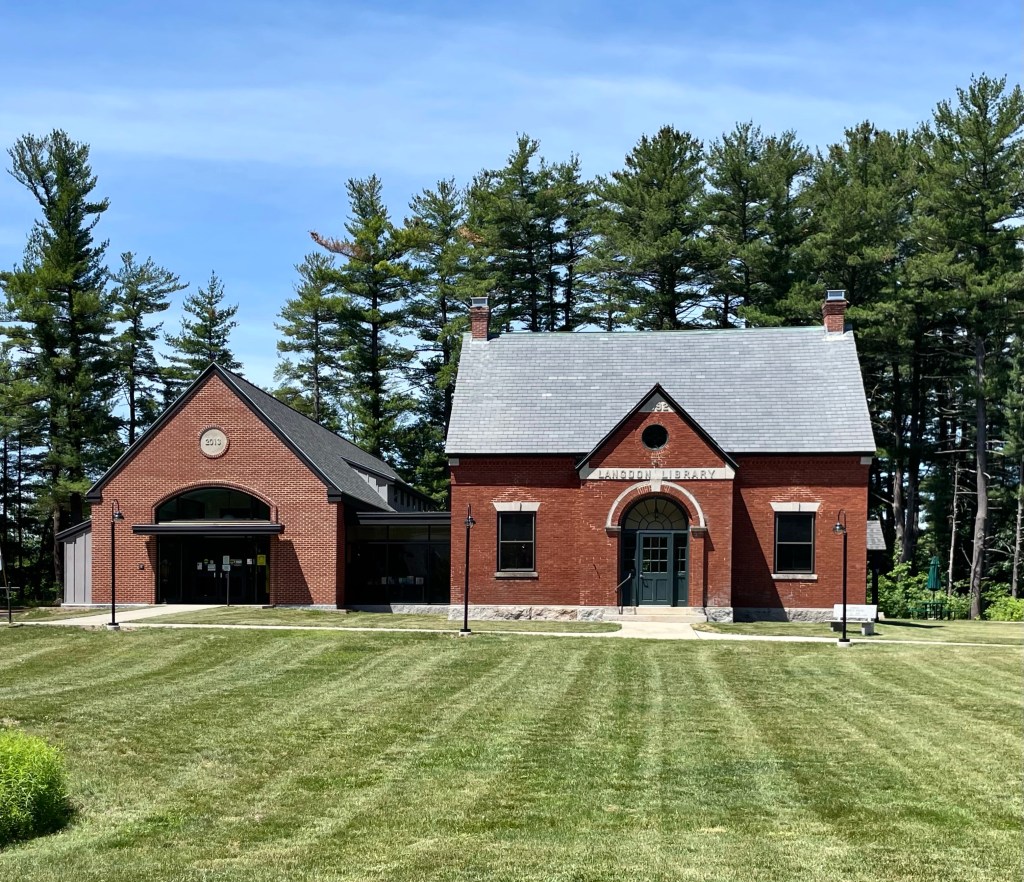
Langdon Library in Newington, NH, was established through the generosity of Woodbury Langdon of New York City, a summer resident of Fox Point in town. In 1892 Langdon offered to donate 2,000 books to the Town of Newington, if suitable provisions could be made for their care and circulation. The Town voted to erect a library at town meeting in 1892 and accepted the offer. Portsmouth architect William Allyn Ashe furnished designs for the building which reads as a pleasing, symmetrical Romanesque Revival building. The structure was outgrown and needed repairs in 2013, and hired the firm of Lavallee Brensinger Architects to oversee the redesign, which restored the 1892 building. The resulting project tripled the usable square footage of the library, and the new wing allows the library to remain quaint and the main focus.

Acton Memorial Library // 1889

In 1888, William Allan Wilde, a Boston publisher who grew up in Acton, purchased land on Main Street to be used as the site for a new memorial library, in “memory of those brave and patriotic men of Acton who so freely gave Time, Strength and Health, and many of them their Lives in the war of the Rebellion, 1861-65.” The former Fletcher Homestead which was located here, was moved to a nearby street. The Richardsonian Romanesque building was designed by the Boston architectural firm of Hartwell and Richardson. The building displays traditional Romanesque materials with its brick wall surfaces, brownstone and terra cotta trim and detailing, and slate roof. The large Syrian arched entry is a hallmark in the Richardsonian Romanesque style, which works extremely well with this design.

Gilbert A. Davis Memorial Library // 1899

Reading Vermont’s public library building was built in 1899, by local resident Gilbert A. Davis (1835-1919). The building’s funds were furnished by Mr. Davis in his life, likely inspired by Andrew Carnegie’s fund which had libraries built in towns all over the United States. Gilbert Davis worked as a lawyer in Woodstock before moving back to Reading, Vermont to run his own practice. The library he funded is Neo-Classical in design in the form of a Greek Cross with intersecting gable roofs and with a monumental portico in the Ionic Order on the front facade. The charming library building is well-preseved and an excellent example of Vermonts beautiful small-town libraries.

Fletcher Free Library // 1904

On July 14, 1873, Mrs. Mary L. Fletcher and her daughter, Miss Mary M. Fletcher, gave the city of Burlington, VT, $20,000 for the founding of the Fletcher Free Library. Half of this sum was to be spent on books; the other half was used to start an endowment for the library. By 1901, the library had outgrown its location in the old City Hall building. In the same year, Andrew Carnegie made a gift of $50,000 for the construction of a new library. In 1902, an architectural competition was created with entries from Boston, New York, Buffalo, Montpelier, Vermont, and Lowell, Massachusetts, but a young Burlington architect, Walter R. B. Willcox won the commission. Willcox designed the new ornate library that year and in August, 1904, the new library was dedicated and opened for business. In the early to mid-1970’s there was some pressure from the citizenry to demolish the Carnegie building and rebuild on the site, which coincided with Burlington’s large urban renewal policies in the downtown area. In response, a group of Burlington residents formed The Committee to Save the Fletcher Free Library Building. A petition was circulated, and as a result, the building was added to the National Register of Historic Places in 1974. In 1977, a grant of $234,000 made possible the stabilization and external repair of the building, and later an addition was constructed, to allow the historic library to meet the needs of the much larger city.

Shedd Free Library // 1881

Aren’t tiny old libraries just the best?!

Located in Washington, NH, the Shedd Free Library is the only Victorian Gothic building in town, and packs a punch for its small size. The library was named for Sarah Shedd, a Washington teacher and poet who went to work in the cotton mills of Lowell, Massachusetts to support her family and educate her siblings. When she died in 1867 she bequeathed $2,500 to her hometown to establish a free public library, an amazing gift! The gift did not appear to be enough as nothing was built until 1881, after Boston architect S. S. Woodcock was selected by Luman T. Jefts, a wealthy shoe manufacturer in Massachusetts, to design the library after a gift to his hometown.

Richards Free Library // 1899

Designed by Boston architect, James Templeton Kelley, the Richards Free Library (originally the Seth Richards House) is an outstanding example of the Colonial Revival style, in a region where such expressions of opulence are relatively rare. Located on Main Street in Newport, NH, the house was built during a period of great prosperity by one of Newport’s wealthiest citizens. Richards was one of the few in the area able to afford the services of a metropolitan architect for his own home. The family occupied the home until the 1960s when Louise Richards Rollins, offered the family home on Main Street for the to the town for use as a library in 1962. The first floor rooms were renovated and equipped as a library and Ms. Rollins continued to live on the second floor of the library until her death.

Pequot Library // 1894

The Pequot Library in Southport, Connecticut was founded in 1889 by Virginia Marquand Monroe and her husband Elbert B. Monroe. The library, designed by noted New York City architect Robert H. Robertson, opened to the public in March 1894. The building is Romanesque Revival in style in a granite sandstone construction. There is an expansive roof area topped with red tile and hipped dormers; an arcaded entrance porch with three arched openings serves as the focal point of the front facade. It was Mrs. Monroe’s intention that Pequot be as “free as air to all”, which it remains as to this day.

Abbott Memorial Library // 1905

Gifted to the town of Pomfret by Ira Abbott, the Abbott Memorial Library is one of the most stunning little libraries in the State of Vermont. Given to his hometown as a memorial to his parents by Ira Abbott, who was at that time a State Supreme Court justice in the territory of New Mexico. Its architect, Henry M. Francis, used diverse materials — brick, granite, fieldstone, red birch, and pre-stressed concrete, to design the eclectic building. Capped with a red slate roof with terra cotta ridge tiles, the building stands out as one of the most unique buildings in the state and has been extremely well-maintained through its public-privately funded Commission.