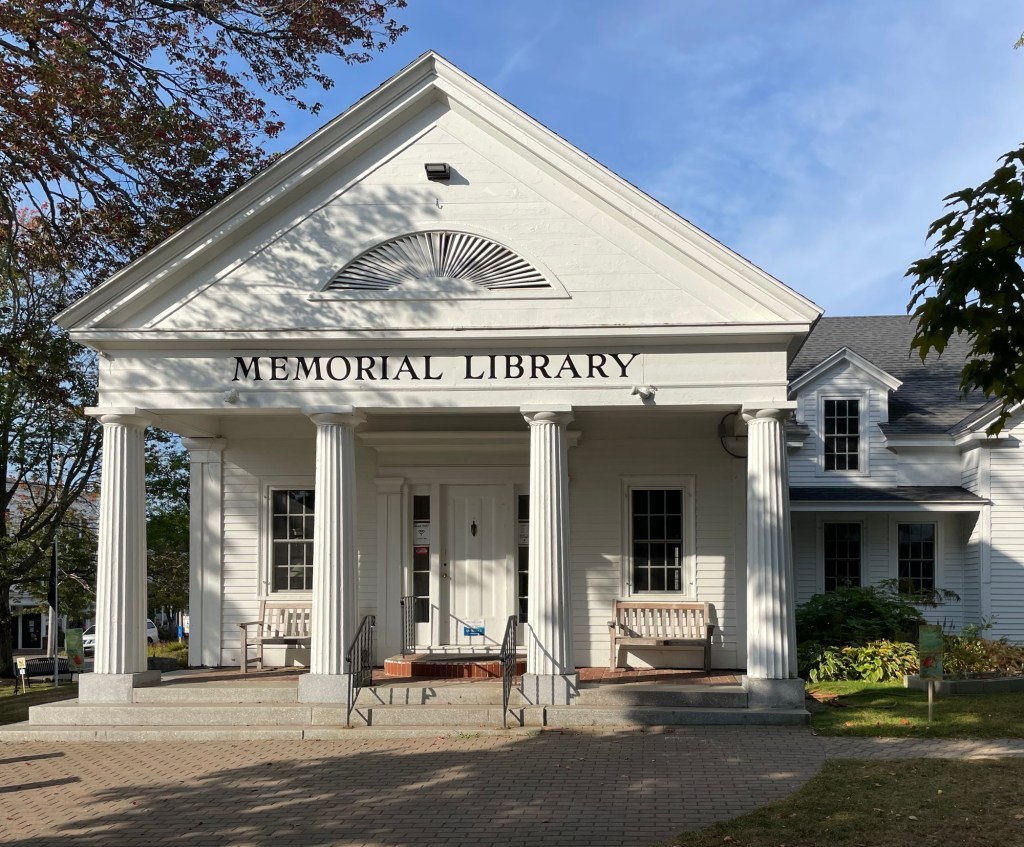
In 1906, the citizens of Boothbay Harbor voted to establish a free public library for all to enjoy. In 1923, the need for more library space, along with a desire for a World War I Memorial, led to the approval of a bond for the purchase of a 1842 Greek Revival style house on Oak Street. The building was remodelled for use as a library by the Boston architect William Stanley Parker, and was enlarged in 1966 to a design by Parker’s son, Stanley Jr. The temple-front, Neo-Classical entry was added at this time and harkens back to the original classical style Greek Revival home, while clearly showing a grander scale seen in the 20th century.
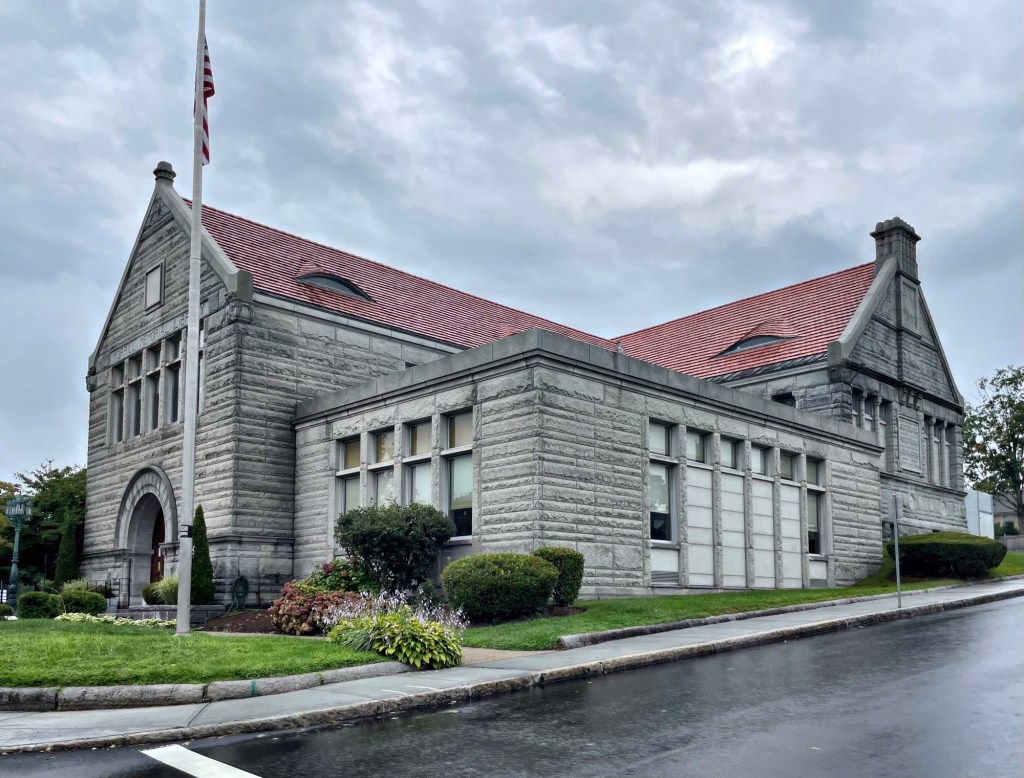
One of the best parts about New England is the diversity of the architecture and history of local public libraries. The Morrill Memorial Library in Norwood, Massachusetts, was erected by George H. Morrill in memory of his daughter Sarah Bond Morrill, who apparently died in 1895 of Typhoid Fever at the age of 22. George Morrill made his fortune as one of the largest producers of printing inks in America. The business was founded by Samuel Morrill, father of George H. Morrill in 1845 in Andover, but in 1856, he moved the works to South Dedham (present-day Norwood). The company grew rapidly and factories were built in Norwood and expanded to meet increasing operations. Mr. Morrill built a massive estate in Norwood (no longer extant) and also houses for his family members nearby to create a small enclave for the family. One of the lots on Walpole Street was utilized for a memorial library in honor of his late daughter. Architect Joseph Neal, who originally worked for Shepley, Rutan & Coolidge in Boston, designed the Richardsonian Romanesque library constructed of rough-faced granite blocks with a red terracotta tile roof above. The main entrance was deeply recessed within a great Assyrian arch typical of an arch-type that was a hallmark of the public and ecclesiastical buildings of Boston architect Henry Hobson Richardson during the 1870’s and 1880’s, but has since been enclosed by a vestibule, somewhat diminishing the original entry. The library was originally cruciform in plan but one-story additions constructed in the 1960s, on either side of the original facade have altered its original volume, but at least they are of a similar material. The library is one of the more unique in the Boston area and a testament to a father’s love to their children.
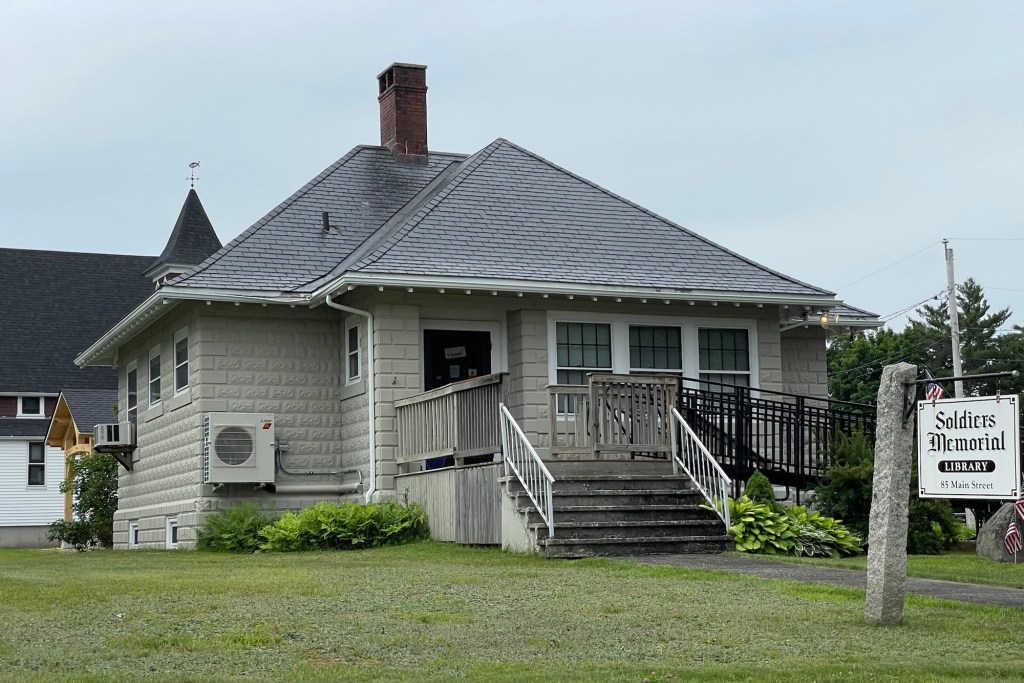
Located on a slight rise above Main Street and across from the sprawling Hiram Village Cemetery, this one-story library with walls of textured concrete blocks was dedicated in August of 1915 and has been a center for cultural activities in the town of Hiram, Maine, since that time. The Soldier’s Memorial Library was built with funds provided largely by Virginia Barker Jordan, a granddaughter of local businessman Benjamin Barker. Also instrumental in organizing Hiram’s first free public library was Llewellyn A. Wadsworth, local poet and cousin of Henry Wadsworth Longfellow. Beyond the unique use of concrete block construction for a library, other interesting exterior architectural features include the wide-flaring eaves with exposed rafters and the bands of windows on the first story walls, which hint of the Arts and Crafts/Bungalow styles. The library building was designed by Boston architects Robert Wambolt and Amos A. Lawrence.
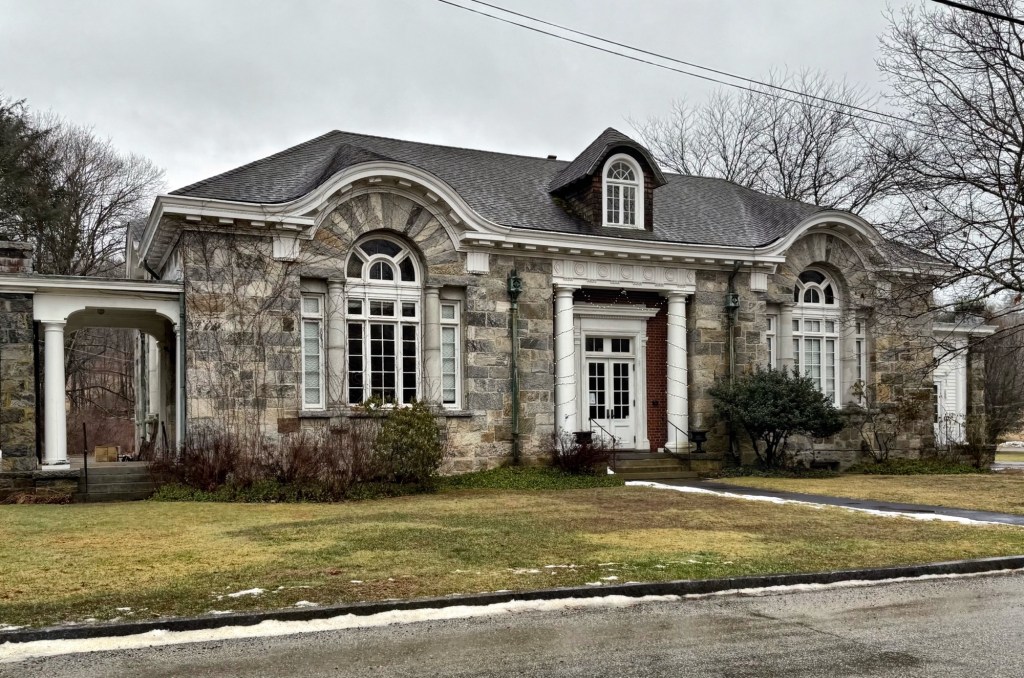
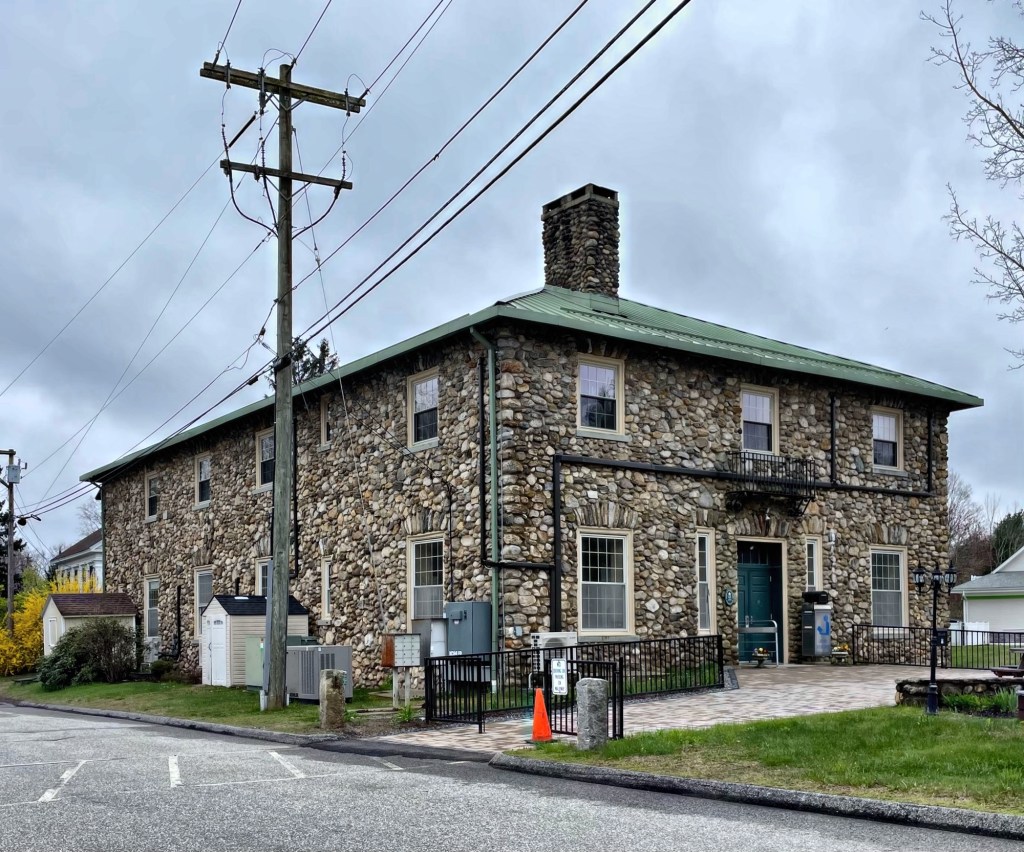
In the 1840s, Archibald Babcock (1780-1862) from Ashford, Connecticut, went west to engage in the California Gold Rush to seek his fortune. He did well and upon his return, moved to Charlestown, Massachusetts and began purchasing property for redevelopment. Upon his death in 1862, Mr. Babcock bequeathed $3,000 to the Town of Ashford start a “free” library there. For the next 60 years the library was located in a variety of private homes and country stores in town until the 1920s when this stone structure was built to house the town hall and library. Construction was made possible by a gift from Charles Knowlton, whose family had lived in the area since the 18th century. When built, it featured a number of modern innovations, including electrical service (generated on site), and steam heat. In addition to town offices and the library, the building also has an auditorium which is used for town meetings. Architect Herbert Loud furnished plans for the building which is rustic Arts and Crafts in style with randomly laid fieldstone walls with wide mortared joints. The roof eaves show exposed rafter tails below the shallow hipped roof.
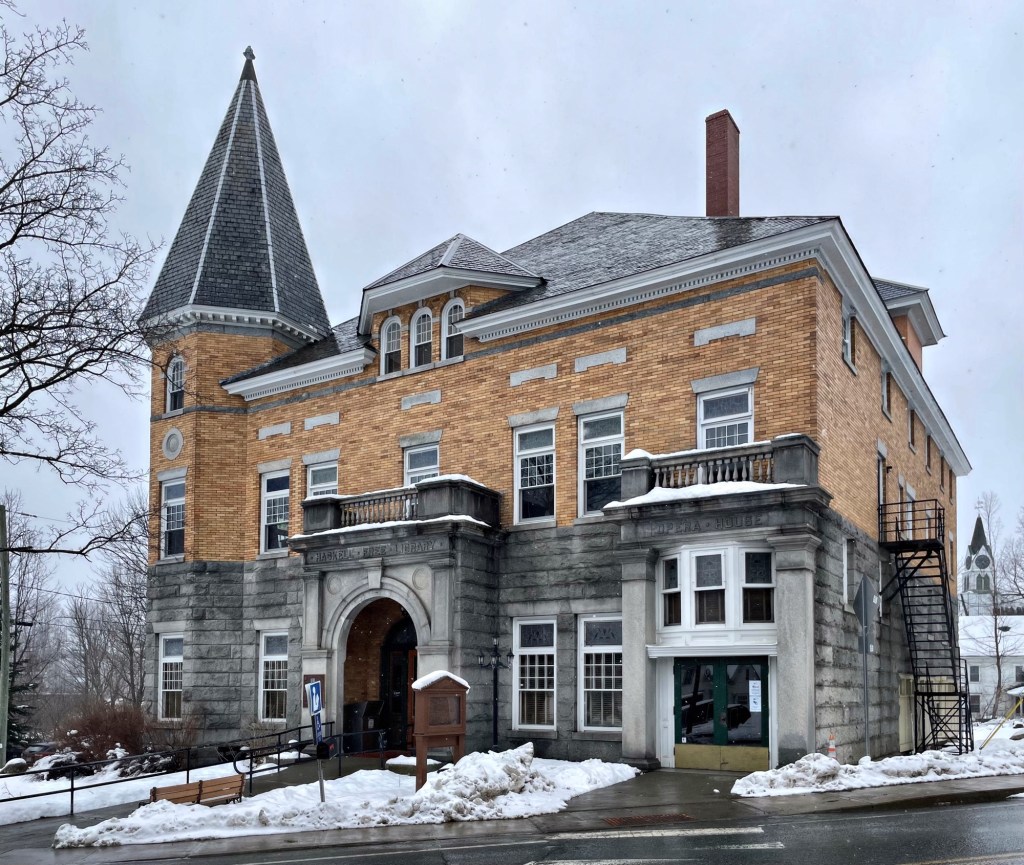
How many buildings do you know of that straddle two countries?! Well, here is one of the most iconic buildings in Vermont, the Haskell Free Library and Opera House of Derby. The building was gifted to the villages of Derby Line, Vermont and Rock Island, Quebec, by Martha Stewart Haskell and her son, Horace Stewart Haskell, who wanted to leave their mark on the town. The building was designed by James Ball of Rock Island, Quebec and is a high-style structure comprised of both a library and opera house for residents. Designed in a eclectic mix of Romanesque Revival and Classical Revival, there is a lot to look at from both countries! Some of the outstanding features of the building include the structural and ornamental use of granite, stained glass windows imported from Scotland, ornate fireplaces and rich woodworking on the library interior, and one of the most elaborate opera house interiors in a completely preserved condition in Vermont.
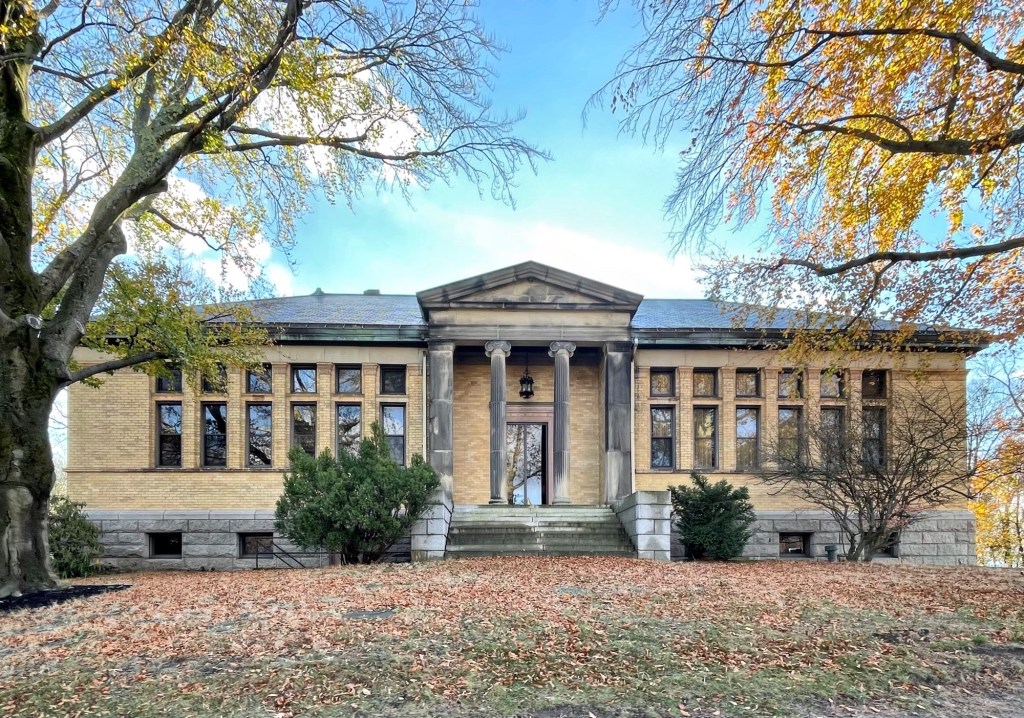
The Colonial Revival style Weare Public Library was built in 1926, being the second purpose-built library building for the town of Weare, New Hampshire. After the Neo-Classical style Stone Memorial Building was taken over as town offices following a fire of the old town hall, local resident Eben Paige saw the need for a new designated library building. Upon his death in 1923, he left his entire estate, over $30,000, to the town to build a new free library. The Boston architectural firm of Kreider and Peterson were selected to design the building, which is still in use today.
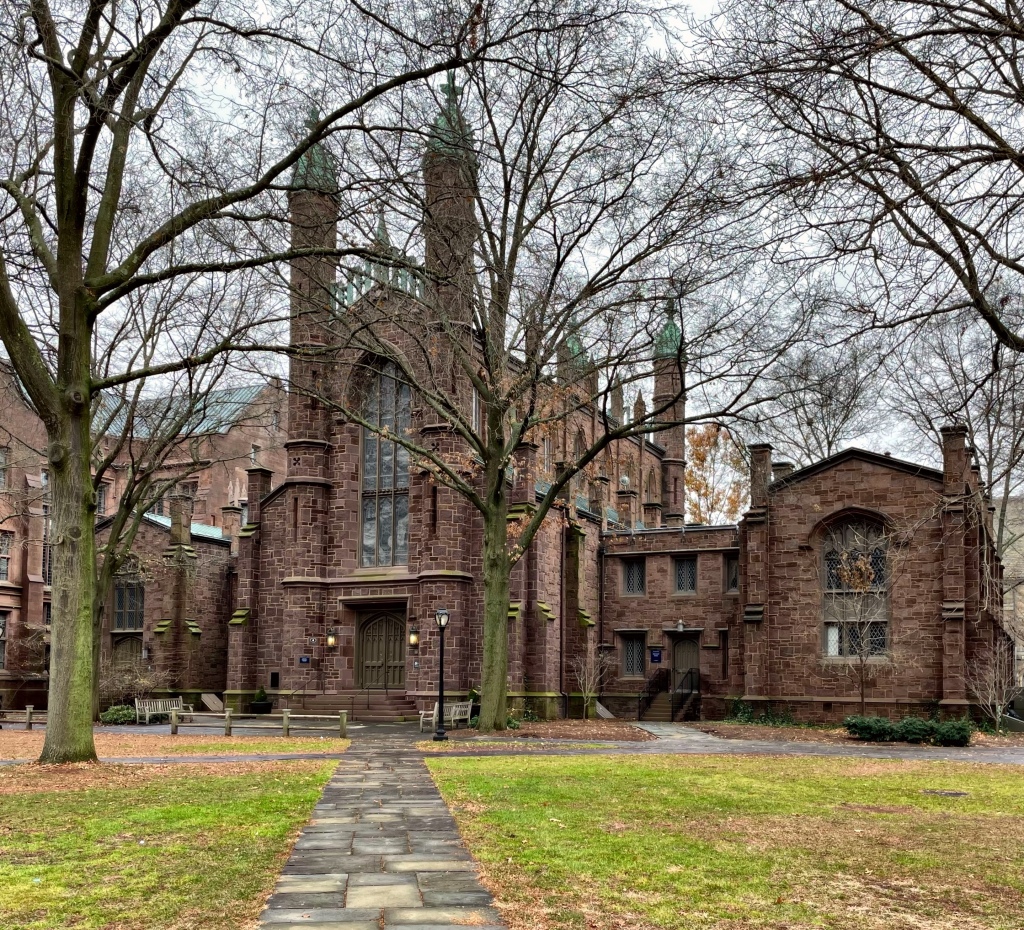
One of the most architecturally significant college buildings in the United States, Dwight Hall was designed to house the growing book collection of Yale College as its library. The former Yale College Library, now Dwight Hall, represents a significant shift in Yale’s campus architecture from Georgian and Federal brick buildings to the Gothic mode which the campus is largely known for today. Dwight Hall was designed by local architect Henry Austin with the guidance of esteemed architects Ithiel Town and Alexander Jackson Davis, both experts in early high-style Gothic buildings in America. The design, to me, resembles the 1443 King’s College Chapel in Cambridge, England. The structure is constructed of brownstone from Portland, Connecticut, and it is composed of a central block with two smaller flanking wings on either side connected by smaller linking spaces. At the yard facade, two octagonal towers with domed copper roofs rise, flanking a large, pointed lancet arch window that extends above the doorway. The library was outgrown fairly quickly, necessitating an annex next door and eventually collections were transferred to Sterling Memorial Library in 1930, the Old Library was converted to a chapel and community service building and is known as Dwight Hall.
Every village needs a library, and East Blue Hill is no different! Without easy access to the main Blue Hill library, a group of “willing workers” amassed a collection of books with the hopes to donate to a future village library organization. A campaign to build the present building began in 1914 with the acquisition of land adjacent to the village post office, with major fundraising undertaken in 1917. The building, completed in 1920, was designed by John W. Merrow, a New York City theatrical architect and is an uncommon example of a small, Arts and Crafts style library in the state of Maine.
Some small town libraries really pack an architectural punch! Blue Hill had long had a public library building, which eventually outgrew its limited space in the 1895 Town Hall building. During the mid-late 1930s, in the depths of the Great Depression, plans began for a new library. Adelaide Pearson, who had moved to Blue Hill in 1928, took on the formidable task. She was described as “a small woman who got things done” and had a vision for a library that was an integral part of the community, serving more than as a place to store and retrieve books. To fulfill that dream, she organized a fundraising campaign to buy a vacant lot in town. Local pledges came in ranging from 25 cents to “one dollar or a day’s work.” With the help of librarian Anne Hinckley, Adelaide Pearson petitioned the federal government for funds from the Public Works Administration, part of the New Deal program. At last, in March of 1940, the Colonial Revival style library building designed by Bunker and Savage Architects of Augusta opened its doors. The library has been a centerpiece of life in the coastal town of Blue Hill ever since.
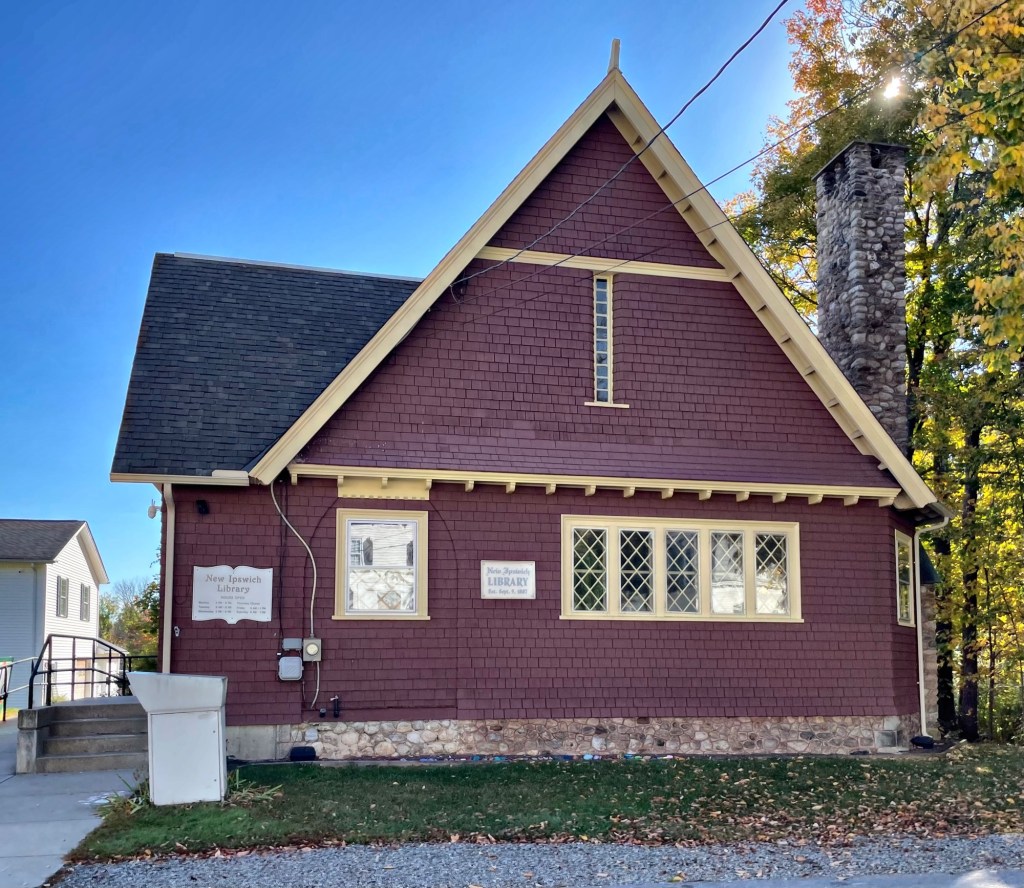
Nothing screams Maine architecture like weathered cedar shingles. The Sedgwick Public Library on Main Street was built in the early 20th century as a small village library to serve the small and seasonal population of the coastal town. The building is Craftsman in style in almost every feature. A broad hipped roof terminates with exposed rafters at the eaves, tuscan columns at the entry support the projecting portico, and a rubblestone foundation continues the composition of natural materials.
This 1840s Greek Revival home turned library, sits on the main street in the charming rural town of Moretown, Vermont. The quaint village never had a public library, but that changed starting in 1904, when residents and the town established a fund for purchasing books for the town’s citizens. In 1923, the library trustees purchased this residence which would serve as a stand-alone library for the village. Resident Lilla Haylett was instrumental in the accession and conversion of the home for use as a library from the estate of Ellen J. Palmer, who lived there until her death in 1923. The opening and celebration was short-lived however, as in 1927, elevated levels of the Mad River flooded much of the town. Water levels were well over the first floor of the building and nearly all books were lost. The Moretown Memorial Library was nearly lost, but the town rebuilt over years. The library remains today as a testament to the desire for learning and it serves as a landmark for the charming rural village.
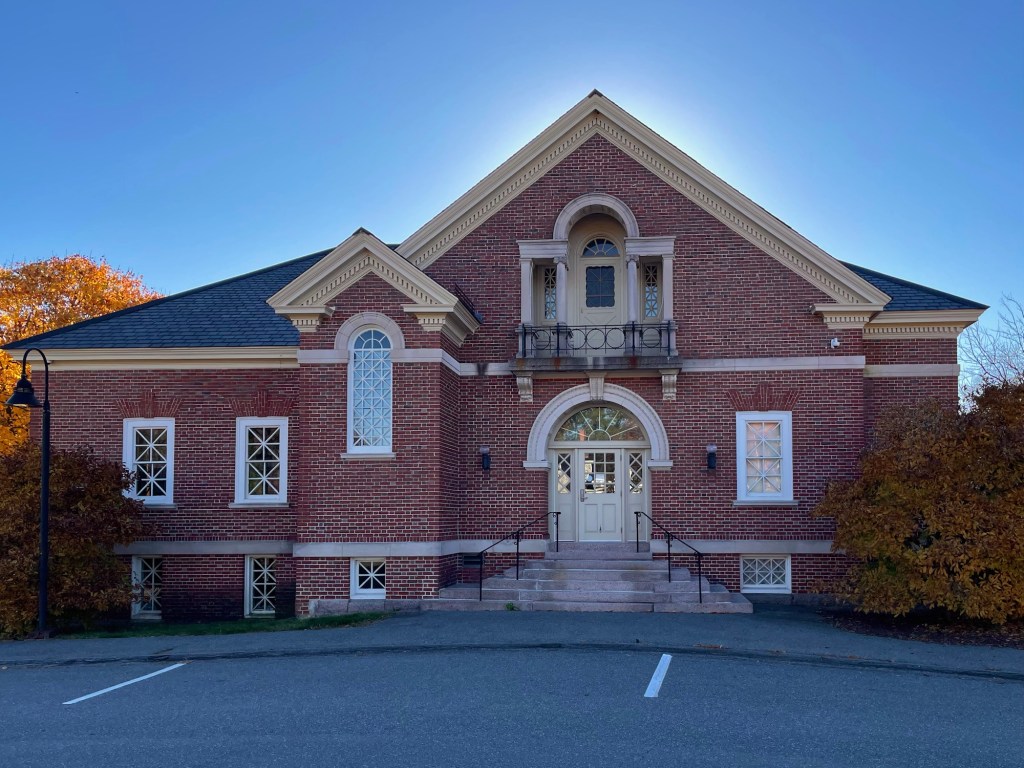
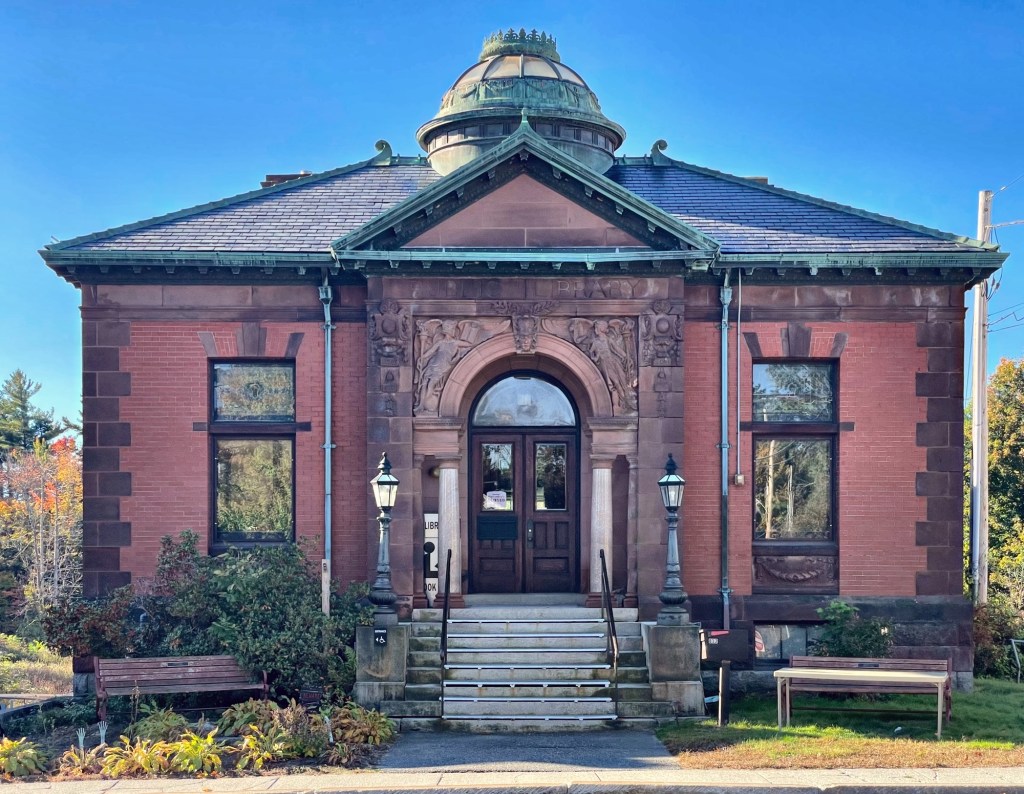
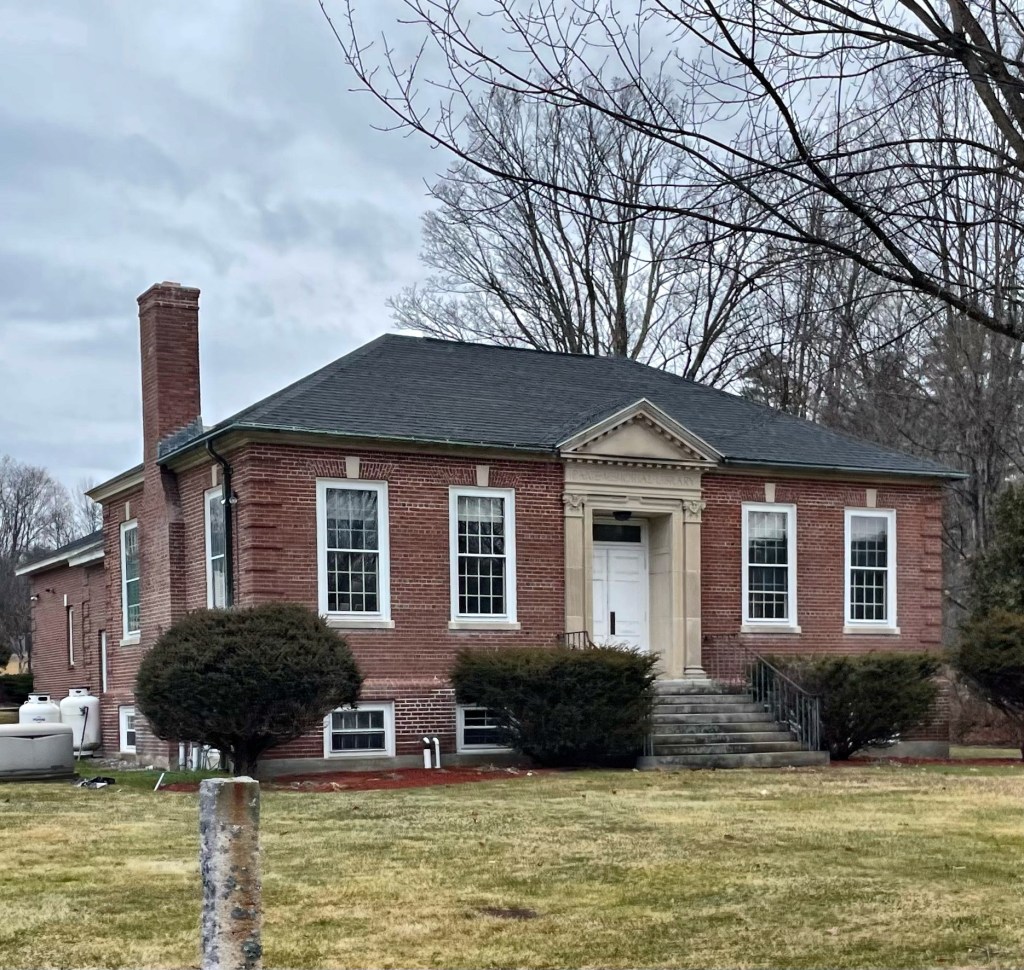
In his 1917 will, Aaron Cutler of Hudson, N.H. left his estate to family and friends with his remaining estate to be bequeathed “for the purpose of the erection, furnishing and maintenance of a Public Library, upon the express condition that the citizens of said town give land upon which to erect the same. Said land to be located within one-quarter of a mile of the town hall. Said Library to be of brick and slate. And to be known as “The Aaron Cutler Memorial Library.” His town of Hudson recently erected a memorial library, so he sought to fund a library in an adjacent municipality. Land was donated in Litchfield for a new library there and architect William M. Butterfield furnished plans for the building. The library was completed in 1924 and exhibits Tudor/English Revival design, unique for the town.
The first library in Ware, Massachusetts was organized in 1796. Operating on a subscribers system, books were lent out to those who paid the most at the time. The Society flourished for 26 years until it abruptly disbanded. In 1824, a second library was organized, called the Mechanics and Manufacturers’ Library, which was loosely managed by the manufacturing companies in town. In 1872, an act providing for the formation of library corporations was passed in Massachusetts. The Ware Young Men’s Library Association was the first to incorporate under the new law. They established a location in a commercial space in town until it was outgrown. In 1879, the present lot at the corner of Main and Church streets was donated by a local businessman. Funding was acquired and Springfield-based architect Eugene C. Gardner was hired to design the building. In 1923, an addition was built onto the side by architects Gay & Proctor in the Jacobethan Revival style, which blends well with the original Queen Anne building. The building remains home to the library and is the town’s public library.
Dorset, Vermont is one of the most beautiful villages in New England and is often overlooked and rarely featured by “influencers” and blogs compared to nearby Manchester or Woodstock, which get all the love. This building in Dorset Village was built around 1800 and was constructed by John Gray, who kept a tavern here the early 19th century. The tavern was eventually sold out of the Gray family and was donated by Bernard G. Sykes to the Town of Dorset as the village’s library. It was originally known as the Sykes Memorial building so-named as a memorial to Bernard’s late parents, Lydia and Gilbert Sykes. The former tavern was renovated, giving it the Colonial Revival detailing and addition.
The original section of this building was the second dwelling house of Rev. John Lothrop (1584-1653), one of the first European settlers who settled in present-day Barnstable in 1639. The oldest part of this structure, built in 1644 (yes you read that correctly), is possibly the oldest extant house in the Town of Barnstable. The home was constructed as 21 feet long and 29 feet deep with a chimney on the west side of the house. Perhaps John Lothrop’s principal claim to fame is that he was a strong proponent of the idea of the Separation of Church and State (also called “Freedom of Religion”). This idea was considered heretical in England during his time, but eventually became the mainstream view of people in the United States of America, because of the efforts of Lothrop. His descendants today include six former presidents, Louis Comfort Tiffany (of the stained glass fame), J. P. Morgan, Clint Eastwood, Henry Wadsworth Longfellow, and many more recognizable names! The house was eventually owned by Isaac Chipman in the 19th century, and he modified the house close to its current conditions, adding on numerous times.
Captain William Sturgis, a mariner, businessman and politician, who was born in the house, purchased the property in 1862 from the heirs of Isaac Chipman. Sturgis left $15,000 along with this property in a trust to be gifted to the people of Barnstable for a public library. The library opened in 1867 in his honor, with 1,300 books. As the old Lothrop House is incorporated in the building, it makes the Sturgis Library the oldest building housing a public library in the USA. A great claim to fame for this town!