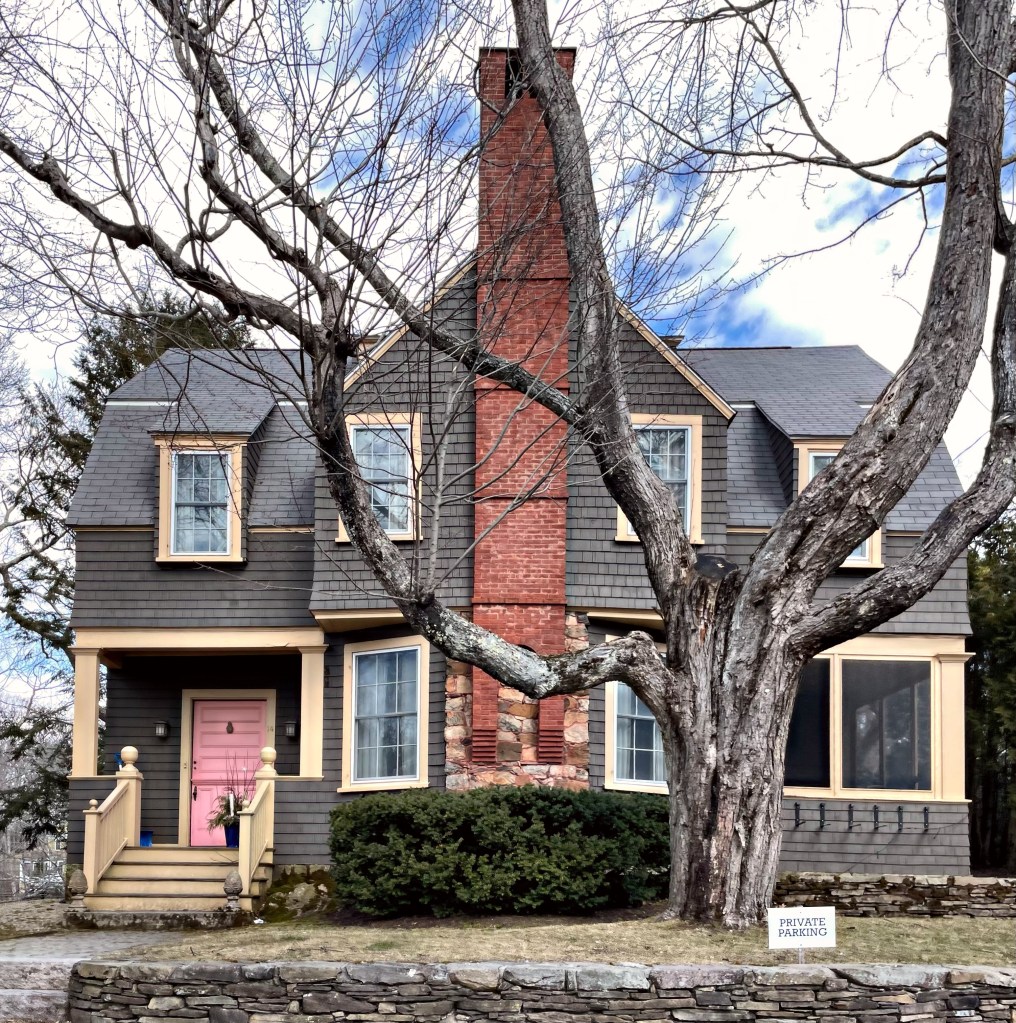
Before Miss Gerrard purchased the Glen Cottage (last post) in 1900 in Kennebunkport, Maine, she had already summered in her own summer cottage nextdoor for over a decade. In 1888, she hired an architect from New Jersey to furnish plans for this charming shingle and stone cottage as her summer retreat. The cottage features a prominent brick and rubble stone chimney facing the street with a gambrel roof. The entrance is tucked away under a recessed porch and looks to be the original dutch-door. I can’t imagine how amazing summers in this house would be!
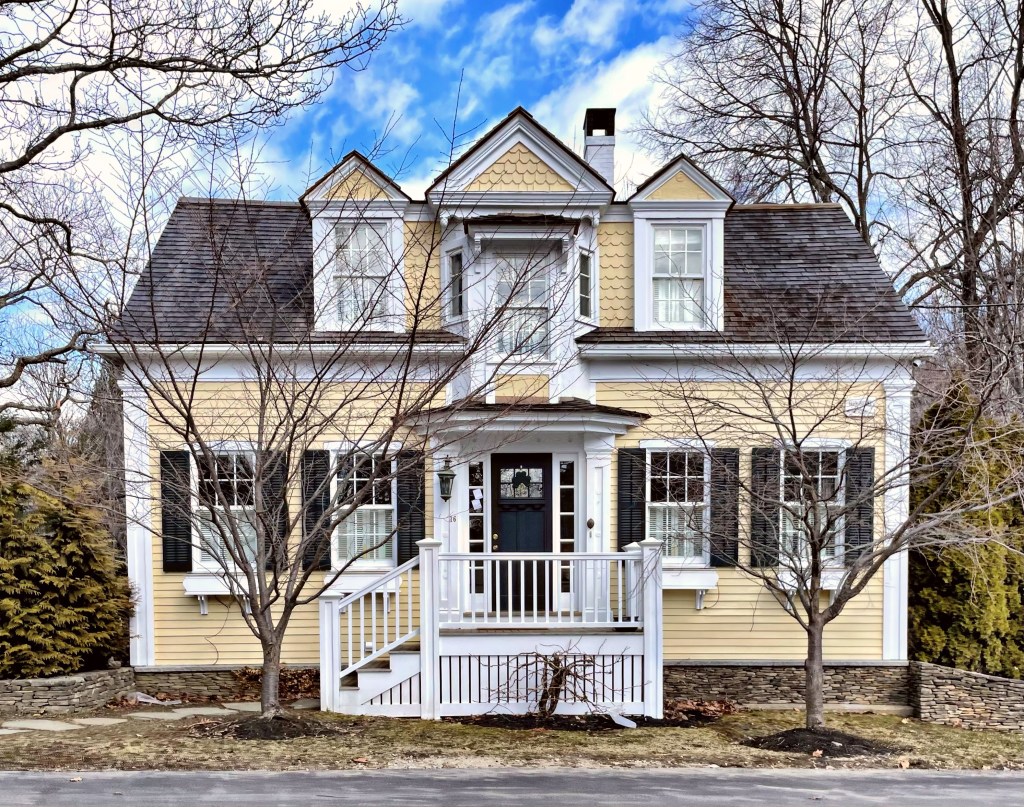
Not all of Kennebunkport’s summer “cottages” are grand, Shingle style mansions… Glen Cottage was originally built in c.1850 as a Greek Revival style cape house. As the town developed into a desirable summer colony for wealthy residents of Boston, New York and Philadelphia, the small cottage caught the eye of a Ms. Garrard. Margaret Garrard purchased Glen Cottage in 1900 and hired Maine architect William Barry to transform the old cape, adding the dormers, octagonal bay, and door hood. Here, she ran the Bonnie Brig Tearoom for twenty years. Tea houses were important social centers for wealthy summer residents Later owners renamed the tea house, “The Old Tree Tea Tavern” and “Periwinkle” but in 1926, the name reverted to The Bonnie Brig Tearoom. Today, the cottage has reverted back to residential use with the owners lovingly maintaining the old cape.
Newton Booth Tarkington (1869–1946) was an American author best known for his novels The Magnificent Ambersons (1918) and Alice Adams (1921). He is one of only four novelists to win the Pulitzer Prize for Fiction and was considered the greatest living American author in much of the 1910s and 1920s. While he was born and grew up in Indiana, “Booth” eventually fell in love with the coast of Maine, and built a home in the charming village of Kennebunkport. In Kennebunkport, he was well known as a sailor, and his schooner, the Regina, survived him. Regina was moored next to Tarkington’s boathouse this building, which was named “The Floats” which he also used as his studio. The building was constructed in 1900 as a shop to build ships. He purchased the building, preserving it for generations to come. After his death, the boathouse and studio were converted into the Kennebunkport Maritime Museum. The building appears to now be a private residence, perched above the harbor. How charming!
Believe it or not, this stunning Federal mansion in Kennebunkport was a marriage present! When Phebe Walker married Nathaniel Lord in 1797, Phebe’s father, Daniel had this home built for the new couple. Phebe and Nathaniel had a total of nine children before Mr. Lord died in 1815 at 38 years old. Before his death, the wealthy couple used part of their property to erect a larger home, which is now known as the Nathaniel Lord Mansion. The couple sold the property, and it was owned for some time by Captain Alden B. Day, who passed it down to his daughter Nellie and her husband, William Gould. The property remained in the Day-Gould family until 2017. The house is very well-preserved and looks much like it would have appeared when built in 1799 besides the later entry added in the mid-19th century.
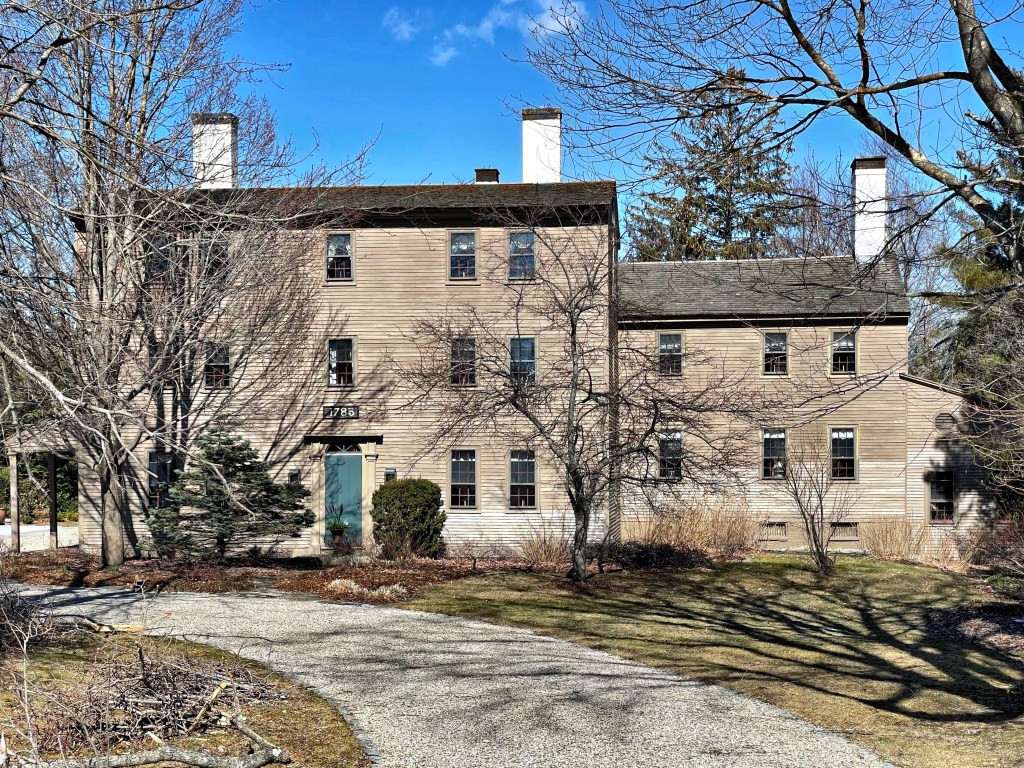
One of the hidden architectural gems of Kennebunkport is this Revolutionary-era house with some serious proportions. The house was built around 1785 by Benjamin Coes, a sailmaker from Marblehead, who settled in the burgeoning Kennebunkport in search of new work and opportunities. He married Sarah Durrell and the couple erected the seventh house in town, which is part of this property. For his work, Mr. Coes used the first two floors as his residence and the third floor was used as a sail loft, with an exterior staircase. A young boy, Joseph Brooks, would work in the loft and he would go on to marry Benjamin’s daughter, Sarah. The couple inherited the family house and retired here. The property was sold out of the Coes-Brooks Family when Maine State Historian, Henry Sweetser Burrage and his wife Ernestine purchased this house in 1917, which would be used as a guest house. The couple and lived in the house across the street. Ernestine Burrage, who was Chairperson of the Kennebunkport Chapter of the Red Cross, allowed the ladies of her chapter to gather there three times a week to roll bandages for the soldiers injured in battles overseas. It became the headquarters for the Kennebunkport Red Cross. It was likely Ernestine who had the chimneys painted white, which resembled the old Tory Chimneys in Revolutionary-era New England; where, when painted white, they served as a quiet signal which indicated that a home’s residents were loyal subjects of the British Crown.
John Bourne (1759-1837) was born in Wells, Maine as the son of Benjamin Bourne. When the American Revolution hit a peak, when he was only sixteen years of age, John enlisted in the service of the country, and marched in company of Capt. Thomas Sawyer, to Lake Champlain. After the war, he learned the trade of shipbuilding and established himself in Kennebunkport, at the height of the village’s manufacturing. John Bourne built ships for a wealthy ship-owner and became successful himself. Bourne was married three times. His first wife, Abigail Hubbard (m.1783) died at just 24 years old after giving him three children. He remarried Sally Kimball a year later, who died in her twenties at just 28, she birthed one son for him in that time. His third wife, Elizabeth, would outlive John, and they had five children together. After his marriage with Elizabeth, John likely had this home built, possibly from his own hands. The Federal style home stands out for the unique entry with blind fan and modified Palladian window framed by engaged pilasters.
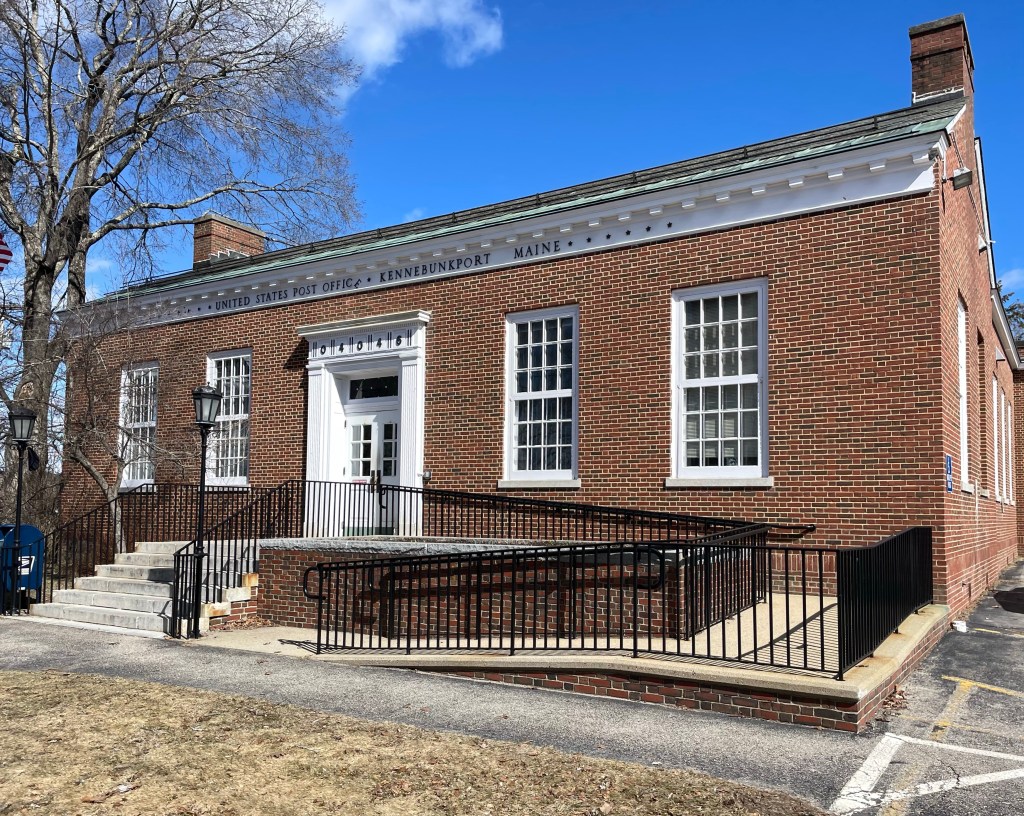
During the Great Depression, the federal government built over 1,100 post offices throughout the country as part of the New Deal’s Federal Works Agency. Many of the post offices funded and built in this period were designed by architect Louis Simon, Head of the Office of the Supervising Architect for the U.S. Treasury. Few architects had such a role in designing buildings nationwide than Federal architects who designed buildings ranging from smaller post offices like this to courthouses and federal offices. They really are the unsung designers who impacted the built environment in nearly every corner of the nation. As part of the Treasury Department Section of Fine Arts, artists were hired to complete local murals inside many post offices built in this period, depicting local scenes and histories of the towns they were painted in. In Kennebunkport, artist Elizabeth Tracy who submitted a preliminary sketch of her piece “Bathers” which was approved depicting a beach scene, though the townspeople had not been consulted. Unfortunately, the opinion of a vocal part of the Kennebunkport populace was highly negative to Tracy’s painting, largely due to the fact that her beach scene depicted people on a beach in adjacent Kennebunk, not Kennebunkport! Within a few years, the townspeople gathered funds to hire artist Gordon Grant to paint a satisfactory replacement mural in 1945. The new mural remains inside the post office.
In about 1812, Captain Nathaniel Ward Jr. of Kennebunkport purchased this home in the village from housewright and builder Samuel Davis. The Federal style house is five bays with a central entrance with pedimented fan over the door. Two end chimneys would heat the home in the winter months when Nathaniel was out at sea and his wife, Sarah, would be maintaining the home and caring for their six children. The couple’s eldest son Charles Ward, served as the second American Consul to Zanzibar in Africa. In his role, Ward bickered continuously with the Sultan, whose word of law changed with the wind and he eventually left his position and settled in Salem, Massachusetts. This house was later owned by Abbott Fuller Graves (1859–1936), a renowned painter before he built a Prairie Style house in Kennebunkport in 1905.
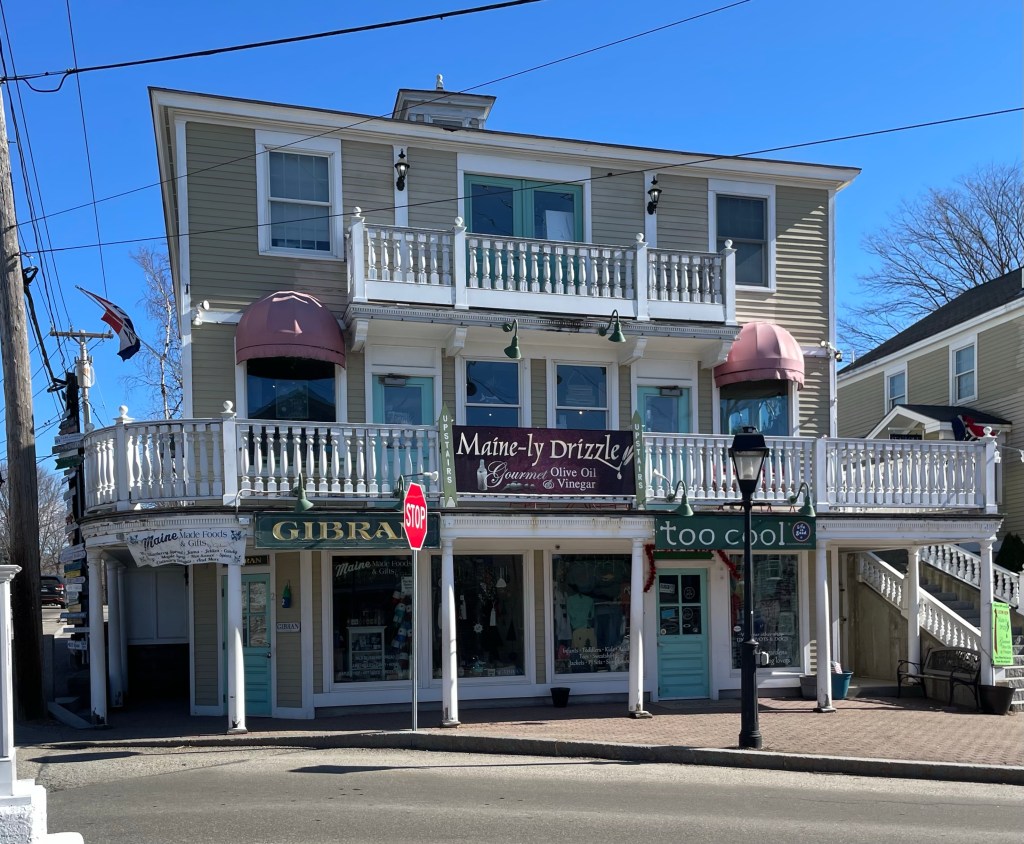
Across from the Luques Store in Dock Square in Kennebunkport, another 19th century commercial building serves as a visual anchor to the vibrant village, this is the Benjamin Mason Store. Built in the 1810s, the Federal style commercial block was originally owned by businessman Benjamin Mason (1777-1855) who built a house in 1812 just nextdoor (which has since been converted to commercial use). The store is three-stories with a cupola at the roof. Later porches were added as the village prospered.
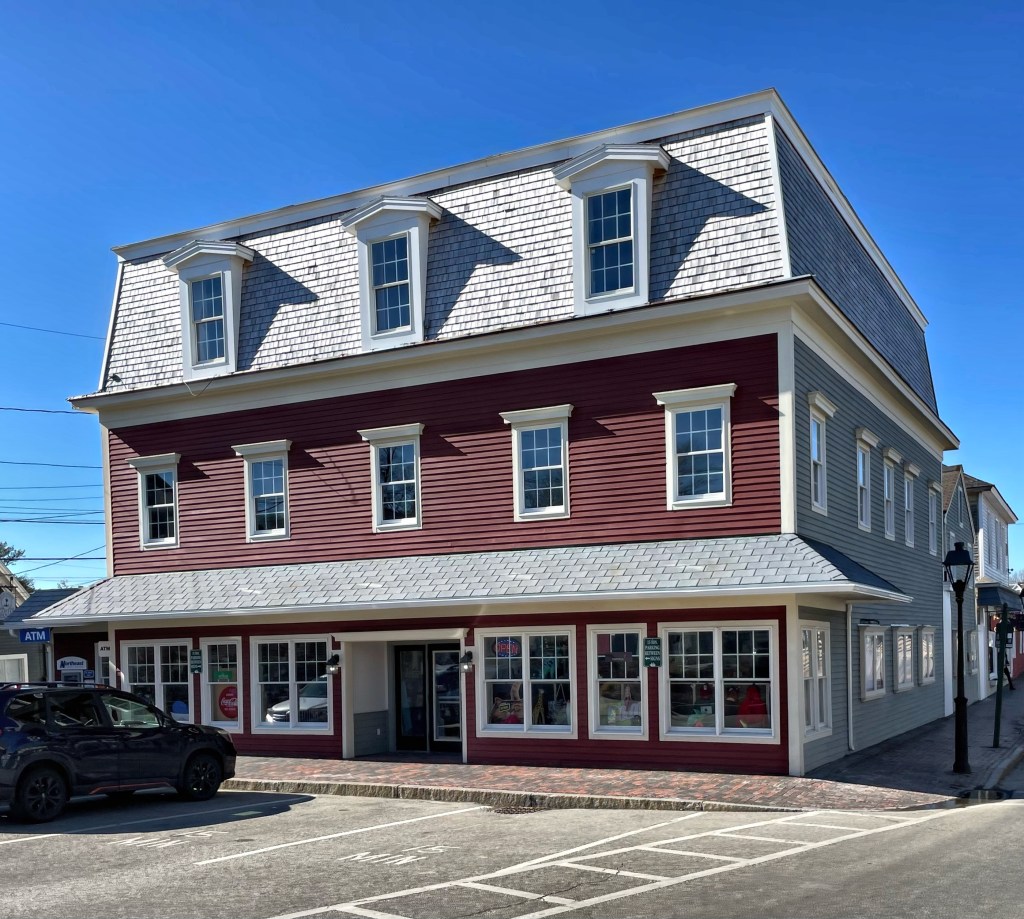
In 1827, a young Andrew Luques (1791-1873) built a store in the village of Kennebunkport, Maine where he sold dry goods, hardware, and fancy goods to the area’s citizens. As the village grew around him, the store grew and occupied the entire block near a drawbridge, which spanned the Kennebunk River to Harbor Village in adjacent Kennebunk. The business did well and the store was eventually inherited by Anthony Luques in the late 1850s. Anthony expanded the store, modernizing it and added a Mansard roof for an additional floor. Anthony continued operating the store until his death in 1890, when it was sold to a member of the Dennett Family. Around 1900, the building was occupied by a few businesses, with one taking advantage of the town’s recent desirability as a summer resort colony by selling bathing suits and hammocks. The building remains a visual and important anchor to the human-scaled and walkable village of Kennebunkport.
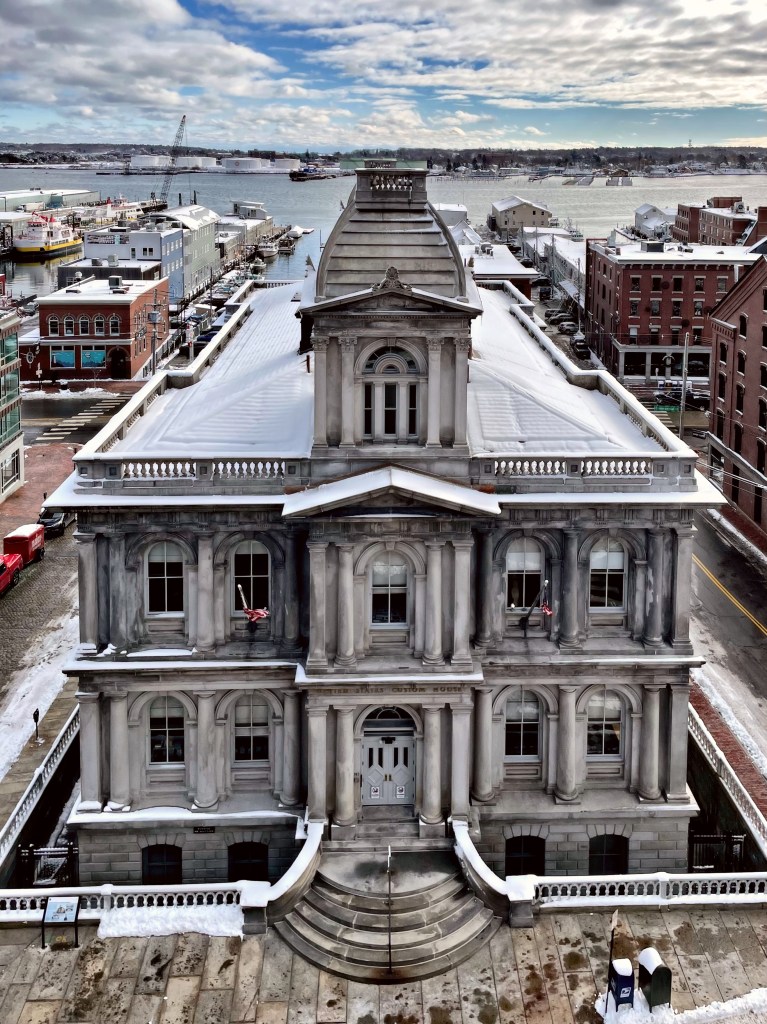
Probably my favorite building in Portland, Maine is the former Custom House building, an imposing granite building located a stone’s throw from the Portland Harbor. It was built to accommodate the city’s growing customs business, which, by 1866, was collecting $900,000 annually in customs duties—making Portland one of the most significant seaports in the country. The building is typical of the notable designs completed under the direction of Alfred B. Mullett, Supervising Architect of the Treasury from 1865 to 1874. Constructed between 1867 and 1872 (due to delays in obtaining granite for the upper stories) the U.S. Custom House combines elements of the Second Empire and Renaissance Revival styles and is one of the best preserved custom houses in New England. The interior custom hall is especially remarkable.
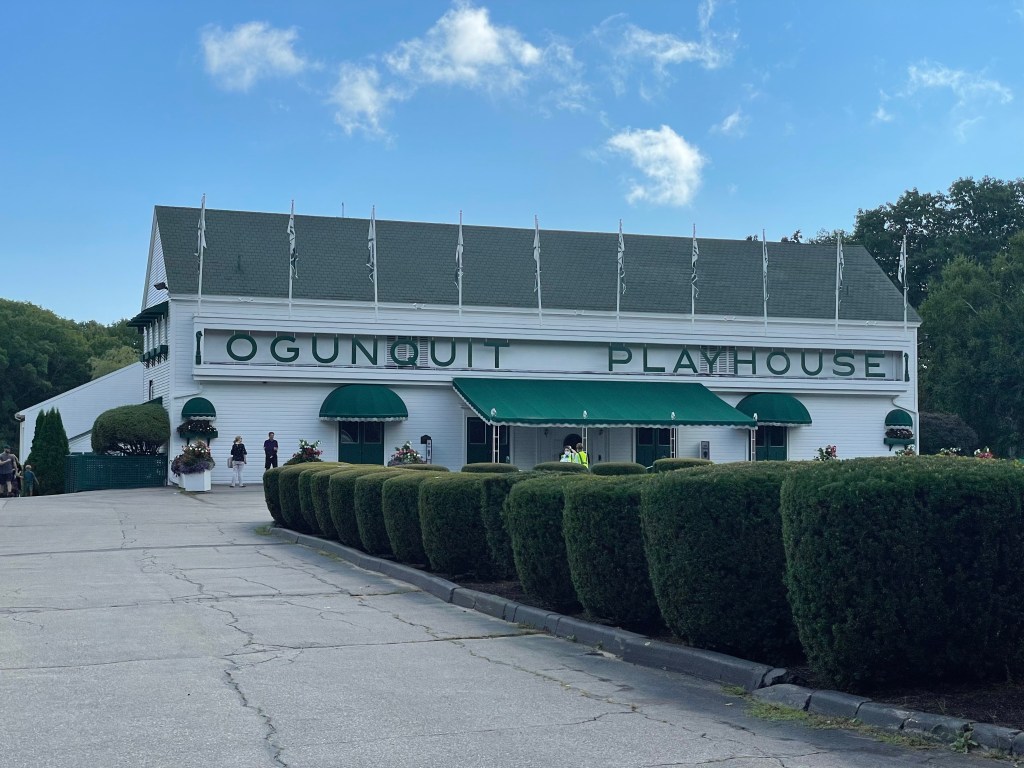
Opened in 1933 in a converted garage and relocated to the existing building upon its completion in the summer of 1937, the Ogunquit Playhouse is an important part of Maine’s historic twentieth-century cultural landscape. The Playhouse was founded by former Hollywood director and Broadway producer Walter Hartwig and his wife Maude, and the building was designed by theater architect Alexander Wyckoff. The site on Rt-1 was intentional as the highway was the main coastal route for the inter-war summer tourist travel. The Colonial-inspired theater was in keeping with the historic nature of New England, but with the grandeur to attract a nation-wide summer audience. Early articles mentioned the building constructed of “…steel and wood, painted white with green shutters and roof, is simple in line, suggesting the Colonial architecture of New England”. Walter Hartwig died in 1941, and his widow Maude took over as the producer for the upcoming season. In 1947, she engaged George Abbott, New York’s most distinguished playwright/producer to share in the managerial duties, and in 1950 John Lane arrived as co-producer. Lane acquired the property in the following year, counting among his first tasks the rebuilding of the stage which was destroyed by a storm the year prior and changing the landscape to move the parking lot in front of the building to the side. The Ogunquit Playhouse continues its 26-week season runs from May through October, with off-season co-productions at The Music Hall in Portsmouth, NH. Go see a show before the season is over!
This large wooden building in Waterford, Maine, looks much like a church, because it was built as one in 1844! The building was constructed as a Universalist Church just over a decade after a local Universalist Society was formed in the area in 1830. In the subsequent decades of the church’s founding, dwindling membership by the time of the Civil War required the group to sell the building to local businessmen. The town rented a space in the building which used a floor as a school, after an additional floor was added to the base, giving the building the vertical appearance it has today. in 1896, the Bear Mountain Grange purchased the building as a meeting hall, allowing the school to operate in the building (an arrangement that lasted until 1949)! The building has seen better days, but besides the chipping paint and some wood-rot, it retains the original windows and has been relatively un-altered!
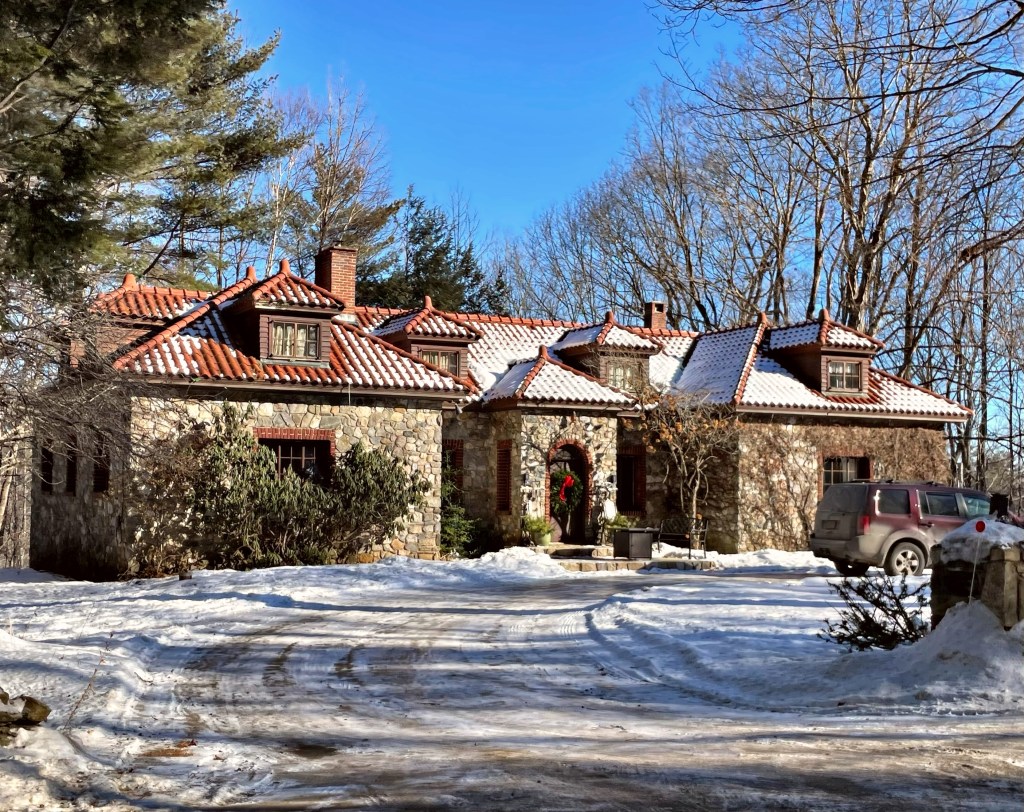
In the early 20th century, Norway, Maine and the surrounding towns were sought-after for their natural beauty with large lakes and rivers with untouched expanses of forest. Upper-middle class residents of Portland, Boston and other larger cities in New England built more rustic summer homes, compared to the elaborate “White Elephants” in Newport, Rhode Island. This home in Norway was named Wrightstone and was built in 1925 for the Wright Family. The U-shaped home is constructed from rubblestone, likely gathered from the land on which it sits. The house blends the Arts and Crafts movement with the uncommon (in Maine) Spanish Colonial Revival style, with the terracotta roof! I bet the interior is so cozy!
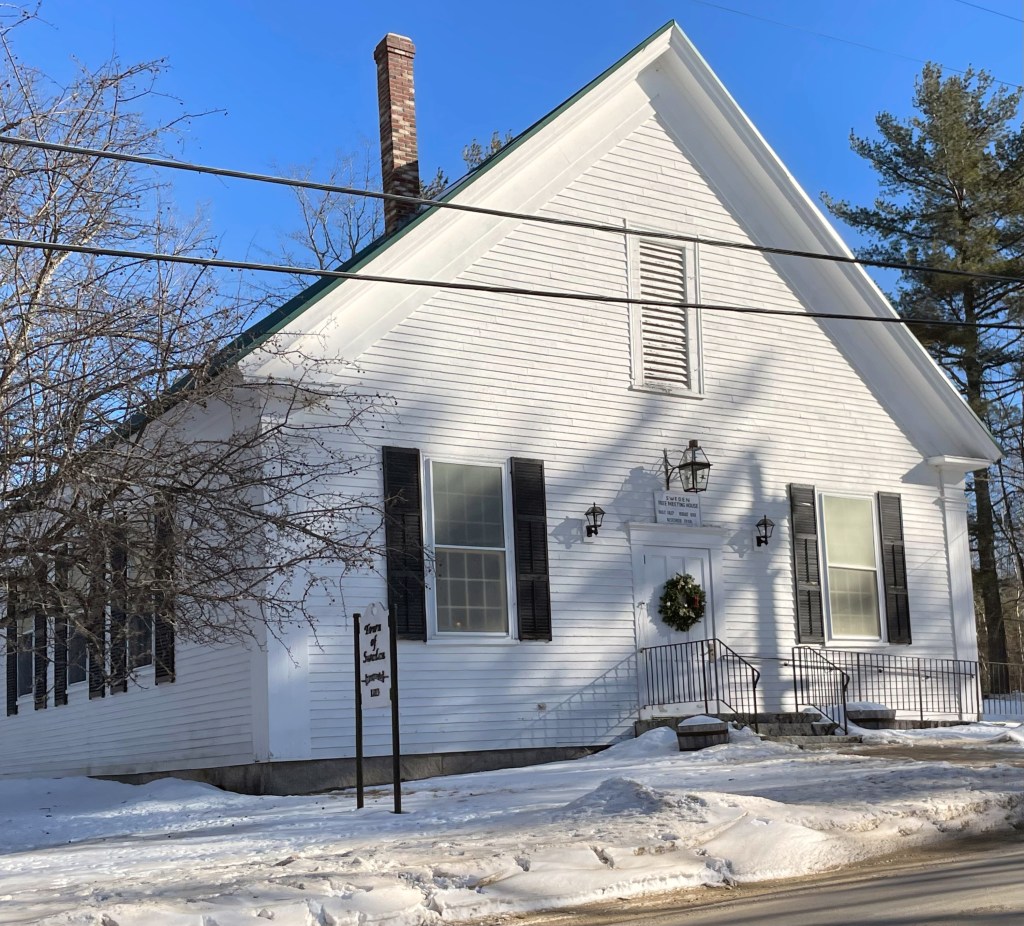
Just a short flight (erh I mean drive) from Denmark, you’ll find Sweden… Maine. Sweden is one of three towns of Oxford County Maine, named after Scandinavian countries (Denmark, Norway & Sweden). Sweden was once territory of the Abenaki tribe who fled to Canada during the Dummer’s War. Present-day Sweden was first colonized in 1794 by Colonel Samuel Nevers from Burlington, Mass. After the Revolutionary War, where he served, Samuel was given a large tract of land in Maine. The town separated from Lovell and became known as Sweden, likely due the . THe started to clear his lumber on his land, and he returned several times a year to his home in Burlington, Mass. for supplies. In 1796, his friend Benjamin Webber joined him and Samuel gave his friend some land for his assistance. Upon his last visit back to Burlington in 1796, he took his bride Esther Trull by horseback, making the 180-mile journey within 24 hours, a record time for this era. The Nevers cleared out land, laid out roads, and built the earliest civic buildings in the fledgling town, including the town’s Free Meetinghouse seen here in 1826. This building has served as a townhouse, community church, schoolhouse, and grange hall. The building was largely rebuilt in the 1860s, giving it the vernacular Greek Revival appearance we see today.