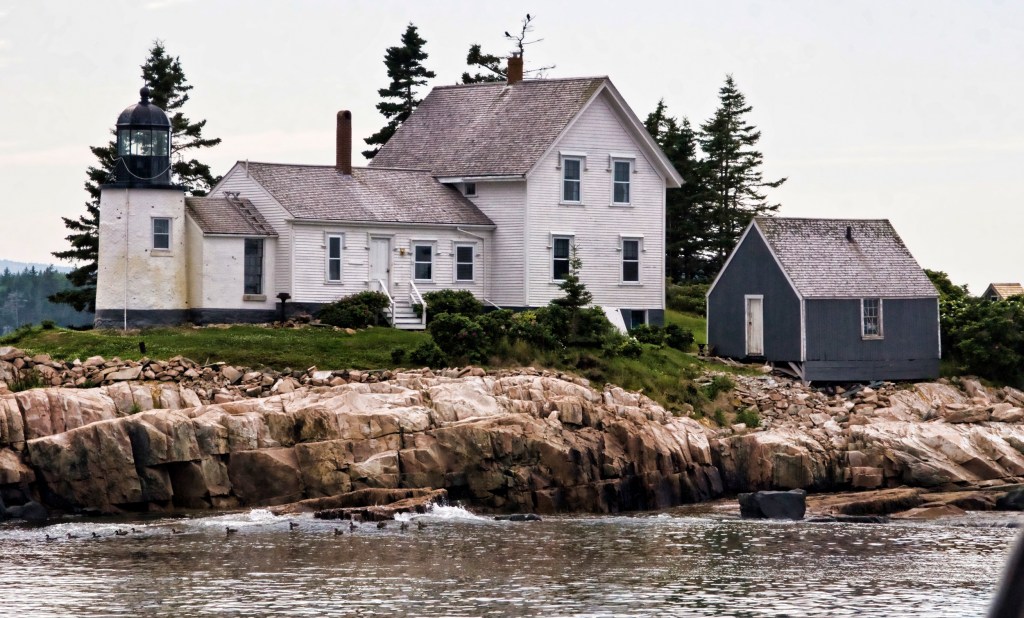
Winter Harbor Lighthouse // 1856

Built in 1857, Winter Harbor Light is one of Maine’s enchanting historic lighthouses dotting the rugged coastline. The lighthouse was built by the United States government to aid navigation for the local fishing fleet, an important piece of the local economy there. The light tower, built in 1856, is a round brick structure topped by an original octagonal lantern house with an iron walkway and railing around it. A brick single-story workroom projects from the tower. The keeper’s house is a two-story wood-frame structure, which was built in 1876 (along with the ell) to replace the original keeper’s house. The light was decommissioned in 1934 and sold into private hands, but in its seventy-six years of service, nine keepers and their families lived on the island. It remains a visual landmark on its small island in Mt. Desert Narrows on the drive along the Schoodic Peninsula in Acadia National Park (Winter Harbor side). What are your favorite lighthouses in Maine?

Hammond Hall // 1903

Winter Harbor, Maine, may just be my new favorite place in the state! The town is located just east of Mount Desert Island, south of Gouldsboro (of which it was a village within the town). In 1895, after the Grindstone Neck summer colony was developed, the town’s increased finances and outlook led them to incorporate as a separate town. And what does any new town need? A town hall! Construction of the hall was proposed in 1902 by Edward J. Hammond, owner of a local lumber business who made his fortune shipping and selling the Maine lumber in Boston. Hammond donated the building materials and building lot after a fire swept through Winter Harbor village. The town offices moved out of the building in 1958, and the main hall continued to be used as a school gymnasium until 1987. The town then sold the building to the Winter Harbor Historical Society. Lack of funding by the turn of the present century resulted in the building’s decline, and it was slated for demolition in 2002. It was rescued by Schoodic Arts For All, a cultural organization that brings a variety of events to the space, which now holds a long-term lease on the property. The building looks great today!

Barncastle // 1884

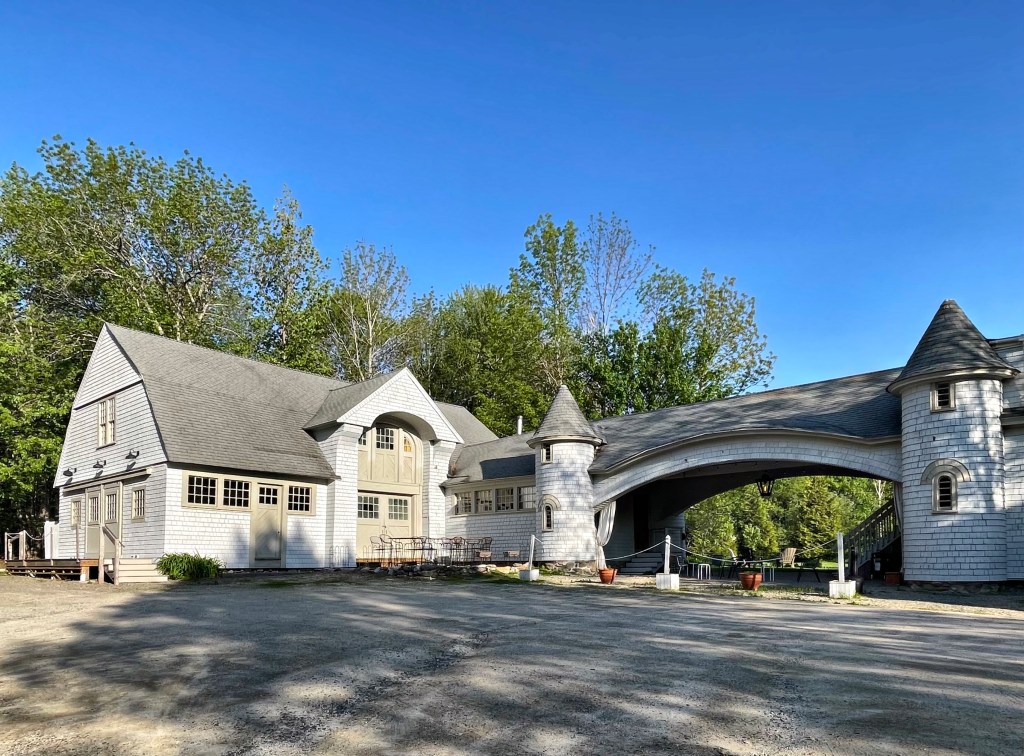
Barncastle, located in the Town of Blue Hill, Maine, is an elaborate and distinctive house. Designed by George A. Clough and built in 1884, the building is a sprawling complex in the Shingle style with additional eccentric details. As Blue Hill and other coastal communities of Down East Maine saw popularity as summer colonies of wealthy city-dwellers flocking to the rugged coastline, many new residents either built new “cottages” or renovated older (often ancestral) homes. Effie Hinckley Ober (1843-1927) who was born in town, married Virgil P. Kline, personal attorney to John D. Rockefeller, and for thirty years worked as attorney for the Standard Oil Co. of Ohio. Effie founded the Boston Ideal Opera Company in 1879 and traveled with the group extensively, retiring in 1885, upon that time, she would move into Barncastle for summers (then named “Ideal Lodge” after her opera company). In 1884, before her retirement, Effie hired her childhood friend, architect George A. Clough, who was born in Blue Hill and worked in Boston, to completely redesign her ancestral home. Clough’s design engulfed a smaller Cape Cod-style house owned by Effie’s mother Mary Peters Hinckley Ober Atherton, a descendant of early Blue Hill settlers, creating an absolutely elegant Shingle-style summer cottage. The house is highly visible on a main street, but what many do not see is the arch-and-turret link between kitchen wing and carriage barn. “Barncastle” is now home to an elegant inn and restaurant!

Parker House // 1814

Wrapping up this series on a tour of buildings in Blue Hill, Maine, we have two stunning old homes left! 

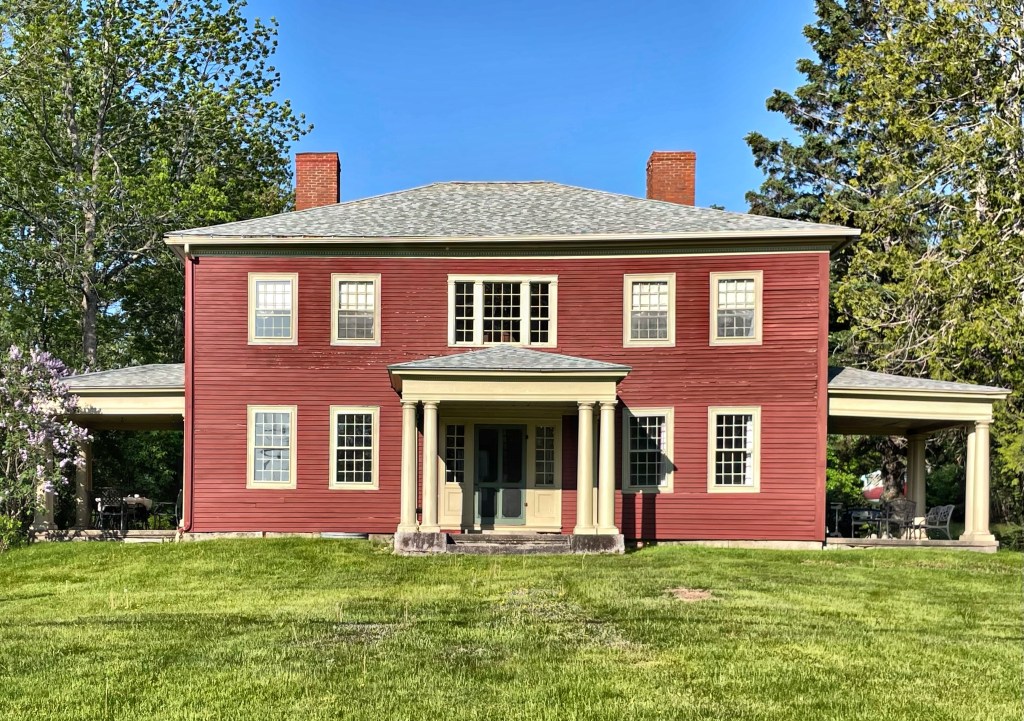
This landmark Federal style house was built sometime between 1812 and 1816 by Robert Parker, whose wife was a daughter of Joseph Wood, one of the first two white settlers of Blue Hill. The home is significant not only architecturally, but for its connections to a number of old settlers to Blue Hill and their families.

By the turn of the 20th century the farming, mining and granite producing town of Blue Hill had been discovered. Writers, artists, musicians, and wealthy urban families from all over the East Coast found inspiration or retreat in many coastal Maine communities including Blue Hill, building “cottages” to summer at. Not all those who arrived to Maine were ‘from away’, as many built new or renovated their old ancestral homes to be occupied when seeking the peace and tranquility of coastal Maine. The Parker House was no different. In 1900, it was renovated in the Colonial Revival style as a summer home for Frederick A. Merrill and his wife, Elizabeth, residents of Boston. The couple hired George A. Clough, who worked as the first City Architect of Boston, but grew up locally in Blue Hill. Mrs. Merrill was descended from Mrs. Robert Parker’s sister. The current owner, the Merrill’s great-grandson, has undertaken a restoration of the house which pays homage to its Colonial Revival past. The stunning house can even be rented!

Pendleton House // 1826

Large commercial blocks like this can really transport you back a century or more! The Pendleton House in Blue Hill, Maine was built in 1826 by Jonah and Jeremiah Holt. The brothers were born in Beverly, Massachusetts and their family settled in Blue Hill, likely to work in the shipbuilding industry. Originally called the Brick Block, the building was a storefront for the Holts. In the 1870s, the building had fallen into disrepair, and was seized from its owner, Frederick Holt (Jeremiah’s son), by the Blue Hill Academy, from whom Nathan Pendleton purchased the building. As an 1877 issue of The Ellsworth American stated: “Blue Hill needs a hotel. There have never been so many strangers and visitors. Five hundred men are working in the quarries.” From the massive demand for lodging in town, tied to industry, Pendleton opened the building as a hotel in 1878, possibly adding the mansard roof at that time. The building became known as the Pendleton House for a number of years and was purchased by John M. Snow in 1888, who added porches to the building. Sadly, the porches were removed in the 20th century, but the old Pendleton House remains a fixture in Blue Hill and is home to small businesses with housing above.

Blue Hill Academy Building // 1833

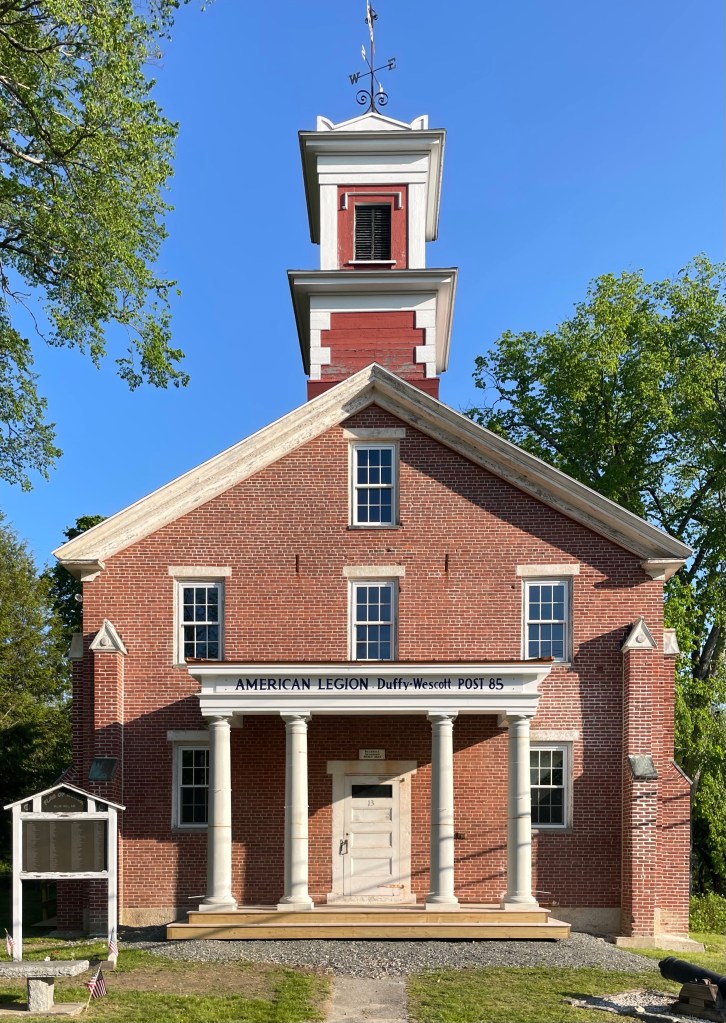
This gorgeous brick building sits in Blue Hill, Maine and is an excellent example of a Greek Revival style institutional building found on the coast of that great state. The structure was built in 1833 and originally housed the Blue Hill Academy, a school which provided courses in Greek, Latin and (due to the town’s maritime economy), navigation. The original building was constructed decades earlier when the school was founded, but was quickly outgrown. When the George Steven Academy opened its doors a couple blocks away in 1898, the two institutions were merged. The American Legion eventually purchased this building, renting it to the Blue Hill Grammar School. Renovations in 1909 were designed by Blue Hill native, George A. Clough which likely included the portico and elaborate belfry. After years of deferred maintenance on the building by dwindling membership of the local American Legion post, the building’s future was uncertain. Thankfully, the Duffy-Wescott Post 85 stood up and funded preservation and planning for the building and make emergency repairs.

Whereaway // c.1840

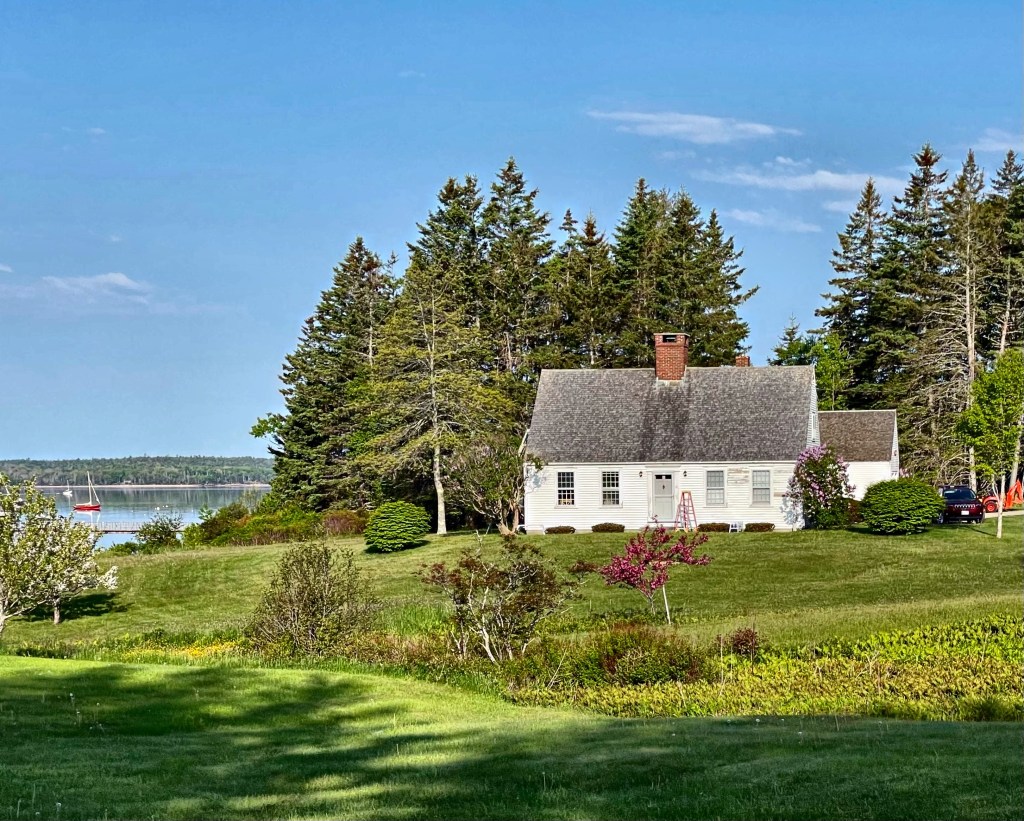
In a town of 850 residents (2,800 in the summertime), Brooklin, Maine was an absolute treat to explore. The winding roads terminate at abrupt ends where the rocky Maine coast begins and hand-made wooden ships are docked in protected harbors. I stumbled upon this absolutely charming Greek Revival style Cape house with just steps to the ocean. The siting beyond a sweeping field and adjacent to the calm harbor presents the perfect example of what makes Maine so special. The house is a short term rental and named “Whereaway”. If only I was rich, but I can dream right??

Dr. Hagerthy House // c.1860

Dr. Rufus Hagerthy (1859-1933) was born in Surry, Maine to father, Daniel Hagerty (sic) a naturalized citizen in 1871 who hailed from County Kerry, Ireland and mother, Carrie. Rufus went to Bowdoin College where he completed his study of medicine in 1884. He moved back to Sedgwick, Maine and married Jane C. Holden (1861-1896), the couple lived in this home, which served as a home-base for Dr. Hagerthy to make house calls by horse or sleigh (depending on the weather). Dr. Hagerthy was eventually wealthy enough to get involved in real estate, and developed Byard’s Point in Sedgwick in 1909, the town’s first sub-division.

Riverside Hall // c.1860

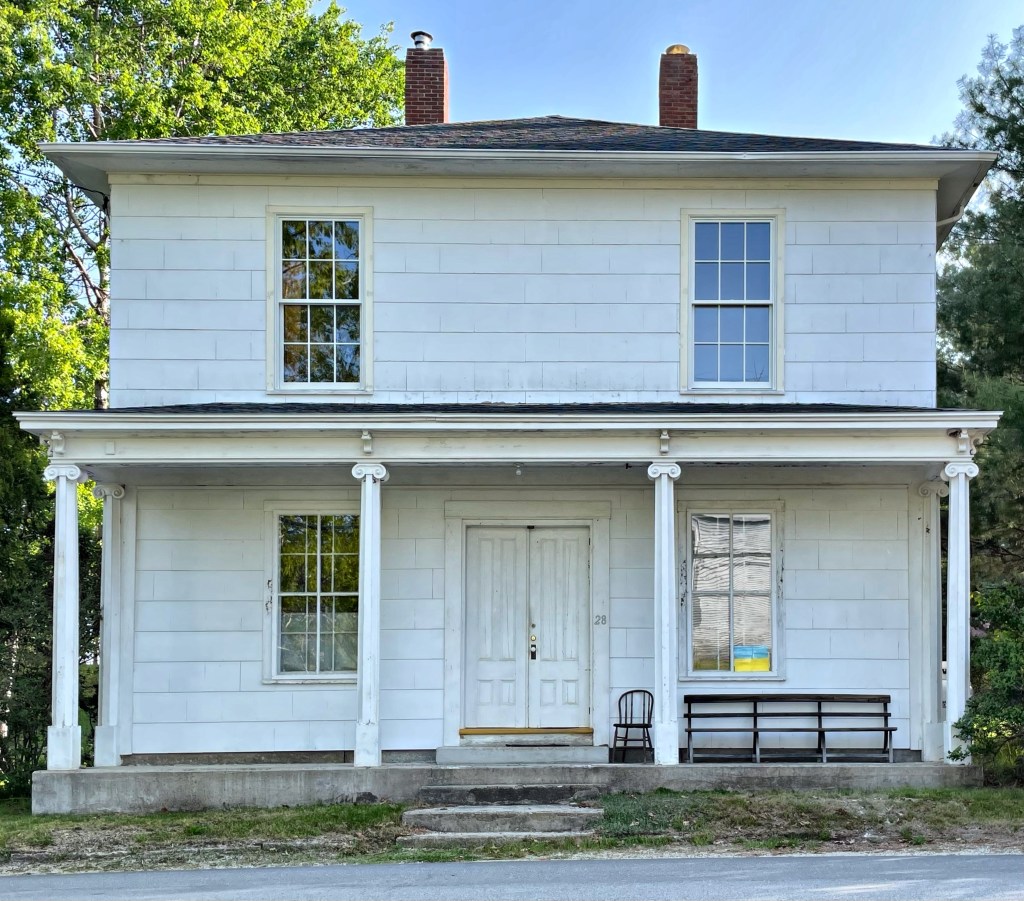
Located across the street from the Sedgwick Baptist Church at 28 High Street, this modified Greek Revival style building in Sedgwick, Maine stopped me in my tracks. Sadly, I could find little on the building besides the fact that the building is absent from an 1860 map of Hancock County, but it appears in an 1881 map listed as “Hall”. The building exhibits flush siding which is scored to resemble ashlar/stone construction, overhanging eaves with a hipped roof which was common in the Italianate style, and a full-length one-story portico supported by square posts with applied Ionic detailing. That’s something I’ve never seen before! Upon a little more digging, I found a historic image of the building titled, “Riverside Hall”. The photograph shows a Second Empire style building with a mansard roof and cupola. The unique portico is shown as well. The local library lists the Riverside Hall as a community hall where events and gatherings were held. A fire destroyed the roof and much of the interior, but it was renovated and converted into a single-family home.

First Baptist Church of Sedgwick // 1837

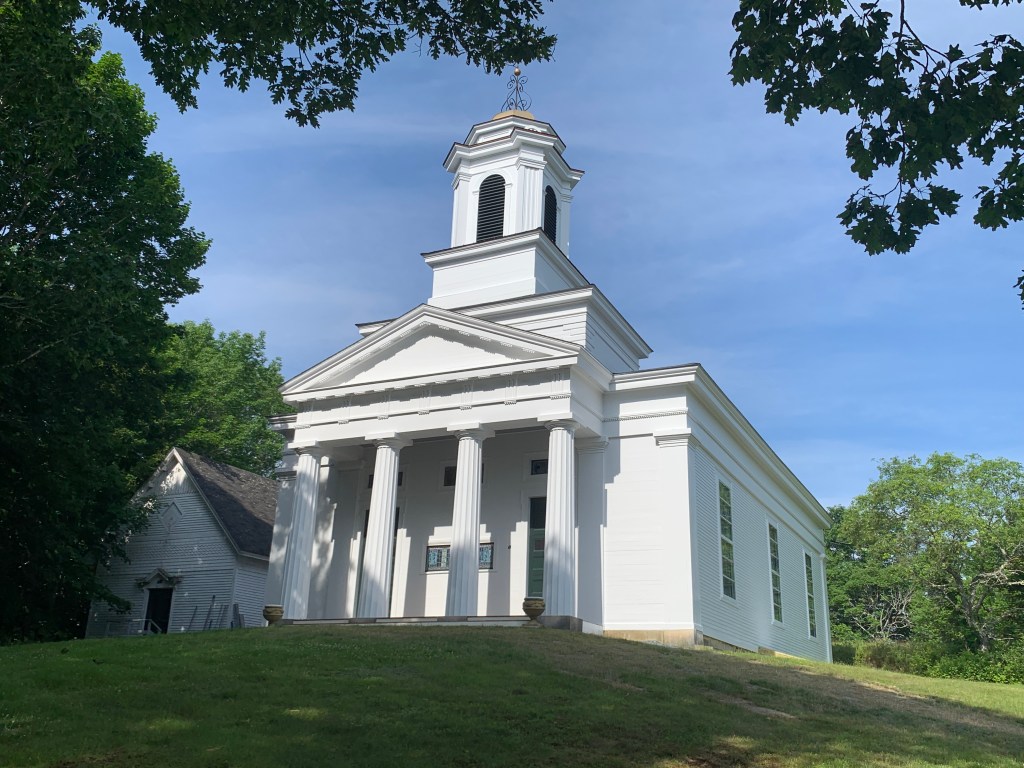
Sedgwick, Maine is a coastal town overlooking the Penobscot Bay separating it from the better-known Deer Isle. The town was originally inhabited by the Wabanaki people. In the 18th century, land here was granted by the Commonwealth of Massachusetts in 1761 to David Marsh and 359 others, and settlers began arriving and building homes here shortly after. In 1789, the town was incorporated as Sedgwick, named after Major Robert Sedgwick, who in 1654, captured nearby Fort Pentagouet from the French. The land in Sedgwick was very rocky and was thus better suited for grazing than cultivation. Because of the geology, for decades Sedgwick had operating many granite quarries, which shifted southward toward Stonington in later decades. The town then became a hub of seafaring professions, from ship-building to trading, to fishing and clam-digging. The town’s Baptist population established a congregation in 1794 as a Congregationalist organization which underwent a large-scale conversion to Baptistry in 1805. This congregation retained Bangor architect Benjamin S. Deane to design its church, which was built in 1837 in the Greek Revival style. Deane’s design is based on a drawing publisher by Asher Benjamin in his Practice of Architecture. The church had seen a dwindling congregation for decades until it was disbanded in 2008. The church was acquired by the Sedgwick-Brooklin Historical Society, who have begun a restoration of the building.

Glen Cottage // c.1850

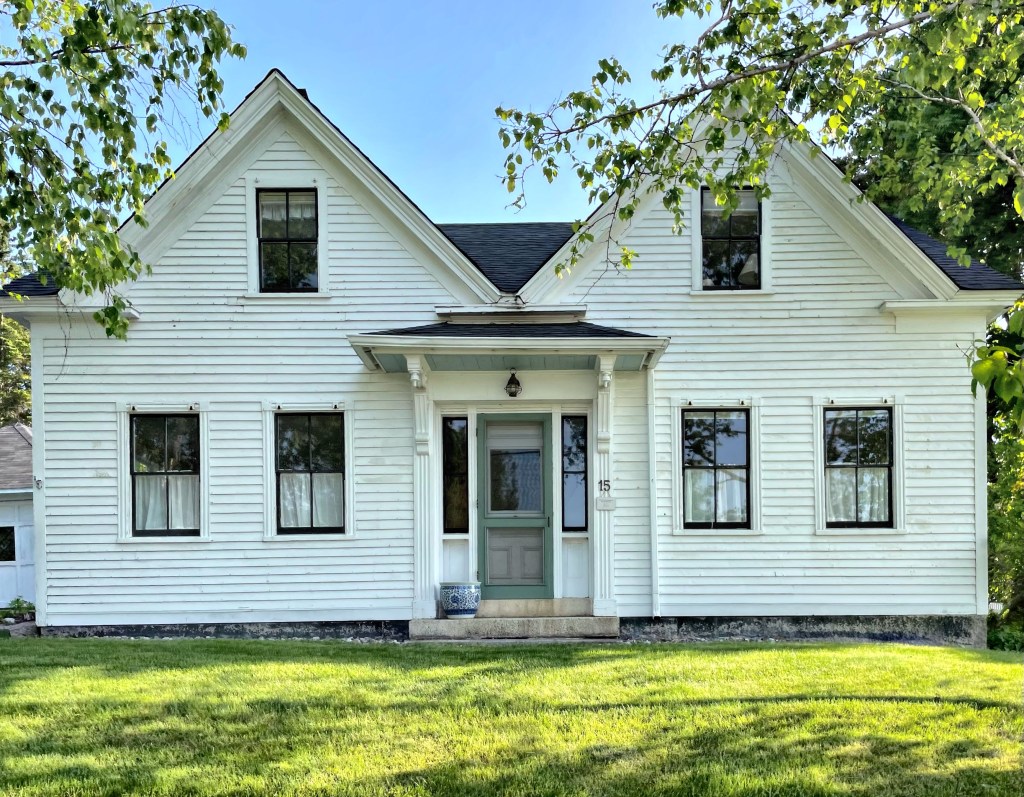
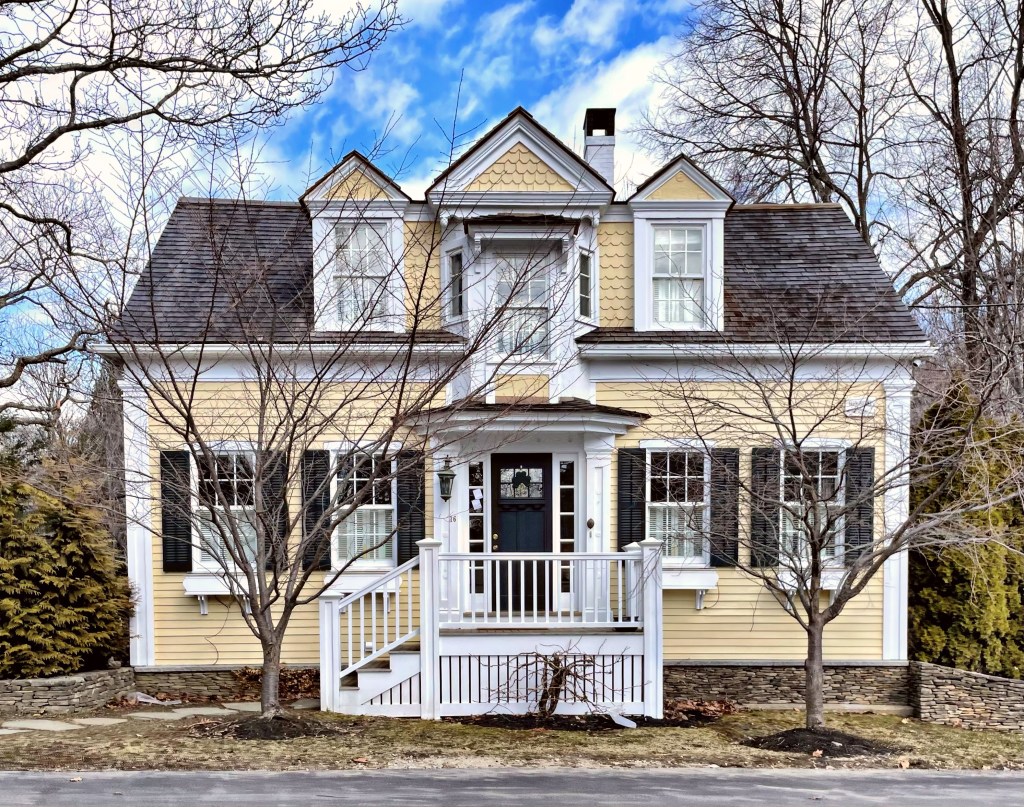
Not all of Kennebunkport’s summer “cottages” are grand, Shingle style mansions… Glen Cottage was originally built in c.1850 as a Greek Revival style cape house. As the town developed into a desirable summer colony for wealthy residents of Boston, New York and Philadelphia, the small cottage caught the eye of a Ms. Garrard. Margaret Garrard purchased Glen Cottage in 1900 and hired Maine architect William Barry to transform the old cape, adding the dormers, octagonal bay, and door hood. Here, she ran the Bonnie Brig Tearoom for twenty years. Tea houses were important social centers for wealthy summer residents Later owners renamed the tea house, “The Old Tree Tea Tavern” and “Periwinkle” but in 1926, the name reverted to The Bonnie Brig Tearoom. Today, the cottage has reverted back to residential use with the owners lovingly maintaining the old cape.

The Floats // 1900

Newton Booth Tarkington (1869–1946) was an American author best known for his novels The Magnificent Ambersons (1918) and Alice Adams (1921). He is one of only four novelists to win the Pulitzer Prize for Fiction and was considered the greatest living American author in much of the 1910s and 1920s. While he was born and grew up in Indiana, “Booth” eventually fell in love with the coast of Maine, and built a home in the charming village of Kennebunkport. In Kennebunkport, he was well known as a sailor, and his schooner, the Regina, survived him. Regina was moored next to Tarkington’s boathouse this building, which was named “The Floats” which he also used as his studio. The building was constructed in 1900 as a shop to build ships. He purchased the building, preserving it for generations to come. After his death, the boathouse and studio were converted into the Kennebunkport Maritime Museum. The building appears to now be a private residence, perched above the harbor. How charming!

Lord-Gould House // 1799

Believe it or not, this stunning Federal mansion in Kennebunkport was a marriage present! When Phebe Walker married Nathaniel Lord in 1797, Phebe’s father, Daniel had this home built for the new couple. Phebe and Nathaniel had a total of nine children before Mr. Lord died in 1815 at 38 years old. Before his death, the wealthy couple used part of their property to erect a larger home, which is now known as the Nathaniel Lord Mansion. The couple sold the property, and it was owned for some time by Captain Alden B. Day, who passed it down to his daughter Nellie and her husband, William Gould. The property remained in the Day-Gould family until 2017. The house is very well-preserved and looks much like it would have appeared when built in 1799 besides the later entry added in the mid-19th century.

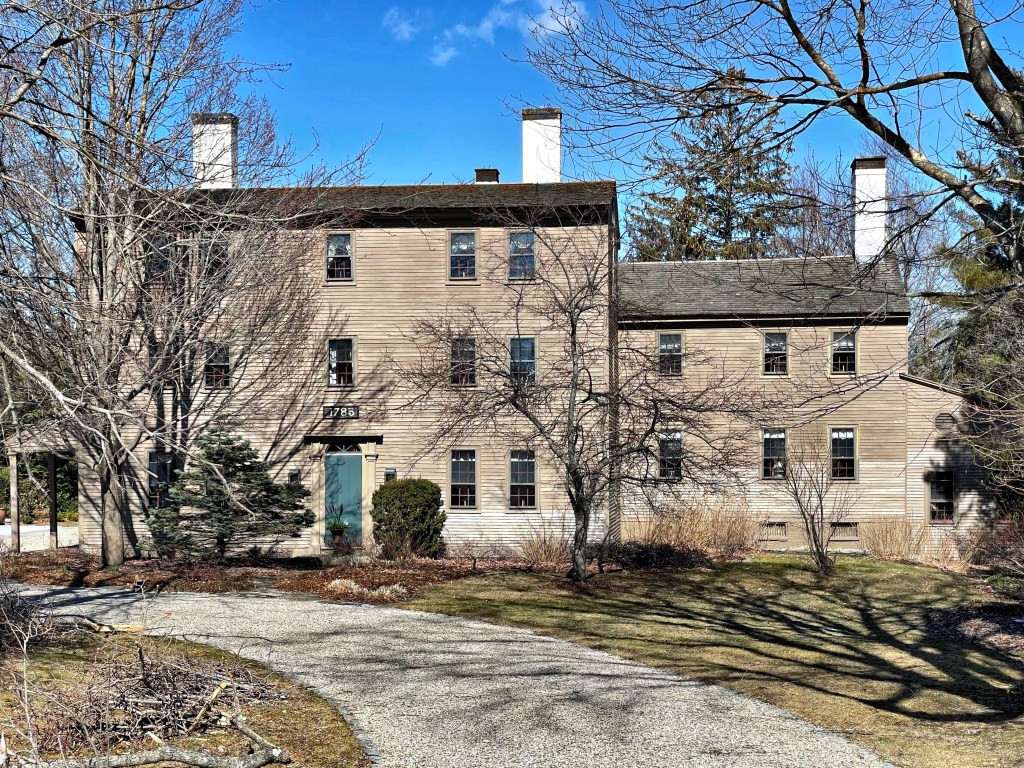
Benjamin Coes House – “Tory Chimneys” // c.1785

One of the hidden architectural gems of Kennebunkport is this Revolutionary-era house with some serious proportions. The house was built around 1785 by Benjamin Coes, a sailmaker from Marblehead, who settled in the burgeoning Kennebunkport in search of new work and opportunities. He married Sarah Durrell and the couple erected the seventh house in town, which is part of this property. For his work, Mr. Coes used the first two floors as his residence and the third floor was used as a sail loft, with an exterior staircase. A young boy, Joseph Brooks, would work in the loft and he would go on to marry Benjamin’s daughter, Sarah. The couple inherited the family house and retired here. The property was sold out of the Coes-Brooks Family when Maine State Historian, Henry Sweetser Burrage and his wife Ernestine purchased this house in 1917, which would be used as a guest house. The couple and lived in the house across the street. Ernestine Burrage, who was Chairperson of the Kennebunkport Chapter of the Red Cross, allowed the ladies of her chapter to gather there three times a week to roll bandages for the soldiers injured in battles overseas. It became the headquarters for the Kennebunkport Red Cross. It was likely Ernestine who had the chimneys painted white, which resembled the old Tory Chimneys in Revolutionary-era New England; where, when painted white, they served as a quiet signal which indicated that a home’s residents were loyal subjects of the British Crown.

John Bourne House // c.1800

John Bourne (1759-1837) was born in Wells, Maine as the son of Benjamin Bourne. When the American Revolution hit a peak, when he was only sixteen years of age, John enlisted in the service of the country, and marched in company of Capt. Thomas Sawyer, to Lake Champlain. After the war, he learned the trade of shipbuilding and established himself in Kennebunkport, at the height of the village’s manufacturing. John Bourne built ships for a wealthy ship-owner and became successful himself. Bourne was married three times. His first wife, Abigail Hubbard (m.1783) died at just 24 years old after giving him three children. He remarried Sally Kimball a year later, who died in her twenties at just 28, she birthed one son for him in that time. His third wife, Elizabeth, would outlive John, and they had five children together. After his marriage with Elizabeth, John likely had this home built, possibly from his own hands. The Federal style home stands out for the unique entry with blind fan and modified Palladian window framed by engaged pilasters.