Pine Grove Cemetery Mausoleum & Chapel // c.1875 & 1904

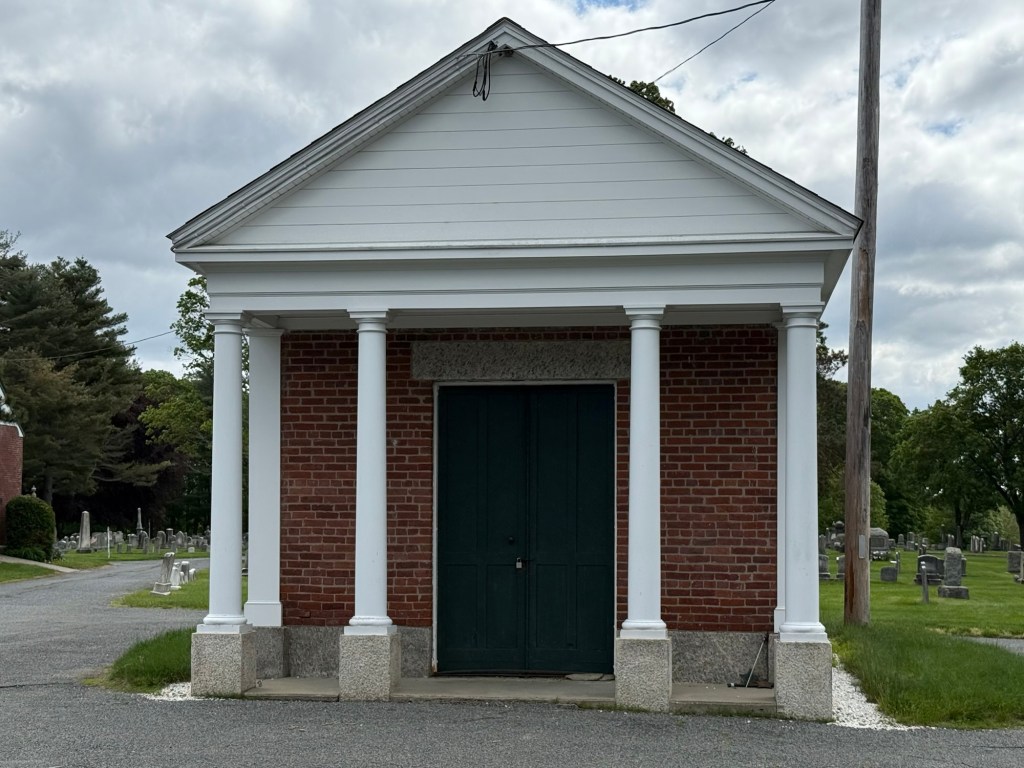
Mausoleum

The mausoleum and the Jonas A. Stone Memorial Chapel are two historic structures located in the Pine Grove Cemetery of Westborough, Massachusetts. Land here was acquired in 1746 by the Reverend Ebenezer Parkman, and it comprised of a pine lot of sixteen acres on the road to Mendon (now South Street). Nearly 100 years later, in 1844, the lot was deeded to the town as a new cemetery, as the older cemeteries were quickly becoming crowded. It was named Pine Grove after the historic use of the grounds. Due to the rural cemetery movement, which sought to reimagine cemeteries as a beautiful park-like setting, not a simple burial ground, many Westborough families purchased plots here and some even moved their loved ones to the new family plot, in the “new” Pine Grove Cemetery.

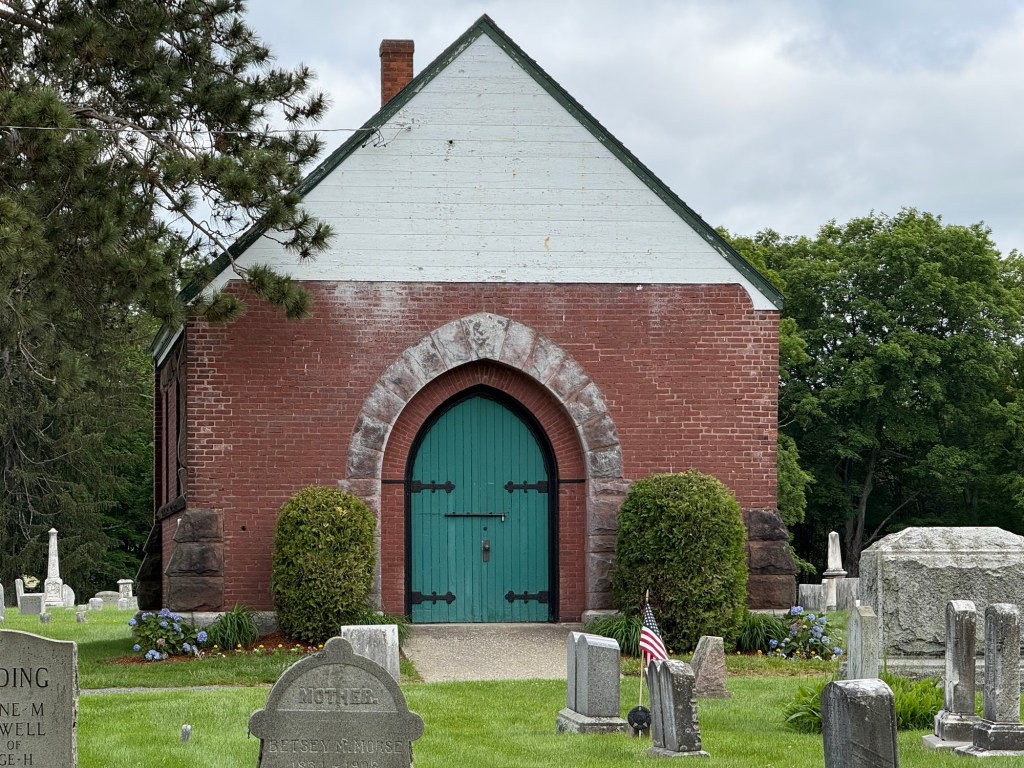
Chapel

The Mausoleum was built sometime in the mid-19th century and is a modest, Greek Revival style structure of granite and brick construction. Four Doric columns support the portico and wooden roof which serves as a pediment above. The Jonas A. Stone Memorial Chapel was built in 1904 following a bequest to the town from the will of Jonas Adams Stone (1821-1900), and additional donation by his brother, Nymphas Stone. The Victorian Gothic chapel is built of brick and brownstone with a wooden gable and roof. The structure was damaged during the destructive 1938 New England Hurricane, but restored and is an important local landmark today.

St. Peter’s Episcopal Church // 1833

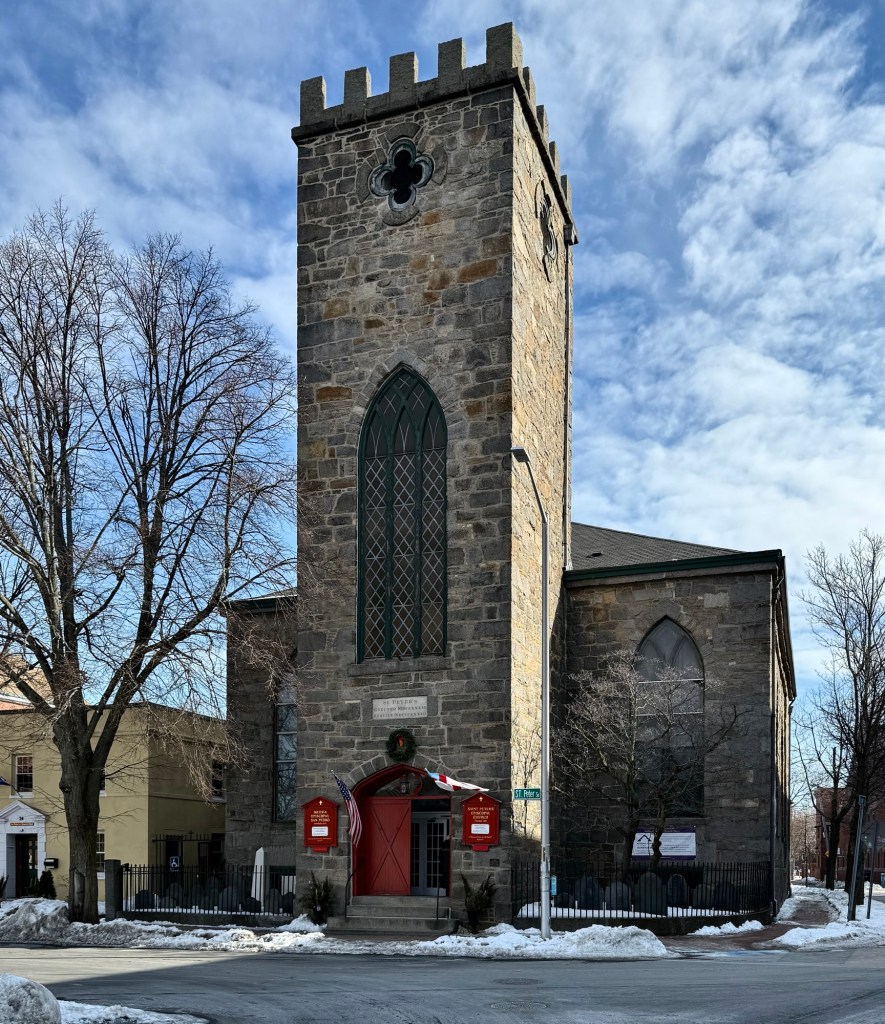
The St. Peter’s Episcopal Church of Salem, is a landmark example of a granite, Gothic Revival church of the 19th century. The present church, which is constructed of Cape Ann granite, was the second church on the site built for local Episcopalians, replacing a wood-frame building constructed there 100 years prior. Designed by architect Isaiah Rogers, the Gothic church features a prominent entry tower with a quatrefoil window in each elevation, large lancet-arched windows in the tower and lining the sanctuary, and a crenelated parapet. When completed, St. Peter’s had Salem’s first church bell, an 1740 English bell that supposedly still graces the tower today and is said to be the oldest church bell in the United States! In 1871, the rear chapel was added to the building, from plans by George E. Harney. The chapel was built directly over the old parish cemetery, requiring some of the tombstones to be placed inside the chapel walls, while others were moved to the front of the church, creating a really unique “garden cemetery” in front of the church.

Holyhood Cemetery Chapel // 1857

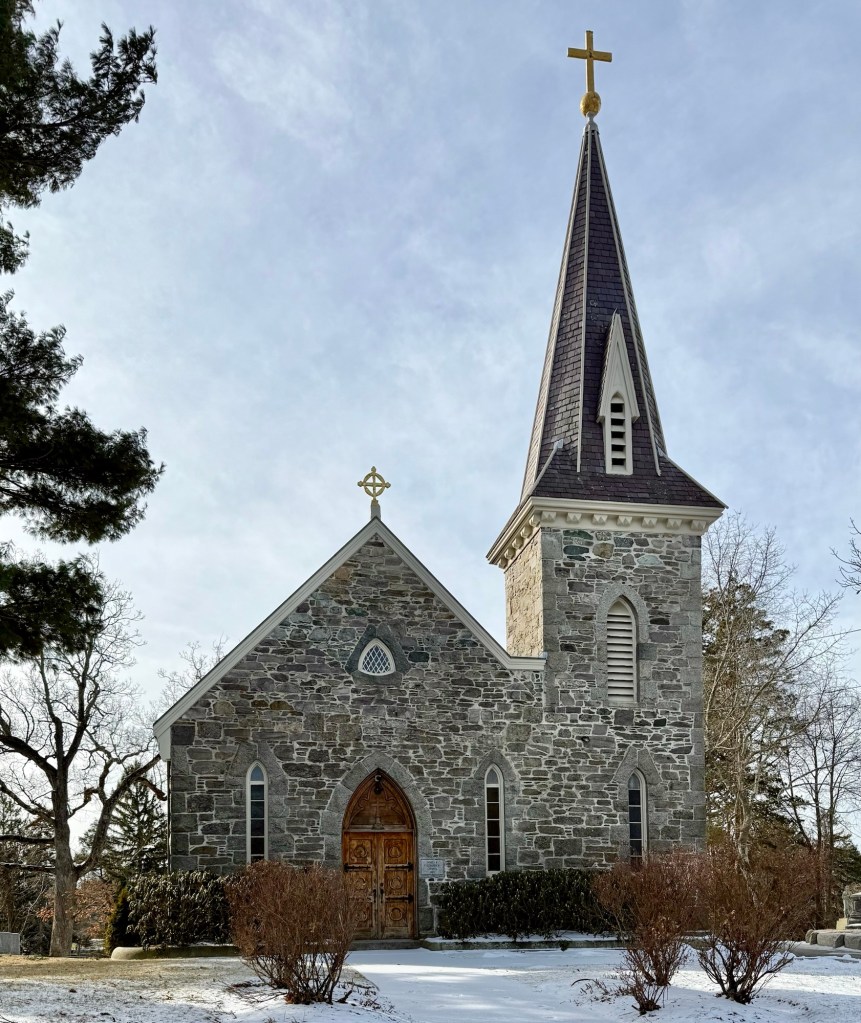
Holyhood Cemetery in Brookline, Massachusetts, was laid out in 1857 under the direction of Father Joseph M. Finotti, pastor of Assumption Parish , which included Brookline and Brighton. The cemetery reflects the mid-19th century influence of the Rural Cemetery movement and the romantic landscape cemetery planning begun at Cambridge’s Mount Auburn Cemetery in the 1830’s. A plan of the cemetery was drawn up by Shedd & Edson and published in August 1857. It shows curvilinear avenues and paths named after former bishops of Boston and Biblical figures. All were welcome to be buried except those who “died in a state of Drunkenness, Duel, or by self-destruction, unbaptized, non-Catholic, or otherwise opposed to the Catholic Church.” In the 1857 Shedd & Edson plan for Holyhood Catholic Cemetery, a chapel was located at the center on the hill shown in a small drawing on the edge of the plan. Known as St. Joseph’s Chapel, the stone building was designed by Patrick Keely, the successful and influential New York architect of many mid-19th century Catholic churches. The chapel would be dedicated in 1862. Decades later, a cemetery office was planned and built across Heath Street from the cemetery gates, but was demolished sometime in the 20th century. The cemetery grew and it along with the mid-19th century chapel, has been lovingly maintained to this day.  

Chapin Mausoleum // 1914

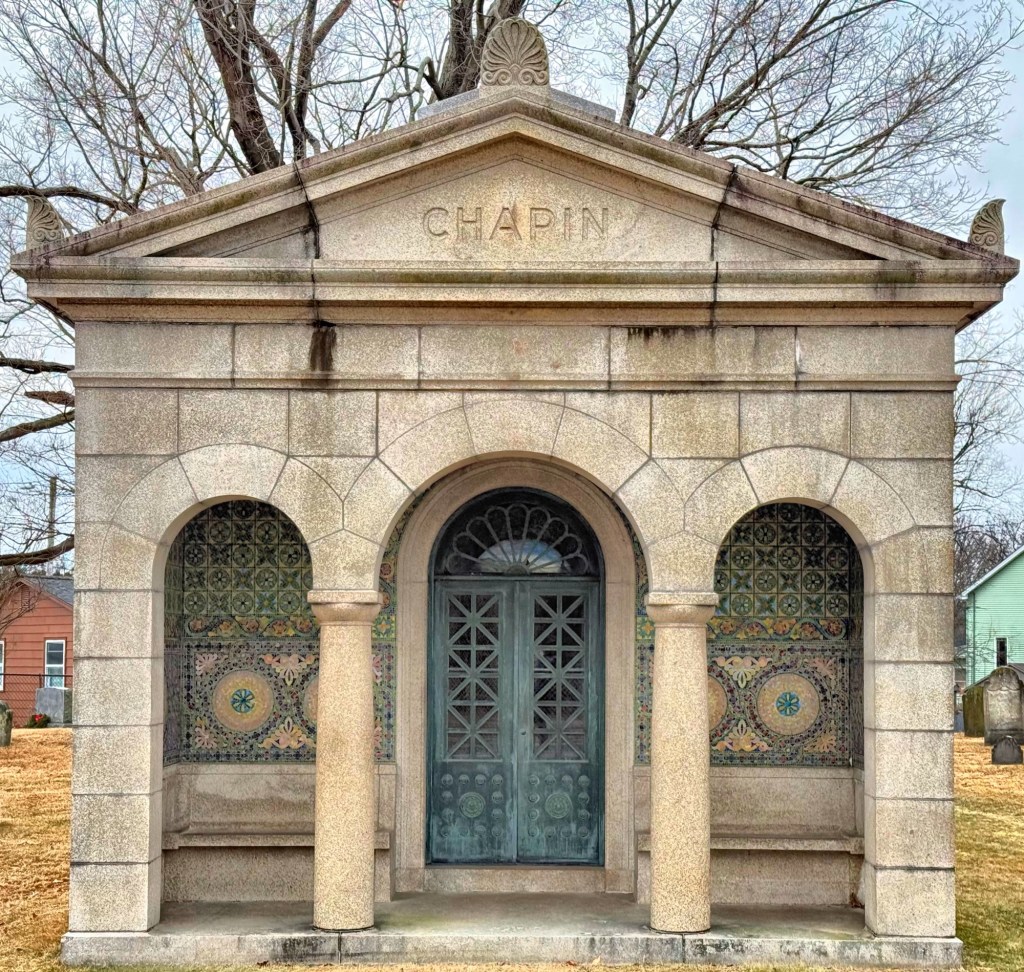
The Chapin Mausoleum was built as a memorial to Chester and Dorcas Chapin by their son, Chester W. Chapin Jr. Located in the Chicopee Street Cemetery in Chicopee, Massachusetts, the otherwise ordinary burial ground is adorned by this stately mausoleum, which was designed by none other than Louis Comfort Tiffany. Chester W. Chapin, the father of the mausoleum builder, was one of the Connecticut Valley’ s most important 19th century businessmen. After more humble beginnings operating a store, Chapin operated a business for coaches and steamboats, and later, he became president and director of the Western Railroad Corporation (1854 to 1867), and president of the Boston and Albany Railroad Company (1868 to 1878). He was elected as a Democrat to the US House of Representatives and served from 1875 to March 3, 1877. His son, Chester Williams Chapin (1842-1922), followed his father’s footsteps and serves as president of the New York & New Haven Steamship Company and one of the organizers of the Central New England Railroad. Chapin Jr. hired Louis Comfort Tiffany to design and decorate this mausoleum as a memorial to his parents, in the cemetery where hundreds of family members are buried in Chicopee. The mausoleum is constructed of “Tiffany granite”, from a granite quarry in Cohasset that Tiffany Studios purchased in 1914. The entrance to the mausoleum is through a Romanesque portico complete with round arches, stocky columns, and Favrile glass mosaics on the sides. Two marble benches flank a specially designed Tiffany bronze door. Inside, it is said that there are 12 catacombs of richly veined white marble under a Favrile glass mosaic ceiling.

Copp’s Hill Burying Ground // 1659

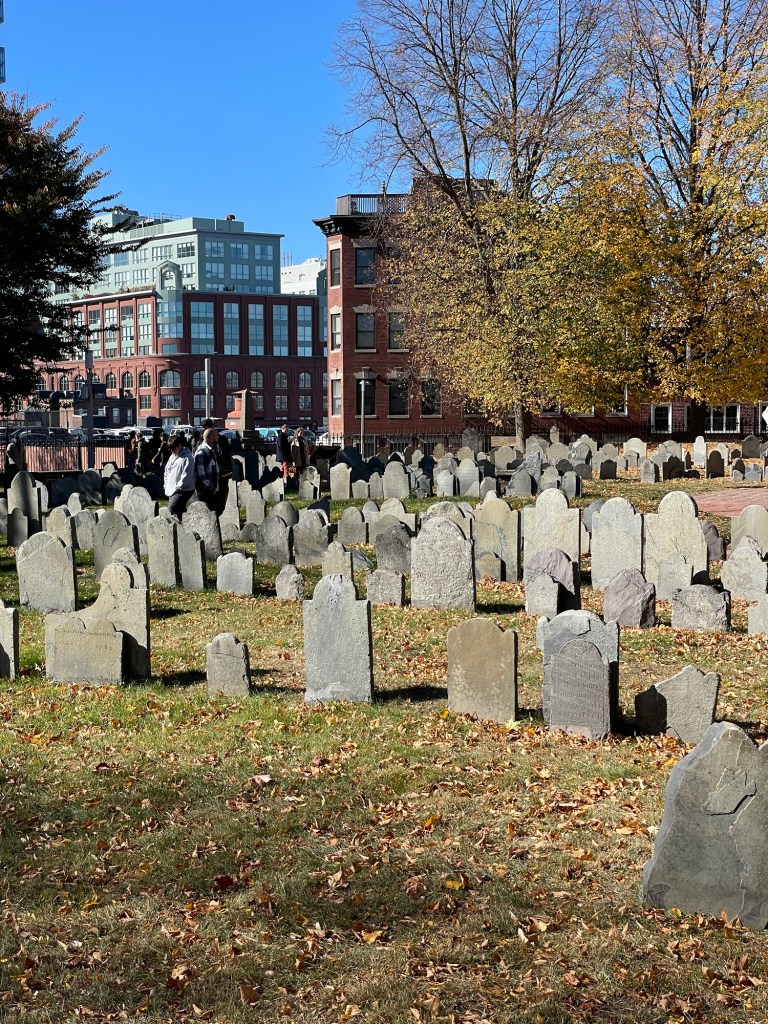
Happy Halloween! Welcome to Copp’s Hill Burying Ground, a historic cemetery nestled in Boston’s historic North End. Established in 1659, it served as a burial site for some of Boston’s earliest settlers and notable figures, including craftsmen, merchants, and members of the influential Mather family. Also burie here is abolitionist and leader in the free black community in Boston, Prince Hall. Originally called North Burying Ground, Copp’s Hill was the second place of interment on the Boston peninsula and was laid out in 1659. The area acquired its present name through its association with William Copp (1589-1670), a shoemaker and early settler who lived near today’s Prince Street; ironically, his stone is no longer standing.

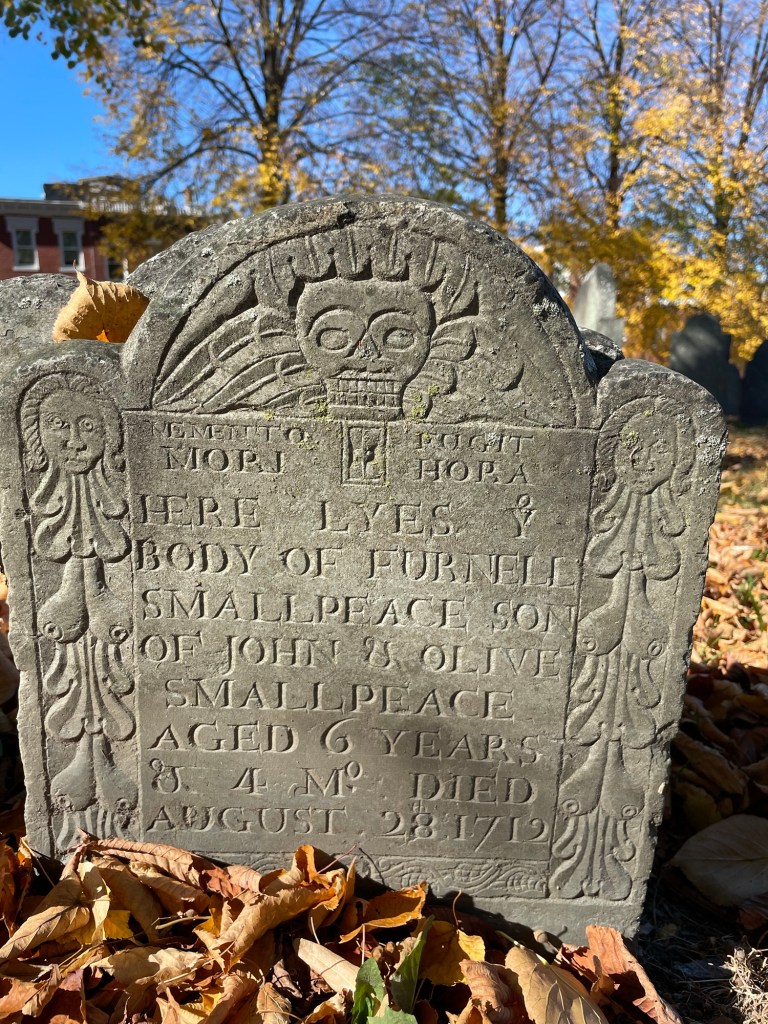
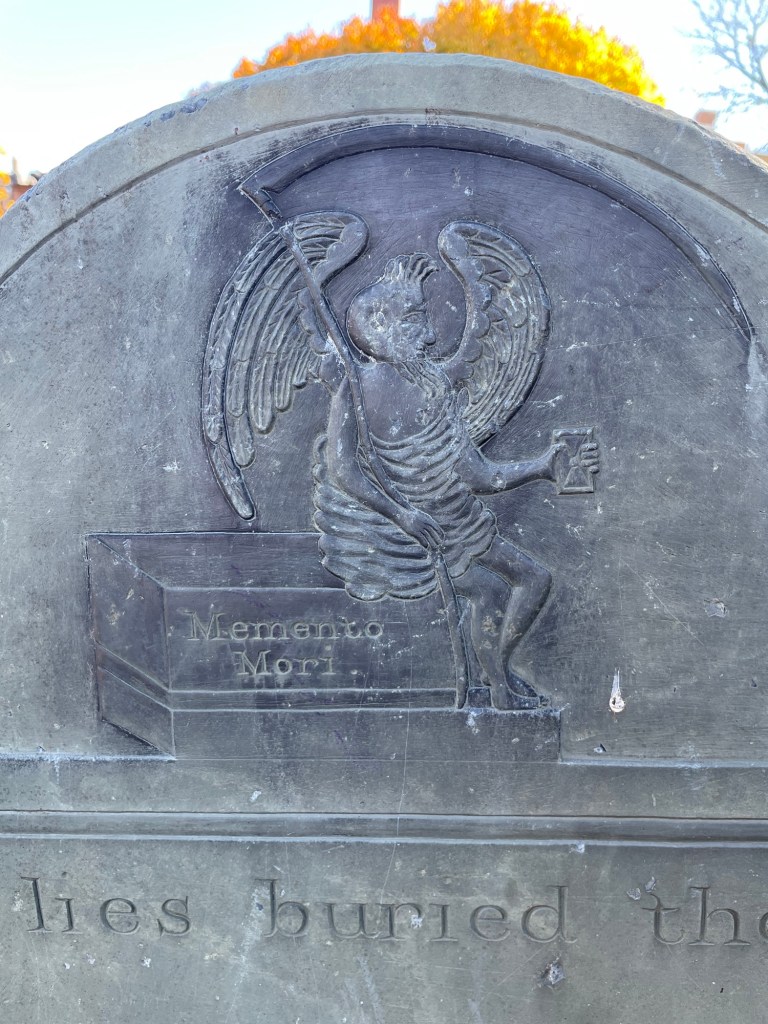
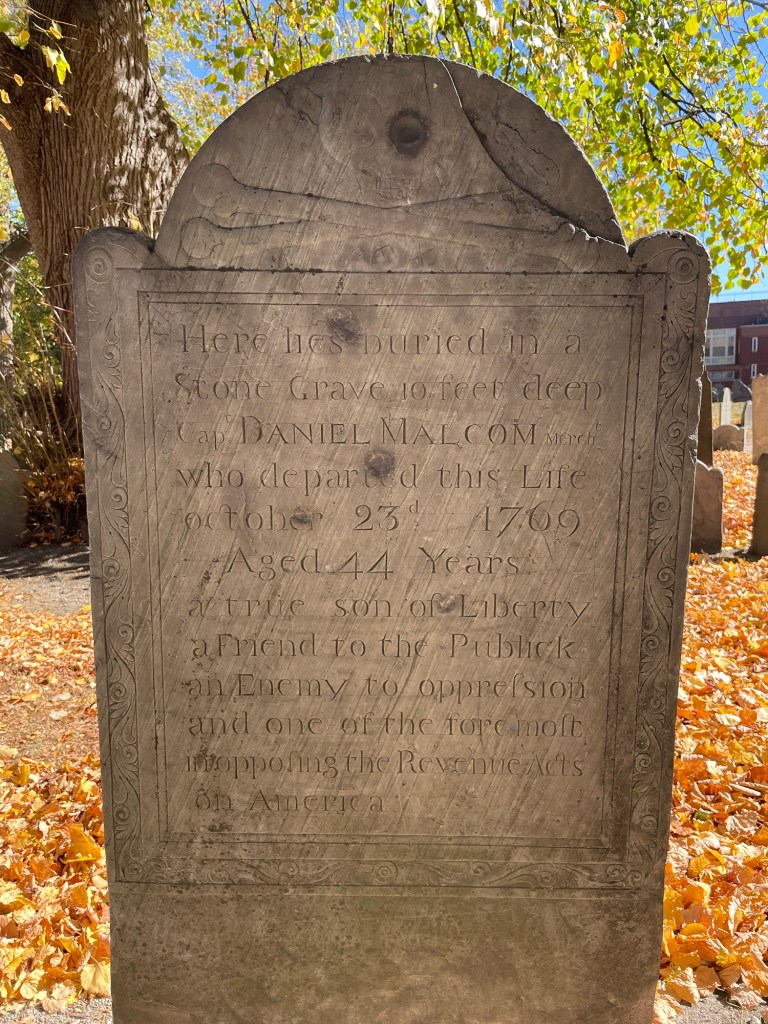
The cemetery is particularly known for its distinct slate gravestones, many adorned with intricate carvings that reflect the artistry of the era. Over the centuries, it has witnessed significant events, including the American Revolution, when it was used as a lookout point for British troops. During the Revolution, the burying ground’s prominent location overlooking the harbor gave it strategic military importance. At its southwest side the British established their North Battery and an earthworks from which they directed the shelling of Bunker Hill and ultimately the torching of Charlestown. Legend has it that British troops used gravestones for target practice. Many have interpreted the round scars on the gravestone of Captain Daniel Malcolm, an ardent son of liberty who spoke against Britain, as the result of musketballs shot at close range. The cemetery was used continually until the 1850s and is today, an evocative reminder of Boston’s early days, drawing visitors who seek to connect with the city’s storied history amidst its tranquil surroundings while the city stretches upwards around it. The cemetery is open and free to visit most of the year and is a great place to stroll and learn about Boston’s early history and see amazing stone carving!

Woodlawn Cemetery – Entrance Gate // 1897

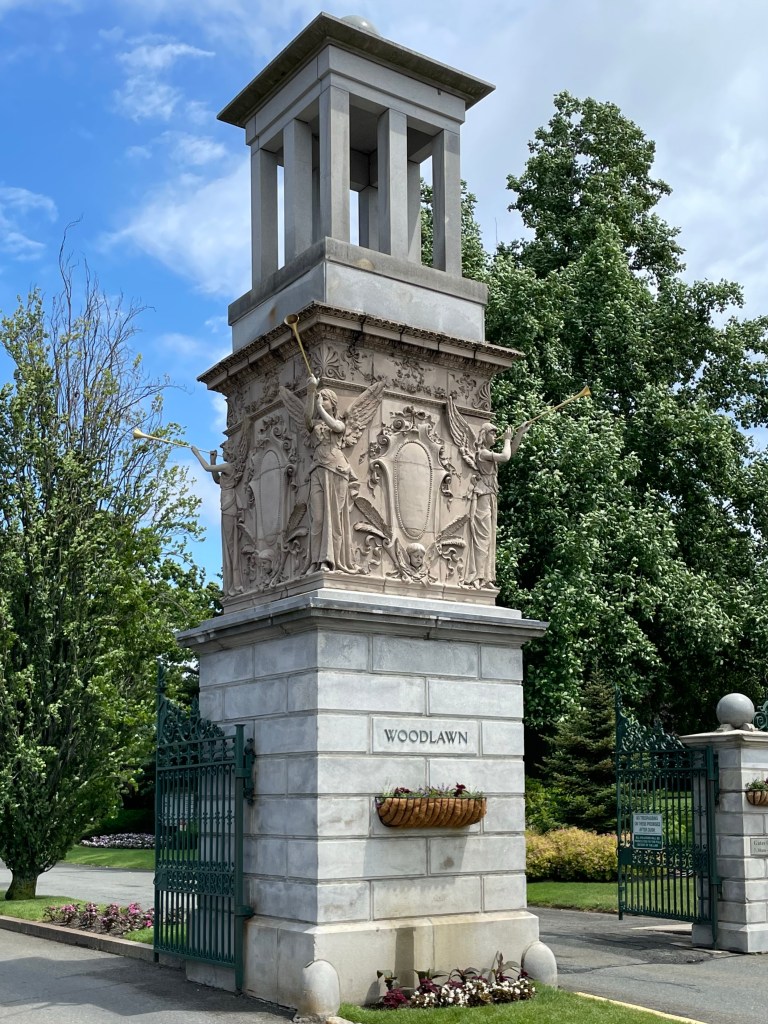
Woodlawn Cemetery in Everett, MA was established in 1850 as a rural, private cemetery in the tradition of Mount Auburn Cemetery in Cambridge. The story of Woodlawn Cemetery began in 1850 when a group of ten prominent Bostonians petitioned the Massachusetts General Court to organize a corporation “for the purpose of procuring, establishing and preparing a cemetery or burial place for the dead in Malden” (present-day Everett was established in 1870 from Malden). When you approach the main entrance of the cemetery, you are greeted by the entrance gate and tower. Completed in 1897 to replace an earlier wooden gate, the Entrance Gate consists of a central stone tower and two side entrances. The gate, tower, and adjacent lodge (next post) were designed by Boston architect William Hart Taylor, who was buried at the cemetery upon his death in 1928. The tower has decorative sculpted terra cotta which includes winged angels at the corners with outstretched arms that once hold trumpets. Below the medallion which is centered on each side, there is the bust of a winged child, supposedly a carved likeness of the architect’s young son who died at the age of six and is buried at Woodlawn.