Governor Draper Mansion // 1905

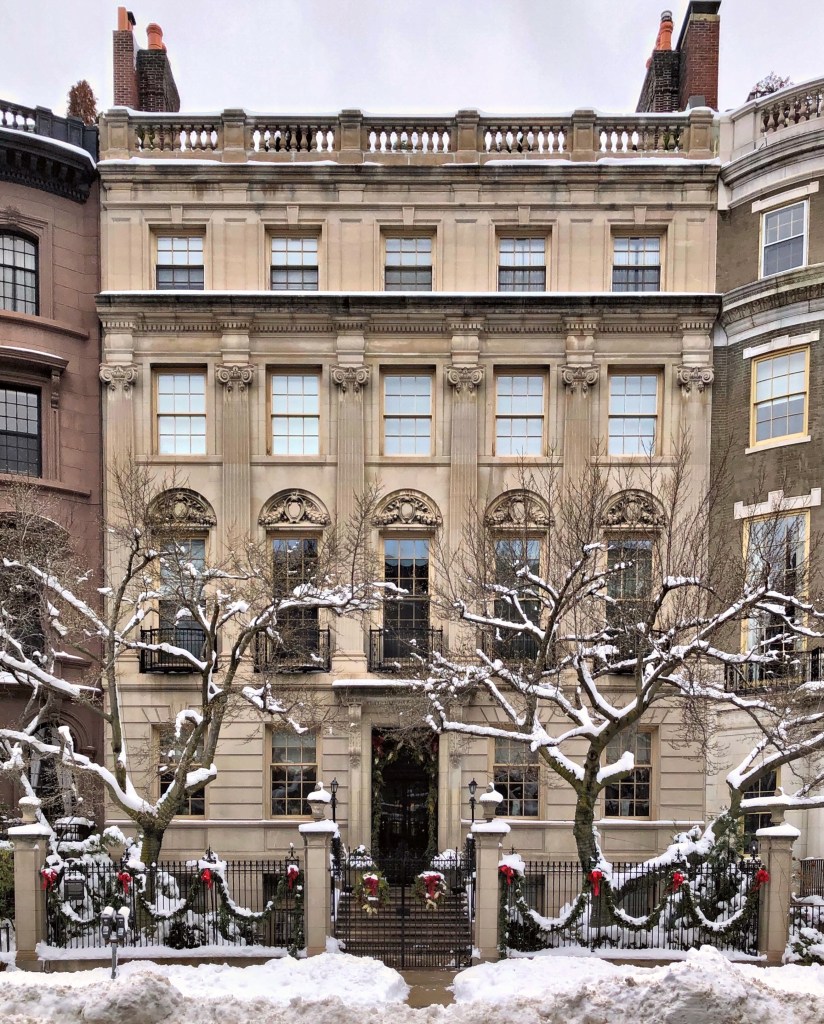
Adjacent to the Warren House (last post) on Beacon Street in Boston’s Back Bay neighborhood, this massive mansion is one of my favorites on the street. Built in 1905, and designed by architect Alexander Wadsworth Longfellow, Jr. an amazing local architect, and nephew of poet Henry Wadsworth Longfellow. The grand mansion was the home of Eben Sumner Draper and his wife, Nancy. Eben Draper was a manufacturer of cotton machinery in the Draper Corporation, founded by his father in Hopedale, MA. Draper graduated from MIT and entered his fathers business, which upon the time of his graduation, was the largest plant for manufacturing cotton machinery in the world. In 1905, Draper was nominated and elected as Lieutenant Governor of Massachusetts, the same year he had this mansion constructed. In 1908, Draper was elected Governor, and served two terms under the Republican Party, pushing a pro-business, and anti-reform agenda, a bill legalizing the merger of the Boston and Maine Railroad with the New York, New Haven and Hartford Railroad, signaling approval of what was seen as monopolistic business practices, something the Draper Corporation was known for in Hopedale. The former single-family home was converted to six condominium units in 2000. Fun fact: the Draper Mansion replaced the 1860 home David Stewart, a merchant from New York, built as a wedding present for his daughter, Isabella Stewart, and John (Jack) Lowell Gardner. Isabella would later create the beloved and iconic Isabella Stewart Gardner Museum. The couple purchased the adjacent townhome in 1880 to store their growing art collection.
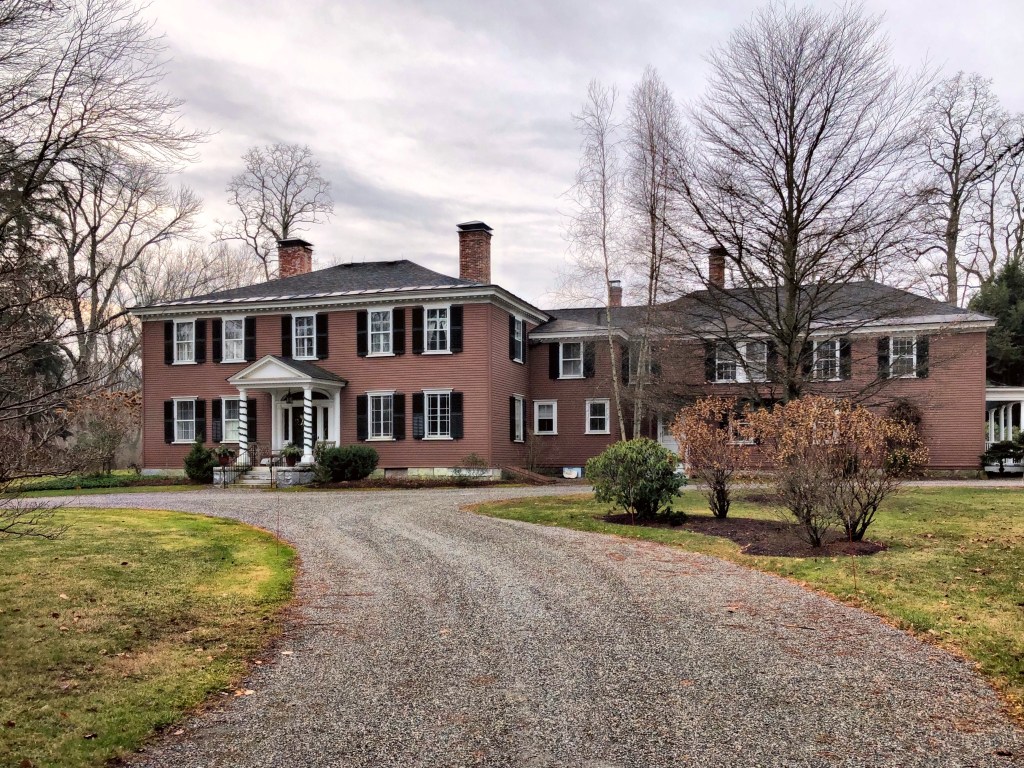
Tanglewood // c.1865

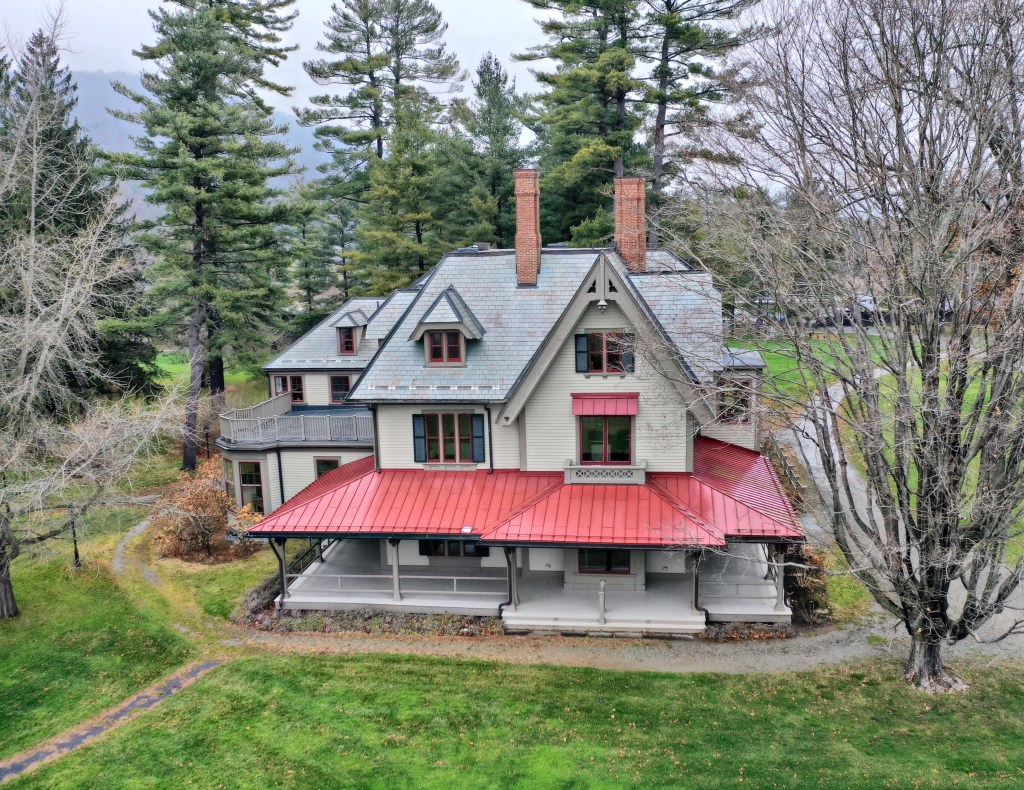
The 200-acre campus of Tanglewood, where the Boston Symphony Orchestra spends its summer months, spreads the grounds of two historic summer cottages in the charming town of Stockbridge, MA. One of the summer “cottages” Tanglewood, where the music center gets its name, was constructed around 1865 for Caroline Sturgis Tappan, husband William Aspinwall Tappan and their two daughters, Ellen Sturgis Tappan and Mary Aspinwall Tappan. Mary, with her niece Rosamund Hepburn, donated the family summer home, Tanglewood in 1937 to Serge Koussevitzky, a Russian-born conductor, composer and music director of the Boston Symphony Orchestra from 1924 to 1949. The campus has since grown astronomically as it hosts musicians and tourists from all over the region and globally to experience the arts in the charming town in the Berkshires. The Tanglewood house retains much of its historic architecture and siting, overlooking the Stockbridge Bowl (lake).

Citizen’s Hall // 1870

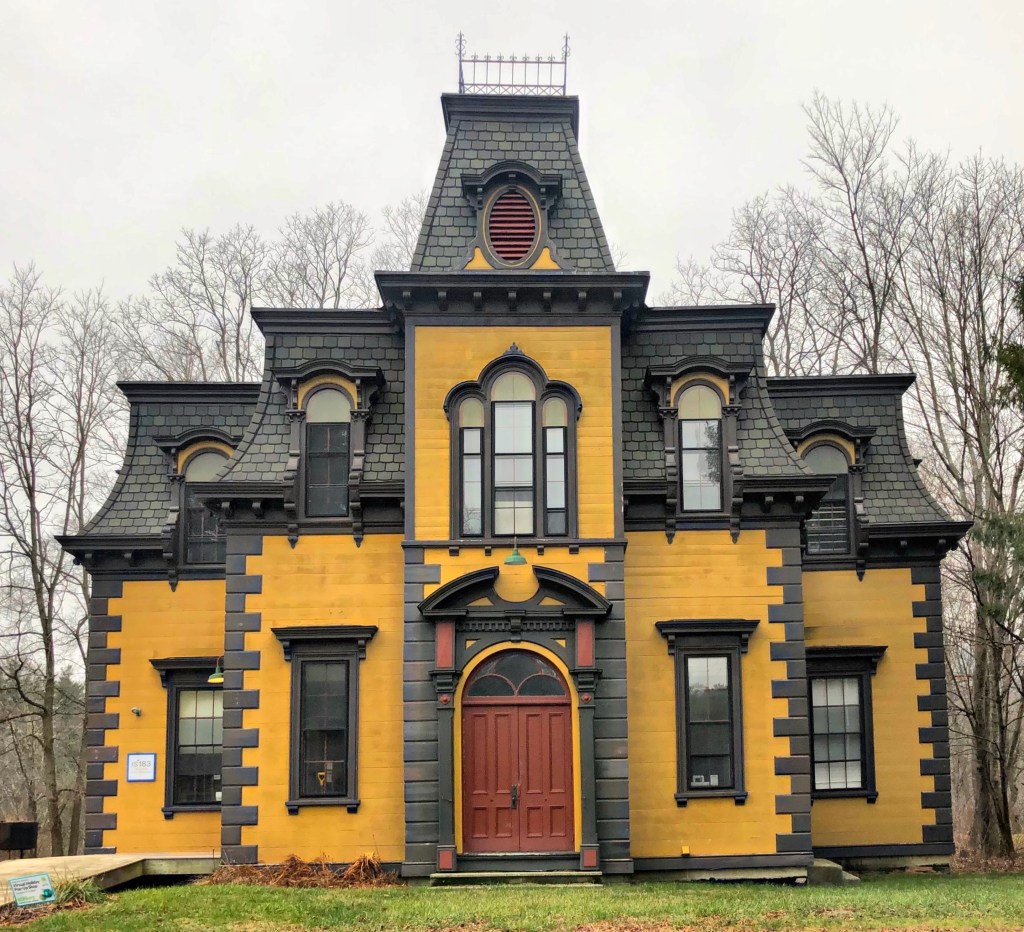
Citizens Hall, which was built in 1870 in a small village within Stockbridge, MA, is a small-scale version of the civic buildings constructed in the Second Empire in American towns and cities following the Civil War. The building is the architectural epicenter of Curtisville (now sometimes referred to as Interlaken), a small community within the Town of Stockbridge, which grew up around twelve mills. The mills are gone but several significant structures remain, also retaining their rural character. Citizens Hall was designed by Charles T. Rathbun, and inside, the two rooms on the first floor housed the public school and the second floor was the community assembly hall. The building was threatened with deferred maintenance in the mid-20th century and its future was uncertain until 1975 when a local group worked with the State Historic Preservation Office and acquired a grant to make needed repairs on the building. Today, the structure is maintained and houses the Art School of Berkshire (now known as Interlaken School of Art). Look at that historically appropriate paint scheme!

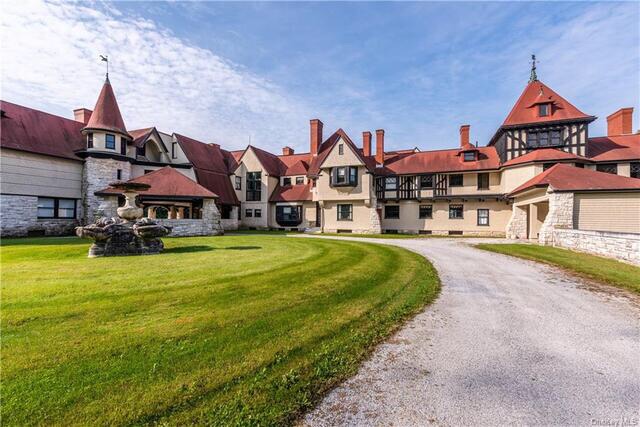
Elm Court // 1886

Real estate listing 11-2020

At 55,000 square feet and 106 rooms, the Elm Court mansion retains the title of the largest American Shingle Style home in the United States. The structure was built for William Douglas Sloane and Emily Thorn Vanderbilt (granddaughter of Cornelius Vanderbilt) as their summer “cottage” in the Berkshires. The home straddles the towns of Stockbridge and Lenox and sits on a massive parcel of land, giving the owners space to breathe the clean countryside air. Emily’s brother, George, built The Biltmore in Asheville, North Carolina and her sister, Eliza (Lila), constructed Shelburne Farms in Shelburne, Vermont. The home was constructed in 1886 from plans by the great Peabody & Stearns architects. Shortly after the turn of the century, ca. 1901, the couple commissioned Peabody and Stearns again, to vastly enlarge their original house. The additions used both Shingle Style and Tudor Revival motifs, and the result is a structure highly reminiscent of an English country house. William Sloane died in 1915, and Emily Vanderbilt continued to use the summer cottage, and in 1921, she married a summertime neighbor, Henry White, a career diplomat. While Henry White died in 1927, Emily retained the house and kept the grounds running until her death in 1946. The property’s use evolved into an inn in the late 1940s. During the 1950s, it embraced the public for dinners, overnight accommodations and events. Eventually Elm Court’s doors closed, and for approximately 50 years the mansion succumbed to significant theft and vandalism. The property has been listed for sale numerous times in the past decades, after a renovation by the last owners in the Sloane family. It is now listed for $12,500,000!

Sedgwick House // 1785

Built in 1785, the Sedgwick House on Main Street in Stockbridge, MA, is the oldest of several Federal mansions built in town after the Revolution. Theodore Sedgwick (1746-1813), one of the early lawyers of Berkshire County, moved to Stockbridge in 1785 and built this house. From 1796 to 1799 he was a Senator in the federal government, and declined a position of Secretary of the Treasury offered by George Washington. Before this, when a House Representative, he was nominated the fourth Speaker of the House. An ardent Federalist, Theodore retired from the national arena upon Thomas Jefferson’s election. Sedgwick was also a member of an early abolitionist society organized in Pennsylvania in 1775 and played a key role in abolishing slavery in Massachusetts by his win in the case of Bett v. Ashley. In this case, Sedgwick served as attorney of Mum Bet (also known as Elizabeth Freeman) an enslaved woman in nearby Sheffield and argued that slavery was inconsistent with the 1780 Massachusetts State Constitution, and won. Bet became the first enslaved African American to file and win a freedom suit in Massachusetts, effectively abolishing slavery in the state. She was later buried in the Sedgwick Family burial plot in Stockbridge. The home was later owned and occupied by Catharine Maria Sedgwick, Theodore’s daughter, who became one of nineteenth-century America’s most prolific women writers. She published six novels, two biographies, eight works for children, novellas, over 100 pieces of short prose and other works.

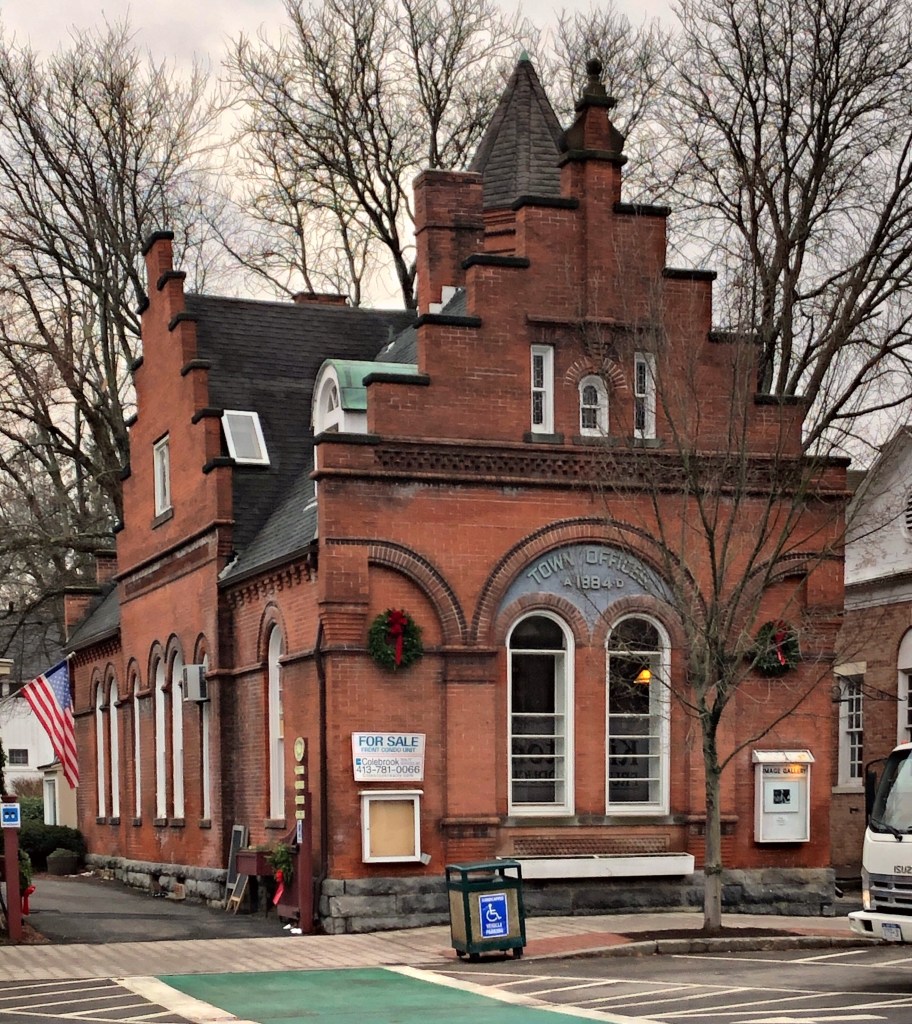
Stockbridge Town Offices // 1884

Built in 1884, the Town Office Building on Main Street in Stockbridge, housed more conveniently located government offices and came equipped with a basement jail. The building was constructed of brick to protect town records from fire and the adjacent buildings. The architecture is Flemish Revival with its stepped gables, a tower, and terra cotta and stained glass ornaments, a distinctive and different type of architecture on Main Street. The building was occupied after the Town Hall, further down Main Street, was deemed inadequate. The building displays the words “Town Offices” with the date 1884 A.D. as the town was sure to label the building as town offices over ‘town hall’ so they could retain the former town hall building after a deal with the First Congregational Church. The town sold the building to private owners in 1960 and has since been used as commercial space.

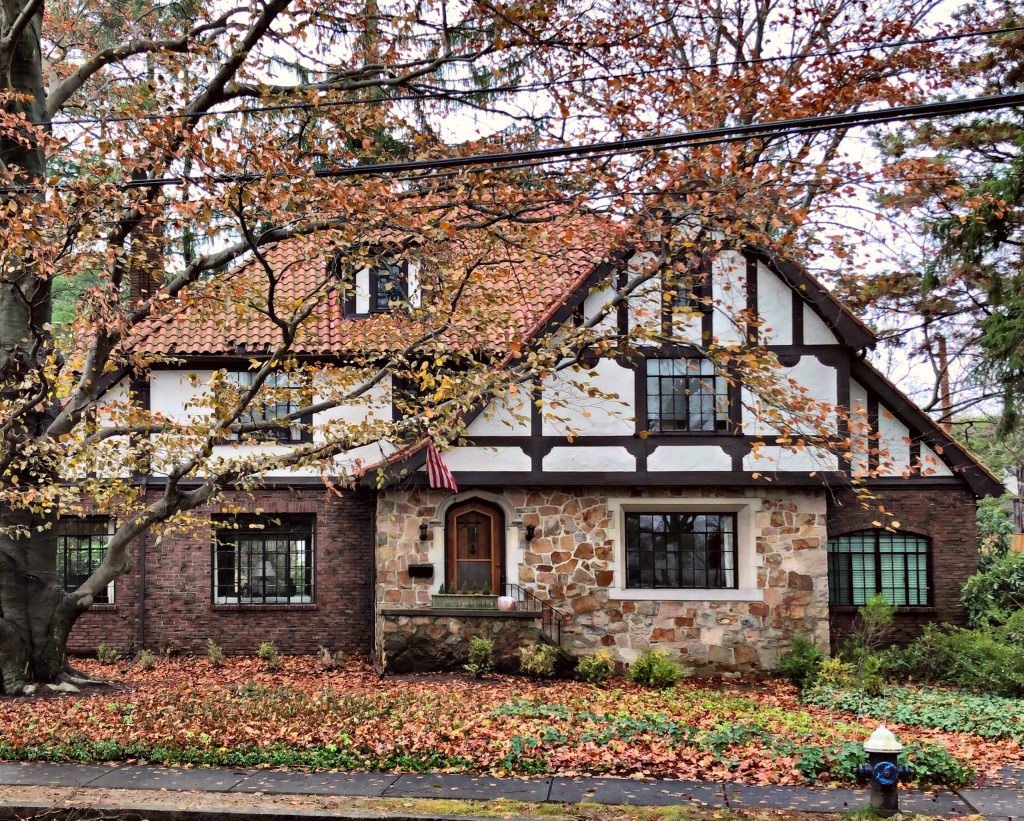
Glacy House // 1930

Residential architecture of the early decades of the 20th century is among my favorites as the Tudor Revival movement took off and was sometimes mixed with other revival styles at the time, creating really unique homes. The Glacy House in South Brookline, MA was built in 1930 as one of the earlier homes in the Walnut Hill development. It was likely designed and built by Walter L. Fernandez, a contractor who appears to have design-built a handful of spec homes to help get the neighborhood’s development going in the early stages. This home was originally occupied by George and Mary Glacy. George later worked as Vice President of the Boston & Maine Railroad, though he later got into legal trouble for hiring companies for railroad projects where he had financial interests, becoming indicted in an antitrust case by a Federal grand jury. The home features a first floor constructed of stone and brick with half-timbering on the floor above. The building is topped by a terracotta red tile roof, which is fairly uncommon for the region.

Webber House // 1935

Located in South Brookline, a neighborhood of mostly early-mid 20th century architecture, you can find amazing residential designs for middle-class suburban families in the Boston area. This home was built in 1935 for Max and Rebeccah Webber in the Garrison Colonial Revival style. The home, designed by architect Harry Morton Ramsay, is characterized by a second-story shingled overhang with decorative pendants reminiscent of 17th century American homes. Adding some extra flair, an eyebrow dormer can be found at the roof, as well as a glazed projecting entry porch with a broad pediment and corner pilasters.

Ames Shovel Works // 1852-1934

Oliver Ames began producing shovels in North Easton, Massachusetts at three pre-existing factory sites in the early 1800s. By 1852, O. Ames & Co., now run by Oliver Ames’s sons, Oakes and Oliver, Jr., was prompted to construct stone shops on the west side of the Shovel Shop Pond. In 1851, the original shovel shop was destroyed by fire. The company would soon rebuild, and by 1852 the first of the new shops, of fireproof stone construction had been completed. From 1852 to 1953 the company hired hundreds of men, women, and boys to make dozens of different kinds of shovels as well as hoes and, later, lawn and garden tools. Strong demand for shovels would continue in the mid 19th century, with the great expansion of railroads and later the American Civil War. Abraham Lincoln personally asked Oakes Ames to supply shovels to the Union Army, and he obliged. By 1879, the company is said to have produced 60% of all the shovels in the world!! The Ames Shovel Company ceased production in Easton in 1952. After, the buildings started to suffer from neglect with only a few buildings occupied by commercial uses. Thankfully, in 2014, the complex was redeveloped into a local YMCA and apartments as the Ames Shovel Works Apartments!

Thomas and Esther Smith House // c.1758

The Thomas and Esther Smith House in the Feeding Hills area of Agawam, Massachusetts is a 1½ story, vernacular Georgian style house with a gambrel roof. Feeding Hills, so named for its bountiful soils, is an agricultural plain approximately five miles west of the Connecticut River at the eastern foot of Provin Mountain. The land was highly sought after by farmers, with many agricultural uses still taking place here to this day. This parcel of land was purchased by Thomas Smith, a carpenter, in 1757, who likely built the home soon after for his new family. The family occupied the home into the mid-19th century, harvesting crops and raising cattle for sustenance and sale. The agricultural property was subdivided numerous times and now sits on just an acre. The home and remaining land was purchased by the Agawam Historical Society in 2002, who maintain the property and educate on Agawam’s agricultural heritage.