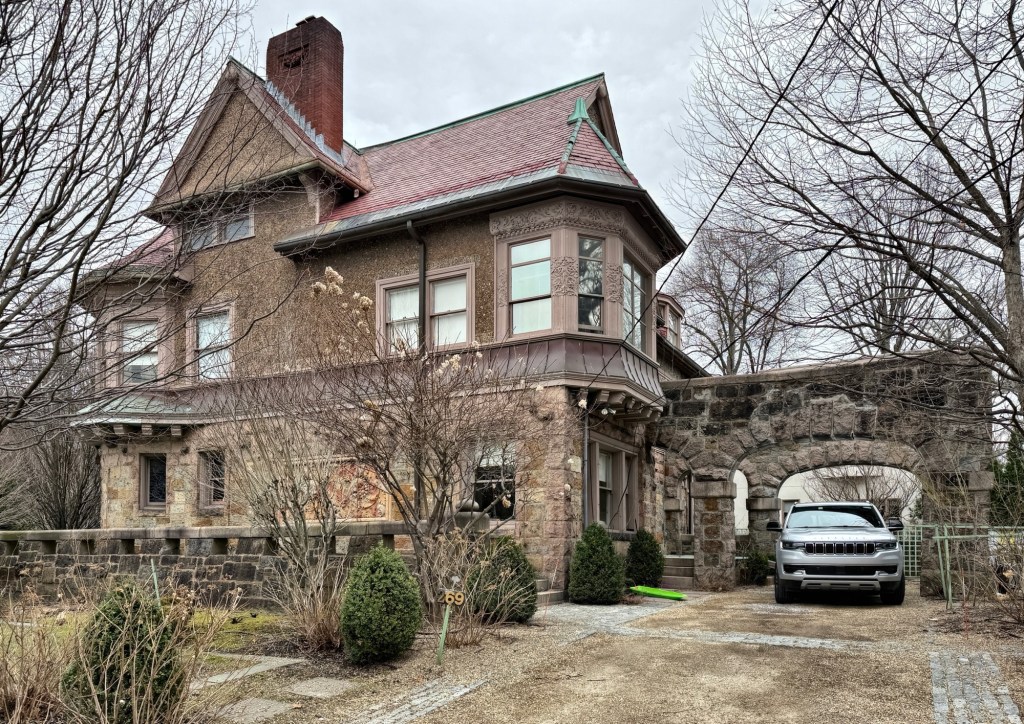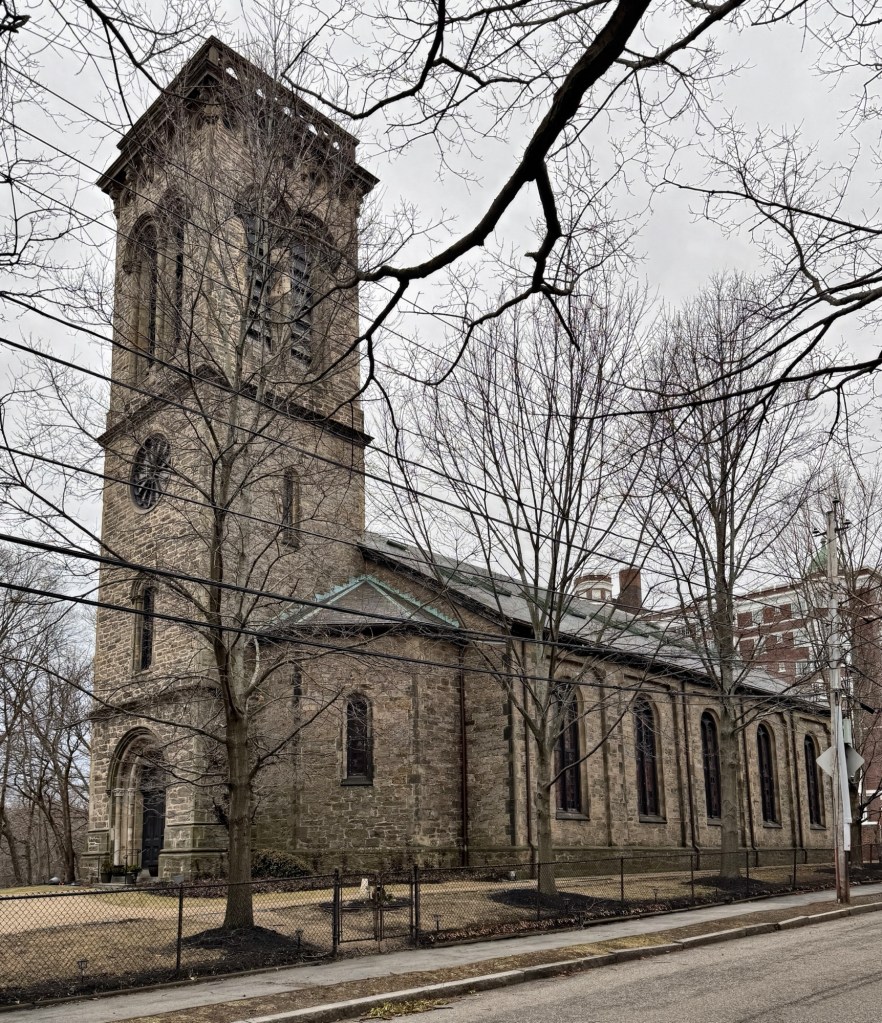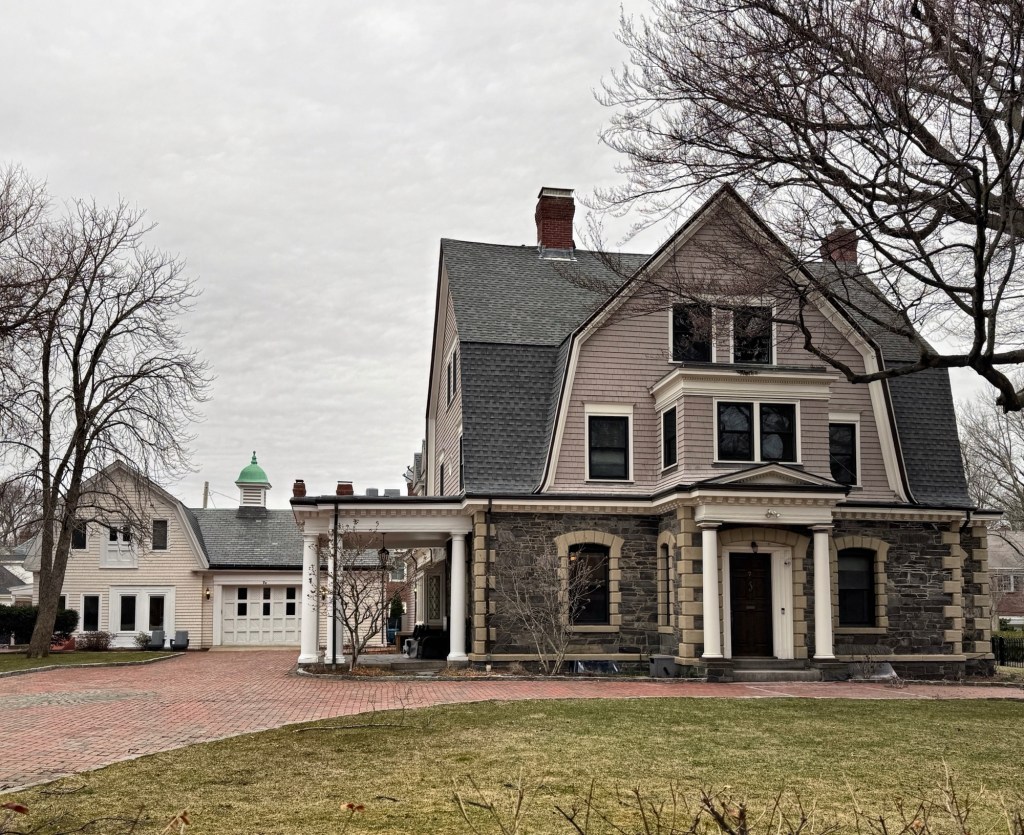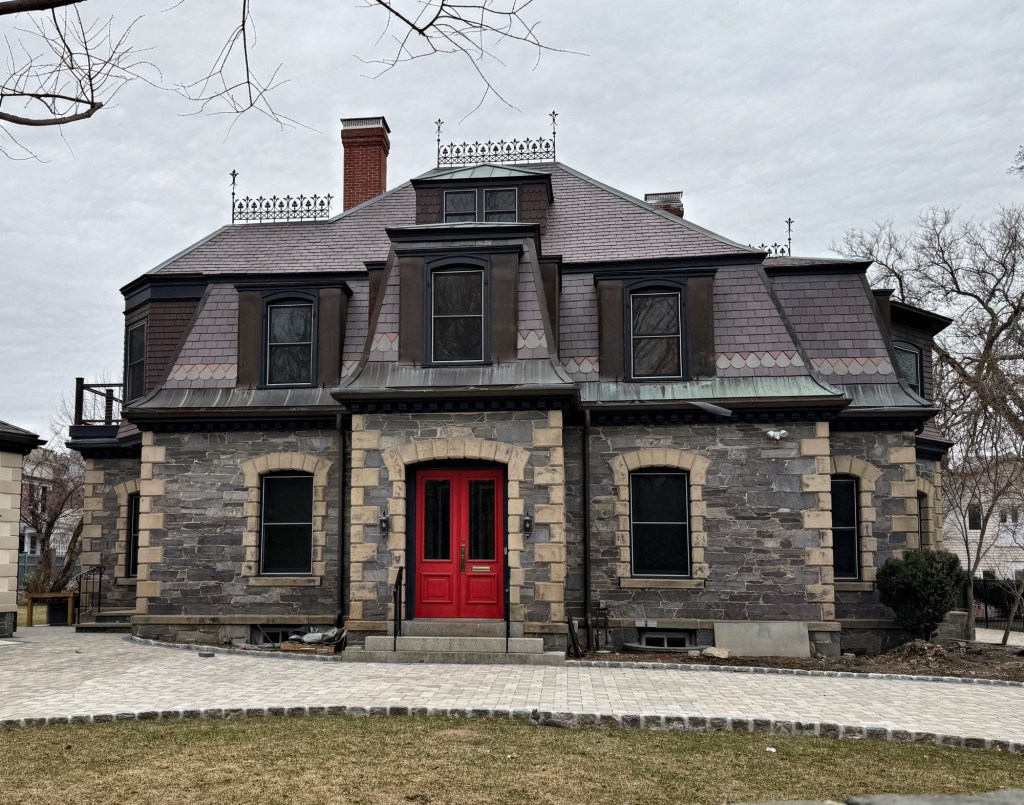
Wheaton-Capper House and Store // c.1760

Built before the Revolutionary War, this charming building on Water Street in Warren, Rhode Island, dates to around 1760 and was The house was occupied by D. B. Wheaton as a residence and later by James Capper (1819-1891), an Irish immigrant who settled in Warren. James’ wife Ann, worked as a dressmaker and the couple sold goods out of the storefront in their residence. The retail storefront helps to tell the evolution of Water Street from a more industrial and residential street to a commercial corridor, similar to Main Street. The Wheaton-Capper House and Store legacy lives on with the building still occupied by a local business and residence.

Warren Masonic Temple-Washington Lodge No.3 // 1796

Located next door to the Randall House (last post) on Baker Street in Warren, Rhode Island, this early building has some history! Constructed in 1796 by the Washington Association, Inc., this two-story Federal period building is an architectural and historic landmark in the immensely beautiful town of Warren. The elongated building is fairly plain in plan, but is adorned by corner quoins, elaborate pedimented entries, ornate cornice, and (now filled) ocular windows in the gable ends. It is believed that many of the timbers used in the building are oak beams that were formerly part of the British Frigate Juno and other ships which were sunk in Newport harbor during the American Revolution. Brother Sylvester Child, a member of the building committee purchased the old ships and floated the timbers up Narragansett Bay and into the Warren River and his shipyard at the base of Miller and Baker streets. The rib cuts in the oak plate beams can clearly be seen in the curvature of the ceiling in the lodge room.The Lodge was likely built by local carpenters using Asher Benjamin’s plan books for the detailing and was utilized as the Warren Town Hall and the Warren Academy, a private school, in the early 1800’s with meeting space for the local masonic lodge. The building has lost its original cupola at the roof, and its principal interior meeting room was redone in 1914 with elaborate murals by the Rhode Island artist Max Muller, some of which in Egyptian depictions.

Judge Samuel and Patty Randall House // 1809

This stately three-story Federal style mansion on Baker Street in the lovely town of Warren, Rhode Island, was built in 1809 as a gift from a father to his daughter as a wedding gift. The house was funded by James Maxwell, of the local family of merchants and slave traders, for his daughter Martha “Patty” Maxwell and her soon-to-be husband, Samuel Randall. Judge Randall operated a school in town and published three local newspapers, the Telescope, the Clarion, and the Telegraph, all rather short-lived. In 1822, he was appointed judge of the court of common pleas for Bristol County, Rhode Island, and served in that capacity until 1824, when he was made justice of the supreme court of the state. The pop of color at the entry and the bracketed, Victorian era door hood complete the facade to give it some serious curb-appeal.

St. Mark’s Chapel, Warren // c.1853

This charming shingled building on School Street in Warren, Rhode Island, was built around 1853 as a chapel for the accompanying St. Mark’s Episcopal Church a stone’s throw away on Lyndon Street. The chapel was originally constructed on the same lot as the church, but in 1863, was moved to its present location and rotated to face the street. The formerly plain chapel would be expanded in 1900, where a rear addition perpendicular to the main building was added, a new octagonal entry on the facade, and the entire building clad with cedar shingles. The chapel remained in use as a sunday school and for smaller services and later as a parish house. In 2012, the building was sold by the congregation and has since been a residence, which preserves the important architecture of the chapel while supplying much needed housing for the community. Oh how I love adaptive reuse!

Caleb Carr Tavern // c.1760

This house, located on Water Street in Warren, Rhode Island, is said to have been built in the 1760s, but its present appearance in the Federal style is credited to owner, Caleb Carr (1768-1853). In around 1790, Caleb fully renovated the property in the Federal style for his residence and as a tavern, with an elegant fanlighted door put on each facade—one for household use, the other for tavern customers. The property was inherited by his son, Captain Caleb Carr Jr., who continued as a tavern owner, but was also an important shipbuilder and operator of the ferry to Barrington, which docked at the end of the street. The Carr Tavern is today covered with later aluminum siding and has Victorian-era two-over-two windows but if restored, would shine as one of the best Federal style homes in town!

George Hail Free Library // 1888

The George Hail Free Library on Main Street in Warren, Rhode Island, is a unique, Victorian-era public library building that has been lovingly preserved by the community. Built in 1888, the building cost just over $16,000 and was designed in a more vertical expression of the Romanesque Revival style by the Providence architectural firm of William Walker and Son and built of rough-faced granite. The library is named after George Hail (1793-1873), a merchant, philanthropist, industrialist, and native son of Warren. His second wife, Martha Hail died in 1882 and left $5,000 and their home to the Warren Public Library provided that the name of the Library be changed to the George Hail Free Library in memory of her husband. The Library Committee agreed and planning began soon after for a new, purpose built library we see today. The exterior is distinguished, but the interior is also well-preserved, with original cherry woodwork grained to resemble mahogany, brass gaslighting fixtures, fireplaces, and leaded glass windows patterned with stained glass, together with some of the original furniture, that preserve a sense of the original setting.

Eddy-Cutler House // c.1806

Located next door to the Rebecca Maxwell Phillips House on State Street in Warren, Rhode Island the Eddy-Cutler House remains as one of the finest Federal style residences built of brick in the charming waterfront town. Warren merchant and slave trader Benjamin Eddy purchased this desirable house lot in 1806 from John Throop Child, a town councilman and slave owner in 1774 who built slave ships before the Revolutionary War. Benjamin Eddy began construction on his mansion by 1806, and it was completed sometime before the War of 1812. Like many of the town’s wealthiest residents, Benjamin Eddy was engaged in the slave trade. Captain Benjamin Eddy was captain of at least three slave voyages, delivering 139 captives to docks in Charleston, South Carolina, in June 1806 alone. In 1808, just before the “Act Prohibiting the Importation of Slaves” he purchased and imprisoned 176 Africans – the largest number ever carried on a Warren slave ship. Nineteen died during the return voyage. When he reached Charleston, South Carolina the remaining 157 people were sold into slavery. At the time, the sale would have returned nearly $33,000. He would return home to this mansion on money profited from human suffering, a story as American as apple pie. In 1871, the Eddy Homestead was sold to Charles R. Cutler, a ship master and whaler who had many successful voyages to the Indian Ocean before working in the manufacturing of cotton cordage. The three-story, five-bay Federal style mansion of brick features a Victorian-era porch, but retains its Palladian window with blind fan and lights over the entry and belvedere at the roof. Once painted, the brick is now slowly being re-exposed, a great sight to see.

Rebecca Maxwell Phillips House // 1806

The Rebecca Maxwell Phillips House at 26 State Street in Warren, Rhode Island, is one of the state’s finest examples of the Federal style of architecture, though the building was funded through profits off of enslaved people. The house was funded by Warren resident, Squire James Maxwell for his daughter, Rebecca, and is traditionally said to have been a wedding present or possibly a gift to potential suitors to his daughter. The Maxwell family’s immense wealth was partially resulted from the illegal sale of enslaved Africans, including those illegally transported on his schooner, Abigail, which left Warren in September 1789. The captain of the vessel, Charles Collins, purchased 64 slaves on the coast of Africa, and sold them in the Americas by June of 1790. Of the 64 captives embarked on the ship, only 53 survived the voyage. This home was occupied by Rebecca Maxwell and her new husband, William Phillips. The three-story mansion exhibits a pedimented fanlight transom, corner quoins, and a shallow hipped roof. The property is located on an oversized lot which contains a massive Japanese Beech tree in the side yard, which is said to have been brought from Japan by Commodore Joel Abbot, who lived nearby, in 1853.

Maxwell House // c.1755

The Maxwell House in Warren, Rhode Island, is a striking example of mid-18th-century colonial architecture and one of the oldest brick dwellings in the waterfront town. Built before 1755, the house is one of the finest brick Georgian-era residences in New England with its characteristic Flemish bond brickwork, fieldstone foundation, wood-frame gable ends, and massive central chimney that anchors its historic pre-Revolutionary form. Originally constructed for the Reverend Samuel Maxwell (1688-1778) and later home to members of the Maxwell family, prominent shipowners, merchants, and slave-owners in town. The Maxwell family’s wealth was tied to the maritime economy of the era, which tells the story of many Rhode Island merchants of the time, who participated in the trans-Atlantic slave trade that enriched local elites and shaped the region’s economic growth, a history that communities are increasingly confronting alongside preservation efforts to this day. Today, the Maxwell House serves as a house museum preserved by the Massasoit Historical Association, who (hopefully) share the full story of the house, from its architecture to funding to construct it.

Miss Grace Nichols House // 1913

Located at the western end of Chestnut Street in the Flat of Beacon Hill, you will find this stucco residence, one of the finest mansions in Boston. The four-story residence with two entrances is built of brick and covered with stucco and was constructed for Miss Grace Nichols (1874-1944), the daughter of John Howard Nichols, who worked for John Lowell Gardner (the husband of Isabella Stewart Gardner) as a merchant transporting goods between Boston and Chinese markets, before overseeing mills. As a single woman, Grace inherited much of her parents wealth upon their deaths, and in 1913, hired architect, William Chester Chase, to design her Beacon Hill home in the Italian Renaissance Revival style, similar to Isabella Stewart Gardner’s Fenway Court mansion (1903). Grace Nichols married Richard Pearson Strong, a Harvard professor and medical researcher, in 1936 and the couple lived here with servants until their deaths in 1944 and 1948 respectively. After their death, the building was either purchased by or willed to the Boston Society of Natural History and the New England Museum of Natural History, which moved out of their Berkeley Street location in 1946. The Nichols Mansion served as the new Boston Museum of Science until 1951, when the new and current museum was built between Boston and Cambridge. Today, the former Nichols mansion is five condominium units, with owners having one of the most enchanting and unique properties in the exclusive Beacon Hill neighborhood.