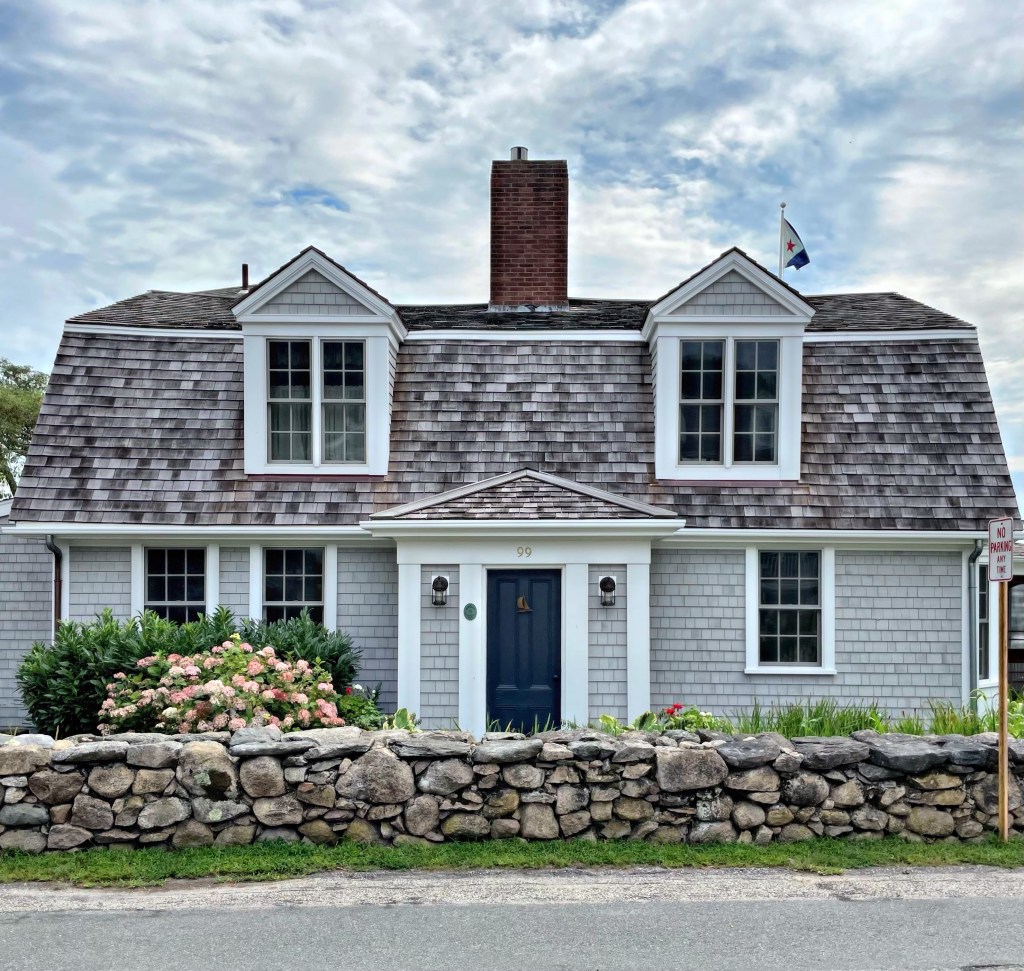
Sherman’s Inn – Beverly Yacht Club // 1784

One of the oldest homes in Sippican/Wharf Village in Marion, Mass., this beautiful Cape house with gambrel roof dates to 1784 from deed research. The house was constructed by two owners, Barnabas Luce, innholder, and Stephen Cunningham, a mariner, seemingly as an inn for sailors who would dock their ships in the harbor just behind the property. It was later acquired by Edward Sherman (1790-1867), a shipwright and carpenter who built schooners at the wharfs in town. In 1868, his son Edward Franklin Sherman (1821-1907), also a ship carpenter, sold the waterfront property after his father’s death to Andrew A. Harwood, an admiral in the United States Navy, Commodore of the Washington Navy Yard, and through his mother, Elizabeth Franklin Bache, a great-grandson of Benjamin Franklin! The property remained in the Harwood family until, 1955, when the property was sold to the Beverly Yacht Club. The yacht club was originally named after the town of Beverly, north of Boston, when members broke from the Eastern Yacht Club of Marblehead which was more prestigious. For the first 23 years, the club had no fixed location, but eventually settled in Bourne, and merged with the local Sippican Yacht Club. The Great Hurricane of 1938 destroyed their clubhouse and they were “homeless” for years until moving into this 1784 home, later expanding it to meet growing needs.
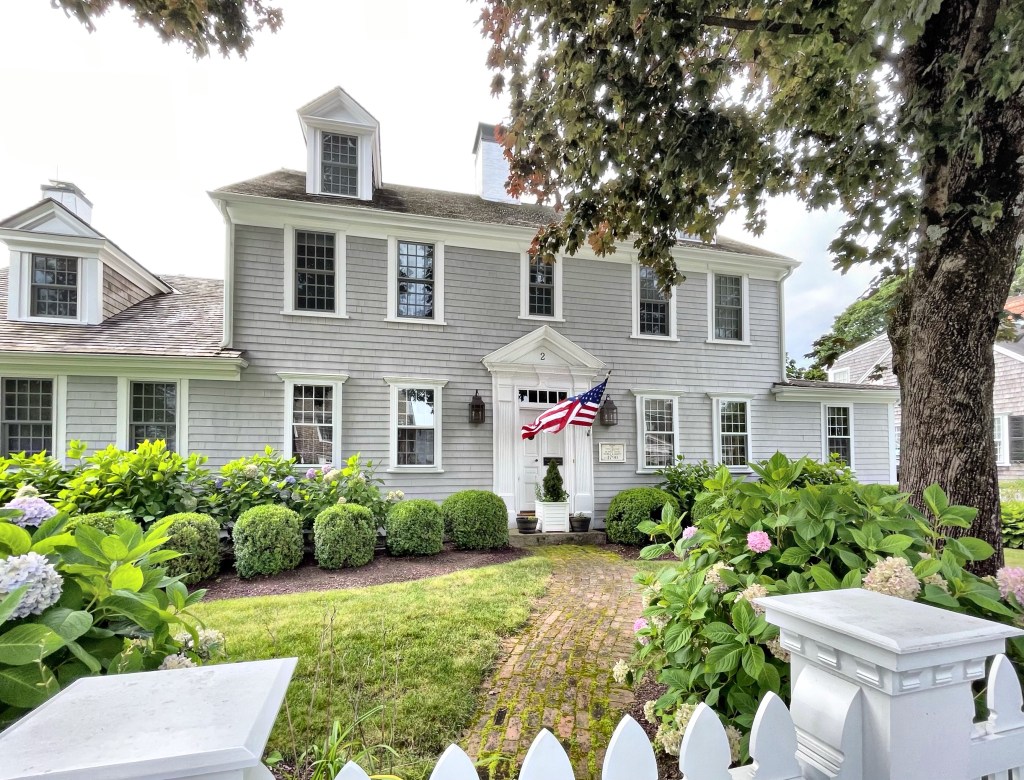
Luce-Bates House // c.1790

Captain Elisha Luce (1786-1850) was born in Massachusetts and from a young age, loved the sea. The son of Rowland Luce, Elisha spent his childhood in the family home (featured in the last post). Captain Luce moved into half of this double-house by 1813, right after his marriage to Jane Hiller, when he was 27 and she was 19. I don’t know many 27 year olds that could afford a house like this today! Captain Elisha E. Luce’s best known ship was the Persia, which made numerous profitable trade missions and whaling excursions from her home port of New Bedford. His wife, Jane died at the young age of 29, and he quickly remarried the next year to Lucretia Clark; they had three boys. In the other half of the home, Captain Noble Everett Bates who co-owned the schooner Marmion and went on his own voyages from his wharf in town. The home was locally known as the “Two Captains House”.

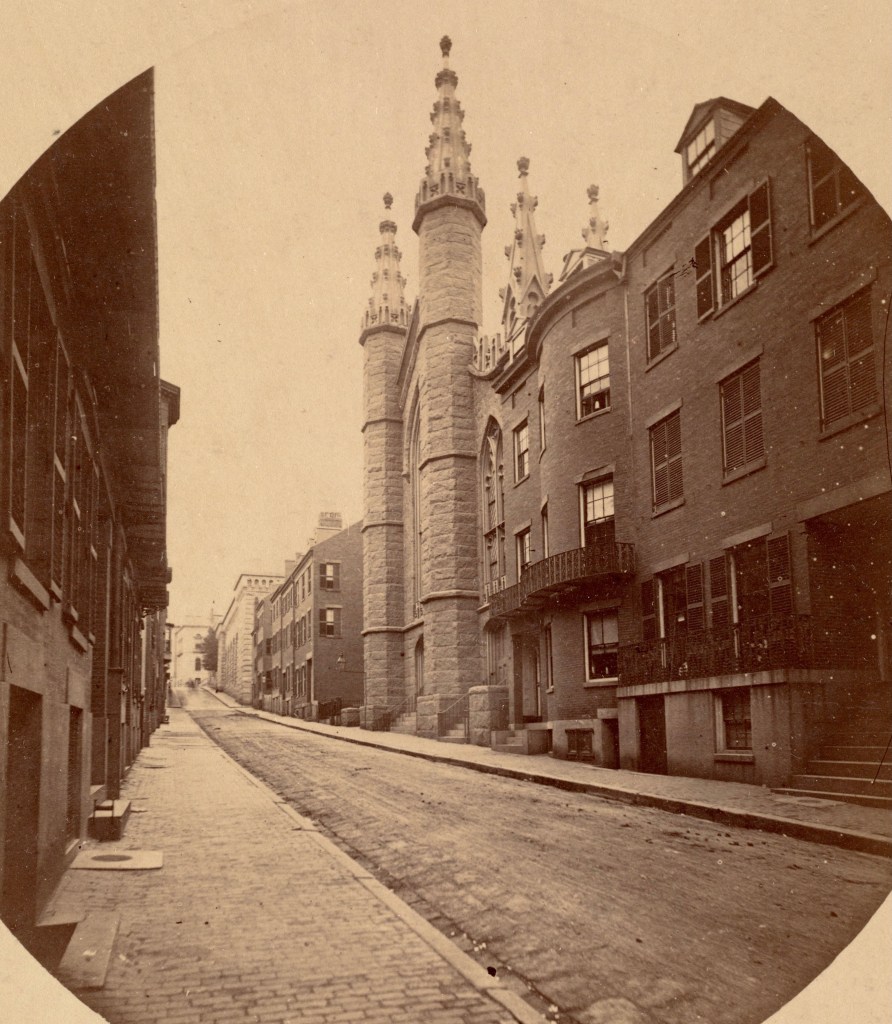
Grace Church // 1835-1966

Grace Church was built in 1835 for a growing congregation in Beacon Hill. The absolutely stunning Gothic style church was designed by William Washburn (1808–1890), an architect and city councilor in Boston. The church was constructed of granite and had massive stained glass windows and soaring towers with decorative embellishments. Inside, a massive central window flooded the interior with natural light, and illuminated paintings from Mario Bragaldi, a Milan artist. In 1865, the building was sold to the Methodist Episcopal Society. 1873, it merged with Hanover Street, and took the name First Methodist. The church was variously referred to as First, Grace, or Temple Street, sometimes all at once! This church was occupied until 1962, when it merged with Copley to form First-Copley, which appears to have then occupied the Old West Church. The building was soon after acquired by Boston University and demolished for the building on the site today, a true loss to one of Boston’s most beautiful buildings.

Mitchell-Patten House // c.1840

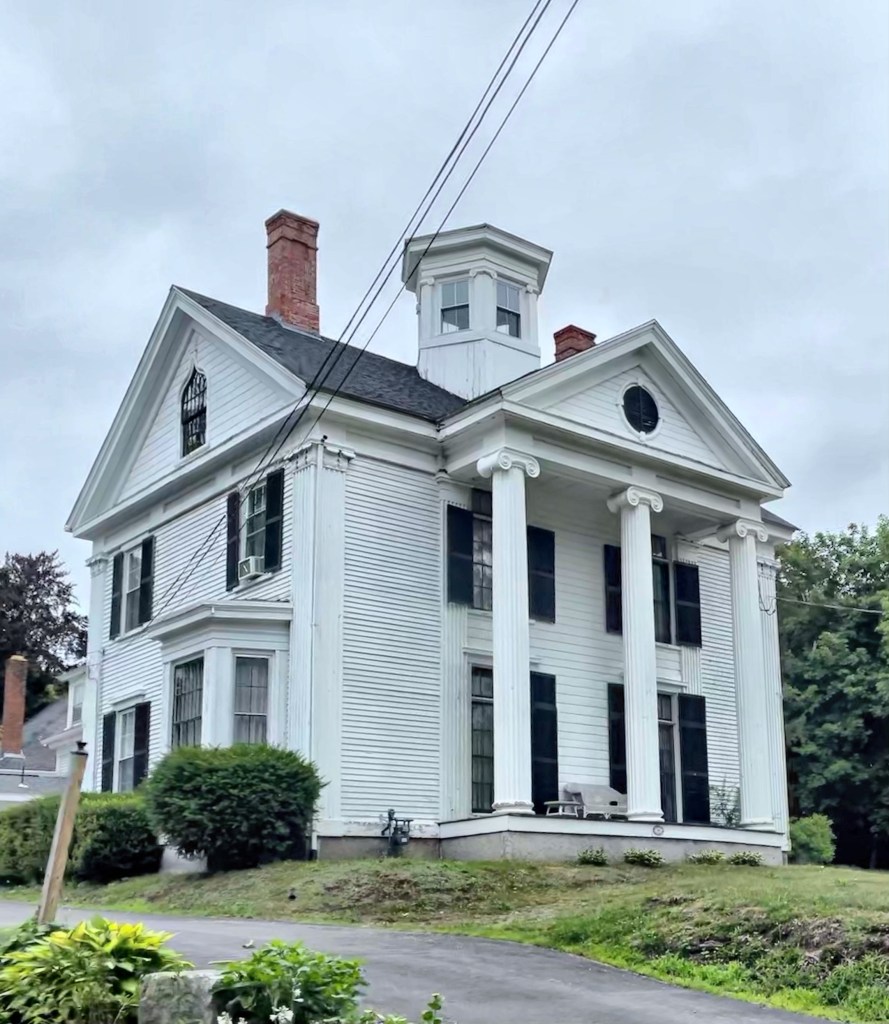
One of the most stunning examples of Greek Revival architecture in Gardiner, Maine, is the Mitchell-Patten House. The home was constructed in the mid-1840s for John S. Mitchell (1804-1891) head of the firm of Mitchell, Wilson and Co., who were traders on the Kennebec river, in lumber and other goods. The home was likely built not long after John’s wife, Philenia Sewall Mitchell died during childbirth in 1837 to the couple’s son, who died at just two years old himself. After the death of his wife and only son, John met Mary and they married, moving into this home. Together, they had four children. Together, they had three sons, but like with his first marriage, tragedy wasn’t far behind. Their first son was stillborn, their son William died at age 27, and their third son, Egbert died in his first year. The family home was willed to the couple’s only living child, Susan, after her marriage to husband Freeman Patten. Freeman was a successful businessman in town and worked as a bank director, and later served as President of the Board of Trade and as Mayor of Gardiner 1899-1900.

Captain Nathaniel Stone House // 1872

The Captain Nathaniel Stone House in Farmingdale, Maine was constructed in 1872 on a small plot of land overlooking the Kennebec River. The charming home was constructed by Nathaniel Stone (1797-1884), a retired ship chandler,(a dealer in supplies or equipment for ships) who moved back to his hometown after making his fortune in Boston. He lived here with his wife, Martha, and his adopted son, Uriah, in this fashionable Second Empire style. Nathaniel died in 1884, outliving his wife by two years. The property was willed to his adopted son Uriah, who quickly sold the home on account of him seeing ghosts inside, he refused to live there because of it. The home was acquired by William Ring, a businessman who owned real estate in nearby Gardiner, Maine. Between 1886 and 1912 he and his family resided at the former Stone House, but by the turn of the Twentieth-century he grew increasingly in debt, and on several occasions he borrowed against his property to meet his obligations. Before the home went up for auction in 1912, a massive fire broke out in the home, destroying all the interior woodwork, and William perished inside. Although significantly damaged, it was largely rebuilt to its original appearance by its eventual buyer and has been an architectural landmark on the Kennebec River ever since. Now that I think of it, maybe Uriah Stone could see the future and saw William Ring as a ghost!

Wetherbee-Steele Farm // 1784

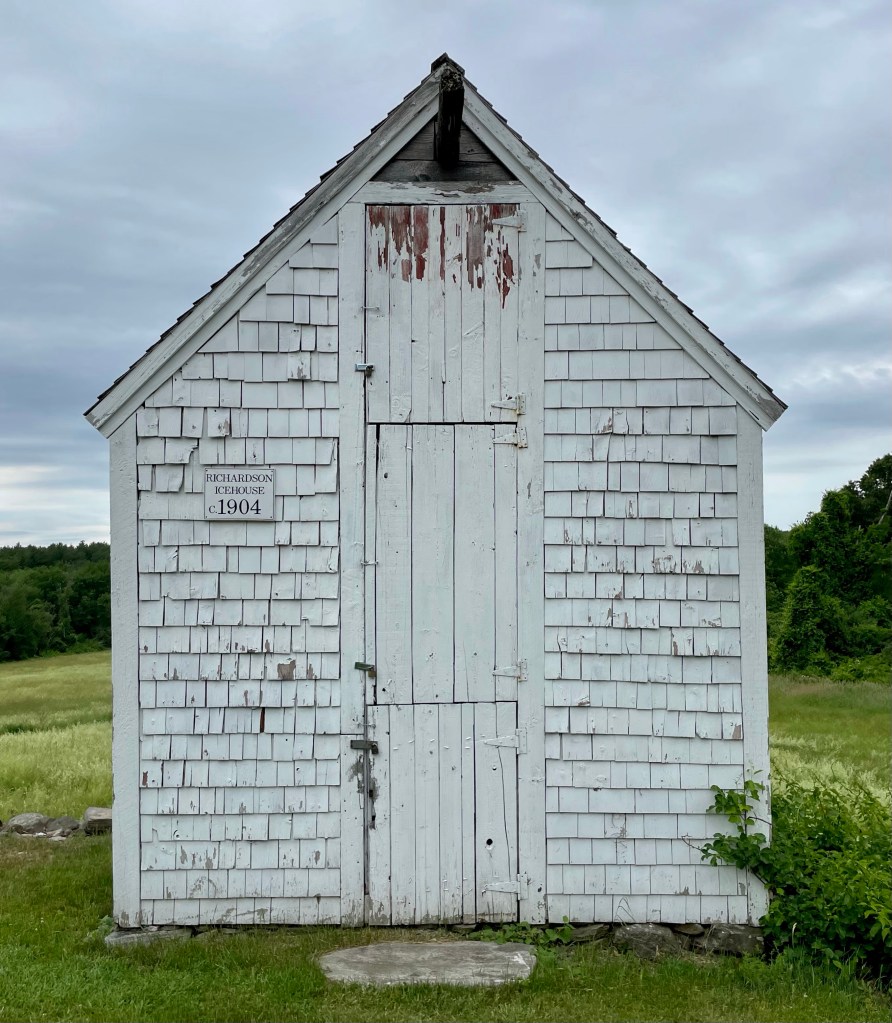
In 1775, Silas Wetherbee gave three acres of land in present day Boxborough, MA, to be used as a meetinghouse and burial ground site for the new town that he and 17 other outlying farmers of Stow, Harvard, and Littleton hoped to establish. That year, having formed a new religious society, they acquired the old meetinghouse in the nearby town of Harvard, dismantled it, and began to reconstruct it on land donated by Wetherbee. In 1783, the Town of Boxborough was officially incorporated, with the meetinghouse at its approximate center. That next year, Silas sold his son Levi, “60 acres of land, half of a building referred to as the “old house,” and half of a barn, all located just east of the townhouse. The farm was run by Levi until his death in 1829, when it came into the possession of his son, John Wetherbee (1800-1858). In 1908, the property was sold out of the family when it was purchased by Burpee Clark Steele, who owned it for the next seventeen years. Steele had immigrated from Nova Scotia to Boxborough in 1886, and he quickly became known for his expansive apple orchards. In 1925, Burpee Steele conveyed the farm to his son, Burpee Franklin Steele. Under his ownership, the old barn blew down in the Great Hurricane of 1938, and he constructed a new barn years later. Also a later addition, the Richardson Ice House was moved to the site by the local historical society in the 1990s. The farm today is protected by the town, but the buildings could use some better maintenance. Hopefully the town funds their preservation so they do not decay.

Old Acton Parsonage // c.1740

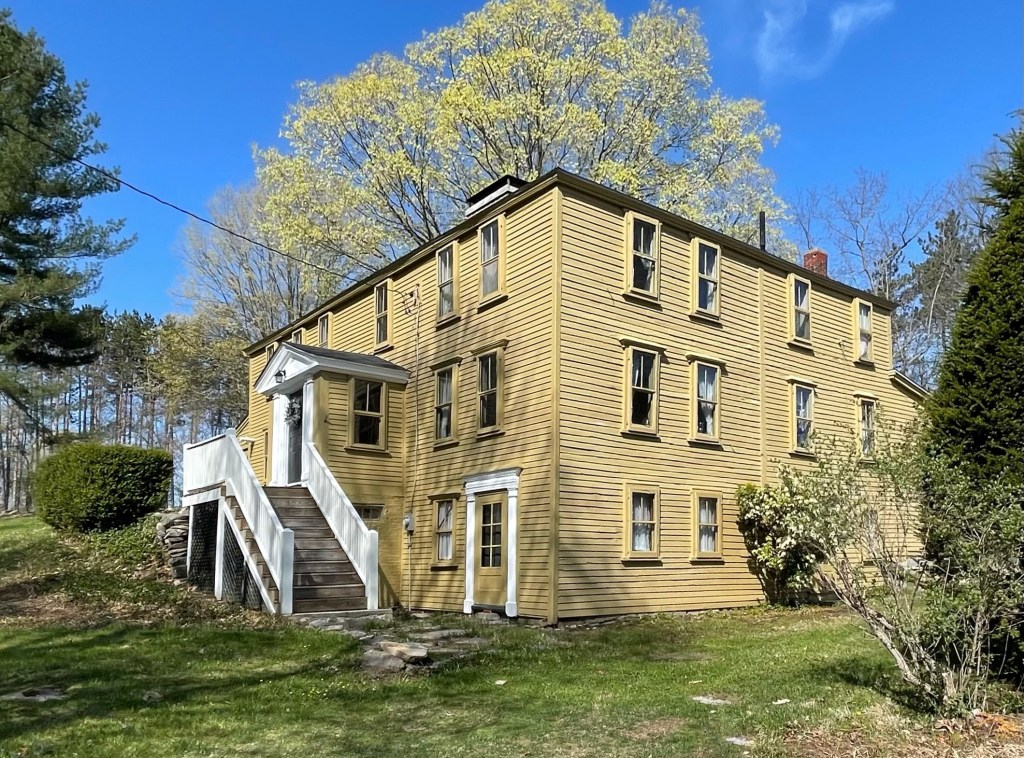
Not far off Main Street in Acton Center, this stunning old Georgian home was built around 1740 for Jacob Hooker a tailor and later served as the home of James Dudley, a blacksmith in the village. After the American Revolution, Acton called on Reverend Moses Adams (1749-1819) to be the minister for the Acton Meetinghouse. The town acquired the old Dudley House for Reverend Adams to reside in with his family. In 1780, the home was enlarged, and possibly given the raised foundation we see today. Mrs. Adams ran a store out of the basement, accessed by the doorway in the brick foundation. After Adams’ death in 1819, the property went to the next reverend in town, until his death decades later. In 1889, a carpenter, Moses Taylor, purchased the home, restored much of the woodwork, and replaced the historic windows with 2-over-1 windows, popular at the time. Moses moved a house on Main Street to make way for the new Acton Memorial Library, and was active in building and renovating homes in Acton until his death.

Henry Tuttle House // 1873

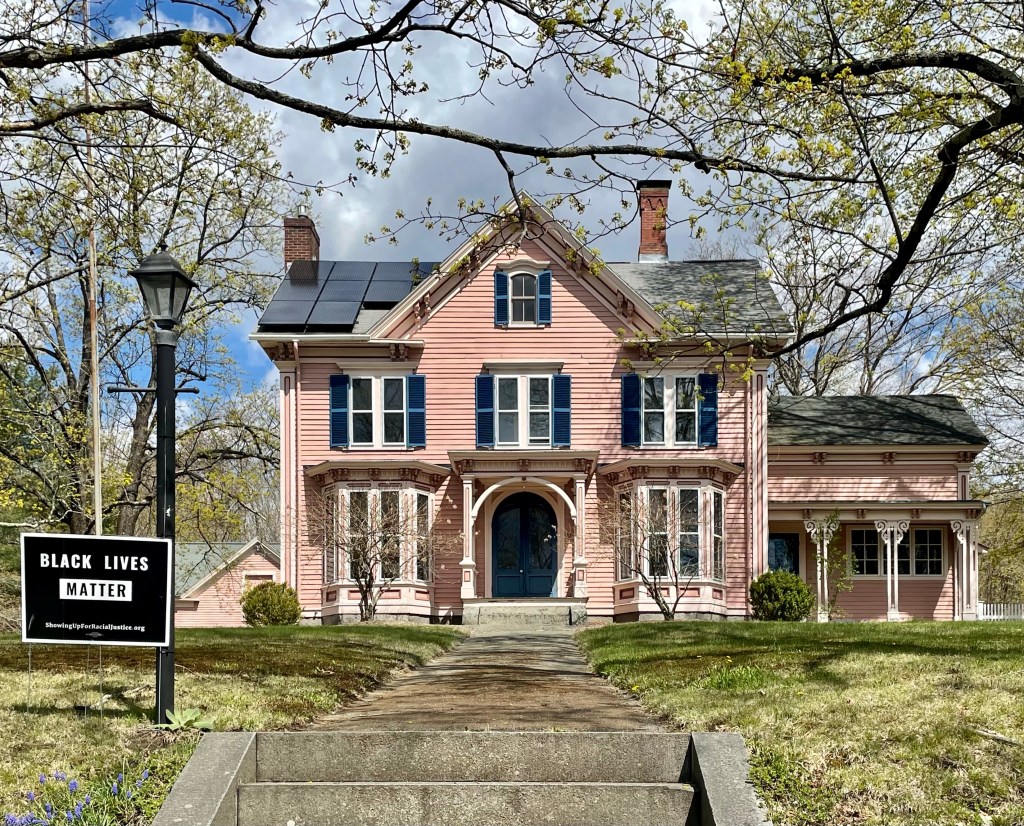
This large Italianate house in Acton was built in 1873 for Henry Waldo Tuttle (1847-1916), who ran a grocery store business in town with his father, James Tuttle. The business did quite well as Henry built this massive home around his 26th birthday, likely around the time of his marriage. The exuberant Italianate home features a wide central gable and a projecting central entrance porch accessed by double entrance doors. The home has a detached stable to the left of the home too!

Acton Town Hall // 1863

Acton, Massachusetts, was once part of Concord, the first inland colonial town established in the Massachusetts Bay Colony in 1635. 100 years later in 1735, land that we know today as Acton, separated from Concord to become their own town. Acton’s second Meetinghouse was located here in Acton Center, which was selected for its location more accessible to all houses and farms in the town. The Second Meetinghouse was built in 1806, and burned to the ground in 1862. Immediately after, a town committee was formed to construct a new town hall. Opening in 1863, Acton’s Town Hall stands as a stunning Italianate building with tripartite arched windows, corner quoins, a two-stage cupola with clock, and a bold (and historically appropriate) paint scheme. Acton’s Town Hall remains as one of the finest extant in the state.

Tewksbury State Hospital, Superintendent’s Residence // 1894

Located adjacent to the Administration Building at the Tewksbury State Hospital, the Superintendent’s Residence, built in 1894, combines elements of the Craftsman and Colonial Revival styles wonderfully. The home is two-stories, and built of red brick laid in Flemish bond, capped with a slate hipped roof with exposed rafters. A massive uncovered porch wraps around the home and sits atop a rubblestone foundation. Like the adjacent Administration Building, the Superintendent’s Residence was also designed by Boston architect John A. Fox. From this residence, the massive almshouse and asylum would be run by the superintendent, who oversaw day to day activities and made sure everything was running smoothly. The house appears vacant now.