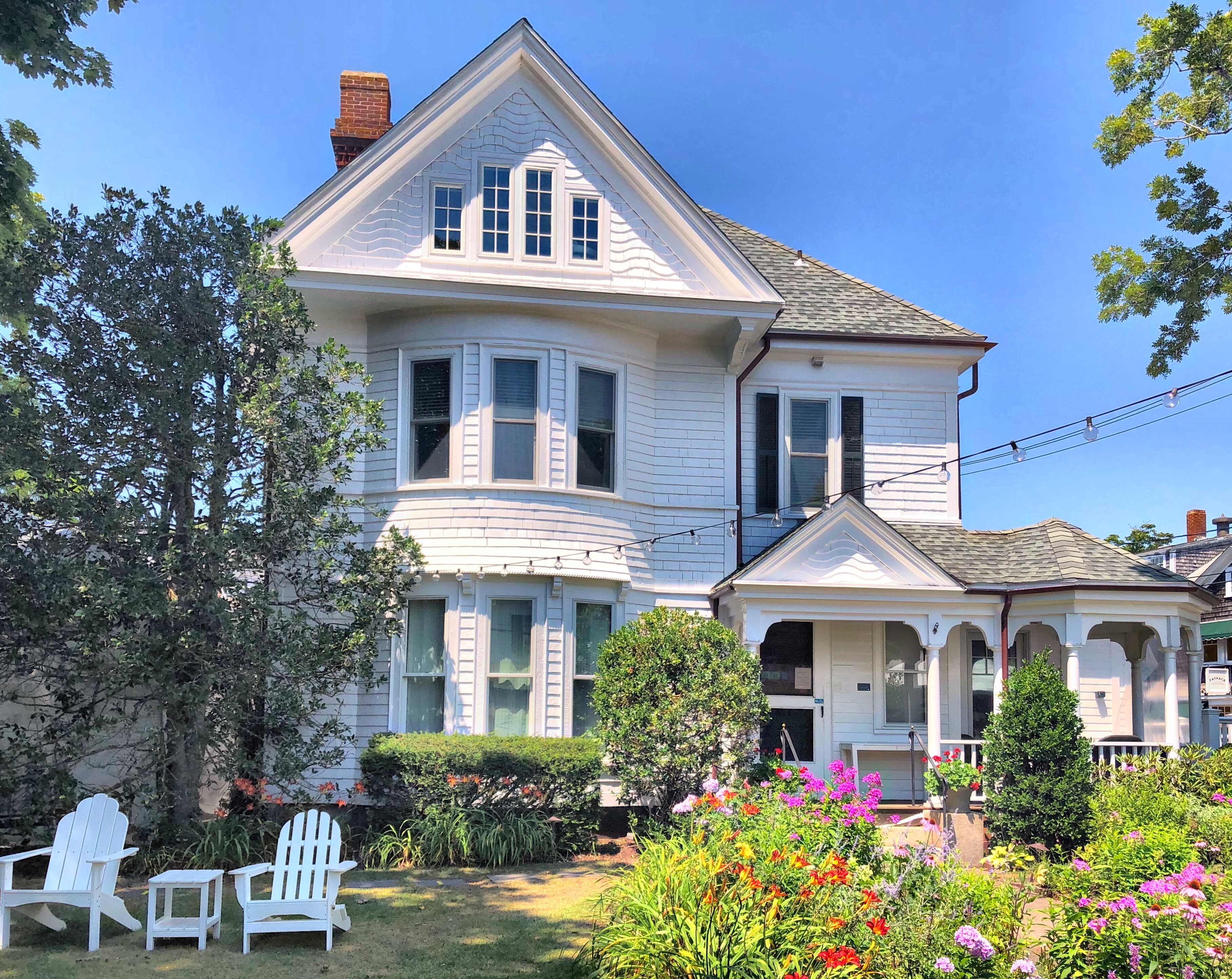
John Coffin House // 1703

This historic Georgian mansion was built in 1703 for John Coffin (1647-1711) who moved to Edgartown by the way of Nantucket and Haverhill, Massachusetts looking for new work. John Coffin opened a blacksmithy
on the waterfront in Edgartown and immediately prospered, building this home after his success. Legend says the home was actually right on the street before the street was widened and after, the front steps and home’s location obscured the view of other buildings on the street. The home was moved back on the lot in its bucolic setting now amongst the hustle and bustle of downtown Edgartown. The home was threatened with demolition almost all of the 20th century due to the commercial nature of its location. Thankfully, it was acquired by the Vineyard Trust in 1946, who preserve it to this day with small businesses located inside.
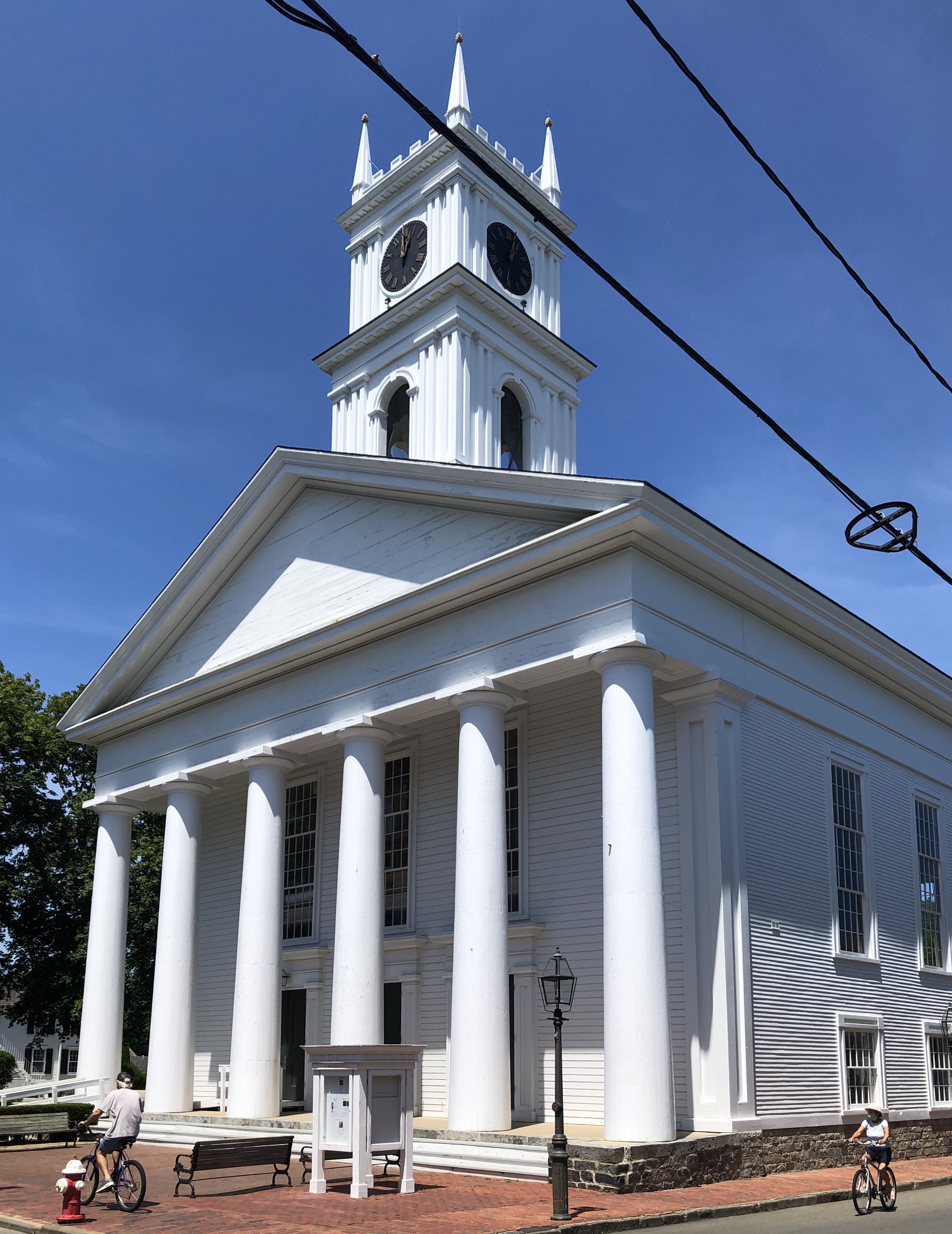
Old Whaling Church // 1843

Methodists on Martha’s Vineyard arguably left the largest lasting mark between religious groups on the island between Wesleyan Grove in Oak Bluffs and this stunning church in Edgartown. The Methodists in Edgartown grew with the success of the whaling industry there and their former church was outgrown, requiring a larger and more prominent worshipping space in town. Designed by Frederick Baylies, Jr., the Old Whaling Church was built by skilled shipwrights for Edgartown’s Methodist whaling captains and is regarded as one of the finest examples of Greek Revival architecture in New England. The Old Whaling Church was not only funded by mariners and those dedicated to seafaring trades, it was quite literally built by them, too. Baylies hired a crew of local carpenters who were equally as skilled in building churches as they were in constructing ships. The church is topped by a Gothic Revival clock tower which has crenellations, rounded arches, engaged pilasters, dentil cornice moldings and four spires capped with gilded acanthus leaf finials. The church was acquired by the Vineyard Trust in 1980, and they converted the old sanctuary into a performing arts space. The congregation meets in the former sanctuary in the summer months and in the vestry in the winter with its smaller numbers.

Captain Valentine Pease House // c.1830

This charming little Greek Revival house has a lot of history, tied to literature and the whaling industry that shaped Edgartown in the 19th century. The home was built in around 1830 for Captain Valentine Pease (1797-1870), a master mariner and captain of the Acushnet, a prominent whaling vessel which often departed from New Bedford. In 1841, Captain Valentine Pease, his crew, and a 21-year-old Herman Melville shipped out of New Bedford 1841 for eighteen months as Melville’s only whaling voyage. Melville took part in the hunting and killing of whales and in harvesting and processing whale oil aboard ship. He endured gales and calm, experienced excitement and boredom, followed ship’s discipline, all the while absorbing the lore of the veteran seamen who made up the Acushnet’s diverse and colorful crew. It is speculated that Valentine Pease was an inspiration for the character of Captain Ahab in Melville’s book “Moby Dick”.

Captain Fisher House // 1892

Standing out amongst the Federal and Greek Revival homes in Edgartown, this Victorian home was constructed in 1892 by Captain Charles W. Fisher (1835-1905) for his new wife. The Fisher family includes many members who were active in the local whaling industry. Fisher is said to have caught the largest sperm whale on record in 1884 and apparently loved being on the open ocean. The next year he married Parnell Pease and she sailed with him to the Pacific on a whaling voyage, lasting five years! At the time of their marriage, Fisher was in his 50s and his new wife in her 20s. Upon their return, Fisher built his wife this “modern style house on the pretentious side with Victorian ornamentation.” Unfortunately, his wife preferred her former house, which was a block a way and obscured any views of the water. Tradition states that apparently, Mrs. Fisher had seen enough of the water during her voyage, as her diary on the five year trip detailed her many unfortunate bouts with sea-sickness, a stay on an island, and dangerous storms.

Norton-Coffin House // c.1740

This home on the idyllic Water Street in Edgartown (maybe my favorite town in Massachusetts) was built in two main phases in its storied history. What is now a rear ell, was built as a home around 1740 by “Squire” Norton, who ran the Customs office out of the house in his role as Customs Collector in town. The home was located in the current location of North Water Street, which had to jog around the home until the early 19th century when it was moved to the current location and altered as an ell of the new house standing there. The home was later owned by Captain Edward Coffin (1850-1917), a renowned sea captain. At just 15 years old, Edwin Coffin left Edgartown to be a cabin boy on his first ship. Through the end of the 19th century, he voyaged on numerous whaling vessels and served as captain on many. In 1902, Captain Coffin was chosen to command the steamer America, which carried the Fiala-Ziegler Expedition, a failed attempt at reaching the North Pole. The party remained stranded north of the Arctic Circle for two years before being rescued, yet all but one of its members survived.

Edgartown Town Hall // 1828

Located on the idyllic Main Street in Edgartown, on Martha’s Vineyard, this historic building stands out for its design. It was built in 1828 as the first meeting house for the Methodists of Edgartown, the former building was shared with the Baptists there, but was quickly outgrown. Ten years after this church was built, the space was already becoming too cramped with the booming population of the town due to the success of the whaling industry here. The Methodists then constructed a larger church (known as the Old Whaling Church nearby and sold this structure to the town as a new Town Hall. After the Town bought it, the first floor was remodeled to accommodate the fire engine and also the Town’s police station. Today, it contains town offices on the ground floor and the former upstairs church
auditorium is now used as a movie theater. The infamous nails on the chalkboard scene in the movie Jaws was filmed in this building!

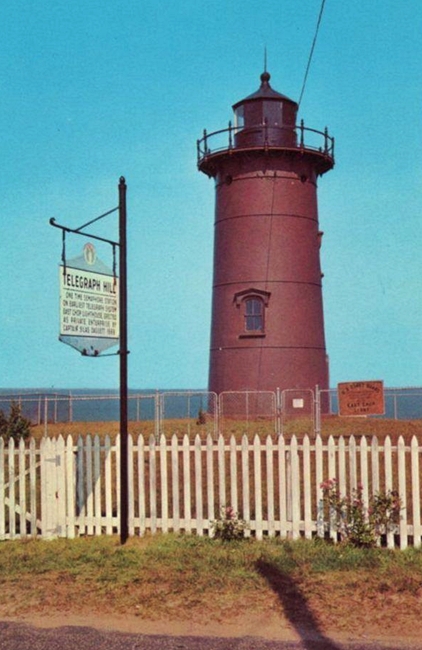
East Chop Light // 1878

Is anything more “New England” than a historic lighthouse? Whenever I think of symbols of New England, lighthouses, Saltbox colonial homes, and lobster comes to mind. Located just north of Oak Bluffs, the East Chop Light was built to guide the hundreds of ferries every summer, picking up and dropping off passengers to the island. One of the many definitions of “chop” is the entranceway into a body of water. Knowing this, it seems natural that the two lighthouses flanking the entrance to the harbor at Vineyard Haven on the north shore of Martha’s Vineyard are respectively known as East Chop Lighthouse and West Chop Lighthouse. In 1878, a one-and-a-half-story dwelling and a cast-iron tower were under construction at the station. The forty-foot-tall, conical tower was similar in style to several other New England lighthouses constructed during the late 1800s. The lighthouse was painted white at first, but in the 1880s it received a coat of reddish-brown paint and became popularly known as the “Chocolate Lighthouse.” In 1988, it was returned back to white, as the dark color was causing excessive heat and condensation in the tower. East Chop Lighthouse remains an active aid to navigation, although the Fresnel lens was replaced by a modern beacon in 1984. The land surrounding the tower was sold to the town of Oak Bluffs in 1957 for use as a park.

Hills-Claflin House // 1871

This grand home was built in 1871 for George Hills, one of the original investors in the Oak Bluffs Land & Wharf Company development, a development to the east of Wesleyan Grove. The home was designed by Samuel Freeman Pratt, a Boston carpenter turned premier architect of Oak Bluffs, who likely designed the home in his distinct Stick Style with intricate wood carvings and posts. In 1877, the home was purchased by Governor William Claflin after his time in office as a summer retreat from his home in Newton, MA. The governor was an ardent Methodist who was involved with liberal causes such as abolition and Native American and female enfranchisement. Within 10 years of his purchasing of the home, he modified and enlarged it with Colonial Revival motifs including the gambrel roof, Tuscan columned porch, and simplified dormers.

Corbin-Norton House // 1891

Sited prominently on Ocean Park in Oak Bluffs, the Corbin-Norton House overlooks the Nantucket Sound with no buildings obscuring the gorgeous sunrises. When the home was originally built in 1891, it belonged to Philip Corbin, a manufacturer of household hardware and locks from New Britain. Conn., who got his start as a locksmith apprentice and grew his business until it employed 15,000 people. Corbin summered on Martha’s Vineyard and saw the shift from Cottage City, a Methodist-oriented summer resort town to Oak Bluffs, an exclusive summer colony. The house was built by Eli A. Leighton, a carpenter from Oak Bluffs whose descendants still live on the Is­land. The house remained in the Corbin family for some 40 years, after which it changed hands a number of times, at one point, housing a doctor’s office. By that time, nearly all of the historic character had been stripped of the home with replacement vinyl windows, removed trim and finials, and a monochrome color scheme. In 1991, when Peter Norton, the computer soft­ware magnate, and his wife, Eileen, de­cided to buy the old Corbin house for a reported $350,000, it was begging for someone with the resources to restore it. The restoration would take three years to complete, and Mr. Norton commissioned a team of consultants, ar­chitects and contractors to do the job. They meticulously restored the home, only to have the misfortune of a fire which destroyed the home. Norton funded the replica which was completed soon after, and passers-by wouldn’t be able to tell the difference!

The Arcade // 1870

Prior to 1866 the area now called Oak Bluffs was largely undeveloped with the exception of the famed Methodist meeting camp at Wesleyan Grove that had been established in 1835. By the 1860s the meeting camp was attracting large numbers of middle class visitors from Boston and surrounding towns who came for summer retreats; in 1868 approximately 600 tent and cottage lots were being leased in the Methodist compound. The Land & Wharf Company catalyzed this success into profit, by developing a more commercial presence on Circuit Avenue and developed housing on large lots to the east.

The first major structure built by the Land & Wharf Company was the Arcade Building. In it, they established their office from which they directed development of the resort. The central open arcade provided access to the campground from the heart of Oak Bluffs’ commercial area. The Arcade was designed by Boston carpenter/architect/inventor Samuel Pratt (1824-1920) who was also responsible for many of the cottages in Oak Bluffs. The Arcade remains a historically significant and well-preserved commercial building in town. My bad photo doesn’t do it justice! 😦