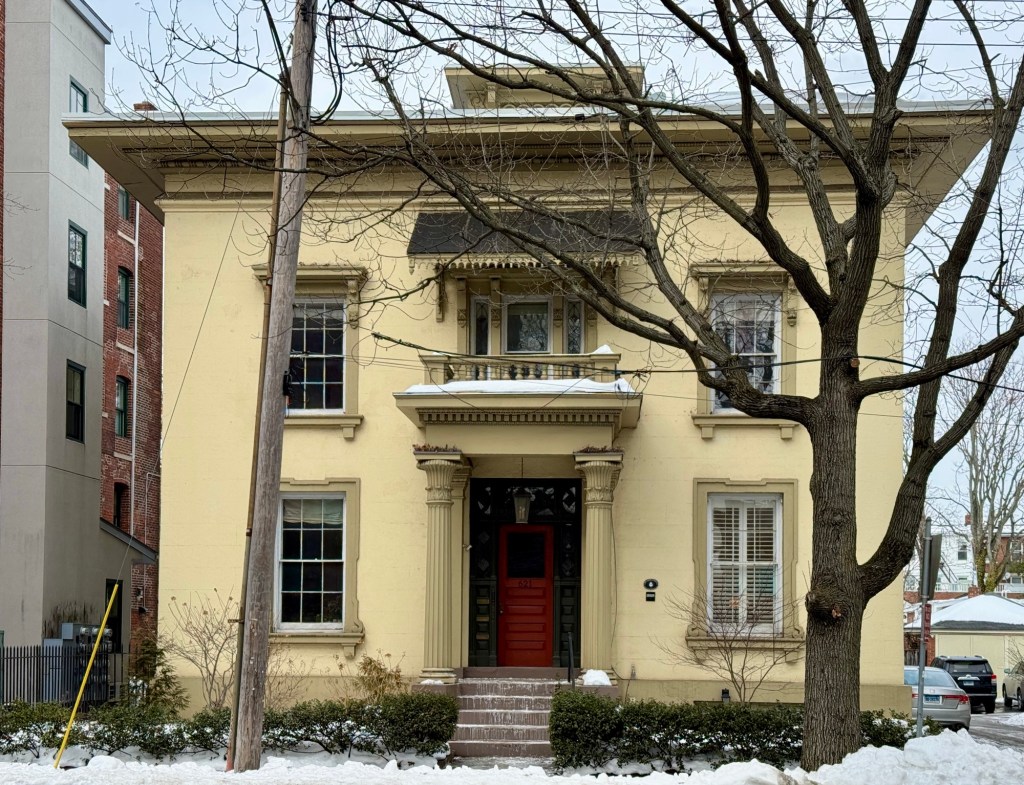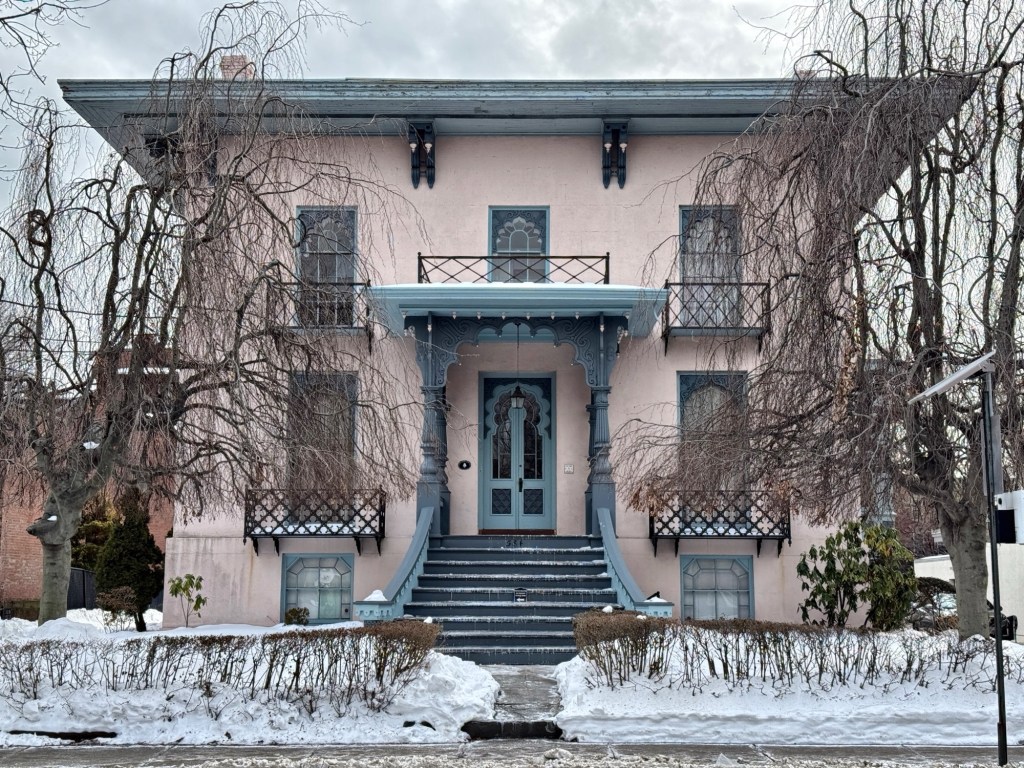
Willis Bristol House // 1845

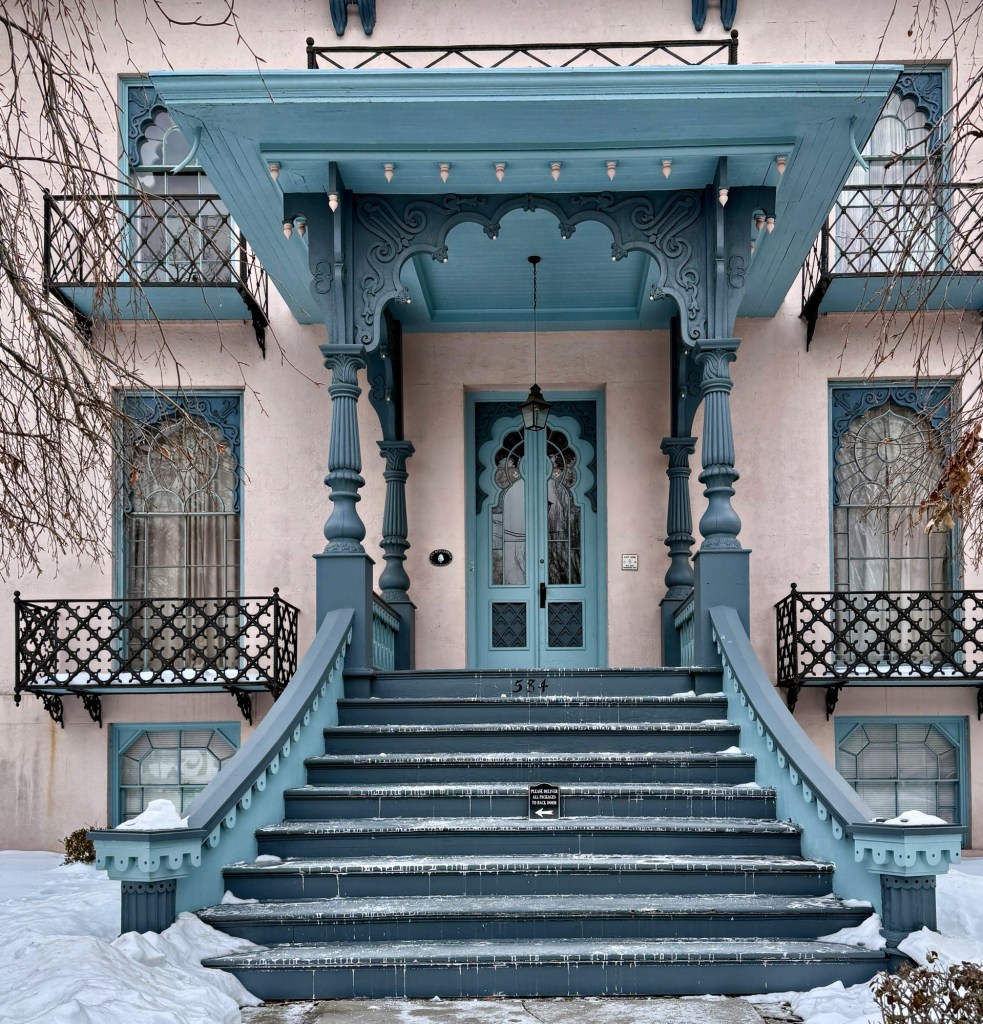
The Willis Bristol House on Chapel Street in the Wooster Square neighborhood of New Haven, Connecticut, is one of the finest and most architecturally distinctive residences in New England. Built in 1845 for Willis Bristol (1804-1875), a partner in the shoe manufacturer of Bristol & Hall, the home was designed by Connecticut architect, Henry Austin, who designed many of the other great mansions in Wooster Square around this period. The Bristol House is Italianate in style with Exotic Revival detailing which has often been described as Moorish Revival, but it is actually more Indian Revival, an extreme rarity in 19th century New England. It is believed that Henry Austin was influenced by an illustration of columns and capitals at the Ellora Caves in India published by Henry Repton in Designs for the Pavilion at Brighton (1808) and through this worked picked up a fascination with Indian architecture that was to influence his designs in the mid-19th century. Many of Austin’s designs in Wooster Square feature these Indianesque columns on their porches. The Willis Bristol House remained in the family until 1876 and was subsequently used as a congregation house, school, beauty parlor, and presently as apartments. The owners should be commended for preserving and protecting this ornate and unique residence for all to enjoy.
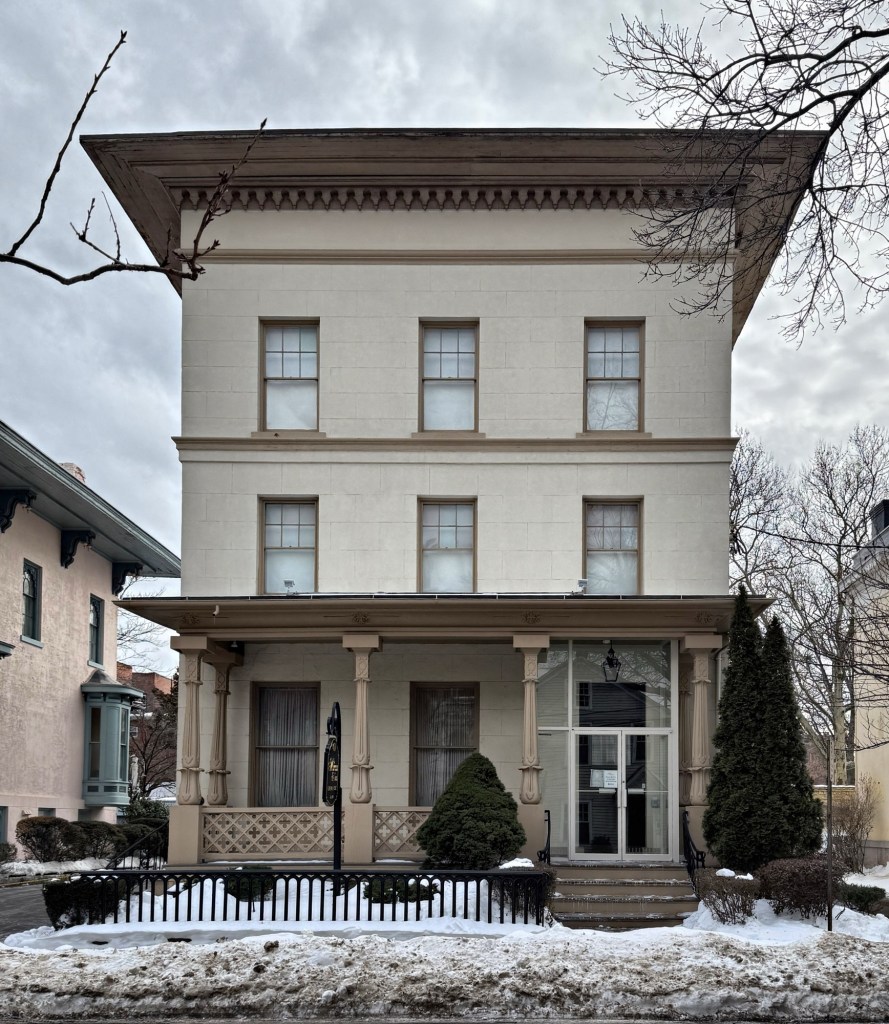
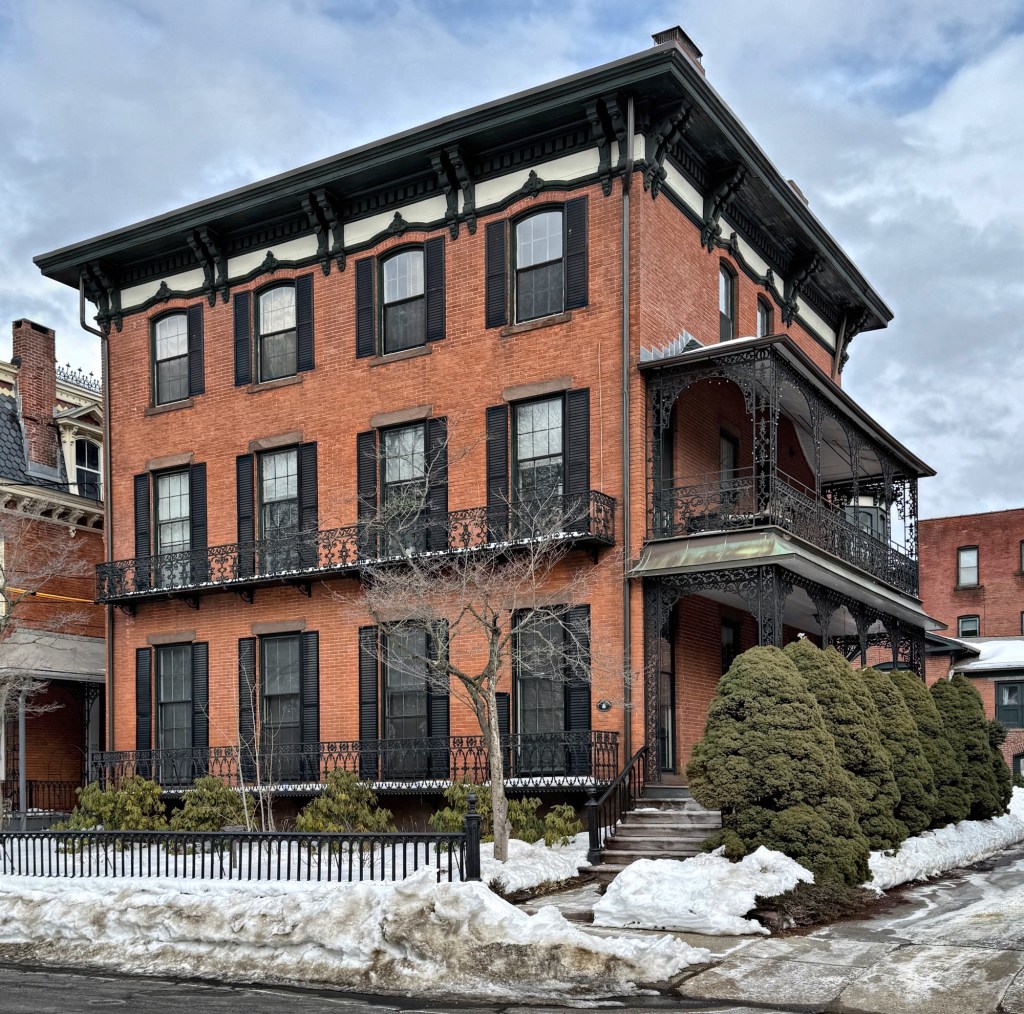
James E. English House // 1845

The oddly proportioned James E. English House stands on Chapel Street in New Haven’s Wooster Square neighborhood and remains one of the most interesting mid-19th century residences in the city. Built in 1845 for James Edward English (1812-1890), a prominent businessman who later became Governor of Connecticut and U.S. Senator. James English started his career as a carpenter and expanded to open the English & Welch Lumber Company. He was a savvy businessman and helped restructure the New Haven Clock Company into one of the largest clock manufacturers in the region. From his success, he purchased property in the new fashionable Wooster Square district and moved into this residence which was designed by architect, Henry Austin, who designed many other homes in the neighborhood. English got engaged in politics and served as the 43rd and 45th Governor of Connecticut and later as a U.S. Senator (1870-1871). Upon returning to Connecticut, James English continued his lumber business and with his own product, expanded his Wooster Square home, vertically. In the mid-1870s, the house, which was originally two stories, was given a third floor, creating the strong vertical proportions we see now. Today, the James E. English House operates as the Maresca & Sons Funeral Home, one of the many prominent Italian-American-owned businesses that helped revitalize the neighborhood in the 20th century.

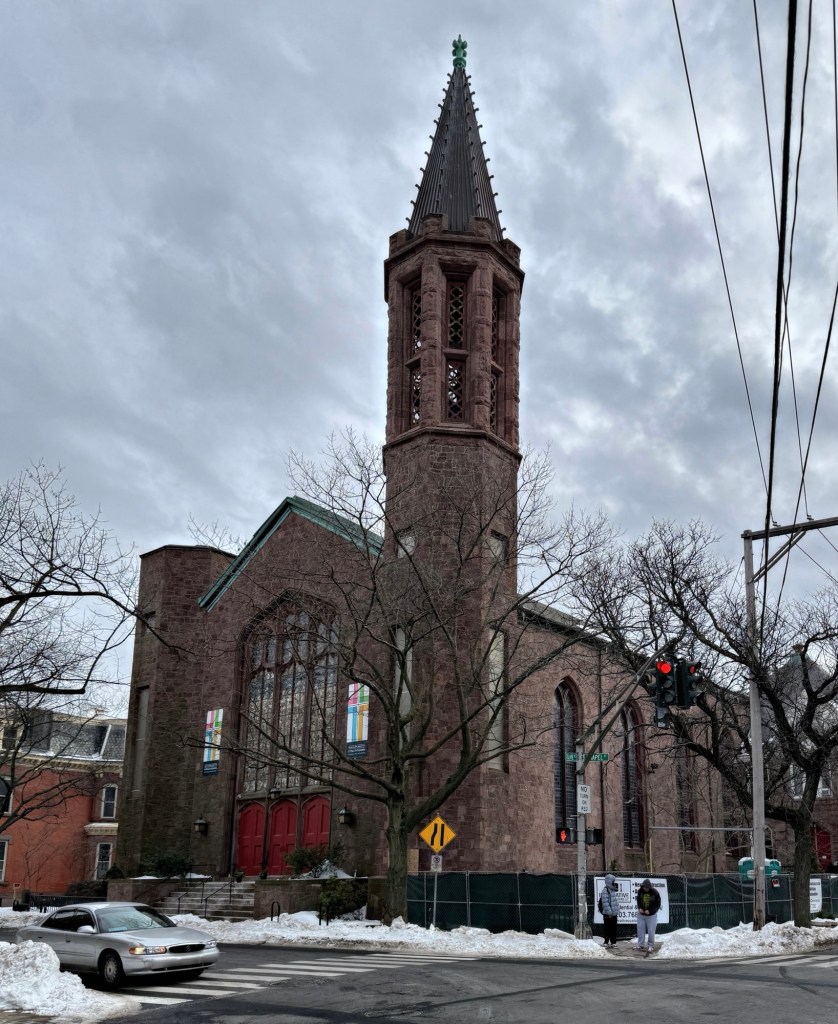
St. Paul’s Episcopal Church, New Haven // 1829

Built beginning in 1829, St. Paul’s Episcopal Church on Chapel Street in Wooster Square, New Haven, Connecticut, was one of the first churches in the nation built in the Gothic Revival style and a visual entrance to the iconic neighborhood. Constructed from local brownstone, the design of the building is attributed to a partnership between master builder and contractor, Sidney Mason Stone, and Sherman Croswell, son of the congregation’s pastor, Rev. Harry Croswell, who possibly consulted with architect, Ithiel Town. St. Paul’s is said to be the first attributed work of Sidney Mason Stone, who went on to build and design over 100 churches, homes, and buildings all over the region. The church originally featured two end towers were built of wood but were ambitiously removed in 1893 to be replaced with stone belfries, which was likely the original design. Sadly, funding ran out and only one tower was rebuilt of stone, leaving the lopsided single-tower look today.

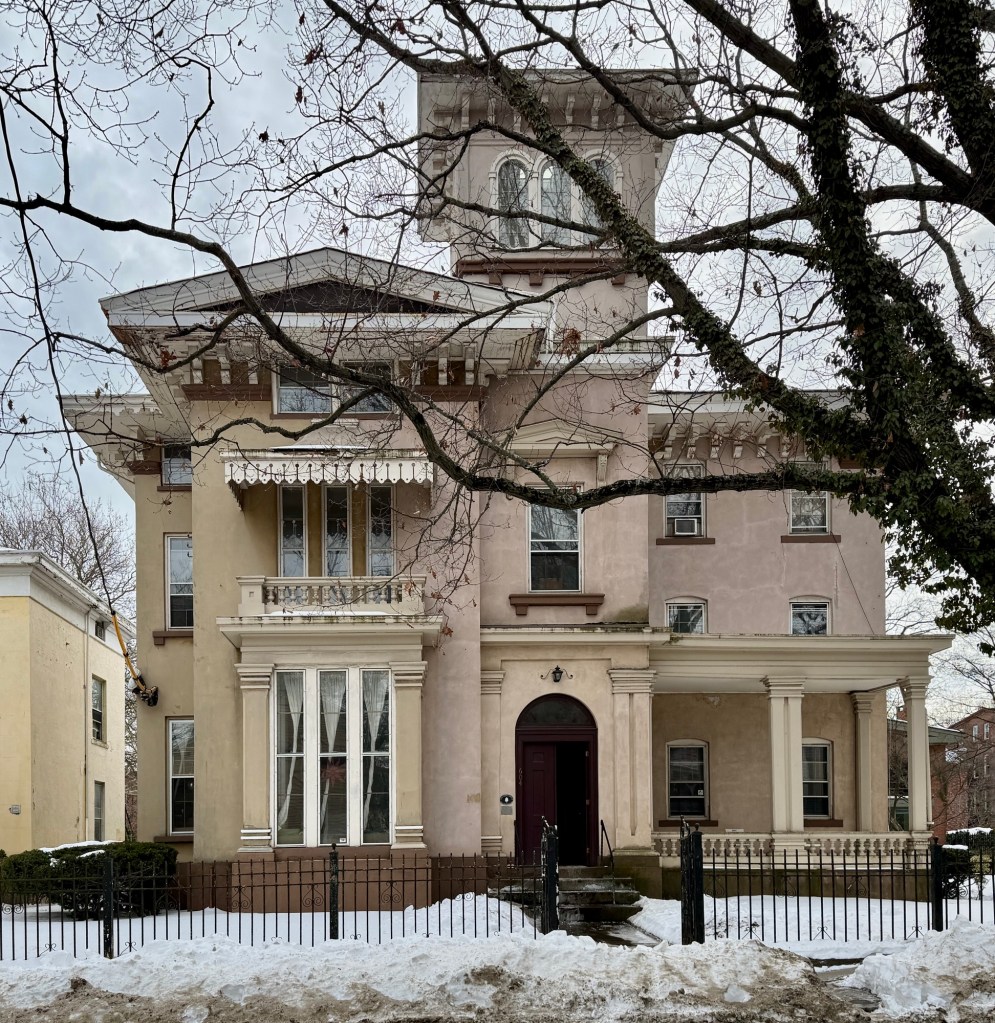
Jonathan King – Oliver B. North House // 1852

A true expression of the Italianate Villa style, the King-North House on Chapel Street in the Wooster Square neighborhood of New Haven is among the communities finest mid-19th century residences but suffers from some serious deferred maintenance. The residence was built in 1852 for Jonathan Williams King (1813-1863) a merchant who moved to New Haven from Cincinnati and hired famed Connecticut architect, Henry Austin, to design this home for him and his new bride, Ann Margaret Smith. The stuccoed mansion features a central tower, broad overhanging eaves with brackets, porches, and arched windows. After Jonathan King’s death in 1863, the property was purchased by Oliver B. North, owner of a saddlery and carriage firm. The property became a multi-family property in the 20th century and has suffered from some unsympathetic alterations and neglect, but remains a highly significant gem in Wooster Square.

William Lewis House // 1850

William Lewis was a lumber dealer and business partner of Nelson Hotchkiss, who managed the firm in their name. The partners purchased house lots on Chapel Street in the Wooster Square district of New Haven and are said to have worked with architect, Henry Austin, on furnishing designs, with this residence built for Mr. William Lewis. Square in plan, the two-story residence is built of brick with stucco walls, broad overhanging eaves, and a front porch with Indian style columns on bases.

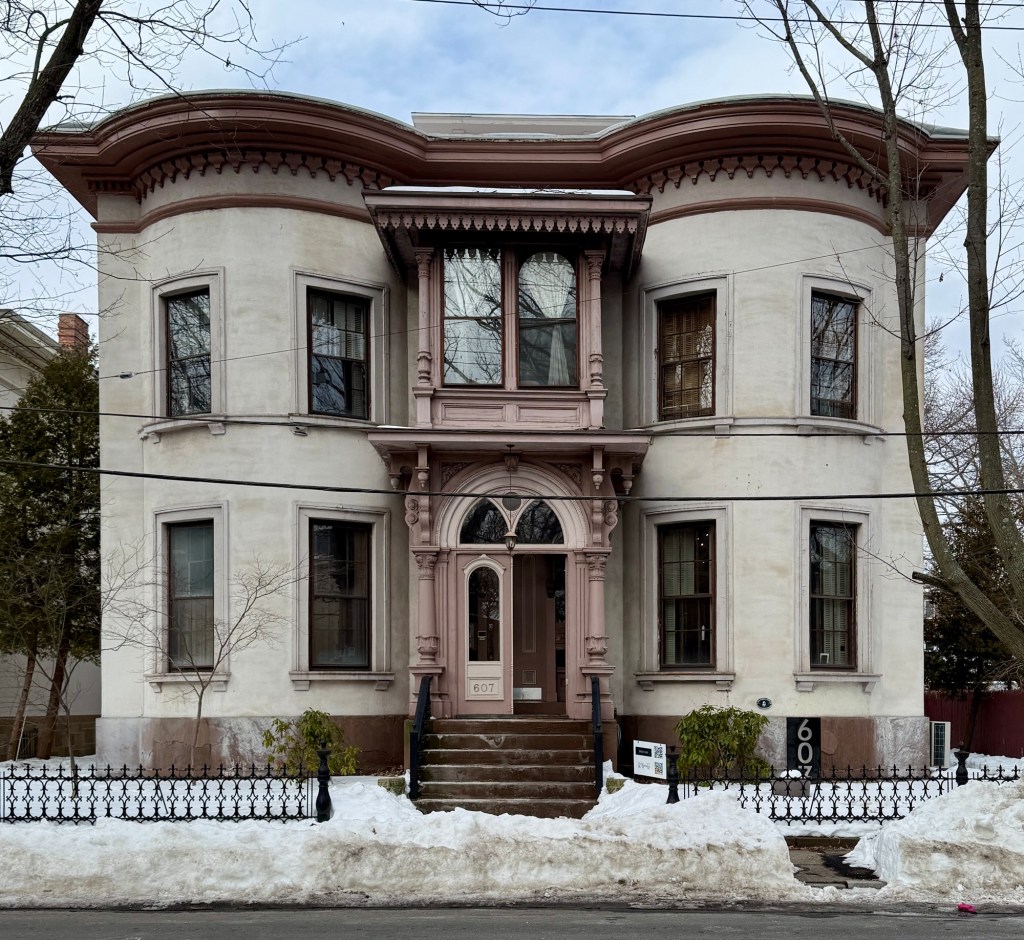
Hotchkiss-Shoninger House // 1854

The Hotchkiss-Shoninger House on Chapel Street in New Haven’s Wooster Square district is one of three residences in a row developed and designed by the duo of architect, Henry Austin, and lumber dealer/developer, Nelson Hotchkiss. The finest of the three residences, this house, was built in 1854 and features a double bow-front facade, brick walls covered in stucco, and ornate two-story central porch with brackets and colonettes. Nelson Hotchkiss moved into this home from his first Austin-designed house and resided here for a number of years before moving back to the first home again. The second owner Frederick Betts, was an insurance commissioner, and in the late 19th century and early 20th century, the home was owned by Bernard Shoninger, a German-born, Jewish organ maker.

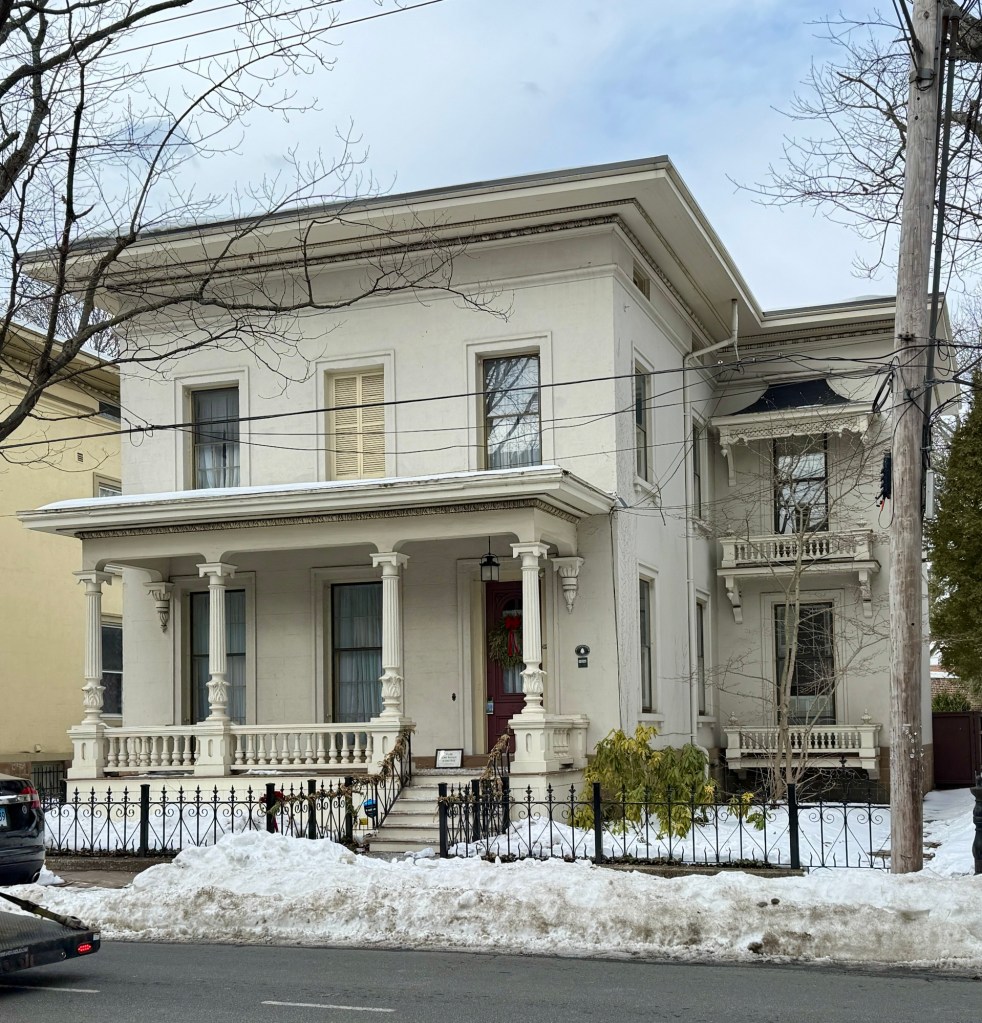
Nelson Hotchkiss House // 1850

Nelson Hotchkiss was a New Haven lumber dealer and developer in the Wooster Square district and had this stately home on Chapel Street built for his family. While the architect is not confirmed, it is probable that the residence (along with neighboring homes also developed by Hotchkiss) was the work of Henry Austin, who partnered with Hotchkiss on developments in New Haven and Trenton, New Jersey. The Nelson Hotchkiss House was built in 1850 and is an excellent example of Italianate style with boxy form, broad overhanging eaves, brick walls covered with stucco and Austin’s signature Greek Doric columns with fluted shafts and foliate capitals. The house maintains a window hood over the upper floor window with delicate carved wood bargeboard.

Hotchkiss-Stephens House // c.1843

The Hotchkiss-Stephens House on Wooster Place overlooks the iconic Wooster Square park in New Haven, Connecticut, and is significant as an early neighborhood residence altered after the Civil War in the fashionable Italianate style. The brick residence is said to have been originally designed by Ithiel Town for Russell Hotchkiss (1781-1843), an early merchant in the neighborhood. Hotchkiss lived in the home just a year before his death in 1844. His second wife remained in the home for some years after his death, along with children and two Black female servants according to census records. The property was later purchased by Edward Stevens (1824-1884), a manager at the New Haven Clock Company, who had the property modernized with a full third floor with bracketed cornice, iron balconies and garden fence, and its stunning two-story castiron side porches.

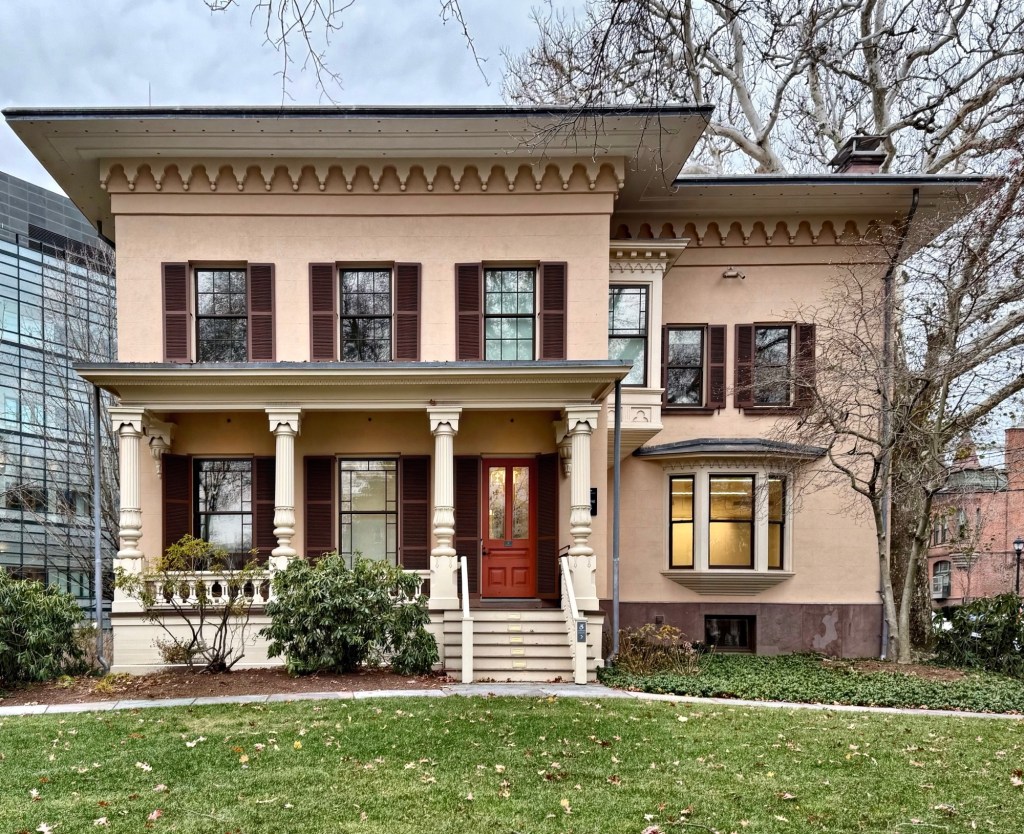
James Dwight Dana House // 1849

The James Dwight Dana House at 24 Hillhouse Avenue in New Haven, Connecticut, is a landmark early example of an Italianate style residence designed by a famed 19th century architect. Built in 1849 from plans by architect Henry Austin, the house was constructed for owner, James Dwight Dana (1813-1895) and his new wife, Henrietta Silliman and possibly funded by her father, Benjamin Silliman, a Yale professor who was considered “The Father of Science in America”. James Dwight Dana’s education in geology, in addition to his studies with his father-in-law, Professor Silliman, extended to the four-year United States Exploring Expedition between 1838–1842), in which Dana served as the staff geologist and mineralogist, exposing him to a wide-ranging variety of geological formations and minerals. Upon his return to New Haven, he married Silliman’s daughter and then moved into this stately home. Later in his career, Dana was responsible for developing much of the early knowledge on Hawaiian volcanism. In 1880 and 1881 he led the first geological study of Hawaii. The James Dwight Dana House has a three-bay front facade, with a single-story porch extending across its width, supported by wooden columns with unique capitals. The shallow roof has broad, overhanging eaves sheltering a unique corbelled brick cornice. The building was added onto in 1905 with similar architecture and was purchased by Yale in 1962. Today, the building is preserved by the University and houses the Institution for Social & Policy Studies (ISPS).

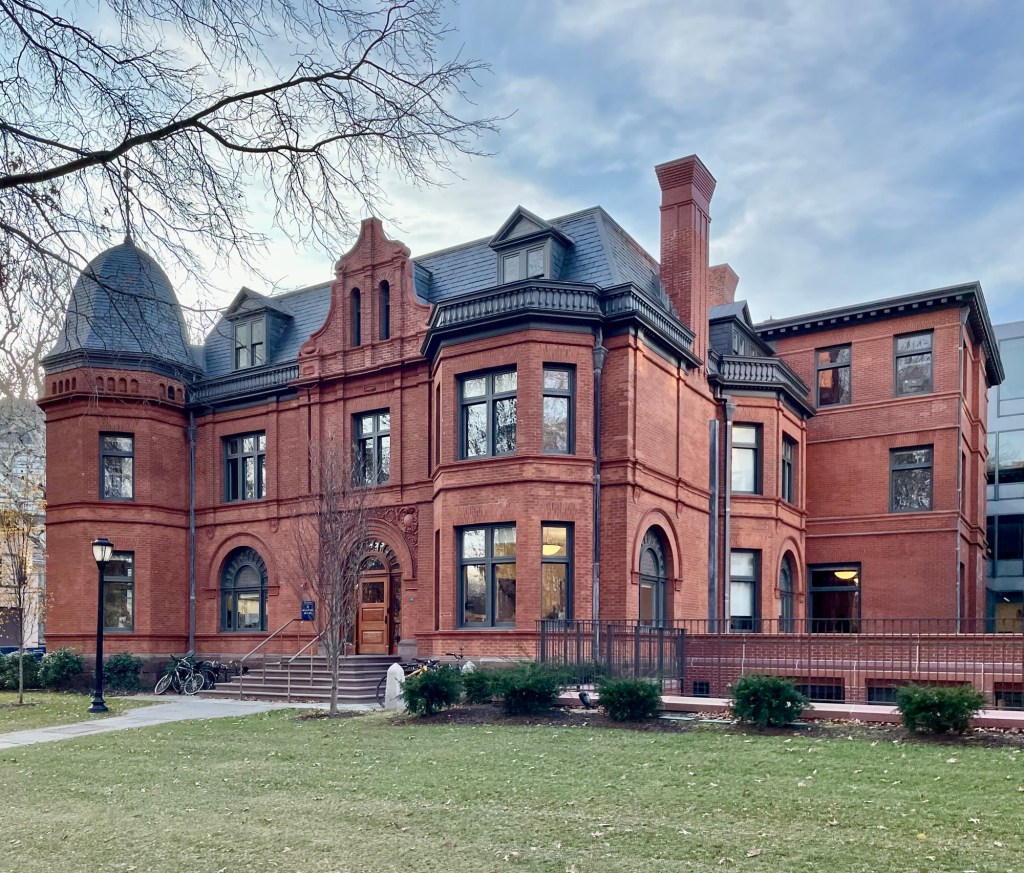
Charles H. Farnam Mansion // 1884

Charles Henry Farnam (1846-1909) was a lawyer, genealogist, and the son of Henry Farnam, a wealthy railroad industrialist in New Haven, Connecticut. Following his father’s death in 1883, Charles, who may have inherited a small fortune in the will, purchased a house lot on the finest residential street in New Haven, Hillhouse Avenue. The existing house on the lot, the Benjamin Silliman House, was relocated to front Trumbull Street (and recently relocated again to 85 Trumbull Street), clearing the site for his new mansion. He hired esteemed architect J. Cleaveland Cady, who designed a large, Queen Anne/Romanesque masonry home unlike anything else on the Avenue. The house features an asymmetrical plan, corner tower, a Flemish style gable, fancy brickwork and terracotta detailing, and a slate mansard roof. Charles H. Farnam would sell the property to Henry S. Parmelee, a noted businessman and piano manufacturer, who also is credited with inventing the first automated sprinkler head and as a result, owning the first building in the United States to be equipped with a fire suppression system, his piano factory. Parmelee hired local architect Leoni Robinson, to design a rear addition for the house. Parmelee died in 1902, and the property was maintained by his widow and daughter, until it was acquired by Yale University in 1920. Today, the Farnam Mansion is occupied by the Economics Department.