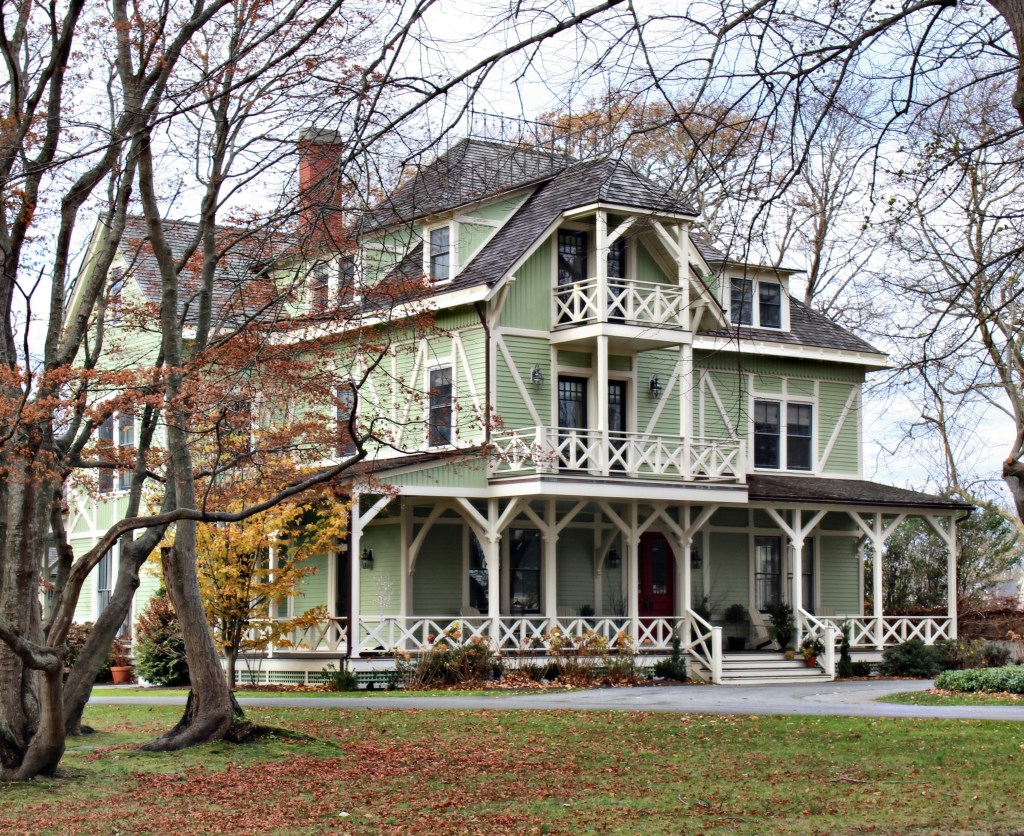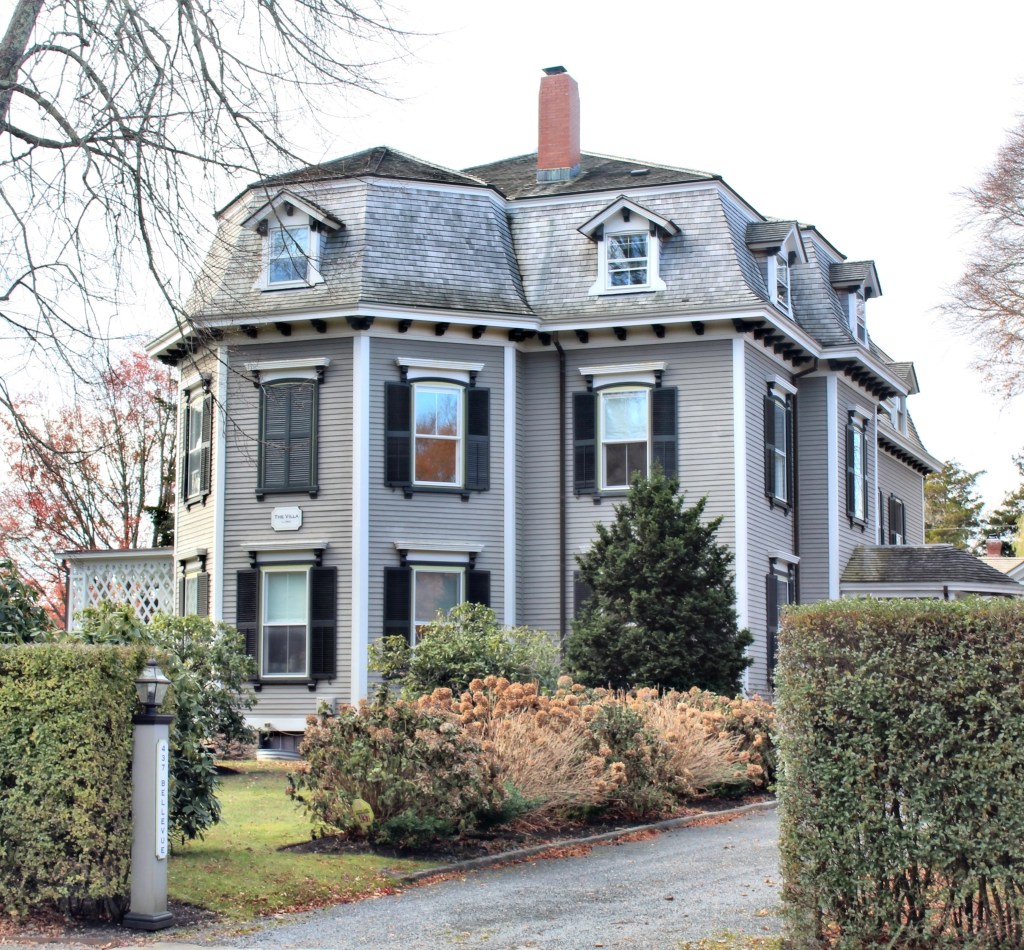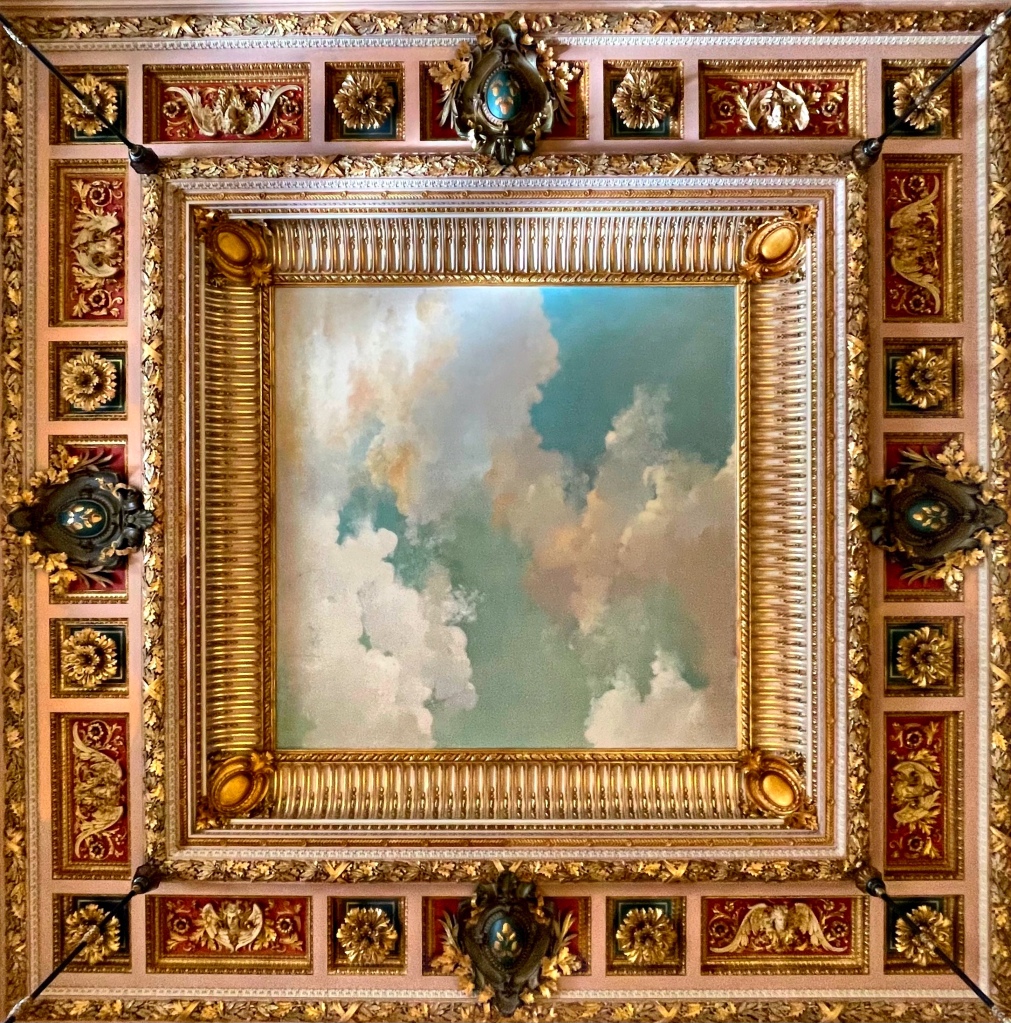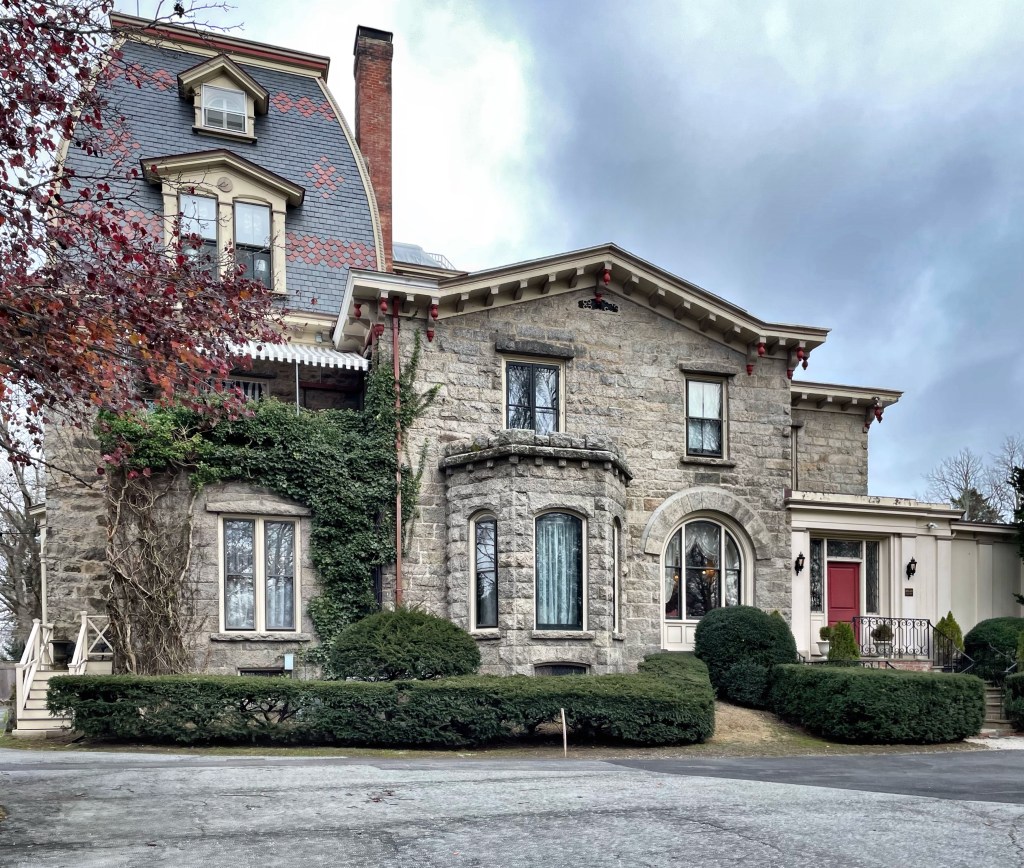
Cornè House // 1822

What does this house and the tomato have in common? Keep reading to find out!

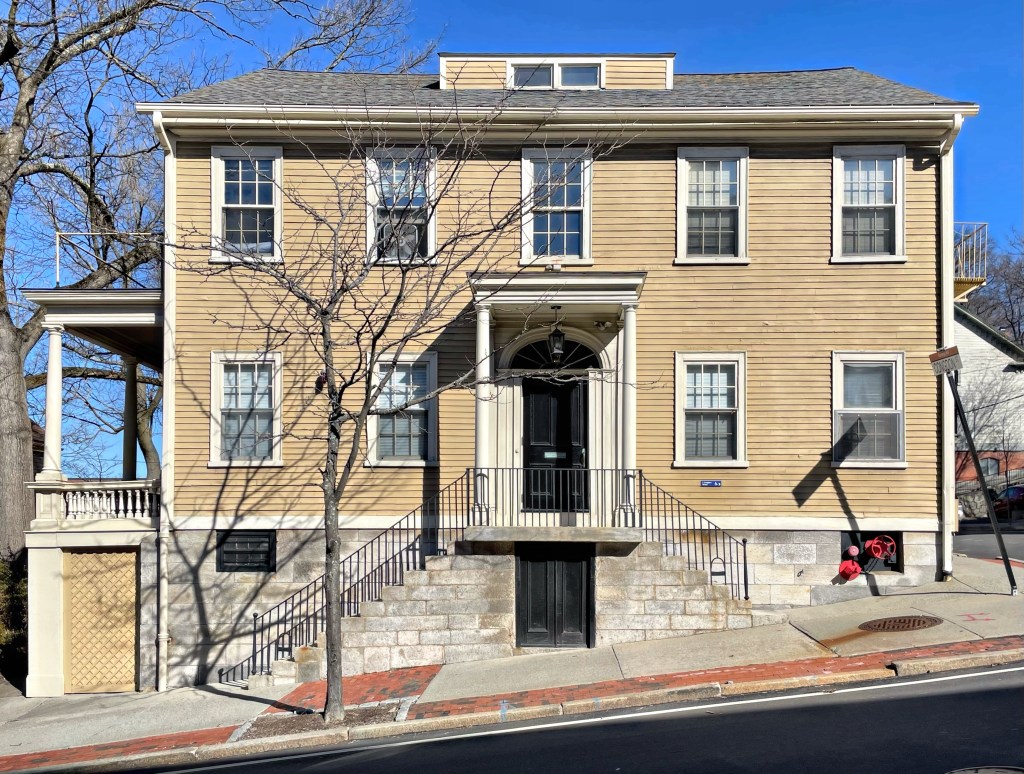
Michele Felice Cornè (1752-1845) grew up in Naples Italy and became disillusioned with the Napoleonic Wars. After the French occupation of Naples in 1799, he fled and was brought to the United States on the ship Mount Vernon, commanded by Elias Hasket Derby Jr., and settled in Salem, Massachusetts. Cornè moved to Boston in 1807 and lived and worked there until 1822 when he moved to Newport, Rhode Island, purchasing a property containing a barn. Cornè either had the barn renovated into this 1822 house or built the Federal period house from its timbers. Here, Cornè would paint many maritime scenes as murals in homes and businesses. However, his true contribution to his adopted country was convincing his neighbors to eat the tomato. While in Newport, it is reputed that Cornè introduced the tomato into the American diet. In early 19th century New England tomatoes were thought to be deadly poison. Cornè was accustomed to eating tomatoes in his native land and would regularly eat them without ill effect and, thus, allayed the fears of the residents of his adopted country. Today, the popularity of the tomato in American cuisine can be credited (in part) to Cornè and his love for the tomato.

John Banister House // 1751

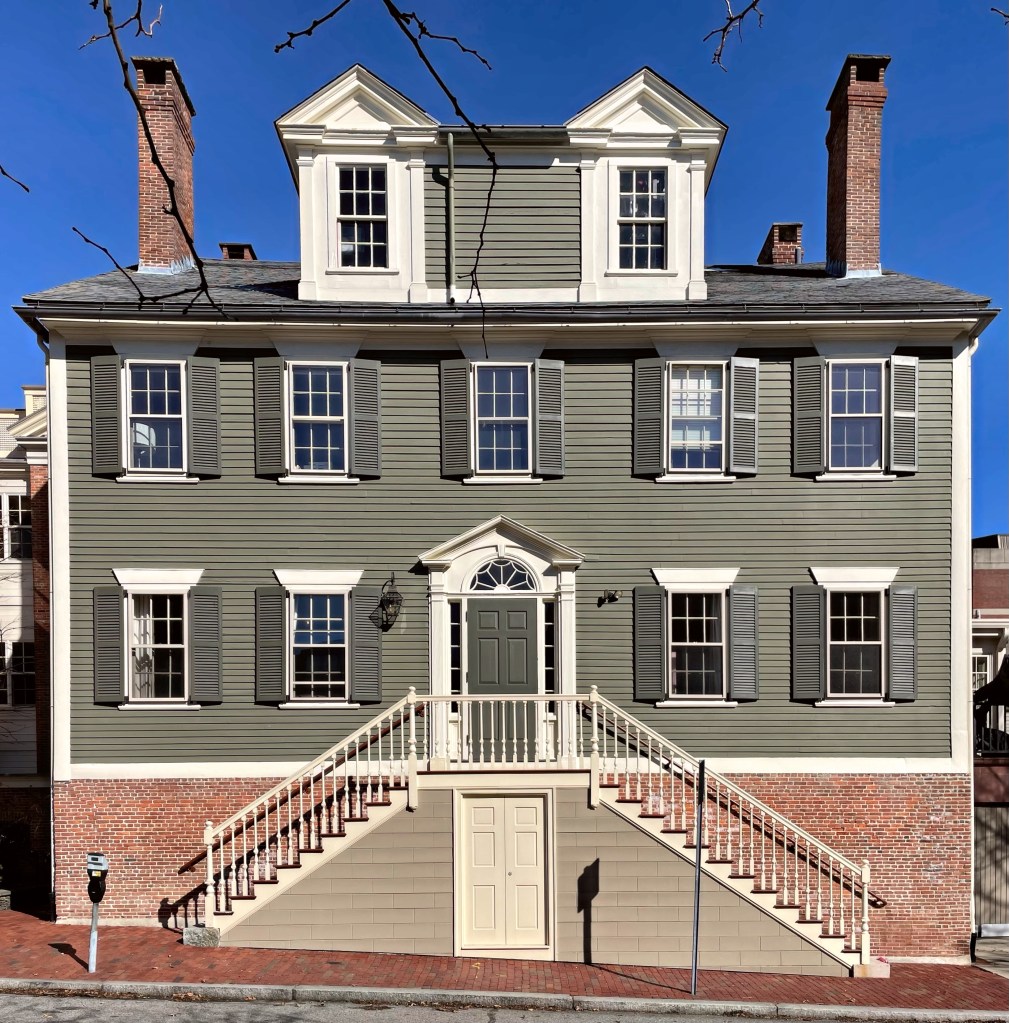
This deep, gambrel-roofed house is among my favorites in Newport. The house was built in 1751 for John Banister (1707-1767), a Boston-born merchant who moved to Newport in 1736, marrying Hermoine Pelham (1718-1765), a granddaughter of Gov. Benedict Arnold, that next year. Banister quickly established himself as a leading Newport merchant, trading with England, the West Indies, engaging in privateering and the slave trade. In 1752, he held one of the last public slave auctions in Rhode Island at his store, describing them in advertisements as “the finest cargo of slaves ever brought into New England”. The couple also built a country estate in Middletown, Rhode Island. John and Hermione had two sons, John and Thomas, who grew up in this home. John inherited the house after his father’s death in 1767, but the two brothers would soon find themselves on opposite sides of the battle for independence. Thomas was a loyalist, and even enlisted in the British army during the occupation of Newport, while John supported American independence. In retaliation for his patriot views, the occupying British forces seized this house, along with John’s farm in nearby Middletown. The house became the headquarters of General Richard Prescott during the occupation, although John later reclaimed his property following the British evacuation of Newport in 1779. The house has a later Federal entry, but otherwise is one of the best-preserved Colonial homes in Newport. It is a single-family home.

Bowen-Newton-Tobin House // c.1825

Who would have ever imagined that the Federal and Second Empire architectural styles could work so well together?! This is the Bowen-Tobin House on Spring Street in Newport, Rhode Island. The house was originally built around 1825 by Stephen Bowen as a typical two-story Federal style house with five-bay facade and entry with pedimented fanlight above. The property and it remained in the Bowen Family until 1892, when it was sold by his heirs to Mary Bailey Newton, the wife of Dudley Newton, a prominent local architect who designed dozens of summer cottages for wealthy residents in Newport. Dudley Newton “modernized” this house, adding a towered mansard roof, bracketed cornice, new two-over-two windows, and a full-length front porch wrapping around the side. The couple later moved the house, which was formerly set back behind a front garden, to the side and at the sidewalk to lay out Green Place (originally Bowen Ct.) and house lots behind this home, removing the front porch in the process. The house was later sold to the Tobin Family.

Stephen S. Albro House // 1876

Stephen Stedman Albro (1817-1895) was born in Newport, Rhode Island, the son of James and Rhoda Albro. After attending local schools, he entered into a mason’s trade, eventually starting his own contracting business. He split his time as a contractor and as a Deacon of a local Baptist Church. He was engaged in local politics, serving as a alderman for Newport and even was a director of the National Exchange Bank in Newport for some years. He built this home on Green Street after his marriage to his second wife, Emma, possibly designing and constructing the house himself. The Albro House is a stunning example of a late-Italianate style dwelling with later Queen Anne/Colonial Revival embellishments. This is a special house!

Joseph Cottrell House // 1843

The Joseph Cottrell House on Spring Street in Newport is a handsome, two-story, Greek Revival style house with flushboard siding and a traditional pilastered recessed center entry. What really stands out about this home is the two-story rounded corner bay which is finished with columned porches (since enclosed) which were likely added in the second half of the 19th century. Cottrell worked as a ship-builder in Newport, likely constructing the house and later addition himself. Developers today would never!

Cahoone-Yates Double House // c.1763

James Cahoone (1727-1814) and Stephen Yates built this stunning double-house on Green Street in Newport around 1763. Both James and Stephen worked as painters in town, and built this house together, each living in one half (Cahoone must have paid a little more because his “half” was a little larger). The Georgian style double-house eventually suffered from neglect and like several other Colonial-era buildings in Newport, its future was uncertain. Luckily, the Newport Restoration Foundation stepped in and purchased the property in 1968, restoring the houses in 1974, complete with a paint color even Cahoone and Yates would love!

Newport Old Fire Station No.1 // 1885

Central Newport, Rhode Island is best-known for its Colonial and early 19th century architecture, so when a Victorian-era building is spotted, it always stands out! This ornate building was constructed in 1885 as one of a half-dozen fire stations in Newport. This fire station housed one of the nation’s first organized fire companies known as Old Torrent No. 1. It was home to Newport’s first horse drawn steam engine until the steamers were replaced with motor-driven equipment in 1913. Unfortunately, these early model fire trucks weren’t designed to handle the steep incline of Mill Street. So, after 29 years of service, the station was closed and the horses, steamer, and the building were sold in 1915. The building saw numerous uses and deferred maintenance until 1991, when it was restored by local residents. Today, the one-of-a-kind features include original brass fire pole, private roof deck, and a 65 foot lookout tower with views of the Newport Harbor in the distance. It recently sold in 2022 for over $3 Million and is a residence!

Billings Coggeshall Double House // c.1784

This unique double-house on Mill Street is stopped me in my tracks when strolling around Newport. The two-family house was built around 1784 by Billings Coggeshall (1733-1810) and is unique architecturally as it is comprised of two houses, each with its own separate pedimented entry, into a single lengthy block. Both houses have interior chimneys and are just one-room deep! When urban renewal hit Newport in the second half of the 20th century, traffic patterns and revitalization of the waterfront were top of mind (not necessarily slum clearance and wholesale redevelopment of neighborhoods like in Boston). To bring traffic into the downtown shopping area, Memorial Boulevard was laid out by 1969, and the Newport Restoration Foundation was integral to saving this building from the wrecking ball, as it was in the path of the new road. As luck would have it, an area around Trinity Church was cleared to establish Queen Anne Square, a town common-like park in the center of town. To provide the quintessential “New England charm”, many historic buildings were relocated to line the square, including this house. When the Billings Coggeshall House was moved here, it replaced a gas station, and it was given an even longer side addition with breezeway, providing screened parking and a rear addition for offices. Here’s to preservation!

Newport Telephone Building // c.1897

Before the days of virtual meetings, texting, and calls by cellphone, residents of towns and cities all over New England needed central telephone exchanges to connect them to those who they were trying to reach. Telephone exchange buildings were typically located in downtown areas and were often architectural statement-pieces by telephone companies. This example in Newport, Rhode Island, is located just behind Trinity Church and was designed around 1897 by the firm of Perkins & Betton of Boston. The building is constructed of brick (now painted) with terracotta trim details, which really pop. The oversized Palladian window with arch, pilasters, and cornice are all terracotta installed by the Waldo Brothers, contractors. The building was converted to residential use and was sold for $2.5 Million in 2020.

Trinity Church, Newport // 1725

Trinity Church in Newport, Rhode Island is one of the largest extant 18th century churches in New England, and founded in 1698, it is the oldest Episcopal parish in the state. Built in 1725, the Georgian style church was built just as the influence of Sir Christopher Wren’s churches reached the colonies, about a quarter century after his work had come to dominate ecclesiastical design in London. Trinity is the second major church built in the original colonies influenced by Wren, following Old North Church in Boston’s North End (1723). Stylistically, both churches are similar, with the notable difference in material (Old North in brick and Trinity Church in clapboard). Local builder Richard Munday, is credited with the design of Trinity Church. By the late 19th and early 20th centuries, many members of the Vanderbilt family and other wealthy residents attended sermons here when summering in Newport. When Newport was undergoing Urban Renewal in the mid-20th century, Queen Anne Square (the park which fronts the church) was created in the 1970s to establish a town common in a city which had never truly had one. “Early” buildings in the area to be bulldozed for the common were moved to other sites to enhance the “colonial” rehabilitation of the area around the harbor, making this one of the few examples of urban renewal having a positive impact on a city.