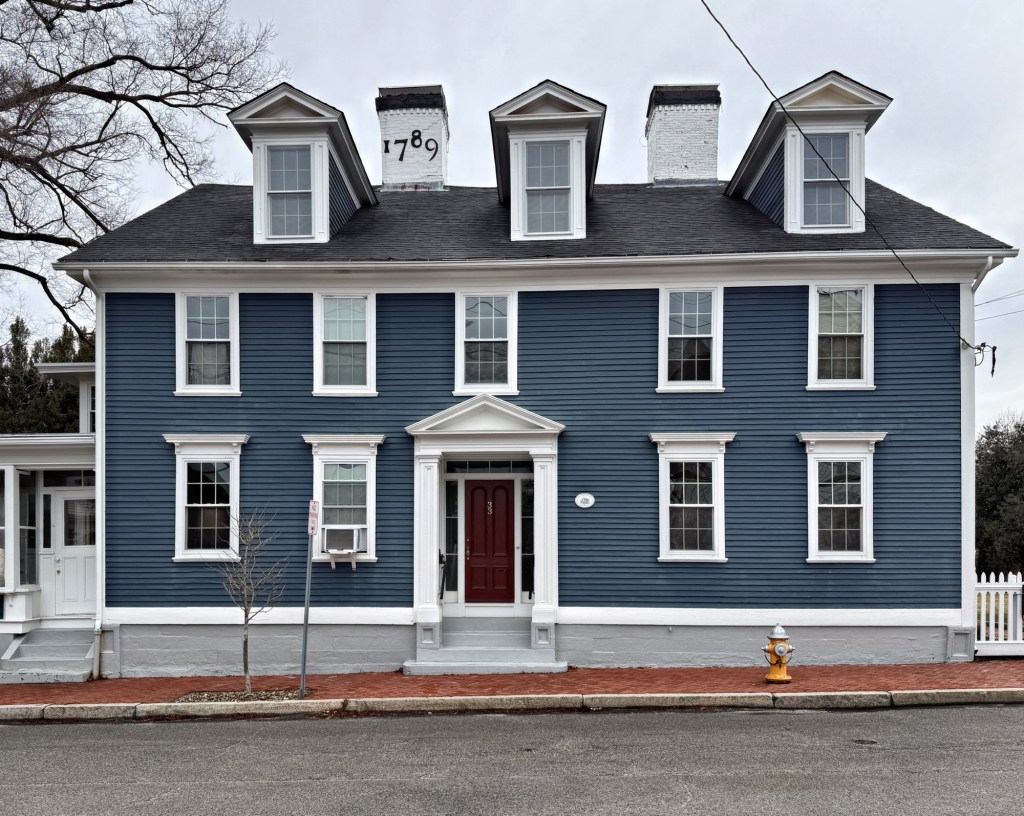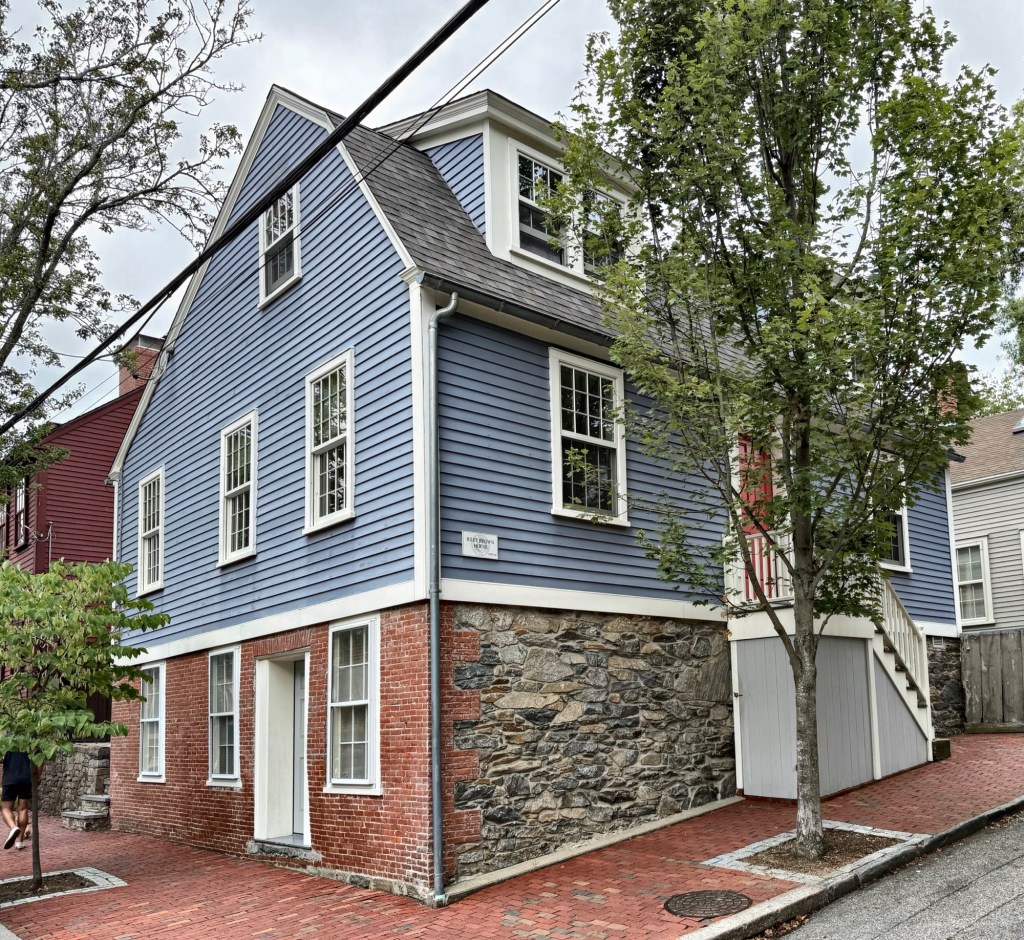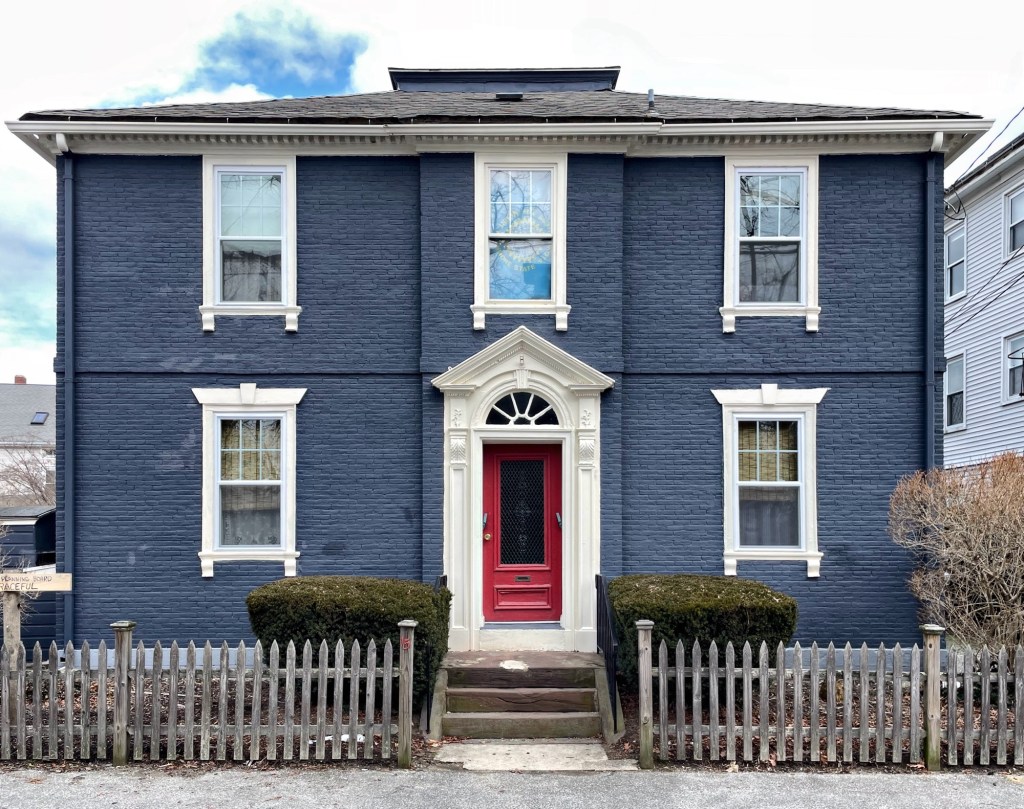
Bowen-Newton-Tobin House // c.1825

Who would have ever imagined that the Federal and Second Empire architectural styles could work so well together?! This is the Bowen-Tobin House on Spring Street in Newport, Rhode Island. The house was originally built around 1825 by Stephen Bowen as a typical two-story Federal style house with five-bay facade and entry with pedimented fanlight above. The property and it remained in the Bowen Family until 1892, when it was sold by his heirs to Mary Bailey Newton, the wife of Dudley Newton, a prominent local architect who designed dozens of summer cottages for wealthy residents in Newport. Dudley Newton “modernized” this house, adding a towered mansard roof, bracketed cornice, new two-over-two windows, and a full-length front porch wrapping around the side. The couple later moved the house, which was formerly set back behind a front garden, to the side and at the sidewalk to lay out Green Place (originally Bowen Ct.) and house lots behind this home, removing the front porch in the process. The house was later sold to the Tobin Family.

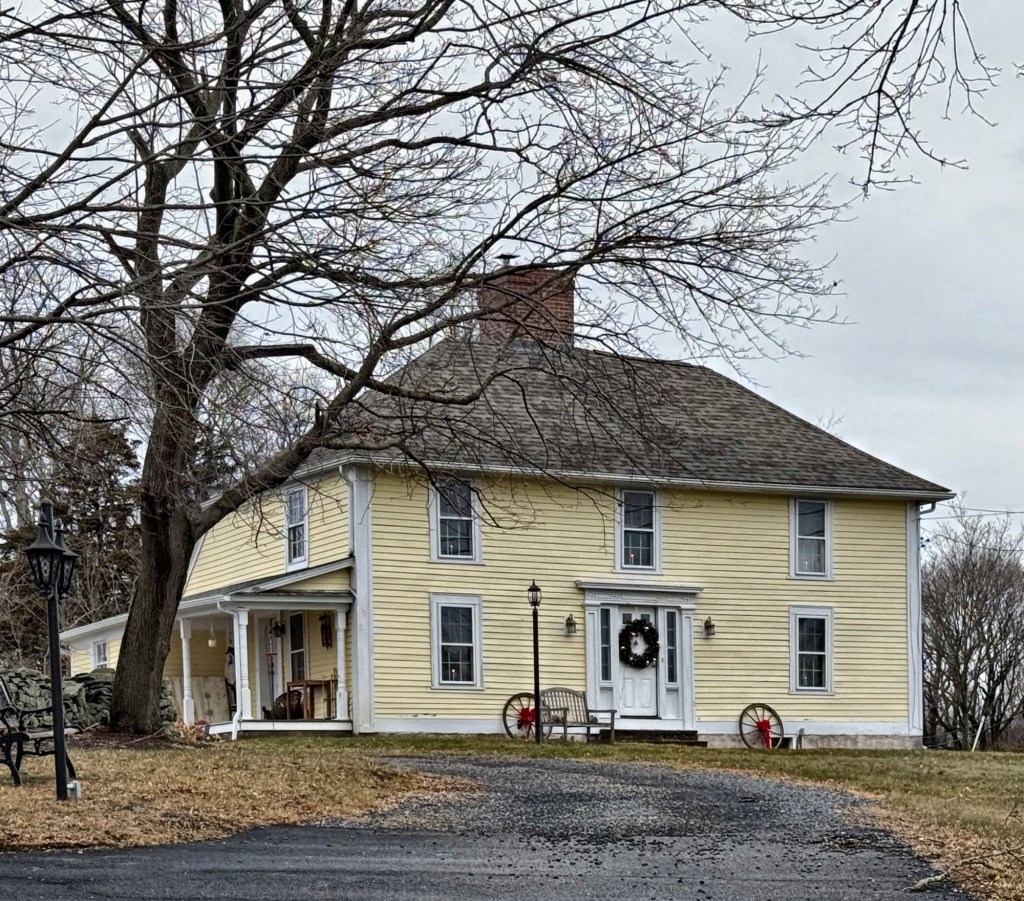
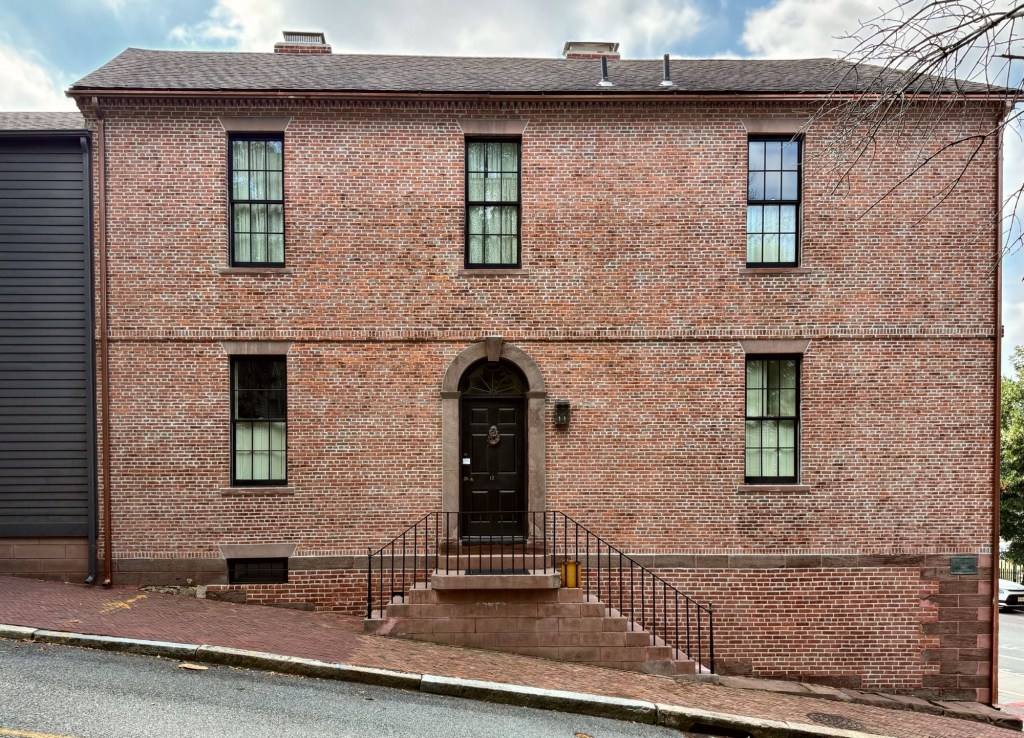
Richard E. Edwards House // 1981

The Colonial era has had a grip on New England residential design since the 1700s, with each subsequent “revival” showcasing the character-defining features in bold new ways. With this house on College Hill in Providence, Rhode Island, the architect, Friedrich St. Florian, blended traditional Colonial Revival residential design with the flair and quirkiness that comes with the Post-Modern style, popular in the 1980s. The house is five bays wide at the facade with a central projecting bay at the entrance. Post-Modernism takes architectural precedence and turns it on its head, with quirky takes on features and larger proportions. The Edwards House exhibits decorative stone lintels, a Classically inspired entry with pilasters, and a very large cupola at the roof. What do you think of this house? I feel it works well for the neighborhood as it is contextual to the surrounding Colonial-era and Colonial Revival style residences while clearly being of the late 20th century.

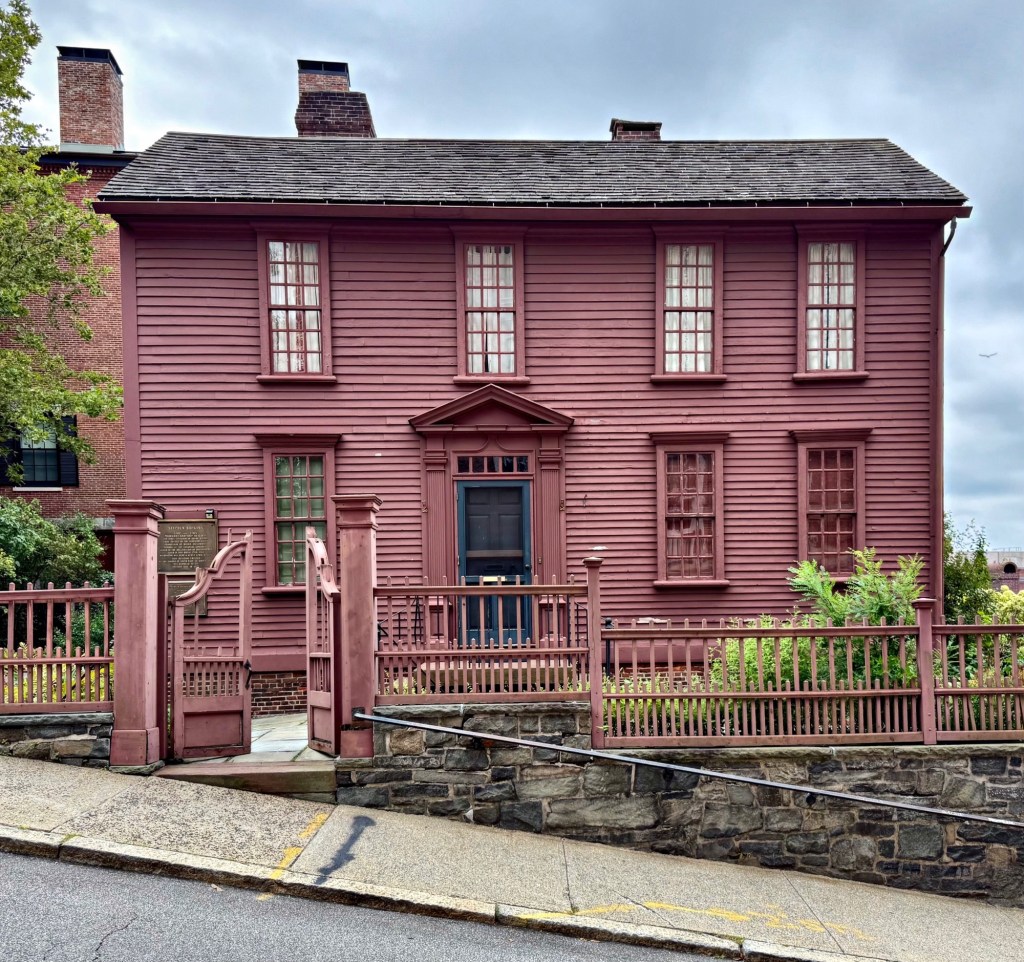
Henry Samuel Sprague House // 1902

Colonial Revival houses just exude New England charm! This house in Providence’s East Side/College Hill neighborhood was built at the turn of the 20th century in 1902 for Henry Samuel Sprague, a Providence grain dealer, for $15,000. Mr. Sprague clearly did well for himself financially as he could afford a house lot on one of the city’s most beloved streets, Prospect Street. The large mansion has many architectural details which stand out including contrasting brick and shingle on the first and second floors, a massive projecting portico covering a prominent entry, bold fluted pilasters at the center bay, and three pedimented dormers at the slate roof. Inside, this old house has some amazing woodwork and details too!

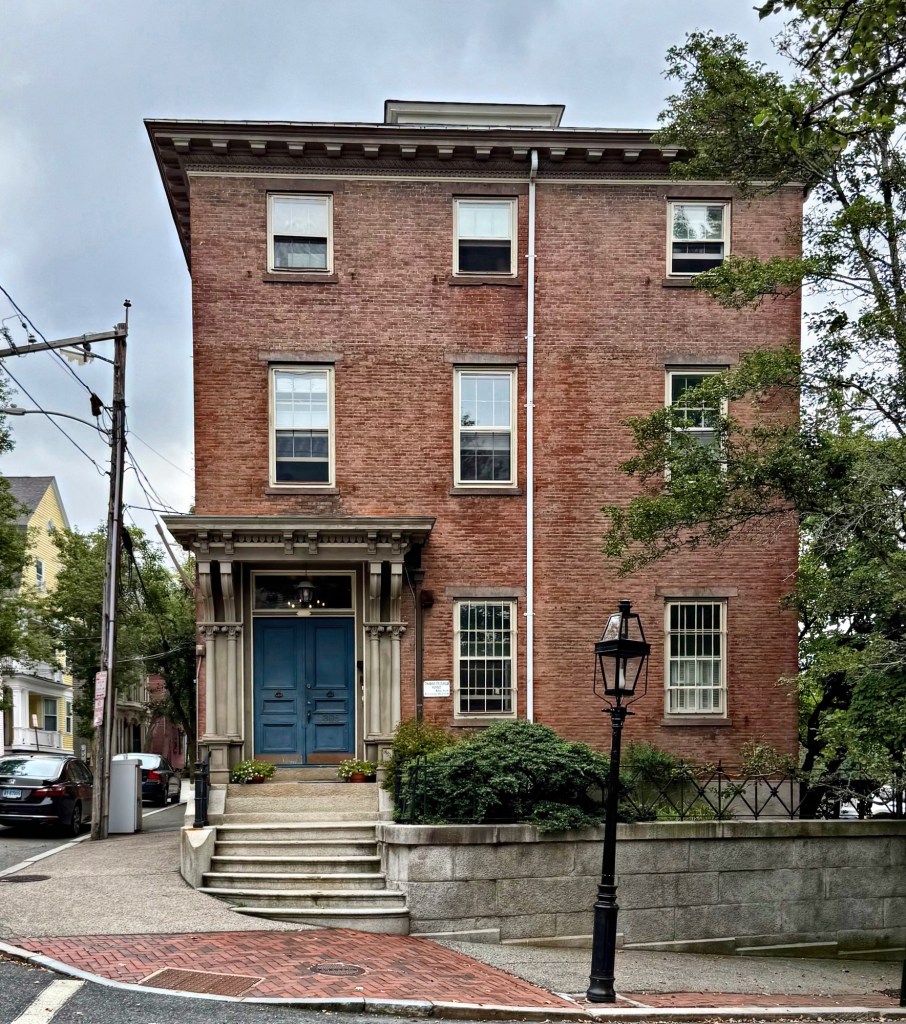
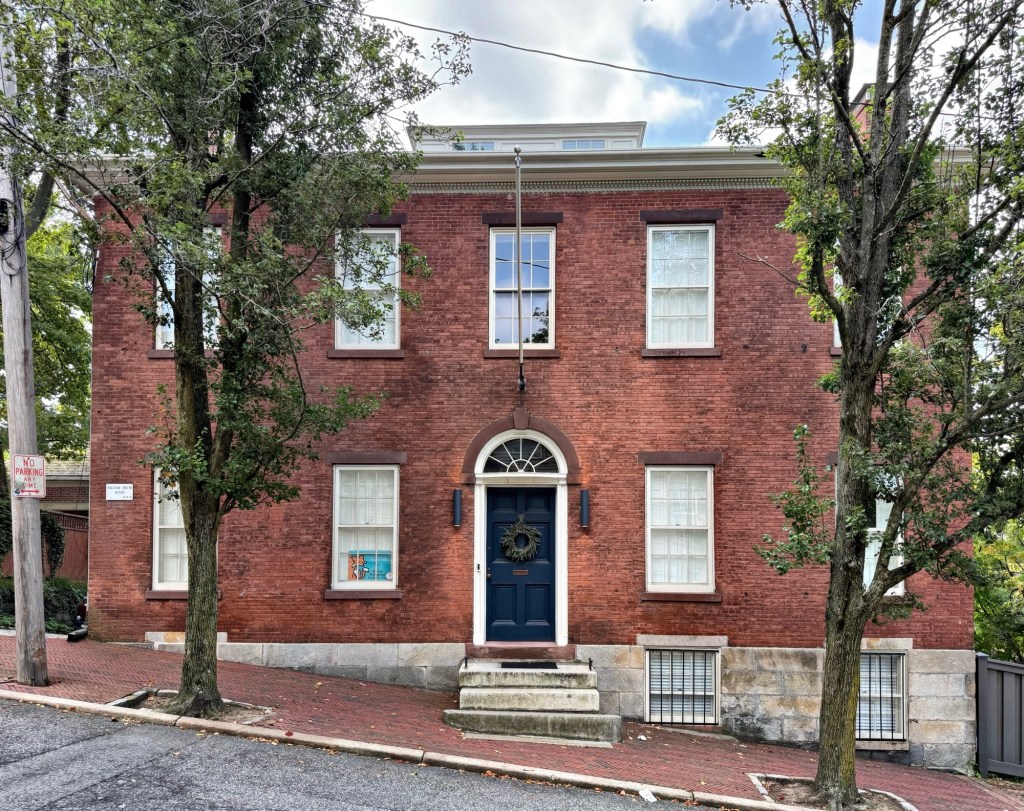
Smith Owen Mansion // 1861

You honestly cannot beat Providence when it comes to brick Italianate mansions… The Smith Owen Mansion on College Hill was built in 1861 for jeweler and silversmith Smith Owen (1809-1889) and is one of the finest homes in a neighborhood full of historically and architecturally significant properties. Mr. Owen was in business with his brother George, and they manufactured and sold some of the best jewelery in the region, largely from their commercial block downtown (featured here previously). He hired Alpheus C. Morse and Alfred Stone, local architects who furnished the plans for the colossal home. Owen lived here until his death, which occurred less than a week after his wife’s passing. His daughter Lydia Dexter Owen Beckwith (1850-1947) inherited the property and lived here with her family until her death. It was under Lydia’s ownership that the Colonial Revival entrance details were added with projecting vestibule with columns and urns and central fan transom. It is really something special!

Rose and Howard K. Hilton House // 1900

Tudor Revivals may just be my favorite style of house. The interesting roof forms and gables, the use of stone, brick or stucco, and the presence of garrisoning and half-timbering in designs are always so charming. This enchanting Tudor Revival home in Providence, Rhode Island, was built in 1900 by local architect Howard K. Hilton (1867-1909) as his personal residence with wife Rose. He first worked in the office of H. W. Colwell and continued his training under Ellis Jackson joining him in partnership (Jackson & Hilton) and under the firm name was identified with the design of several churches, schools, hospitals and various other buildings in his native city before he retired in his final years. This home is very unique for its site on a narrow urban lot with the door at the side, brick first floor with jettying at the second floor of wood construction with half-timbering. While writing this, I noticed that there are also projecting gargoyles which serve as water spouts to send water away from the structure during rainfall events. Tudors are really the best!

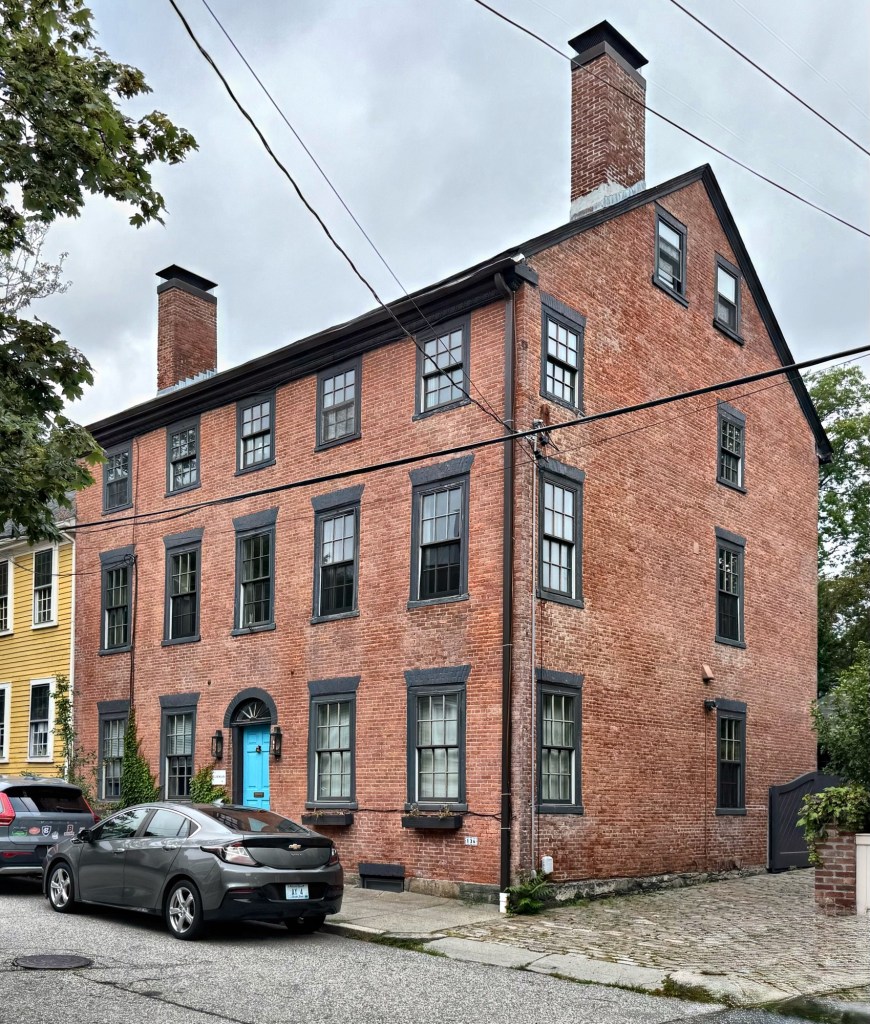
Walter and Kate Hidden House // 1901

I love a good high-style Colonial Revival home with big proportions and warm red brick! This example on College Hill in Providence is a great example. The 2 1/2-story dwelling is five bays at the facade with a center entrance under a hollow pediment hood with an enframement which reads much in the Palladian-realm. Owners Walter and Kate Hidden hired local architect Wallis Eastburn Howe to design their elaborate Colonial-inspired home in 1901, they moved in within a year. Mr. Hidden worked at his father’s business, and in 1875 became a member of the firm of H. A. Hidden & Sons. He did well for himself and became a member in many social and outdoors groups including the Audubon Society, the Squantum Association, the Hope Club, and for five years was president of the Agawam Hunt Club.