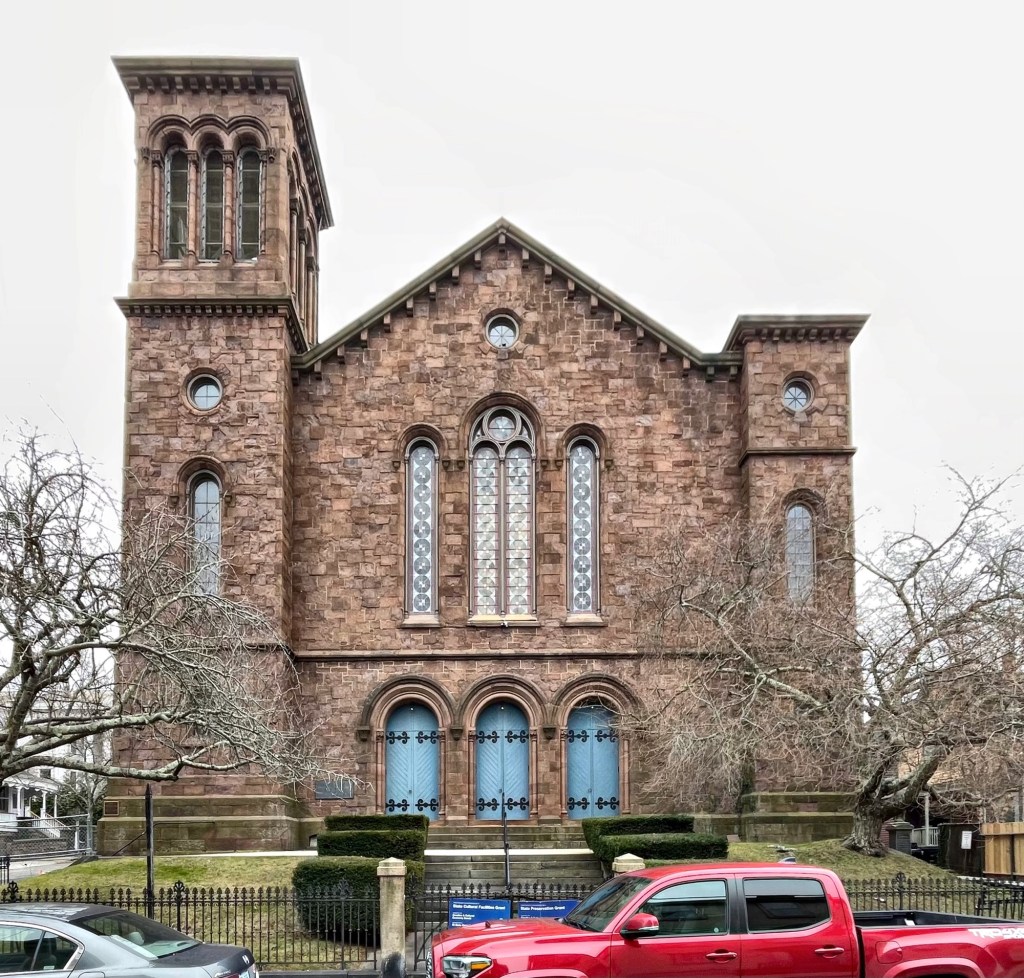
Lancaster Industrial School for Girls Chapel // c.1840

The Lancaster Industrial School for Girls was a self-sustained campus of housing, dining, farming, and functional buildings giving the State of Massachusetts little need to worry about its day-to-day function or funding. In 1838, the First Universalist Society in South Lancaster (then known as New Boston), built a house of worship for members living there. When the southern part of Lancaster reincorporated as the separate town of Clinton, members of the church relocated a short distance to the new manufacturing-oriented community for prosperity. This church was closed, but was purchased by the Industrial School for Girls, who moved the building 1.5 miles to their campus, for use as a chapel. The building was added onto and altered a couple times, but has sat deteriorating since the school closed.

Thompson Hall – University of New Hampshire // 1892

The centerpiece of the University of New Hampshire (UNH) campus in Durham, is Thompson Hall, a stunning example of Romanesque Revival architecture. Thompson Hall was the first building to be built on the new campus of the New Hampshire College of Agricultural and Mechanical Arts, which had been founded in 1866 as a land grant college and was previously located near Dartmouth in Hanover. Benjamin Thompson, a Durham farmer, died 1890, leaving an estate worth $400,000, with 253 acres (102 ha) of land, to the state for use as an agricultural school. The state accepted his gift, and construction of Thompson Hall began in 1891, with a landscape plan for the campus developed by the great Charles Eliot. The bold Romanesque building was designed by Concord, NH architects Dow & Randlett, who were among the most prestigious architectural firms in the state at the end of the 19th century. The building remains as a significant piece of UNH’s ever-growing campus.

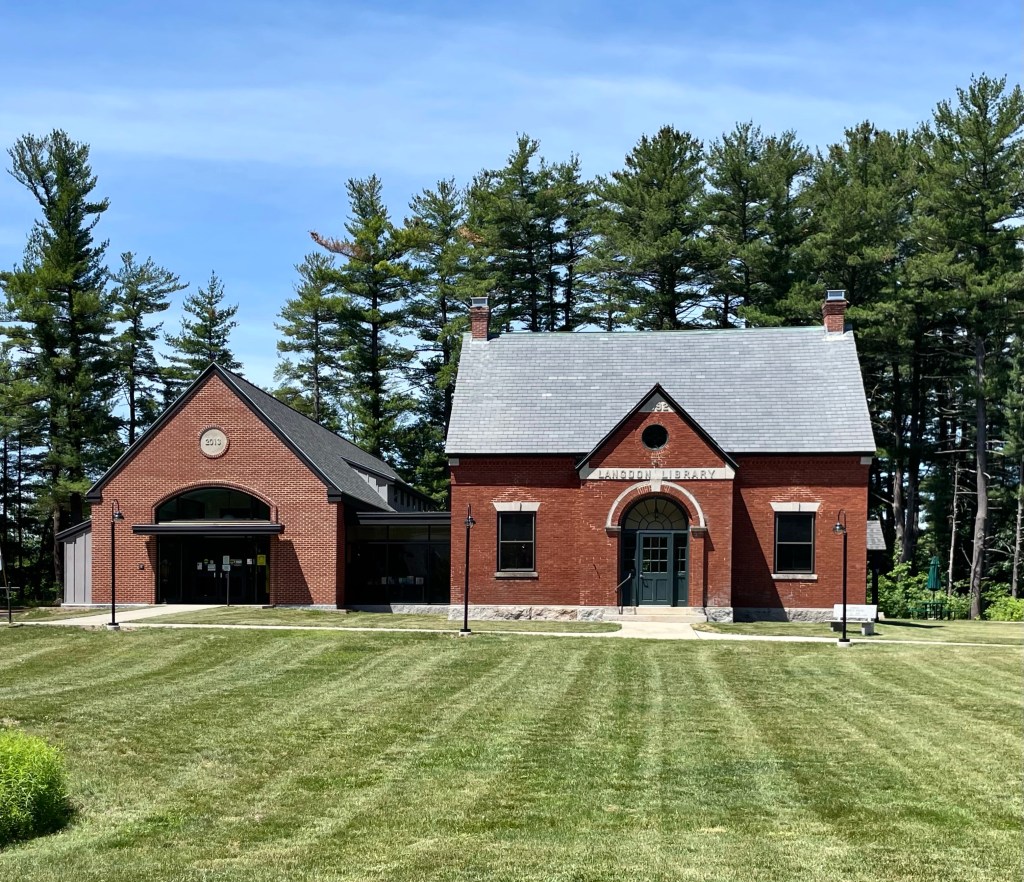
Langdon Library // 1892

Langdon Library in Newington, NH, was established through the generosity of Woodbury Langdon of New York City, a summer resident of Fox Point in town. In 1892 Langdon offered to donate 2,000 books to the Town of Newington, if suitable provisions could be made for their care and circulation. The Town voted to erect a library at town meeting in 1892 and accepted the offer. Portsmouth architect William Allyn Ashe furnished designs for the building which reads as a pleasing, symmetrical Romanesque Revival building. The structure was outgrown and needed repairs in 2013, and hired the firm of Lavallee Brensinger Architects to oversee the redesign, which restored the 1892 building. The resulting project tripled the usable square footage of the library, and the new wing allows the library to remain quaint and the main focus.

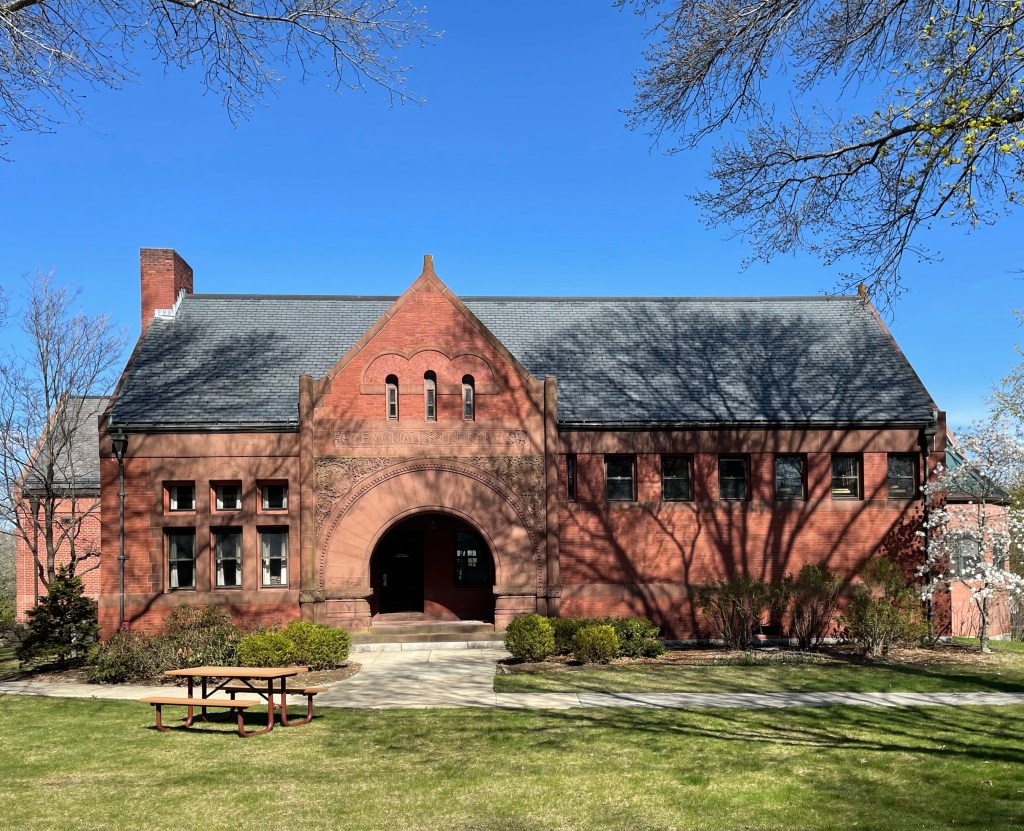
Acton Memorial Library // 1889

In 1888, William Allan Wilde, a Boston publisher who grew up in Acton, purchased land on Main Street to be used as the site for a new memorial library, in “memory of those brave and patriotic men of Acton who so freely gave Time, Strength and Health, and many of them their Lives in the war of the Rebellion, 1861-65.” The former Fletcher Homestead which was located here, was moved to a nearby street. The Richardsonian Romanesque building was designed by the Boston architectural firm of Hartwell and Richardson. The building displays traditional Romanesque materials with its brick wall surfaces, brownstone and terra cotta trim and detailing, and slate roof. The large Syrian arched entry is a hallmark in the Richardsonian Romanesque style, which works extremely well with this design.

Tewksbury State Hospital, Male Asylum // 1901

The Male Asylum building at the Tewksbury State Hospital was built in 1901 from plans by architect John A. Fox, who designed the Administration Building and many other buildings in the hospital/asylum campus. The building was eventually renamed after Anne Sullivan, who is best known as the teacher and companion of Helen Keller. Anne Sullivan contracted a bacterial eye disease known as trachoma, which caused many painful infections and, over time, made her nearly blind. When she was eight, her mother died from tuberculosis, and her father abandoned the children two years later for fear he could not raise them on his own. She and her younger brother, James (Jimmie), were sent to the run-down and overcrowded Tewksbury Almshouse (later renamed the Tewksbury Hospital) as a result, where she endured multiple unsuccessful eye operations and poor, cramped conditions. The male asylum building held cramped dormitories with men and boys suffering from various ailments and mental conditions. The building sits atop a stunning rubblestone foundation and features prominent Romanesque arched windows.

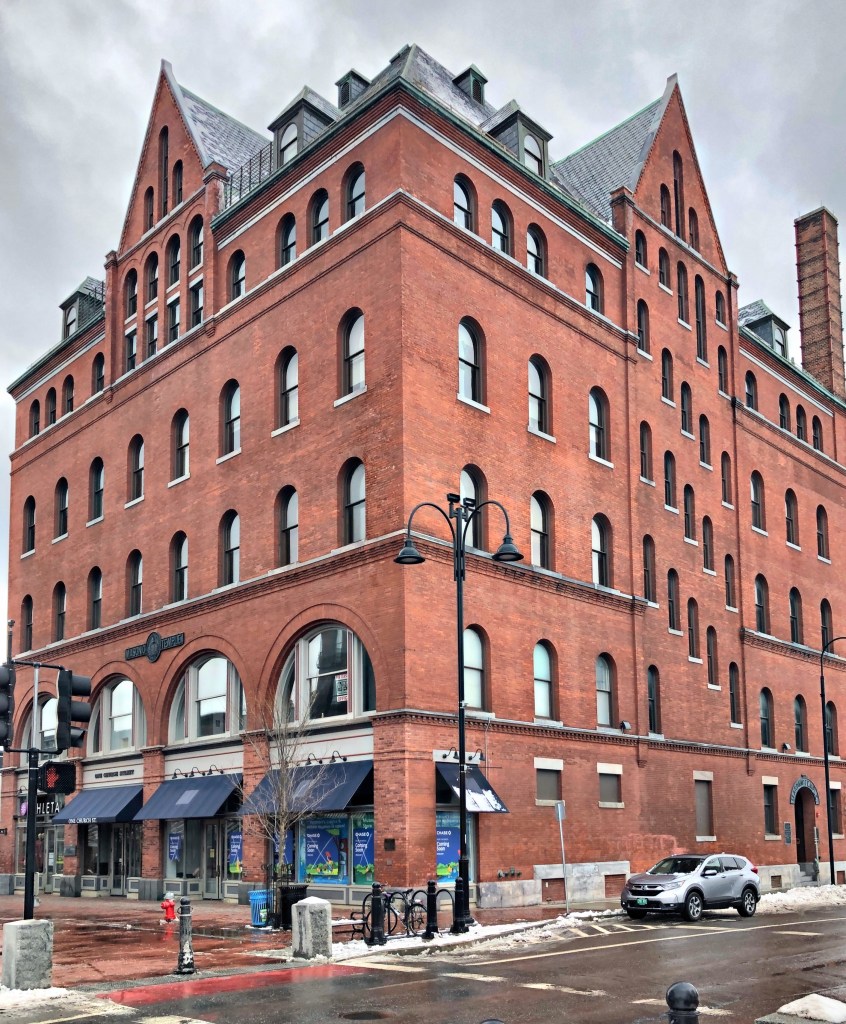
Burlington Masonic Temple // 1898

This large, imposing brick structure across from the Unitarian Church in Burlington, Vermont, was built in 1898 as the state headquarters of the Grand Lodge of Vermont, Free and Accepted Masons. Masonry, also known as Freemasonry, is the oldest and largest fraternity in the world, and they erected architectural landmarks in cities and towns all over the globe. At the end of the 19th century, the Masons in Vermont wanted a large new headquarters to host events and meetings for those visiting from all over. The building was designed by John McArthur Harris of Wilson Brothers & Company of Philadelphia at the time the firm was working on major buildings for the UVM campus. Above the retail use at the ground floor for rental income, multiple floors of meeting and banquet rooms, parlors, library, offices, and regalia spaces culminated in a fifth-floor assembly hall surrounded on three sides by a sixth-floor gallery. At the roof, the gables, along with small hipped dormers, animate a great hipped roof that evokes the symbolic Masonic pyramid. The massive roof, round arches, and a striking stair-step side elevation give the building a purely Richardsonian character, minus the carved sandstone and monumental arches.

First Church Congregational of Fairfield // 1892

The First Church Congregational in Fairfield, Connecticut is the sixth church to occupy this site! The first structure was built in 1640, and the current building was constructed in 1892. The third version of the church was burned by the British in 1779, while the fourth “meeting house” took nearly 42 years to finish and was partially funded by the sales of properties which formerly belonged to Tory sympathizers. The Romanesque Revival church was designed by architect J. Cleaveland Cady, who is best known for his design of the south entrance of the American Museum of Natural History on the Upper West Side of Manhattan.

North Easton Railroad Station // 1884

Frederick Lothrop Ames (1835-1893) was born in Easton, MA, the son of Oliver Ames Jr. who ran the Ames Shovel Works in town. On the death of his father in 1877, Frederick became head of the Ames & Sons Corporation also inheriting upwards of six million dollars, which he invested in railroads. From this, he eventually became Vice President of the Old Colony Railroad and director of the Union Pacific railroad. At the time of his death, Ames was reported to be the wealthiest person in Massachusetts! Due to his role for the Old Colony Railroad, Ames had a rail station built in his hometown, adjacent to his family’s factory. Henry Hobson Richardson, who designed many other buildings in town for the Ames Family, designed this station in his signature Richardsonian Romanesque style with its large arches, varied rustication of stone, and brownstone trimming. The building was completed two years before Richardson’s death. Rail service here was cut in the 1950s, allowing the Ames family in 1969 to buy the station back from the consolidated New York Central Railroad, gifting it to the Easton Historical Society.

Ames Memorial Hall // 1881

There are few buildings that make you stop and stare in marvel at their perfect architectural proportions, detailing and design, the Ames Memorial Hall in Easton, Massachusetts is one of them for me! In the late 1870s, the children of Oakes Ames commissioned the great American architect Henry Hobson Richardson to design the Memorial Hall as a tribute to their father. Richardson, the architect of Boston’s beloved Trinity Church in Copley Square, responded with a picturesque masterpiece using his signature architectural elements of rounded arches, dramatic roof lines, and heavy masonry adorned with carvings. The building was provided to the inhabitants of Easton “for all the ordinary purposes of a town hall”. Oakes Ames (1804-1873) was partner in the family business, O. Ames & Sons, a U. S. congressman, an early investor in the Central Pacific Railroad, and, at the urging of President Abraham Lincoln, a prominent force in the building of the first transcontinental railroad. The Richardsonian Romanesque building stands on the solid foundation of a natural ledge, from the northeast corner of which rises the beautiful octagonal tower, on whose frieze are carved the twelve signs of the zodiac.