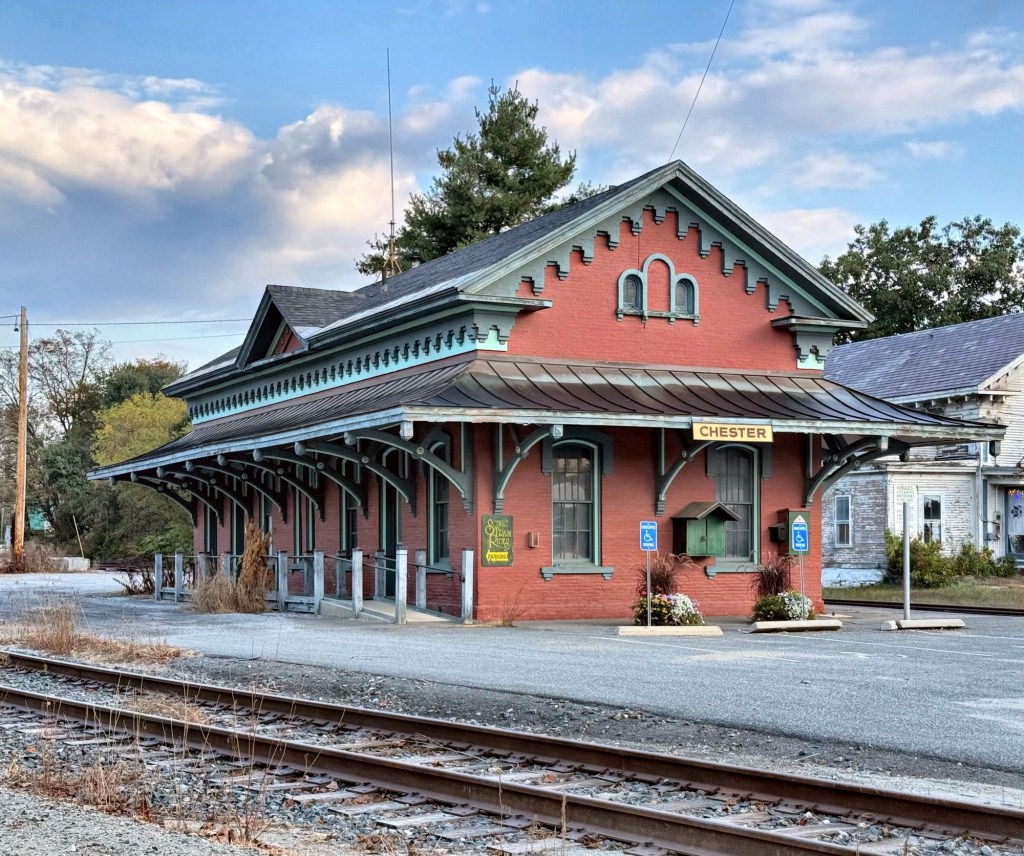
The first public train arrived in Chester, Vermont, on July 18, 1849, and in December, the Rutland & Burlington Railroad opened the first rail line across Vermont linking the Connecticut River valley at Bellows Falls and Lake Champlain at Burlington. A fire destroyed the first station in 1871, and the Vermont Central Railroadbuilt the current station within a year. The State of Vermont purchased the line in 1963, leasing it in part to the Green Mountain Railroad. Exceptional in Vermont, this brick station retains its high-style Italianate design and continues in railroad use. The station can be classified as Italianate/Romanesque in style and has a corbeled cornice, windows capped by brick hood moldings, and a projecting trackside awning. It appears that the station is not in active use, does anyone know more?
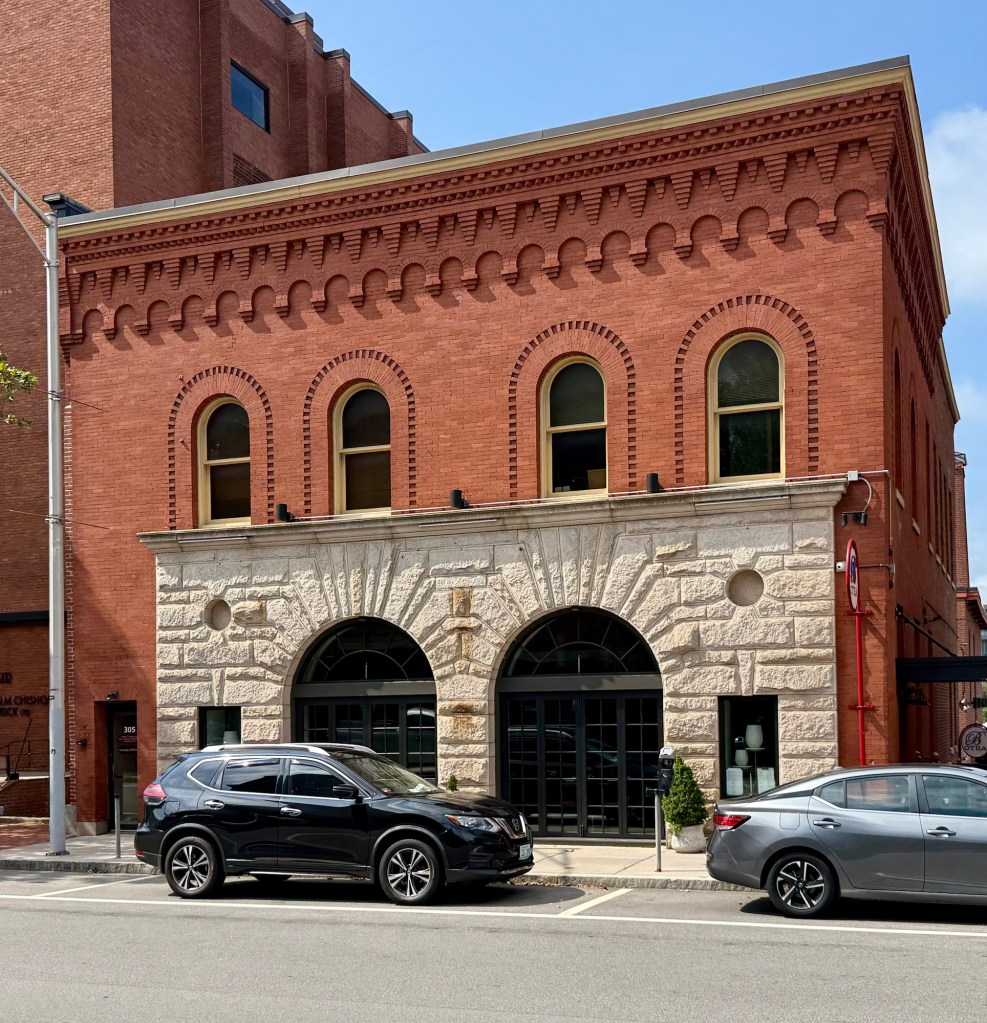
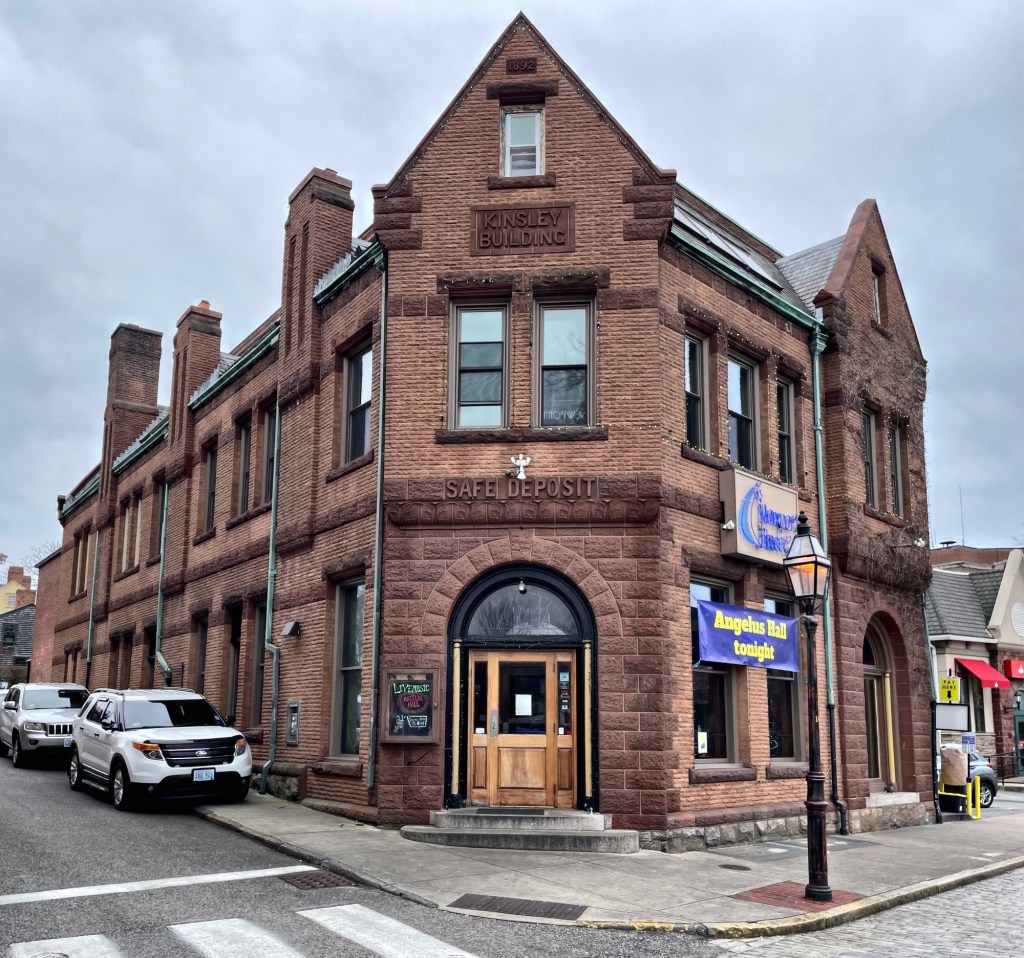
Built as a neighborhood fire station by the City of Providence in 1892, this handsome brick structure on South Main Street showcases how infrastructure and civic buildings can (and should) still contribute to the streetscape. Constructed along a streetscape of early 19th century brick buildings, the local architectural firm of Stone, Carpenter & Willson, sought to take cues of the materiality and massing of nearby structures, but employ new detailing and vocabulary for the fire station here. The result is a Romanesque style fire station with a pair of round-arched engine portals surrounded by stone facing, with the showstopping second floor and roofline with ornate brickwork around the arched windows and multi-staged corbeled cornice. The building with its smaller engine doors became obsolete with newer, larger fire trucks, and the building has since held a variety of commercial uses, today as a up-scale Italian restaurant.
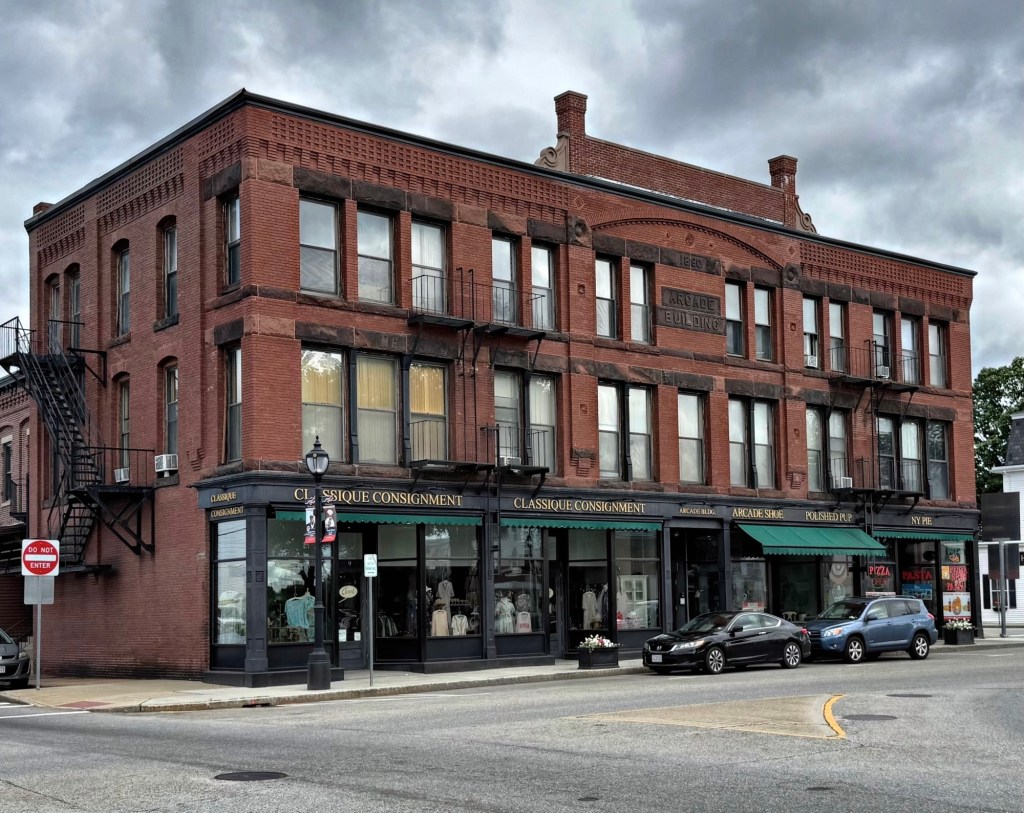
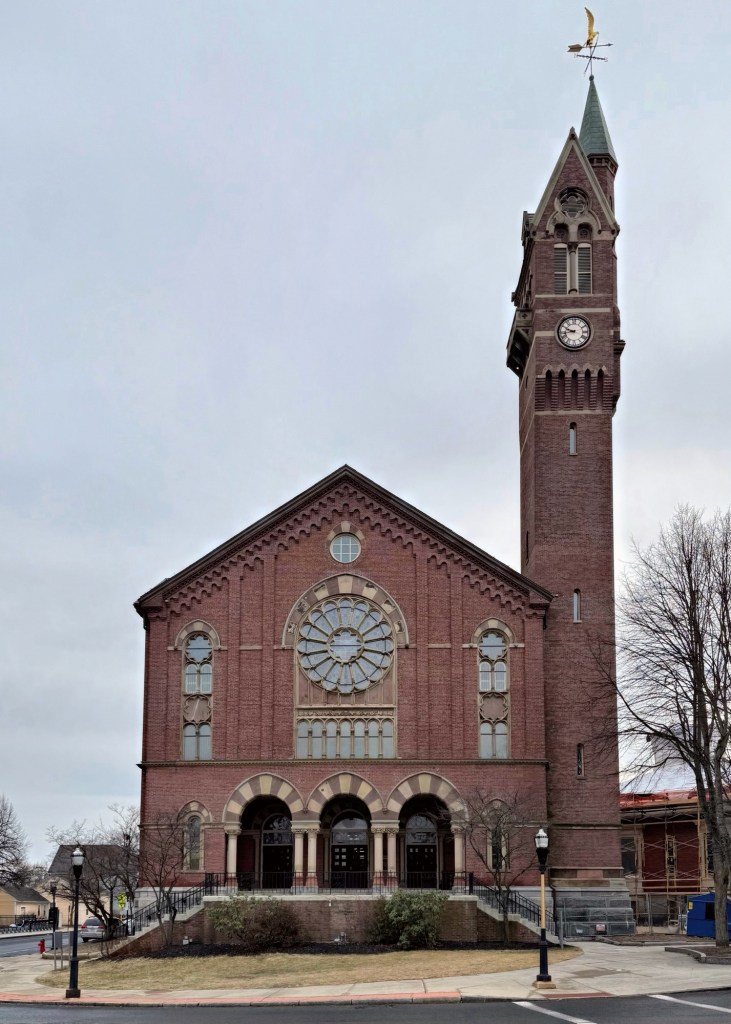
The Second Meeting House of Westborough, Massachusetts, was built on this important site in the center of the village in 1749. It was a plain, wooden building and was used for both church services and town meetings, since church and state were essentially inseparable at the time. When a new church was built in 1837, this building was purchased and converted to commercial use. The first floor of the building was raised, and another floor was added underneath. The steeple was also removed. The building then became known as “The Arcade Building,” a kind of mall with small shops opening onto the porch. By the end of the 19th century, the old wooden building was nearing 150 years old and owners decided to demolish the structure, and replace it with a more permanent and stately block. The New Arcade was built in 1890 and is more Romanesque in style. The handsome brick block has retail spaces on the ground floor with residences above, a great example of mixed-use.
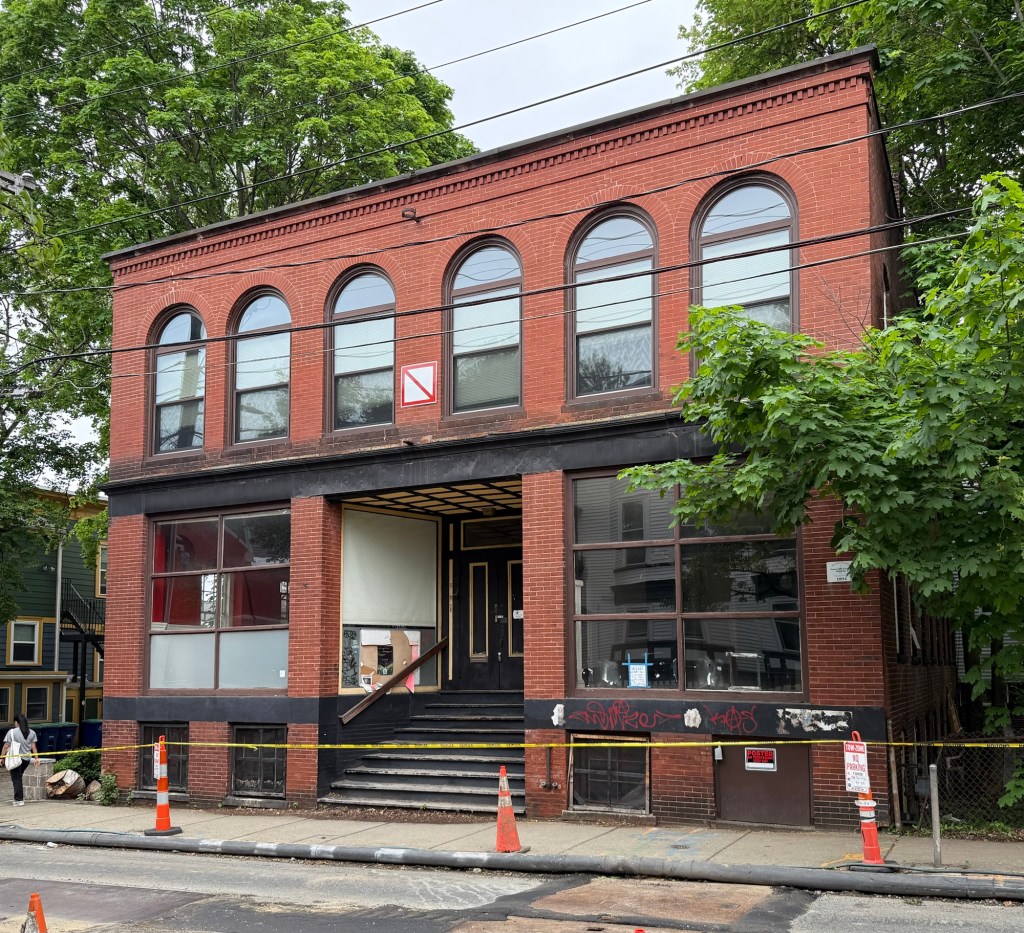
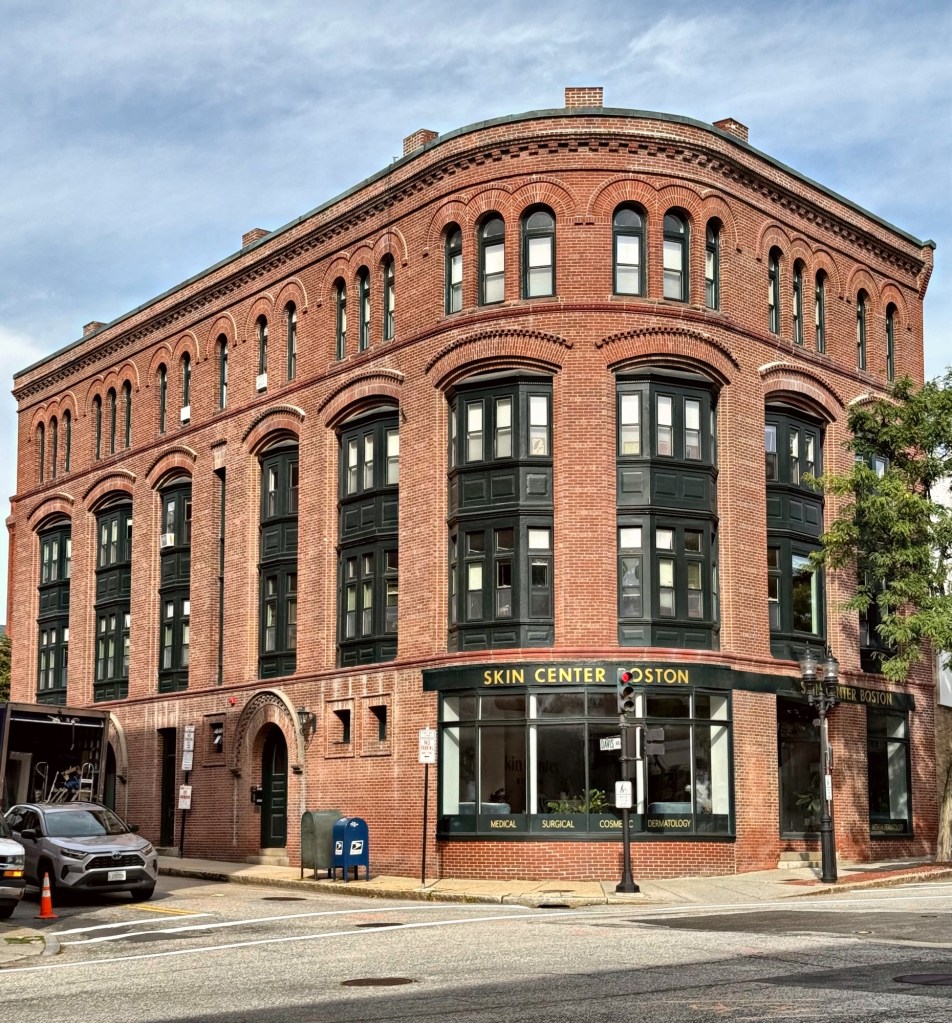
The Somerville Journal was a local paper founded in 1870. The paper was originally published and printed in an office in Boston, but moved to Somerville by the late 1870s. After about 15 years of renting space in a commercial building in Somerville’s Union Square, the paper purchased a lot nearby and began planning for its first purpose-built building for their company. This structure on Walnut Street was built in 1894 to house a new generation of printing equipment and increased production for its growing market, along with the estimated 50 employees at the time. The building was designed by William H. Gerrish (1865-1915), an engineer. Romanesque Revival in style with the arched second-story windows, the building along with its plate glass storefronts, have been an important landmark in the Union Square area for over 130 years. The Somerville Journal vacated the building in the 1950s and the building was used as a photo developing and printing studio. During the 1970s the building was used as a youth recreation center for the city of Somerville. It has been used as artist studios since the 1970s and today, appears to be vacant. Does anyone know what the plans are for this building?
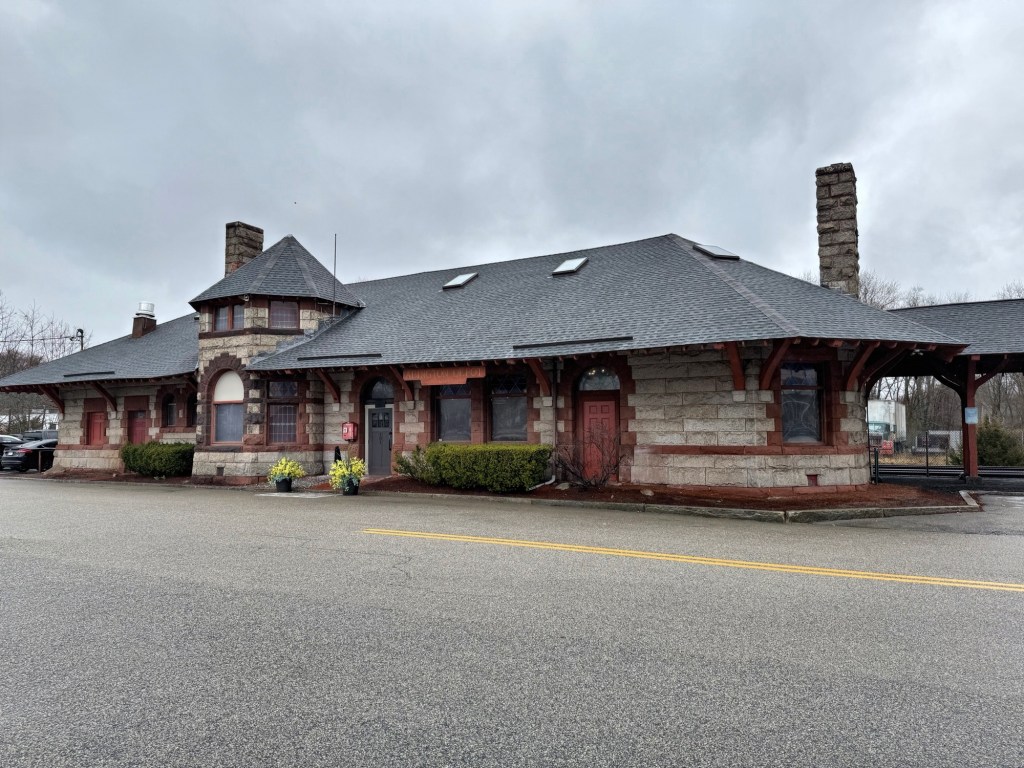
The North Abington Depot was built in 1894 from plans by notable architect Bradford Lee Gilbert in the Richardsonian Romanesque style, a design that typified many regional train stations following Henry Hobson Richardson’s commission by the Boston and Lowell Railroad. Construction on the depot began soon after the “North Abington Riot”, in which railroad laborers and local townspeople fought over the town’s right to allow a grade-level streetcar crossing over the train tracks. The railroad executives filed an injunction before the state supreme court, and Justice Marcus Perrin Knowlton, at a hearing, dismissed the bill, saying that since the Selectmen had acted within their right as representatives of the townspeople who owned the public highway, the Supreme Court had no reason to become involved. This decision was disputed by the railroad’s attorney, who advised them that this decision was not binding, which ultimately would be deemed incorrect. On August 15, 1893, fifteen local men (many of whom were sworn in as special police for the occasion) with the aid of fire hoses, withstood the onslaughts of more than 200 railroad laborers, armed wit h picks, shovels, and paving stones. After many were injured, the brawl ended. In the aftermath, the full bench of five Justices of the Massachusetts Supreme Court upheld the validity of the position taken by a single Justice, saying that any one member was in position to adequately interpret the law. This decision still stands and is quoted in similar cases in the field of jurisprudence. This depot was completed in 1894 by the New York, New Haven and Hartford Railroad as a peace offering following the North Abington train riot and a visual reminder that no corporation, no matter how powerful, is superior to the right of the people and the laws of the land.
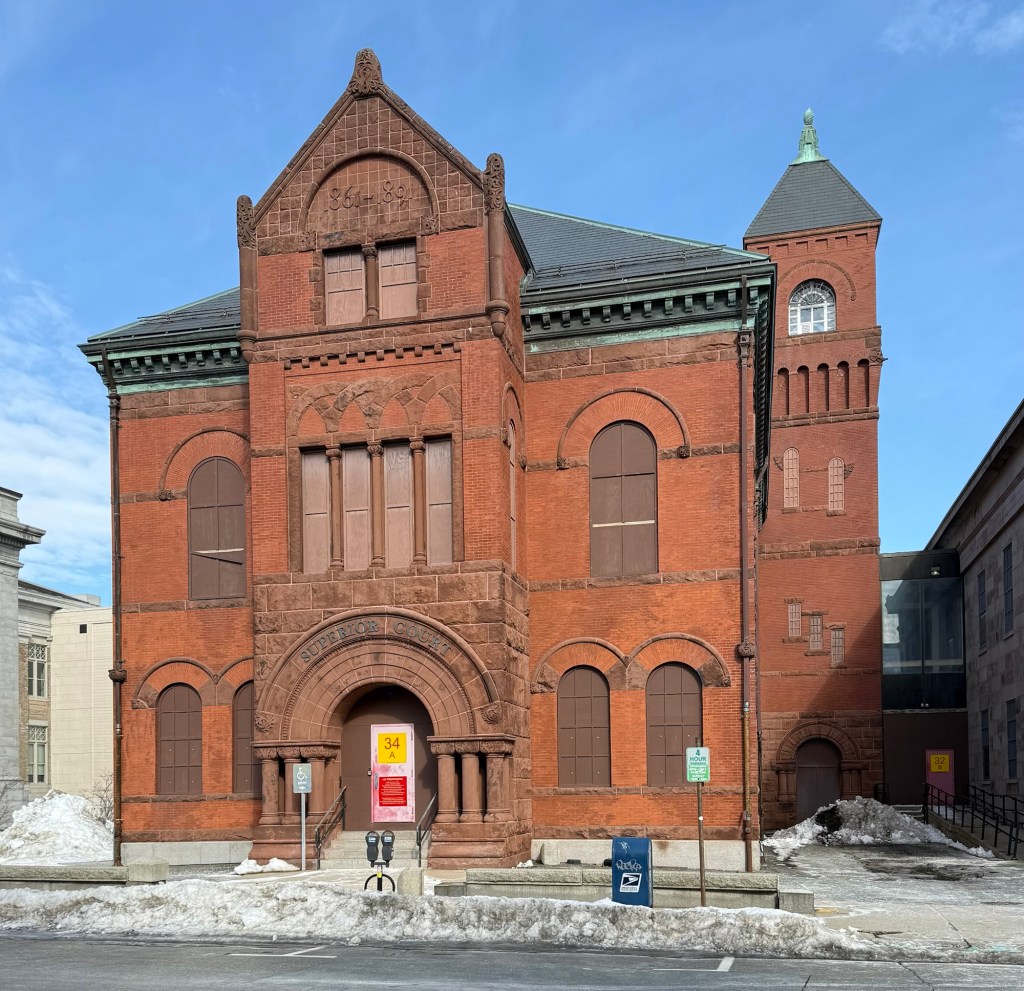
Located to the west of the Old Granite Courthouse on Federal Street in Salem, the Old Essex County Superior Courthouse is a visual depiction of the emergence of the Victorian styles from the more Classical Greek mode. Originally built in 1861 from plans by Salem architect, Enoch Fuller, the building was distinctly Italianate in style and built of brick until a major renovation in 1889 gave the building its present Richardsonian Romanesque appearance. The building was enlarged and renovated by architects Holman K. Wheeler and W. Wheelwright Northend which includes: changes to the roof line, creation of dormers, alterations to the window surrounds to create Romanesque arches and more. A three-story projecting pavilion, whose first floor is finished with rusticated brownstone, contains a recessed entry with a large semicircular arch supported on three columns with carved capitals at each end. The central pavilion resolves into a gable with corner pilasters with carved finials centering a blind arch containing the full date span of the complex, “1861-1891” in a field of square rusticated brownstone blocks. The courthouse remained in use until the J Michael Ruane Judicial Center at the end of the block was completed in 2012. The Old Granite Courthouse and adjacent Old Superior Courthouse were both vacated and have been essentially mothballed ever-since under the ownership of the Division of Capital Asset Management and Maintenance as surplus. The fate of the two buildings remains undetermined.
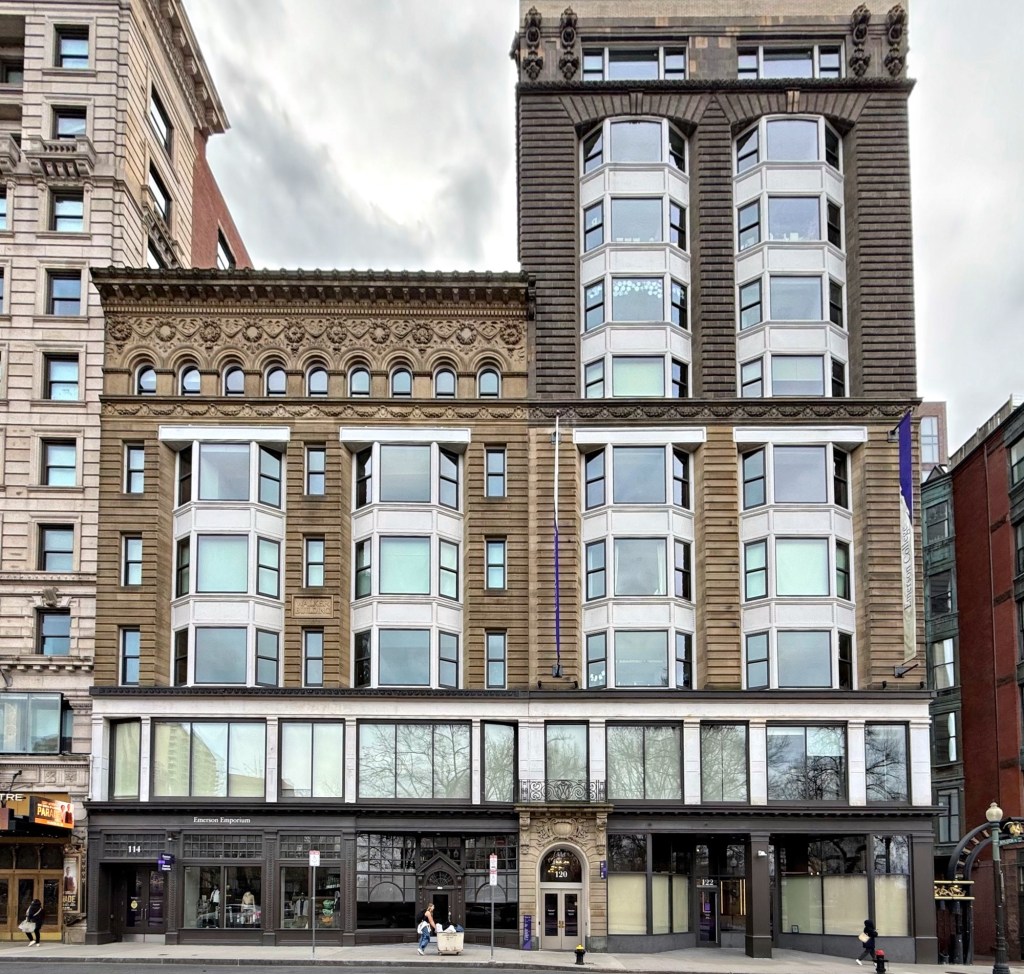
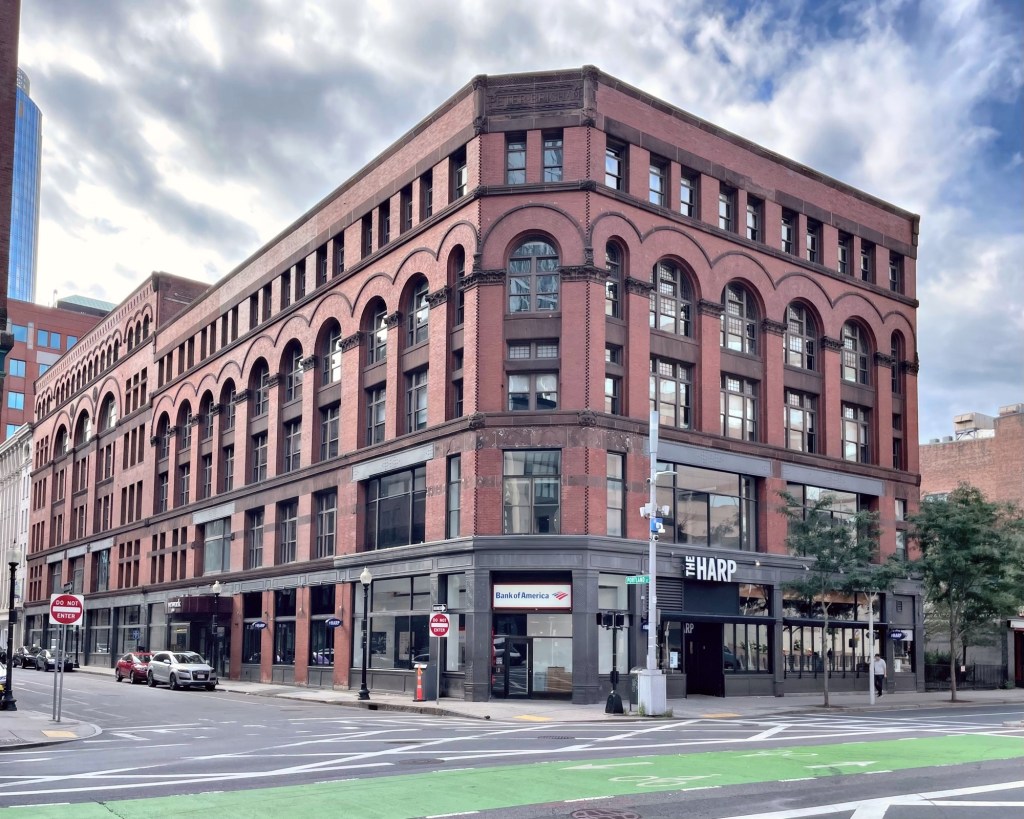
On Boylston Street overlooking the Boston Common, this historic building with two distinct parts is not photographed as much as some of its neighbors, but it is an important visual reminder of the period of growth and development in the city in the late 19th and early 20th centuries. This is the Walker Building, an early office building that was constructed beginning in 1891 in two phases by owner Joseph W. Walker. Mr. Walker hired the architectural firm of Winslow & Wetherell to design the building, which was finished in the Romanesque Revival style with a notable cornice with nine-bay arcade of arched windows and ornate wreath and swag motifs. A major tenant in the building was the Boston office of the S. S. White Dental Manufacturing Company, the largest dental manufacturing company in the world. Less than a decade after the six-story Walker Building opened, Joseph Walker purchased and razed the parcels nextdoor and again hired the same firm (at this time renamed Winslow & Bigelow), to expand the Walker Building, building a ten-story addition in a similar style. The second Walker building housed piano company showrooms and offices along with professional offices of numerous architects and professionals. The Walker Building is now owned by Emerson College, and is used as classrooms, computer labs, and study spots for students with the dining center and bookstore in the former retail spaces.
Chicopee, Massachusetts, was first settled in the early 17th century and incorporated as a town in 1848. Originally part of Springfield, Chicopee grew rapidly in the 19th century, fueled by industrialization and following immigrants arriving to the city to work in factories there. Many of these ethnic groups established cultural centers and built churches, creating the diverse and architecturally unique city we see today. Sadly, like many other 19th century industrial cities, many of the factories closed or relocated in the mid-late 20th century. While the loss of industry harmed the local economy, Chicopee is poised for growth and rebirth as the second largest city in Western Massachusetts, and anchored by its great architecture. The Chicopee City Hall, built in 1871, is one of the region’s finest buildings and one of a handful built in the Romanesque Revival style. The present building was constructed on land the City purchased in 1869 from the Ames Manufacturing Company, a major employer in town with mill buildings nearby along the river. Architect, Charles E. Parker of Boston, was hired to design the new building which is said to have been loosely modelled after the Palazzo Vecchio, the historic town hall of Florence, Italy. The City of Chicopee have been great stewards to their historic City Hall, undergoing numerous restoration projects in the past decades.
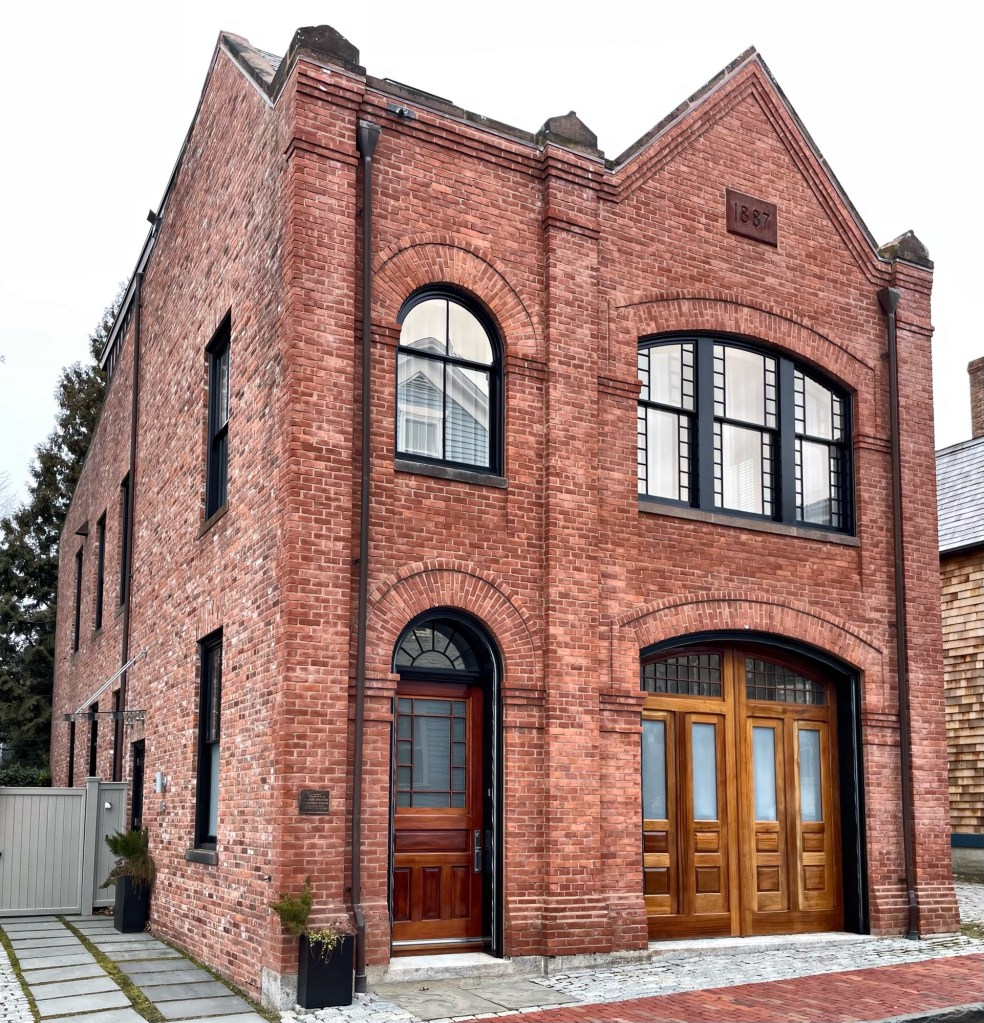
One of the charming converted old fire stations of Newport, Rhode Island, can be found tucked away on Prospect Hill Street. This is Hose No. 8 Fire Station, built in 1887 by the City of Newport as a neighborhood station to battle fires in the dense network of streets and homes Downtown. The design blends Romanesque Revival and Victorian Gothic elements into a compact, two-story brick building. The station was closed in 1912 as the structure no-longer was compatible with larger fire apparatus and gasoline-powered trucks. The building would suffer from neglect and was crumbling, before being reconstructed, brick-by-brick, and restored by Hacin Architects of Boston as a private residence. The structure is essentially new on the interior but provides a significant preserved exterior that was long part of the eclectic streetscape of Prospect Hill Street.
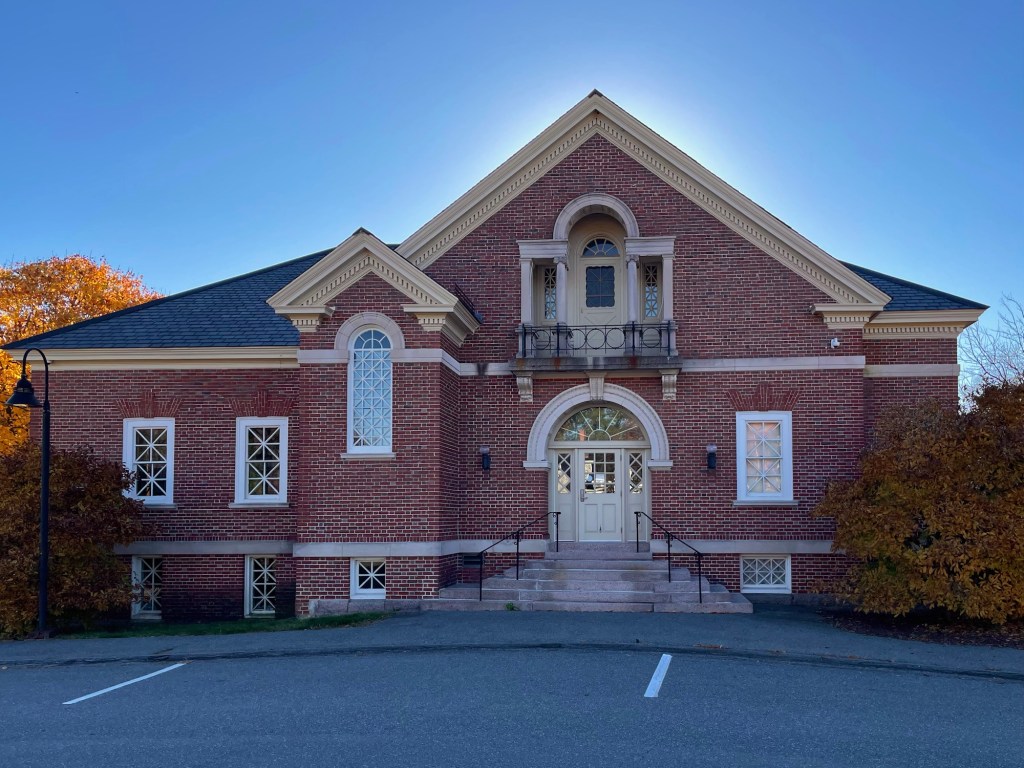
The Georgetown Peabody Library began on September 19, 1866, following a generous gift from George Peabody (1795-1869), a great man who is considered the father of modern philanthropy. George Peabody’s interest in the town was due to the fact that it was the birthplace of his mother, Judith (Dodge) Peabody, and for many years the home of his sister, Mrs. Judith Peabody Russell. Mr. Peabody decided to donate funds for the town’s first public library and also had 2400 books brought from London for its initial book collection. The wooden library building was designed by the Boston architectural firm of Bryant & Gilman and opened in 1869. After a few decades, the first library proved inadequate for the town’s needs and the present building was built with invested Peabody funds. In 1904, construction began on the new, present library building, a robust, brick structure in the Romanesque style with the firm of Cooper & Bailey furnishing the plans. The building has since been added onto as the town grew, but it retains its significance architecturally and historically for ties to Mr. George Peabody.