The former Goshen Academy building is located in the central village of the rural town of Goshen, Connecticut, and it is an important vestige of early education in the small town. The Goshen Academy building was built in 1824 from funds by shareholders of the institution. The academy featured a lecture room on the second floor with smaller classrooms downstairs. The academy would eventually close, and it has been occupied by the Goshen Historical Society.
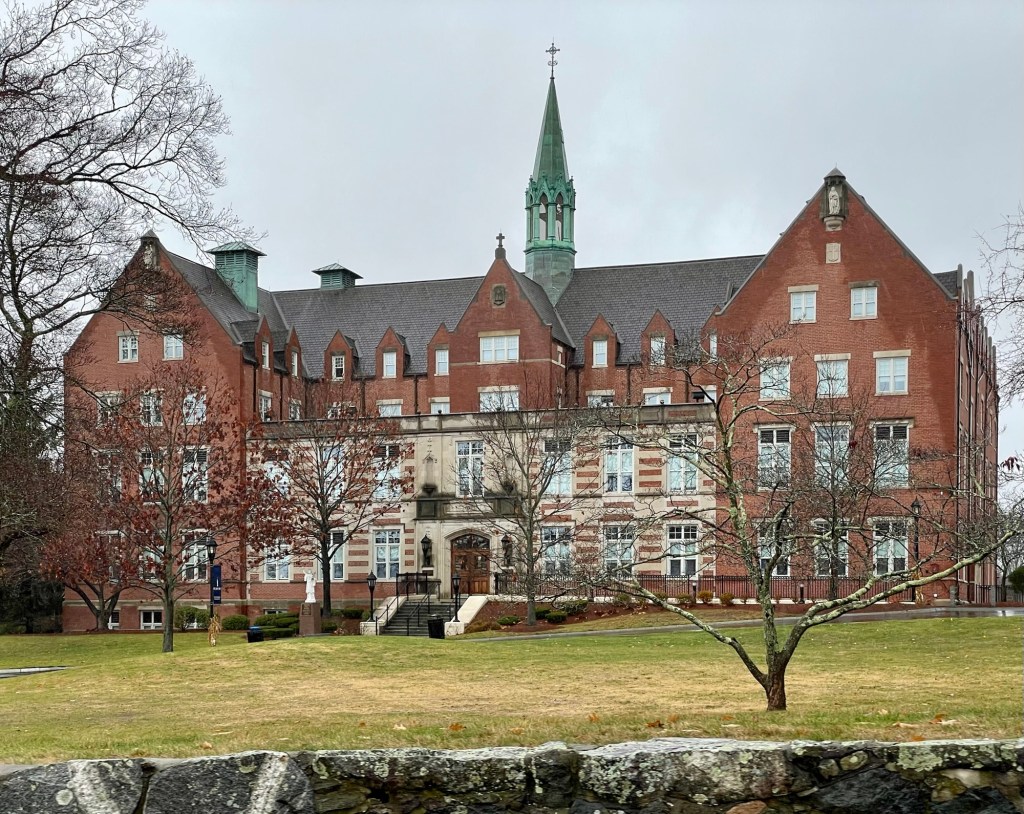
Xavier Hall was built between 1910-11 on the campus of St. John’s Prep School in Danvers, Massachusetts. The building was constructed by the Xaverian Brothers as classrooms as the first purpose-built structure in what would become a large campus. The Neo-Gothic Revival style building was sited adjacent to Porphyry Hall, an 1880 estate house that the new school purchased in 1891, which was later expanded by the addition of a rear chapel. Edward T. P. Graham, an architect best known for his design of Roman Catholic churches and associated buildings, was hired to design the stately structure built of brick and limestone.
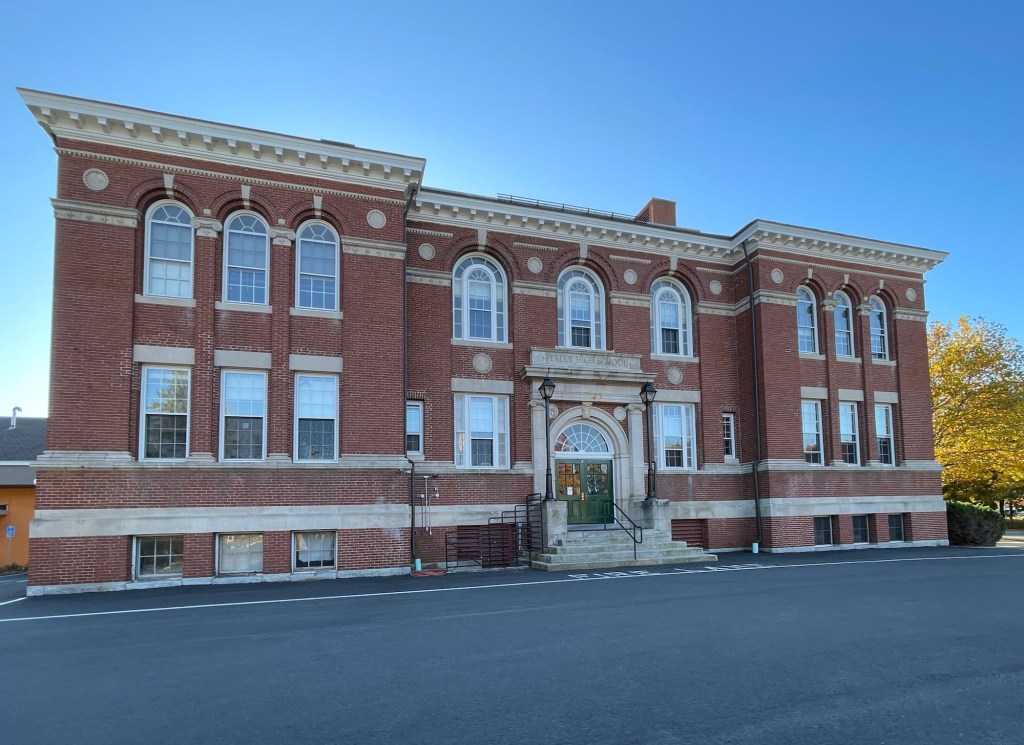
The Perley School, formerly known as the “The Perley Free School” is an architecturally and historically significant school building in Georgetown, Massachusetts, constructed in 1898 as a result of the former high school being lost to fire. The original funding for the Perley School was made possible by donations from the estate of John Perley. John Perley (1782-1860) was born in town and operated grocery stores, later getting involved in land speculation. He never married nor had children and lived frugally despite having a small fortune, that would end up being distributed to extended family and as gifts to the town, including funding this building and in the local Congregational church. He died in 1860 and was buried in a local cemetery, marked by the town’s most ornate memorial. The Colonial Revival style school would suffer a catastrophic fire in 1935, but was largely rebuilt and added onto, showing the community’s resolve and determination. It remains today as the town’s elementary school.
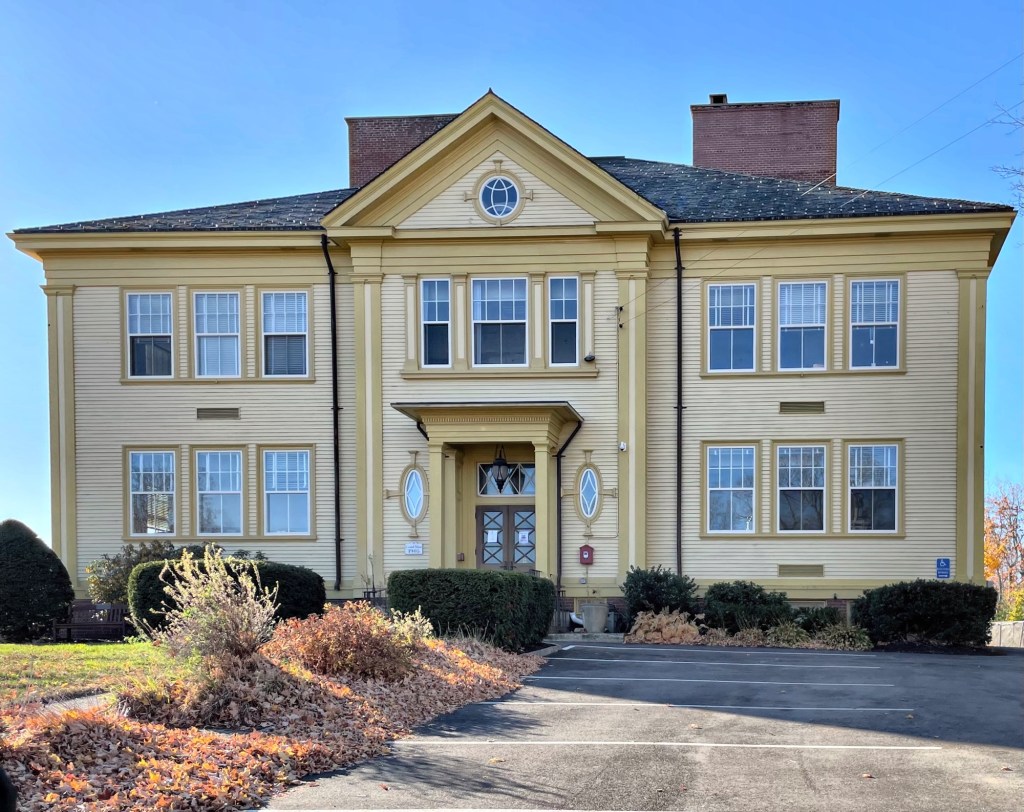
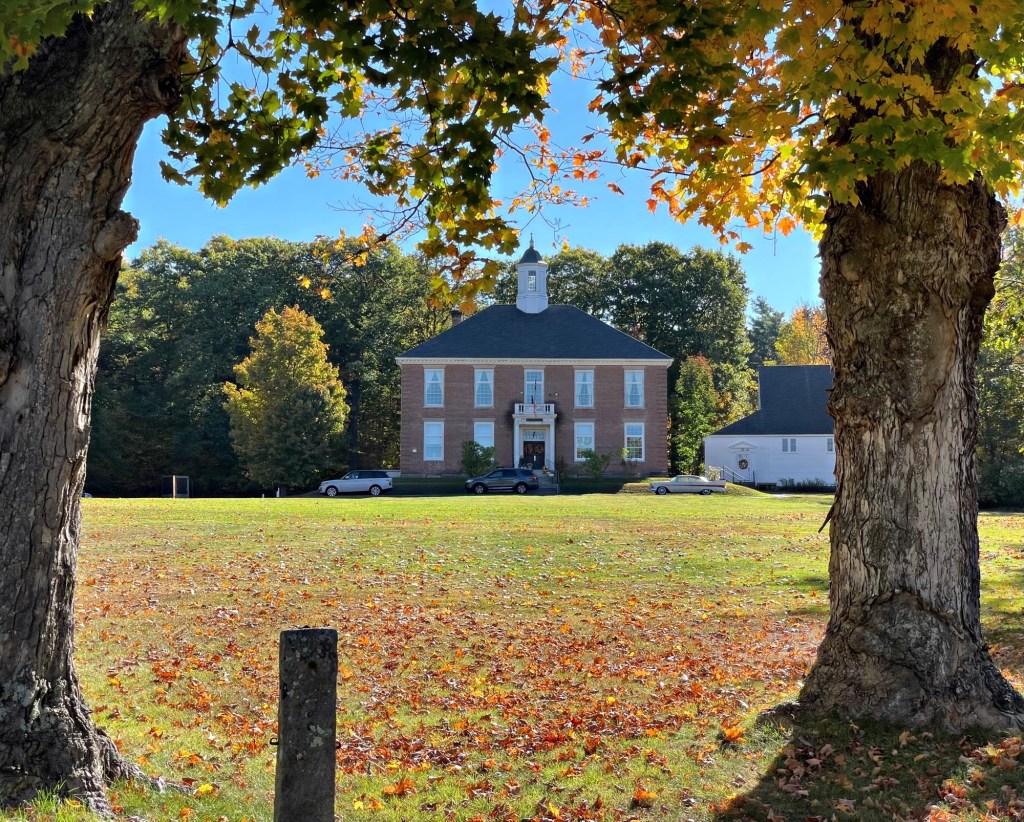
Welcome to Georgetown! The Georgetown Central School, now known as the Memorial Town Hall, stands near the historic commercial center of Georgetown, Massachusetts, a rural community in Essex County located about 28 miles north of Boston. The two story wood-frame building was built in 1905 to a design by the Boston architectural firm of Cooper and Bailey, and located at the site of an earlier one-room schoolhouse built in the 18th century. It was Georgetown’s first multi-room school building, and was built after the town’s first high school/town hall burned down in 1898. The Colonial Revival style school building was eventually outgrown and was no longer needed as an educational facility. It was converted to municipal offices in 1974, a use that has remained ever since. The town has taken pride in this building, restoring much of the exterior details and slate roof.
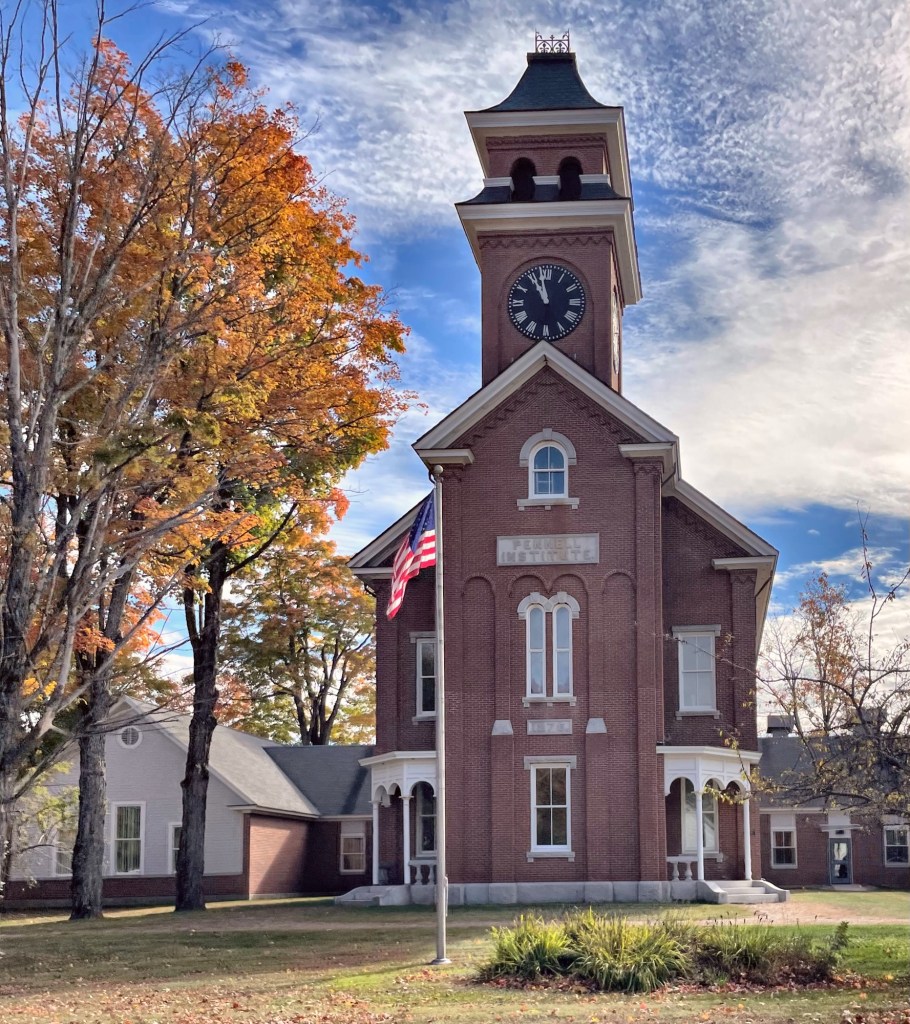
The Pennell Institute was built in 1886 as a privately funded, public school for the town of Gray, Maine. By 1870, Gray High School was located in the former Town Hall, and due to increased enrollment and ever-cramped quarters, demand for a standalone school was of grave importance. As a result, local resident Henry Pennell decided he would help his hometown. Henry Pennell (1803-1884) as a young man, worked as a butcher and traveled to Portland to sell his cuts of meat, later buying and selling livestock. After the Civil War, he dealt in real estate and mortgages, was sheriff of Cumberland County (1857-1858) and served in the State Senate (1872-1873), and became the richest man in the town of Gray. Mr. Pennell, who himself, never had received much formal education, saw the value in it for the youth of the town. Construction started on the school in 1876, where the foundation was laid, but it would take ten years until after the death and bequeathing of his estate in his will, that the building would be completed in 1886. Henry Pennell left the town the school building, the lot it stood on, a trust fund of $25,000 for the school’s general expenses, and a special fund of $5,000 for the library and for laboratory equipment and supplies. The school closed with students educated at a larger, modern building. After disputes between the Town of Gray and the local school district, the building has now been home to the Gray Town Hall, with the town clearly showing pride in their Italianate style building.
Appleton Academy (aka the New Ipswich Academy) was established in New Ipswich, New Hampshire, in 1789, being the second oldest private academy in the state. The school was named after benefactor Samuel Appleton, the largest early donor, who grew up in town at his father, Isaac Appleton’s homestead. This is the fourth Academy building in New Ipswich. The original 1789 frame building was outgrown and in 1816, it was decided that the academy would be shared with the new town hall building, occupying the second floor. Sharing a prestigious academy building with the town functions was deemed insufficient, and a new prominent site near Appleton Common was acquired, with a new brick academy building constructed there in 1853. The Italianate style structure was funded by the Appleton Family, and was designed by Boston architect, William Washburn. In January 1941, the main Academy building was destroyed by fire. The next year it was rebuilt, closely following the design of the earlier brick structure. The school closed in 1974 and was used by a non-profit and schools until it sold in 2018 and appears to be a residence now.
Originally built in 1903 as the central school for the town of Ashby, Massachusetts, the significant Colonial Revival style Lyman Building is one of the most significant and well-preserved buildings in the village. The building was designed by architect Henry M. Francis of Fitchburg and educated pupils in town from grades 1-12. The two-story, hip-roofed building displays a symmetrical facade with a central section displaying five arched upper story windows, flanked by two pediment-topped pavilions atop projecting, flat-roofed arched entrance vestibules with quoined corners. The symmetry of the original design was preserved when the identical side wings constructed in 1922. Ashby public schools merged with Pepperell and Townsend and this building was later converted to the town hall. I love when towns value their historic buildings and retrofit them for new uses!
Located in the heart of Brookline Village, the old Pierce School sits tucked away behind the Brookline Town Hall and other municipal and institutional buildings. The school was built in 1855 at a cost of $15,000 and later expanded in 1904 from plans by Julius Adolphe Schweinfurth, a prominent local architect. Julius had two brothers who also were architects: A. C. Schweinfurth, who worked out of California and Charles F. Schweinfurth, out of Ohio. The Pierce School was named after Reverend John Pierce, noted pastor of the Walnut Street church during the mid 19th century. He and his wife, Lucy Tappan Pierce, were active leaders in the abolition movement in Brookline. The school was expanded a number of times until the 1970s, when the present Pierce Elementary School was built, in an unsympathetic Modern design that does little to enhance the busy street. As expected, the 1970s school will soon be demolished and replaced by a new, $212 million school. The old Pierce School will be incorporated into the new development.
The Old Killingly High Schoolis located in a densely built residential neighborhood east of downtown Danielson, a village of Killingly, Connecticut. The building has served the community for well over 100 years, but through various uses. The school was built in 1908 and enlarged with side wings in 1927. It was considered state of the art for its time, with fireproof construction, wide hallways, and large bands of windows to maximize lighting of the classrooms. Clearly showcasing the village’s wealth and hope for future prosperity. The school was even designed by Hartwell, Richardson & Driver, a leading architectural firm based in Boston, Massachusetts. The building served as the community’s high school until 1965, and as its junior high school 1966–90 until it was converted to a community center and police station for the town. The Renaissance Revival style building is a gem and while tucked away off the main street, it shines through some great maintenance and restoration from the town.
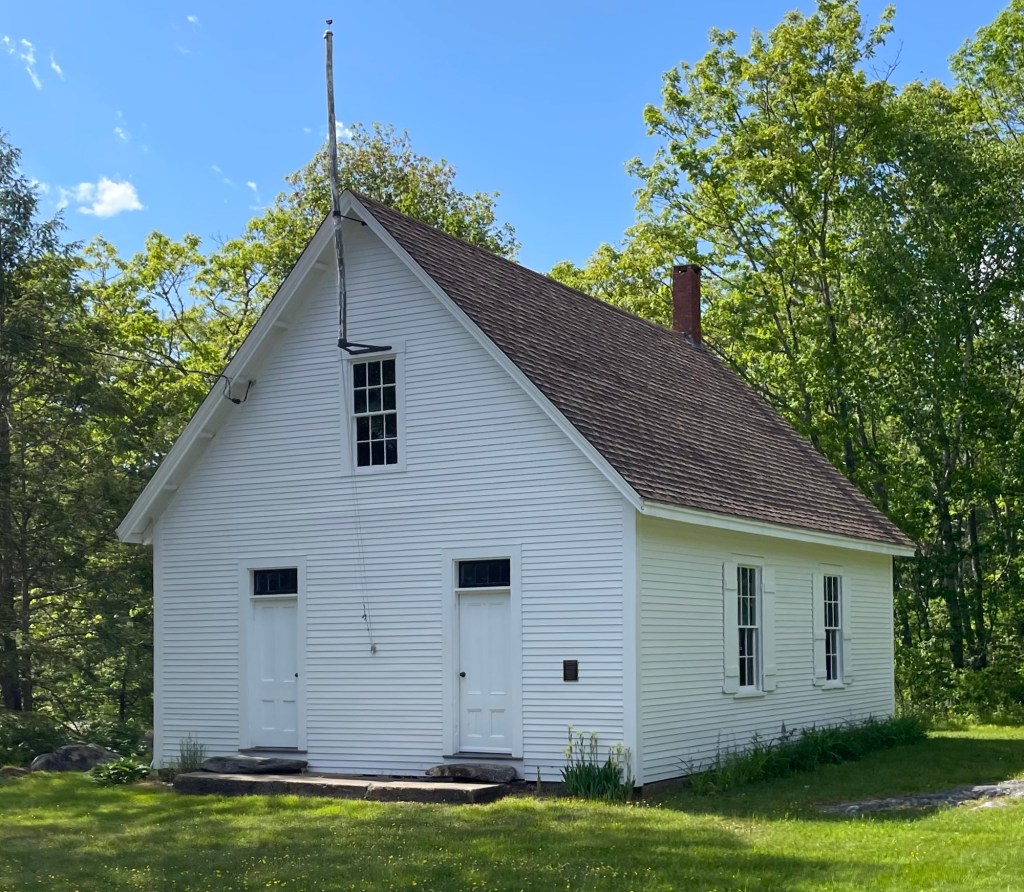
The S Road Schoolhouse is the last-remaining one-room schoolhouse in the charming coastal town of South Bristol, Maine. The structure was built in 1860 as the District Five School for the Town of Bristol (South Bristol set off and incorporated as a separate town in 1915). This building replaced an earlier schoolhouse on the site that was on the 1857 Map of Lincoln County. By 1895, enrollment was about 16 but rose to the mid-twenties after other schools closed in the early 1900’s. The school is said to have closed in 1943 following the death of the teacher here, it never reopened. The South Bristol Historical Society recently restored the building following a successful capital campaign, gathering funds from members and town citizens, preserving this lasting remnant of days past.



 Buildings of New England