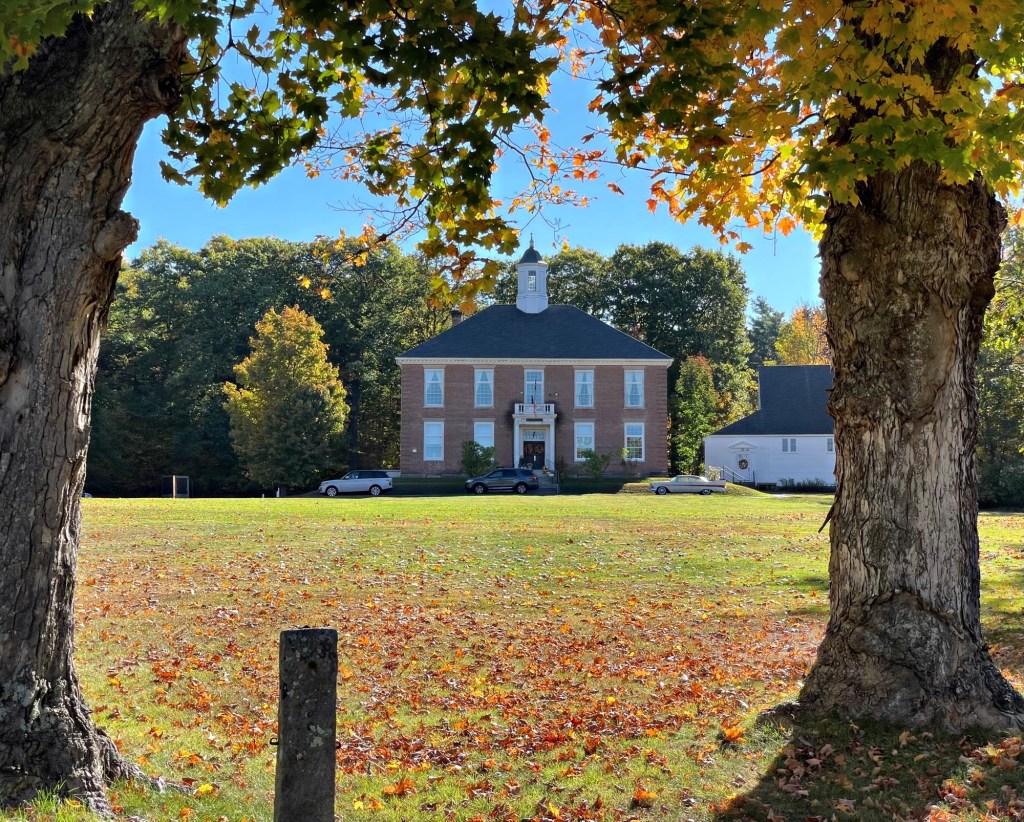
Unity Village School // 1898

The town of Unity, Maine, was incorporated in 1804, and for most of the 19th century had small district schools for the education of its children. In 1894, the state enacted legislation that encouraged the consolidation of school districts in order to improve quality and building standards. The town, whose population and student enrollment had been declining, voted in 1898 to build this school, which effectively replaced four of its eight district schools. The Colonial Revival style schoolhouse was built by Joseph Sawyer of Fairfield, Maine. The Village School remained the town’s largest primary school until 1953, when increasing enrollment and school overcrowding prompted the decision to build a new elementary school.

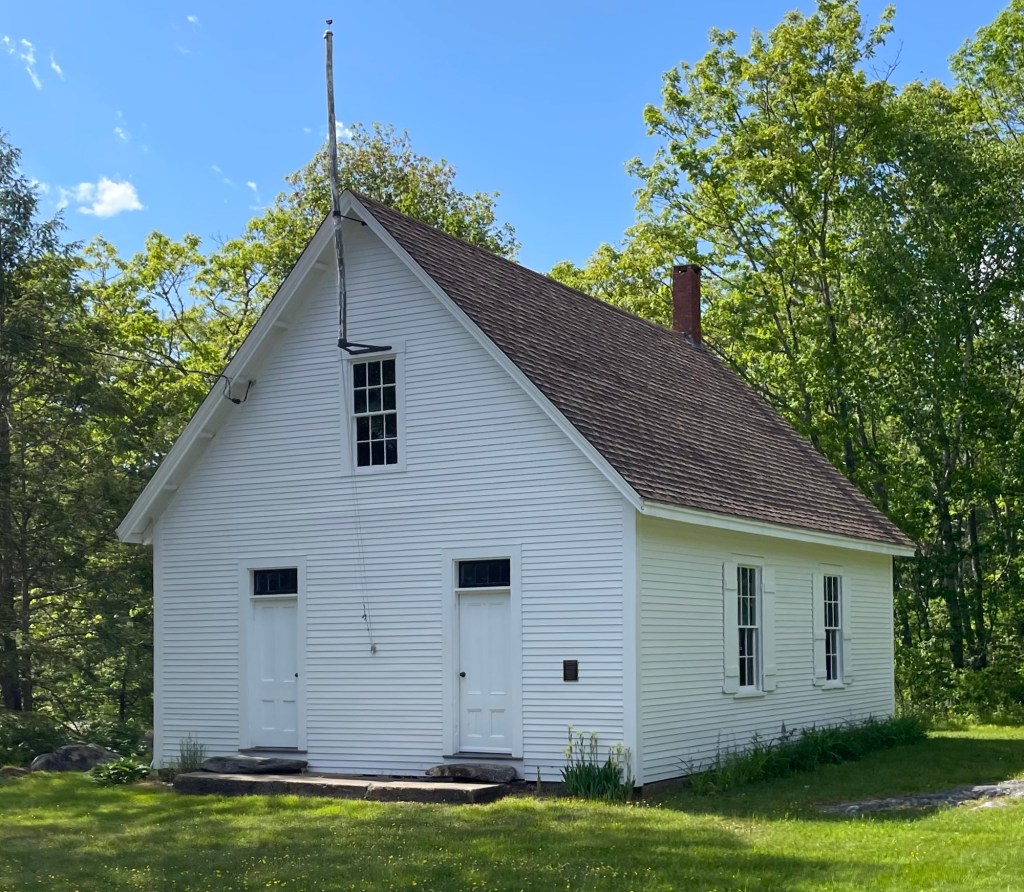
White Oak Schoolhouse // 1840

When the first white settlers of present-day Southbury, Connecticut, traveled up the Housatonic on rafts in 1673, they spent their first night under a white oak tree in what is now Settlers Park. That section of Southbury became known as White Oak for this early history. As this part of town developed and the population grew, another schoolhouse was needed. In around 1840, this Greek Revival style school building was constructed and has stood proudly on Main Street in the nearly 200 years since. The school now shares the same lot as the Reverend Graham House and has most recently been occupied as an antiques store.

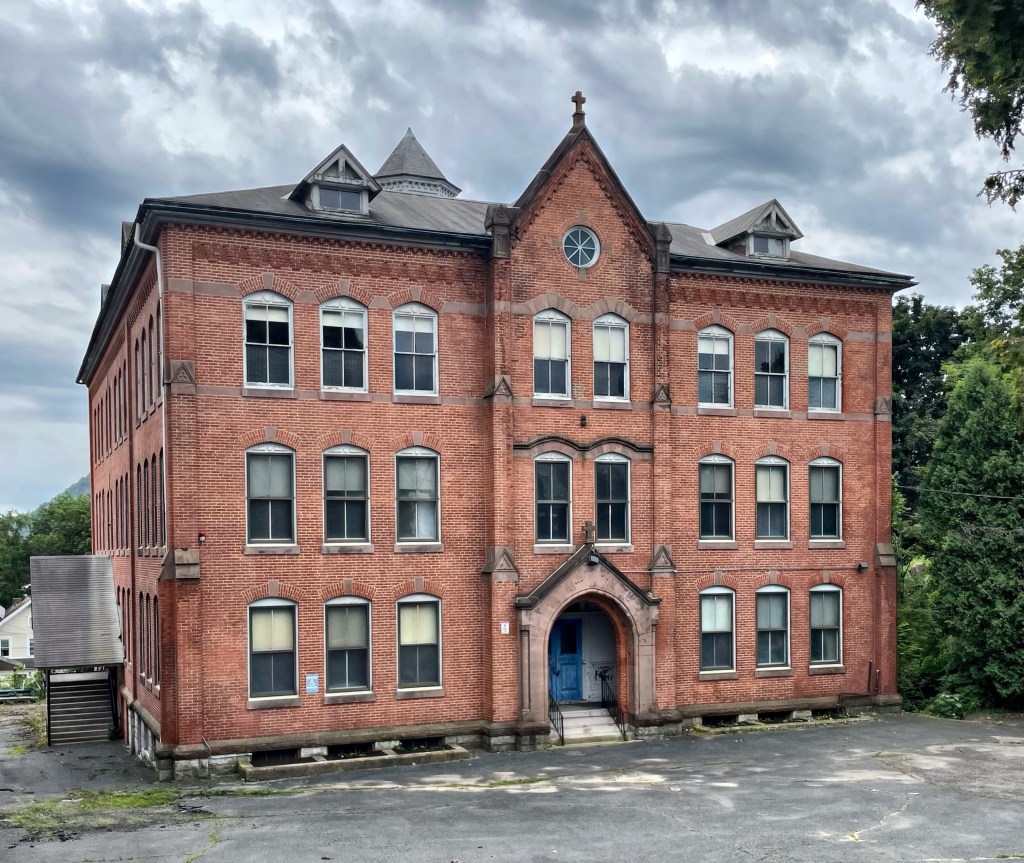
Former Notre Dame Parochial School // 1898

Located next door to the former Notre Dame Roman Catholic Church in North Adams, Massachusetts, this stunning former school building stopped me in my tracks. The sad fact is that the former school is seemingly vacant makes me really sad and concerned for the future of the building. This beauty was constructed in 1898 to serve as a school associated with the Notre Dame Roman Catholic Church located to its east. Local architect Edwin Thayer Barlow, who formerly worked with Carrere and Hastings, designed the building in the Queen Anne and Romanesque Revival styles, both popular at the time. The school remained in operation until the 1968-1969 school year, after several years of declining enrollment. The City of North Adams leased the school beginning in the 1969-1970 school year to relieve overcrowding at the public schools. In 2008, the City of North Adams purchased the school and church properties from the Springfield Roman Catholic Church Diocese after the church closed in 2005, but no plans have yet materialized to restore the beauties. What would you like to see this building converted into?

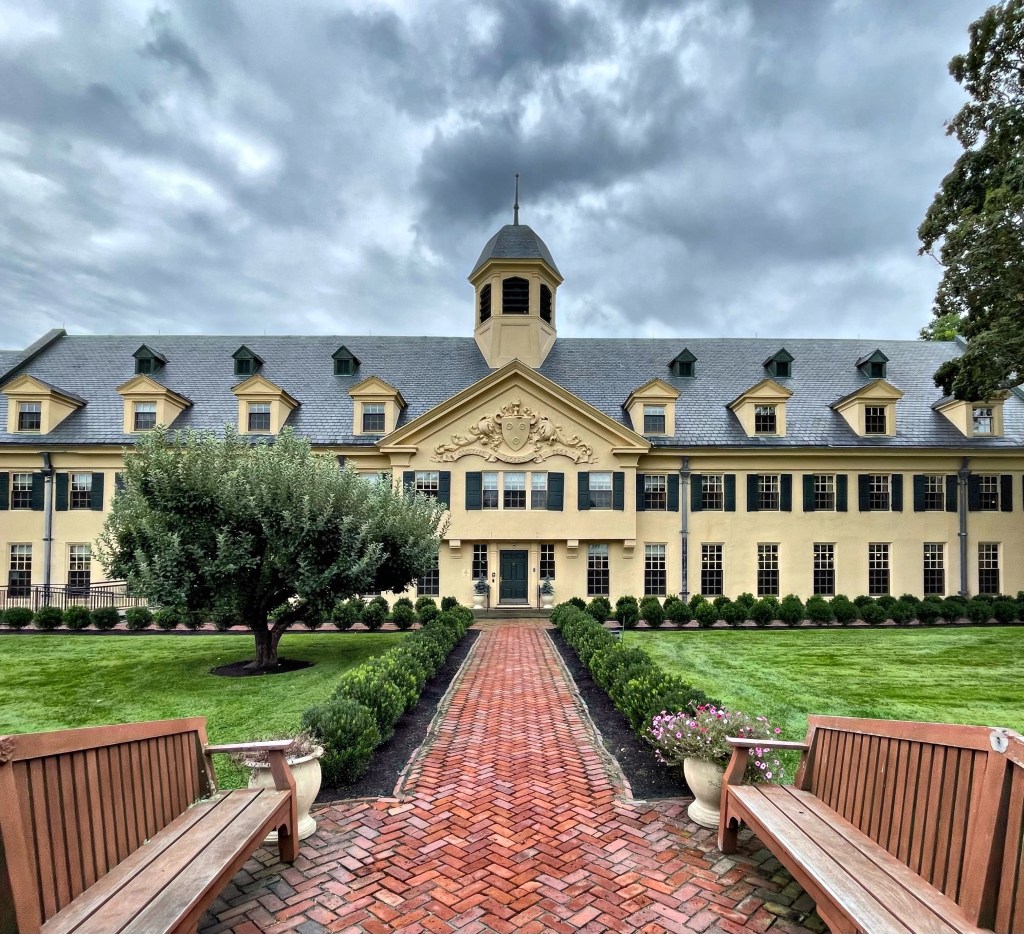
Westover School // 1909

At the heart of the rural community of Middlebury, comprised largely of Connecticut farmers, far from the hustle and bustle of the world, Mary Robbins Hillard (1862-1932) sought to create a girls school to “provide young women with a liberal education in a community which would contribute to the development of their character, independence and sense of responsibility.” To accomplish this, they needed a school, and Mary hired her good friend (and architect) Theodate Pope Riddle to design the private girl’s school campus and main buildings on a site fronting the town green. The school opened in 1909 with125 pupils, slightly over capacity. For the design Theodate Pope Riddle – who was one of the first American women architects and a survivor of the sinking of the RMS Lusitania – took inspiration from English Arts and Crafts and historical precedence in English schools with large open courtyard plans. Originally finished in a gray stucco, the building enclosed a quadrangle at the rear. Inside, administration offices, reception rooms, living rooms, a library, gymnasium, chapel, dining rooms, infirmary, and (of course) classrooms lined the interiors on a closed loop to allow students and teachers access to all parts of the building without ever stepping outside in the cold New England winters. The Westover School remains active and one of the highest ranked private schools in the area today, and with a more cheery yellow coat!

Margaret Fuller Primary School // 1891

The Margaret Fuller Primary School (now Community Academy) is a public school in Boston that shows how much attention to detail the school department and the city architect paid when designing these structures in the late 19th and early 20th centuries. The Fuller School was constructed in 1892 to alleviate an overcrowded school district resulting from rapid urbanization. Jamaica Plain was one of Boston’s first streetcar suburbs largely spurred by the growth of the Boston and Providence Company Railroad between 1860 and 1890, when the area saw a shift from large bucolic estates to subdivided urban housing (largely triple-deckers and apartment buildings along major routes). With the surge in population, many new schools were built city-wide, including this primary school which was designed by Edmund March Wheelwright (1854–1912), a prominent Boston-based architect who served as City Architect for Boston from 1891 to 1895. Architecturally, the building is a stunning example of the Colonial Revival style with red and buff brick walls which are laid in a Flemish bond and rusticated at the first story with single recessed courses of buff brick. An arched entrance and Palladian window with iron false balcony sit at the central bay. The school was named after Margaret Fuller Ossoli (1810-1850) an early transcendentalist and writer advocating for women’s rights born in Cambridge.

Versailles School // 1924

While Baltic has long been the dense population center of the Town of Sprague, Connecticut, the Village of Versailles has also had ties to industry and growth. The village was originally named Eagleville but was renamed sometime in the late 19th century. The village is located along the Shetucket River and has had industry, which was slower to grow than neighboring Baltic. The village had a wood-frame school building, which was consumed by fire in the early 20th century. In 1924, this substantial “fire-proof” school was built just at the time the Town of Sprague was consolidating schools, in the three main population centers: Baltic, Hanover and Versailles. The schools were consolidated again and this building was sold in the mid-1950s. It was later a Masonic Lodge and is now a commercial use, occupied by Dark Manor, Inc., a haunted house company.

Academy of the Holy Family // 1914

Built adjacent to and just a few years after the St. Mary of the Immaculate Conception Church in Baltic (last post), the Academy of the Holy Family stands as a high-style Colonial Revival building in the town. The building stands four full floors with a raised basement and attic story, and is symmetrical in its design. A large fan-light transom and stone trimmings add much depth to the buildings large massing. The structure was built in 1914, and has housed the Academy of the Holy Family, a private, Roman-Catholic all-girls prep school, which is still active today.

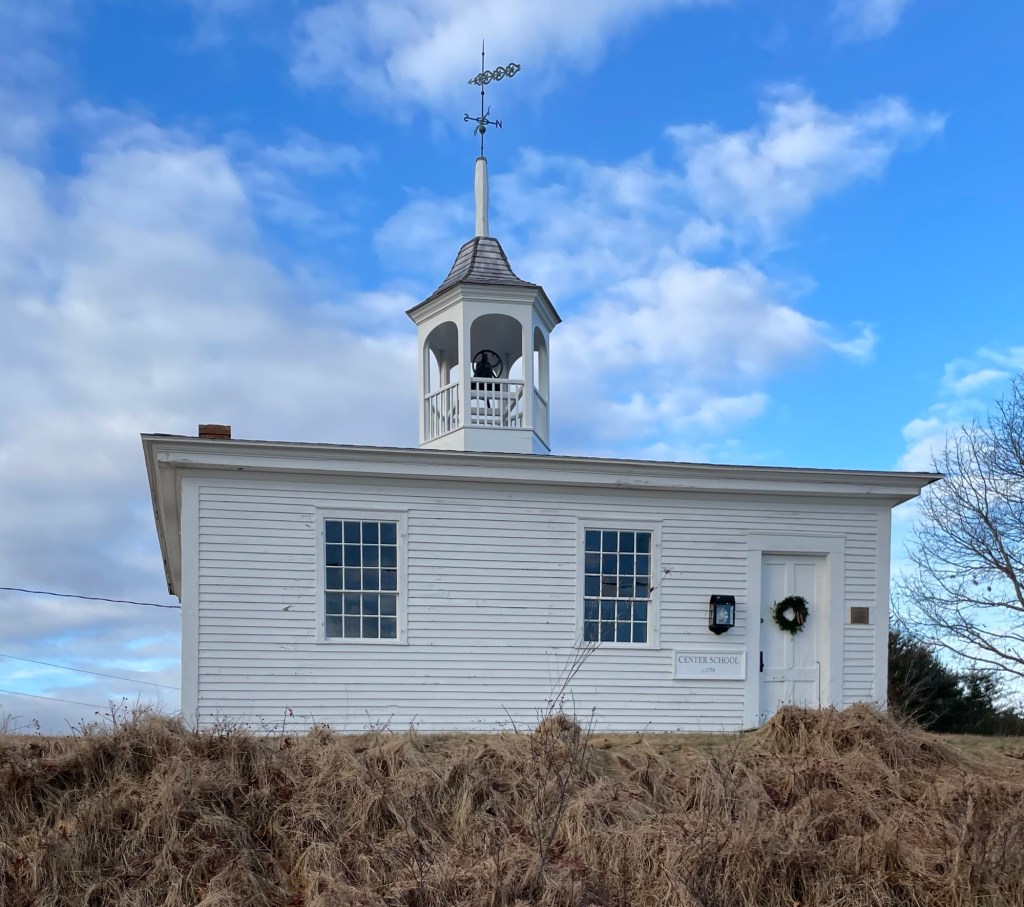
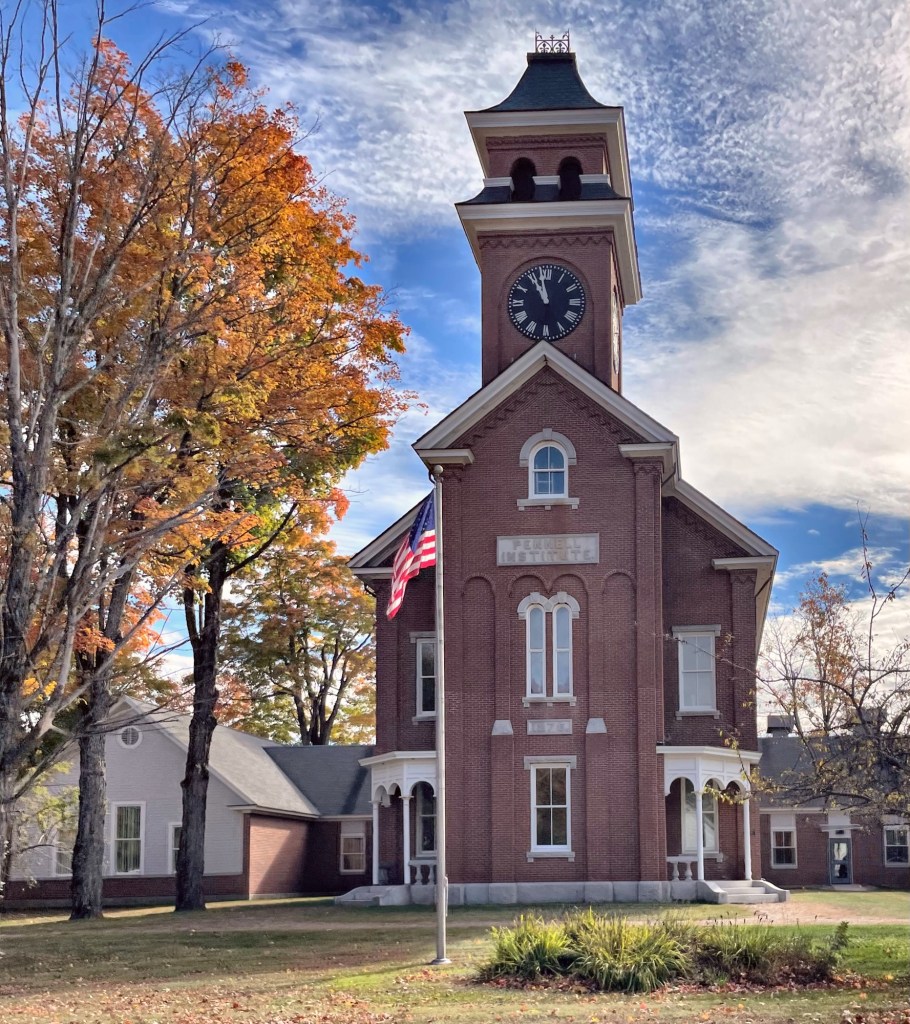
Old Peru Schoolhouse // 1864

In 1816, the turnpike to Manchester, Vermont was completed and ran through the small town of Peru. As a result, inns and taverns were built, and the young village of Peru began to grow, with farming and lumber businesses being the most common employment in town. A village school was built here and in the town’s other school districts. By the end of the 19th century, the lure of moving to the Western U.S. and cities for industrial work caused some population decline in Peru, and a larger, consolidated school was built in the town village. This schoolhouse on the hill was constructed in 1864, replacing the former one-room schoolhouse on the lot. The school consolidated again in the mid-20th century when further population decline necessitated a school district encompassing Peru and nearby towns. This building was later converted to town offices, a use that remains to this day.

The good news is that the town’s population is seeing a resurgence, led by both tourism and the Bromley Mountain Ski Resort as an anchor.

Albert Parlin School // 1931

Albert Norton Parlin (1848-1927) was born in Everett, Massachusetts to Ezra Parlin and Nancy Pickering-Parlin. At a young age, Albert lost both his parents – his mother passed in 1853 at the age of 26 and his father passed in 1858 at the age of 37, both succumbing to “consumption” (tuberculosis). At the age of nine, young Albert had become an orphan, and was raised by his grandmother at the Pickering Estate. He found his first job as a floor-sweep and errand boy in a retail cloak store. At seventeen, Albert Parlin began working with Magee Furnace Company, a Boston-based company where Mr. Parlin spent twenty-eight years of his professional career, moving up the ranks to become treasurer of the company. After he became successful, he gave back to his hometown, when in 1892, he donated his familial home and money to the City of Everett for the erection of the Parlin Memorial Library, to honor his late son. Parlin was not done giving to his hometown. He also left funds and a large piece of land to the City of Everett for a new Junior High School in 1915. The architectural firm of Desmond & Lord was commissioned to design the school which is set deep on the lot to give the building a beautiful front lawn. The 1931 building blends Art Deco and Tudor Revival styles with a large central panel.

Second Everett High School // 1922

In 1892, the growing municipality of Everett, Massachusetts incorporated as a city. While Everett’s population had remained small compared to nearby towns throughout much of the nineteenth century, its close proximity to Boston resulted in dramatic population growth between 1885 and 1915. During this late industrial period Everett’s population was one of the fastest growing in the state, doubling between 1870 and 1880, nearly tripling from 1880 to 1890 and doubling again between 1890-1900. This massive population growth put a strain on public facilities, necessitating new housing construction, new public utilities, and schools. By 1889, planning for the first purpose-built high school had begun. The resulting first Everett High School, first known as the Home School, in 1893, the year after Everett’s incorporation as a city. That building was almost immediately outgrown and the city acquired a new site for a school that was large enough to educate the ever-growing town’s students. The City of Everett selected the architectural firm of Ritchie, Parsons, and Taylor for the construction of the new high school. The firm was led by Scottish-born James H. Ritchie, who designed the Classical Revival building. In the early 2000s, the building was again deemed inadequate and a third high school was built about a mile away. The building is now occupied by the Everett Community Health and Wellness Center and the Webster School Extension.