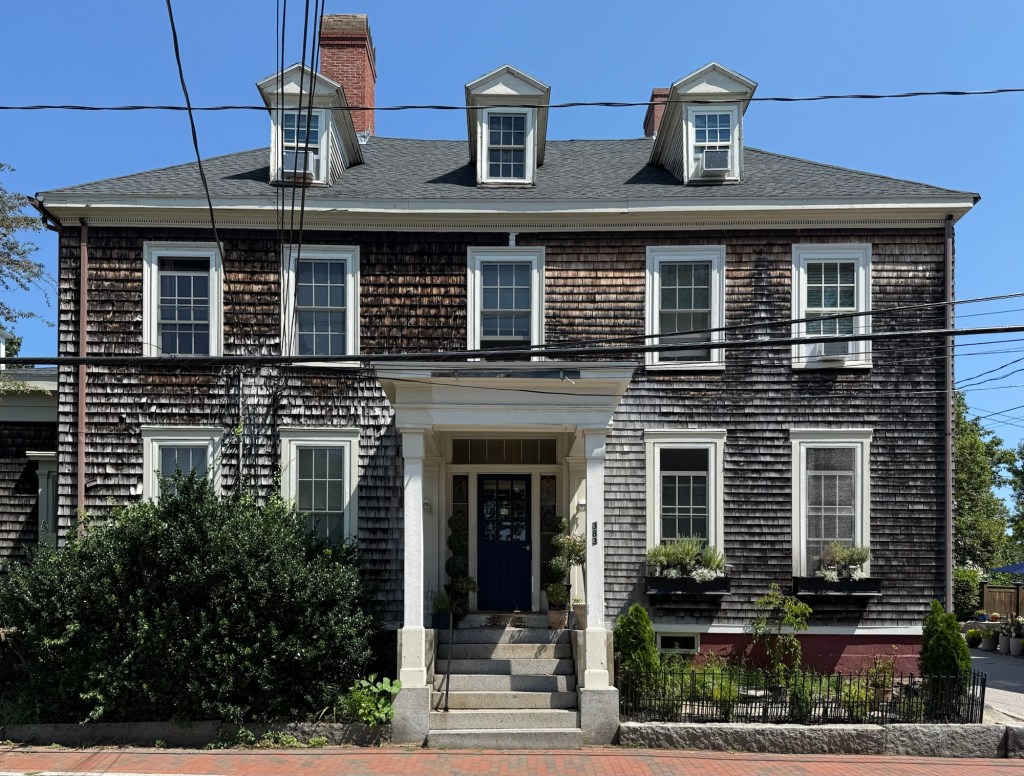
Master mariner Charles E. Blunt Sr. (1768-1823) built this large Federal period home on Pleasant Street in Portsmouth, New Hampshire near the turn of the 19th century for his bride, Abigail Laighton, and their new family. Charles Blunt was a wealthy sea captain who would be out at sea for months at a time, trading in the west indies. On a voyage near Havana Cuba in March, 1823, his vessel was boarded in the night by two piratical boats, with six men each, and Captain Charles Blunt was brutally murdered and thrown overboard. The ship’s cook was stabbed, and fed to the hogs on the brig, with the remainder of the crew maltreated and the goods plundered. The Captain Blunt House follows a symmetrical, five-bay, center entrance form, with cedar shake shingles, three pedimented dormers and large portico over the door.
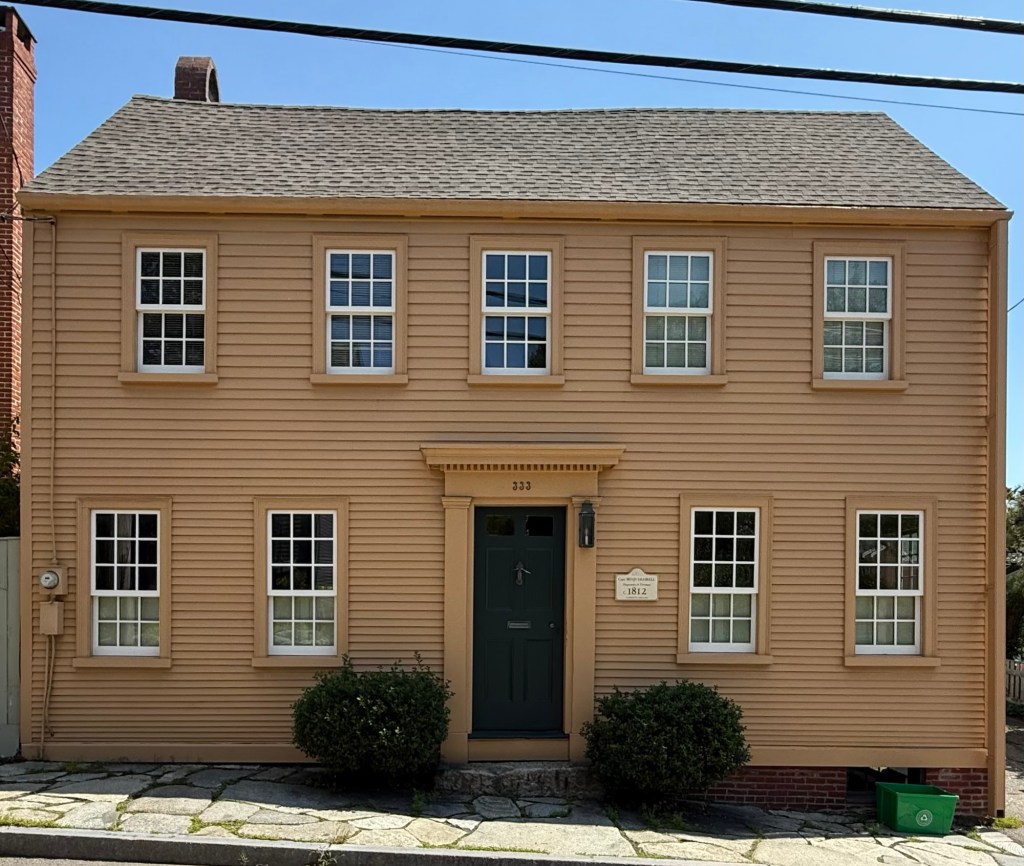
The people and buildings of Portsmouth, New Hampshire, have always been closely tied to the sea. Many old houses and commercial buildings here were built for merchants, ship builders, sea captains, and fishermen, who made their living from the charming port town. This historic house at 333 Marcy Street in the Downtown area of Portsmouth, was built around 1812 for Benjamin Damrell (1781-1821) a sea captain, privateer during the War of 1812, and member of the Portsmouth Marine Society and Alert Fire Society of Portsmouth, a volunteer fire fighting group. Captain Damrell died in 1821 while at sea and his property was inherited by his widow, Lucy, who appears to have remained here for some time, raising their daughter.
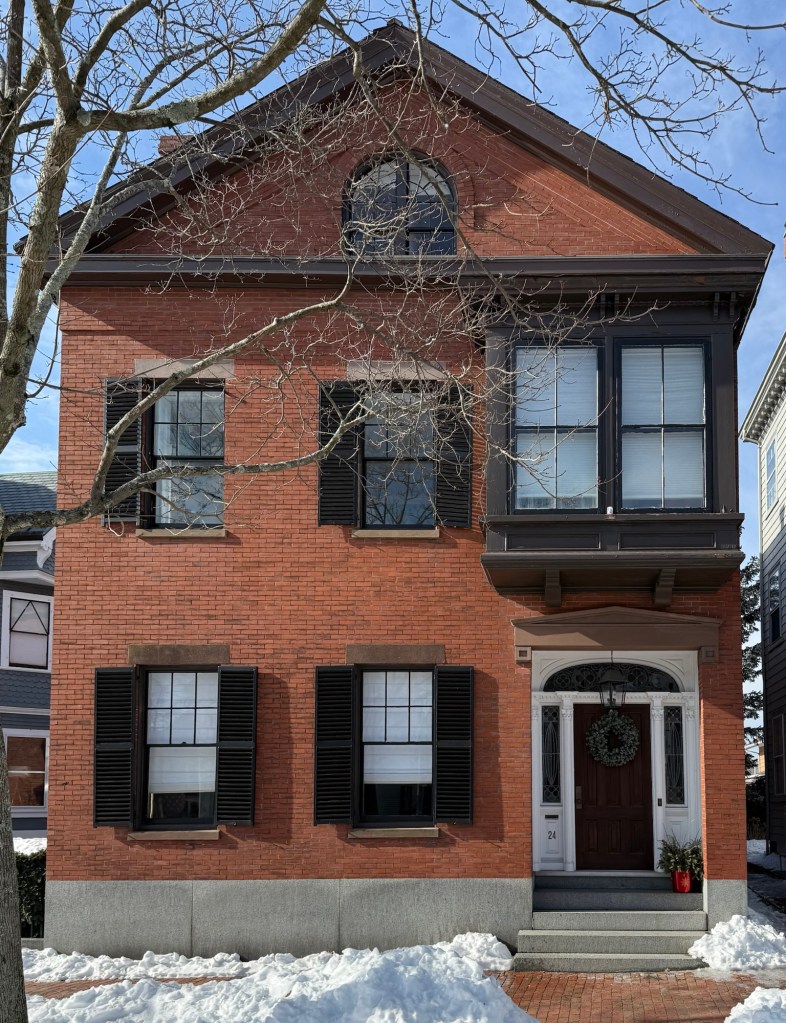
This lovely brick house on Winter Street in Salem was constructed for Capt. John Bertram in 1842-3. John Bertram (1795-1882) as a boy had his first job as a cabin boy and would work his way up to become a commander, ship owner and investor. He was extensively involved in shipping around the world including to Zanzibar, South America, and California and later he invested in railroads and real estate. He retired from actively commanding boats at age thirty-six with a vast fortune which he would become a philanthropist, giving much of it to charitable causes and his home city of Salem. Captain Bertram continued to own this property until 1855, when he moved to his new house on Essex Street, which he later gifted to the City of Salem as its public library. By the time of his death in 1882, he donated funds to the Salem Hospital, Old Men’s Home, Home for Aged Women, and various colleges and scholarships. Bertram sold this Winter Street house to John Jewett in 1855 for $10,000. Jewett began his career as a cabinet maker in Beverly in 1817 and subsequently became a dealer in mahogany, fancy woods, furniture and grain. Jewett died in 1874 and the property was sold by his heirs to Henry Appleton Hale in 1890. Engaged in the hardware business, Hale also served as president of the Salem Gas Light Company and as a vice president of the Salem Five Cents Savings Bank. Mr. Hale also served the country during the Civil War, and was shot in the face at Antietam on September 17, 1862. The bullet knocked out his front teeth and sliced off a piece of his tongue. Despite the severity of his wound, he recovered and returned to the regiment months later, and mustered out in 1865 following another injury. Henry A. Hale died in 1927. The property is significant not only for its owners, but also for its architectural quality and integrity. The transitional Federal-Greek Revival house features a recessed entry with original leaded sidelight and transom windows, brownstone trimmings, and alterations (likely by Hale) from the second half of the 19th century, including the projecting bay and arched window in the gable.
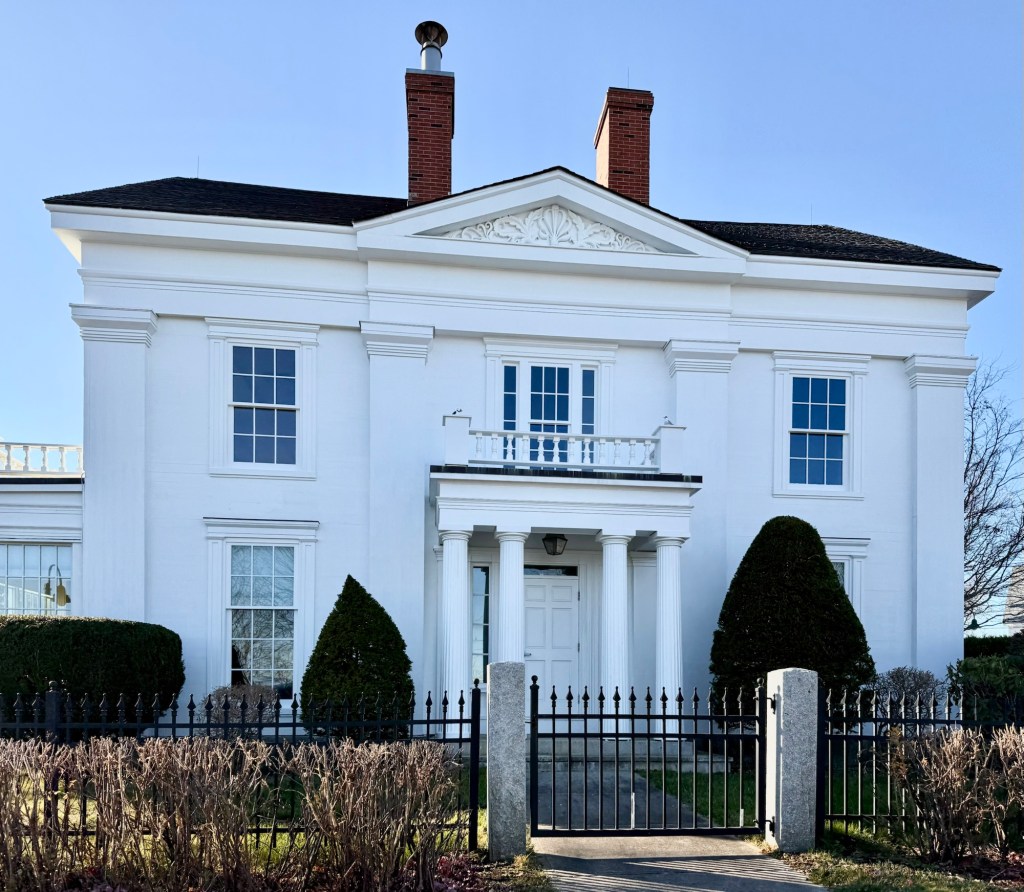
The Israel Snow House stands at 9 Water Street in the South End of Rockland, Maine, and it is one of the region’s finest examples of late Greek Revival architecture. The residence was built for Captain Israel Snow (1801-1875), a mariner and captain of several vessels, including the schooner Maria (1829), the brig Snow (1835-36), the brig Lucy Ann (1842), and the Barque Star (1848). In 1850, he and his wife Lucy moved from Thomaston to Rockland, and he would build this stately mansion where they raised seven children. Some records put the construction of this house at 1861, but that seems very late for such an example of this style. In 1863, he founded Snow’s Point Shipyard on Mechanic Street in the South End. Rockland was the fourth largest seaport in the United States in terms of production and commerce at the time, and Snow’s shipyard was a large part of that production. This residence is now offices to the U.S. Fish and Wildlife Service’s Maine Coastal Islands National Wildlife Refuge Complex.
This perfect Greek Revival cape house sits on Pascal Avenue, the main street that cuts through the center of Rockport, Maine. The house dates to the 1840s or early 1850s and was owned by the Dillingham Family for a few generations. The original owner may have been Josiah Dillingham (1796-1861), a mariner and sea captain. Josiah died in 1861, and the property was inherited by his eldest son, Josiah Winslow Dillingham (1829-1895) who went by Winslow, seemingly to differentiate himself from his father of the same name and same profession. The Dillingham family home is a quintessential Greek Revival cape with central portico with Ionic columns and corner pilasters with full length entablature at the facade. In true Maine fashion, the side elevations are covered in weathered shingle siding.
In Newport, Rhode Island, you can find that even the more regular-looking historic buildings often hold an interesting (and sometimes troubling) past. Little information was available on this Georgian-era house, but I did some digging and turned up a lot. Rhode Island and Newport specifically had been a hub of trade going back to its founding by white settlers. Even though it was the smallest of the colonies, the great majority of slave ships leaving British North America came from Rhode Island ports. Historian Christy Clark-Pujara, in her book Dark Work,The Business of Slavery in Rhode Island, indicates that during “the colonial period in total, Rhode Island sent 514 slave ships to the coast of West Africa, while the rest of the colonies sent just 189.” Captain Caleb Godfrey, who owned this home on Franklin Street in Newport, was a sea captain and hired by wealthy merchants to pick up slaves in West Africa and bring them back to the British colonies. In 1754, Samuel and William Vernon of Newport hired Caleb to take their ship, “Hare“, taking captives from Sierra Leone and embarking them from South Carolina. Godfrey left Sierra Leone with 84 slaves aboard, but 16 died on the 10-week voyage or soon after the ship arrived in Charleston, their bodies were dumped at night into the sea. In South Carolina, a prominent slave dealer named Henry Laurens handled the sale of African captives from the Hare, placing an advertisement to attract the attention of local rice planters. Godfrey’s Newport home is a visual reminder on New England’s direct ties to the enslavement of African people and how the colonies benefited financially from this terrible trade.
In about 1812, Captain Nathaniel Ward Jr. of Kennebunkport purchased this home in the village from housewright and builder Samuel Davis. The Federal style house is five bays with a central entrance with pedimented fan over the door. Two end chimneys would heat the home in the winter months when Nathaniel was out at sea and his wife, Sarah, would be maintaining the home and caring for their six children. The couple’s eldest son Charles Ward, served as the second American Consul to Zanzibar in Africa. In his role, Ward bickered continuously with the Sultan, whose word of law changed with the wind and he eventually left his position and settled in Salem, Massachusetts. This house was later owned by Abbott Fuller Graves (1859–1936), a renowned painter before he built a Prairie Style house in Kennebunkport in 1905.
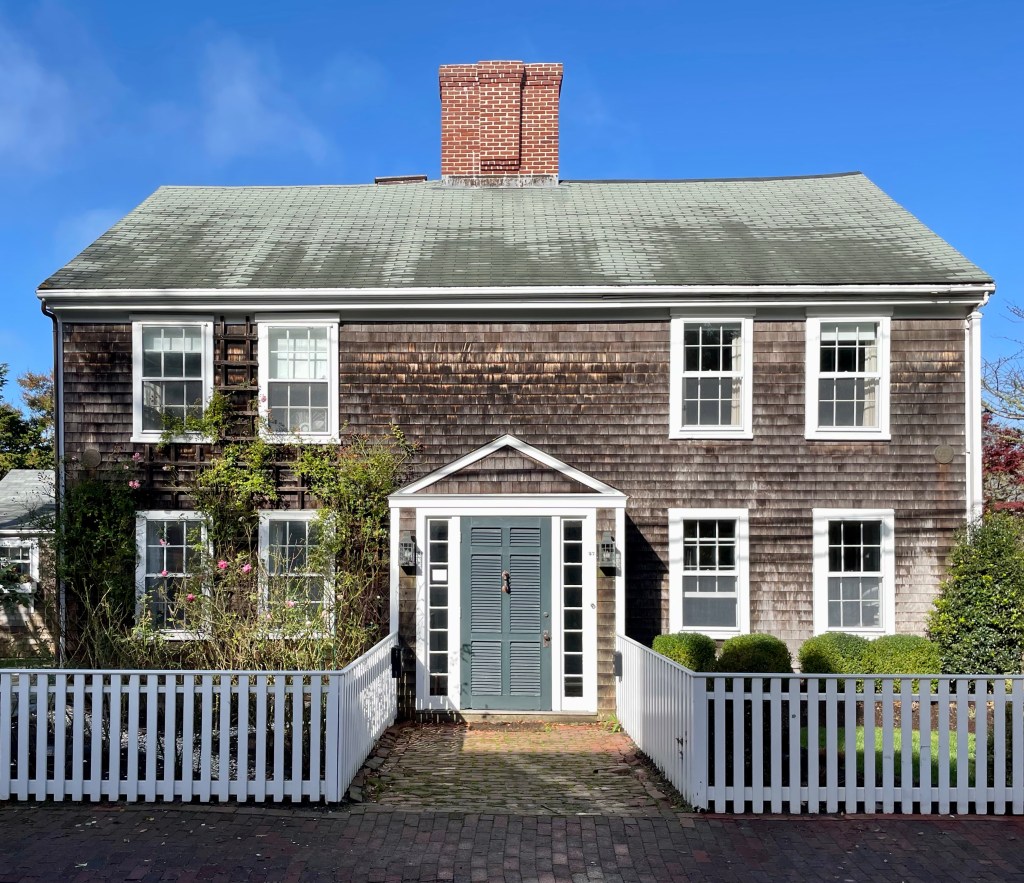
This 2 ½-story, five-bay house was built for Benjamin Fosdick (1713-1801) and his family on Nantucket. After Benjamin died in 1801, the house was inherited by two of his surviving sons and they divided the house into two, creating a double-house for them and their own families. The symmetrical home was divided down the middle at the central chimney, and two front doors provided access to the two dwellings. The right section was once the home of Capt. William Calder, who escaped shipwreck at Cape Horn on his first voyage at age 13. He later was captured by the British during the War of 1812, and escaped from Dartmoor Prison in England, making his way back to Nantucket. The double house has retained much of its original design since 1801 until the 1960s when the projecting entrance porch was added.
Built sometime between 1749 and 1756, the Hart-Rice House, a little-altered example of Georgian architecture, stands out in the densely packed Hill section of Portsmouth, NH. The area contains amazing early homes, largely moved to their sites from nearby, saving them from the wrecking-ball of Urban Renewal in the 1970s. The house demonstrates the high-quality craftsmanship of its owner, ship-joiner Samuel Hart (1701-1766), who likely built the home himself. Decades later, William Rice, a sea-captain, purchased the home. Rice was a known privateer during the War of 1812, causing a lot of trouble for British ships off the shores.
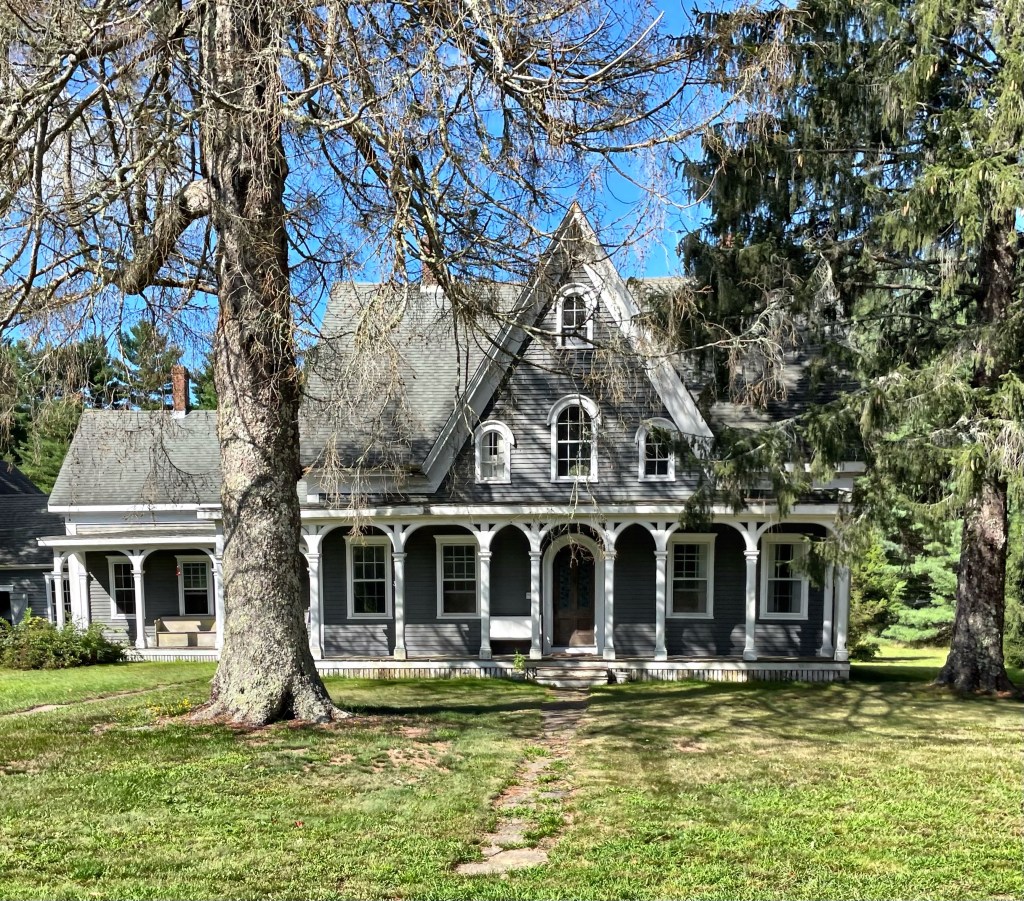
This beautiful house was built by retired whaling Captain John G. Dexter in 1860. The Dexter family’s ties to Rochester, Massachusetts, began when William Dexter became the first descendant of the Dexter family to settle in town around 1679. William, one of the 32 original grantees of the town (from land by Sachem Metacomet), died in Rochester in 1694 and his four sons and grandsons remained in Rochester through the 19th century. After being away for months or years at a time, Captain John Dexter returned to his hometown to build this home on family land that was previously undeveloped. The Dexter family remained in the house well into the early 20th century, carrying on the family’s deep rooted history in the area. The home is a blending of Gothic and Italianate styles, which work really well in the rural area.



 Buildings of New England