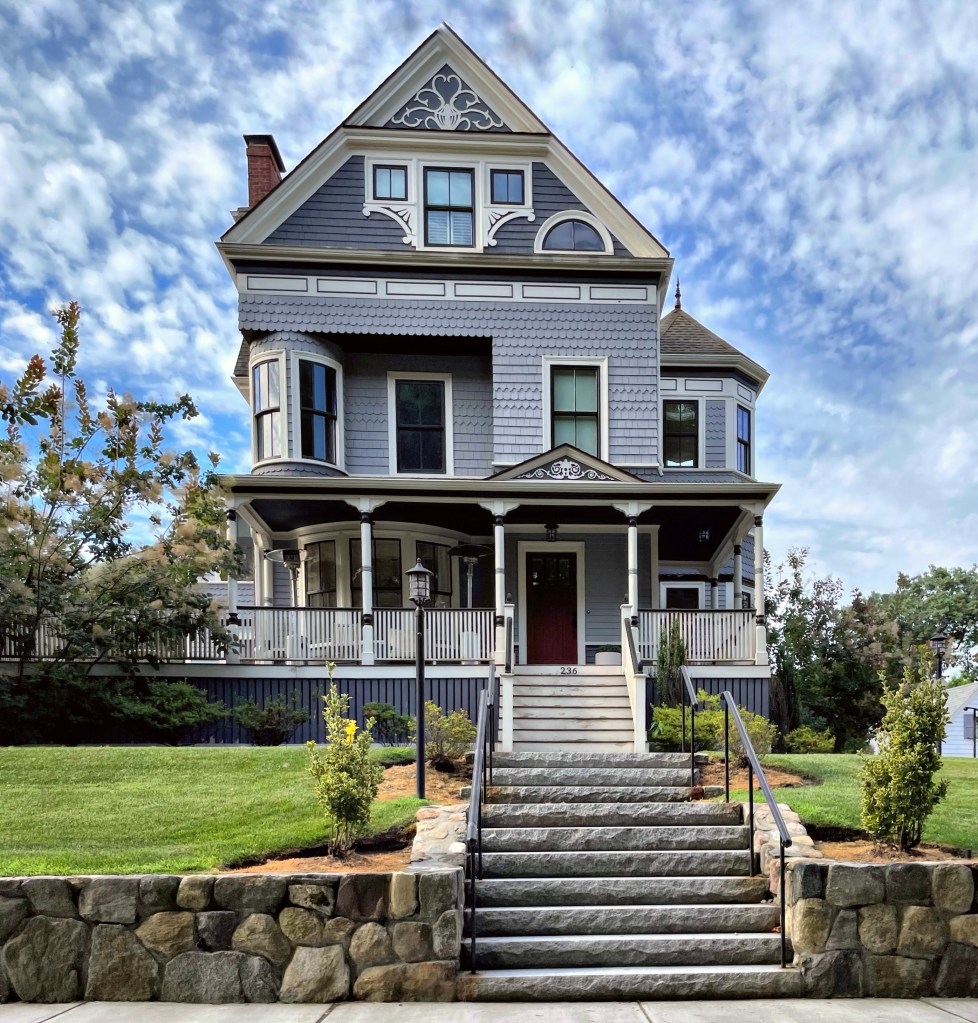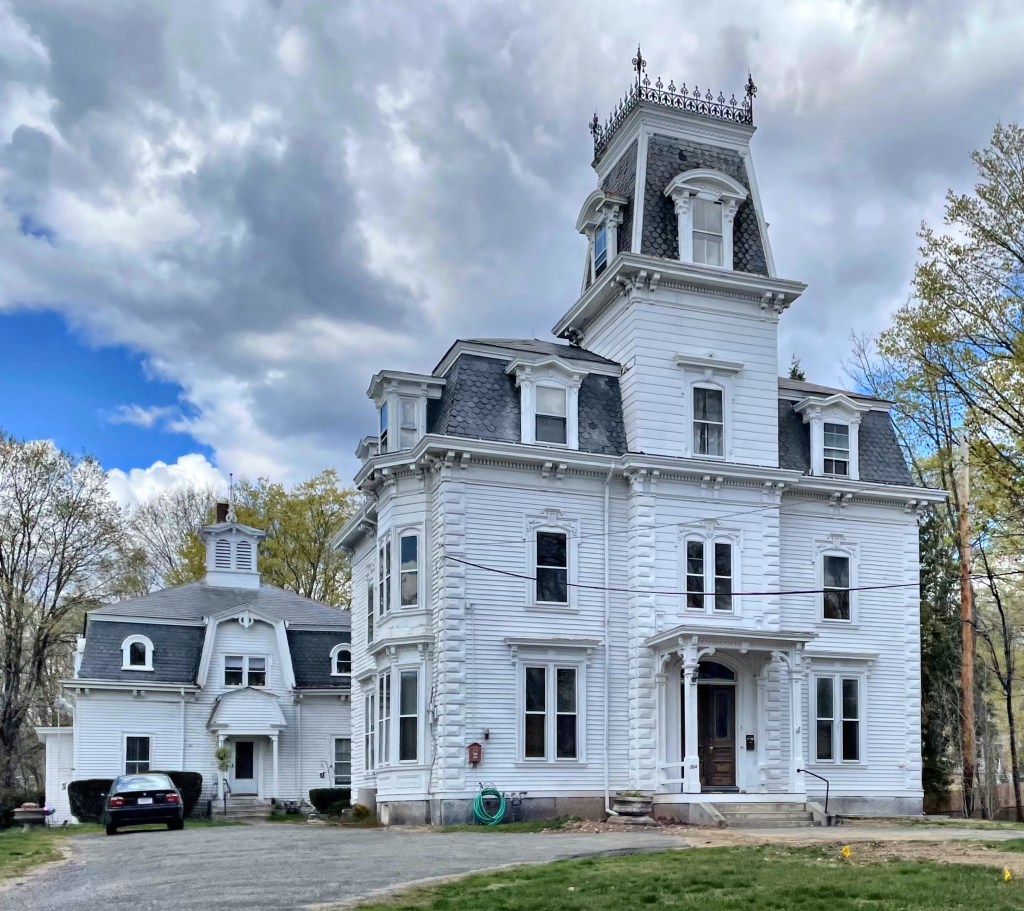
Oakwold Cottage // 1883

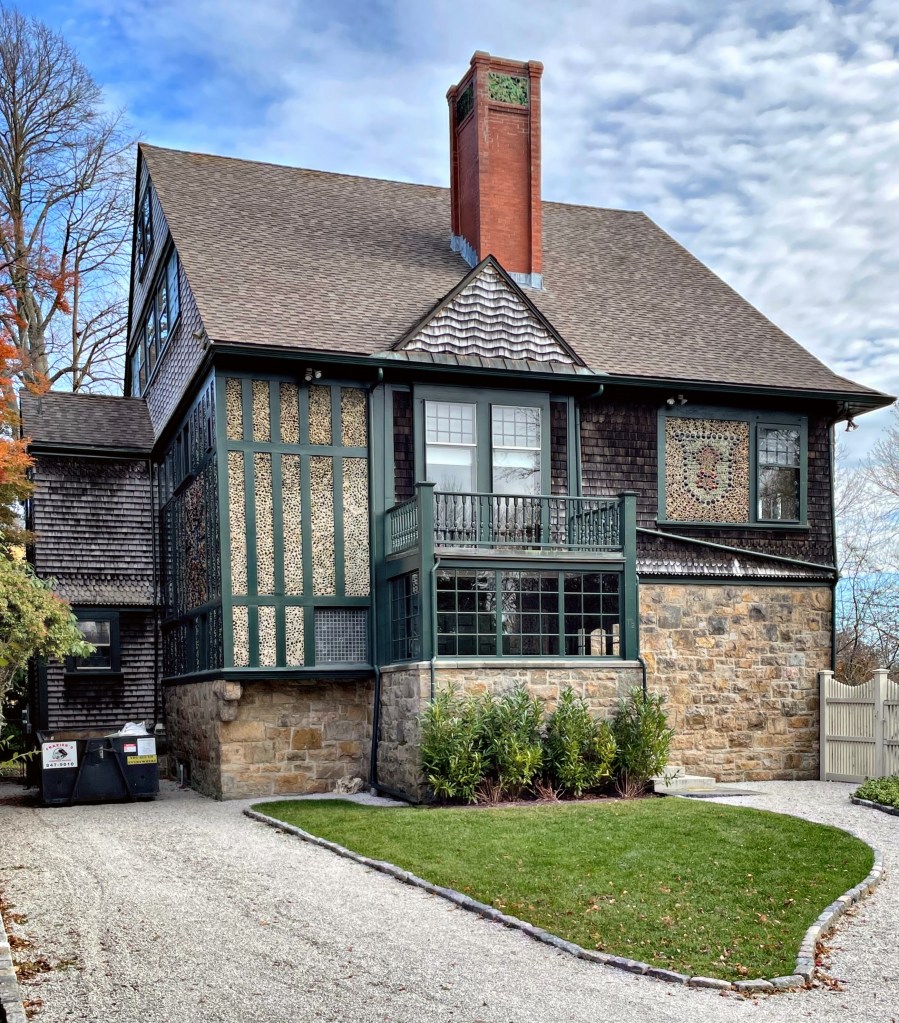
Oakwold, a stunning Queen Anne residence on Old Beach Road in Newport, Rhode Island was supposedly built on speculation and purchased by Augustus Jay (1850-1919). Mr. Jay was born in Washington, D. C., the son of Peter Augustus Jay and Josephine Pearson Jay. Augustus Jay graduated from Harvard College in 1871 and from the Columbia Law School in 1876, and worked as a diplomat. His wife was Emily Astor Kane (1854–1932), a daughter of DeLancey Kane and Louisa Dorothea (née Langdon) Kane. Emily was a descendant of John Jacob Astor. The “cottage” was named Oakwold, and was designed by architect Clarence Sumner Luce, who designed many summer residences in Newport, and specialized in the Queen Anne style. Particularly noteworthy in the design of Oakwold are the brick first floor with entrance within a recessed arched opening and pebble-dashed and half-timbered gable ends.

Bethshan Cottage // 1884

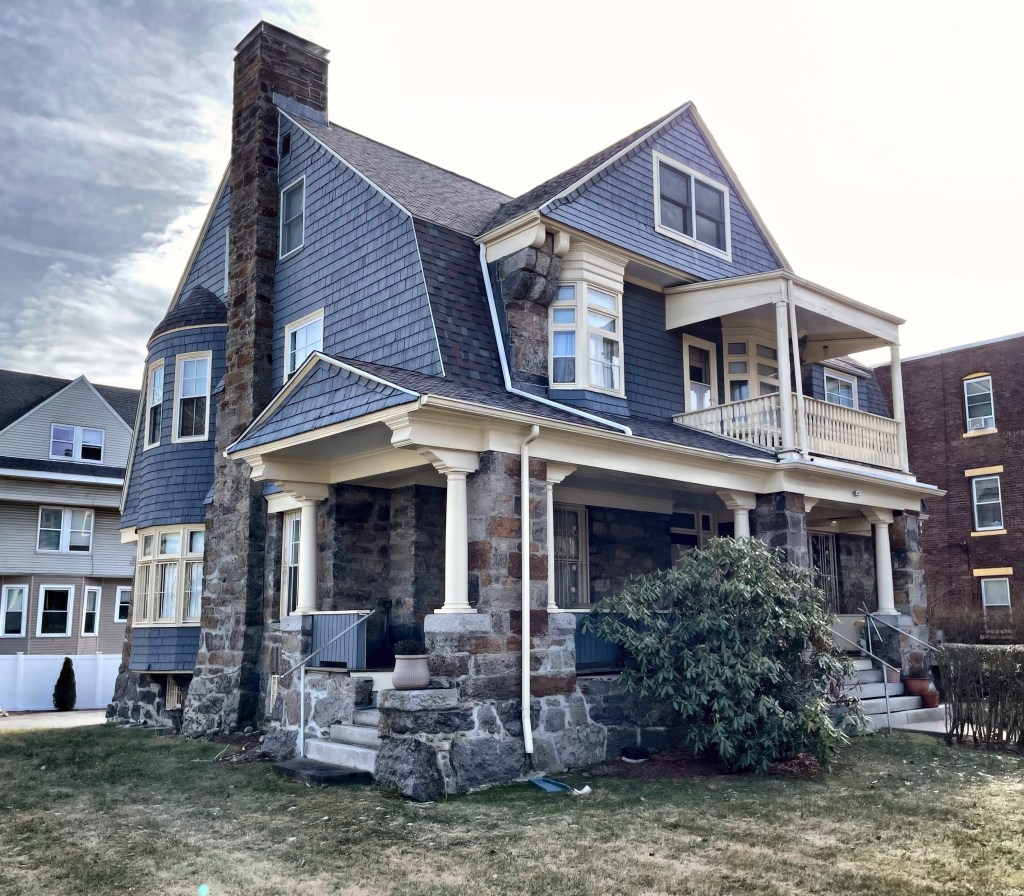
Bethshan Cottage is one of Newport’s (many) “hidden” gems that gets far too little attention from publications! Located on Gibbs Avenue, down the block from Eveherdee and William Barton Rogers‘ summer cottage, “Morningside”, Bethshan was built in 1884 on land purchased by Major Theodore Kane Gibbs. Theodore was the son of William C. Gibbs, the 10th Governor of Rhode Island, and served in the Union Army during the American Civil War, mustering out as a Major in 1870. Newport-based architect Dudley Newton designed this cottage for Gibbs, which blends nearly every major architectural style of the late 19th century under one, beautiful gambrel roof. The red granite stone walls, red brick trim, red fish-scale slate roof, even the rust-colored mortar, all work together to create a lovely composition, unlike anything else seen in Newport. According to Newport’s Assessor, the house is presently an apartment house.

Dr. Thomas J. Shanahan House // 1892

Dr. Thomas Joseph Shanahan (1873-1929) was born in Lawrence and graduated from Harvard Medical School in 1896. He practiced medicine in Brookline and Boston and was engaged in local organizations. He purchased this 1892 house on Aspinwall Avenue in Brookline in 1911, which had previously been rented to families. Two generations of Shanahans would own the house until the 1970s. After Dr. Shanahan’s death in 1929, the widowed Margaret Shanahan remained in this house with their daughter, Mary Margaret Shanahan, who was employed in 1940 as a medical secretary for a hospital. Mrs. Shanahan transferred title to the property in 1947 to her daughter, who converted the house to a two-family dwelling in 1953 for supplemental income. Architecturally, the house is Queen Anne and Shingle styles with continuous shingle siding, complex form with bays and oriels, and a unique arched opening in the gable over the entrance filled with a spindle screen. Architects were William Langley Morrison and Peter J. McEwen.

Dr. Ralph Fogg House // 1893

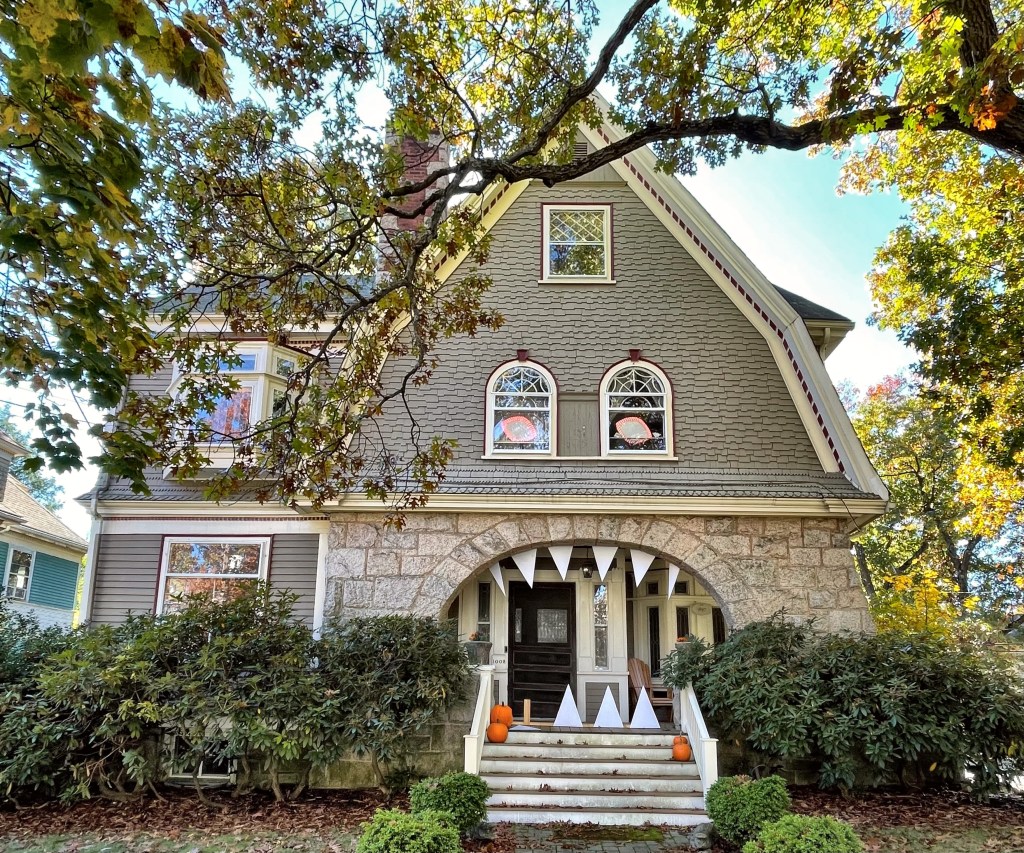
Built in 1893, this house in Norwood, Massachusetts, was built for Dr. Ralph Fogg, a leading dentist in the Boston area with offices in Boston, Norwood, and Quincy. Dr. Fogg was dissatisfied with nitrous oxide gas as an anesthetic, as it failed to protect the patient against pain; and, in trying to find some harmless compound to accomplish the desired results, he produced the “Boston Vegetable Vapor,” an anesthetic to compete with nitrous oxide in markets. In 1885, the Boston Vegetable Anesthetic Company was formed for the purpose of placing the vapor in the market, and it was used by leading dentists across the country. With his dental practice growth and success of his new invention, Dr. Fogg and his new wife, Anna Saville, hired architect, Herbert Mosely, to design a stately home for their family. The Queen Anne/Shingle style house features a sophisticated use of stone, clapboard and wood shingle materials. It’s main facade is dominated by a broad gambrel gable with the main entrance set within a rusticated stone arch which is edged with large voussoir blocks.

William Dexter House // 1899

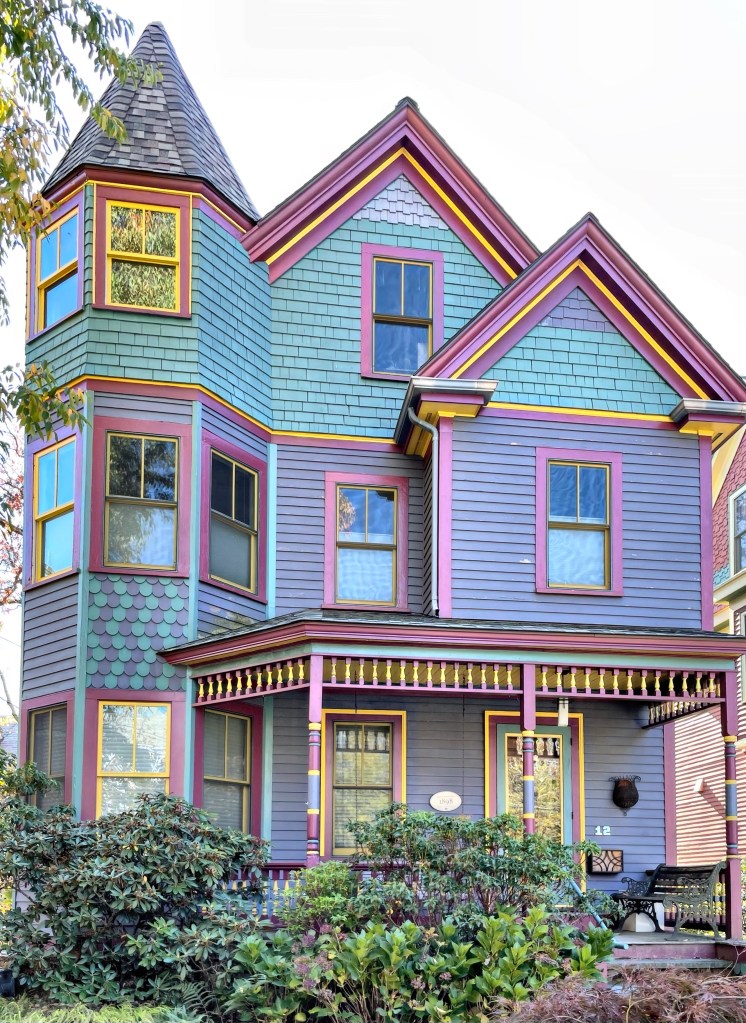
One of the best examples of the eclectic architecture designed at the of the 19th century in Norwood, Massachusetts, can be found on Beacon Street in the William Dexter House. Built in 1899 for William W. Dexter (1827-1911), who in 1852, married Harriet Blake, later settling in Massachusetts. Tragedy struck the family in 1871, when on the same day, his wife and daughter died; two days later, his sister-in-law, and six days after that, his other daughter Carrie died, all of bacterial infections. All that remained of the family was William and his only surviving daughter, Nellie. William remarried and built a blended family until his death in 1911. This house was built by Dexter, who worked as a contractor and painter, and George F. Bagley, a local builder. The complex form, rooflines, varied siding types, corner tower, and intact historic windows all add to its beauty. If only it had a historically appropriate color scheme to compliment it!

Oliver J. Barr House // 1908

Built in 1908 as a late example of the Queen Anne and Shingle styles, the Oliver J. Barr House is one of the finest Victorian buildings in Norwood, Massachusetts. The residence was built for Oliver J. Barr (1863-1935), who served as the General Manager of the Norwood Press in town, following his company from Boston to Norwood. The house was designed by Eugene Clark a Boston-area architect who specialized in suburban houses in the late 19th and early 20th centuries. The dwelling is noteworthy for its distinctive form, intact and rough textured wood shingle siding, and complex roof configuration. Particularly noteworthy is the verandah which encircles its northeast corner and rounded conically capped tower.

William Bates Summer Cottage // 1885

While Salem is best-known for its First Period and Federal style buildings, the Salem Willows neighborhood features some of the finest Victorian summer cottages in the Boston area. This cottage was built in 1885 by William Marston Bates (1820-1912), a Salem-based dentist, as his summer retreat when not in the office. The Stick style cottage has a steep gable roof with jerkinhead clip at the facade and a wrap-around porch with decorative jigsawn bracketed details. The house is a well-preserved example of the style, examples of which are becoming less-and-less frequent in recent years.

George N. Faught Chalet // c. 1890

The most unique house in Hull, Massachusetts is this stunning (and rare) example of a Swiss Chalet, located on Vautrinot Avenue in the fashionable Hull Hill neighborhood, which is dominated by late-19th century summer cottages. The earliest owner of the house was George N. Faught (1831-1915), an artist and tailor who moved to Boston from Maine. George went into the tailoring business in Boston and did well for himself, eventually building (and possibly designing) this summer home for himself in Hull. Mr. Faught died in 1915 in his bed in Boston, and this property was sold at auction in 1917. After some insensitive alterations in the 20th century, the property was sold in 2011. The later owners restored much of the house, while modernizing it to meet their needs. It is a showstopper!

The house is privately owned and not open for tours.

Galvin Cottage // c.1882

Hull Hill is a relatively unknown enclave of summer cottages that sit on a rise overlooking Boston Harbor in the coastal community of Hull. The development of Hull Hill began in the 1870’s but became most active in the 1880’s and 1890’s. The land here was previously maintained as pasture and gardens by Hull villagers, but the land here was eventually sold and developed when the Hingham Water Company came to Hull in 1882. That same year, the railroad arrived which provided easier access to the town. This cottage on Andrew Avenue is one of the earliest summer residences built here, and dates to the late 1870s or early 1880s. The cottage was owned by Owen Augustus Galvin, a Boston lawyer, and his wife, Jane Sullivan Galvin. The unique cottage features a hexagonal section with a roof extending down to meet the wrap-around porch. The cottage exemplifies late 19th century cottage/resort architecture.

Bread Loaf Campus – Maple Cottage // c.1900

Welcome back to the Bread Loaf Campus! For more early history and context of the complex, check out the post on the Bread Loaf Inn. By 1900, owner Joseph Battell’s enterprise exceeded the capacity of the original inn, and cottages were added to accommodate more guests visiting his new permanent home in the mountains of Ripton, Vermont. Located adjacent to the Mansard-roofed Birch Cottage, one of the most visually striking buildings in the campus is Maple Cottage, which reads more porch than cottage, but it’s 100% perfect. It was the last cottage built by Battell for his family and friends to stay at when visiting. They must have loved evenings on the three-floors of porches looking out over the Green Mountains.