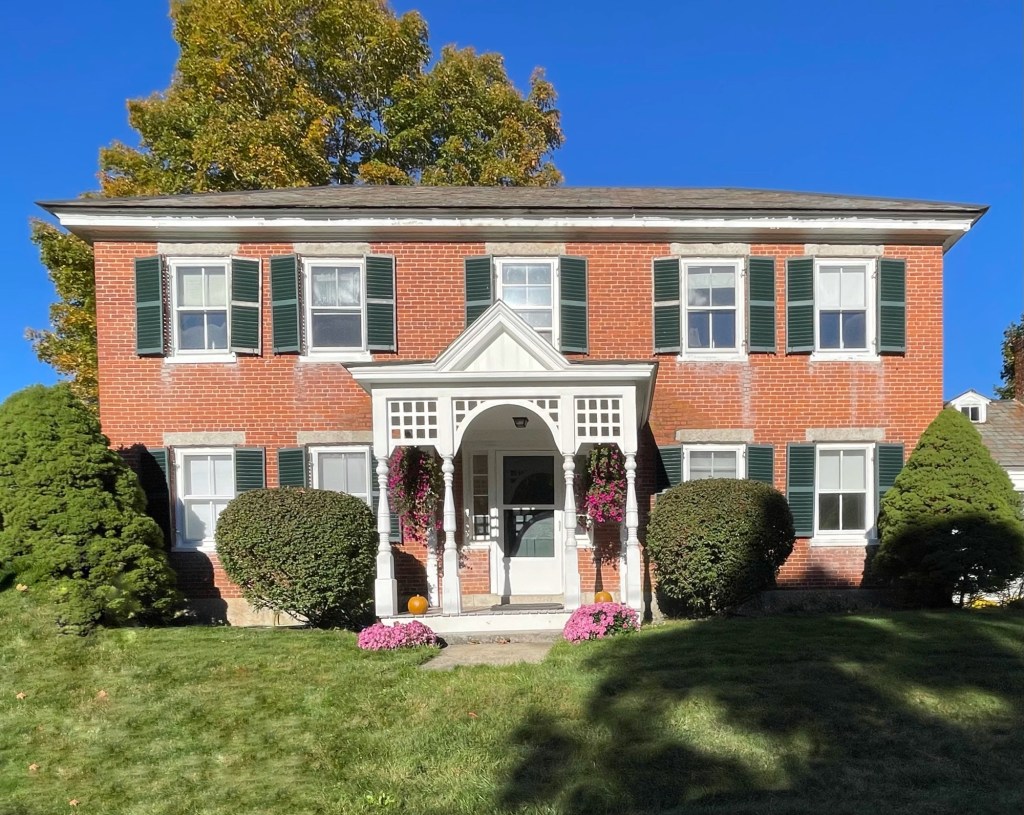
The Asa C. Everett House on Allen Road in Ashby, Massachusetts, was built around the time of the wedding of Asa Cutter Everett, a saddle- and harness-maker, and Rowena Spaulding in 1824. The house was built of brick and in the Federal style with a shallow hipped roof and symmetrical facade, and was “modernized” in the late 19th century. Victorian-era alterations include the entrance porch with turned posts and spindle frieze and two-over-two sash windows. Blending of vastly different architectural styles can be tough to pull off, but this example really looks great! What do you think?
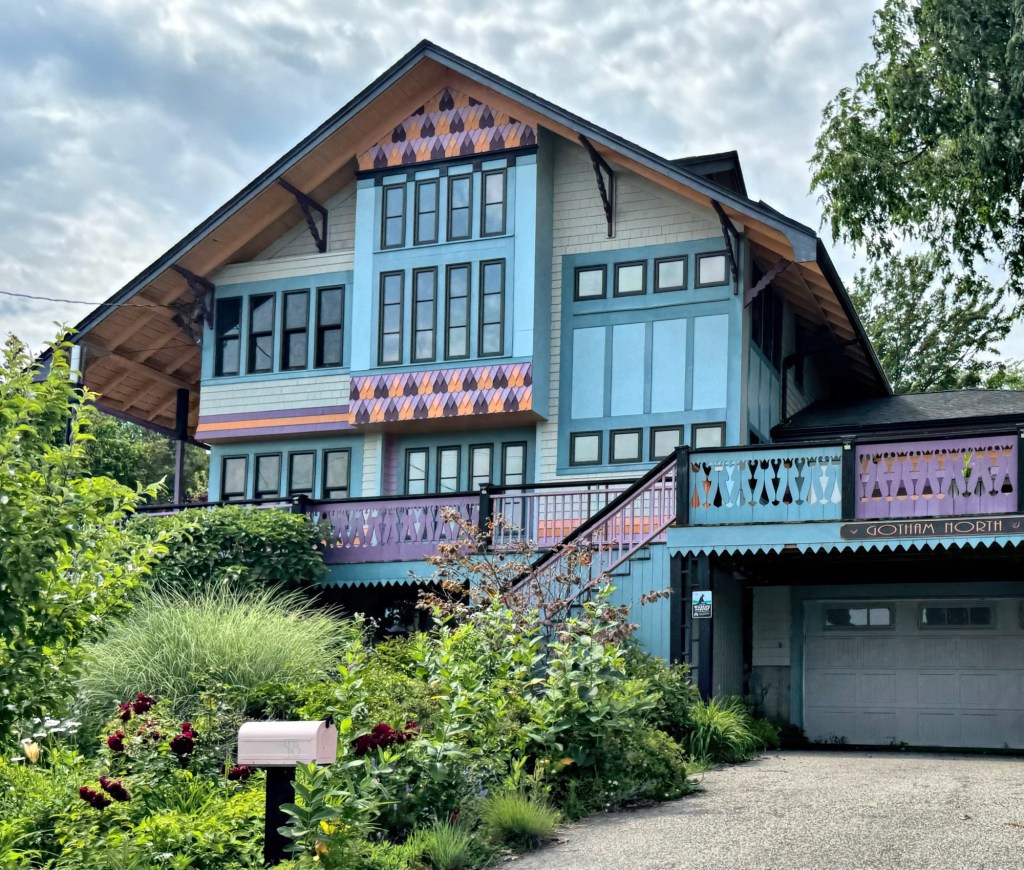
The most unique house in Hull, Massachusetts is this stunning (and rare) example of a Swiss Chalet, located on Vautrinot Avenue in the fashionable Hull Hill neighborhood, which is dominated by late-19th century summer cottages. The earliest owner of the house was George N. Faught (1831-1915), an artist and tailor who moved to Boston from Maine. George went into the tailoring business in Boston and did well for himself, eventually building (and possibly designing) this summer home for himself in Hull. Mr. Faught died in 1915 in his bed in Boston, and this property was sold at auction in 1917. After some insensitive alterations in the 20th century, the property was sold in 2011. The later owners restored much of the house, while modernizing it to meet their needs. It is a showstopper!
The house is privately owned and not open for tours.
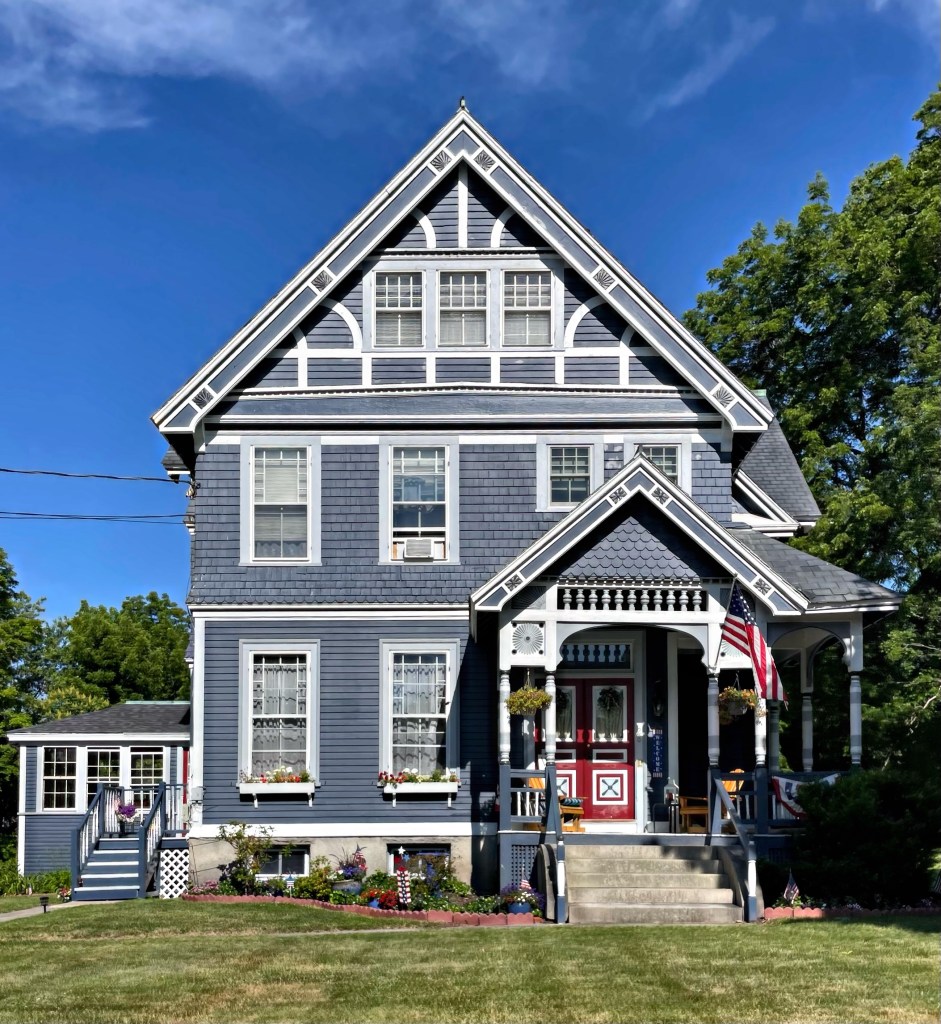
One of the more exuberant and ornate homes in Roxbury’s Washington Park neighborhood is this charmer on Howland Street. The eclectic house was built in around 1894 for Ellen S. Johnston from plans by local architect Timothy Edward Sheehan and stands out for its preserved exterior in a neighborhood where many homes are covered in later siding, obscuring the ornate details underneath. Details include: swag and garland applied ornament, two bays at the facade (one polygonal and one rounded), a Colonial Revival style porch, and central rounded dormer. Wow!
The College Hill neighborhood of Providence has some of the finest residential architecture in New England, and some really fun stories of those who built these grand homes. In 1859, the house was built with a concave mansard roof punctuated with dormers and a bold bracketed cornice below. The use of round headed windows on the second floor is a really great design detail. The residence was first owned by Eliza Talbot Almy (1808-1886), who held the title to the property. Wives holding the title of properties in this period was fairly common as it would protect their personal property and residence from financial risk if the husband was met with lawsuits or financial hardship. Eliza’s husband was cotton broker and manufacturer Samson Almy (1795-1876), who had already been sued in a case heard before the United States Supreme Court in 1851. After Eliza’s death in 1886, her daughter, Susan Smith (1837-1917) and husband, Amos Denison Smith (1835-1912), a Civil War veteran, occupied the house into the early 20th century.
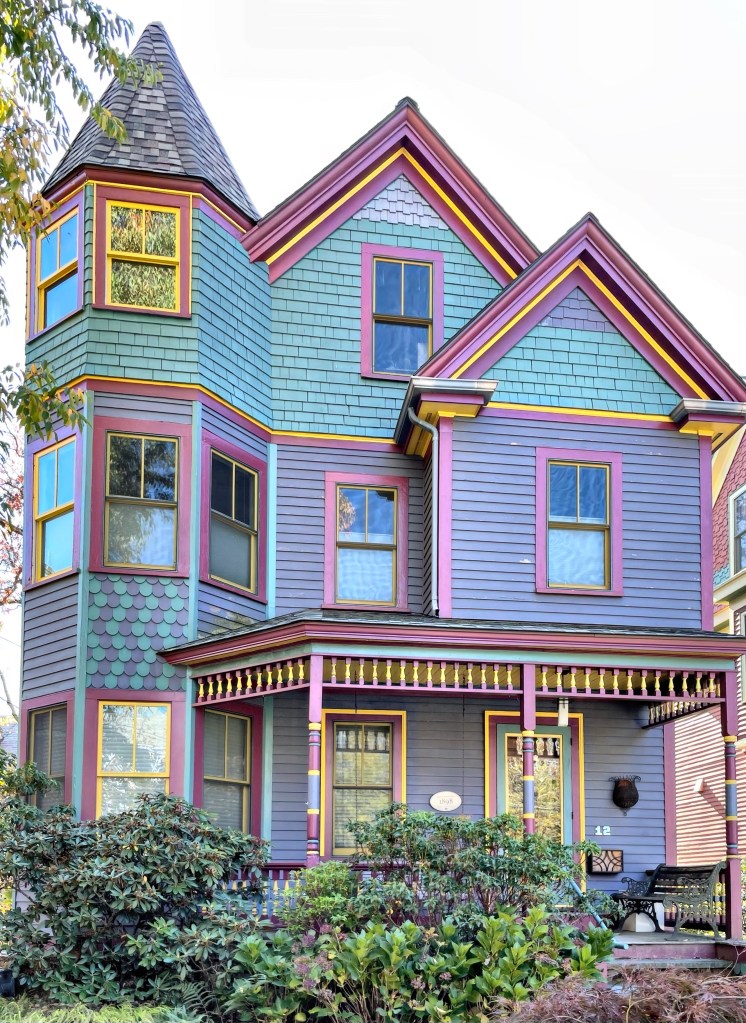
Behold this Queen Anne painted lady in all her glory! This home was constructed in 1898 as a late Victorian addition to Newton’s built landscape. The home’s earliest known owner was a T. C. Sullivan, who left the property to his family upon his death. The house is painted some pretty bold colors, which does an effective job at highlighting the many architectural details and intricacies in the design, but the home would have never been painted like this historically. A little history lesson: the “painted lady” trend took off in San Francisco when after WWII, disinvestment in the urban core led many Victorian homes there to be demolished, altered and covered with siding, and many were painted gray with war-surplus Navy paint (battleship gray). In 1963, San Francisco artist Butch Kardum began combining intense blues and greens on the exterior of his Italianate-style Victorian house. His house was criticized by some, but other neighbors began to copy the bright colors on their own houses. Kardum became a color designer, and he and other artists / colorists began to transform dozens of gray houses into Painted Ladies. By the 1970s, the colorist movement, as it was called, had changed entire streets and neighborhoods. This process continues to this day. The trend took off all over the United States as urban centers saw re-investment and gentrification. While not historically appropriate, the Painted Ladies can really make people happy and show pride in ownership.
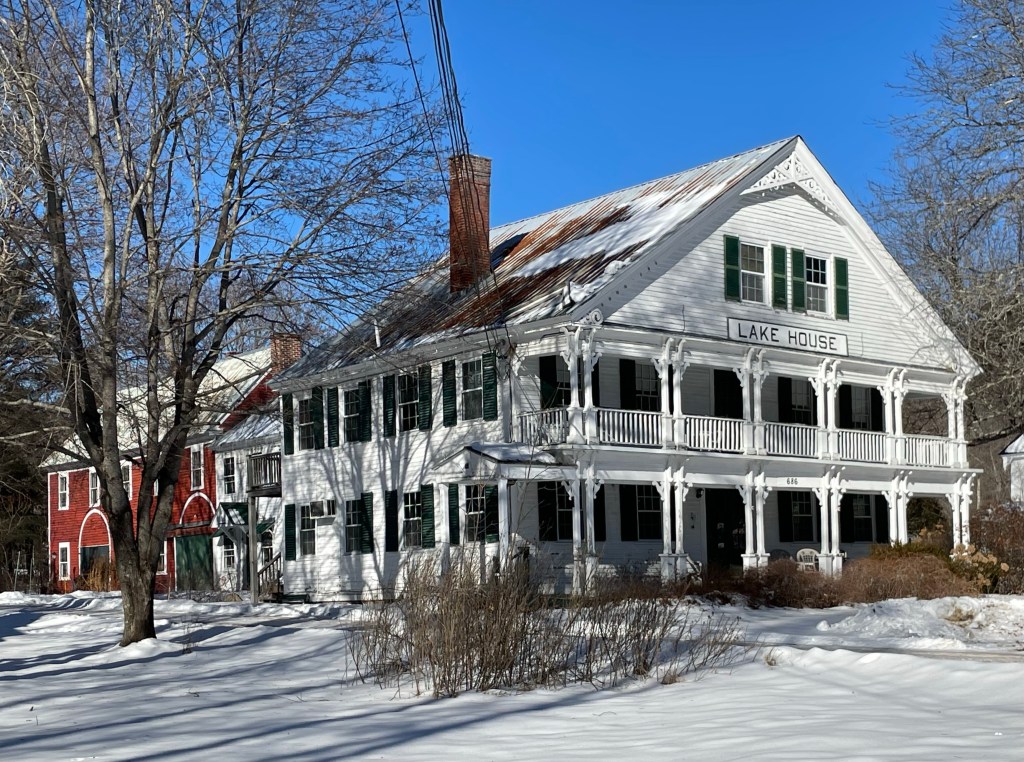
Eli Longley (1762-1839) came to Waterford, Maine by way of Bolton, Mass., in 1789 and erected a log cabin in town. As the first settler to build in this part of town, he owned a substantial piece of property, which was frequently travelled through as the area was being developed. Seeing a need for lodging, he built a one-story tavern in the location of this building, which was added onto and modified as demand and the area’s population grew. Longley would also subdivide some of his land for house lots along the new town common, selling to new settlers as they arrived. Longley sold the tavern in 1817, which was acquired later in 1847 by Dr. Calvin Farrar. Taking advantage of a nearby mineral spring, Dr. Farrar opened a successful hydropathic spa, which used natural waters to cure patients of their ailments. The spa was taken over by Dr. William P. Shattuck, who expanded the site as the “Maine Hygienic Institute”, a hospital exclusively for lady patients employing eclectic treatment. This business and the tourism it generated helped shift the town from a sleepy village to a tourist destination by the late 19th century, where city-dwellers would flock to view the natural scenery and breathe in the clean air. In the 1860s-70s, Shattuck “modernized” the Lake House Hotel with the two-story Victorian-era porch and sawn decorative trim.
The most iconic house in Norway, Maine has to be the Evans-Cummings House (also known locally as the Gingerbread House) on Main Street. The ornate Victorian era home was originally built in 1855 for Richard Evans, who was born in Portland in 1805 and after training as a carpenter, moved to Norway in 1833 for work. He and his wife, Mary Warren Hill, had eight children and they resided in the home until their death. In 1890, Charles B. Cummings bought the house in 1890 and hired local architect John B. Hazen to remodel the house. Hazen added the gingerbread adornments for which the house is now known colloquially. The home attracted a lot of attention in the region, and the later heirs continued that whimsical appeal. When the home was willed to Fred and Cora Cummings, they were said to have kept a stuffed peacock at the top of the stairs, which delighted children when they toured the home. The house eventually became used as storage by the owners of the local Advertiser Democrat newspaper, and its future was threatened. Since 2012, a local group, Friends of the Gingerbread House, have poured tens of thousands of dollars and an equal amount of time restoring the iconic home to her former glory! Preservation is important!
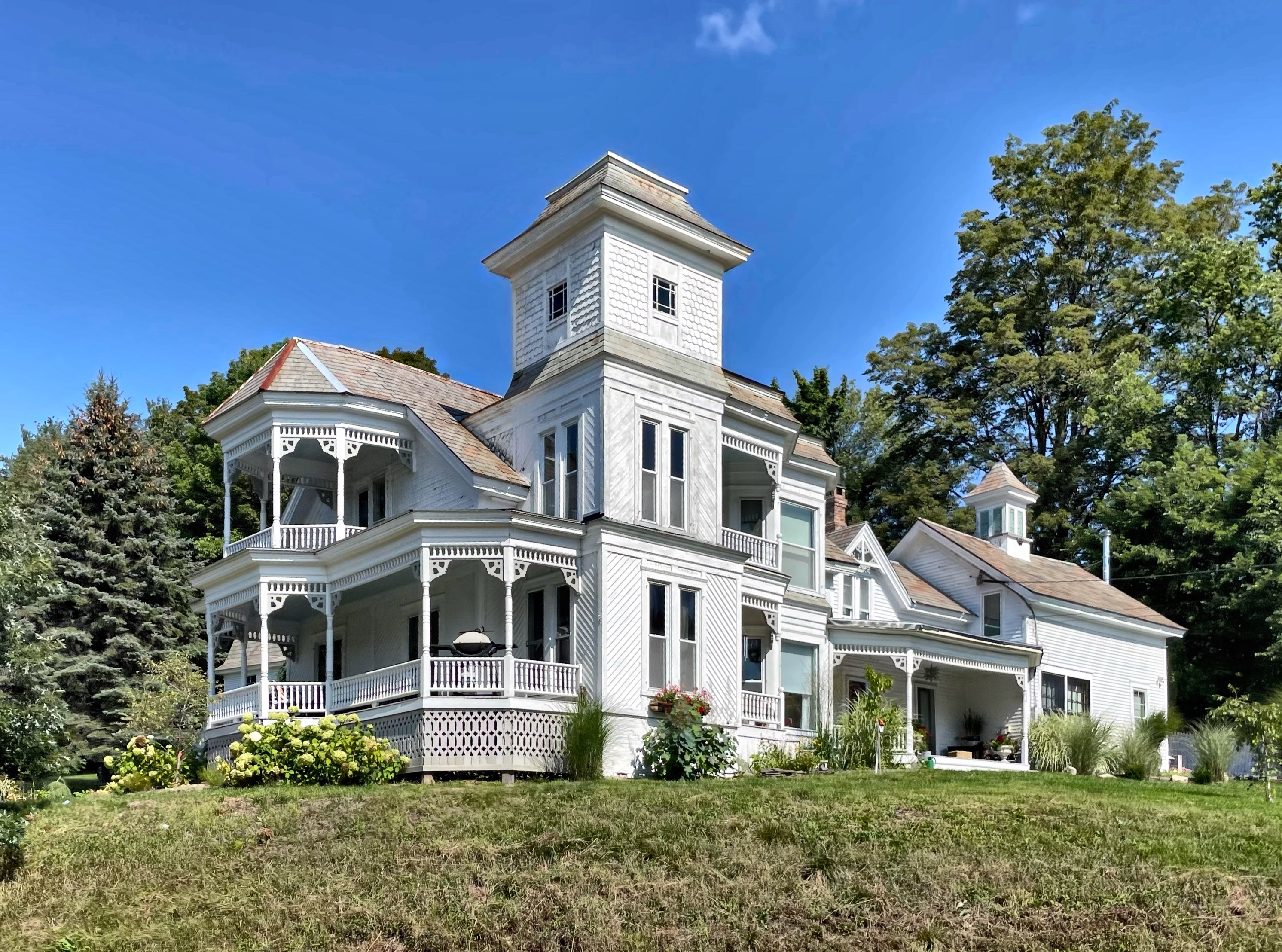
One of the most visually striking homes in little Chester, Vermont, is the Durand House. Sited prominently on a hill, the 1861 home resembles a wedding dress in bright white with intricate spindles that look like lace. The house was seemingly built for Urban Durand, one of the proprietors of the successful Durand Brothers Market in Chester village. The home has an elaborately trimmed full-front porch with a second-story polygonal balcony, and a three-story corner tower with a shallow mansard roof, all possibly later additions. The house stands out in the village, which is largely dominated by classical Federal and Greek Revival houses.
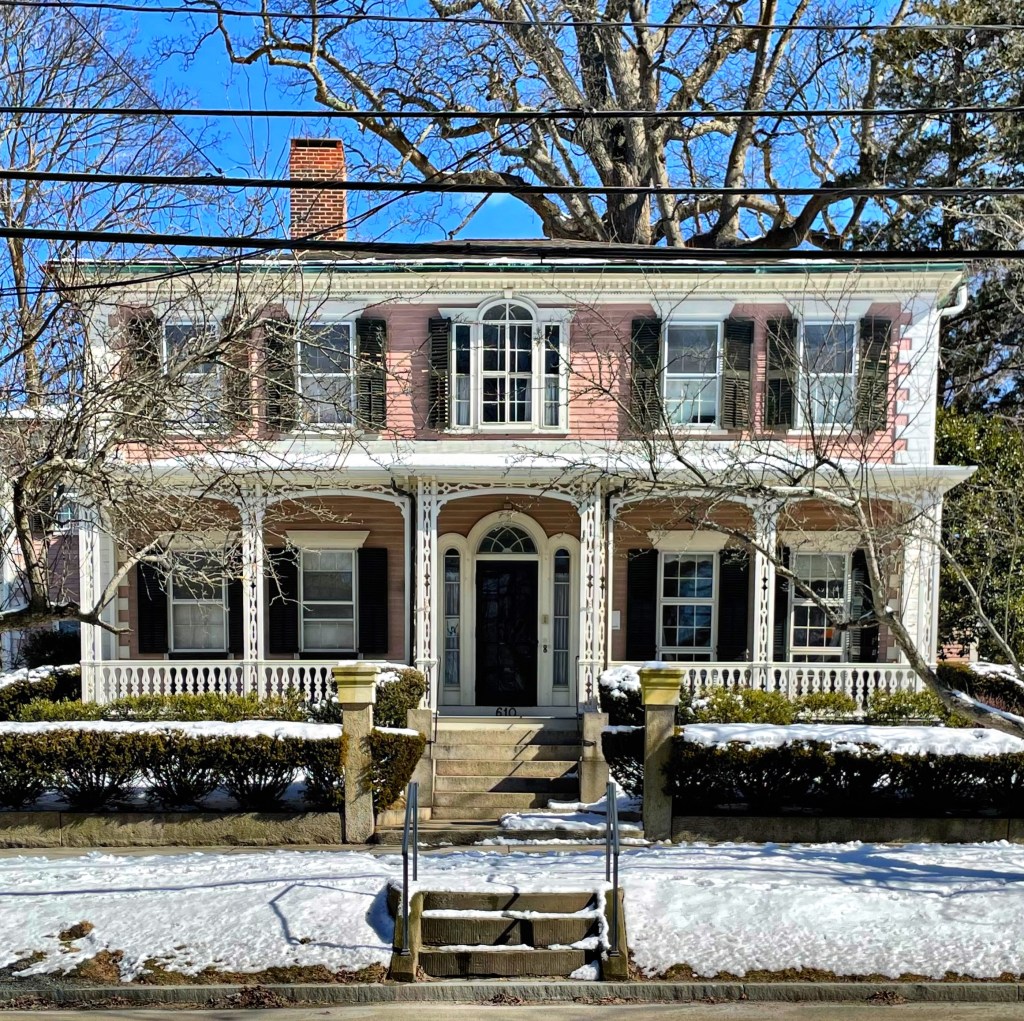
In 1809, Giles Luther built this two-story, 5-bay, hip-roof Federal house, which has been substantially enlarged and altered over the years in succeeding styles. Original detailing on the facade includes the Palladian window, modillion cornice, quoins, and wide-beaded window casings with splayed lintels. Giles Luther (1775-1841), a shipmaster, merchant, and farmer, was more importantly the first Grand Marshall of the Bristol Fourth ofJuly Parade, which is believed to be part of the oldest Fourth of July celebration in the country. In 1825 Luther’s business failed; the Commercial Bank took this house and sold it in 1828 to Jacob Babbitt. Babbitt owned part of a wharf in town and in his will of 1849, he left the “use and improvement” of this house to his son Jacob, Jr. (1809-1862). The younger Babbitt was wealthy and likely made the mid-19th century modifications to the home, including the Italianate triple-arched door and full-width porch with delicate cut-out posts and railings. The home was occupied for much of the 20th century by the Bristol Nursing Association, and sold in the 1970s to a private owner. The home was for a period ran as a bed & breakfast but appears to be back to a private residence today.



 Buildings of New England
