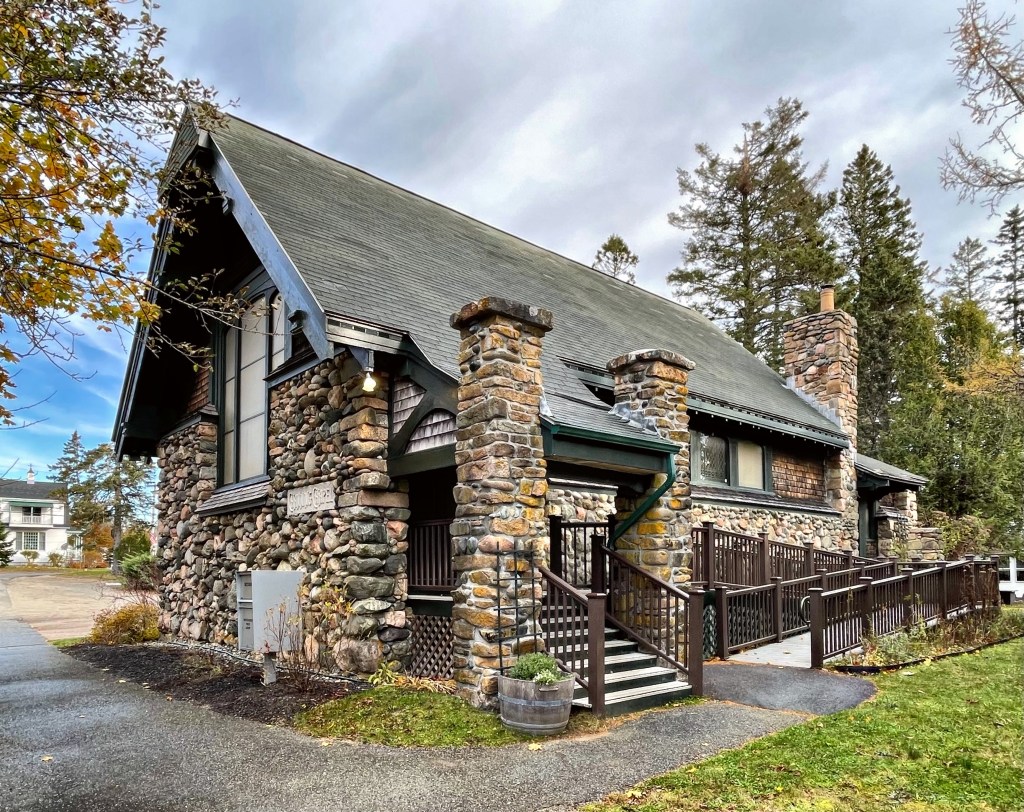
Every village needs a library, and East Blue Hill is no different! Without easy access to the main Blue Hill library, a group of “willing workers” amassed a collection of books with the hopes to donate to a future village library organization. A campaign to build the present building began in 1914 with the acquisition of land adjacent to the village post office, with major fundraising undertaken in 1917. The building, completed in 1920, was designed by John W. Merrow, a New York City theatrical architect and is an uncommon example of a small, Arts and Crafts style library in the state of Maine.
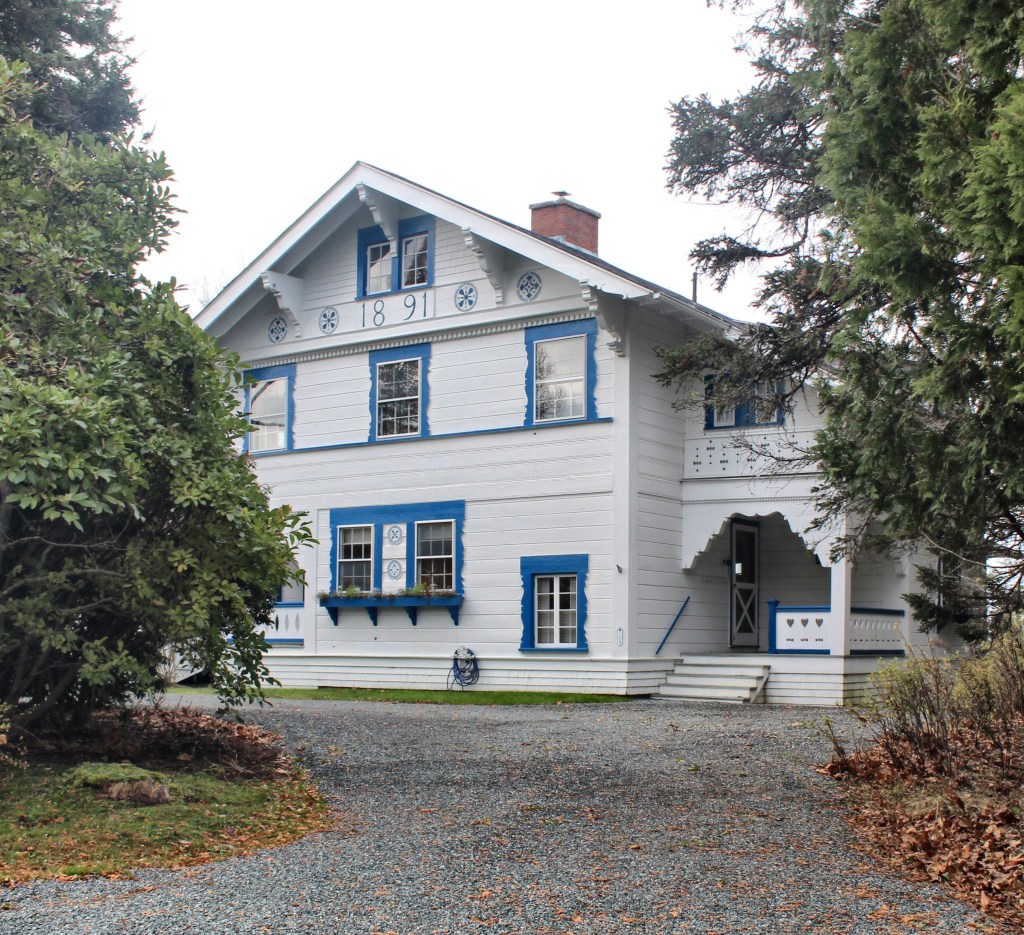
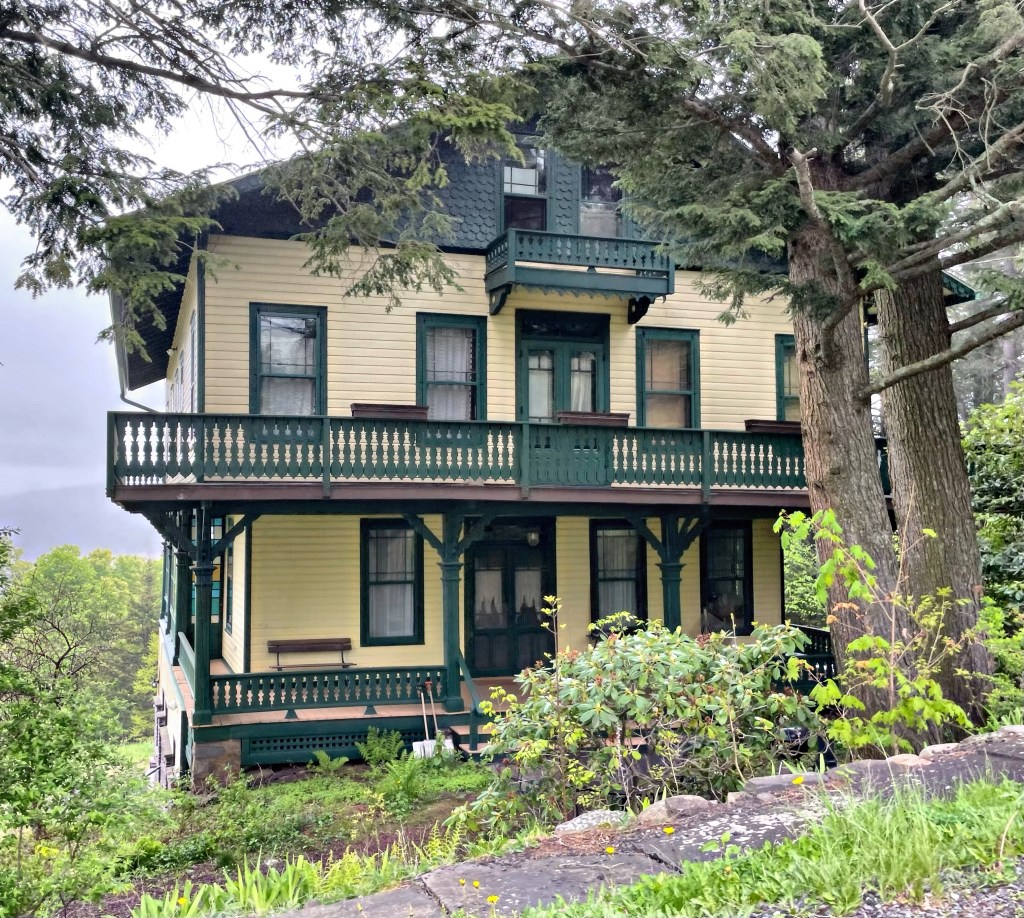
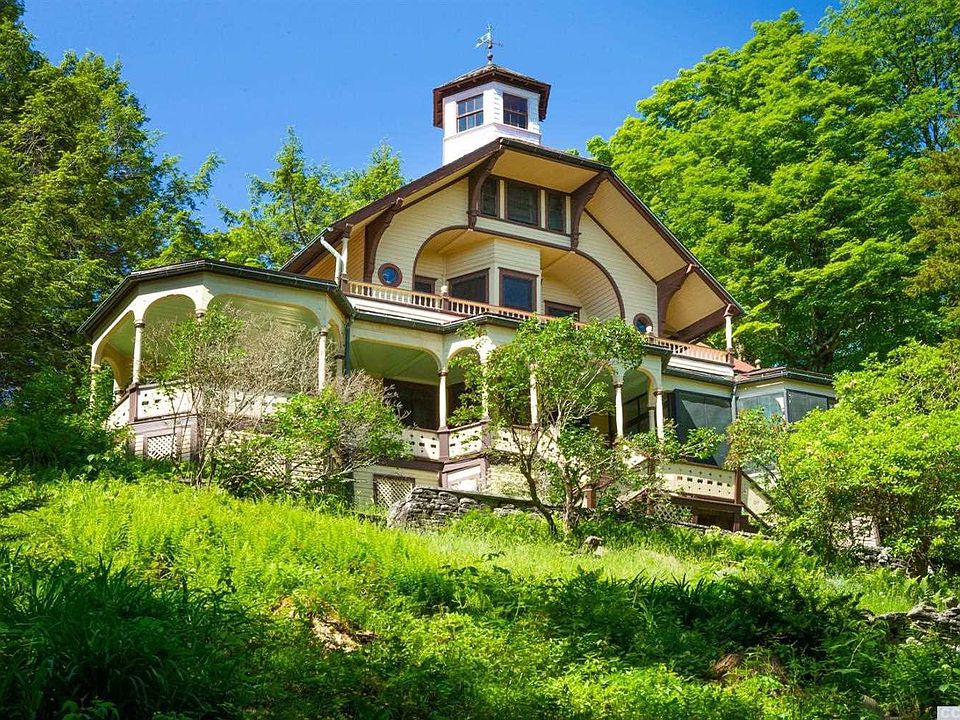
It wouldn’t be a German-developed summer colony with at least one Chalet-style summer cottage, would it? The Keller Cottage in Elka Park, New York, was built in 1896 for John Keller (1867-1924) and his German wife, Caroline Goehring (1866-1917) who summered in the colony for a few months of the year from Brooklyn, N.Y. The 3,500-square-foot, 6-bedroom “cottage” includes a sunroom with stained glass, original unpainted wood-paneled walls and oh, just some jaw-dropping views of the Catskill Mountains for good measure!
One of the more unique cottages in New York’s Elka Park summer colony in the Catskill Mountains is this charmer, the Tamsen Cottage. The cottage was built in 1893 for Edward Tamsen (1849-1907), the Sheriff of New York County from 1895-96 until Governor (and later Vice-President) Levi Parsons Morton removed him from office. The former Sheriff purchased this home and summered here with other German-American wealthy New Yorkers until his death in 1907. The chalet-style house has been exceptionally preserved since, and was listed for sale in 2017 for a mere $425,000. Wow!
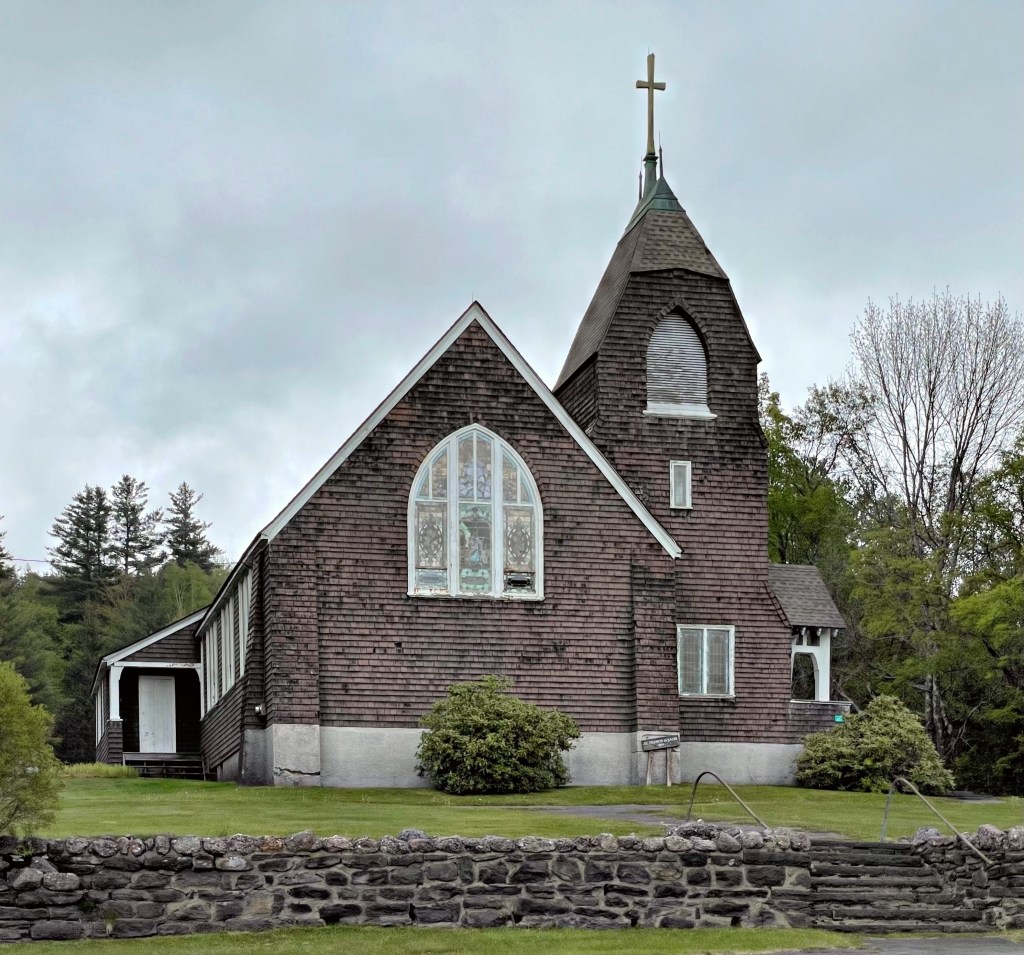
Down the street from the Old Platte Clove Post Office in Elka Park, New York, I stumbled across this large, shingled church with few houses nearby. I had to investigate! In 1888 parish lines for the Catholic church were redrawn in the area necessitating a new church near the summer colony of Elka Park. By 1891, a small, shed-like church was built here. By 1911, the small house of worship had outgrown its usefulness and it was considered a blight compared to the high-style homes nearby. A local summer resident, Francis H. Lewis funded $5,000 of the $6,500 cost of the building, and local carpenter Arthur Showers, was commissioned to erect the building. Father Keefe had conveyed to the builder some remembrances he had of a small church in France, and wished for it to be designed that way. Using local building traditions, the church was constructed of local lumber with shingled siding. The building and adjacent cemetery remain active to this day.
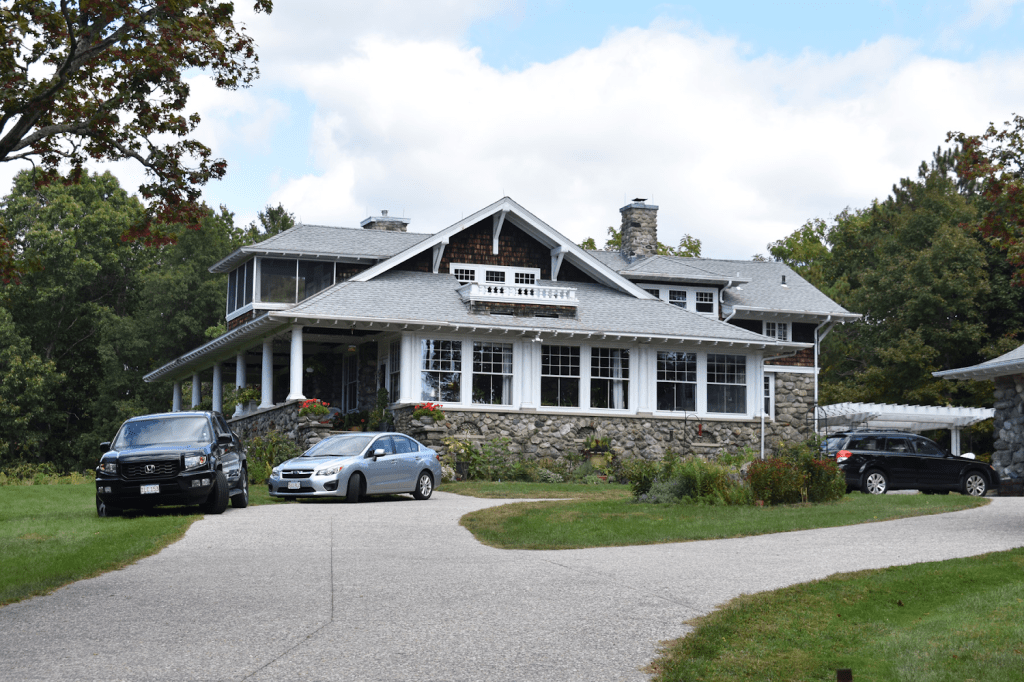
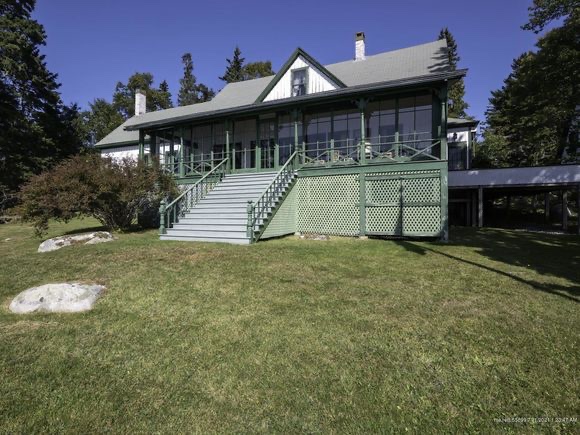
The historic summer cottages for middle-class summer residents of Maine have little written about them, but oh are these little cottages beautiful!! This is Radnor Cottage, a charming waterfront dwelling in the Haven Colony in Brooklin, Maine. The summer colony is comprised of a dozen quaint cabins (most historically without running water) for those of more modest means that wanted to escape the city for peace and tranquility on Maine’s rocky coast. The colony was developed in the late 19th and early 20th centuries as a respite for academics and more who did not want to flaunt their credentials or social prestige. This home was purchased a few years ago and the inside looks like it’s never been altered! This is a dream home!
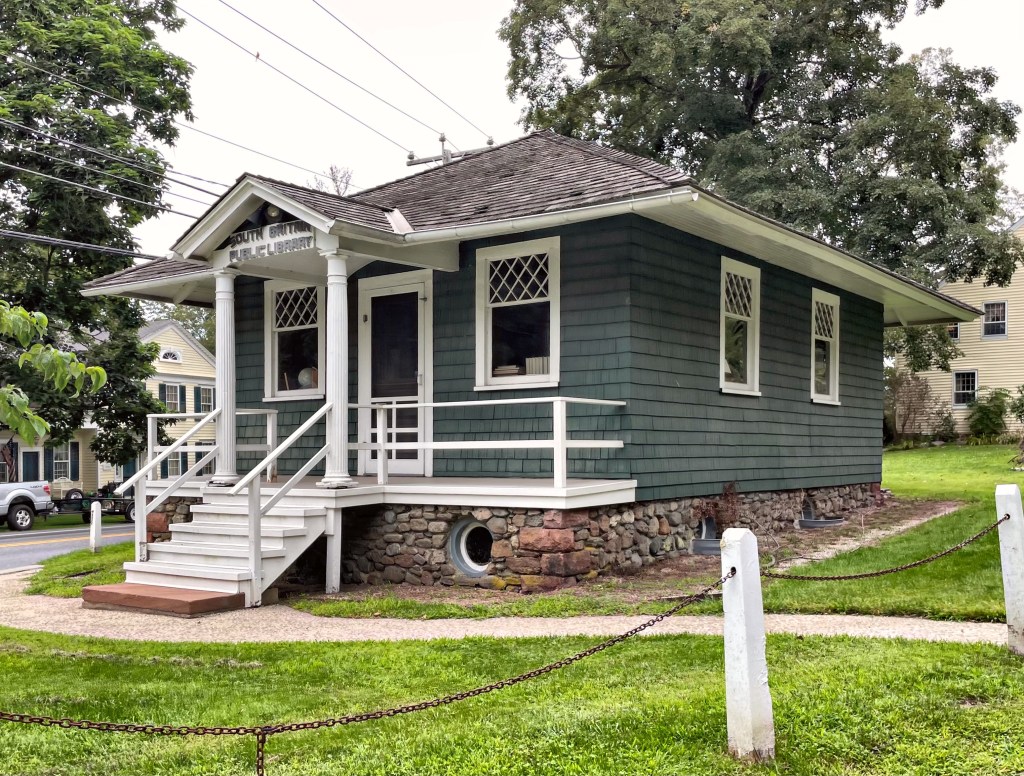
Nothing screams Maine architecture like weathered cedar shingles. The Sedgwick Public Library on Main Street was built in the early 20th century as a small village library to serve the small and seasonal population of the coastal town. The building is Craftsman in style in almost every feature. A broad hipped roof terminates with exposed rafters at the eaves, tuscan columns at the entry support the projecting portico, and a rubblestone foundation continues the composition of natural materials.
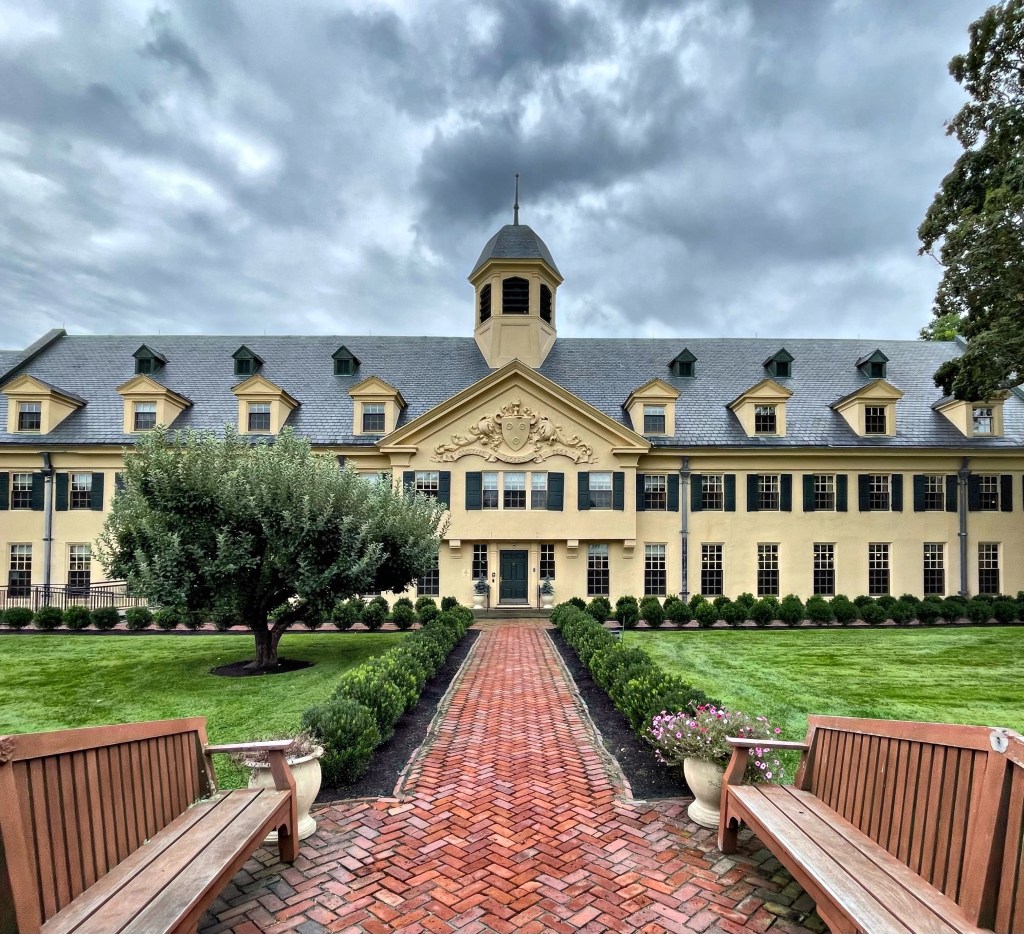
Sayles Hall was the second purpose-built building erected for Pembroke College, a women’s college affiliated with Brown University in Providence. Sayles was originally built as a gymnasium facility for female students and was designed by the same architects as Pembroke Hall, Stone, Carpenter and Willson. Architecturally, the building compliments Pembroke Hall which was built the decade prior with the use of red brick, terracotta trim, and arched openings and gabled pediments at the roof. The funds for the construction of the building were a gift from Frank A. Sayles (whom the building was originally named after). Until 1990, Sayles Gym was used for sports and offices by the Physical Education Department. In 2001, Sayles Hall was completely renovated and converted into classroom space, receiving a new name (Smith-Buonanno Hall). A great example of adaptive reuse!
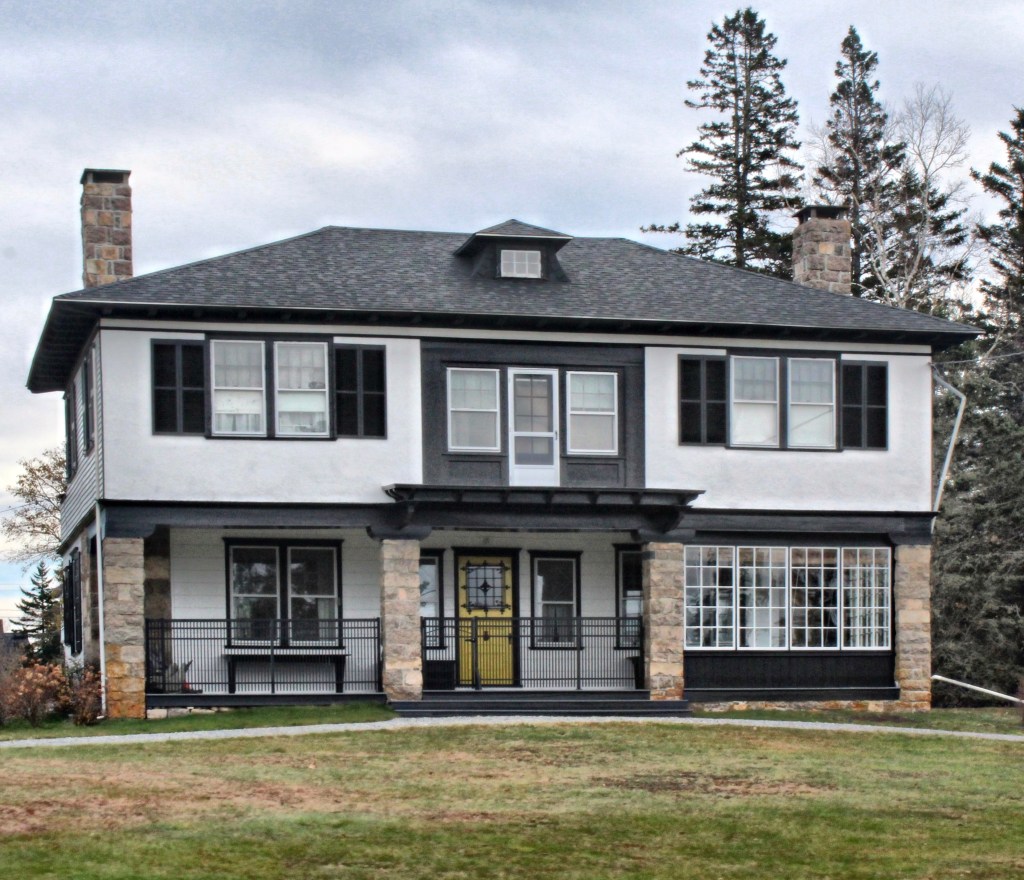
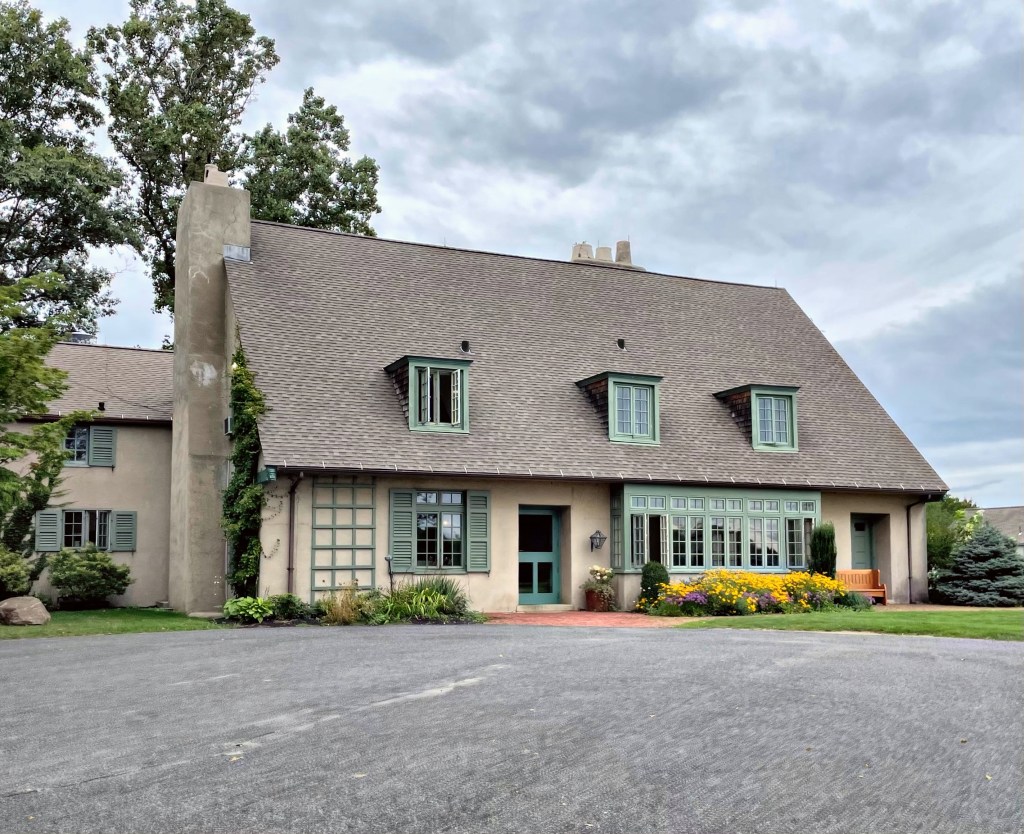
One thing I love about Boston is that nearly every old building has such a rich history that takes so much time to compile and write up (this account keeps me busy)! Located on Forest Hills Street in Jamaica Plain, this stucco building caught my attention when driving by, so much so, that I had to stop and go back. The building was constructed in 1912 as a home for unwed mothers called Talitha Cumi Home (a phrase from the Bible meaning “Arise, young woman”). The charitable organization outgrew their space in the South End and sought greener pastures and open space in Jamaica Plain. The group had been organized in 1836 by “earnest Christian women” who longed to open a “door of hope” to “those hopeless and helpless girls who found themselves facing the sadness and shame and wrong of unwed motherhood.” The Talitha Cumi Home allowed pregnant women to reside and birth their children before their pregnancy began to show. The site originally included an administration building and a hospital with both structures connected by a covered breezeway. The home closed in the 1950s and the former home for unwed mothers has since been converted to a middle school.
Prairie style architecture is not nearly as common in New England as it is in the Mid-western United States. The style was almost always seen in early 20th century residential designs and is characterized by horizontality, low slope roofs, overhanging eaves, and open interior floor plans. This New England vernacular version of the Prairie style employs some Arts and Crafts influence with Tuscan columned porch and wood frame construction, rather than the more bulky and bold use of brick and stone. This residence sits on a busy state route in the sleepy town of Franklin, Connecticut. This house appears to have been built for Oliver Johnson who was about seventy by the time the house was built. Do you know of any other Prairie Style houses in New England?
After the Quabbin Reservoir was filled (more on the history in my last post), the cleared land and body of water, with its over 181 miles of coastline, was seen as not only an engineering marvel, but a place of natural beauty and splendor. Upon a rise in the land and the edge of the reservoir, they saw a perfect location to build a tower that could serve many purposes. The Metropolitan District Water Supply Commission hired the firm of Densmore, LeClear & Robbins to design a tower that would serve as a radio tower, fire station and observation tower to view the reservoir. The structure, while designed in the Arts and Crafts mode, is of modern construction and is comprised of two main parts. The lower portion, is constructed of stone and concrete, with metal casement windows, granite lintels and sills and bronze doors. This section was used for radio equipment. The interior has glazed tile walls and cement floors. The six-story tower has five floors of metal and concrete stairs. At the top is a two-level, glass enclosed observation tower.
Even with a declining marble industry by the turn of the 20th century, Dorset, Vermont was seen as a beautiful retreat from city life, and it attracted well-to-do middle-class families to escape to the town for parts of the year. One of those families was head by Harry Waters Sheldon (1869-1942) and Annie C. Bourn Sheldon (1875-1958) who lived in Yonkers, N.Y. with their four children. The family lived in this home as a cottage retreat in 1909 and constructed the only Craftsman bungalow in the village of Dorset. The bungalow was later altered and the porches were enclosed, but it was restored in the past few years!
The tiny town of Landgrove, Vermont, like many small rural towns in New England, suffered from population decline in the early-mid 20th century. In Landgrove’s case, the town was effectively saved by one man, Samuel Ogden (1896-1985). Samuel was born in New Jersey but eventually visited rural Vermont, eventually buying a run-down farmhouse in Landgrove in the year 1929. By the ’30s and ’40s, began to buy up all the houses in town and fix them up and then sell to people he knew as summer vacation homes, saving historic houses and barns from decay and providing them a new life. He worked as a realtor, selling the restored homes for a series of well-known cultural figures: documentary filmmaker Robert Flaherty, artist Bernadine Custer, and the violinist Nathan Milstein, among many others. In the process, Ogden helped to create an informal network that linked writers and artists across his section of southern Vermont, effectively gentrifying the town in the process (for better or worse). One of his draws to bring wealthy city-dwellers to summer in the hills of Vermont, was a community center/tennis club, known as the Landgrove Tennis Club. The club is still members-only and has just one clay court, but the clubhouse is oh so charming!
Highlighted by the establishment of the Catskill Mountain House in the 1820s, and furthered by the construction of subsequent resorts and boarding houses, the Catskill Mountains enjoyed a lively seasonal tourist industry that continued largely unabated throughout most of the nineteenth century. Mead’s Mountain House was representative of the smaller, less ostentatious boarding houses that sprang up in the region to serve a more middle-class clientele of tourists. This church, the Church of the Holy Transfiguration was originally constructed in 1891 in association with Mead’s Mountain House as a modest place of worship for guests of the Mead family’s boarding house and those of the nearby Overlook Mountain House. The chapel was constructed in 1891 and modestly built, constructed with a wood balloon frame above a fieldstone foundation with detailing reminiscent of the rustic aesthetic, popular in the Adirondacks to the north. In the 1960s, Father Francis, the much-beloved “hippie priest”, here welcomed hippies who had congregated in town during those years that culminated in the famous art and music festival. Fr. Francis began the practice of this lesser known branch of Catholicism, which acknowledges the Pope as an earthly spiritual leader but, unlike classical Roman Catholicism, does not consider the Pope to be supreme or infallible. The small chapel remains as a quirky and important piece of local history.
In 1888, Kate and Charles Page purchased a house lot in the sparsely developed Fenway section of Boston. The corner lot at Westland and Parker (renamed Hemenway) provided views to natural scenery and access to many Boston amenities. The couple worked with architect Herbert Langford Warren, who had previously apprenticed under the great H. H. Richardson. Warren took many of the common motifs seen in Richardson’s own style, but he was also a fan of the Arts and Crafts Movement, with its love of fine handicraft. You can see that in the elaborate diaper-patterned brick and in the stepped gables. The gables were a revival of a motif from old Flemish, Dutch, and Scottish architecture, sometimes called corbie-step gables, because corbies (crows) liked to stand on the steps. The interior was just as stunning, with massive brick arches, fanciful woodwork, and a prominent stairhall at the entrance. The couple was likely inspired to hire Warren by their son, Walter Gilman Page, a young artist who maintained a studio space in the home for some time. The home was sold out of the family by 1912. In 1917, the whole house was lifted up one story and a strip of retail stores was inserted beneath it. The original arched entryway then became a second-floor window. It was replaced with a taller building by 2003. Interestingly, upon the opening, the Commissioner of the Boston Parks and Recreation Department and long-time Boston Preservation Alliance Executive Director stated that the 1888 house “looked like a missing front tooth” and was happy to see it demolished.
Waban Village in Newton, Massachusetts has dozens of amazing examples of early 20th century residential architecture, possibly the best collection in the Boston area! This Arts and Crafts style residence was built around 1908 for William and Delia Wilkinson the former of the two owned the William H. Wilkinson Company, which manufactured oiling devices and oil cups for steam engines. Delia, his wife, owned their family home under her name. The home is an excellent example of the Craftsman style, with stucco siding, thick rounded column supporting the inset porch, oh and that catslide roof!!