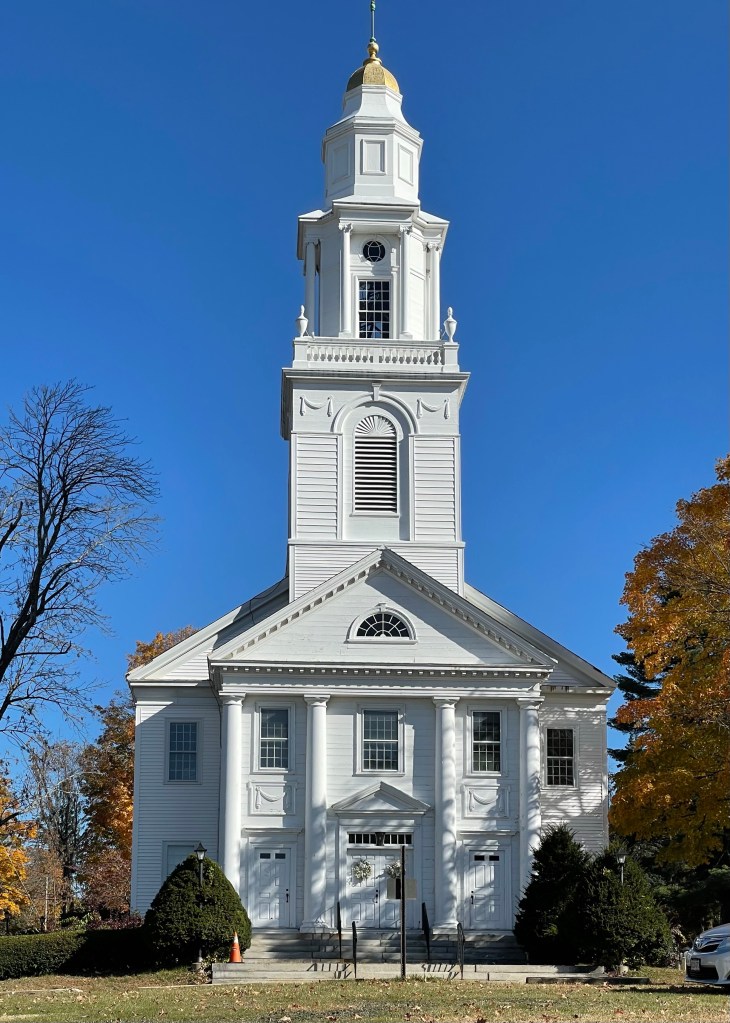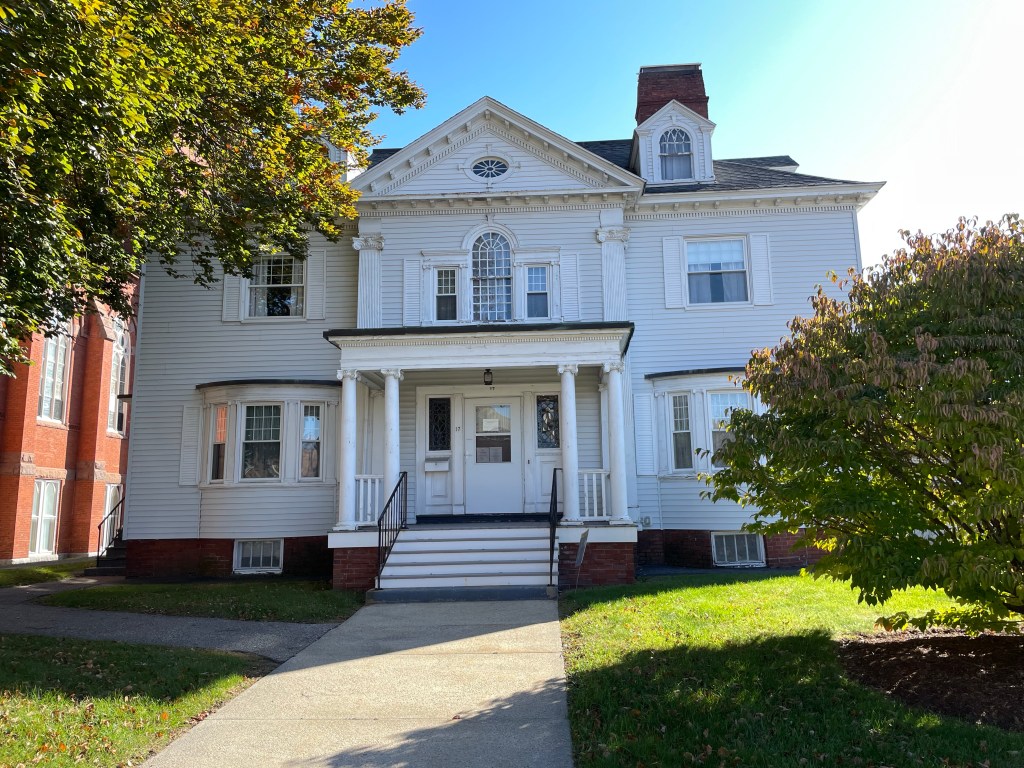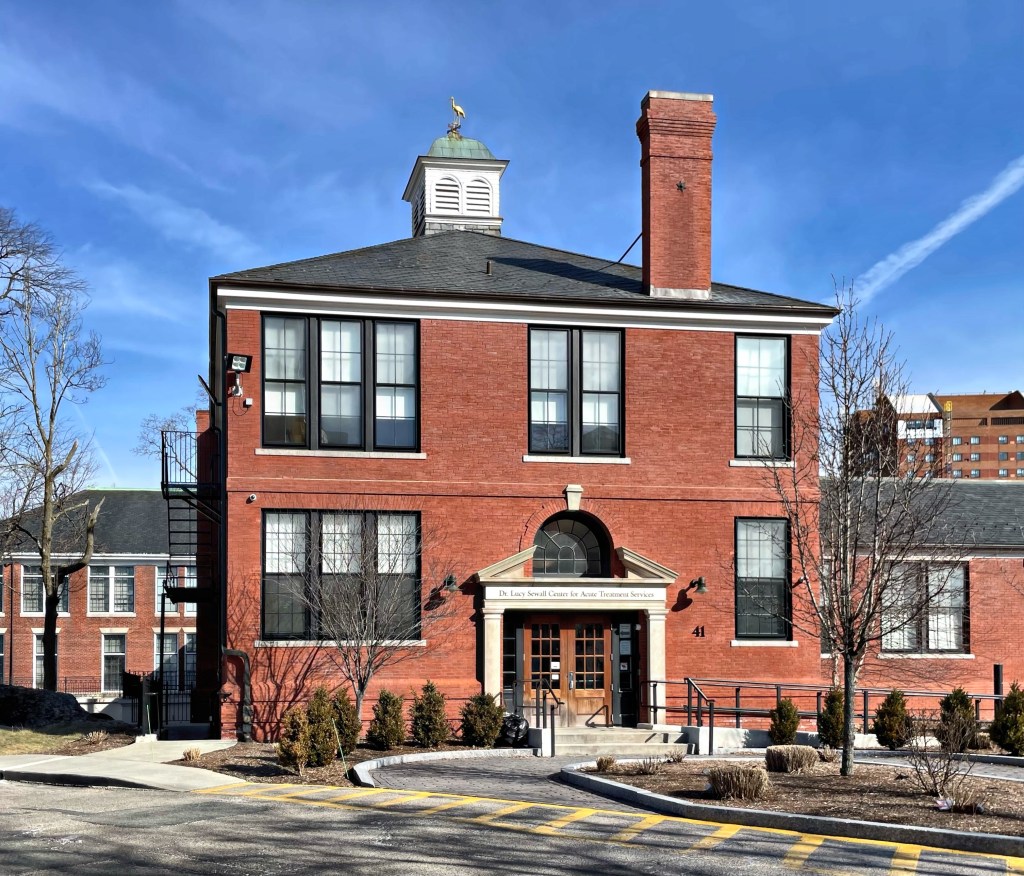
Dimock Center – Sewall Maternity Building // 1892

As the New England Hospital for Women and Children continued to grow in the decades following its founding in 1862, expanded facilities were needed to deal with increased patients along with new nurses and doctors to treat them. Land was acquired across from the Cary Cottage and Zakrzewska Building, and a second building campaign began to expand the facilities and grow the women’s hospital. The management of the hospital did not hire Cummings and Sears, but went with architect John A. Fox to furnish plans for a new maternity building. The Sewall Maternity Building was designed in the Colonial Revival style, a relatively modest example that features a unique broken pediment over the door housing a large window. In 1916, the building was expanded by an addition at the rear which enclosed a central courtyard, it was also designed by John Fox.
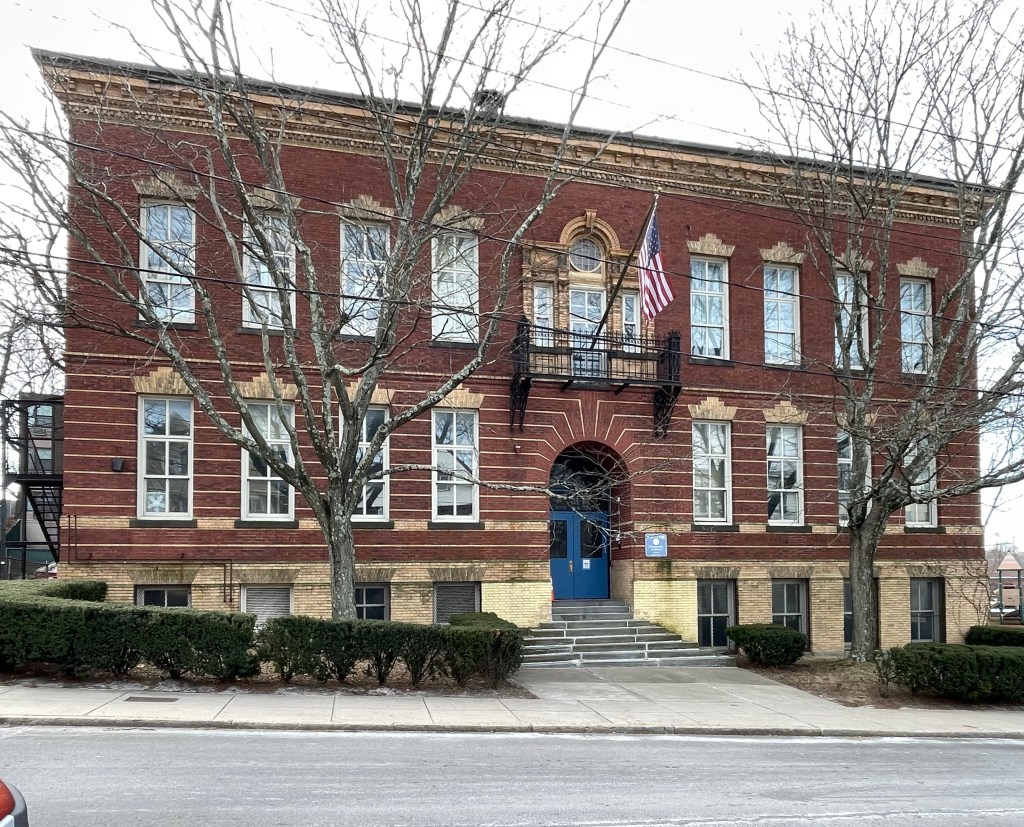
Margaret Fuller Primary School // 1891

The Margaret Fuller Primary School (now Community Academy) is a public school in Boston that shows how much attention to detail the school department and the city architect paid when designing these structures in the late 19th and early 20th centuries. The Fuller School was constructed in 1892 to alleviate an overcrowded school district resulting from rapid urbanization. Jamaica Plain was one of Boston’s first streetcar suburbs largely spurred by the growth of the Boston and Providence Company Railroad between 1860 and 1890, when the area saw a shift from large bucolic estates to subdivided urban housing (largely triple-deckers and apartment buildings along major routes). With the surge in population, many new schools were built city-wide, including this primary school which was designed by Edmund March Wheelwright (1854–1912), a prominent Boston-based architect who served as City Architect for Boston from 1891 to 1895. Architecturally, the building is a stunning example of the Colonial Revival style with red and buff brick walls which are laid in a Flemish bond and rusticated at the first story with single recessed courses of buff brick. An arched entrance and Palladian window with iron false balcony sit at the central bay. The school was named after Margaret Fuller Ossoli (1810-1850) an early transcendentalist and writer advocating for women’s rights born in Cambridge.

J. B. Mulvey Triple Decker // 1904

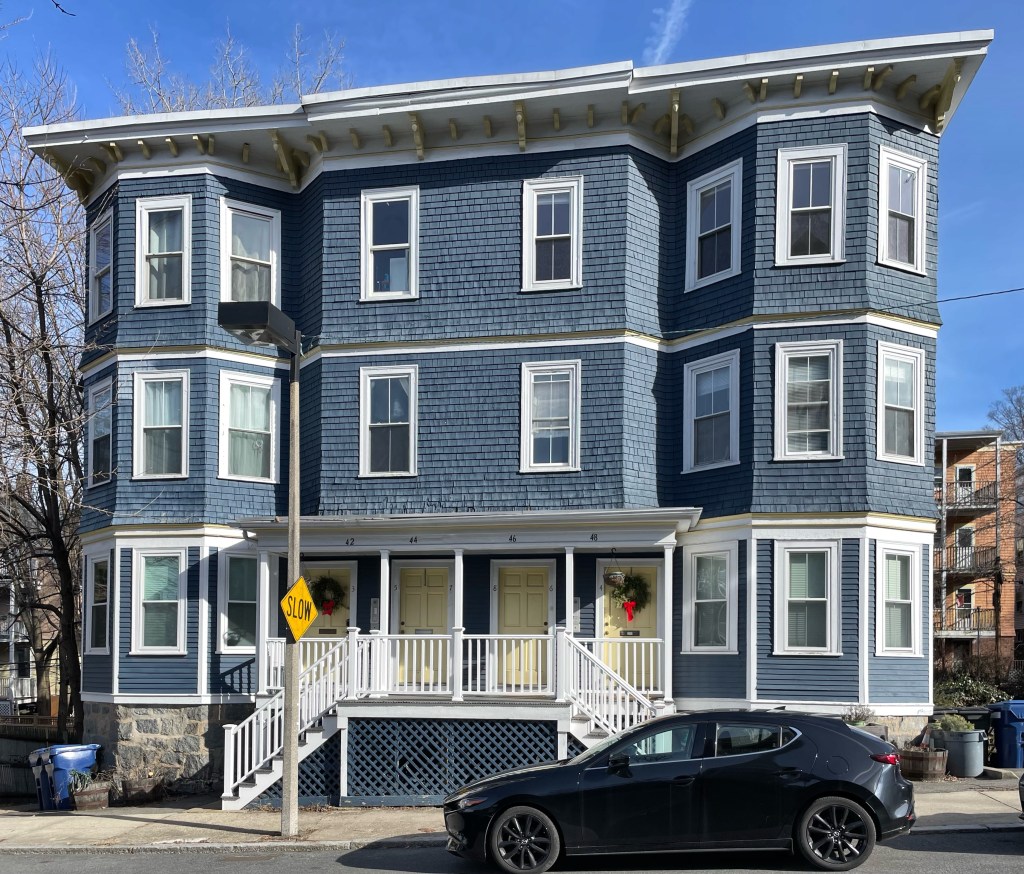
Across the street from the Lannin Triple Deckers (last post) this large triple decker (and the others in the row) was built in 1904 for developer John B. Mulvey. Mr. Mulvey was born in Ireland and migrated to Boston at the age of 16. He climbed his way up the ladder and worked as a builder and developer, largely in Boston-area suburbs and neighborhoods. At the turn of the century, these triple deckers (also known as three deckers) proliferated throughout the Boston suburbs around train stations providing affordable flats to residents. Many were built and rented out by developers, but eventually, owners would live in one unit and rent the other flats for additional income, providing upward mobility and equity, largely benefiting immigrant communities. This high-style example is very well maintained and is a more uncommon double-three decker.

Academy of the Holy Family // 1914

Built adjacent to and just a few years after the St. Mary of the Immaculate Conception Church in Baltic (last post), the Academy of the Holy Family stands as a high-style Colonial Revival building in the town. The building stands four full floors with a raised basement and attic story, and is symmetrical in its design. A large fan-light transom and stone trimmings add much depth to the buildings large massing. The structure was built in 1914, and has housed the Academy of the Holy Family, a private, Roman-Catholic all-girls prep school, which is still active today.

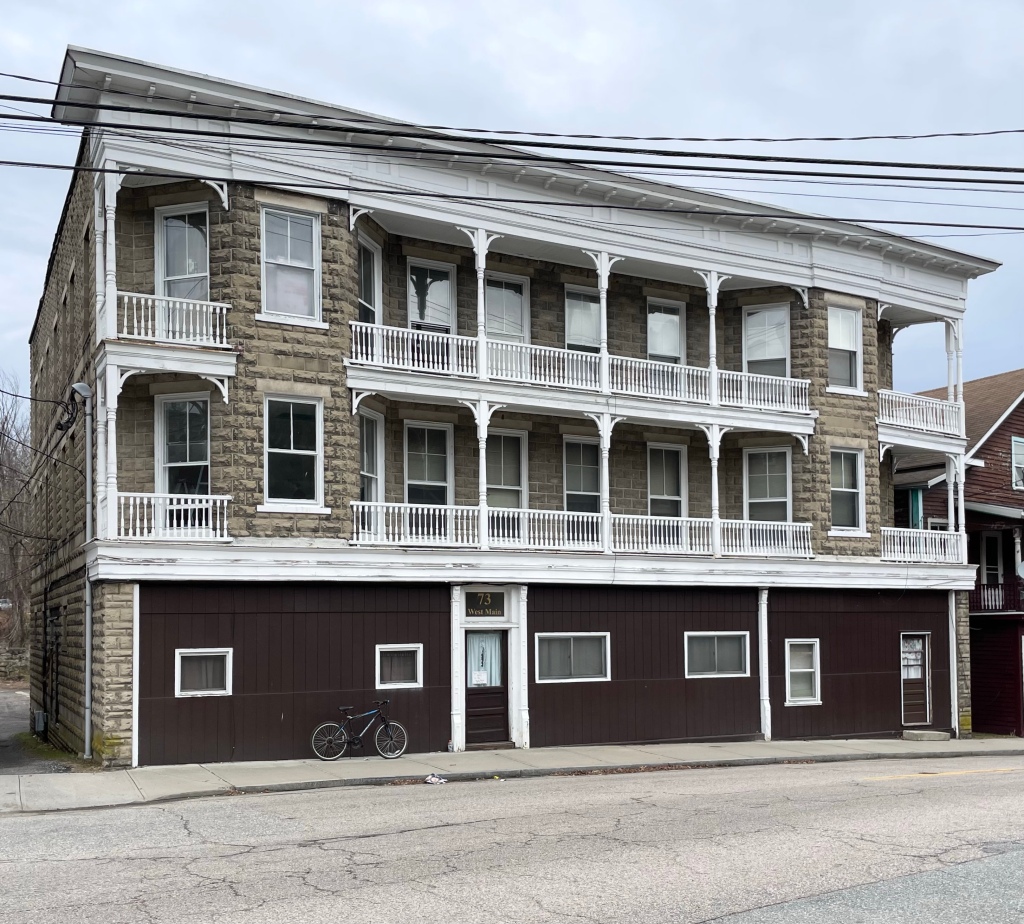
Cote Block // c.1910

The population of Sprague, Connecticut nearly doubled between 1900 and 1910 from 1,300 to 2,500. As a result, the town needed a new town hall and commercial buildings to service the new residents. A member of the Cote Family in Sprague took this as a good opportunity to erect this three-story mixed-use building on Main Street, renting out space for retail, a confectioner, and a clubhouse with residences above. The building is constructed of concrete block, a building material that surged in popularity after concrete block machines allowed these blocks to be manufactured quickly off molds of uniform style and dimension. The building also features inset center and corner porches off the street and a projecting cornice. The storefronts have since been enclosed, but the building remains one of the finest in town (even with its original windows!)

Robb-Kagan House // 1939

Colonial-inspired homes on Nantucket never will go away, and that is because the entire island is a local historic district! New construction, demolitions, and alterations to existing structures all need to be reviewed and approved on Nantucket, no easy task! This home was built in the inter-war period (before the historic district), when New Englanders still harkened back to the classics, Colonial homes. The house was built in 1939 for Annie Robb, and it was later purchased by artist couple Vladimir Kagan and Erica Wilson. Vladimir had a really interesting life. A cabinetmaker’s son, Mr. Kagan came to the United States at 11 after fleeing Nazi Germany with his family. He trained at his father’s New York workshop and by the 1940s was producing his own designs. One of his first orders was a set of tables and chairs for a delegate lounge at the fledgling United Nations! Meanwhile, across the English Channel, a young woman named Erica Wilson came into the world in 1928 in the town of Tidworth, England. Her father was in the military and the family moved to Bermuda soon after Erica’s birth. A drawing prodigy, Wilson “translated her drawing techniques into needlework,” Illya said. Needlework became her artistic focus and she graduated from the Royal School of Needlework in London. The duo lived in this home as a summer respite, where they could hone their artistry and skills. Their son, Ilya Kagan (also an artist, of course) also stayed in the home and still resides on the island. Love it!

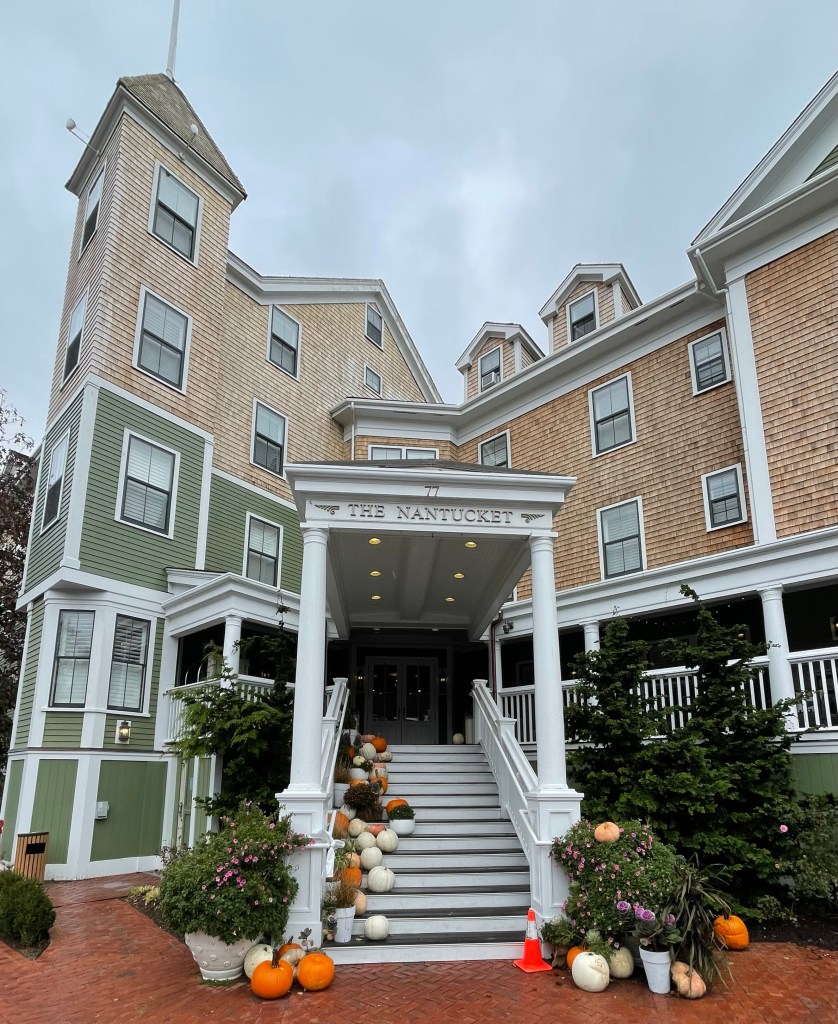
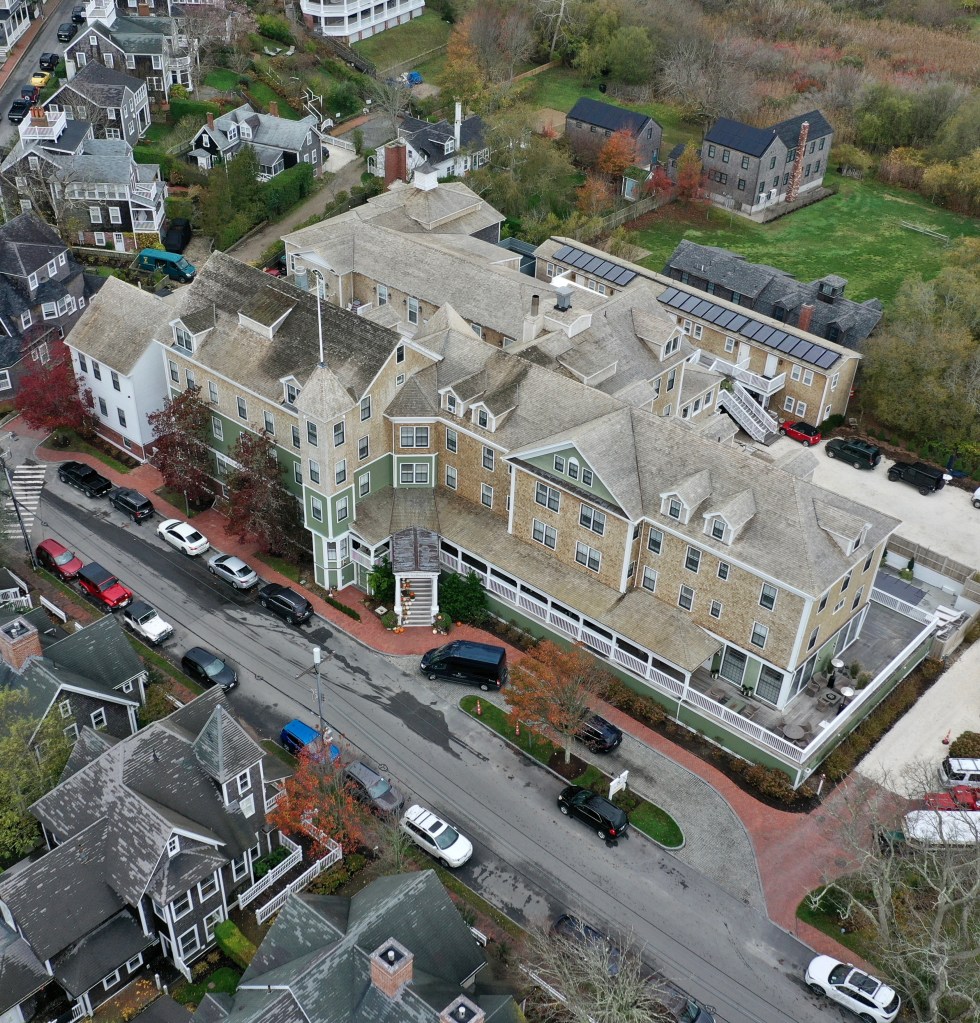
The Nantucket Hotel // 1891

In 1888, Charles F. Folger of Philadelphia purchased the former Elijah Alley house on Easton Street, just north of the main village of Nantucket. Folger hired carpenter Edwin R. Smith to design and build a new grand hotel for summer residents of Nantucket. Originally named the Point Breeze Hotel, the grand resort opened in the summer of 1891. The Queen Anne style hotel contained forty sleeping apartments in the upper floors and was dominated by a corner tower with billiards rooms and a bowling alley in the raised brick basement. Business was booming, and by the early 20th century, Folger expanded the hotel adding the east wing in the Colonial Revival style. In 1925, a fire destroyed the original Point Breeze Hotel, leaving just the East Wing. By this time, the days of the grand, wooden hotels was coming to a close. The Nantucket Institution for Savings acquired the hotel during the Great Depression, until 1936 when Gordon Folger Jr., grandson of the Point Breeze’s original proprietor, purchased the hotel and renamed it after himself, as the Gordon Folger Hotel. By the end of the 20th century, the building sat underutilized, the early 2000s when Little Gem Resorts purchased the hotel, seeking to restore this historic property back to her former glory. The original 1891 hotel was rebuilt in 2012, even down to its iconic corner tower, and the hotel was renamed The Nantucket. The hotel is open year-round and is lavish inside and out, providing you with a sense of home even when on vacation in the middle of the Atlantic!

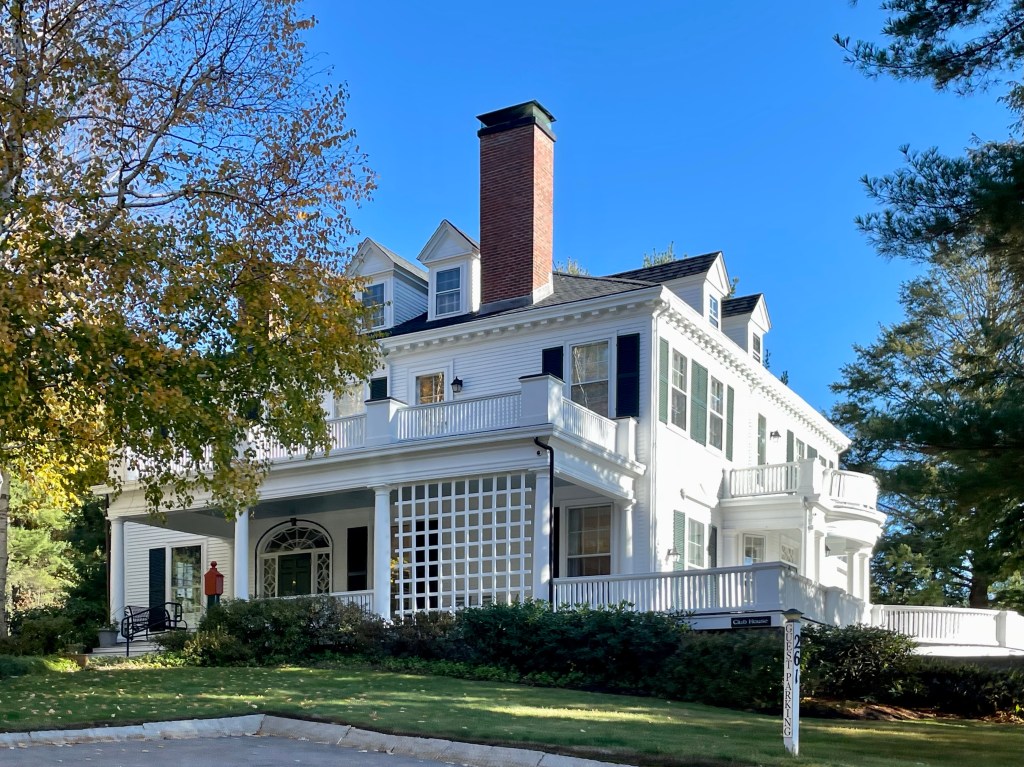
Ellen Banning Ayer Country Estate – “Ledgebrook” // c.1905

Ellen Banning Ayer (1853-1918) of Minnesota married Frederick Ayer in 1884 and her life completely changed. Frederick Ayer was one of the richest men in New England and he was involved in the patent medicine business, but is better known for his work in the textile industry. After buying the Tremont and Suffolk mills in Lowell, Massachusetts, he bought up many textile operations in nearby Lawrence, combining them in 1899 into the American Woolen Company, of which he was the first president. The couple had at least three houses in Lowell, Boston, Pride’s Crossing and had three children (one of whom Beatrice, later married the famed general George Patton). As the Ayer Mansion on Commonwealth Avenue was being built, the family was looking for a country house near the city. One year, Frederick asked Ellen what she wanted for a gift and she said “roses”. Frederick purchased an old farmhouse on Nahanton Street in Newton and had greenhouses and a stable built immediately, followed by a Colonial Revival country house for his wife Ellen. The mansion held lavish parties for the Ayers, who loved to entertain and it was passed down to their eldest daughter Katharine Ayer Merrill. The property was purchased in the 1920s by Clive and Mona Lacy for decades until it sold in the 1980s. The large site was eyed for redevelopment. The architectural firm of Dimella Shaffer was hired, and they restored the Ayer House, and designed forty residential units on the site, all tucked into the woods gently peering out here and there. The old Ayer House remains as the clubhouse of the Ledgebrook Condominiums Association.

United Church of Ware // 1926

The East Congregational Church in Ware was established in 1826, spurred by the industrial growth and subsequent immigrant population boom in the village of Ware, Massachusetts. The Ware Manufacturing Company, a major player in town, contributed $3,000 to towards the construction of a new congregational church in the village, which was matched by residents. The original church was built in 1826, following plans prepared by Isaac Damon, a noted church architect from Northampton, in the Federal style, popular at the time. In 1925, just a year before its centennial, the church burned to the ground. Plans to rebuild the church formulated immediately. Due to changes to the neighborhood since 1826 (notably the construction of tenement housing adjacent to the church), the decision was made to locate the new church setback from the street. Plans were drawn by Frohman, Robb and Little of Boston for the new building, which was to be Federal Revival, a nod to the former church building. The grounds in front were landscaped by the prominent landscape architect Arthur A. Shurtleff. After WWII, population decline and dwindling membership of some churches in town required a few congregations to consolidate, creating a union or united church here. The United Church of Ware came into being in 1969 when the East Congregational Church, United Church of Christ and the Ware Methodist Church, United Methodist Church joined together and became one federated church with ties to two denominations.

All Saints Parish House // 1893

As soon as the All Saints Church of Ware was completed, work immediately began for the parish house which was to be built nextdoor. It is not clear who was retained as the architect, but it could have been Patrick W. Ford, who designed the high-style Victorian Gothic church. The design is almost the complete opposite of the church, in that the parish house is of wood-frame construction, modestly scaled, and is Colonial Revival in style. The parish house features nice proportions with its symmetrical facade, pedimented central bay framed by pilasters and the large Palladian type window at the center.