Immaculate Conception Catholic Church // 1896

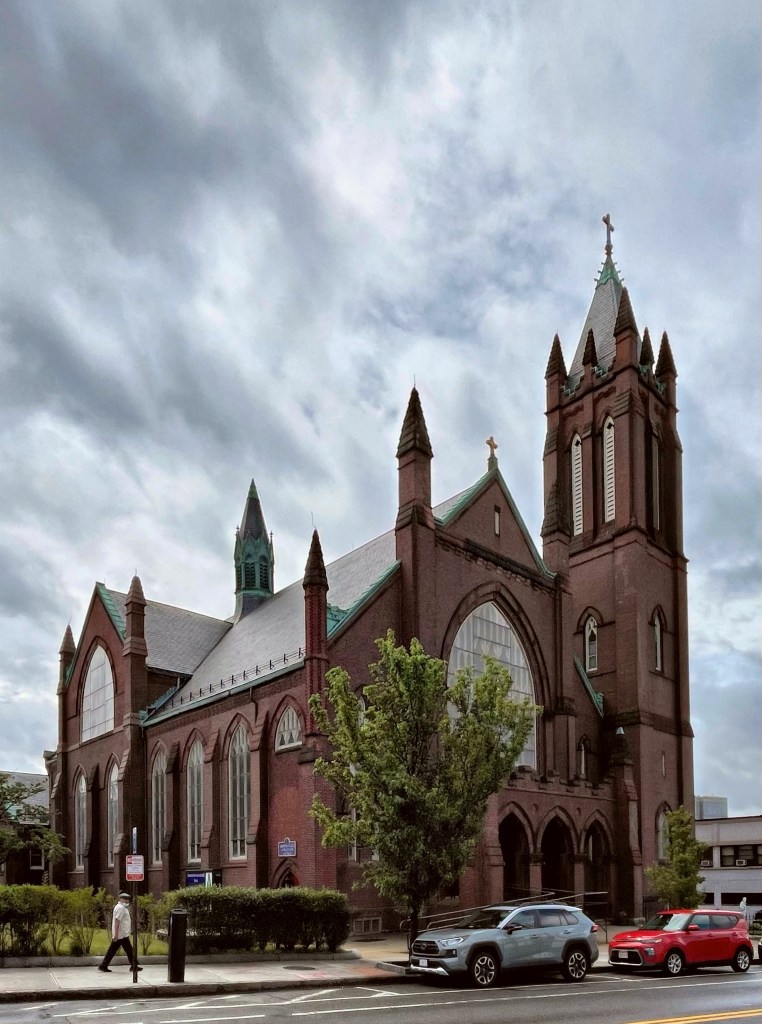
The Immaculate Conception Roman Catholic Church in Everett, Massachusetts, is an imposing Gothic Revival building, that shows how the church spared no expense to build imposing and awe-inspiring edifices all over New England. Constructed of red brick with Longmeadow brownstone trim, the church was designed by preeminent Catholic Church architect Patrick W. Ford and the cornerstone was laid in 1896. Ford was born in Ireland and in 1872, he moved to Boston and opened his own practice. He was widely recognized as an authority on church architecture and his practice focused primarily on designing churches and institutional buildings for the Roman Catholic Church in New England. Ford died suddenly at age 52 in August 1900. Due to a lack of funds, the church was not completed until 1908, so Ford did not see this church completed in his lifetime. The work was completed by architects Reid & McAlpine and is stunning with its square corner tower topped by a pyramidal spire with smaller pinnacles marking the corners of the tower. The projecting entry porch has three, pointed arch openings and is topped by crenellation. The congregation appears pretty active to this day.

Glimmerstone // 1845

What a treat it was to stumble upon one of the most beautiful homes in Vermont, and all the best houses have names! Glimmerstone is located in the small town of Cavendish, and is possibly the finest Snecked Ashlar constructed home in the state. The house was built in 1845 for Henry Fullerton, manager of the Black River Manufacturing and Canal Company mill in Cavendish. The stone used to build the house was quarried less than a mile away, and hauled to the site. The construction style consists of stone facing on either side of rubble fill, with slabs and snecks sometimes laid across the fill to provide strength, a method brought to the region by Scottish immigrant masons. The house’s design is by a local carpenter, Lucius Paige, and is based on designs published by Andrew Jackson Downing, who depicted many Gothic style designs in pattern books which were built all over the country. The house has had a number of owners after Mr. Fullerton died. During the prohibition era, Art Hadley, who would later become extremely wealthy as the inventor of the expansion bracelet, used the home as part of a rum running operation. Glimmerstone was purchased in 2010 by the current owners, who underwent a massive restoration of the home, converting it into a bed and breakfast, allowing the public to experience the property as well.

Joshua Parker Farmhouse // 1850

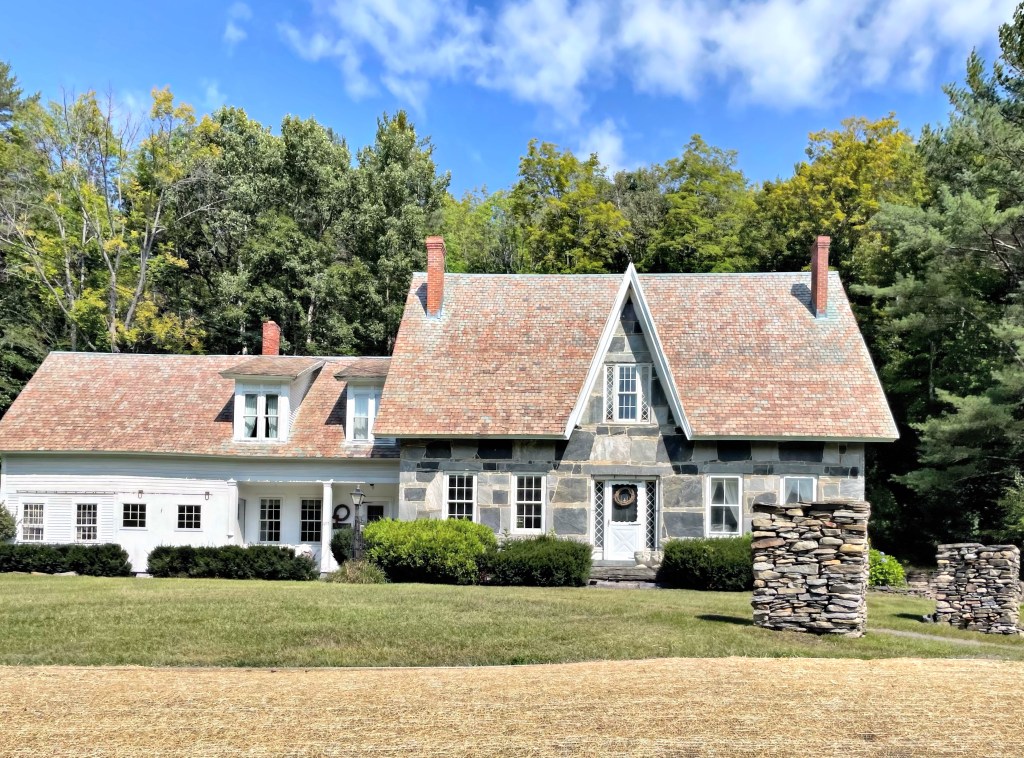
This house in Cavendish was constructed in 1850 by Joshua Parker and is an outstanding example of a gothicized snecked ashlar house. The house is in the Cape form and largely exhibits a more traditional cottage layout, but with the steep gable dormer, giving the home a distinctive Gothic feeling. The 1850 home replaced a late 18th century farmhouse, but in the iconic snecked ashlar construction. The farm grew over the subsequent decades, including a c.1900 snecked ashlar barn (not pictured), which is probably the last building of “Snecked Ashlar” construction erected in the State of Vermont.


Union Hall // 1832

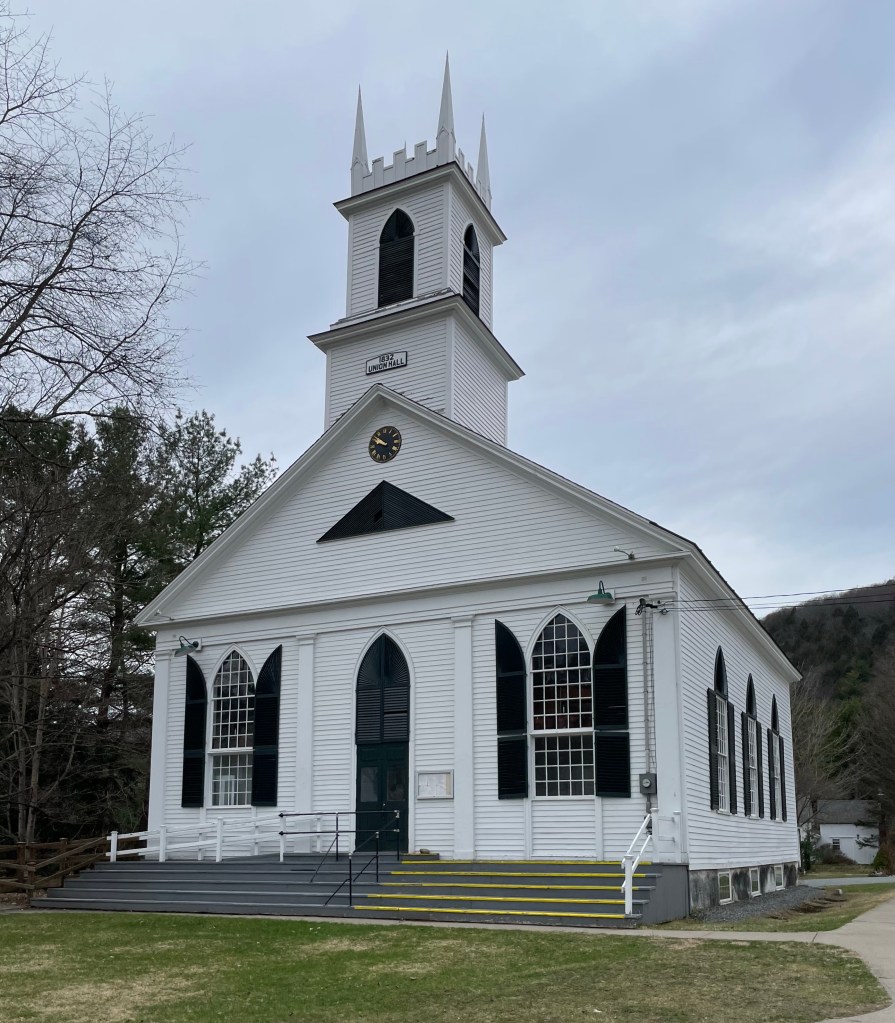
When the village of Newfane, Vermont moved down the hill to the flat of town, new buildings were constructed for county and religious uses almost immediately. The local Baptists, Congregationalists, and Universalists together pooled their funds together to erect this church building, which became known as Union Hall as they organized together to construct it. The design follows Gothic Revival principles with the lancet windows and crenelated tower cresting. The design features were later expanded into the larger Congregational church constructed years later when that group built their own church on a nearby site (featured in the last post). The “Union” did not last long as all the congregations built new structures. This building was vacant for years and was later converted to a Grange Hall and town meetings were held in the structure.

Newfane Congregational Church // 1839

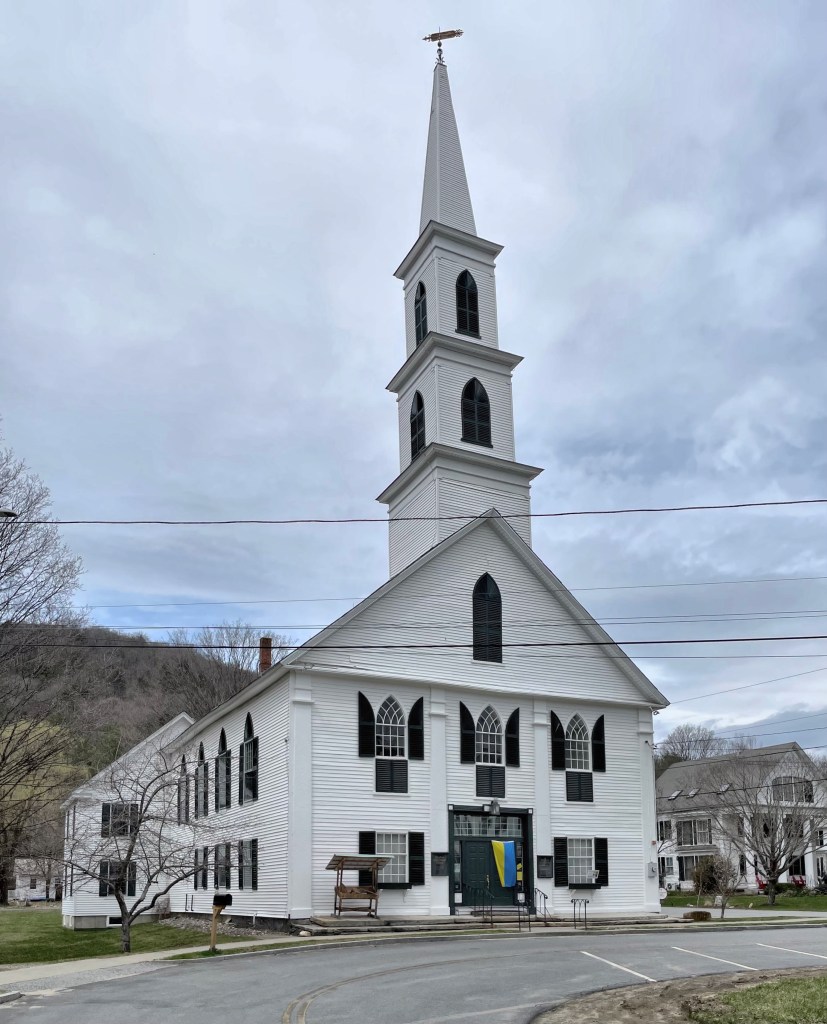
The town of Newfane, Vermont was chartered on June 19, 1753, by Governor Benning Wentworth, who named it Fane after John Fane, the 7th Earl of Westmoreland. But hostilities during the French and Indian War prevented its settlement, and because a first town meeting was not held within the required five years, the charter was annulled. From this, Wentworth issued an entirely new charter in 1761, as New Fane. The town was eventually settled in 1766 from families that moved there from Worcester County, Massachusetts. Newfane became the shire town of the county before 1812 and county buildings were constructed. The village’s location up the hill was not ideal and was difficult to access in the winter, so many new buildings were constructed on the flat of town. The village has retained its rural character, but packs a punch in terms of architecture, especially for a town of under 2,000 people. One of the landmarks in town is the Newfane Congregational Church, constructed in 1839 in the Gothic Revival style. The large lancet (pointed arch) windows with corresponding shutters and spire are eye-catching.

Brookline Baptist Church // 1836

Brookline, Vermont is home to just 540 people but has one of the most beautiful brick churches in the state! The Brookline Baptist Church sits along a quiet road in town and is an excellent example of vernacular Gothic Revival architecture in the Vermont. Brookline’s first organized church congregation were Baptists, who established a formal organization in 1785 out of local homes and barns. By 1836, enough funds were gathered to erect a church, but of brick, a more substantial building material than traditional wood-frame buildings. The church remained active throughout the nineteenth century, and the vestry addition was constructed off the rear in 1895 to provide space for community gatherings and meals. Dwindling membership led the church to become mostly used for weddings, funerals, graduation ceremonies, and craft fairs by the second half of the 20th century. The Town of Brookline presently owns the significant structure, and while preserved, it does not appear to get much use.

First Congregational Church, Norway // 1840

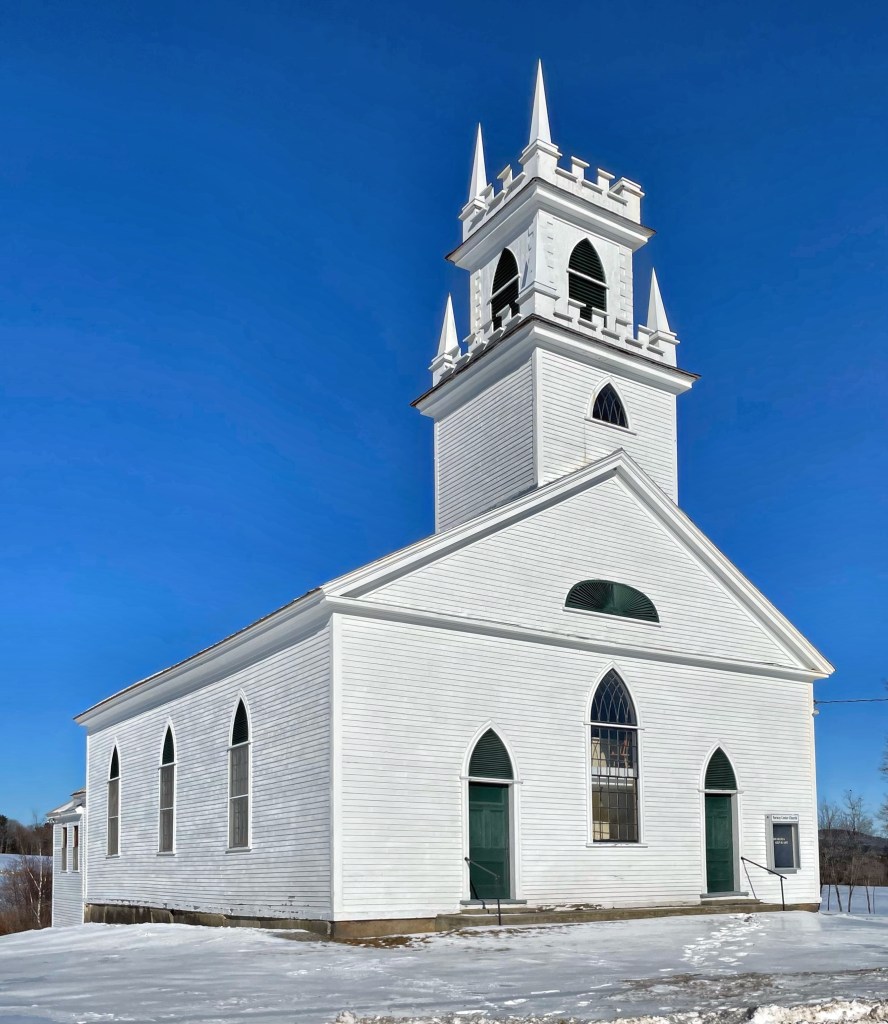
This beautiful, bucolic church in Norway Center was built in 1840 to replace an earlier meeting built in 1808-09 on the site. The present building is Gothic Revival in style with louvered panels making the windows appear lancet in shape and the amazing lancet window centered on the facade. The two-tiered tower is ornamented with crenellation and a wooden spire at each corner (besides one missing). The church features a louvered fan and strong pediment, which are nods to other prominent styles of the early-mid 19th century, Federal and Greek Revival respectively. This church quickly saw membership drop as Norway Village became the population center of town, with Norway Center becoming more agricultural and rural.

Calvert-Marin House // c.1845

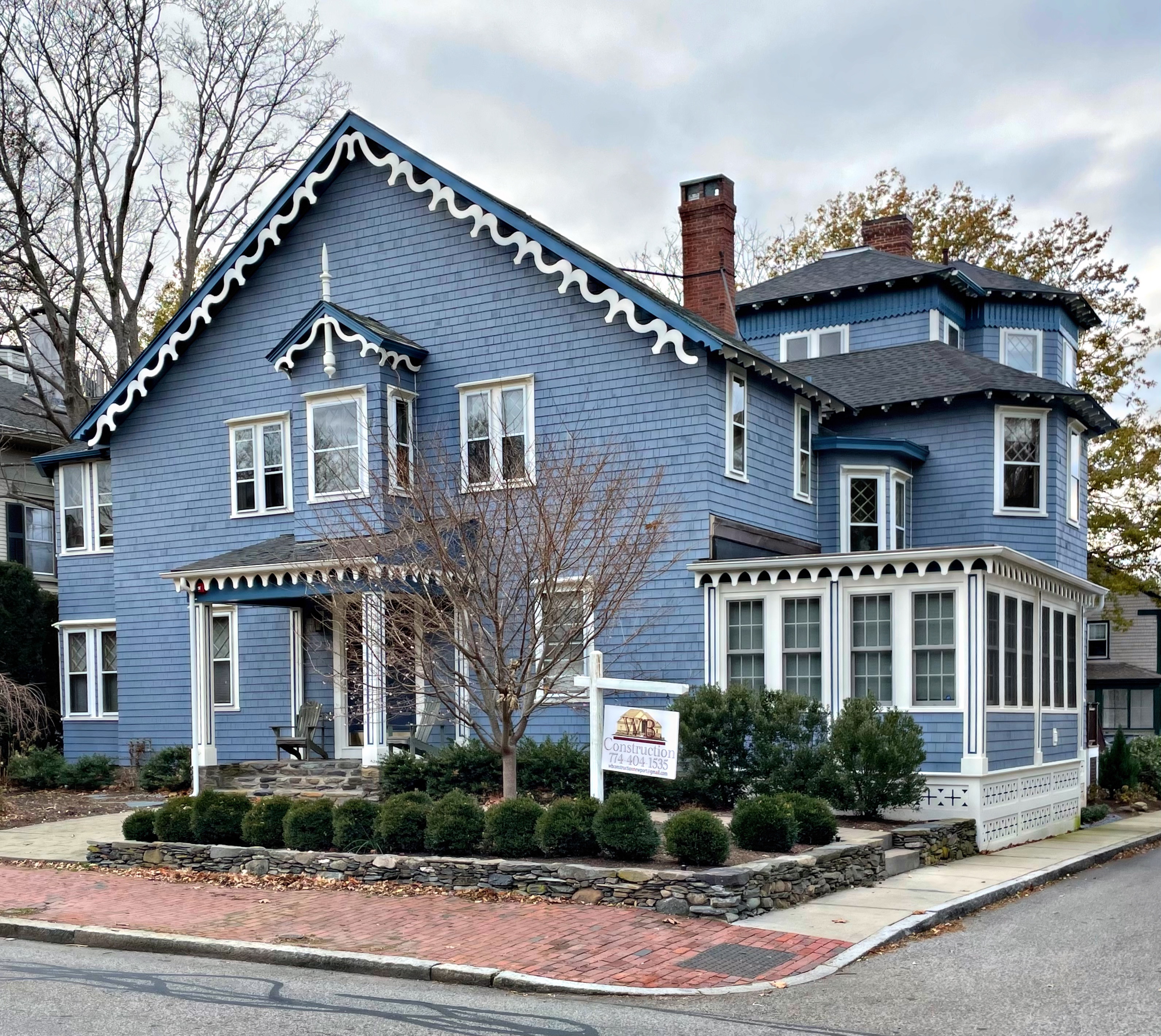
In 1843, George Henry Calvert (1803-1889) and his wife Elizabeth Steuart moved to Newport, Rhode Island from Maryland, not long after built or purchased this home. George was the son of George Sr. a plantation and slave-owner in late eighteenth- and early nineteenth-century Maryland. His plantation house, Riversdale plantation, also known as the Calvert Mansion, built between 1801 and 1807, was designated a National Historic Landmark in 1997. From his wealthy upbringing by unsavory means, George was able to attend Harvard and spent time travelling to Europe. There, he met poets Goethe and William Wordsworth. He lived in Baltimore and served as editor for the Baltimore American, the largest local paper in the city. He worked on poetry and eventually moved to Newport, RI, possibly seasonally. This home was built in the Gothic Revival style for Calvert and his family. Years later, he was elected Mayor of Newport. Calvert hired Fannie Jackson Coppin as a servant for the household. Coppin was born a enslaved in Washington D.C., but gained her freedom when her aunt was able to purchase her at the age of twelve. She went on to become an advocate and leader in Black education. Historic maps show two properties owned by the Calvert’s. A nearby building, presently 38 Kay Street was possibly built as a barn or stable for the Calverts. This home was purchased in the 1880s by Captain Mathias Candelaris Marin, a sea captain who fought in the Mexican and American Civil wars. Marin likely modernized the Gothic House, adding the shingle siding and large Queen Anne additions to the rear. The Marin Street at the side of the house is named after him.

John Bush House // c.1845

Here is another of my favorite non-Gilded Age houses in Newport, the John Bush House on Mann Street! John T. Bush (1817-1881) was listed in directories as a “wool-puller” which clearly was a lucrative job, as he could afford to build this high-style Gothic Revival home. This house is heavily influenced by the publications of Andrew Jackson Downing first published in 1842, so the house is probably built within a couple years of that date. Hallmark features of the Gothic Revival style include: lancet windows, bargeboards, windows with drip molds, and steeply pitched roofs; this house has all of the above!

Queset House // 1854

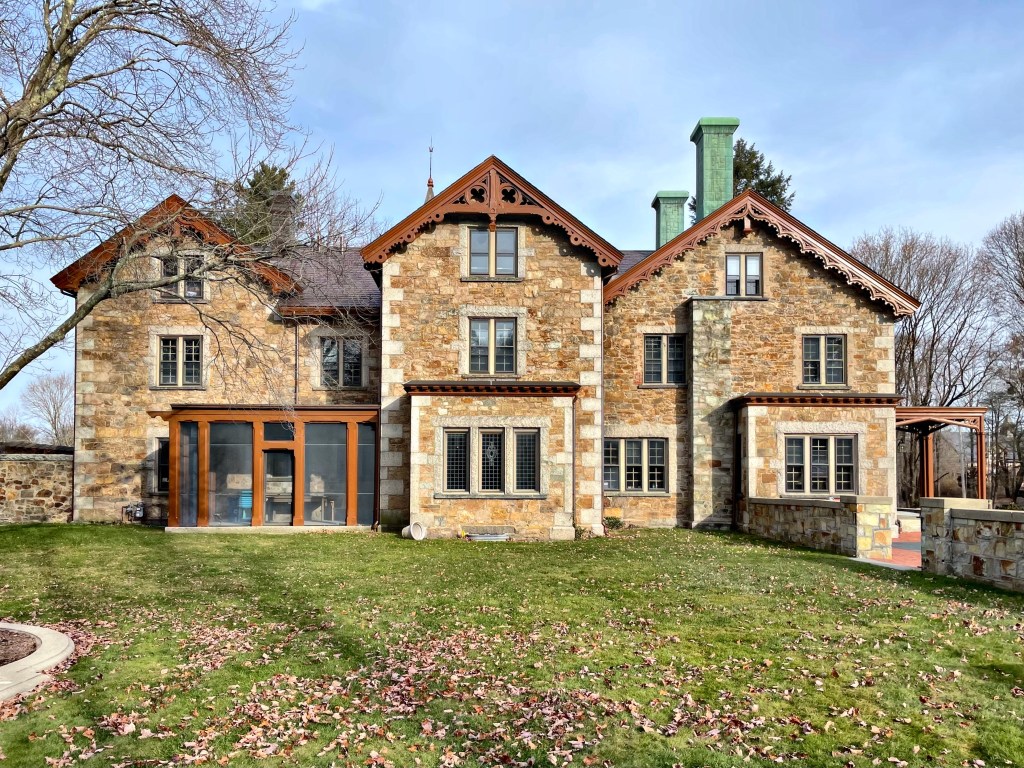
Tucked away behind the Ames Free Library in Easton, you will find one of the most stately examples of Gothic Revival architecture in a house in New England. The house is known as Queset House. Queset was commissioned to be built in 1853 and it was completed the following year for Oakes Angier Ames, of the wealthy Ames Family, who ran a shovelworks in town, and built some of the most handsome structures in the state. The house’s front portion design was drawn from a plan by noted architect Andrew Jackson Downing (who died in 1852). Downing collaborated with Alexander Jackson Davis who provided architectural drawings. The two architects created pattern books which greatly influenced Gothic Revival and Italian Villa style architecture for the next decades, with many wealthy people hiring builders to complete homes in their designs. Queset House is different than most in that the house is constructed of local stone. Oakes would later hire Harvard-educated architect John Ames Mitchell, (a first cousin of Oakes Angier and architect of the nearby Unity Church in Easton) designed the rear addition in 1873, adding the copper-clad chimneys. In the later years of his life, Oakes wanted to help further-improve his town and worked with his family to consult with starchitect H. H. Richardson and landscape starchitect Frederick Law Olmsted on projects in town (the Library, Town Hall, Rockery). After his death in 1899, the home was occupied by his son, famous theatrical producer Winthrop Ames, and his wife. The family would eventually gift the property to the Town of Easton, who today occupy it as an extension of the Public Library, open to the public!

Side view.