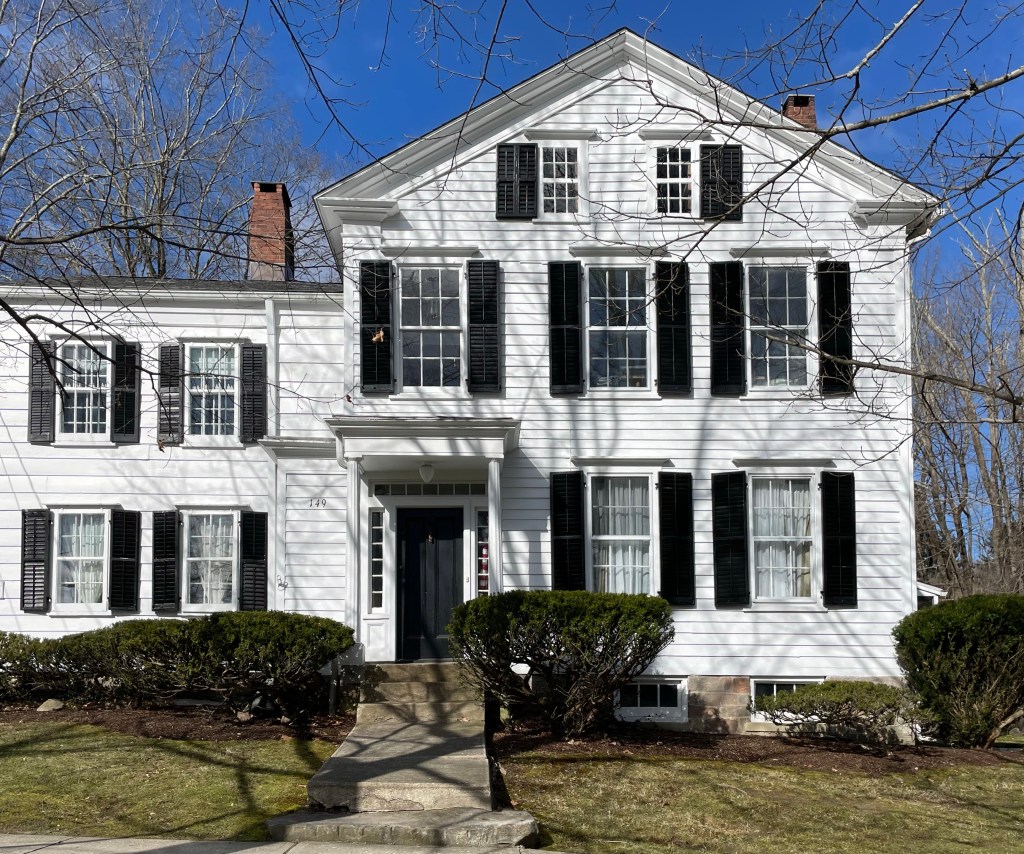
Seymour House // 1760

While this house appears to have been built in the mid-1800s as a Greek Revival home, it was actually built nearly a century earlier as one of the oldest extant properties on Main Street in Ridgefield, CT! Located on proprietors lot #20, the original building lots laid out for the new town of Ridgefield, this house appears to have been constructed in 1760 for Matthew Seymour (Seamore) and consisted of what is now the ell of the home (left side). Seymour operated one of the trade posts in town that engaged in trade with a nearby native Ramapo Tribe. The home was likely re-oriented and added onto with a more formal Greek Revival wing with its gable roof facing the street before the Civil War, a configuration it retains to this day.

Henry Smith House // c.1845

This stunning temple-front Greek Revival home on Main Street in Ridgefield, Connecticut is an absolute dream! The home was built in the mid-19th century for Henry Smith, who operated a shirt factory in town with his father. The house’s gable roof facing the street completes a pediment, which is supported by a projecting portico of four colossal Ionic columns. In the pediment, a gorgeous Palladian window adds so much character to the facade. I love a good temple-front classical home!

King-MacFarlane House // 1845

William Jones King (1803-1885) was born in Providence, Rhode Island as the eldest son of Elijah and Nancy King. His father Elijah was a master-mariner and a wealthy ship-owner, engaging in trade with the West Indies, likely partaking in the transport and sale of humans like many Rhode Island “merchants” at the time. Elijah was travelling to Martinique in 1815, when the Great Gale of 1815, the largest hurricane on record at the time in New England, intercepted the ships and capsized them. Elijah and his crew died at sea. After his father’s untimely death, which left the family poor, William (as the eldest at just 12 years old) became the sole support of his mother and three younger siblings at the time. William eventually became a clerk at the Union Bank in town, moving up the ranks until he became a cotton merchant. He had this home built a few years after his marriage to Lydia Gilbert. The house is an excellent example of a traditional Greek Revival home in the College Hill section of Providence with corner pilasters and central Ionic portico all sited high on a landscaped terrace behind an iron fence. The house is now owned by Brown University and has been renamed MacFarlane House after Walter Kilgore MacFarlane, Jr., a Brown alumnus in the class of 1923. The house today houses the main office of the Classics Department at Brown University.

Jacob Weld Seaver House // c.1850

In 1849, Jacob Weld Seaver (1820-1914) married Sarah Abby Weld and built this Greek Revival home, perched on a hill near the burgeoning Forest Hills Cemetery. The property originally extended all of the area of Orchardhill Road and the dead end streets that extend off of it, and included a stable, caretakers cottage, and at least two rental properties (this house may have been one of them). Jacob Seaver grew up in the neighborhood and attended Harvard, graduating in 1838. He became involved with the drygoods business and must have met his future wife from her father George F. Weld, who was a commission merchant in Boston. He went on to become the director of the Second National Bank of Boston, commuting into the city from the Forest Hills station. In the early 20th century, Seaver sold this property to a Thomas Minton, who subdivided some of the lot and built houses on the estate.

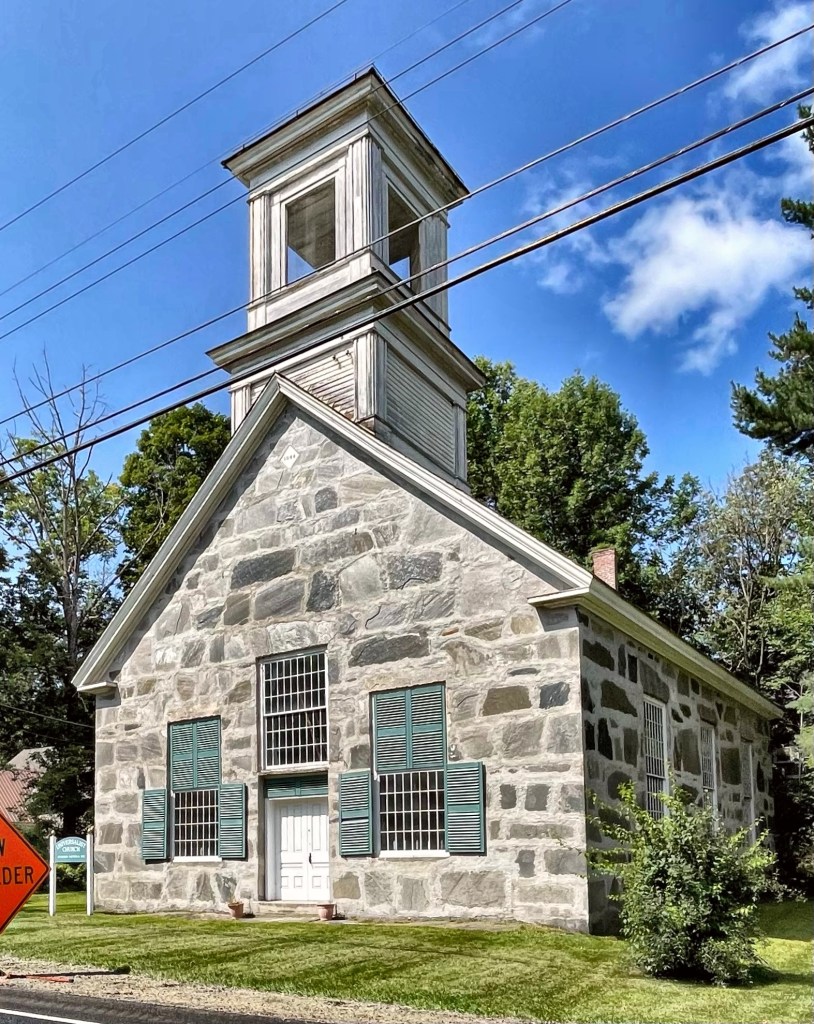
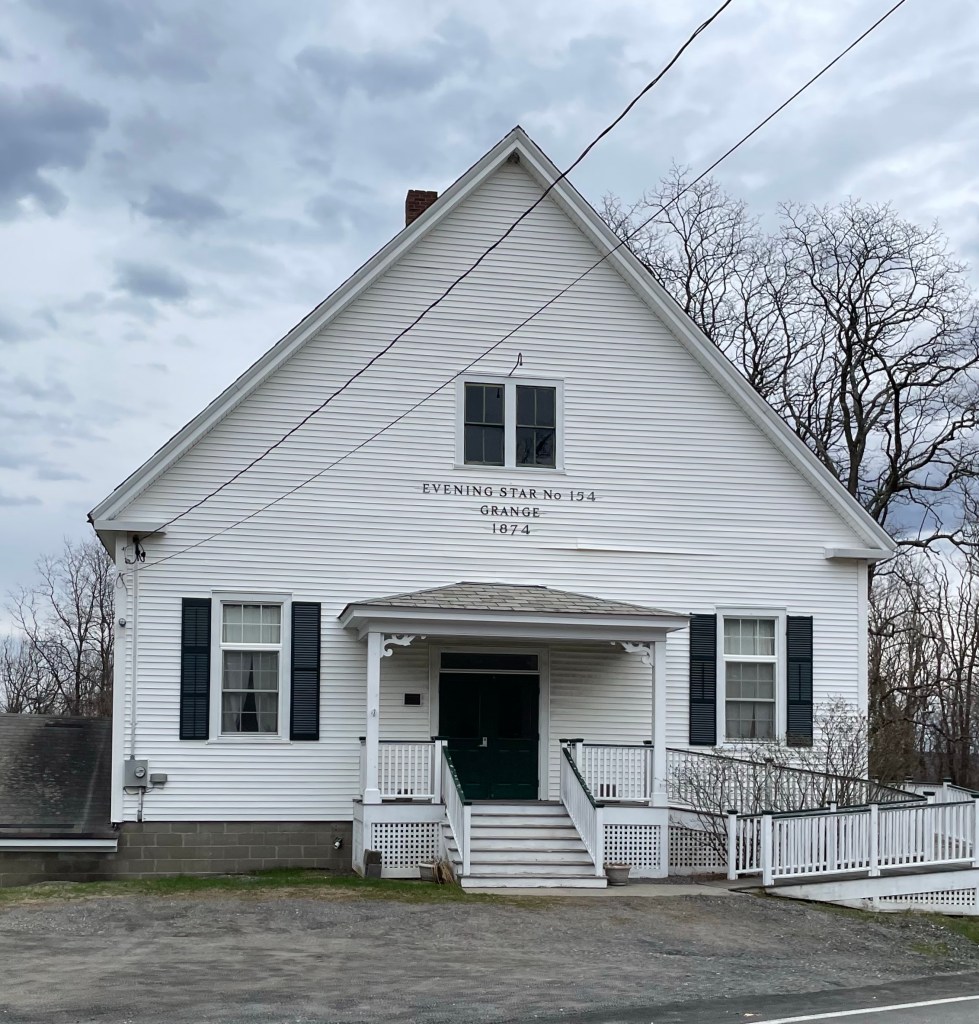
Bear Mountain Grange Hall // 1844

This large wooden building in Waterford, Maine, looks much like a church, because it was built as one in 1844! The building was constructed as a Universalist Church just over a decade after a local Universalist Society was formed in the area in 1830. In the subsequent decades of the church’s founding, dwindling membership by the time of the Civil War required the group to sell the building to local businessmen. The town rented a space in the building which used a floor as a school, after an additional floor was added to the base, giving the building the vertical appearance it has today. in 1896, the Bear Mountain Grange purchased the building as a meeting hall, allowing the school to operate in the building (an arrangement that lasted until 1949)! The building has seen better days, but besides the chipping paint and some wood-rot, it retains the original windows and has been relatively un-altered!

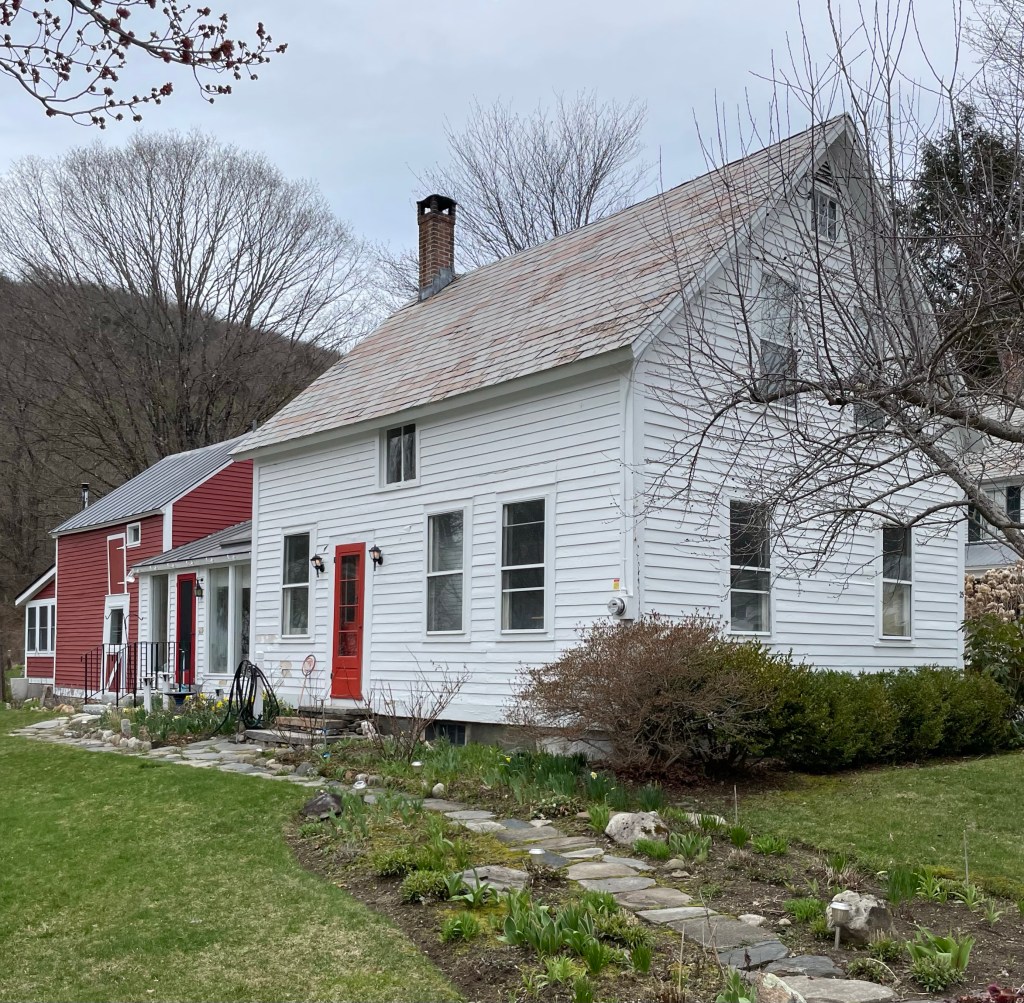
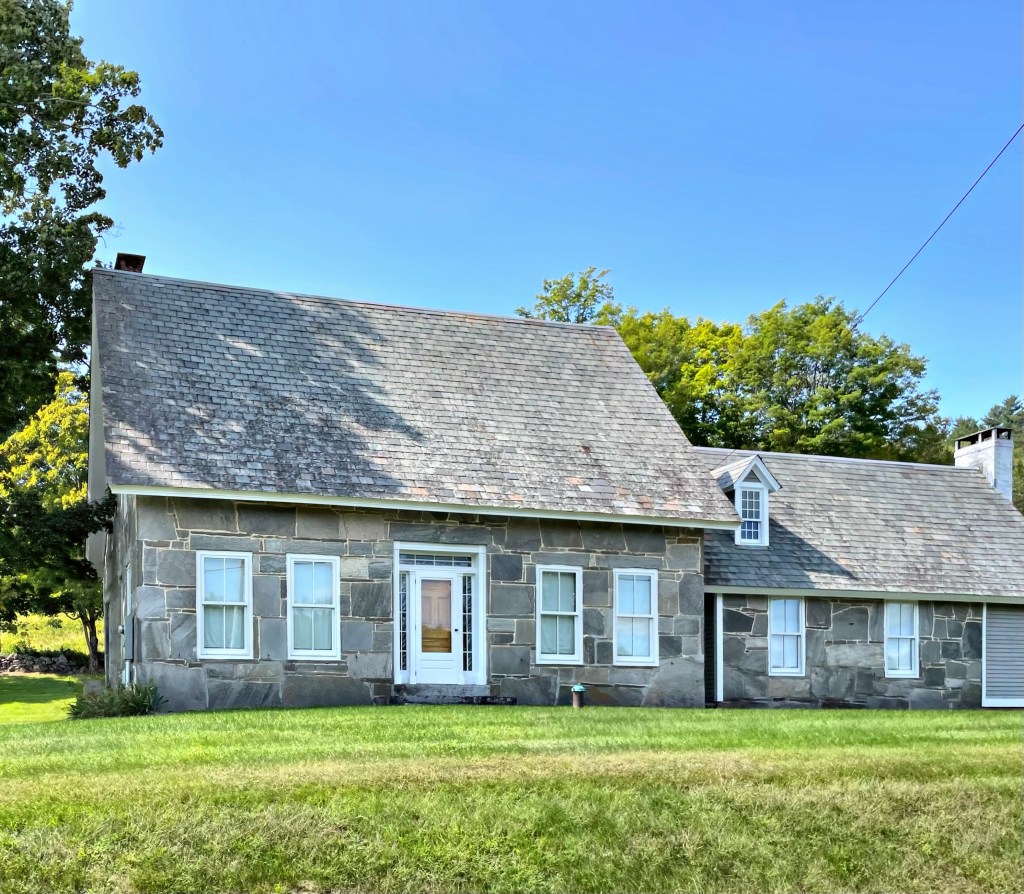
Cox Farmhouse // c.1835

This colorful cape house sits in rural Norway, Maine. The home appears to date to the 1830s or 1840s and was a gentleman’s farm in the early 20th century. A gentleman farmer was a landowner who would farm for pleasure rather than profit or sustenance. It was typically a role that wealthier city-dwellers took to feel more like the average Joe! A 1880 map of the town shows the owner as an F. Cox but I don’t know much more than that!

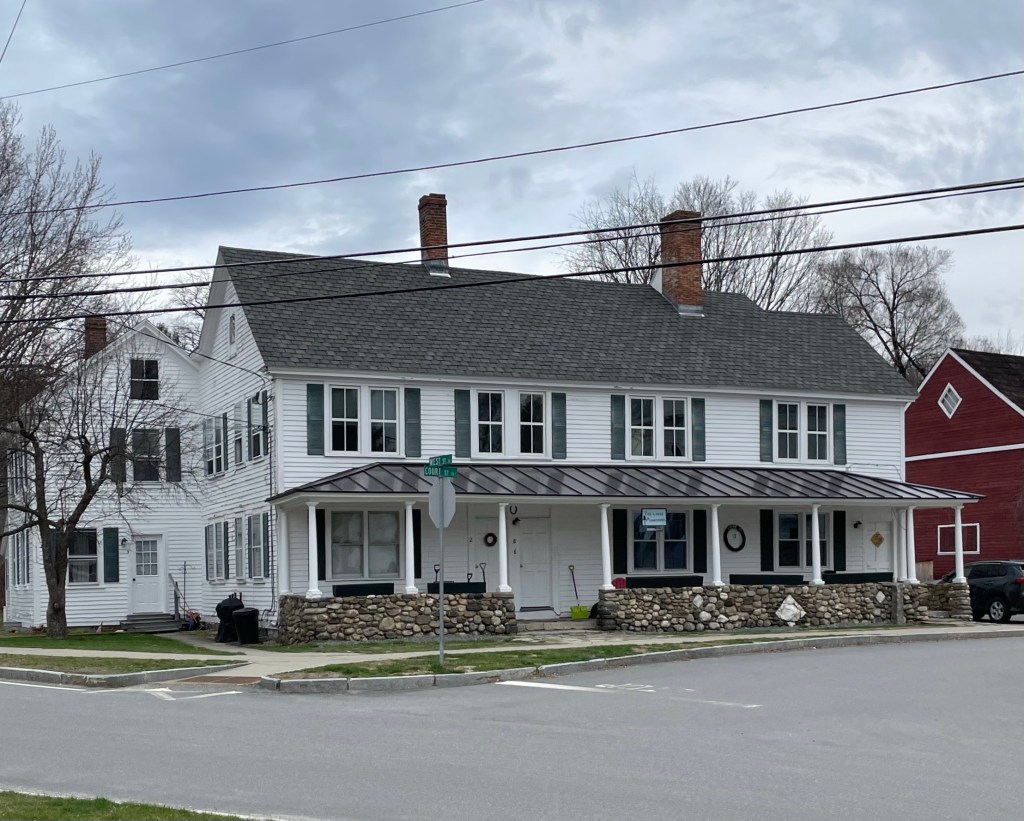
Sweden Free Meetinghouse // 1826

Just a short flight (erh I mean drive) from Denmark, you’ll find Sweden… Maine. Sweden is one of three towns of Oxford County Maine, named after Scandinavian countries (Denmark, Norway & Sweden). Sweden was once territory of the Abenaki tribe who fled to Canada during the Dummer’s War. Present-day Sweden was first colonized in 1794 by Colonel Samuel Nevers from Burlington, Mass. After the Revolutionary War, where he served, Samuel was given a large tract of land in Maine. The town separated from Lovell and became known as Sweden, likely due the . THe started to clear his lumber on his land, and he returned several times a year to his home in Burlington, Mass. for supplies. In 1796, his friend Benjamin Webber joined him and Samuel gave his friend some land for his assistance. Upon his last visit back to Burlington in 1796, he took his bride Esther Trull by horseback, making the 180-mile journey within 24 hours, a record time for this era. The Nevers cleared out land, laid out roads, and built the earliest civic buildings in the fledgling town, including the town’s Free Meetinghouse seen here in 1826. This building has served as a townhouse, community church, schoolhouse, and grange hall. The building was largely rebuilt in the 1860s, giving it the vernacular Greek Revival appearance we see today.

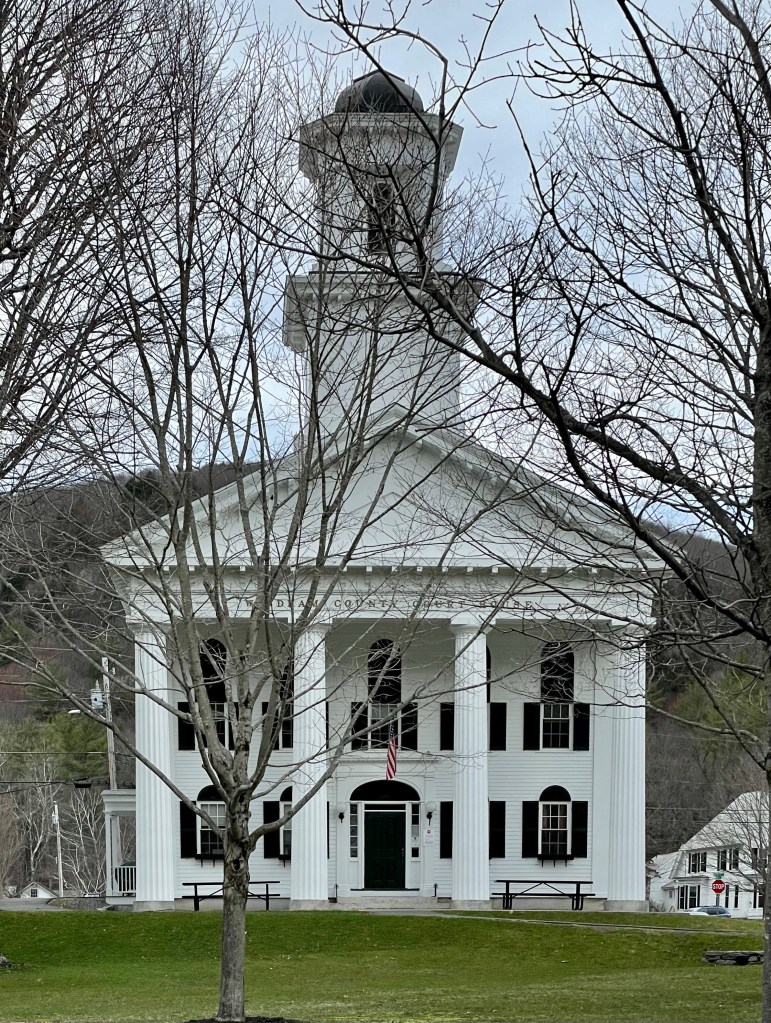
Denmark Odd Fellows Hall – Denmark Arts Center // 1884

This two-and-a-half-story building sits on Main Street in the small town of Denmark, Maine, and has contributed to the town’s cultural life since it was built in 1884. The Independent Order of Odd Fellows (IOOF) is a non-political and non-sectarian international fraternal group that promotes the ethic of reciprocity and charity. It was founded in 1819 by Thomas Wildey in Baltimore, Maryland, evolving from the Order of Odd Fellows founded in England during the 1700s. New buildings sprouted up all over the United States in the 19th century, in cities as large as New York City and towns as small as Denmark. This IOOF Hall is Italianate in style, with brackets at the cornice and hoods and round arched windows in the gable end; it also shows some Greek Revival details with corner pilasters and the pediment. When Raymond Hale, the last member of the IOOF Lodge passed away, the town purchased the old Odd Fellows Hall. The city could not maintain the property and had no good use for it. Residents in town voted in 1991 to sell the building rather than demolish it. Local residents bid on and won the building with the aim to convert it to a local arts center. In August 1994 the owners signed over the deed of the Odd Fellows Hall to the Denmark Arts Center, a non profit organization. From that time until present, the old building, now the Denmark Arts Center, has again served as a community focal point, providing cultural activities for the people of Denmark and surrounding towns.

Ingalls Homestead // c.1794

Cyrus Ingalls (1768-1832) moved to the wilderness of Maine from his relative comfort in Andover, MA at the end of the 18th century. When he arrived to Maine (which was part of the Commonwealth of Massachusetts until 1820), he built a grist mill on Moose Brook in what is now known as Denmark, Maine. Not far away, he built his homestead, a modest 1 1/2-story cape house on the newly laid Main Street where he raised his family. In the home, Cyrus had at least two sons, Cyrus Jr., who would inherit the homestead, and Rufus, who later served as Quartermaster General of the Union Army during the Civil War. After Cyrus’ death in 1832, the property was completely overhauled by Cyrus, Jr., who built a massive Greek Revival mansion likely in the 1840s or 50s, incorporating the former homestead as an ell (seen on the right in the image). The homestead remains an extremely significant architectural and historical landmark in this part of Maine, and is located across from the town’s Civil War Monument, possibly bankrolled by the Ingalls Family.

Denmark Old Schoolhouse // c.1850

Welcome to Scandinavia of Maine, Oxford County! The rural county is home to towns named Denmark, Norway, and Sweden, but no Finland sadly! The land that is now known as Denmark, Maine, was once part of Pequawket, a village of the Sokokis Abenaki tribe. In 1725 during Dummer’s War, the village was attacked and the tribe abandoned the area fleeing to Canada. Settlers established a township with many settlers coming from Andover, Mass. The town was incorporated as Denmark in 1807, and named in a show of solidarity with the country of Denmark, after England attacked Denmark’s capital, Copenhagen that year. The town was mostly agricultural, with some industry along the ponds and the Saco River. The town saw a boost in popularity in the early 20th century as a location for summer camps, including Camp Wyonegonic, founded 1902, which is the oldest girls’ camp in the country.

This building in Denmark Village appears to have been constructed in the mid-19th century as the village school. The vernacular Greek Revival building has very tall, multi-paned windows, Greek Revival trim, and modest proportions which really are pleasing to look at. It shows up on an 1880 map as “Old School House”, and appears to be a private home today. Stay tuned for more on the Scandinavian towns of Maine!