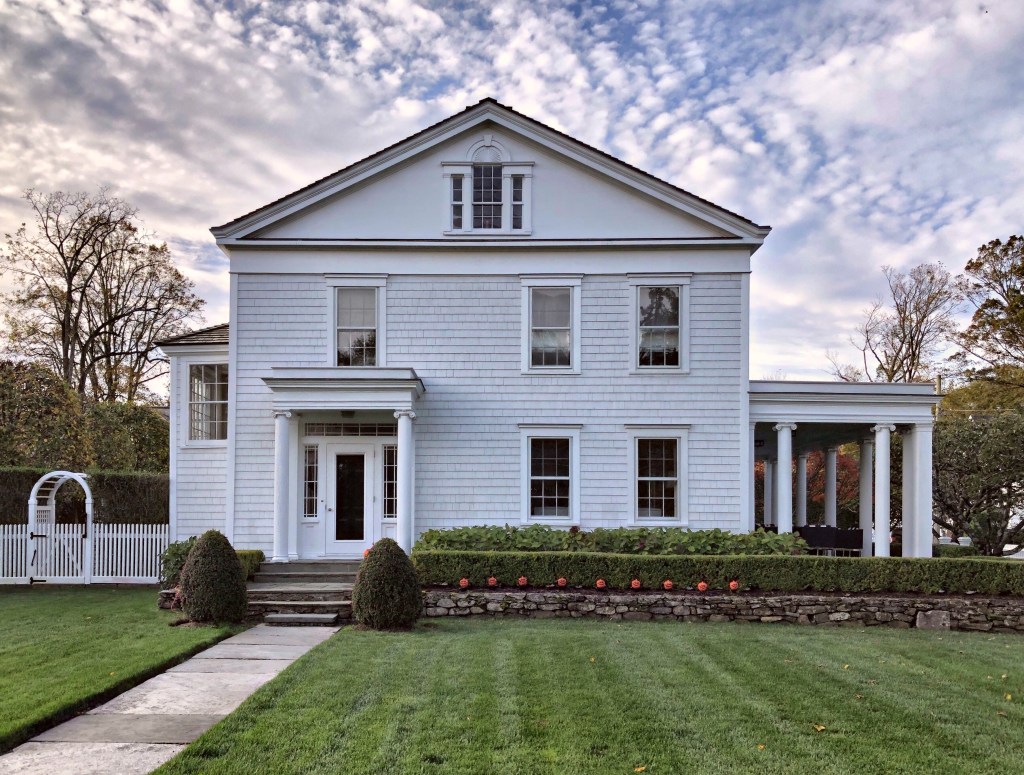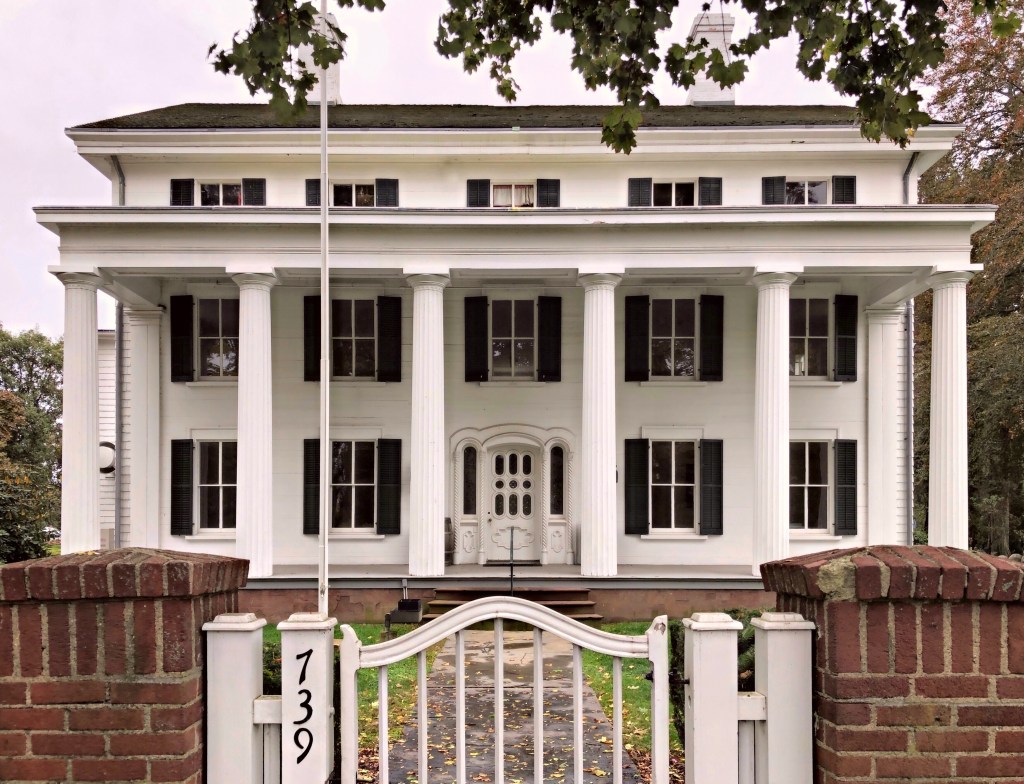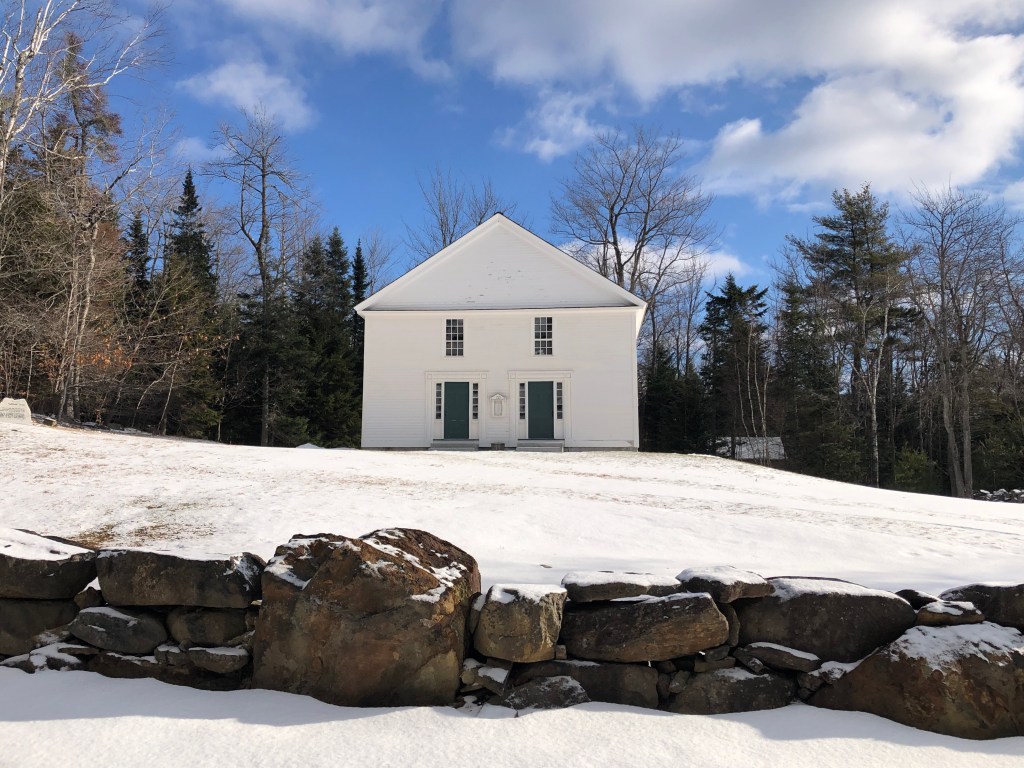
Frederick Collins House // 1847

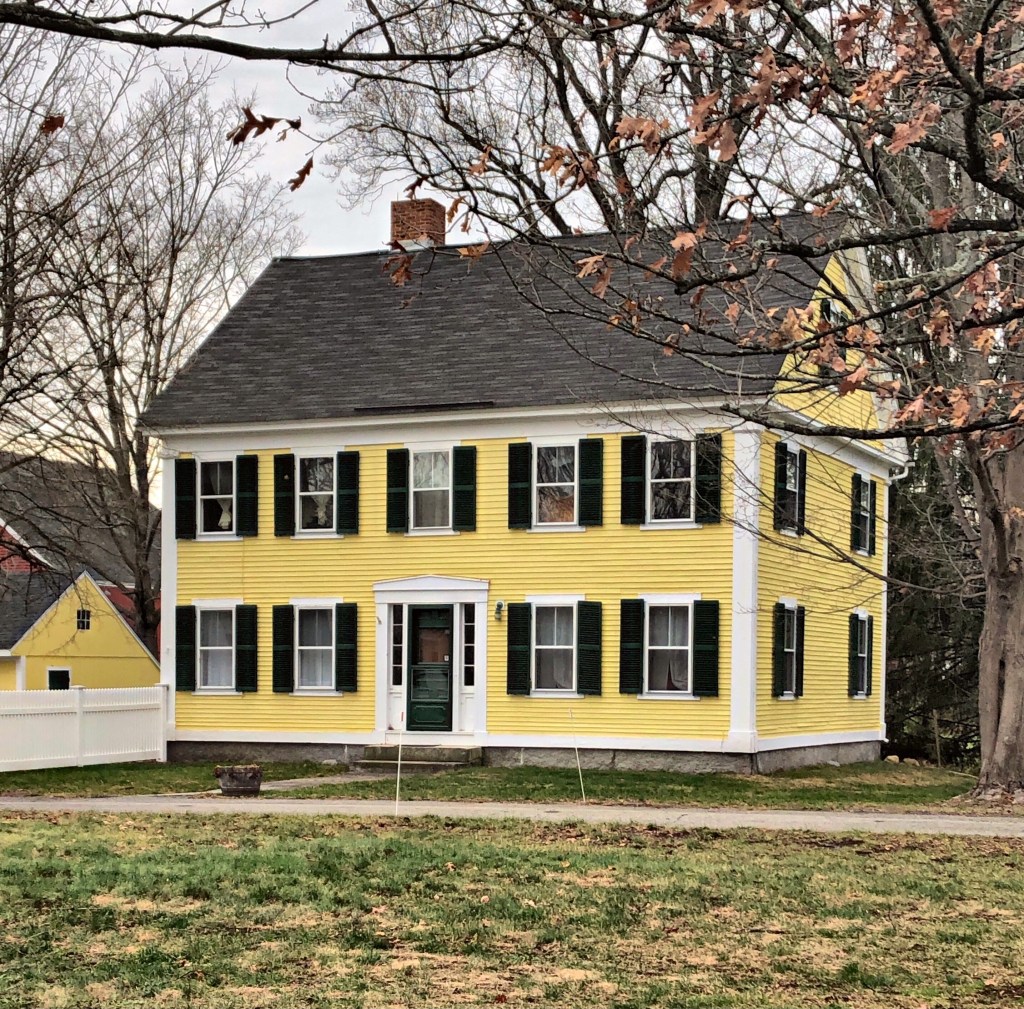
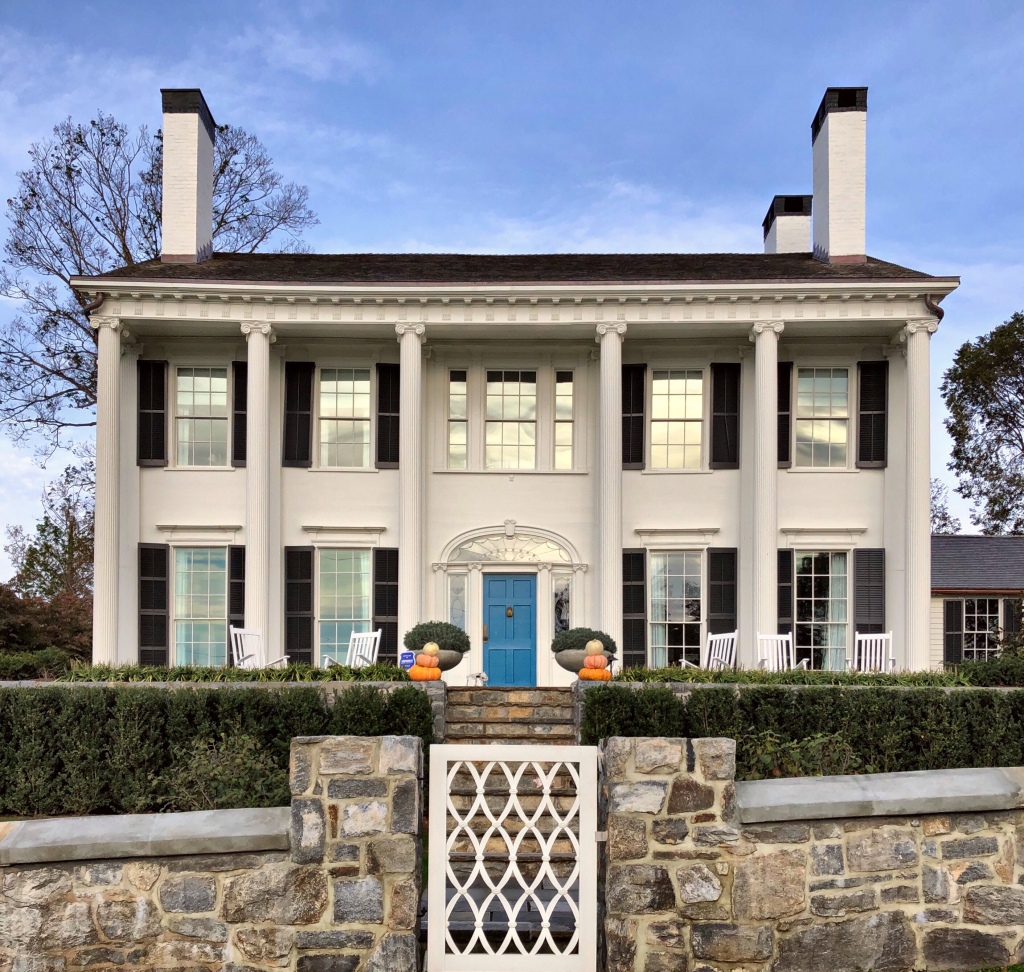
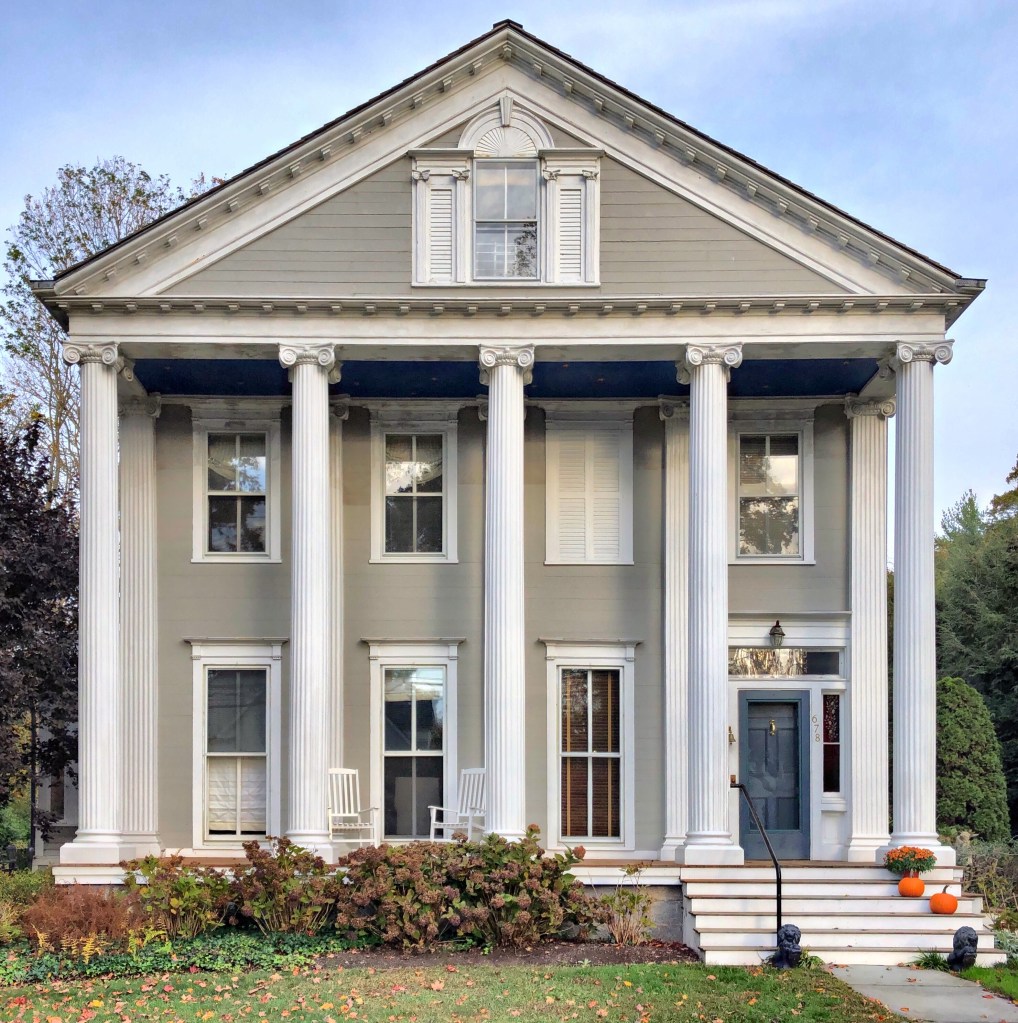
This house was built in 1847 by Frederick A. Collins on land owned by his father, Mathias Collins III. Frederick Collins (1818-1892) had this house built just after his marriage the same year to Amelia M. Revere, purportedly a grandniece of Paul Revere. Prior to his marriage, Frederick A. Collins lived in Newton Upper Falls and started a glue factory with his brother, which
by 1855, had grown to three three factories and which folded upon the death of his brother Edward Collins in 1879. Collins was active in local affairs, serving in later life on the City Council. The home remains a significant monumental temple-front Greek Revival house in the Boston area. It was designated as a Newton Landmark, meaning it will be preserved for future generations to appreciate.

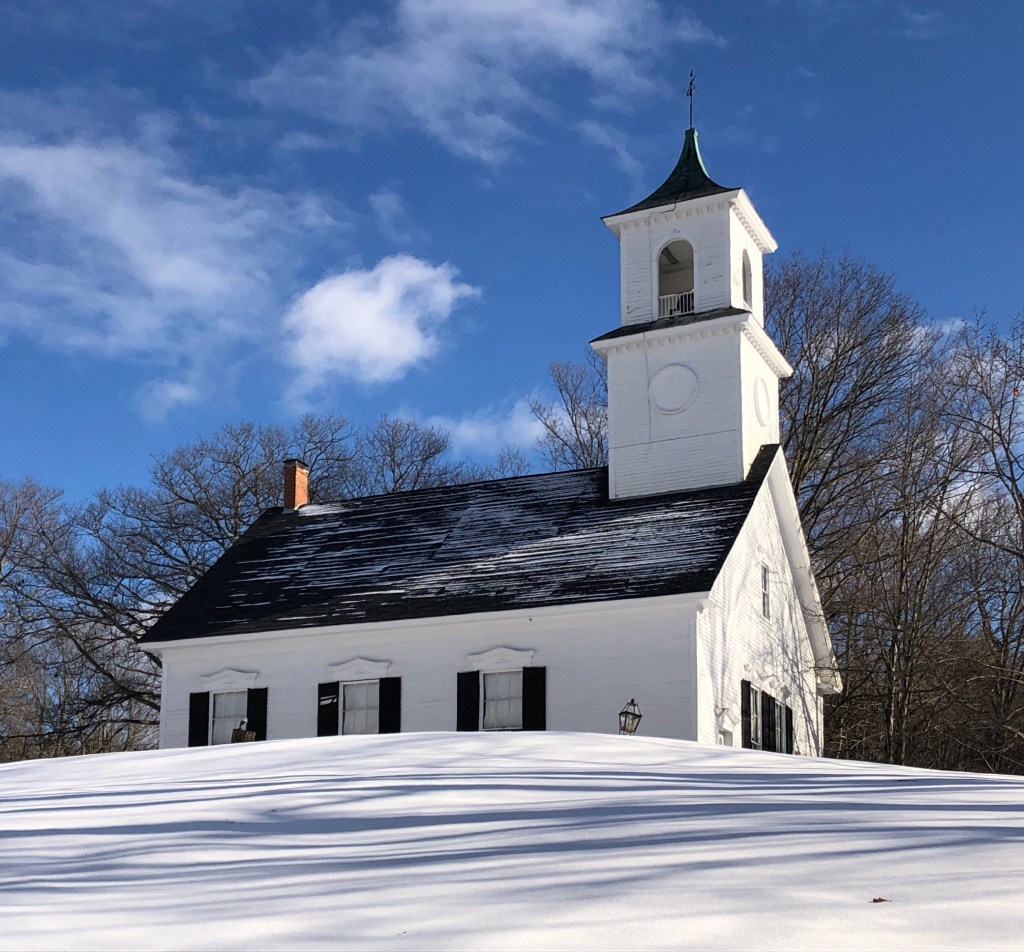
Second Baptist Church, Suffield // 1840

In early New England, the Congregational Church had a near monopoly on churches. Congregational churches had lost much of its hold on its members and on government by 1725. Eventually, some of its ministers decided a religious revival was needed, creating the emergence of new Baptist and Methodist churches all over the region. Baptists erected a church in West Suffield, far from the town center, which began to rapidly develop in the early 19th century. In 1805, they petitioned to create a second Baptist church, and succeeded. By 1840, the members collected funds to erect this stunning Greek Revival church on Main Street. The congregation hired architect Henry Sykes, who had trained under Chauncey Shepherd of Springfield, Mass and Ithiel Town of New Haven, clearly learning a lot on church design.

John W. Loomis House // 1740

This stunning home on Main Street in Suffield, CT was apparently built in 1740. By the 1840s, it was purchased by John Wells Loomis, and altered to fit the then-fashionable Greek Revival style, replacing the center chimney with two chimneys, adding pilasters and a Greek Revival entry. John Loomis was the head of the Loomis family which made a fortune in the tobacco industry in Suffield, rolling and shipping products as far away as California. Before his death, John Loomis built his son George a house nearby, knowing that his son would carry on the business, which he did until a couple years after his father’s death when he sold the business and moved to New Haven.

Dr. Asaph Bissell House // c.1835

Dr. Asaph Bissell was born into the wealthy Bissell family which started here when John Bissell, the progenitor of the family in America, came from Somerset, England, and landed in Plymouth, Massachusetts, in 1628. He became one of the settlers of Windsor, CT. His descendant, Asaph Bissell became one of Yale’s earliest medical graduates. Dr. Bissell, a member of the school’s second class, practiced in Suffield, often making house calls from his home right on Main Street. The house is Greek Revival in style with a stunning fan light in the pediment, echoing the Federal style.

Moses Rowe House // 1767

One of the older homes on Main Street in Suffield CT, the Moses Rowe House was built in 1767 and exemplifies the architectural history of town. The house was constructed as a two-story Georgian home with minimal detailing, as the family home of Moses Rowe (1733-1799), his wife, and nine children. According to historical maps of the area, the home appears to have been purchased by Horace Sheldon, who in the 1830s modified the home in the Greek Revival style, increasing the height of the home, adding side porches and the entablature at the roofline.

Milo M. Owen House // c.1840

Located on Main Street in Suffield, this Greek Revival home stands out for its perfect proportions, entry detailing, and the large 20th century porch. The home was likely built around 1840 for Milo Milton Owen (1811-1886), within a year of his marriage to Martha Alderman in 1839.

West Suffield Congregational Church // 1839

Suffield (originally Southfield) Connecticut, was once a part of Massachusetts, incorporated as a town in 1682. After having to travel to downtown Suffield to worship at the church there, the families in the west part of town established the Second Ecclesiastical Society in 1743. The first meeting house was built in 1744 on what was known as “Ireland Plain”, now the southwestern corner of the West Suffield Cemetery. In 1775, a second meeting house was erected on the site of the present building. It was rebuilt in 1839 using the earlier foundation. The Greek Revival church building is very charming with its columned portico and belfry surmounted above a stepped parapet. The church is very well preserved and a lasting remnant of West Suffield’s early days.

Captain Morse House // 1840

John Osborn Morse was born in 1803 in Edgartown. He was the second of eight children born to Uriah Morse and Prudence Fisher Morse. His father ran the small ferry from the foot of Morse Street to Chappaquiddick Island. As John Morse grew older, he began working as a whaler on various ships, sometimes gone for years at a time. After his first trip, he was hired as Captain of the Hector, a whaling ship which sailed out of New Bedford. Captain Morse took a break from whaling to establish a wharf on land he purchased and construct a massive Greek Revival home to overlook it. When news hit Edgartown of the gold found in California, it stirred the islanders’ imagination. In 1849, several ships sailed from Martha’s Vineyard to California, one commissioned by Captain Morse. The Vineyard Mining Company, led by Morse, brought roughly 50 passionate and hopeful Americans across the country by boat to California with some onboard writing journals of the trip. The boat arrived in San Francisco and discharged its crew in April of 1850 after a harrowing passage around Cape Horn and visits to several South American ports. After being in California for less than a year, Captain Morse decided to take go for a short whaling cruise. He died on this trip, reportedly getting “dropsy” off the coast of Colombia before succumbing in Peru in 1851.

Captain Valentine Pease House // c.1830

This charming little Greek Revival house has a lot of history, tied to literature and the whaling industry that shaped Edgartown in the 19th century. The home was built in around 1830 for Captain Valentine Pease (1797-1870), a master mariner and captain of the Acushnet, a prominent whaling vessel which often departed from New Bedford. In 1841, Captain Valentine Pease, his crew, and a 21-year-old Herman Melville shipped out of New Bedford 1841 for eighteen months as Melville’s only whaling voyage. Melville took part in the hunting and killing of whales and in harvesting and processing whale oil aboard ship. He endured gales and calm, experienced excitement and boredom, followed ship’s discipline, all the while absorbing the lore of the veteran seamen who made up the Acushnet’s diverse and colorful crew. It is speculated that Valentine Pease was an inspiration for the character of Captain Ahab in Melville’s book “Moby Dick”.

Martha’s Vineyard National Bank // 1855

Believe it or not, living on an island in the 19th century wasn’t as easy as you may think. Before this bank building was constructed in 1855, all banking was done off-island. The bank was constructed to house the newly formed Martha’s Vineyard National Bank, whose first president was Dr. Daniel Fisher, who made his money as a merchant and operator of one of the largest whale and sperm oil processing facilities in the country. The bank relocated to Vineyard Haven and the Edgartown National Bank was created to fill the void in town. Amazingly, the building is still to this day occupied by a bank, Rockland Trust, seemingly adding to the continuous occupancy of the building by banking facilities for well over a century. The structure is one of the oldest brick buildings in town and is a late iteration of the Greek Revival style.

White Columns // 1853

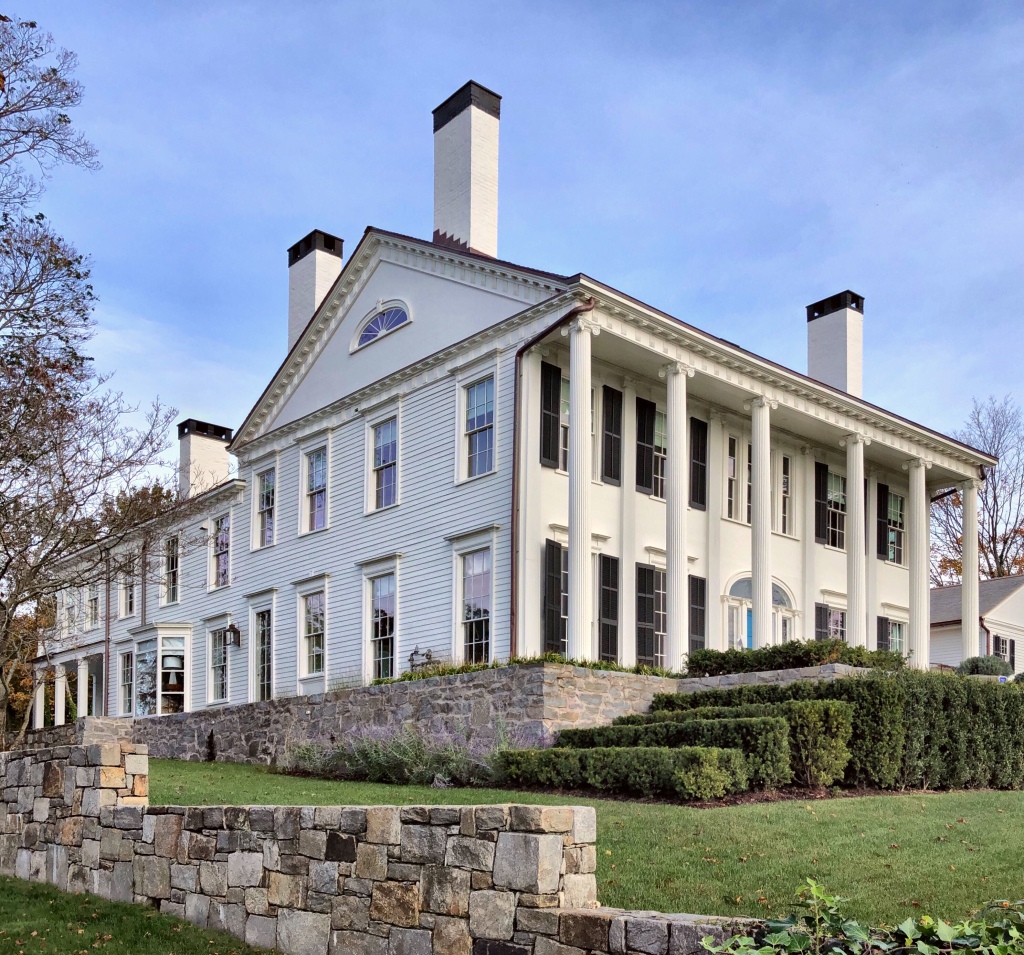
The majestic Greek Revival house on Maine Street in Kennebunkport was built in 1853 for Eliphalet Perkins III, a member of the Perkins Family, one of the earliest families to settle in the area known today as Kennebunkport. Eliphalet apparently sold the home to his son, Charles, who moved in within the year with his new wife Celia Nott. The couple decorated the ornate home inside and out with furnishings still retained inside after the Kennebunkport Historical Society acquired the building in 1955. The home is now known as White Columns, and houses the First Families Museum. One interesting thing I noticed is the rounded arch windows in the pediment, an awareness to the Italianate style which took over in the 1850s-1870s throughout New England, though this home is quintessentially Greek.

Clock Farm // ca.1850

Away from the busy coast of Kennebunkport, Clock Farm, a mid-19th century farmhouse with an odd clock-tower caught my eye while driving by. Clock Farm is a rambling extended farm complex that remains a landmark in the more rural section of town. According to historians, the oldest part of the complex was a home that was later converted to one of the ells, was built in 1773 by a Peter Johnson. By the 1850s, the 1 1/2-story Greek Revival home and barn were built. In the late 19th century, the property was purchased as a summer residence by Thomas Lemmons, factory owner in Lawrence, MA. The story associated with the clock is that originally was mounted on his factory, but kept such bad time that his employees complained. In the early 20th century Emmons had the tower specially built to house the clock, which was transported here from Lawrence.

Thomas Maling House // 1848

This Greek Revival home was built around 1848 for Thomas Maling, a rigger (person who installs the system of ropes and chains for a ships mast and sails). The home is built upon a raised brick foundation, likely to elevate it from the rising and receding nature of the Kennebunk River just across the street. By the 1890s, the home was converted to an inn, known as the Maling’s Inn, after the original owner. Today, the inn is known as the Old River House. On the lot, the old rigging loft remains and has been converted on the inside as additional rooms.

Ivory Goodwin House // c.1808

Built by Ivory Goodwin (1783-1851), a joiner who moved to Kennebunkport from Berwick, Maine in 1799. Goodwin and his wife Mary, lived in this small Cape house with their six children, a pretty amazing feat in its own right! The Federal/Greek Revival home is five bays wide with a central entry with sidelights and pilasters flanking.

John Hovey Perkins House // c.1850

This large house in Kennebunkport Village was built in the 19th century for John Hovey Perkins (1804-1859). The Federal home was constructed sometime in the early 19th century, and by 1857, it was updated by the local master-builder, Bernard Littlefield, who likely added the two-story columned side porch and other detailing. The home was originally located at the corner of Green and Pleasant Streets, across from the Captain Lord Mansion, and was moved in 1900 to its present location on South Street. The house was converted to a bed & breakfast, known as The Inn on South Street, and it has seemingly been converted back to a single-family home.