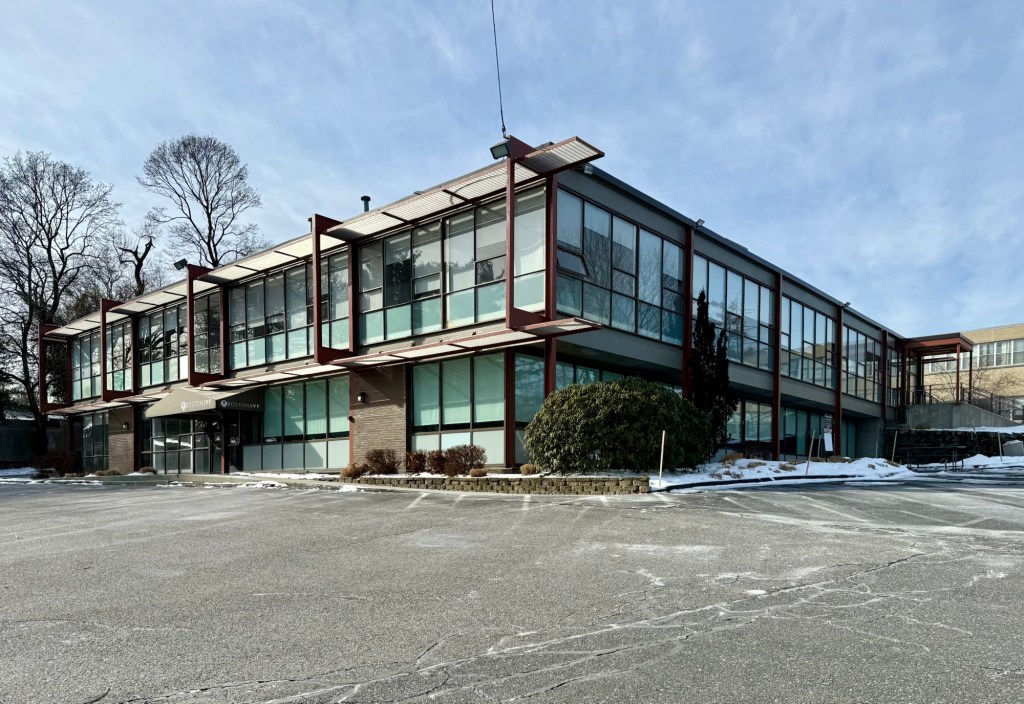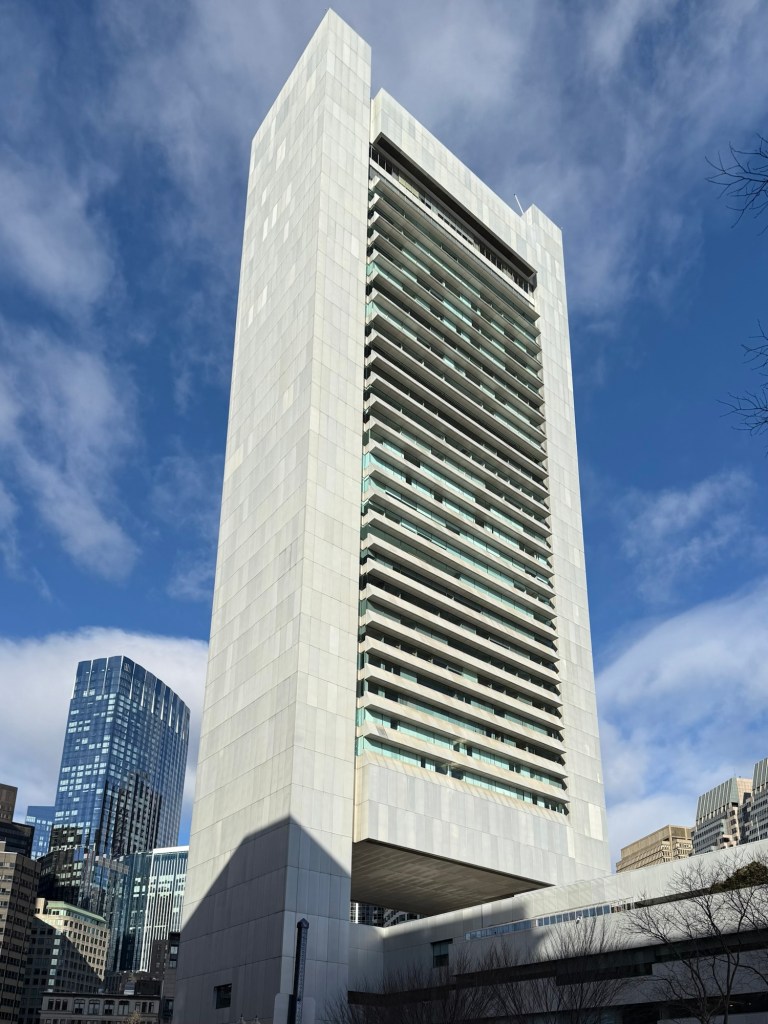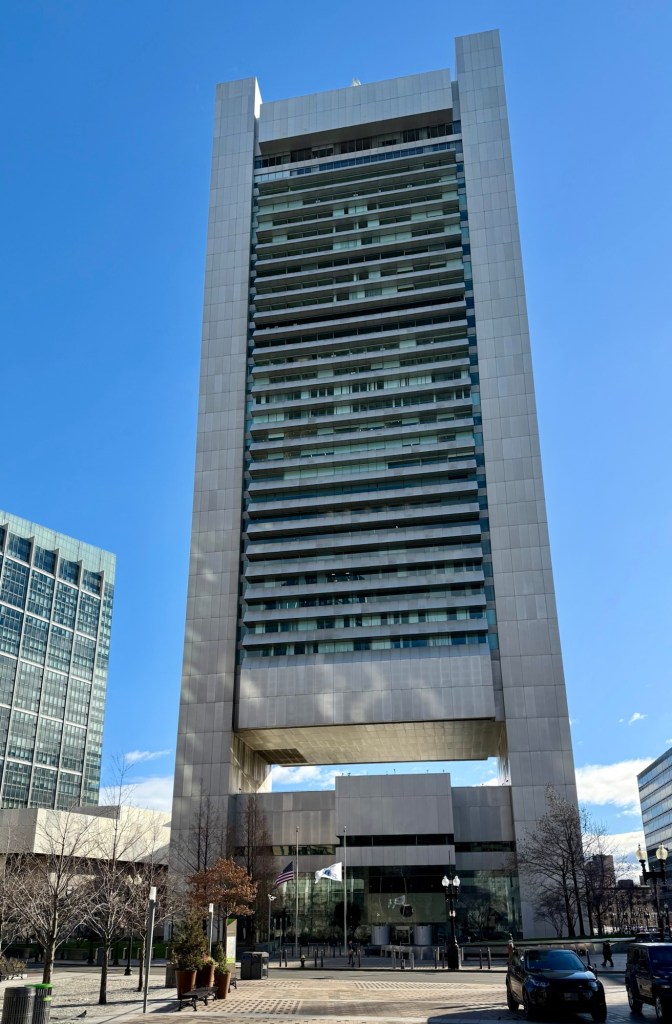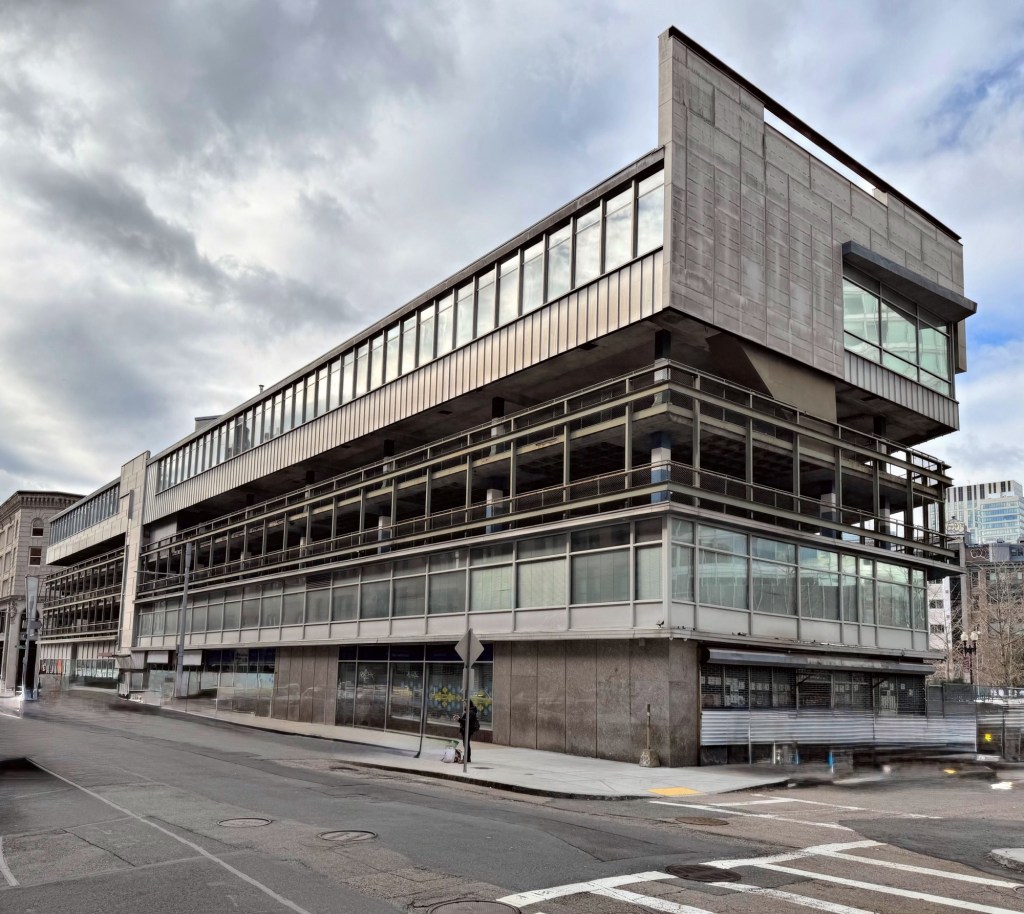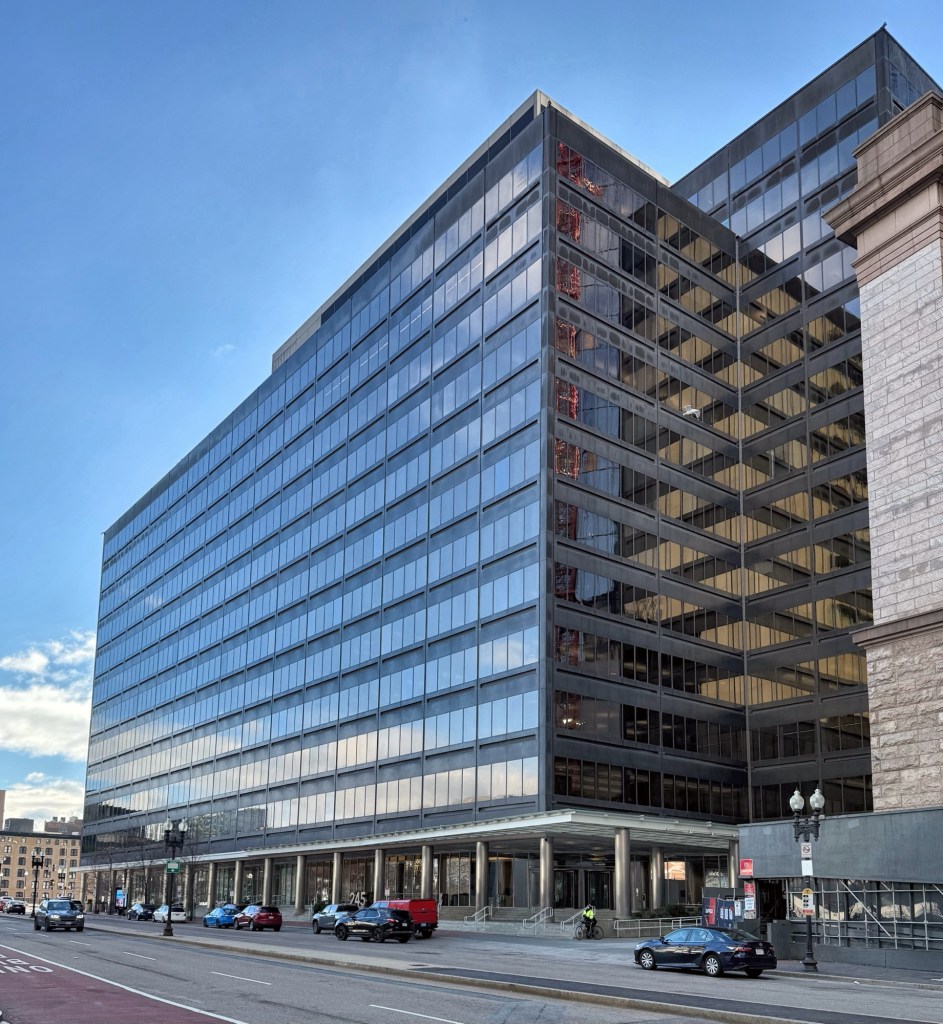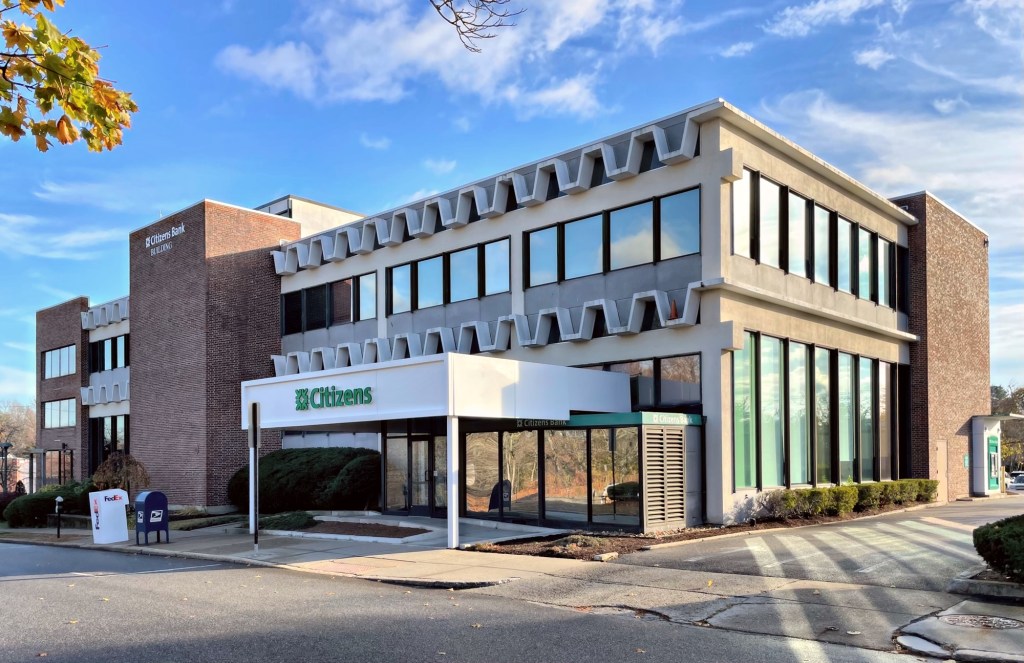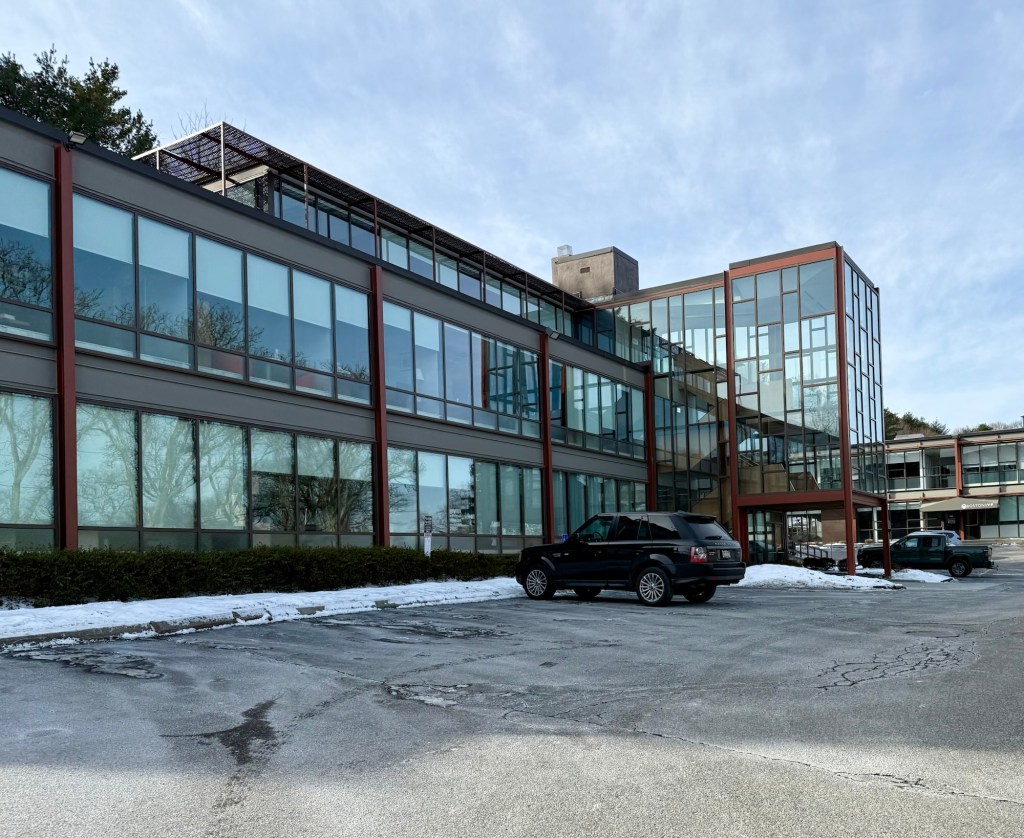
Opened in 1962 as the Newton Savings Bank, this unique Mid-20th century Modern banking structure showcases the forms and materials not conceived in previous decades. The building is located on the Newton Centre Green, adjacent to the former Newton Centre Methodist Episcopal Church, and provides a sharp contrast between the stone building in the Romanesque style and more contemporary forms. The bank was designed by Bastille and Halsey Associates, established in 1953 by partners, Robert Adams Bastille and William Ashbaugh Halsey. Now occupied by a Citizens Bank with professional offices also inside, the building exhibits precast concrete “zipper” banding between floors that are broken up by solid brick masses in the facade. What do you think of these corporate modern buildings?
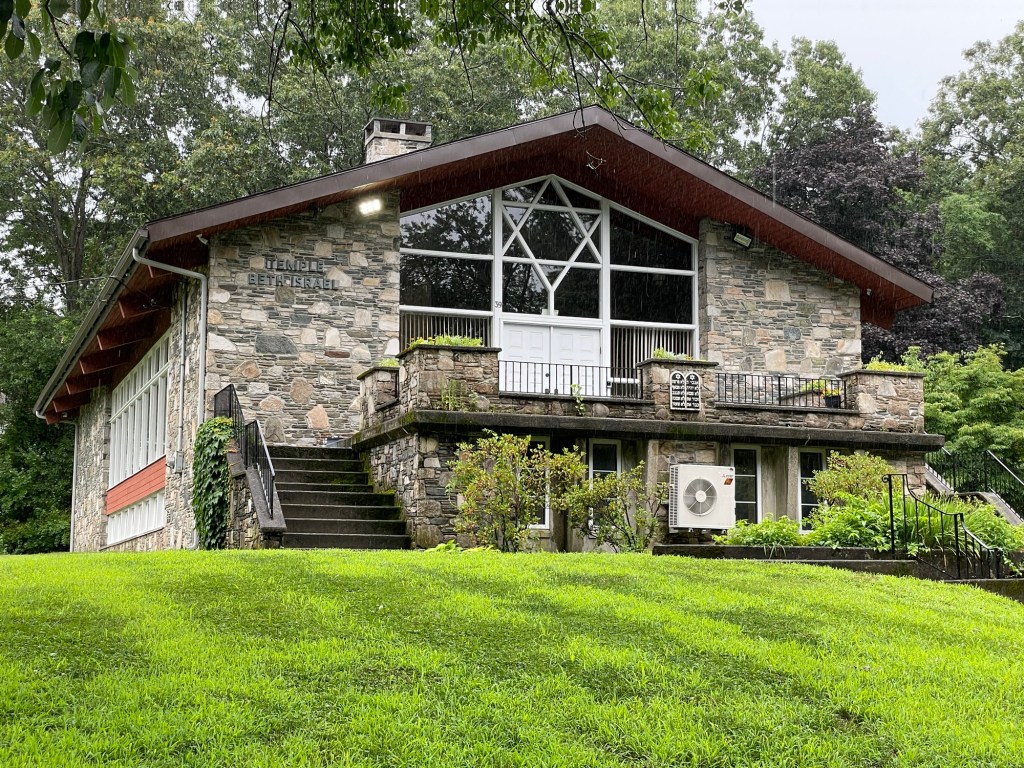
Temple Beth Israel is a unique, Mid-Century Modern former synagogue, that can be found in the village of Danielson, in the town of Killingly, Connecticut. Ground was broken on the temple in 1951 and the foundation and basement were completed soon-after. Funding was tight and the building remained unfinished for years. During the first years that the congregation used the unfinished synagogue, while continually striving for additional funds to complete the building. A congregation member Mary Riseman’ s son William Riseman, an architect, designed the building and the Riseman family donated the fieldstone for the building from a quarry on their farm. The building was eventually completed in 1961, ten years after its ground-breaking ceremony, with young, recently graduated architect, Maurice Finegold as designer of the interior of the main floor sanctuary and more, completing the project. The congregation, a blend of Orthodox and Conservative adherents, was generally served by itinerant rabbis, often religious students. Dwindling membership forced the congregation to merge with another in nearby Putnam, and the building was eventually sold. A secular preservation society was organized to keep it, which has transformed it into a cultural and historical center, dedicated to preserving the history of the Jewish experience in the area.
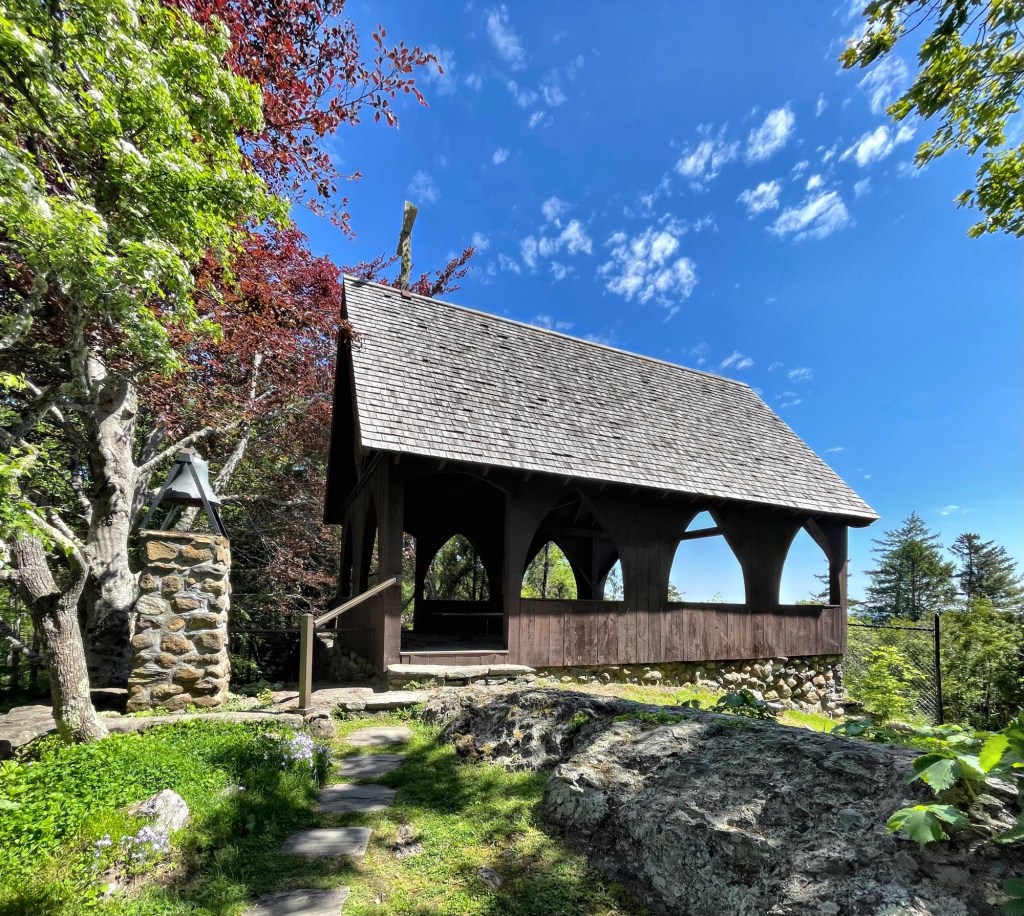
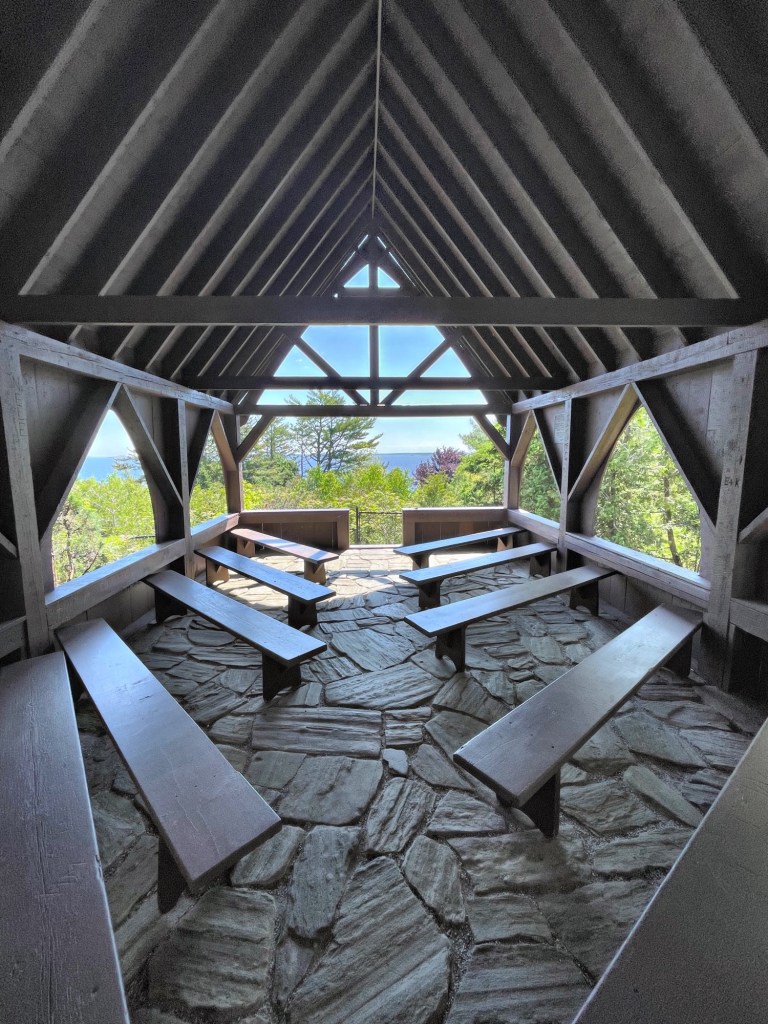
After the Tamarack Lodge hotel of Rockport, Maine, burned down in 1954, nearby resident Helene Bok began to envision what would be the best use of the charred landscape. Her project became the Vesper Hill Children’s Chapel, an absolutely stunning outdoor chapel that is open to the public. Her dream was to build a refuge that would be open for all people and “speak in and of itself of the beauty, goodness and truth of nature, life and God.” It is not clear to me who the designers were, but the structure and grounds are elegantly sited on the hill, overlooking the harbor in the distance. Helene planned the chapel to partially sit atop the rustic stone foundation of the former hotel on the site, with an open post-and-beam wooden structure above. After Helene’s death, Elmer Crockett, a designer for years on the Olmsted staff in Maine, oversaw the grounds and maintained a biblical herb garden. The chapel is today approached by a roofed stairway and surrounded by mature trees and locally harvested stones. It is truly a hidden gem in Mid-Coast Maine.
Breaking ground in 1915, this early Modern church building must have turned heads when it was being built in Roxbury! In October, 1907, a fine lot of land with a house on it, at the corner of Elm Hill Avenue and Howland Street, was purchased for eighteen thousand dollars by a group of Christian Science followers. In October, 1911, a building committee of five was elected by the church, and by the summer of 1914 the building fund had made such satisfactory growth that ground was broken and work for the new structure begun in September. The congregation hired the illustrious architectural firm of Shepley, Rutan, and Coolidge to design the edifice of classic and imposing design. Constructed of gray tapestry brick with limestone trimmings, the auditorium seated upwards of one thousand members, under the dome roof. Today, the building is occupied by Grace Church of All Nations.
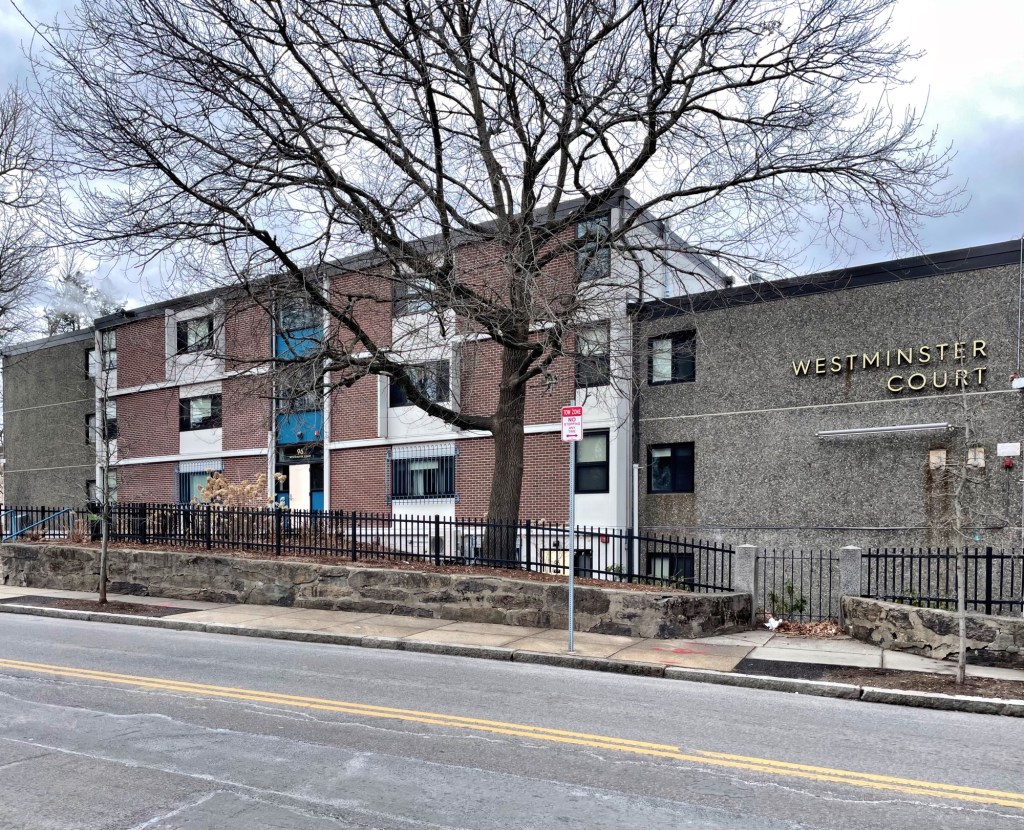
As populations boomed in the decades following the conclusion of WWII and suburbs drew wealthier residents to single-family neighborhoods, city governments were desperate to keep tax dollars in city limits. As a result, many cities instituted a policy called Urban Renewal, where neighborhoods (often with higher percentages of minority or immigrant populations) and historic housing were demolished as a form of “slum clearance” and modern housing centered around the automobile sprouted up in their place. The Washington Park section of Roxbury in Boston was one of the hardest-hit neighborhoods in the 1960s as part of a series of neighborhood plans by the Boston Redevelopment Authority. This housing development, called Westminster Court, was developed on one of the new Urban Renewal parcels in Washington Park. Designed by famed modernist architect Carl Koch, the Mid-Century Modern buildings were constructed in modular units to cut costs and expedite construction time. The buildings utilize precast frames with contrasting exterior panels of brick, exposed aggregate concrete, and aluminum. While many dislike these buildings, it is important to understand the history behind them and how they are part of the complex history of many cities.
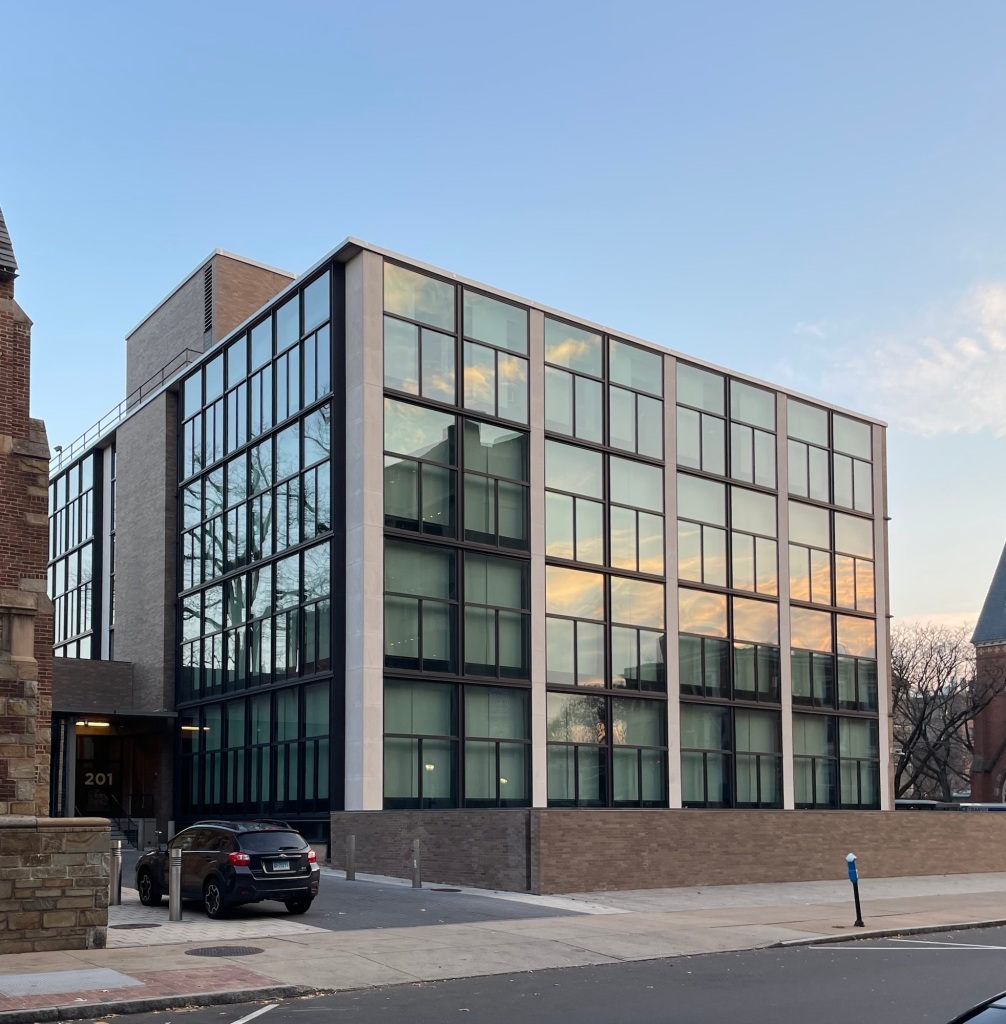
Yale University’s School of Architecture was in the midst transition when Louis Kahn joined the faculty in 1947. The post-war years at Yale trended away from the school’s Beaux-Arts lineage towards the avant-garde, and Modernist principles brought over from European architects. When the University called for a new wing for its existing Venetian Gothic style Art Gallery Building (1928), they obviously had no choice but to make a statement for the future of the school. Architecture professor Louis Kahn worked with Anne Tyng, who was both a professional partner and his “muse”, who heavily influenced his works, including here where she designed the concrete tetrahedral slab ceiling at the interior galleries. As a professor and practicing architect, Kahn hoped for students and visitors would engage with the building, even interior spaces often overlooked design-wise, such as the stairwells. While the facades are fairly minimal in design details, because the attention was paid to the interiors, which provide protection from natural light while also allowing for large floor plates for customizable exhibitions. The structure is Yale’s first true Modernist building on a campus which soon after was dominated by some of the country’s most iconic examples of the style.
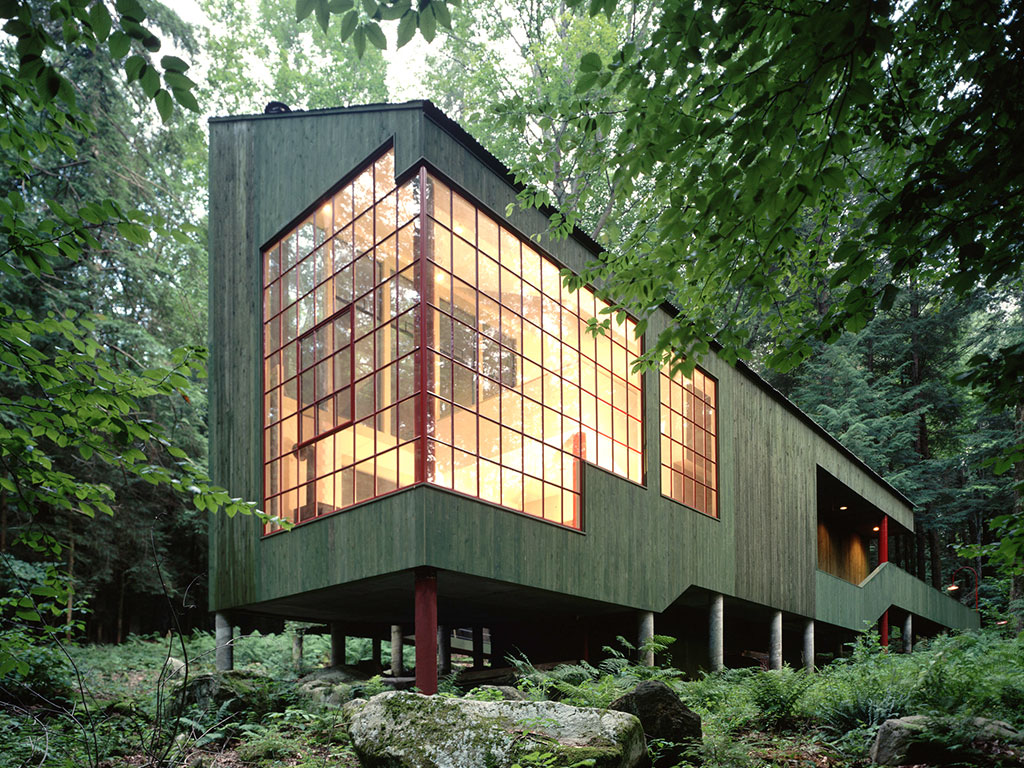
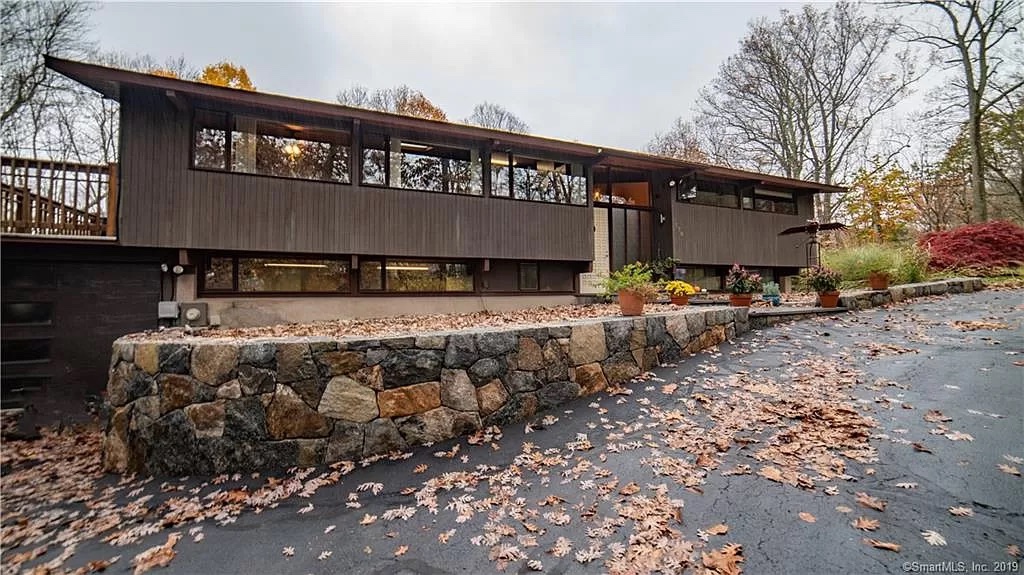
I don’t share Mid-Century buildings on here enough, mostly due to the fact that so many of the houses of the period are secluded down winding driveways and surrounded by trees! This stunning house is located in Southbury, Connecticut, and is a great example of a Deck House. The Deck House was a housing type developed by architect Carl Koch. According to At Home With Tomorrow, he began his lifelong mission to create “the good, the beautiful, and the inexpensive” in housing while at Harvard under the guidance of Walter Gropius, who is famous for the development of the Modernist Movement in architecture. After the war, he turned his focus on the housing shortage, a symptom of the Great Depression, WWII, and returning Veterans with growing families and VA mortgage loan offers. His solution was for an affordable house of pre-fabricated parts to cut costs and provide streamlined construction. In 1953, his Techbuilt house was launched, after a decade of research. William Berkes and Robert Brownell had worked with Koch at Techbuilt after graduate school, but wanted to create a design of their own. They left Techbuilt in 1959 and founded Deck House, using the same principles. The exposed Douglas fir beams, wood panel ceilings and mahogany trim and window casements are what give the deck house a lot of its signature aesthetic. A wall of glazing, open floor plan with sloping roof rafters extending beyond the walls and a low placement in seemingly untouched nature are further elements that have endeared these houses to the modern homeowner.
Believe it or not, the city of North Adams, Massachusetts has long been home to a large Italian population. The first waves of Italians first arrived to this part of the Berkshires in the mid-late 19th century, many of which were hired to build the Hoosac tunnel, which when it was finished, was the second longest tunnel in the world. It took almost 25 years to build! Some Italians were experienced stone carvers and others worked in the cotton mills and other factories in the area. As the Italian population grew, Roman Catholic churches were required for these new first- and second-generation families in the mill town. The first St. Anthony of Padua Roman Catholic Church was erected in North Adams in 1906. Four years later, the 1910 census noted that roughly 16% of North Adams’ population was of Italian descent. After the first church burned down around 1950, money was raised to build the present church which is located across the street from Mass MoCA. The church was designed by architect Anthony DePace (1892–1977), an American architect who designed numerous Roman Catholic churches throughout the Northeastern United States area during the mid to late 20th century. Architecturally, the building features late-Romanesque and Art Moderne details. Eventually, the decline in the number of Catholics in North Adams in recent decades led to the consolidation of parishes in 2009. St. Anthony’s is the sole remaining Catholic church in North Adams and the church and parish are now known as St. Elizabeth of Hungary, possibly after a merging of multiple parishes.
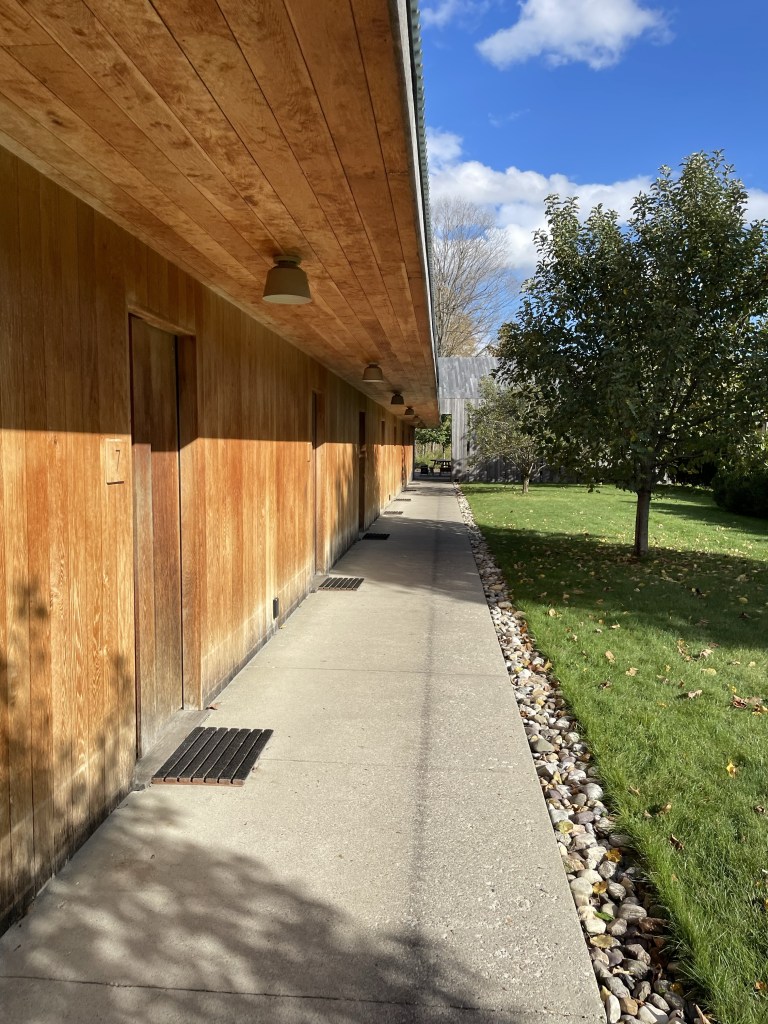
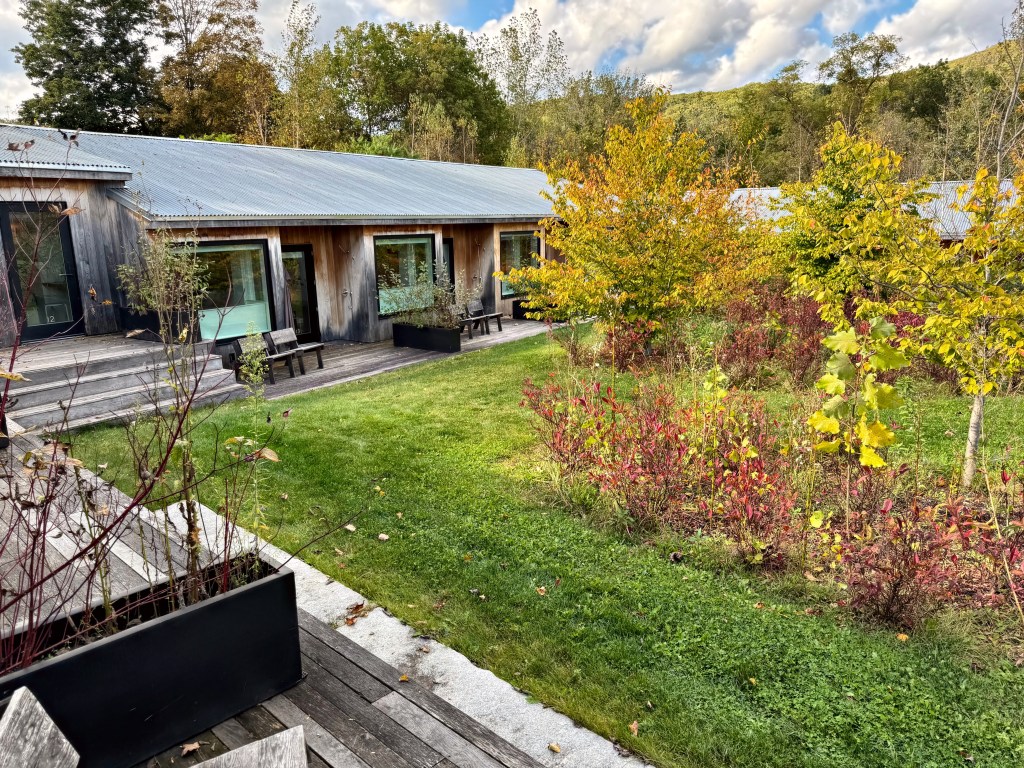
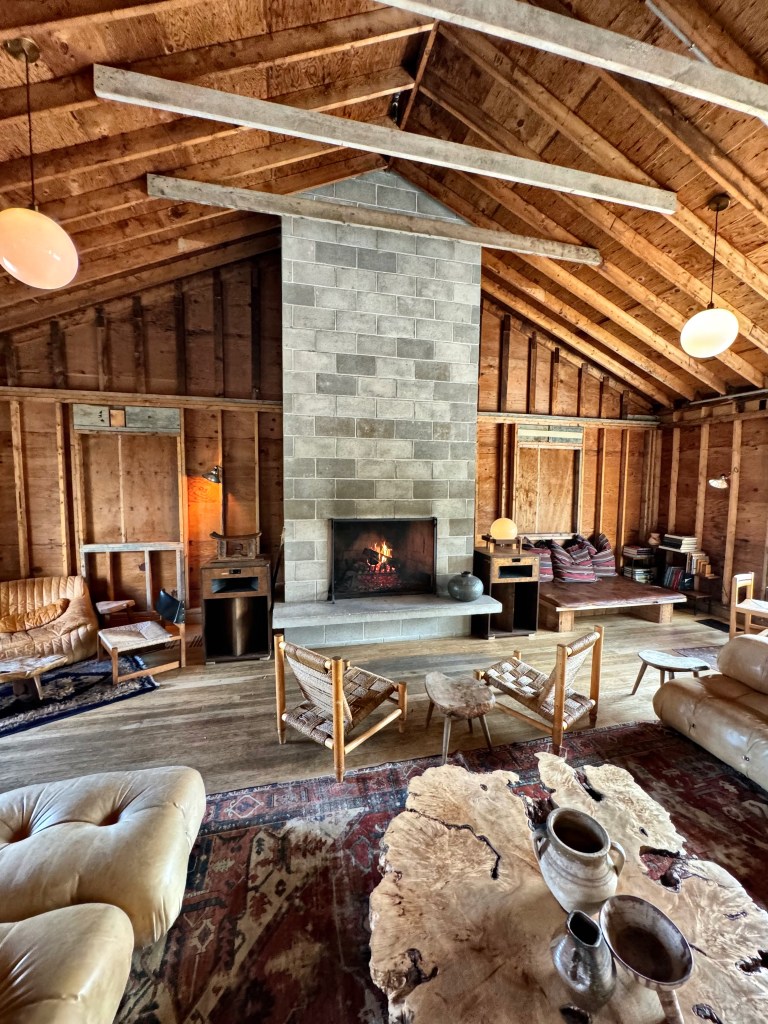
This past weekend, I had the absolute pleasure to stay at one of New England’s coolest new hotels, Tourists Hotel! Located in the industrial-turned-artistic town of North Adams in the Berkshires of Massachusetts this elevated, 48-room hotel modernises the aesthetic of a classic American motor lodge with contemporary design that feels cozy and inviting. The site was originally home to the Redwood Motel, a prototypical 1960s motel on the Mohawk Trail, a designated scenic tourist route which became popular in the automobile era of the 20th century. The reimagined motel was developed by Broder a Boston-based developer who worked with architect Hank Scollard and landscape architecture firm Reed Hilderbrand to design the new hotel. U-shaped in plan, the main part of the hotel surrounds a central courtyard with native flora. Facades are wrapped in white oak planks with the intention to blend the architecture with the surrounding woods. My favorite part was that the rooms have sliding glass doors which open to private decks which make rooms feel more personable. On the crisp fall day, the lounge was an amazing space to cozy up with some spiked cider and chat with other guests. An unexpected treat was to learn that the grounds include dozens of walking trails running along the Hoosac River with a suspension bridge that stretches 220 feet across. Pictures do not effectively showcase how special Tourists is, both in the design details and the attention to detail the staff had during my stay. If you are ever in the Berkshires for a weekend trip, I highly recommend you check them out!
An exemplar of late International Style, this stucco-clad concrete building stands apart from its traditional Back Bay neighbors and is located on one of the city’s most busy streets, Newbury Street. Built as the showroom and offices for Knoll International furniture, its crisp design is an elegant statement in form and details of Bauhaus- and Le Corbusier–inspired architecture, including its asymmetrical composition, curvilinear lower facade, horizontal window bands, and stairwell located behind a glass brick wall. The building was designed by Gwathmey, Siegel and Associates who have a great diversity of commissions, all with thoughtful site-specific designs. The building reinforced the positive qualities of modernist architecture at a time when some architects were advocating for historic revivals and Post-Modernism. The building was later occupied by DKNY and is presently rented out by Lenscrafters.
In 1947, world-famous German-born architect Walter Gropius and his architectural group, The Architects Collaborative (TAC) were commissioned to design a simple summer house for his friends Arnold Wolfers, a noted political scientist, and his wife, Doris, whose father was president of the Swiss Parliament. The site was a wild bluff on the end of Naskeag Point in Brooklin, Maine, with broad views of Blue Hill Bay and Mount Desert Island in the distance. The Wolfers’ wanted a house that was not a typical shingled house, provided sweeping views of the natural scenery, and also fit within its surroundings. Gropius nailed it with this house. As originally built, the house was comprised of a main block with large living room, kitchen, laundry room, service hall, and bathroom. A breezeway connected the house to a wing of three bedrooms along a long corridor. Walls of glass frame the waterfront side to take advantage of the views, while the street-facing facade has less glazing to provide additional privacy. After Doris Wolfers’s death in 1987, the house was purchased by an investment banker and his wife and it was listed for just the third time in over 75 years, and has maintained its architectural integrity the entire time.
Across from the new Nelson Fitness Center at Brown University in Providence, Rhode Island,Meehan Auditorium is an excellent example of a 1960s institutional athletic facility. The auditorium was dedicated at the Brown-Princeton hockey game on January 6, 1962 and was named after George V. Meehan, donor of half a million dollars for its construction. The new facility filled the need for a skating rink and large auditorium for indoor functions, specifically for ice skating and hockey and was the first building of the new athletic plant at Aldrich-Dexter Field east of the campus. The building was designed by Perry, Shaw, Hepburn & Dean, a prominent firm who designed many collegiate buildings in the 20th century, all over New England.
In the second half of the 20th century, parts of Boston saw disinvestment by private property owners as well as local and state government. With people leaving Boston for the suburbs, the hemorrhaging of tax revenue led urban planners to go big and institute ‘Urban Renewal‘ policies and planning to demolish what they believed to be substandard housing and invest in Modern apartments and car-oriented developments. The triangular shaped new community was as comprehensive as any urban renewal district in the region; indeed of the ten General Neighborhood Renewal Plans created by the BRA in 1961, Washington Park was the most self contained Urban Renewal District in the city. It included new police and fire stations, a courthouse, two public libraries, a shopping mall, a health center, elementary school and five garden style housing developments totaling almost 2000 apartments or townhouses. At its completion in 1975, $70.4 million had been invested to build the new community of which $31. 3 million came from the federal government. Part of this massive undertaking was the construction of elderly housing, which resulted in this 20-story cylindrical tower at the southernmost edge of the Urban Renewal area. The tower was constructed between 1967 and 1970 and was designed by Boston-based architectural firm Richmond & Goldberg, led by Isidor Richmond and Carney Goldberg. Apartments were “integrated” with with 70% Black and 30% White residents, all with private balconies and an emergency pull-chain system in kitchens and bedrooms for the elderly residents. As far as mid-century apartment towers go, this one is pretty interesting and unique. The building was renovated a few years ago and renamed the Doris Bunte Apartments. In 1969, Buntè was nominated to the Boston Housing Authority board, making her the first female public housing tenant to serve. In 1972, she was elected to the Massachusetts House of Representatives, becoming the first woman of color to serve in the Massachusetts legislature, and the first female to serve in the House leadership in 68 years. While there, Buntè helped found the Black Legislative Caucus and the Caucus of Women Legislators.
After the Quabbin Reservoir was filled (more on the history in my last post), the cleared land and body of water, with its over 181 miles of coastline, was seen as not only an engineering marvel, but a place of natural beauty and splendor. Upon a rise in the land and the edge of the reservoir, they saw a perfect location to build a tower that could serve many purposes. The Metropolitan District Water Supply Commission hired the firm of Densmore, LeClear & Robbins to design a tower that would serve as a radio tower, fire station and observation tower to view the reservoir. The structure, while designed in the Arts and Crafts mode, is of modern construction and is comprised of two main parts. The lower portion, is constructed of stone and concrete, with metal casement windows, granite lintels and sills and bronze doors. This section was used for radio equipment. The interior has glazed tile walls and cement floors. The six-story tower has five floors of metal and concrete stairs. At the top is a two-level, glass enclosed observation tower.
When you walk along Ogunquit’s Marginal Way cliff walk, it is missing one thing, an iconic Maine lighthouse… or is it? This mini lighthouse on the route always has people lining up to snap a picture and its quirky roadside attraction appeal is undeniable. The original Lobster Point Lighthouse was constructed in 1948 by Winfield C. Littlefield of the local family who first settled in the town. The “lighthouse” was designed by Grover S. Perkins. Much like the real lighthouses on the coast, the original structure was badly beaten by the salt air and high winds and parts of the structure were replaced. Notably, in 1993, the top (lantern) was replaced with fiberglass. Additionally, in 2009 the structure was upgraded, all from donations. The iconic roadside lighthouse will continue to ‘light the way’ for the droves of tourists and locals alike who navigate Marginal Way.