Hope Block // 1869

The Hope Block on North Main Street in Providence’s East Side neighborhood is an architecturally significant commercial block in the Second Empire style. The masonry building was constructed in 1869 and is probably designed by architect, Clifton A. Hall, who designed similar buildings in the city around that time. The block was developed by Edward M. Young and Ezra P. Lyon of the firm, Young & Lyon to house their fruit and grocery store, which they operated here from 1870 until 1889. By the latter half of the 20th century, the building was owned by the Rhode Island School of Design, and rehabilitated for classrooms in 1984, even retaining the cast iron storefronts, unique arched windows, and slate mansard roof. Today, the Hope Block houses the RISD Store.

Jones-Sinclair House // 1865

One of the finest Victorian-era residences in Portsmouth, the Jones-Sinclair House at 241 Middle Street, is a stately and oversized Second Empire style mansion built in the location of an even more significant home. Originally on this site, at the convergence of two busy streets, Thomas Haven, a wealthy merchant and half-brother to William Haven who lived across the street, built an impressive brick, Federal style mansion here in around 1818. Admiral George Washington Storer, Commander in Chief of the Brazil squadron of the U.S. Navy, later purchased the Federal style octagonal house. Mary Washington Storer, inherited the house after her father’s death in 1864, and she with her husband, Albert L. Jones, demolished the old octagonal-shaped house around 1865-1867, replacing it with this mansard-villa style mansion. By about 1890, Charles A. Sinclair and his wife, Emma, is said to have received the house as a gift from her uncle, the famous Portsmouth industrialist and politician, Frank Jones

William Fraser House // c.1873

In a town full of clapboards and shingles, brick houses really do stand out! This is the William Fraser House, located at 303 Pleasant Street in the ever-charming town of Portsmouth, New Hampshire, a stately example of the Second Empire style as a single-family residence. The house was built by 1873 for William James Fraser (1836-1930), a Canadian-born mason who immigrated to Portsmouth in 1850 and began a successful career as a mason, building many of the town’s great masonry buildings. The Fraser House has a slate mansard roof with overhanging eaves, bracketed cornice, and paired gable dormers and a double wood-paneled entrance door with transom under a flat roof portico.

John E. Colcord House // c.1870

While Portsmouth, New Hampshire, is arguably best-known for Georgian and Federal style houses of the 18th and early 19th centuries, there are some great examples of Victorian style residences built after the Civil War to be discovered. This brick Second Empire style residence on Pleasant Street was built around 1870 and originally owned by Ebenezer Lord (1788-1877), who lived elsewhere in Portsmouth, likely gifting this home to his daughter, Susan (Lord) Colcord, and her husband, Charles Colcord. Both Charles and Susan died one year apart in 1872 and 1873 respectively, and the property was inherited by their son, John. John Edward Colcord worked as the Clerk at the Portsmouth Navy Yard. The building has a Mansard roof with overhanging eaves, denticulated cornice, and three shed-roof dormers at the facade. Walls are brick and rest on a granite foundation, with a later, wood-frame side addition that employs similar design details of the main house. 

Tatro-Tyng House // 1873

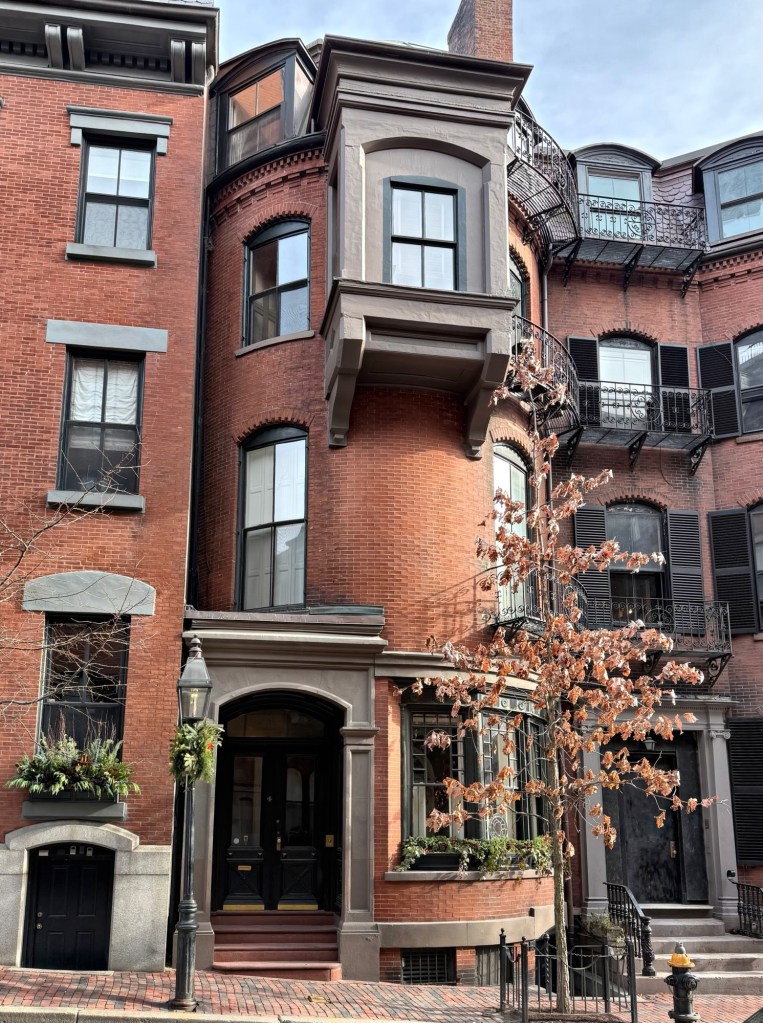
The neighborhood now known as Ashmont Hill had its origins in 1870, when George Derby Welles, who was 26 years old and living in Paris, inherited extensive landholdings in this area from his grandfather’s estate in Dorchester. Welles engaged representatives to subdivide the land. Some parcels were developed with high-style rental properties, managed by his representatives while living abroad, and others were sold and developed by builders, designing homes in the prominent styles at the time. In the early 1870s, the Second Empire style was most popular, though began waning in popularity for Stick and Queen Anne styles. Lots on Welles Street were purchased by Mr. George Tatro, a builder and developer who seemingly designed and built two near identical houses at 48 and 52 Welles street. The houses were completed by 1873 at the time of The Panic, an economic downturn triggered by industrial and railroad over-expansion and consequent bank and business failures. The property was sold, but remained vacant until it was taken over by a bank and then purchased by Catherine Stevens Tyng, the widow of Reverend Dudley Atkins Tyng, who died at just 33-years-old from a freak accident at home. Catherine moved to the area, first settling in Cambridge, to follow her two sons who attended Harvard College, before selling the house and moving to New York. The Tatro-Tyng House is a stunning, and well-preserved example of the Second Empire style, with a shingled bay window and bay dormer in the mansard with applied ornament.

Reed-Loring House // c.1872

Another of the early houses built in the Ashmont Hill neighborhood by George D. Welles, a young man who inherited and subdivided his family estate in Dorchester, is this mini-Mansard on Harley Street. Like a few others in the neighborhood, this house was built for Welles, likely as a rental property. The house was rented by Charles and Nellie Reed, who had painter, Frank Henry Shapleigh over as a guest. Shapleigh would paint the house in the 1870s, shortly after a stint in Paris. The property would be purchased by Stephen L. Emery, a coal and wood merchant in Boston, and later by Clara Reed, the daughter of Charles and Nellie Reed, who took up permanent residence in this house with her husband Royden Loring, the vice president of the Arnold Roberts Company on Congress Street. Clara Reed Loring lived here until the early 1970s. The Second Empire style house and large, preserved barn at the rear of the lot, provides a glimpse into the early development of Ashmont Hill.

George Derby Welles Rental House // c.1872

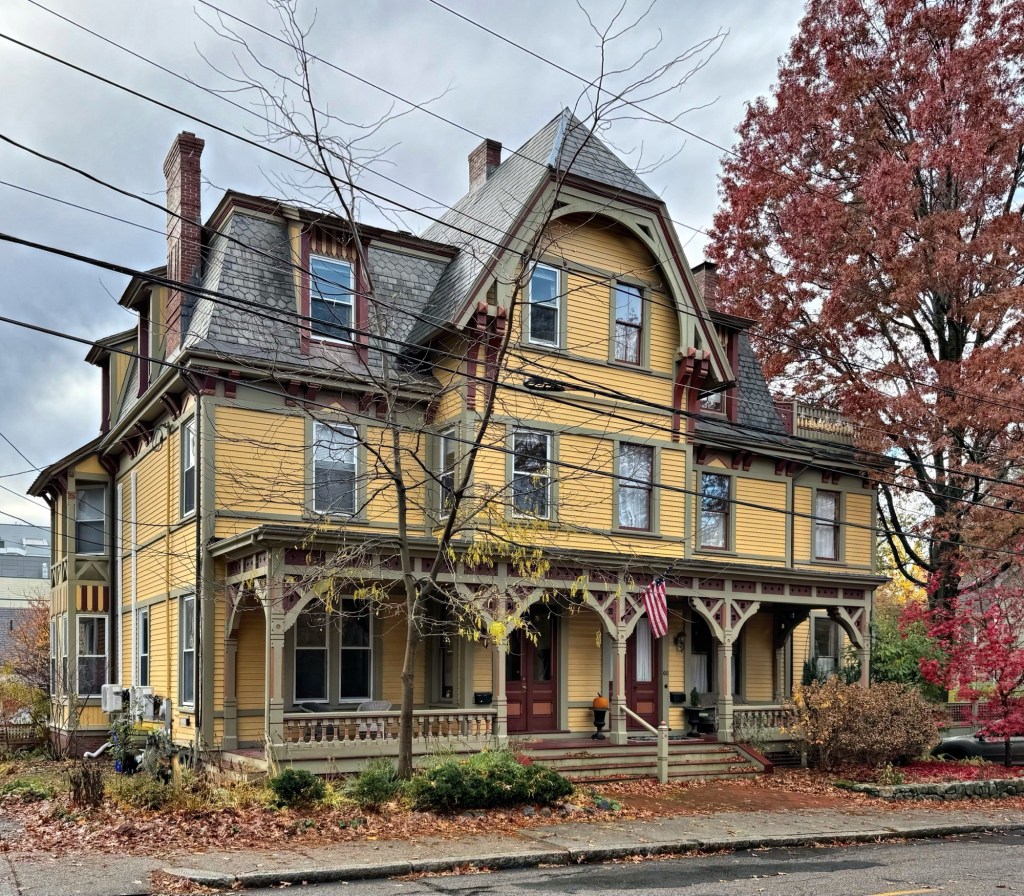
From the 1780s until 1870, almost all of Ashmont Hill (west of the present train station) was a farm, with the large farmhouse dating to about 1720, located at the corner of Washington and Welles streets, now the home to the Codman Square Branch of the Boston Public Library system. The farm was owned for a time by General Henry Knox. Sometime before 1850, the estate and mansion came into the possession of the Honorable John Welles, who died in 1855. The property would eventually be deeded to John Welles’ grandson, George Derby Welles, who was then just 26 years old and living in Paris with his wife, Armandine V. Derby. Welles wasted no time in developing the property through his agent, Boston Attorney Edward Ingersoll Browne. Streets were laid out and house lots were platted and sold, with some early properties built with much of the neighborhood developing by the turn of the century. The old Knox-Welles farmhouse would be razed by 1889, but the remainder of the neighborhood has since become a landmark neighborhood of Victorian-era homes. This mansard double-house at 67-69 Ocean Street dates to around 1872 and is one of the earliest properties in the area. Blending the Second Empire and Stick architectural styles, the handsome double house is said to have been designed by architect Luther Briggs for George D. Welles and rented to tenants.

Fay House // c.1840

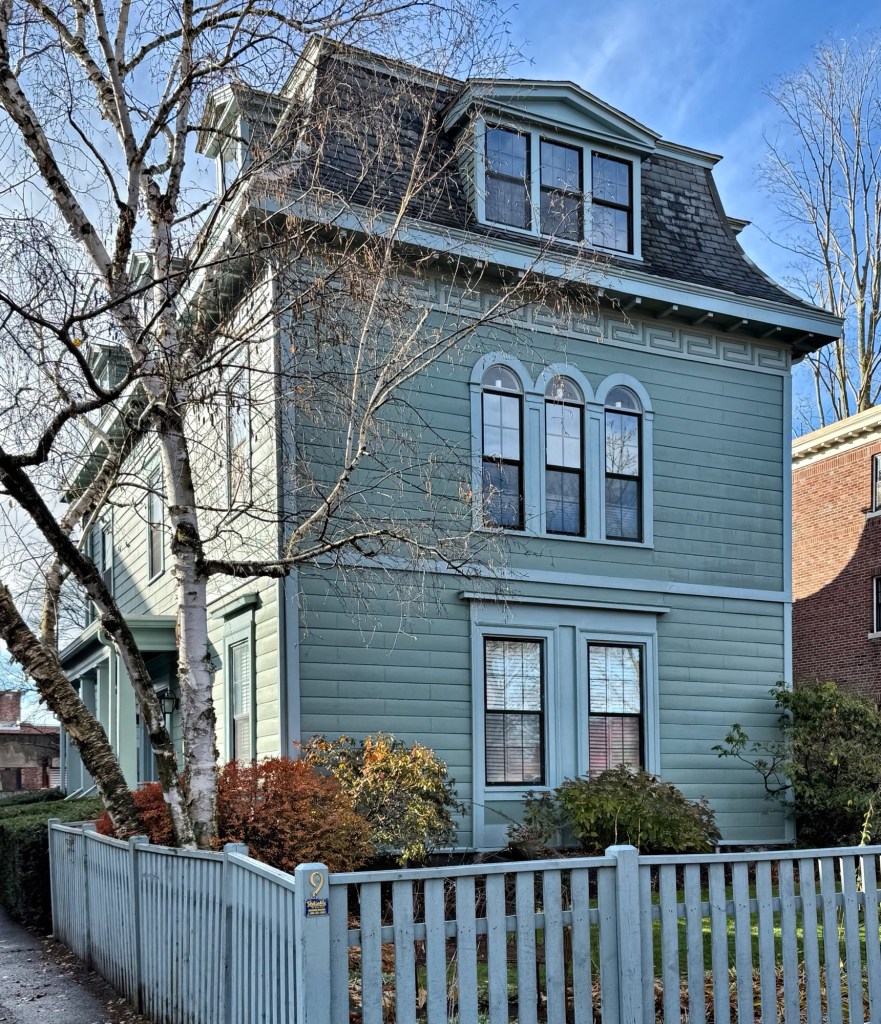
One of the most spectacular residences in Westborough, Massachusetts, can be found on Church Street, which is a unique blending of two distinct architectural styles. The house here was originally built around 1840 as a Greek Revival style residence, which would have had a gabled roof, and it retains the original corner pilasters and Ionic columned porch. Records state the the house was built for Cyrus Fay (1812-1884), possibly around the time of his marriage in 1837 to Caroline Pope. Caroline passed away in 1852 at the age of 36, and Cyrus remarried in 1855 to Nancy Avery White. It was likely after his second marriage, and after he became the first president of the Westborough Savings Bank in 1869, that the house was modernized with a Mansard roof with belvedere.

John A. Turner Cottage // c.1875 

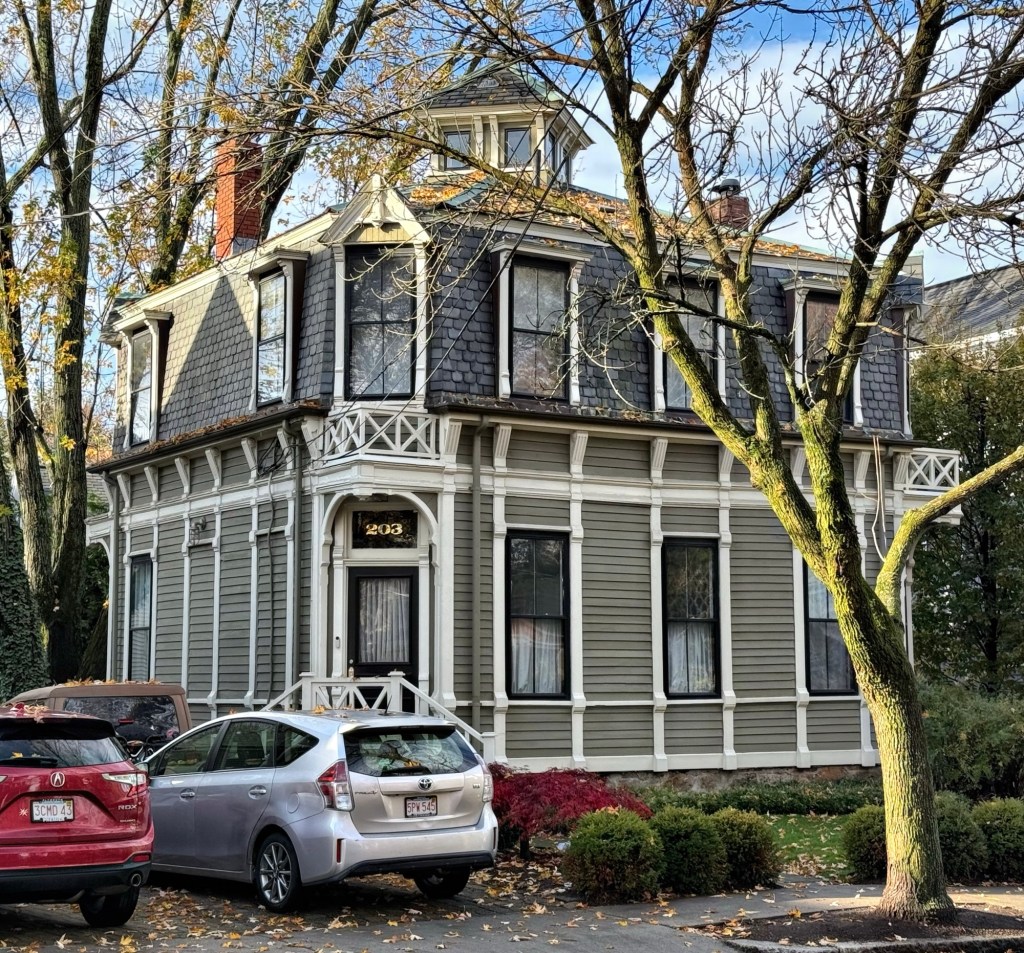
One of the most charming houses in Westborough, Massachusetts, can be found on Central Street, in the commercial village of town. The house was built around 1875 as a Mansard cottage, a style that was beginning to wane out of style by this point. The cottage was built for John Addison Turner (1833-1900) and his wife, Mary Ann Fiske. John worked as a superintendent at the National Straw Works factory, a local manufacturer of straw hats and other goods. The Turner House remains one of the best-preserved Victorian-era homes in Westborough and is even painted to highlight the many intricate details. 

Central Hall // c.1885

Located next door to the former High School (now the Town Hall) of Stonington, this mansard-roofed commercial building on Main Street is a prototypical example of late 19th century mixed-use architecture seen all over Maine. This building was constructed in the 1880s and known as Central Hall. The building contained retail spaces at the ground floor and tenement housing in the upper floors for workers at local granite quarries. The building is well-preserved and an important contributing building to the working village of Stonington.