St. Stephen’s Episcopal Church // 1914

When Ridgefield, Connecticut was settled in 1708 by Europeans, there was only one Episcopal Church in the state, and the general assembly allowed dissenters their own churches so long as they continued to pay taxes to support the Congregational Church. Ridgefield’s first Episcopal church, St. Stephen’s was built in 1740 on land granted by the Proprietors who founded the town and laid out lots along the towns new Main Street. In 1776, St. Stephen’s minister, Epenetus Townsend, a Tory (loyal to the British), was ordered to leave town with his wife and five children when the Revolution picked up steam. He was appointed chaplain to a British regiment and in 1779, the battalion was ordered to Nova Scotia. En route by vessel, a severe storm arose and all passengers were lost. The church was taken over by the commissary department of the American Army. During the Battle of Ridgefield, British troops set it on fire as a statement to the townspeople. The church was replaced two more times until 1914 when the present building was constructed. The Colonial Revival church is absolutely stunning and built from plans by (unknown to me) architect Walter Kerr Rainsford. The rubblestone church is one of the most pleasing designs I have seen in Connecticut!
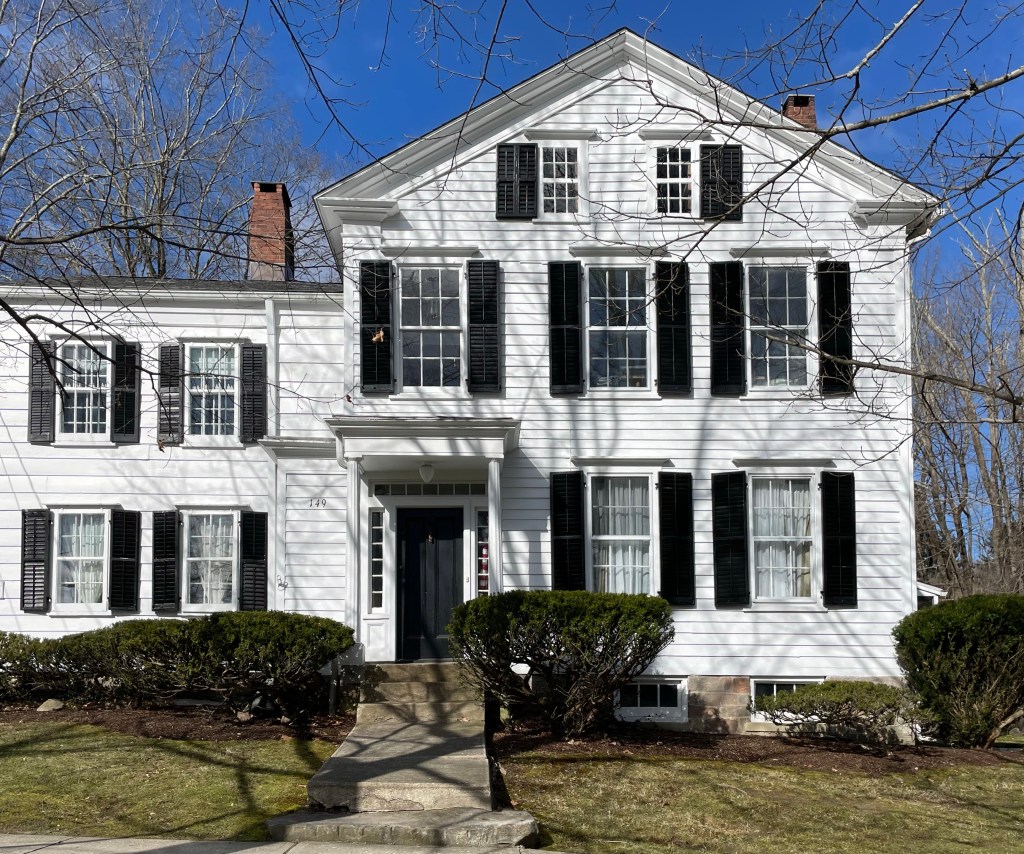
Seymour House // 1760

While this house appears to have been built in the mid-1800s as a Greek Revival home, it was actually built nearly a century earlier as one of the oldest extant properties on Main Street in Ridgefield, CT! Located on proprietors lot #20, the original building lots laid out for the new town of Ridgefield, this house appears to have been constructed in 1760 for Matthew Seymour (Seamore) and consisted of what is now the ell of the home (left side). Seymour operated one of the trade posts in town that engaged in trade with a nearby native Ramapo Tribe. The home was likely re-oriented and added onto with a more formal Greek Revival wing with its gable roof facing the street before the Civil War, a configuration it retains to this day.

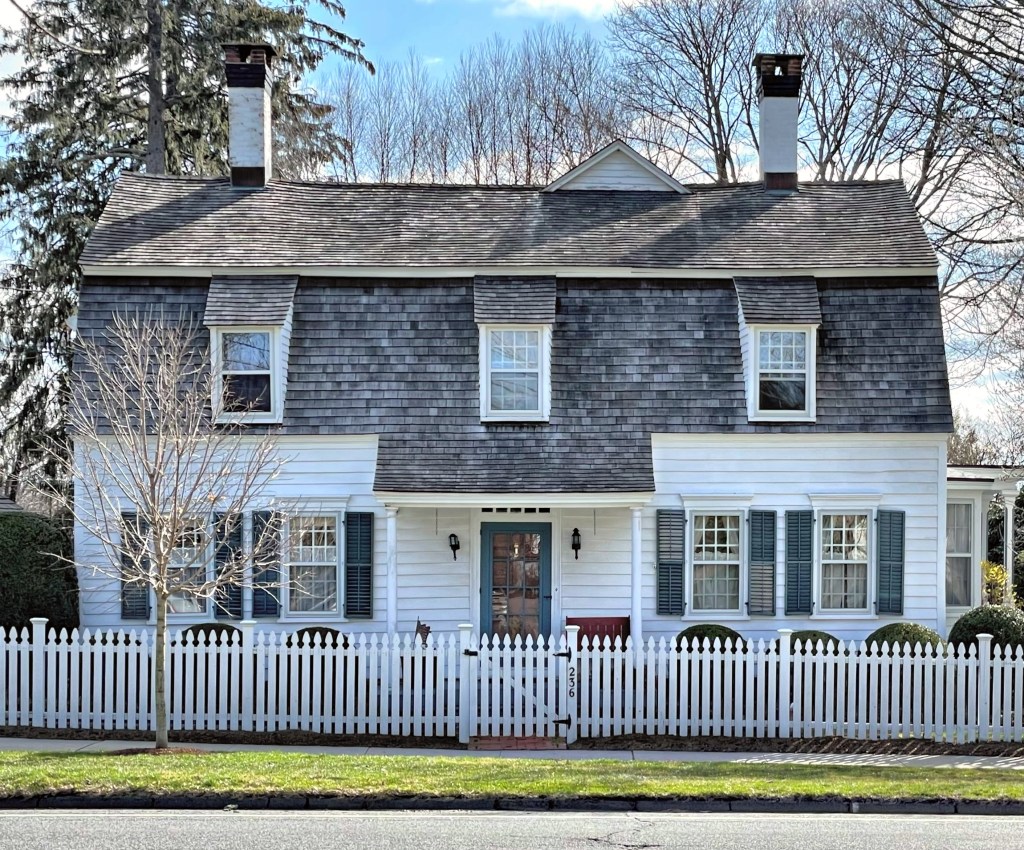
Rev. Thomas Hawley House // 1713


This old Georgian house was built in 1713 on the Proprietors Lot 5, on Ridgefield’s Main Street. Constructed for the first minister of Ridgefield, the home was originally occupied by 25-year-old Reverend Thomas Hawley (1689-1738) not long after his graduation from Harvard in 1709. In addition to being minister of the newly formed Congregational Church, Hawley (also spelled Hauley) also served as school teacher and town clerk. The house employs Dutch Colonial detailing from the gambrel roof to the extended portico over the front door, common in the Dutch colonies in the Hudson River Valley in New York.

Hawley House // c.1865

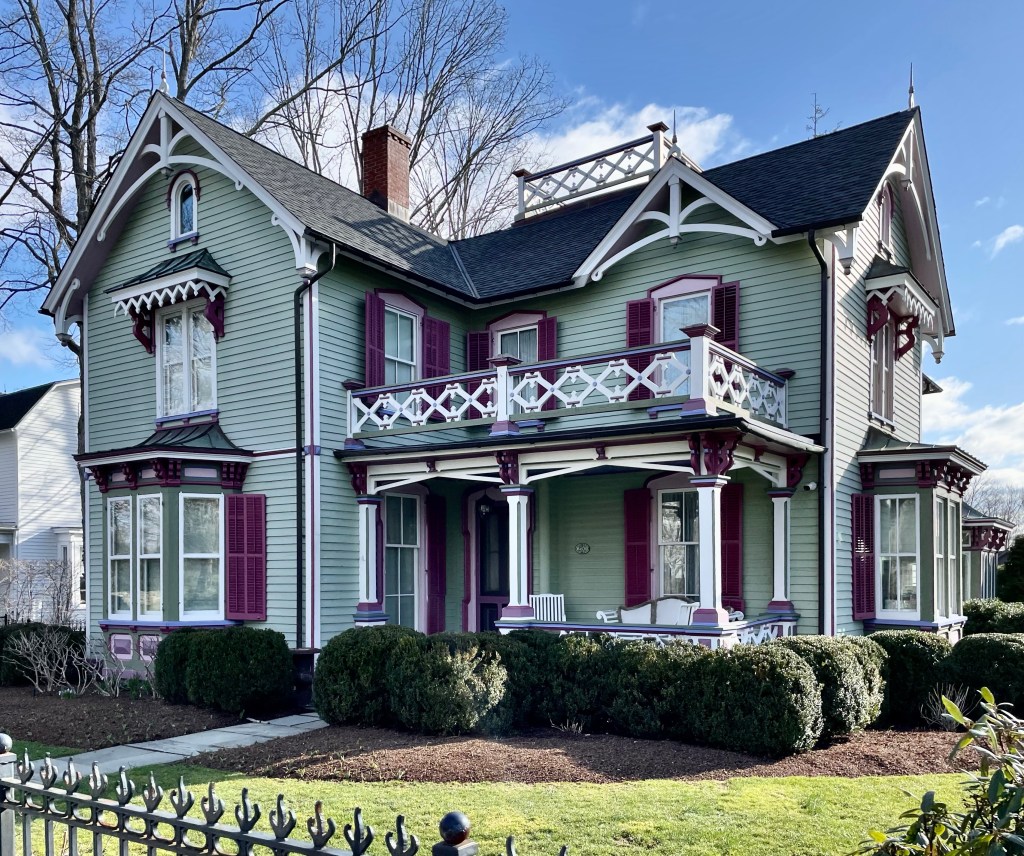
Located next to the Reverend Thomas Hawley House (last post), this gingerbread cottage on Ridgefield’s Main Street looks straight out of a fairy tale! The home appears to have been built around the Civil War (or a renovation of an earlier house) and blends Italianate and Gothic detailing elegantly under one roof. The home was built on land that was owned by the Hawley descendants and was occupied by a few members of the family until it sold out of Hawley ownership in the 20th century. The house was purchased in 2002 by Gregory and Valerie Jensen who restored the home. Mrs. Jensen is the founder of the Prospector Theatre, a non-profit cinema dedicated to providing a higher quality of life through meaningful employment to people with disabilities.

Czar Jones House // c.1787

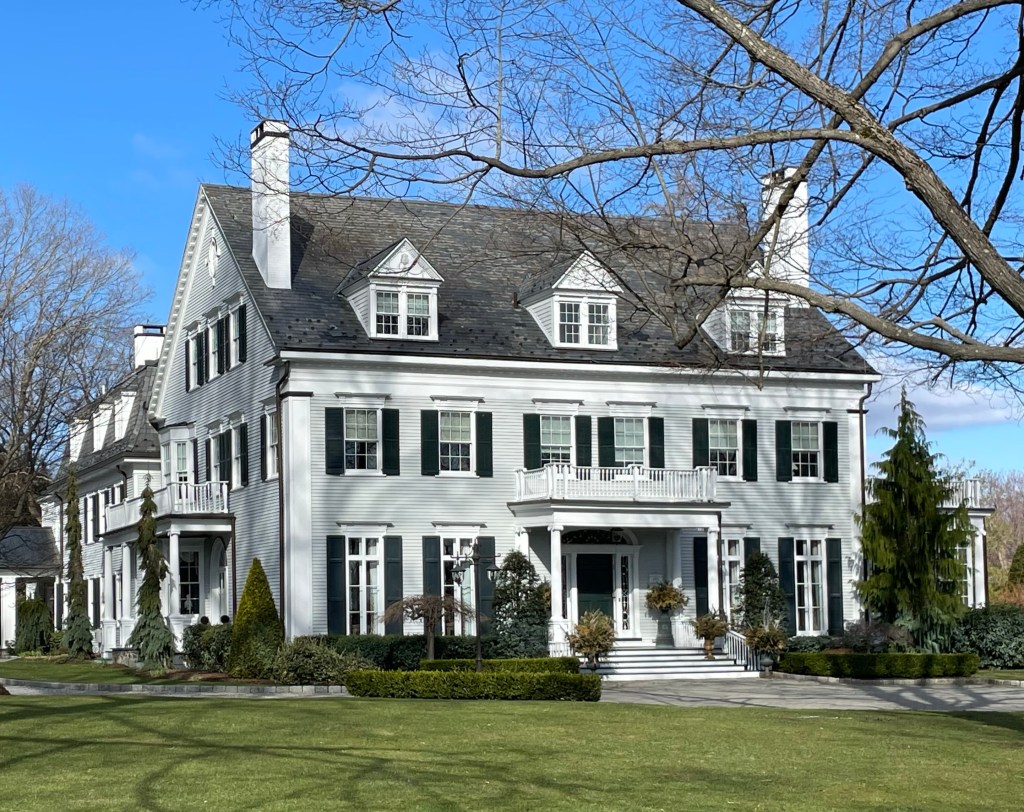
Czar Jones (1789-1869), a woodworker and a justice of the peace, served in the War of 1812 and later was a partner in the local carriage manufacturing company in Ridgefield, CT. Jones bought a circa 1787 house on Main Street in 1818 and modernized it to serve as his family’s residence. The modest late-Georgian house was updated in the Federal style. Not long after Czar’s death (his only wife died 1851) the home was then purchased by New York City publisher, Albert H. Storer and his wife Sophie, the latter was the founder and first president of the local Ridgefield Garden Club. The couple divorced in 1915, and Sophie moved to Europe before remarrying and settling in California. The home that was intended as a summer getaway for the family, became Mr. Storer’s primary residence as he remained in Ridgefield with his son Francis, daughter-in-law, and grandchildren, until his death in 1933.

Rockwell House // c.1850

Built in 1850, likely as a late-Greek Revival or Italianate style home, this property on Main Street in Ridgefield was completely “modernized” in the 1880s in the Queen Anne style popular at the time. The home was originally built for Francis Asbury Rockwell (1818-1881), a tin-smith, wine-maker and inventor who married Mary Lee Everest, who also had deep roots in the community and was a daughter of a local Revolutionary War captain. The couple built a home on Main Street and raised their children there until Francis and Mary died in 1881 and 1883 respectively. The family home was inherited by their eldest son, Charles Lee Rockwell, who became the director of the First National Bank in town. Charles updated the house to give it the Queen Anne Victorian flair we see today.

Lounsbury House // 1896

One of the (many) stately homes on Ridgefield’s Main Street, this massive Neo-Classical mansion is also among the most visited in Fairfield County. Lounsbury House was built in 1896 by former Connecticut Governor Phineas C. Lounsbury. While attending the 1893 Chicago World’s Fair, Governor Lounsbury was so taken by the Connecticut State Building that he built a replica to serve as his family home. The Connecticut State Building was designed by Waterbury-based architect, Warren R. Briggs at a cost of $112,000! Gov. Lounsbury loved this house, which he named “Grovelawn” until his death in 1925. After his death, his heirs were unable to maintain the massive home, and it started to decay. The Town of Ridgefield did not want to see the mansion demolished, and in an early example of historic preservation, the town purchased Lounsbury House in 1945. A school was built behind and nearly ten years later, the home was leased to the The Ridgefield Veterans’ Memorial Community Association. The home is now managed by a board and rented for weddings and community events.

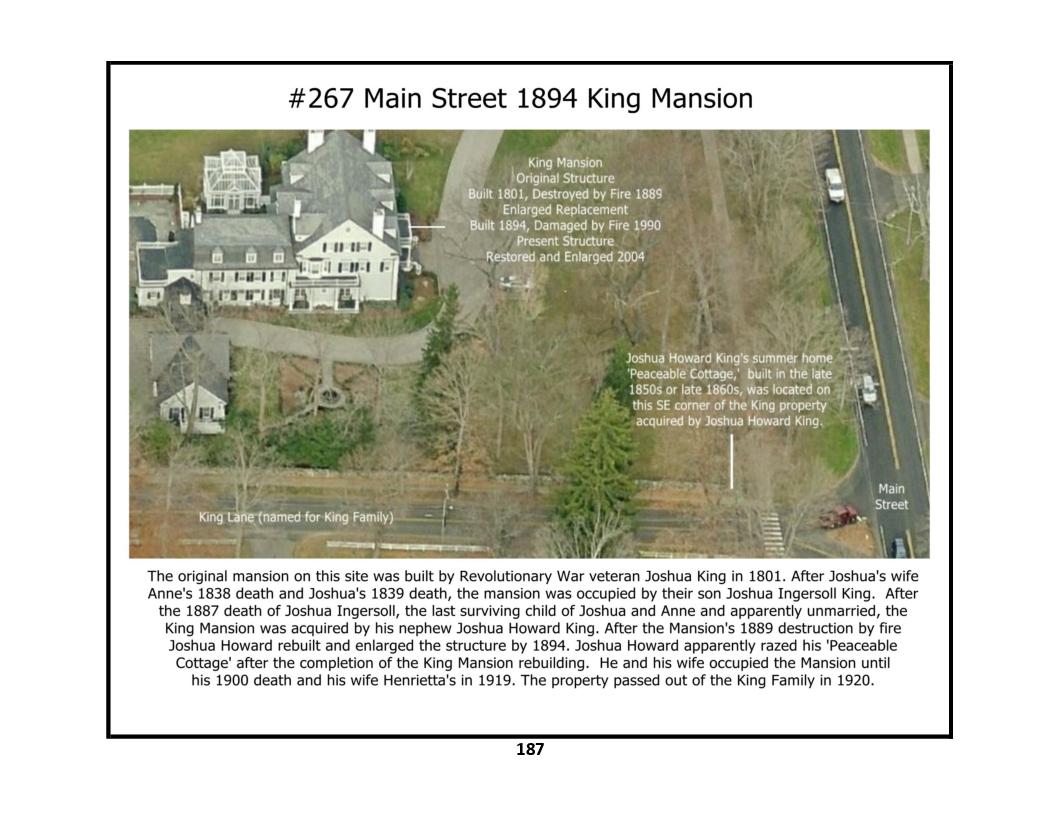
King Mansion // 1894

After the American Revolution, Lt. Joshua King settled in Ridgefield and built the King Mansion in 1801, a Federal style home that commanded the Main Street lot. King was born in Bridgewater, Massachusetts and fought in the Revolutionary War near the border of Connecticut and New York. After the war, he settled in Ridgefield and married one of the most eligible bachelorettes in town Anne Ingersoll. Anne was the daughter of the Rev. Jonathan Ingersoll, pastor of the Congregational Church of Ridgefield. After a long life running a store and raising a family, Joshua died in 1839, a year after his wife. The mansion was inherited by their son Joshua Jr. until his death in 1887. In 1889, a fire destroyed much of the house. When it burned down, The New York Times described it as “the grandest old mansion in the village.” It was quickly replaced by the current house, modeled after the original but larger, which was placed much farther back from the road in the Colonial Revival style. Fire damaged the house again in the 1990s, and the present structure was restored and enlarged from 2002-2004, its HUGE!

Henry Smith House // c.1845

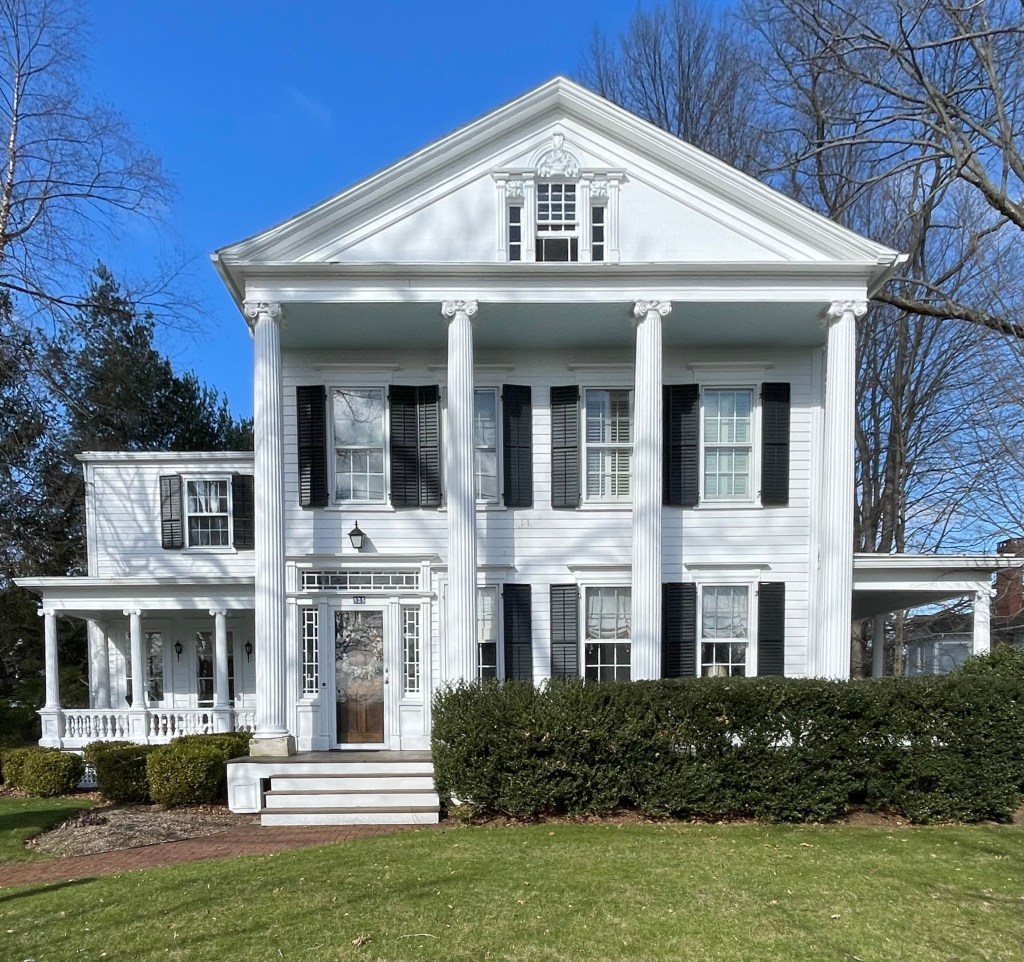
This stunning temple-front Greek Revival home on Main Street in Ridgefield, Connecticut is an absolute dream! The home was built in the mid-19th century for Henry Smith, who operated a shirt factory in town with his father. The house’s gable roof facing the street completes a pediment, which is supported by a projecting portico of four colossal Ionic columns. In the pediment, a gorgeous Palladian window adds so much character to the facade. I love a good temple-front classical home!

First Congregational Church, Ridgefield // 1888

The First Congregational Church was first established in Ridgefield, Connecticut just four years after the establishment of the town. Civic leaders in October 1712 successfully petitioned the Connecticut General Assembly for permission to levy a tax for “the settling and maintaining of the ministry in the said Town of Ridgefield.” Rev. Thomas Hauley, the first minister, also served as town clerk and school teacher. The first meeting house, on the town green, opened for worship in 1726. Plans for a new meeting house were drawn up in 1771 to fit a growing population, but construction was not complete until 1800. The second church was built in a more traditional style with a steeple. With a shift in the towns demographic from rural homeowners to ritzy exurb to New York City, a more suitable church was required by the end of the 19th century. Josiah Cleaveland Cady, one of the many great New York architects at the time was hired to design a new church suitable for the wealthy New Yorkers who summered in town to consider a neighbor, and he did not disappoint! The building blends many styles from Queen Anne, to Victorian Gothic, to Romanesque Revival in a way that isn’t clunky as in some other versions.