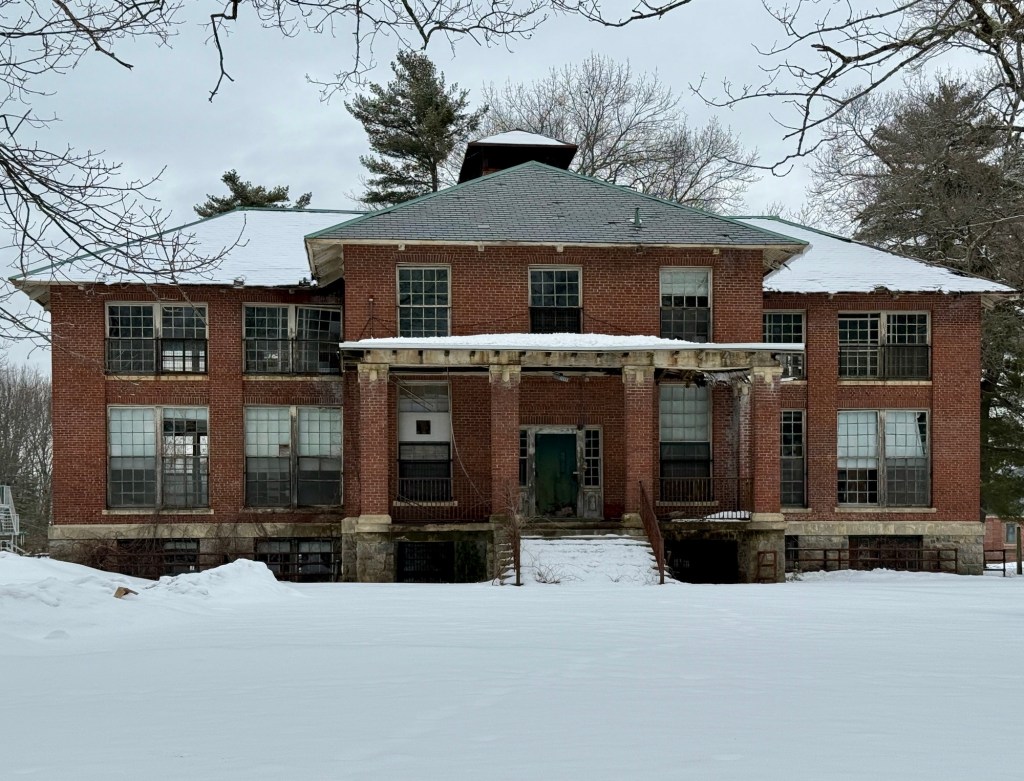
Mount Saint John School // 1908

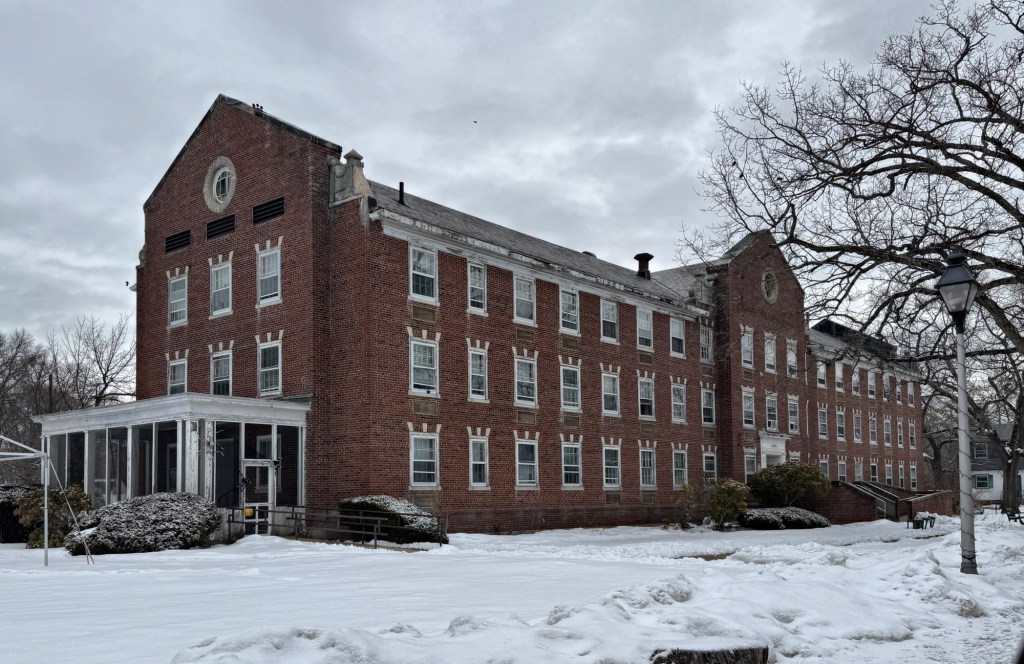
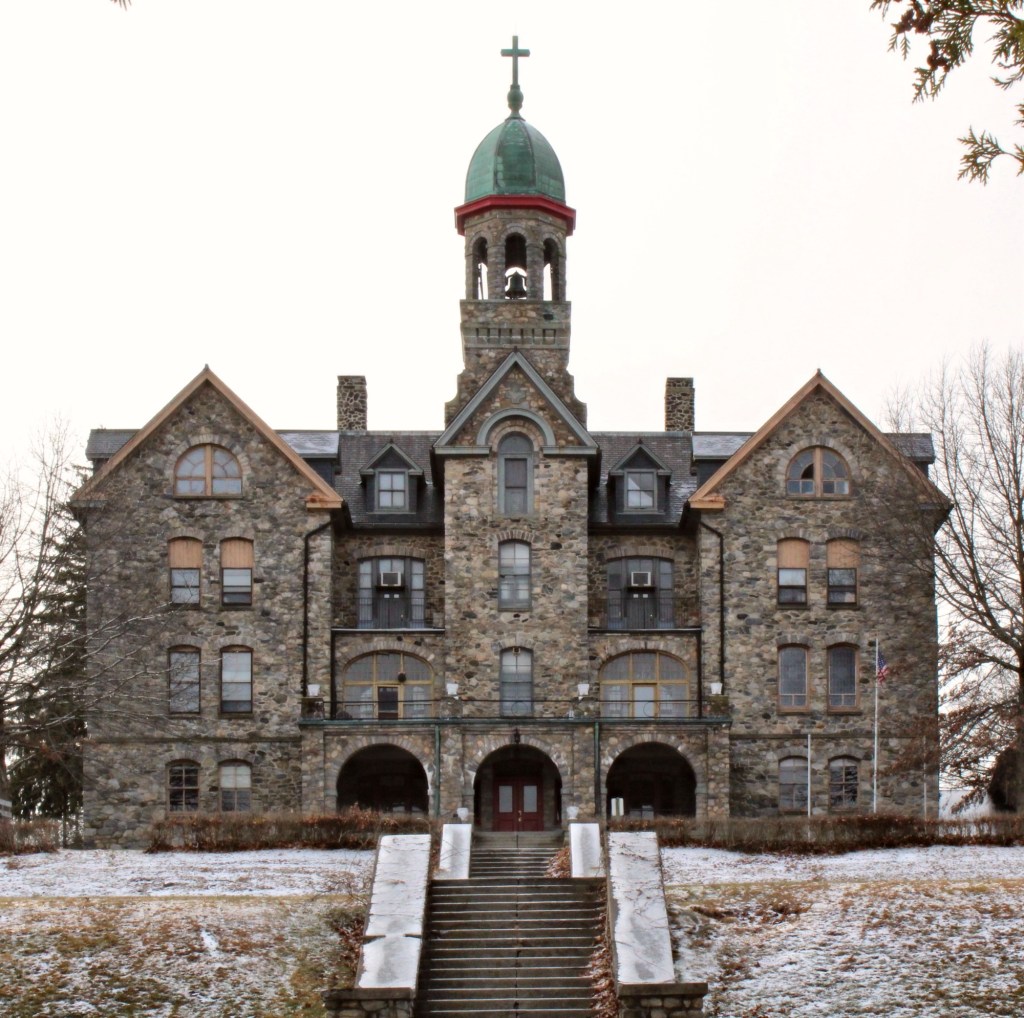
The former Mount Saint John School in Deep River, Connecticut, sits atop a hill on the western banks of the Connecticut River and is a visual landmark in every sense of the word. The school was founded by the Diocese of Hartford, who acquired the site in Deep River and began construction on the present building in 1907. Completed by 1908, the stone building (architect not known at this time), served as an industrial school for 100 boys in the Hartford region aged 8-16. The school, led by the Xaverian Brothers, was intended to educate troubled young men in the Catholic faith and learn working skills for a profession. The use changed numerous times throughout the 20th century, and ended up becoming the Mount Saint John School. Then under the Norwich Diocese, the school became known as the Mt. Saint John School. The school closed years ago and the historic building and surrounding campus’ future are uncertain.

Pawtucket-Central Falls Station // 1916

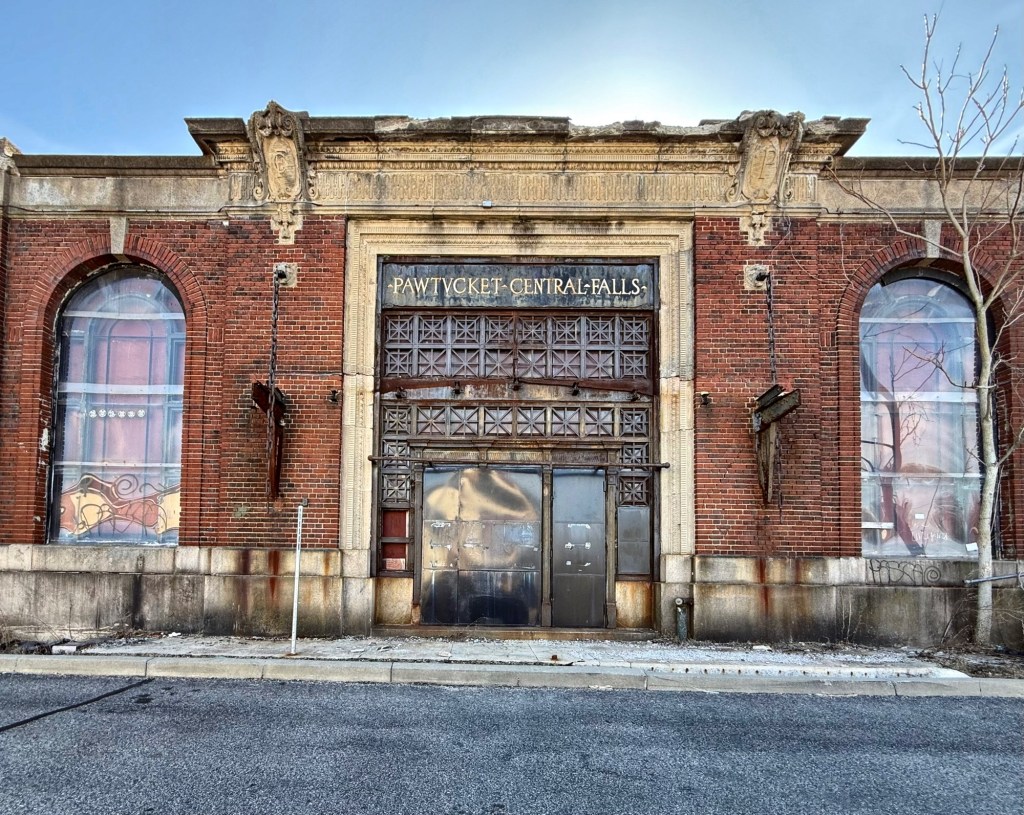
The Pawtucket-Central Falls Railroad Station is a crumbling relic of a time once dominated by rail travel. This architectural landmark spans the border of the cities of Pawtucket and Central Falls, along with the tracks of the former New York, New Haven and Hartford Railroad and is one of the more unique buildings in Rhode Island. The station opened in 1916 to replace separate stations in the two cities from plans by F.W. Mellor, architect for the New Haven Railroad with Norcross Brothers of Worcester facilitating the construction over a structural steel base spanning the tracks. As many as 140 trains per day once passed under this station, but in 1959, it closed. The building was purchased by a private owner and plans failed to materialize for decades, leaving us with a crumbling masterpiece in architecture and engineering. In 2007, the lot was partially developed with the addition of a suburban, soulless CVS store and parking lot, which today, directly abuts the station. In 2023, a new Pawtucket/Central Falls station opened nearby, which has brought new calls to demolish this building, with people actively seeking grants to fund the estimated $10 Million dollar demolition.

Steinert Building // 1894

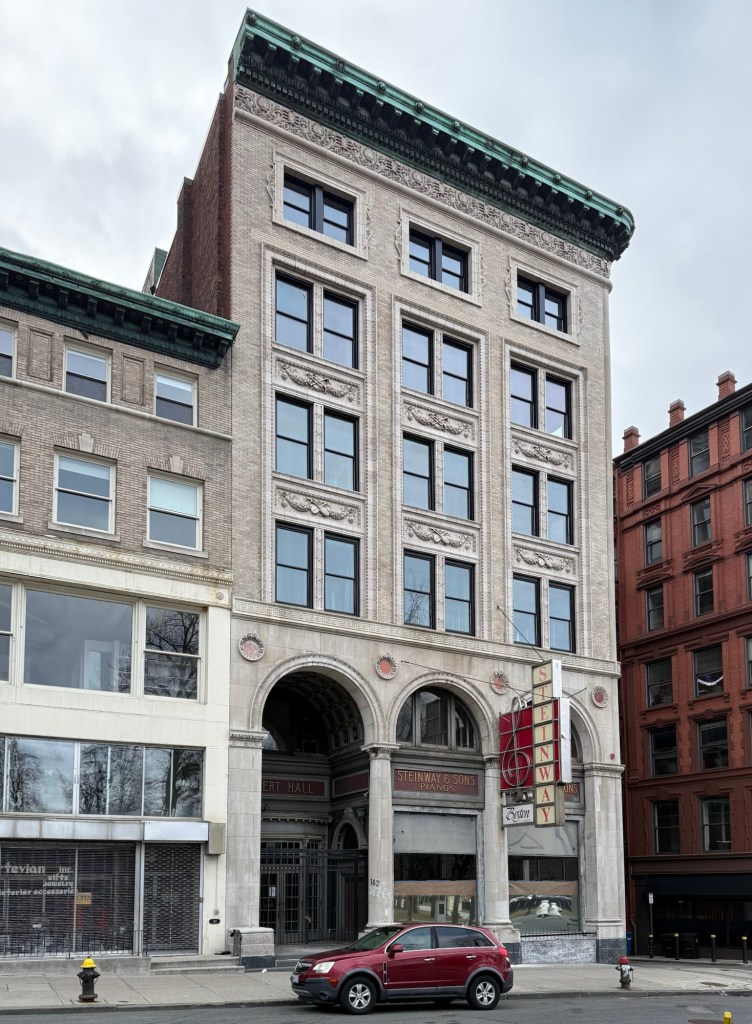
The Steinert Building on Boylston Street in Boston is one of the city’s most iconic and mysterious buildings. The Beaux Arts style building was constructed in 1894 from plans by architects Winslow & Wetherell and contained three floors of display rooms, three floors of teaching studios and practice rooms. The building is arguably best-known for the 650-seat Steinert Hall, a basement concert hall constructed 35′ under ground and considered by some to be one of the most perfect concert halls, acoustically, in the U.S. The building was constructed as the national headquarters for the prestigious firm of M. Steinert & Sons, one of the largest and finest music stores in New England. Established in 1860 by Morris Steinert, a Bavarian musician, musical instrument collector and founder of the New Haven Symphony (originally Steinert’s Family Orchestra). The company was expanded under his second son, Alexander Steinert, who had the Steinert Building in Boston built, requiring a music hall to showcase musicians and their products. The subterranean concert hall closed in the 1940s, following the 1942 Cocoanut Grove fire, the third-deadliest building fire in American history, which resulted in deaths of 492 people. This tragedy inspired an entirely new set of building and fire codes throughout the city; which ultimately would close Steinert Hall, as it had only one means of egress, making it too cost-prohibitive to bring the theatre into compliance. The building was long-operated as a piano showroom, but closed in 2017 and has been vacant ever-since. The basement music hall remains frozen in time, awaiting a new life.

Ames Sword Company Offices // c.1865

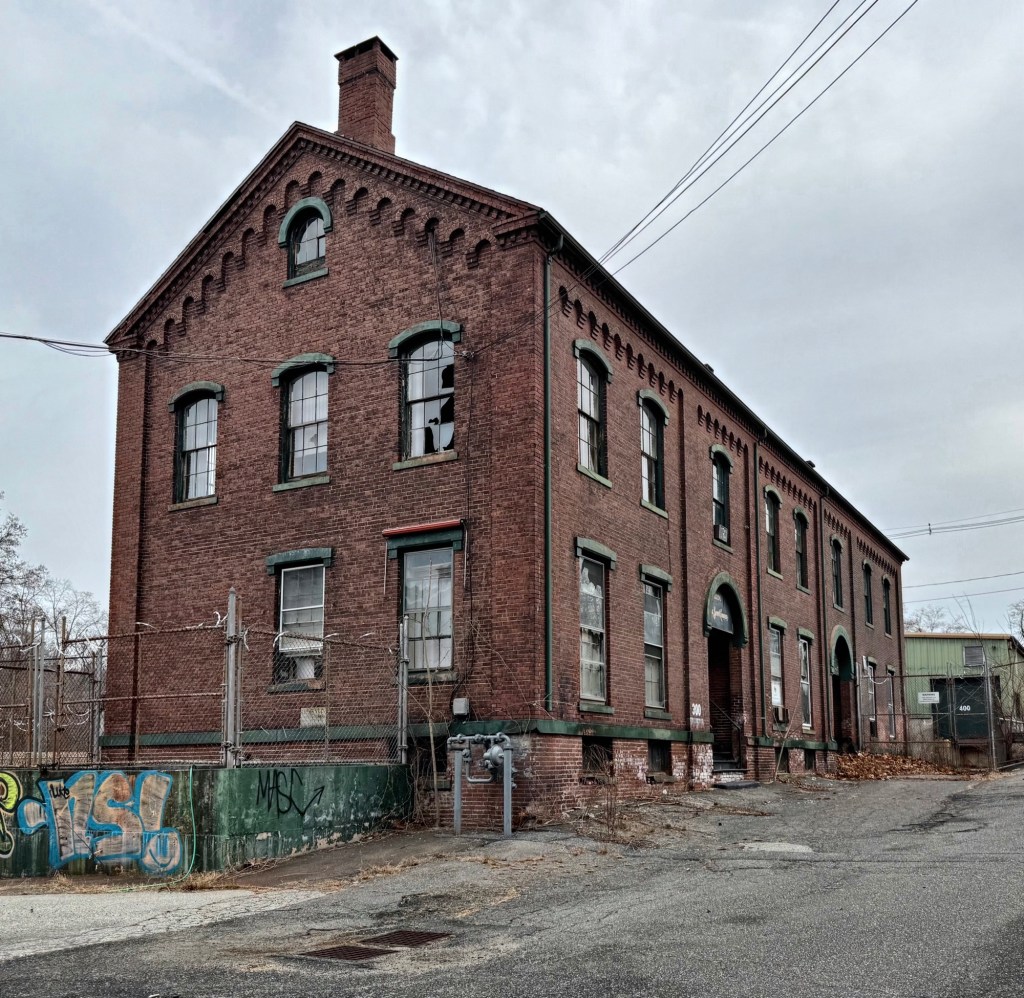
Adjacent to the main Ames Manufacturing Company mills in Chicopee, Massachusetts, this handsome brick structure has ties to industry and the economic growth of the city in the 19th and early 20th centuries. Tucked away on Grape Street, at the edge of the Chicopee River, this building was built following the American Civil War as the offices of the Gaylord Manufacturing Company, a later subsidiary of the Ames Manufacturing Company. The company was run by Emerson Gaylord, a manufacturer, who produced leather belting and swords for the military just before and during the War. After the Civil War, the Gaylord company manufactured cabinet locks and society swords. In 1881, the adjacent Ames Manufacturing Company consolidated its own sword department with the Gaylord Manufacturing Company, forming the Ames Sword Company. The company would close in the 1930s, and today, this handsome brick building with corbelled cornice and segmental arches, sits vacant, awaiting preservation and a new life.

Dwight Manufacturing Company Complex // 1841+

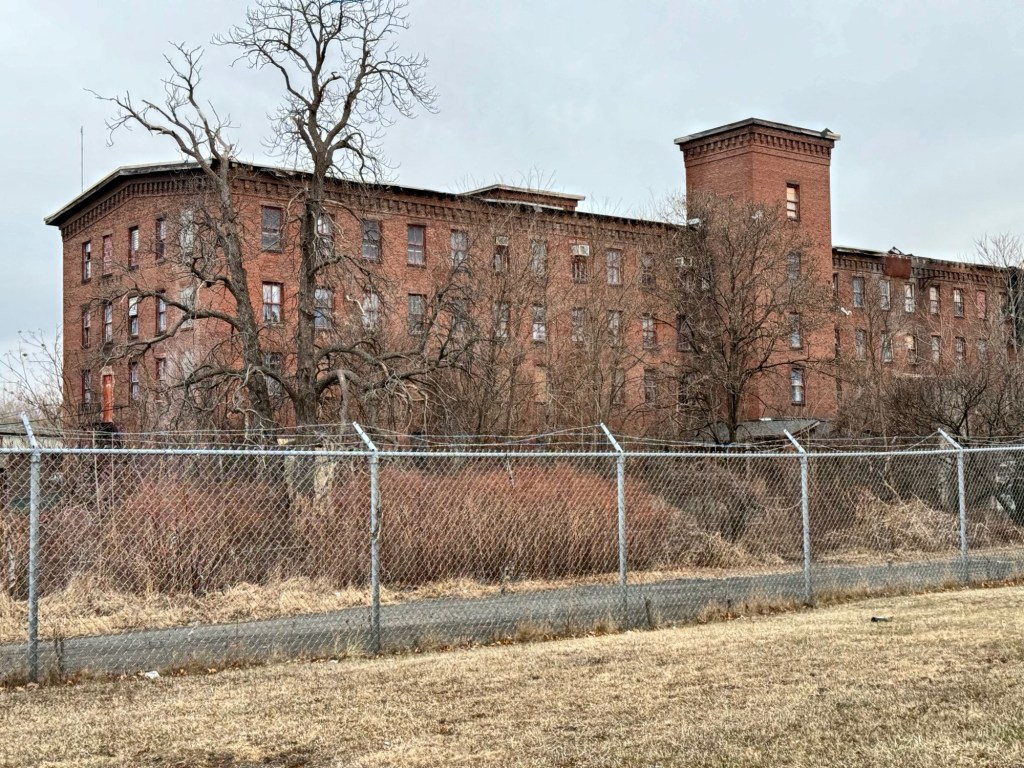
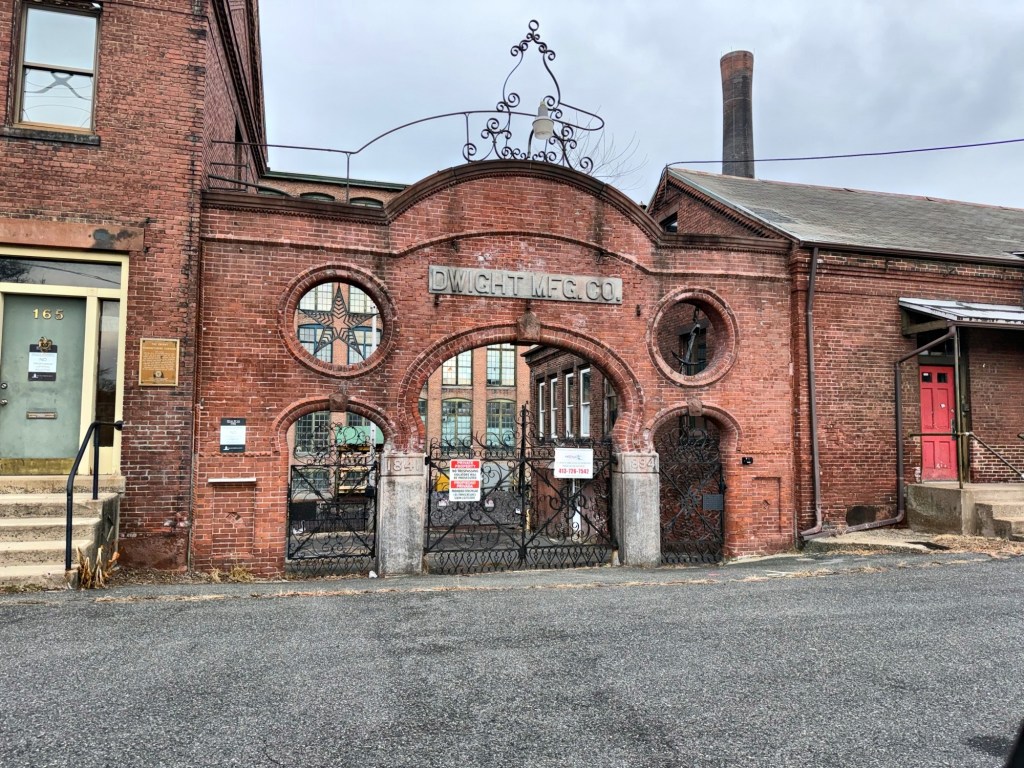
The Dwight Manufacturing Company is named for Edmund Dwight (1780-1849) of Boston, an industrialist who envisioned an industrial town on the Chicopee River. Dwight, having a country home in Chicopee, had begun a venture with his brother, Jonathan, at Chicopee Falls creating the Chicopee Manufacturing Company, to produce cotton cloth. Due to the company’s immediate success, the Dwights along with other investors formed the Springfield Canal Company in 1831, with the goal to create the “new Lowell”, an industrial community in what is now Chicopee Center. In 1856, the Dwight Mills purchased some earlier mill complexes, creating the Dwight Manufacturing Company and consolidating all their cotton cloth manufacturing into one organization. In addition to the mills, the Company also built employee housing
along Depot and Dwight Streets, a stone’s throw from the mills. The creation of employee housing allowed the Company to attract new employees in particular women and children, nearly all immigrants, who could be housed together. My favorite part of the complex is the entrance gate, built in 1894, connecting the Office and Cloth Building. It is amazing to think of all of the people who passed through this portal, working long hours for a better life. Overtime as production methods changed and technology evolved, nearly all the original mills would be replaced or retrofitted. Despite the changes, the Company could not remain profitable and shut down production in 1927 and ultimately selling the land and equipment in 1930. Some smaller manufacturing has since occupied some of these buildings, but they remain largely (if not entirely) vacant, awaiting a new life.

Hiram Lodge 39, Knights of Pythias // 1895

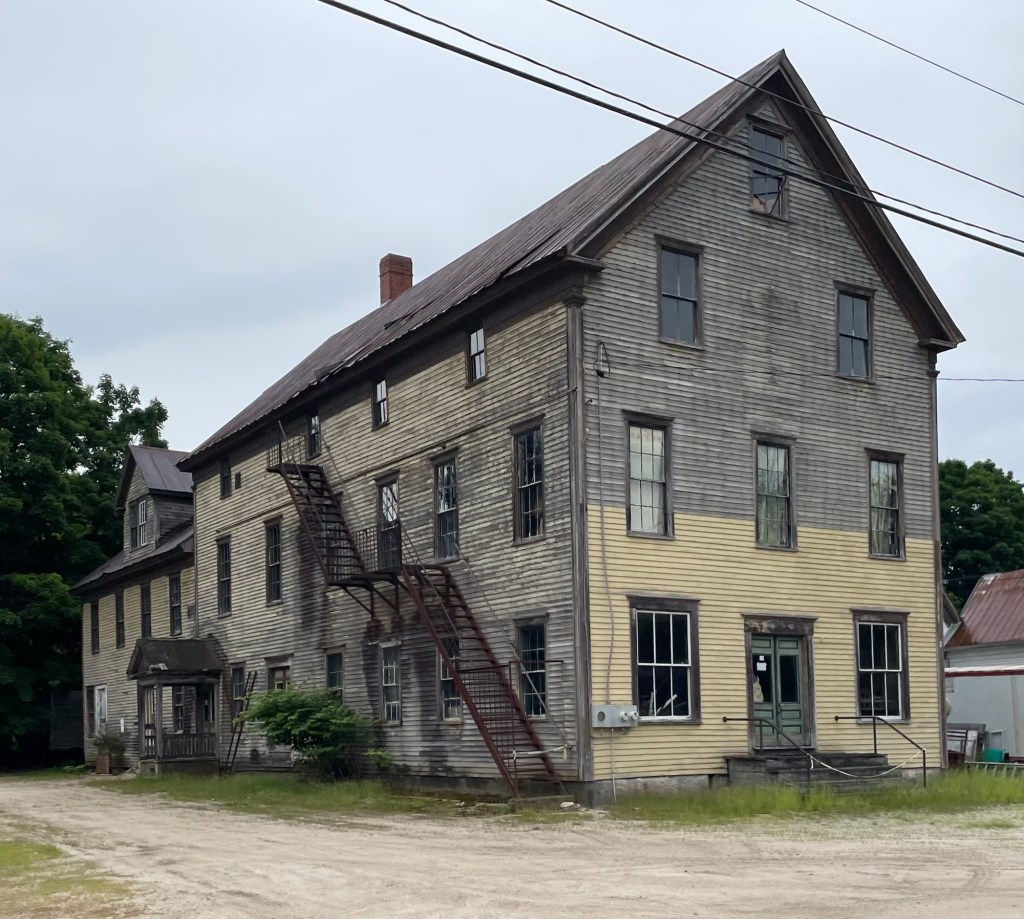
Another of the extant, significant vernacular buildings in the small town of Hiram, Maine, is this large frame building on Main Street. Hiram Lodge #39, Knights of Pythias, was organized in 1883 and a building was constructed on this site around that time. The first meeting hall was destroyed by fire in 1895, and soon-after replaced by this large lodge building, which is possibly the largest wooden building in town!  On the destruction of that first “hall” by fire in 1895, the Lodge hired Alva Ward to build what is probably the largest wooden building extant in Hiram. The Knights of Pythias Hall is important as a remnant of Hiram’s earlier commercial prosperity, with general store on the first floor, a large hall on the second floor (where dances, theatrical performances, and public suppers were held), and the lodge hall on the third floor.

Overlook Mountain House Ruins // 1923-

One of the most intriguing and historical hikes around is at Overlook Mountain in Woodstock, there is just something so mesmerising and enchanting about abandoned places. Overlook Mountain has long been a significant location in New York. In the boom years of New York City after the Civil War, more than 90 quarries in the Town of Woodstock (many around Mount Overlook) produced bluestone for sidewalks in Manhattan. By the end of the 19th century, the mountain and surrounding area became a tourist location for New Yorkers escaping the woes of city living, looking to breathe in the fresh mountain air up the Hudson. The current ruins Overlook Mountain House was actually the third hotel on the site. The first Overlook Mountain House was built in 1871 and accommodated 300 guests, before it was destroyed by fire in 1875. It was rebuilt in 1878 by the Kiersted Brothers of Saugerties. Overlook was used irregularly between 1887 and 1917, when Morris Newgold of Manhattan purchased the hotel. In 1921, it was the site of a secret organizational meeting of what was to become the Communist Labor Party of America. The second incarnation of the Overlook Mountain House was destroyed by fire in 1923. And Morris Newgold sought to rebuild with fireproof construction.

His architect used concrete to rebuild the hotel, which likely would have been covered with stucco. They also broke ground for a chapel, stables, and a standalone lodge for private housing for his family. Newgold’s shaky finances paired with the Great Depression made for slow progress, and portions of the resort were still “under construction” as late as 1939 (and the main hotel never being finished from what I could find). Morris Newgold died in 1940 and the property was either sold by his son or acquired via eminent domain by the New York State Conservation Department and made part of the Catskill Forest Preserve. You can now explore the old ruins of the Overlook Mountain House between views of the Catskill Mountains.

1928 House

The Reefs Mansion – The Bells // 1885-1963

‘The Reef’ a fabulous Gilded Age estate in Newport was built in 1885 for Theodore M. Davis by the Boston architectural firm of Sturgis and Brigham. The elegant shingle and stone Queen Anne villa was erected as both a summer house and to house some of Davis’s vast collection of paintings and Egyptian artifacts, collected during his excavations in Egypt’s Valley of the Kings between 1902 and 1913. Besides the architecture of the home, the Reef Estate was also famous for its walled gardens, greenhouses, and outbuildings, sitting upon eighteen acres. overlooking the Atlantic Ocean. Following Mr. Davis’ death in 1915, Milton J. Budlong of Providence purchased the estate. Milton divorced from his wife Jessie in 1928, and it was MESSY. Their Newport summer estate was placed in contention. The house, never again lived in by the family. During World War II, anti-aircraft gun emplacements were set up around the grounds, with the mansion housing gunnery personnel. After the War, the estate was given back to the Budlong heirs, who did not reside there. Vandalized throughout the 1950’s, the villa was set on fire in 1961 and demolished two years later in 1963. In 1969, the waterfront property came under the control of the State of Rhode Island and in 1976, became a state park. The old carriage house/stable and a later observation tower (possibly converted from a former water tower) stand today.