The Linden Apartments // 1885

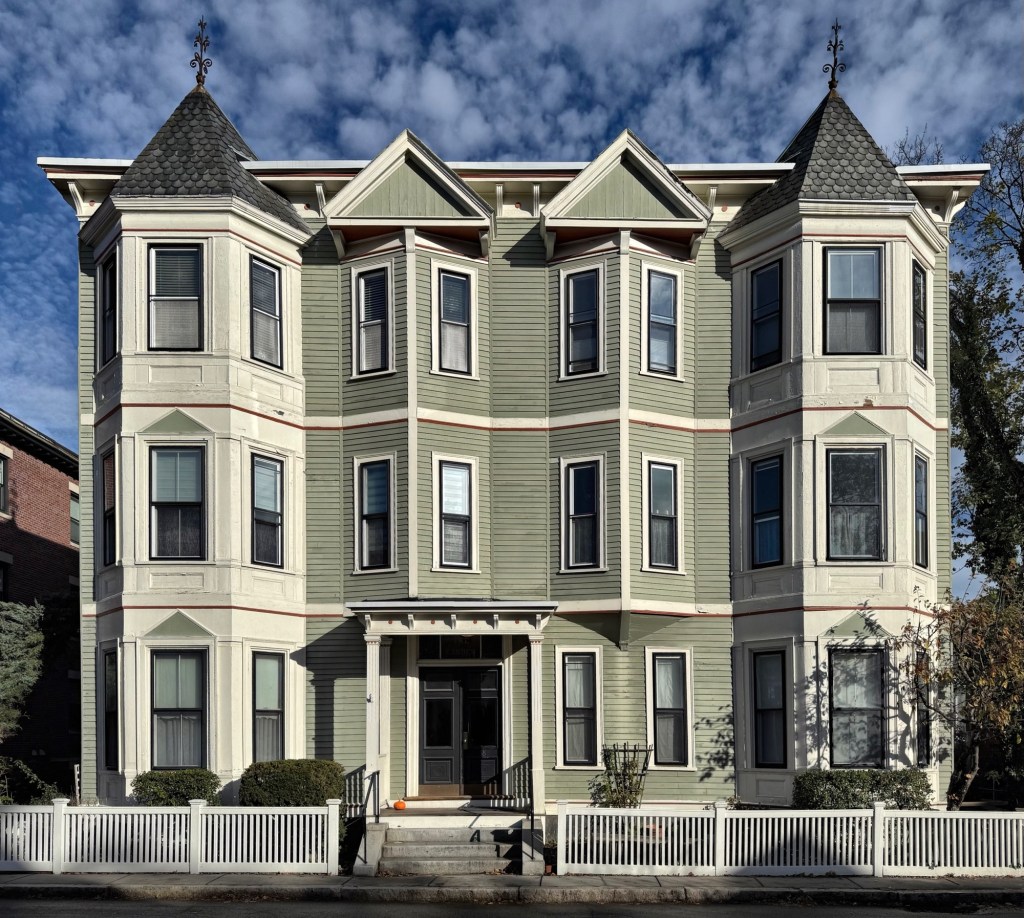
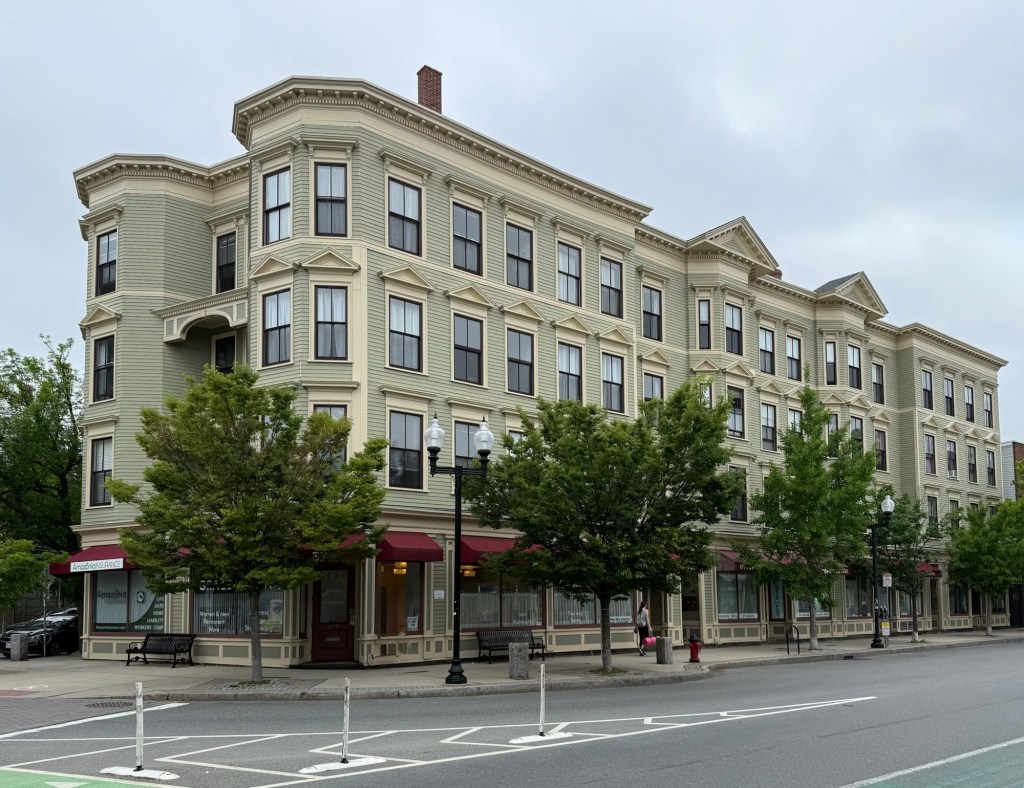
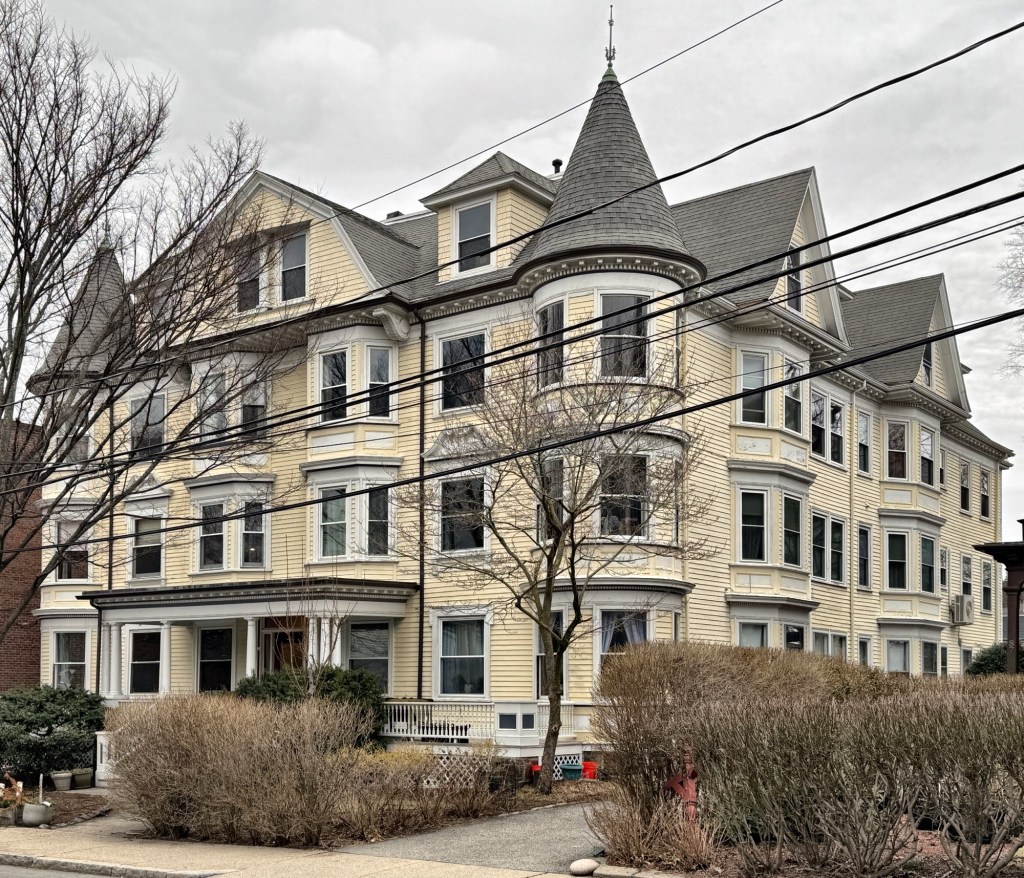
The Linden Apartments is an early multi-family apartment building in Brookline Village that shows how density can be done tastefully. The building is located at the center of Linden Place, Brookline’s first planned subdivision which was laid out in the 1840s. By the end of the 19th century, development pressure associated with the growth of Brookline Village lead to further subdivision of the original building lots and greater density of settlement in this neighborhood. The Lindens was constructed in 1885 by and for James W. Tobey (1830-1914), a local builder, as an income-generating property. Designed in the Queen Anne style, the Linden Apartments contained six suites, all with exceptional quality materials and finishes. The façade is embellished with two octagonal bays at the ends and two angled bay windows with gables which break up the otherwise rectangular form. The building has been lovingly maintained by residents and contributes to the rich history of Brookline Village from a sleepy village to a vibrant and dense “downtown”.

Hollander Apartment Buildings // 1892

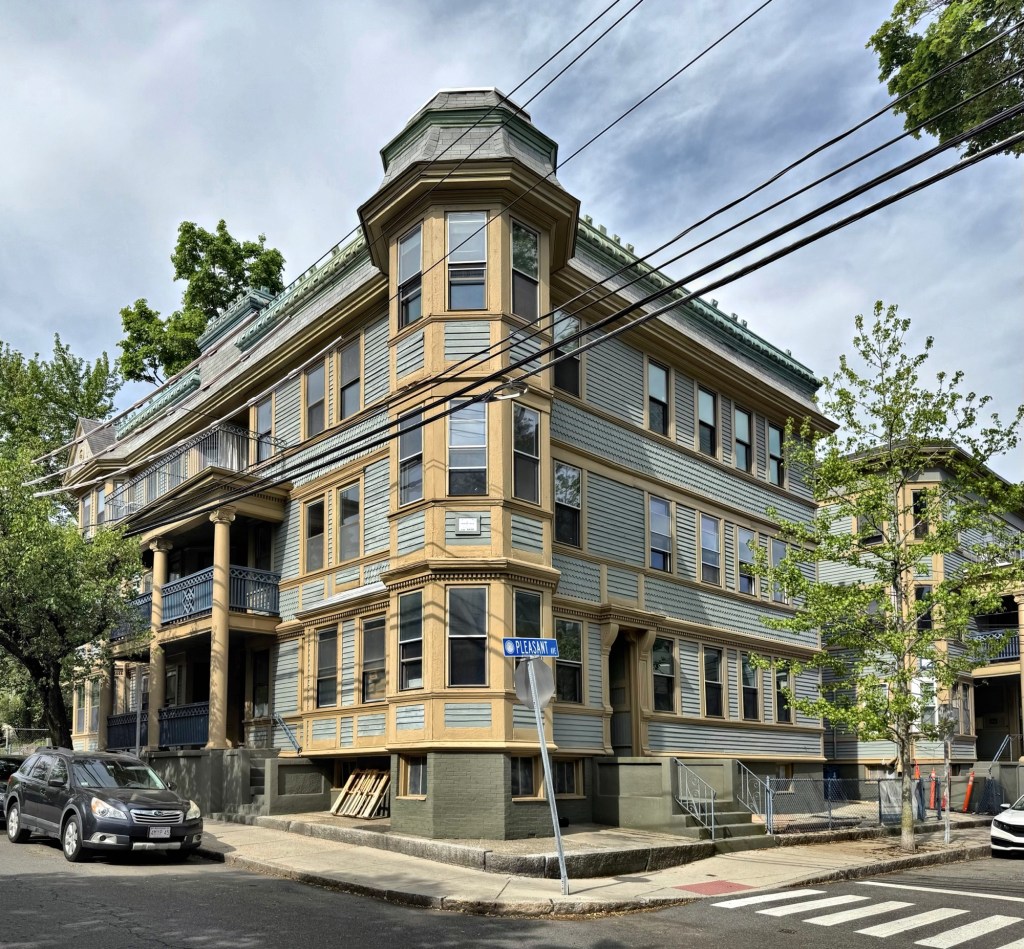
These two stunning apartment buildings were constructed in the early 1890s in the Prospect Hill neighborhood of Somerville. Known as the Hollander Blocks after their original owner, Theodore Clarence Hollander, the two apartment buildings are some of the finest in the Boston suburbs. Both detached buildings follow a traditional three-decker block massing and form, but are decorated with varied siding, two-story columned porticos, and elaborate cornice. 

Drouet Block // 1896

Built in 1896, this handsome, four-story flatiron building at the corner of Bow Street and Somerville Avenue in Union Square, Somerville, was the largest tenement building in the city when completed. The property was developed by Charles Drouet, from plans by local architect, Aaron Hibert Gould. The block originally housed 37 apartments above six retail spaces at the street-level. The series of projections and an interior courtyard provided light and air into the apartments, which made them highly functional and desirable for families in the area. The building is more Colonial Revival than the 1892 Queen Anne style Richmond Apartments, also designed by Aaron H. Gould for Mr. Drouet nearby. The Drouet Block is a well-preserved example of late 19th century tenements in Somerville.

Richmond Block // 1892

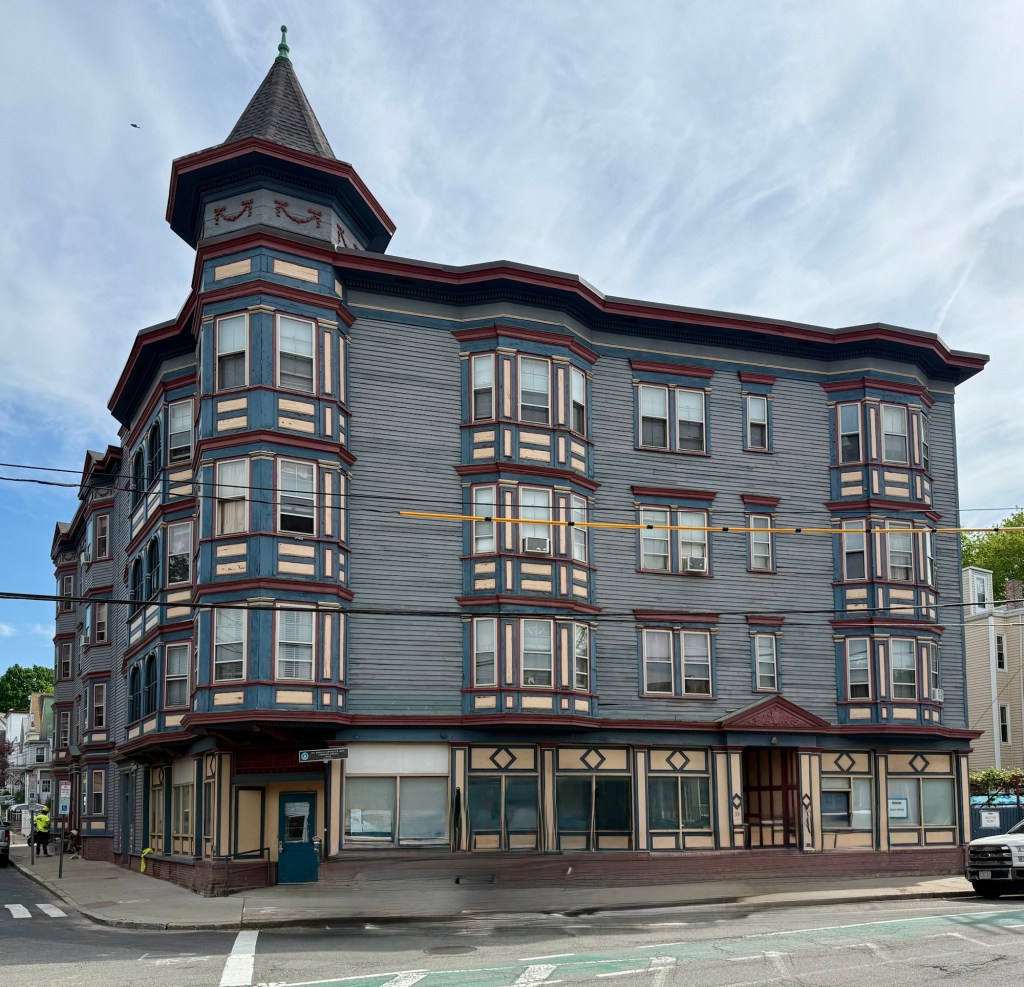
The Richmond Block on Bow Street in Union Square, Somerville, is a historic and architecturally significant mixed use building. Constructed in 1892 as one of the substantial wood-frame buildings in the western section of Union Square, the Richmond was designed by architect Aaron Gould for Mr. Charles Drouet, who developed the Drouet Block, a historic flatiron building just years later. Designed in the Queen Anne style, this building is noteworthy for its corner tower, octagonal oriel bay windows, sleeping porches on the side facade, and polychromatic color scheme to highlight the many architectural details on the block.

The Highland Apartments // 1892

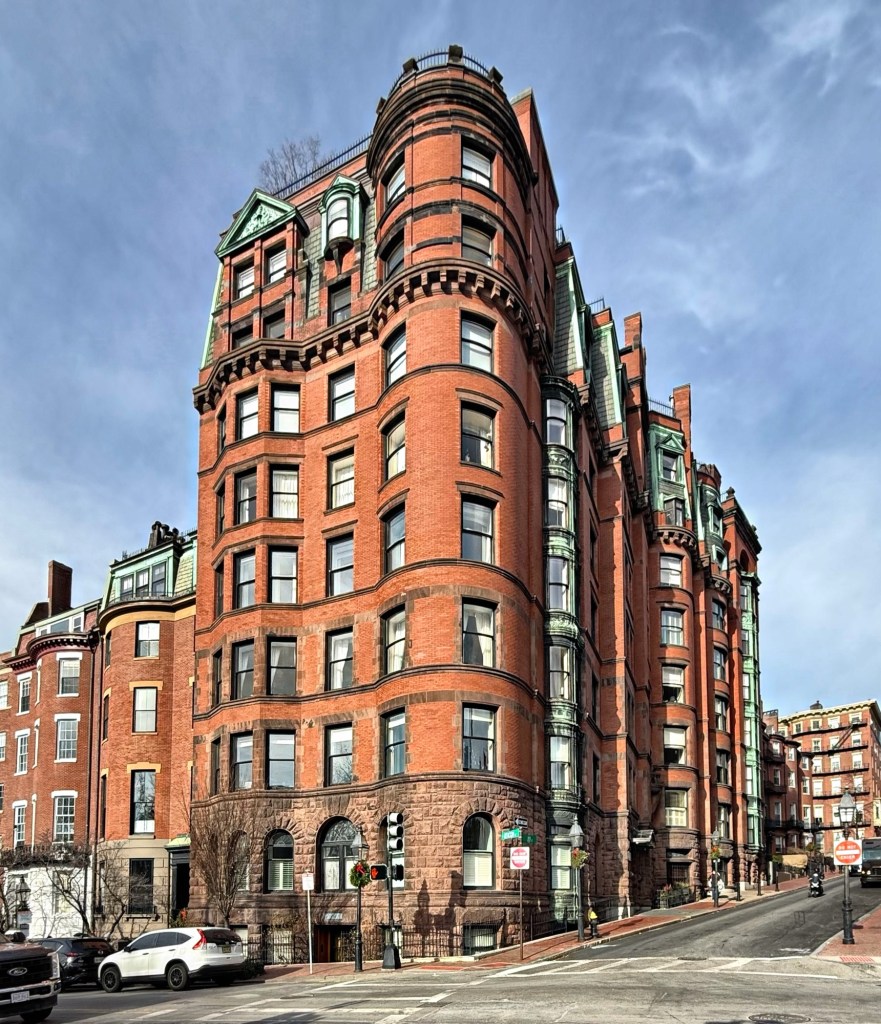
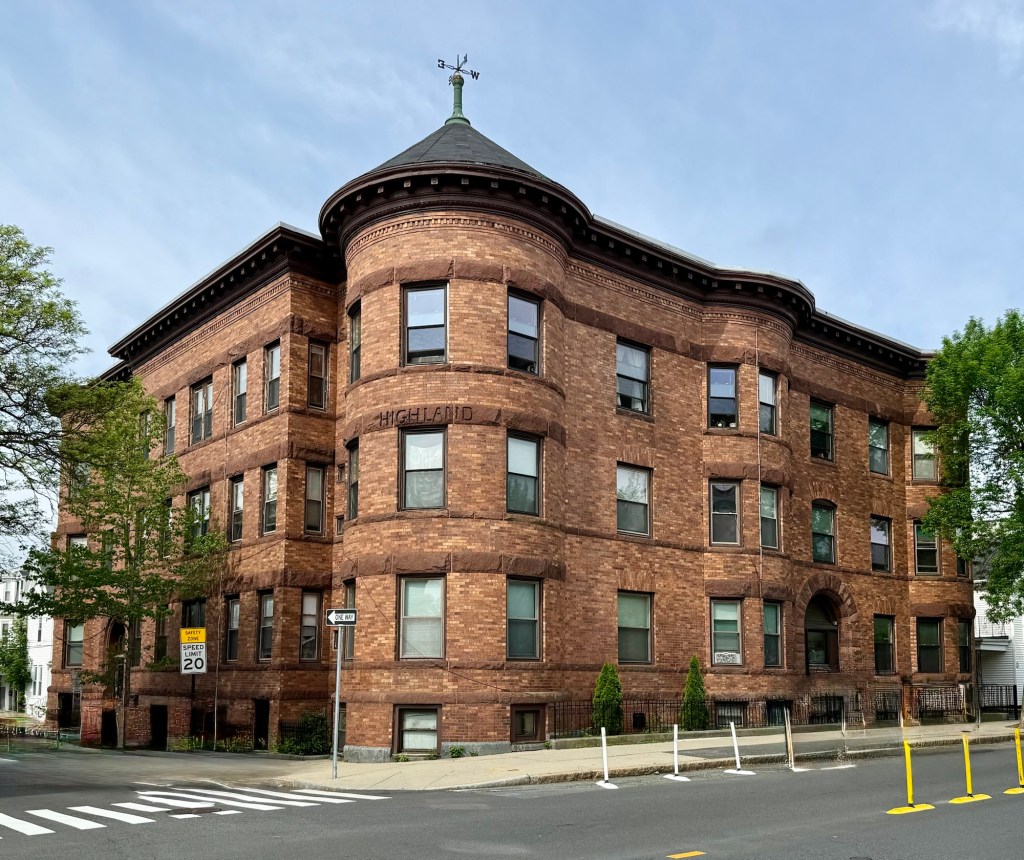
The Highland Apartments, on Highland Avenue in Somerville, is one of the city’s most architecturally distinguished and significant late 19th century apartment buildings. Richardsonian Romanesque in style, the building is constructed of brick with brownstone trimmings, a rounded corner tower with conical roof, and Romanesque arched entrances. The building even retains its name, “Highland”, carved in brownstone at the corner. The building contained 12 units, all with multiple windows and views of the adjacent park or ever-growing Boston from its hilltop location. The architect, Samuel Dudley Kelley, was a noted designer of apartment buildings at the time. The Highland remains an important, preserved example of late 19th century multi-family housing, and showcases how far we have fallen when designing such structures today. 

Emerson Shoe Company Factory // 1894+

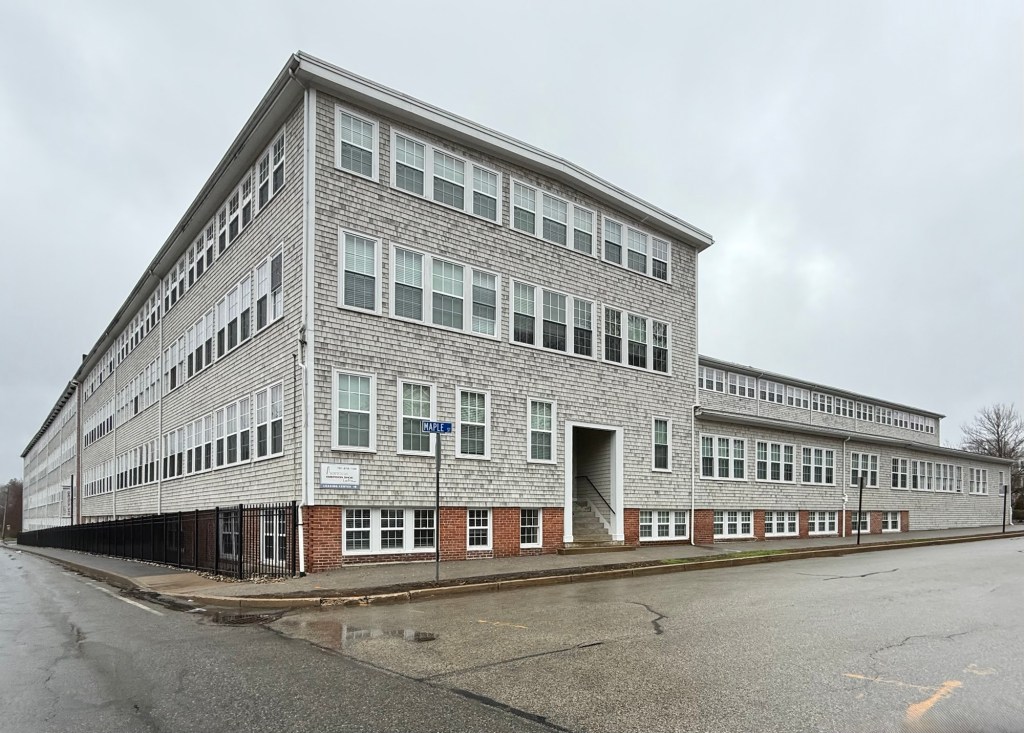
Prior to its establishment as an independent town in 1874, Rockland, Massachusetts, was part of “Old” Abington. The town became best-known for its number of shoe manufacturing companies, even more significant as the town is said to have provided nearly half of the Union Army’s footwear during the Civil War. In the late 19th century, due to increased connectivity of Rockland to regional markets, business boomed, and this site on Maple Street, adjacent to the railroad, was purchased for a new factory. The first factory here was constructed in 1894 for the local Hall, Gallagher & Foulke Shoe Company, who would dissolve after just two years, selling the site to George W. Hall, one of the original trustees. In 1906, the Emerson Shoe Company, burned out of its Brockton factory caused by a disastrous fire, began operations as a tenant in the former George W. Hall factory in Rockland. With continued expansion, the Emerson Shoe Company soon became one of the largest employers in Rockland. The factory was enlarged numerous times through the 1920s. The company would eventually close, even though, by the late 1920s, Rockland and six neighboring communities were manufacturing 27% of all shoes worn in the United States. However, most likely due to the aging of the original founders and labor issues, Emerson Shoe was sold. After various other uses, including as an artist’s colony of studios, the building was restored and converted into residential loft-style housing.


New England Fireproof Construction Co. Apartments // 1917

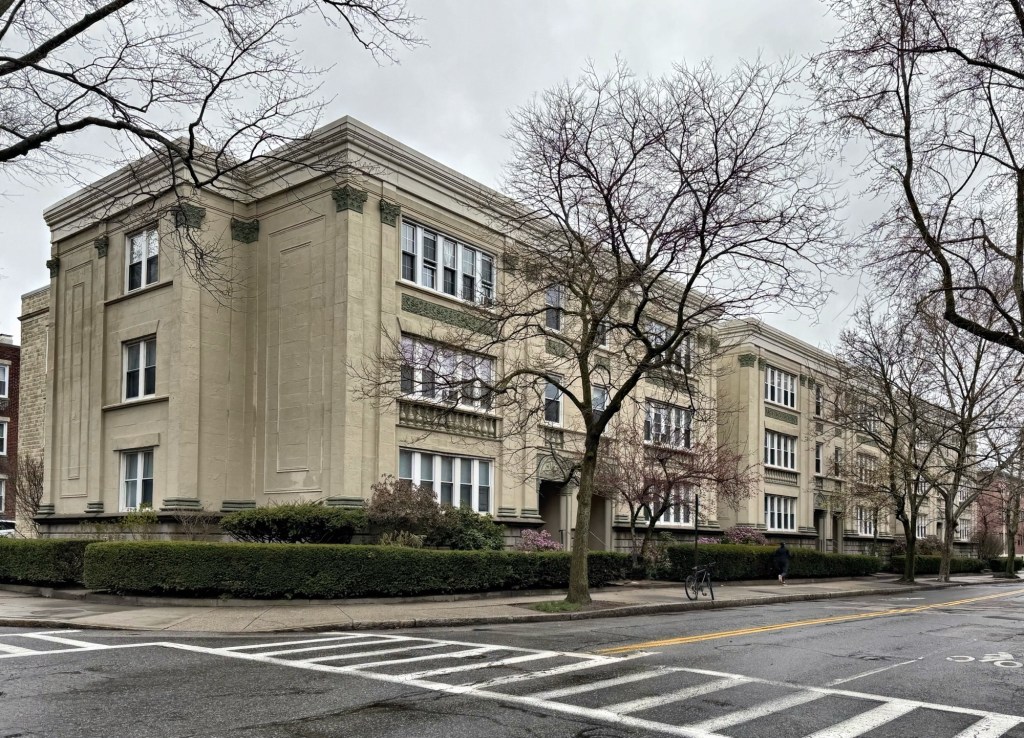
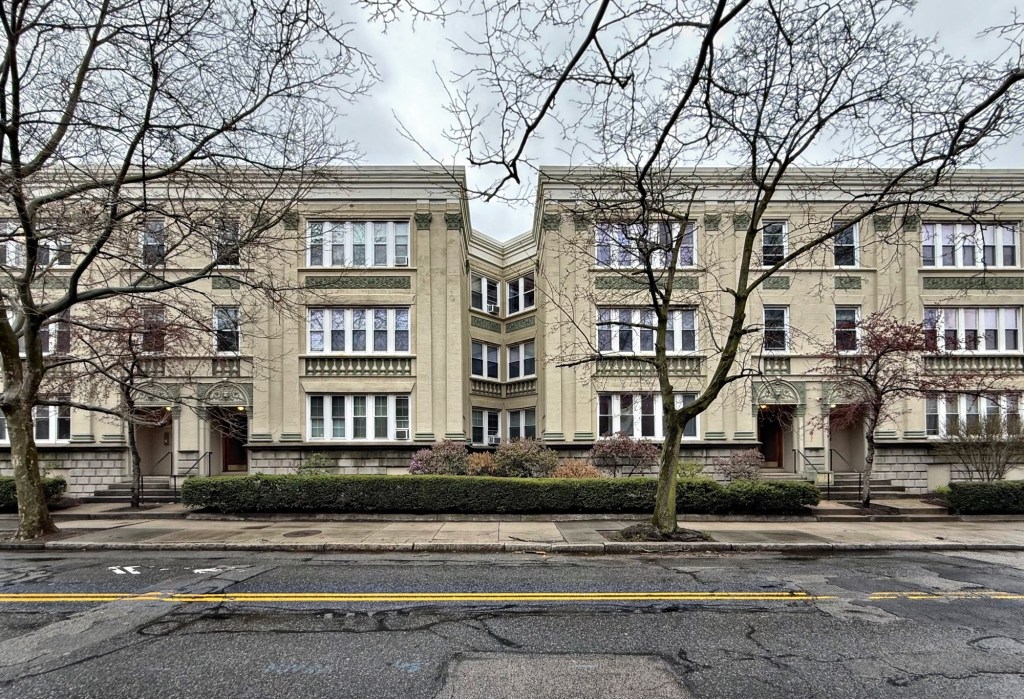
One of the most unique and architecturally pleasing buildings in Brookline has to be these apartments on Egmont and St. Paul streets that break the mold of traditional brick or wood-frame apartment houses. Built in 1917 by the New England Fireproof Construction Company as an example of how cheaper cement material can be used effectively and beautifully to design and construct high-quality housing. The company hired architect G. Bertram Washburn to design the buildings which utilize concrete block and cast concrete details with the facades embellished with pilasters capped with Corinthian capitals, engaged balusters, and modillioned and corniced entrances decorated with a lion’s head over each doorway. Additionally, a special touch is the recessed wells in the facade which not only break up the massing of the building, but provide additional light and air into the apartments inside. 

Snider and Druker Apartments // 1913

By the beginning of the 20th century, Brookline was developing rapidly as a desirable Boston suburb, with easy-access to downtown via streetcar and rail, all with less cramped land and less industrial development impacting the air quality. Developers soon realized that they could build high-quality apartment blocks within established neighborhoods to market to middle-income families who wanted to live in these desirable enclaves without breaking the bank. Developers Snider & Druker (a precursor to the Druker Company) purchased house lots in the neighborhood adjacent to Cottage Farm, a rich enclave of large homes on large lots, and began building apartment buildings. They hired architect Frederick A. Norcross, who specialized in multi-family housing designs, to furnish plans for these Renaissance Revival style apartments at the corner of Browne and Powell streets. Besides the use of buff brick, limestone trim and detailing, and the use of projecting bays to break up the facades, the building’s terracotta roof adds intrigue and individuality to a building form often maligned for blandness. 

Essex County Jailkeeper’s Residence // 1813

Built adjacent to and two years after the construction of the Essex County Jail in historic Salem, Massachusetts, this 1813 brick Federal style house was originally the jailkeeper’s residence. It has been speculated that the house was built by Samuel Field Mclntire (1780-1819), son of preeminent Salem carver and master carpenter, Samuel Mclntire, although there is no conclusive evidence. The house displays a 5 x 2-bay massing and is capped by a hip roof with three, large brick chimneys and a center entry with elliptical fan light transom, sidelights, and shallow portico. The jail was in operation until 1991, and at that time was considered the oldest active penitentiary in the United States. Years prior, in 1984, several detainees had successfully sued the county for inadequate living conditions, leading to the closure of the building. A preservation restriction was established for the building and in 2009, the property was conveyed to a developer who converted the complex into 23 apartments, with 19 in the old jail, three in the old jail keeper’s residence, and one in a converted carriage house. The great preservation/adaptive reuse firm of Finegold Alexander Architects furnished the plans for the successful renovation that provided a new life for a once crumbling eyesore.

Former Essex County Jail // 1811

The former Essex County Jail is a large and significant building in Salem, Massachusetts, that has seen a recent rebirth thanks to the intersection of historic preservation and the demand for new housing in many New England communities. Constructed of large, Rockport granite blocks, the building was constructed in two phases—the section to the east was constructed in 1811-13 while the parallel west wing dates to 1884, with each of the construction dates inscribed at the top of the pediments on the south elevation. Completing the complex is the 1813 Jailer’s Residence which sits at the edge of the now enclosed courtyard. Those who were committed here were largely sentenced to short terms, many for the offense of drunkenness or petty theft. Inside, prisoners did all the labor, such as cooking, baking, firing the boilers, etc., with the female inmates making clothing for all inmates. The jail was in operation until 1991, and at that time was considered the oldest active penitentiary in the United States. Years prior, in 1984, several detainees had successfully sued the county for inadequate living conditions, leading to the closure of the building. A preservation restriction was established for the building and in 2009, the property was conveyed to a developer who converted the complex into 23 apartments, with 19 in the old jail, three in the old jail keeper’s residence, and one in a converted carriage house. The great preservation/adaptive reuse firm of Finegold Alexander Architects furnished the plans for the successful renovation that provided a new life for a once crumbling eyesore.