Henry Thatcher Fowler (1867-1948) was born in Fishkill, New York, on March 4, 1867. He graduated from Yale in 1890 and received his Ph.D., also at Yale, in 1896. After stints teaching at Yale, Norwich Academy, and Knox College, Professor Fowler came to Brown and was hired as Professor of Biblical Literature and History; he was chairman of that department until 1932. Soon after arriving to Providence to accept his professorship at Brown, Henry and wife, Harriett, hired the local architectural firm of Martin & Hall to design a new home for them a few blocks away from his work. The house blends Tudor and Shingle styles with the ogee entrance at the porch, flared shingled overhangs on each floor, and a prominent gable facing the street.
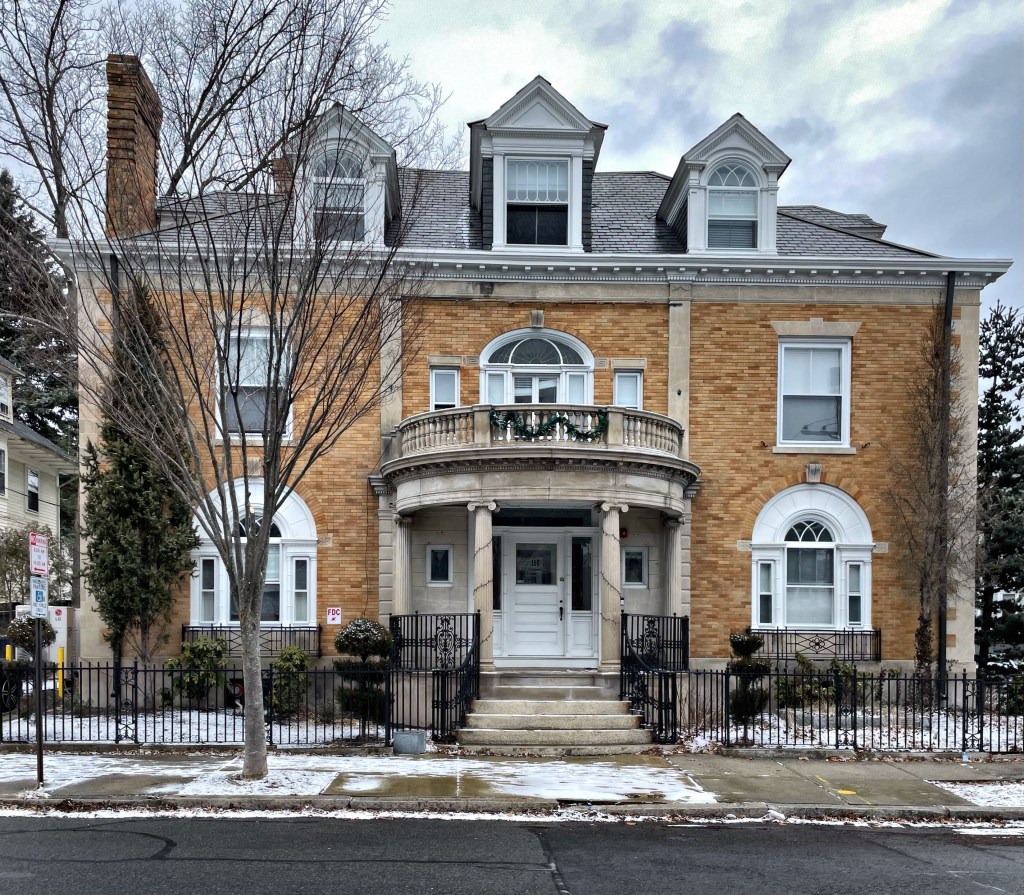
This stately yellow brick Colonial Revival sits on the edge of the College Hill neighborhood of Providence, and I couldn’t help but to take a few photos! This residence was completed in 1904 for Sarah and John Tillinghast in the later years of John’s life (he died less than two years of moving into this home). The house exhibits a large semi-circular portico with balustrade above, the portico is flanked and surmounted by Palladian windows with elliptical reveals. The house was recently proposed to serve as a suboxone clinic, but that was shut down by neighbors. It appears to be divided into residential units now.
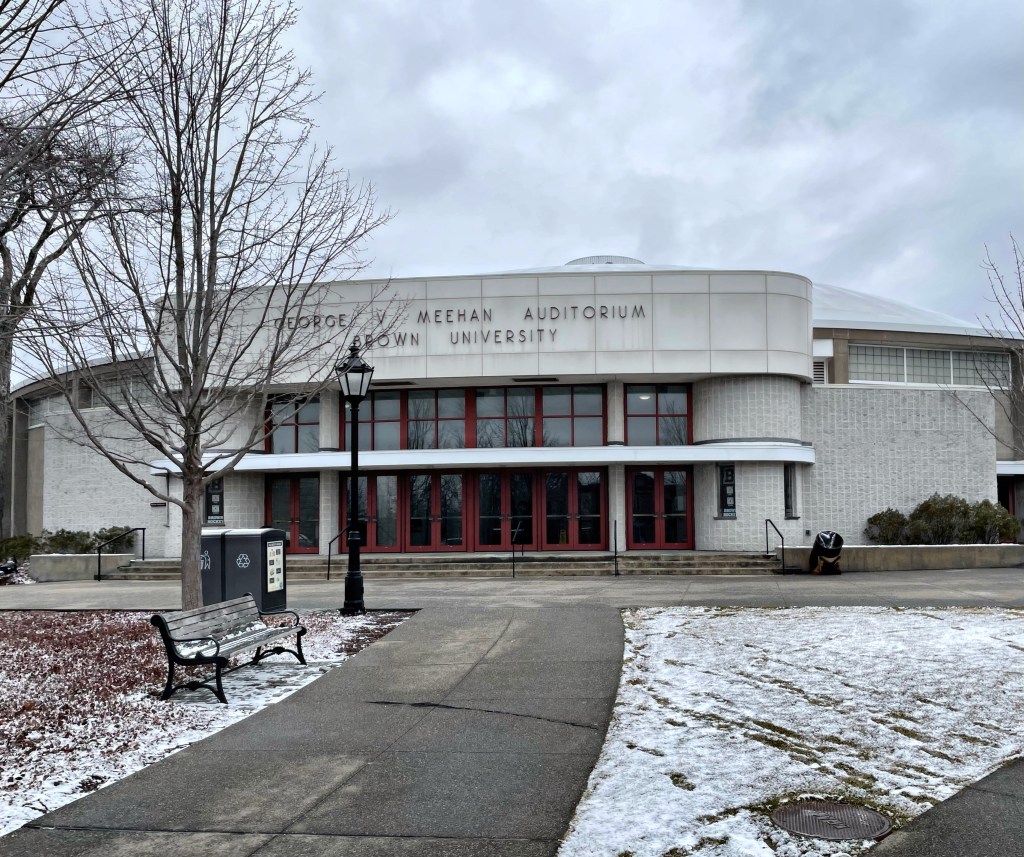
Across from the new Nelson Fitness Center at Brown University in Providence, Rhode Island,Meehan Auditorium is an excellent example of a 1960s institutional athletic facility. The auditorium was dedicated at the Brown-Princeton hockey game on January 6, 1962 and was named after George V. Meehan, donor of half a million dollars for its construction. The new facility filled the need for a skating rink and large auditorium for indoor functions, specifically for ice skating and hockey and was the first building of the new athletic plant at Aldrich-Dexter Field east of the campus. The building was designed by Perry, Shaw, Hepburn & Dean, a prominent firm who designed many collegiate buildings in the 20th century, all over New England.
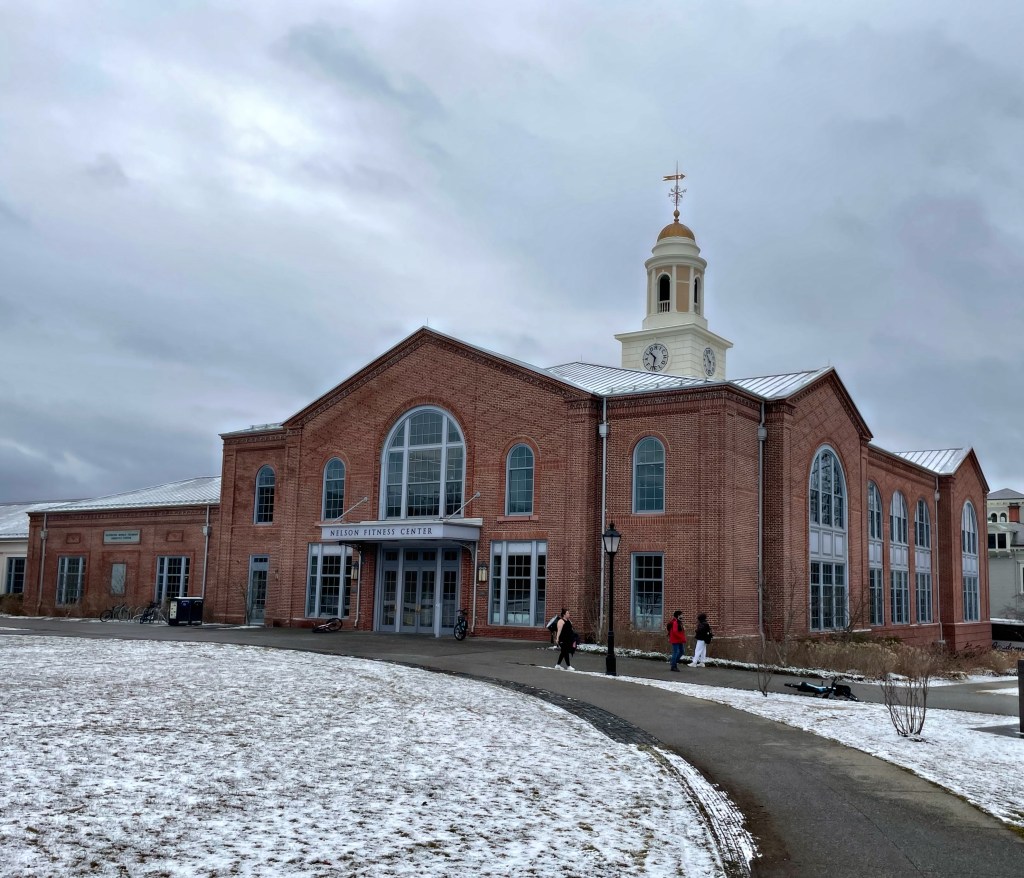
When I walked by Brown University’s athletic center, I assumed it was an older building, but was so plesantly surprised to learn that the building was actually completed in 2012! The 84,000-square foot aquatics and fitness center is a $46-million addition to the existing athletic facilities built on and near the site of the former Smith Swim Center. Designed by Robert A.M. Stern Architects and constructed by Shawmut Design and Construction, the project includes the Katherine Moran Coleman Aquatics Center, the Nelson Fitness Center, the David J. Zucconi Varsity Strength and Conditioning Center. Architecturally, the buildings seamlessly blend into their surroundings thanks to timeless traditional design and high-quality materials. The stunning cupola was actually the original cupola from Marvel Gymnasium, a Brown University gymnasium demolished in 2002, it was added atop the Nelson Fitness Center preserving some history of old Brown. American colleges and universities need more of this high-quality design, kudos RAMSA Architects.
There are fewer and fewer historic movie theaters in America, largely due to the proliferation of larger theaters at the end of the 20th century and the more recent trend of streaming. Smaller, family-owned theaters are becoming rare, so if we value the charm and character of these spaces, we have to support the arts at these spaces! The Avon Cinema is located in Providence’s East Side neighborhood and premiered on February 15, 1938 with the French film Beethoven’s Great Love (titled “The Life and Loves of Beethoven” in the U.S.) The theater was originally constructed in 1915 and operated as the Toy Theater for a few years before it closed. After decades, the building was purchased by the Dulgarian Brothers, who reopened the theater, naming it Avon. The Dulgarian family has owned and operated the theater to this day and have made a point to restore the building and maintain the historic charm.
Newton Booth Tarkington (1869–1946) was an American author best known for his novels The Magnificent Ambersons (1918) and Alice Adams (1921). He is one of only four novelists to win the Pulitzer Prize for Fiction and was considered the greatest living American author in much of the 1910s and 1920s. While he was born and grew up in Indiana, “Booth” eventually fell in love with the coast of Maine, and built a home in the charming village of Kennebunkport. In Kennebunkport, he was well known as a sailor, and his schooner, the Regina, survived him. Regina was moored next to Tarkington’s boathouse this building, which was named “The Floats” which he also used as his studio. The building was constructed in 1900 as a shop to build ships. He purchased the building, preserving it for generations to come. After his death, the boathouse and studio were converted into the Kennebunkport Maritime Museum. The building appears to now be a private residence, perched above the harbor. How charming!
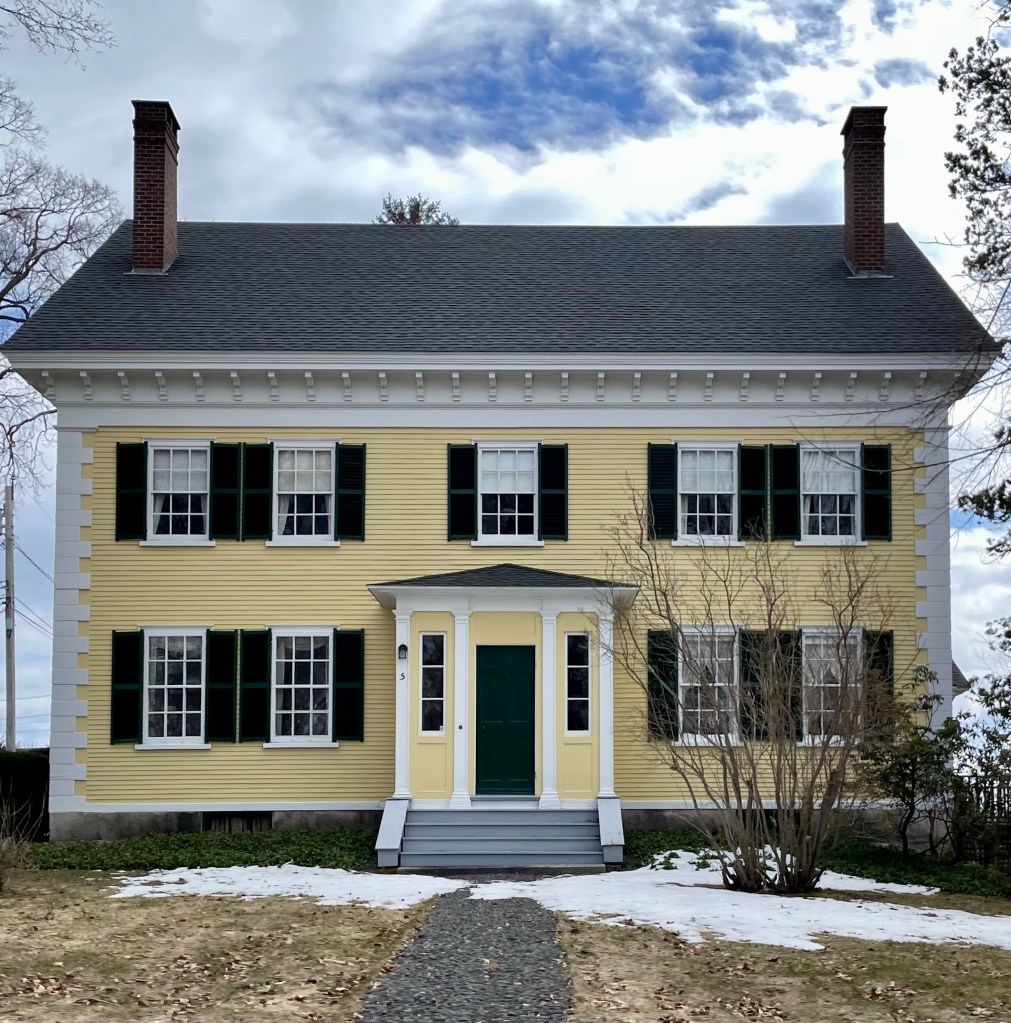
The Oliver Walker House in Kennebunkport Village is one of the better examples that shows how overlapping architectural styles can work really well on an old house (when done right)! The original house was constructed around 1809 for Oliver Walker (1788-1851), a sea captain who later accepted the call and became a deacon for the South Congregational Church in Kennebunkport. Walker died in 1851 and the Federal style property was inherited by his only surviving child, daughter Susan, who had married Portland native, Captain John Lowell Little. Under their ownership, the traditionally designed Federal house was modernized with fashionable Italianate style modifications of the decorative brackets and an enclosed round arched window in the side gable. A later Colonial Revival projecting vestibule adds to the complex, yet pleasing design. I have a feeling the interiors of this house are just as spectacular as the exterior.
Houses with unique names are always the most fun to research and post! This stately Federal style mansion in Kennebunkport was built in 1810 for Samuel Lewis (1777-1857), a cabinetmaker and carpenter in town. Lewis also worked as an undertaker and made glass-top coffins from 1801, until his death. It is estimated that Mr. Lewis made 2,500 coffins during his career – including his own. Samuel was a quirky character and built his home as a large addition to a 1762 home, which possibly remains today as an ell. The 1810 house with original transom and sidelights at the entrance was two stories as built which contained a spiral staircase that ended on the second floor at a skylight. Thus, the house became known locally as “Samuel’s Stairs.” A later owner added the third floor, but maintained the Federal proportions. SWOON!
Believe it or not, this stunning Federal mansion in Kennebunkport was a marriage present! When Phebe Walker married Nathaniel Lord in 1797, Phebe’s father, Daniel had this home built for the new couple. Phebe and Nathaniel had a total of nine children before Mr. Lord died in 1815 at 38 years old. Before his death, the wealthy couple used part of their property to erect a larger home, which is now known as the Nathaniel Lord Mansion. The couple sold the property, and it was owned for some time by Captain Alden B. Day, who passed it down to his daughter Nellie and her husband, William Gould. The property remained in the Day-Gould family until 2017. The house is very well-preserved and looks much like it would have appeared when built in 1799 besides the later entry added in the mid-19th century.
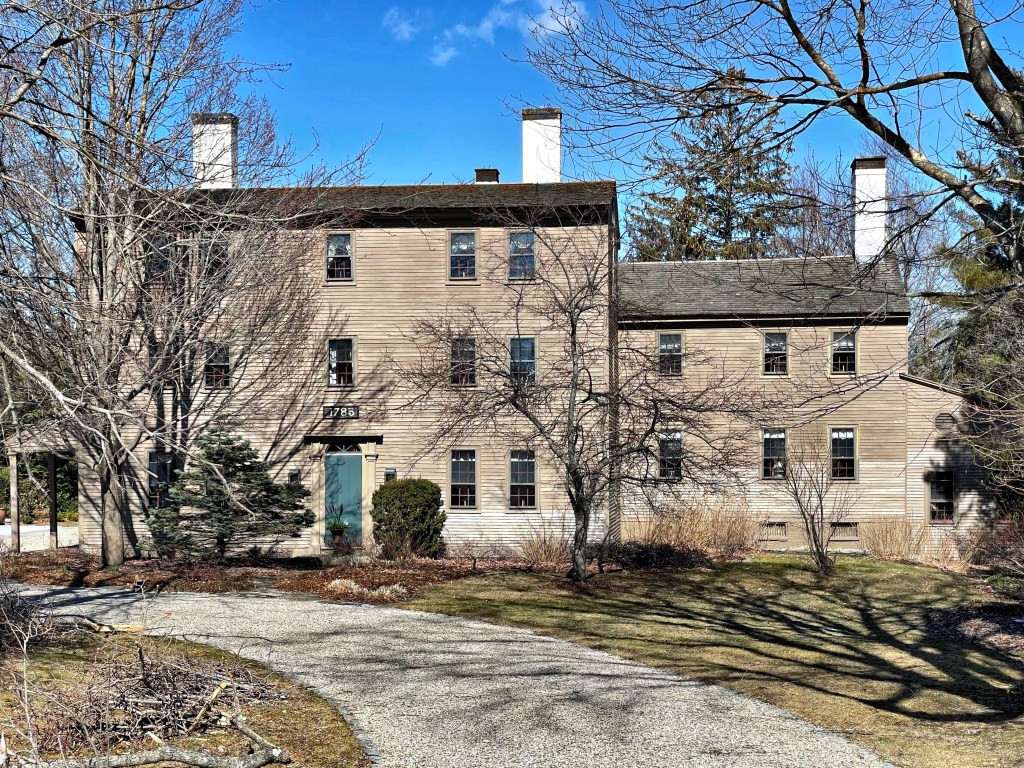
One of the hidden architectural gems of Kennebunkport is this Revolutionary-era house with some serious proportions. The house was built around 1785 by Benjamin Coes, a sailmaker from Marblehead, who settled in the burgeoning Kennebunkport in search of new work and opportunities. He married Sarah Durrell and the couple erected the seventh house in town, which is part of this property. For his work, Mr. Coes used the first two floors as his residence and the third floor was used as a sail loft, with an exterior staircase. A young boy, Joseph Brooks, would work in the loft and he would go on to marry Benjamin’s daughter, Sarah. The couple inherited the family house and retired here. The property was sold out of the Coes-Brooks Family when Maine State Historian, Henry Sweetser Burrage and his wife Ernestine purchased this house in 1917, which would be used as a guest house. The couple and lived in the house across the street. Ernestine Burrage, who was Chairperson of the Kennebunkport Chapter of the Red Cross, allowed the ladies of her chapter to gather there three times a week to roll bandages for the soldiers injured in battles overseas. It became the headquarters for the Kennebunkport Red Cross. It was likely Ernestine who had the chimneys painted white, which resembled the old Tory Chimneys in Revolutionary-era New England; where, when painted white, they served as a quiet signal which indicated that a home’s residents were loyal subjects of the British Crown.





 Buildings of New England