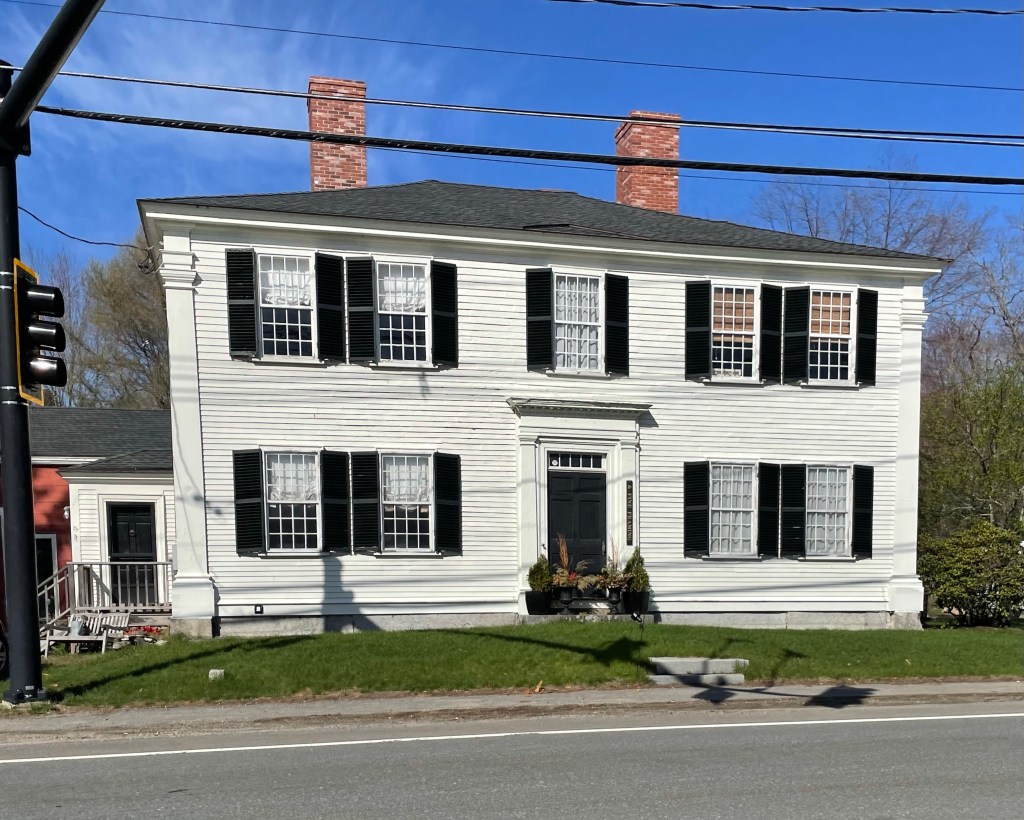
Old Acton Parsonage // c.1740

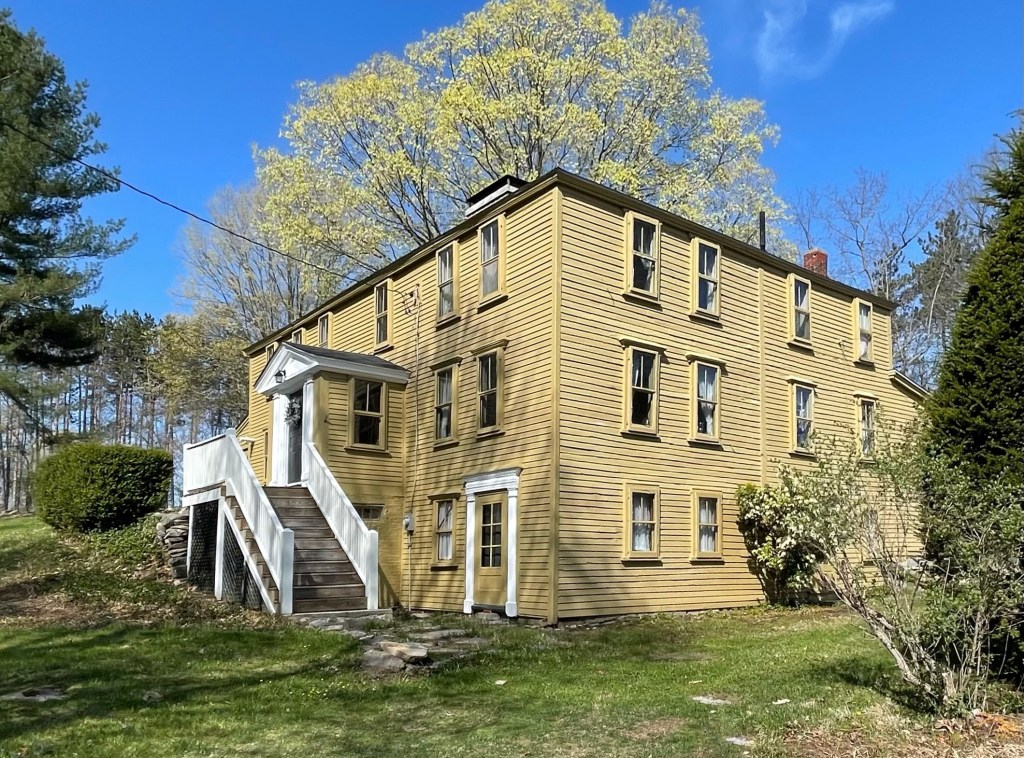
Not far off Main Street in Acton Center, this stunning old Georgian home was built around 1740 for Jacob Hooker a tailor and later served as the home of James Dudley, a blacksmith in the village. After the American Revolution, Acton called on Reverend Moses Adams (1749-1819) to be the minister for the Acton Meetinghouse. The town acquired the old Dudley House for Reverend Adams to reside in with his family. In 1780, the home was enlarged, and possibly given the raised foundation we see today. Mrs. Adams ran a store out of the basement, accessed by the doorway in the brick foundation. After Adams’ death in 1819, the property went to the next reverend in town, until his death decades later. In 1889, a carpenter, Moses Taylor, purchased the home, restored much of the woodwork, and replaced the historic windows with 2-over-1 windows, popular at the time. Moses moved a house on Main Street to make way for the new Acton Memorial Library, and was active in building and renovating homes in Acton until his death.
Jones Tavern // 1732

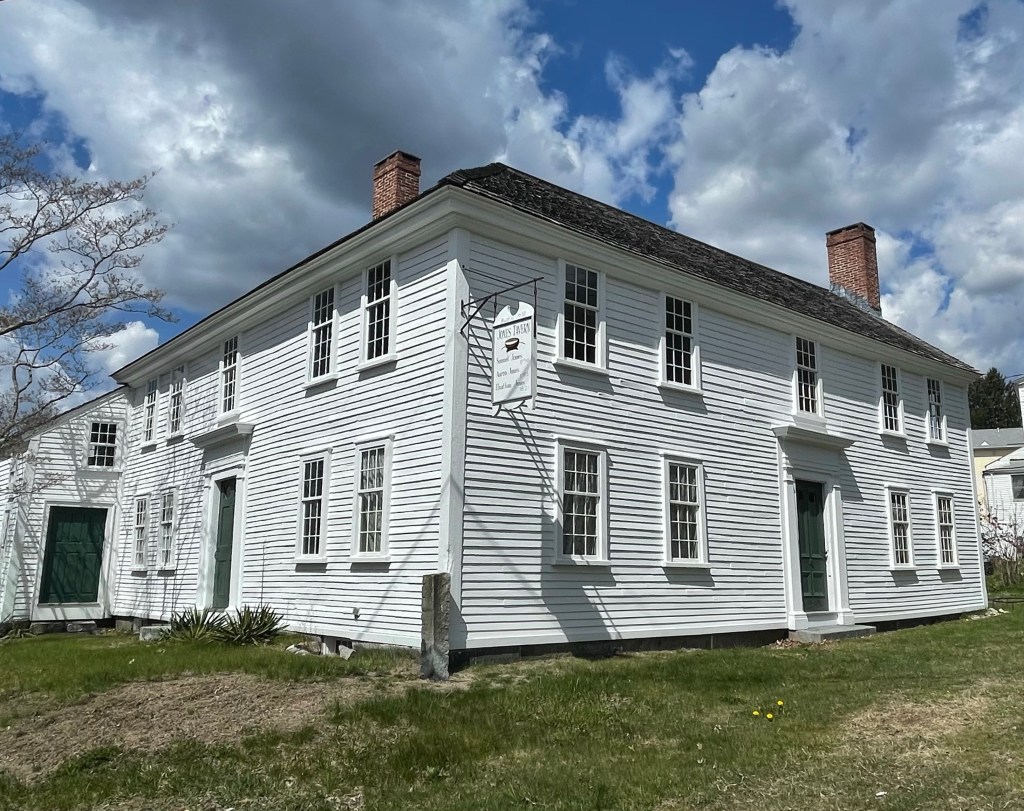
Settlement of South Acton (by colonialists) was begun in 1701 when the Jones and Knight families purchased 600 acres of a private land grant. Over the next 26 years, members of the two families established and operated mills near the Fort Pond Brook, which provided running water for operations. Samuel Jones built a home here in 1732, which as originally built, was a simple, four room central entry Georgian home with gable roof, typical of many eastern Massachusetts homes at the time. In 1750, Jones opened a tavern and general store in his house, enlarging it with a two story addition now visible on the left side. Samuel’s son Aaron Jones, a Harvard graduate and soldier who fought at the Battle of Concord nearby, took over the tavern from his father. In 1818, Aaron more than doubled the size of his establishment when he built a large, 5-bay extension and rear kitchen ell directly behind the existing structure. In addition to enlarging his property, Aaron also had it “modernized”, inserting sash windows (replacing the casement windows) throughout and adding fashionable Federal style door and window surrounds. The additions gave the building two major entries, as well as secondary access to the communal taproom. The property was then willed to his son Elnathan Jones, who operated the establishment until 1845 as both a tavern and hotel. The building remained in the Jones family until it was sold in 1946, and divided inside into multi-family use. The house was sold for salvage in 1964 after years of neglect, but was saved by Iron Work Farm, Inc., a non-profit who maintain the property to this day.

Mount Hope Cemetery Chapel // 1908

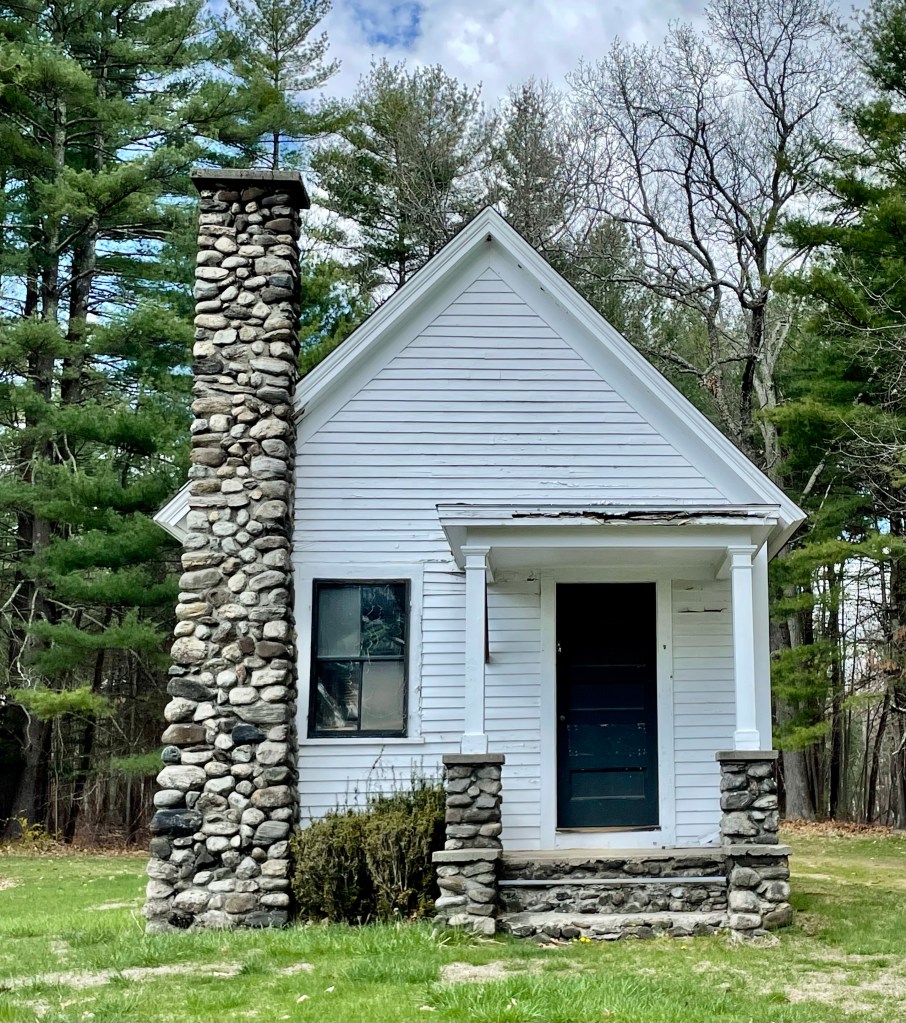
Mount Hope Cemetery in Acton was laid out in 1848 as the third municipal burying ground for the town. Before that, there was a need for a cemetery between the West and South Acton villages, closer to the developing parts of town, without a cemetery of their own. The cemetery was laid out with paths following a grid pattern, with land tapering off towards the rear. The cemetery, used by many prominent families of Acton, was without a chapel for over 50 years until funds were donated by George C. Wright a wealthy resident who lived nearby (featured in the last post). Town officials proceeded to build a small building that was apparently was quite different from the vision that Mr. Wright had for the building, but Mr. Wright generously agreed to accept what had been done and presented it to the town. At the 1909 annual town meeting, the town formally acknowledged the gift. It saw some use as a chapel in the early days, but has since been used for storage and an office for groundskeeping.

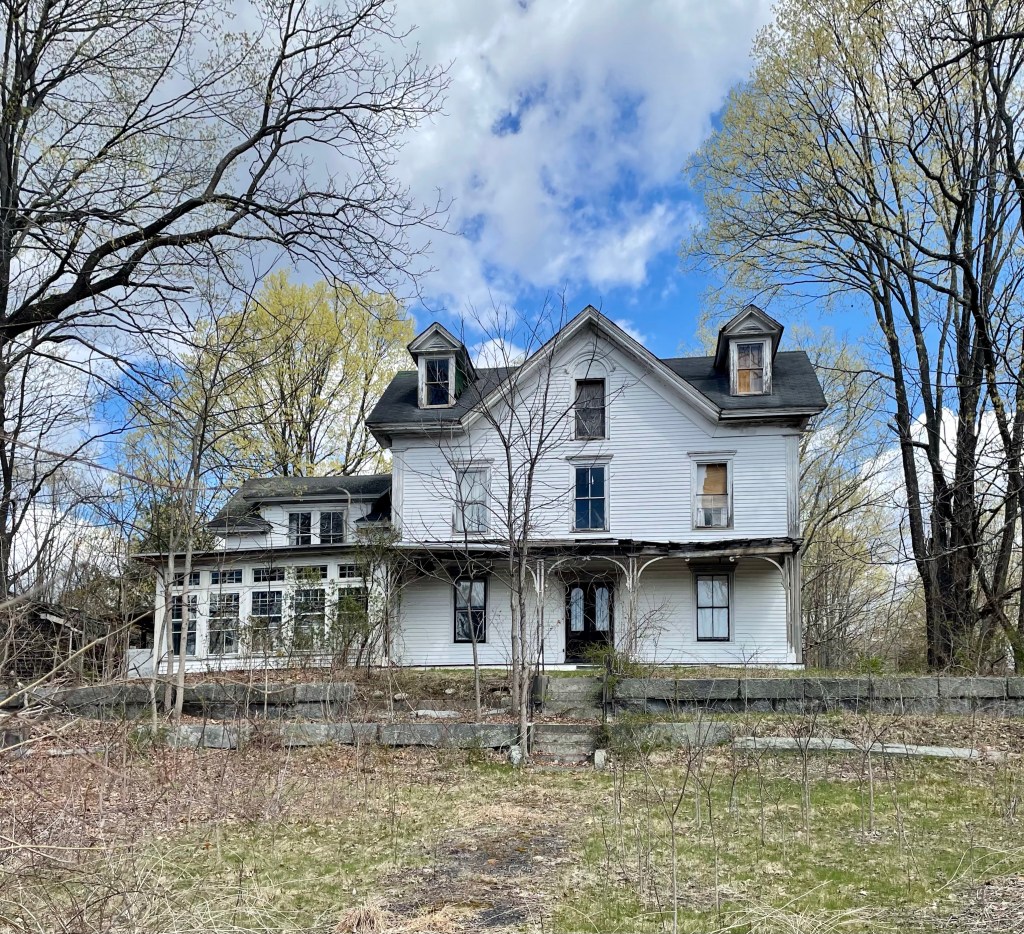
George C. Wright House // 1861

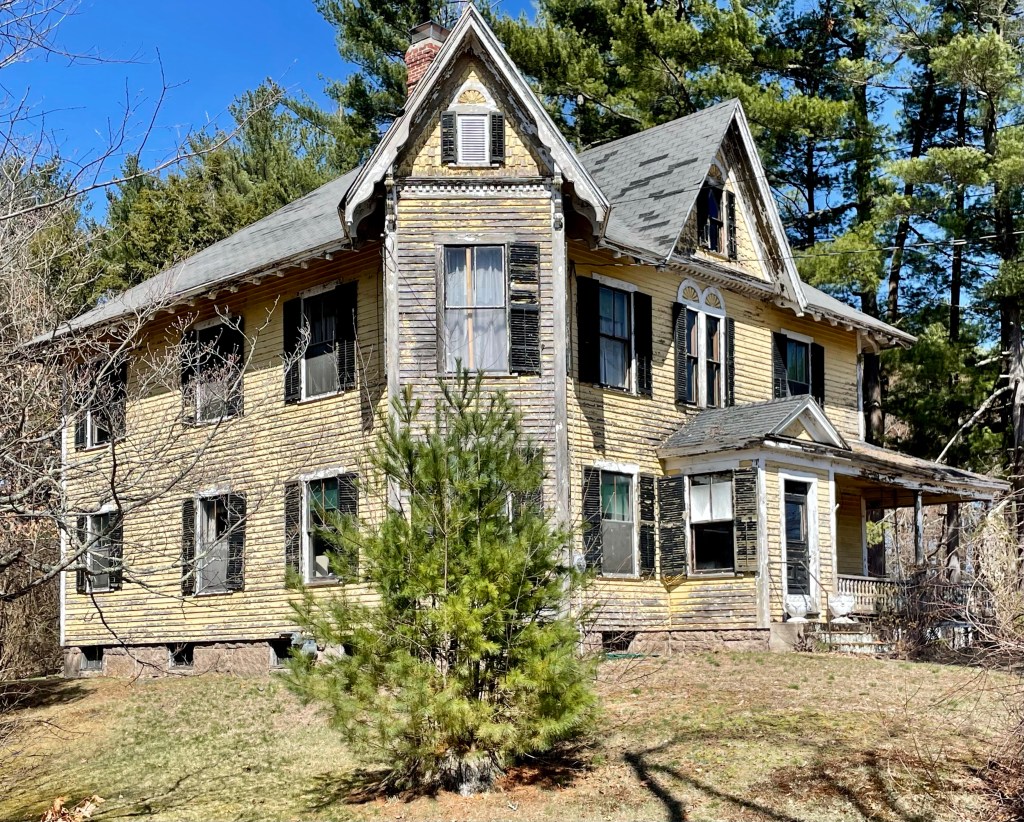
Perched high on a hill in Acton, Massachusetts, this once grand Italianate mansion has been slowly deteriorating without a caretaker. The home was built in 1861 for George C. Wright (1823-1910), a wealthy coffee and spice merchant at Dwinell, Hayward, and Co., a powerhouse in the coffee industry in Boston. In 1855, he was overworked in Boston and fell ill for two years, which worried his wife, who convinced him to relinquish some of his work and move back to Acton, which he did. Soon after he built this house, not too far from the village train depot which would give him easy access to Boston. In papers, he stated, “I felt that good air and a plenty of sunshine would do more for my health than anything else. For this reason, we built upon a hill and arranged the rooms of the house so as to get the sun to its fullest degree.” Wright later served as a State Representative, and remained active in local politics in the suburban town. His home was connected to a large barn (since demolished) and featured a large belvedere (removed after a hurricane) to provide sweeping views from his house on the hill. In recent years, an absentee owner did not appear to maintain the home and it has deteriorated, but good news! The house sold the week that I took these photos, so hopefully it will be restored to its former glory soon!

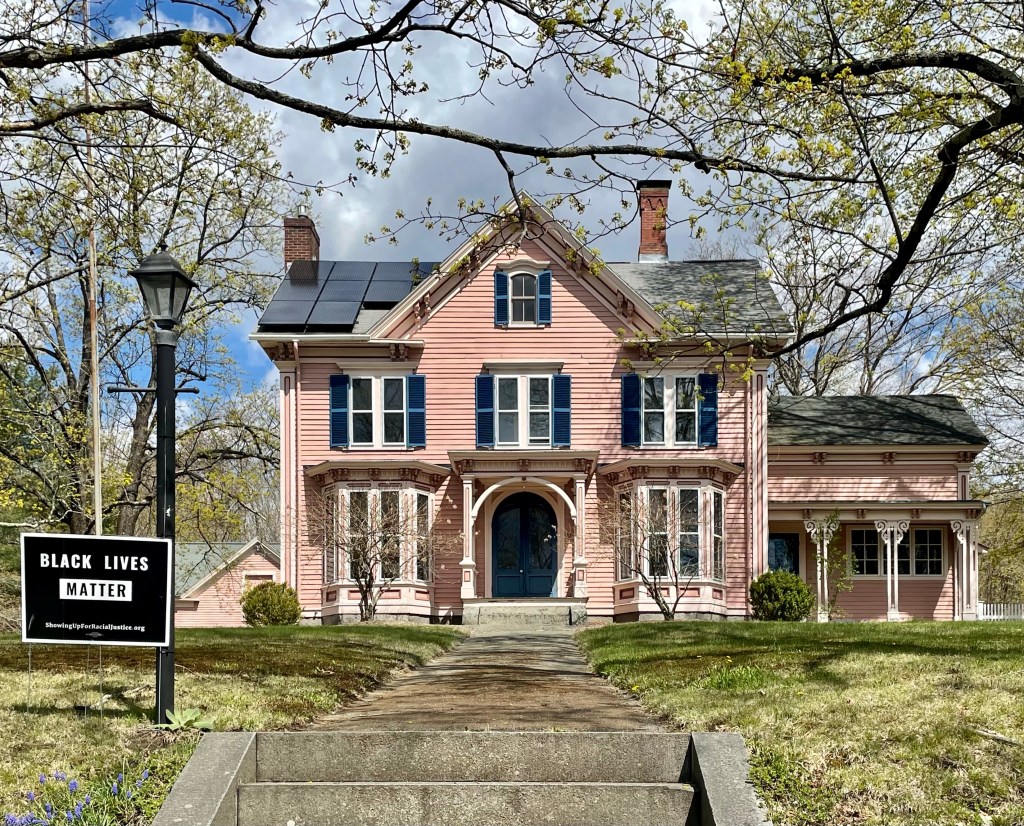
Henry Tuttle House // 1873

This large Italianate house in Acton was built in 1873 for Henry Waldo Tuttle (1847-1916), who ran a grocery store business in town with his father, James Tuttle. The business did quite well as Henry built this massive home around his 26th birthday, likely around the time of his marriage. The exuberant Italianate home features a wide central gable and a projecting central entrance porch accessed by double entrance doors. The home has a detached stable to the left of the home too!

Robbins “Lottery” House // 1800

Government-sanctioned lotteries originated in Massachusetts as an alternative to taxation, but soon expanded as a fundraising tool to help fund building projects and support charities. In 1765, the General Court passed the first legislation allowing Harvard College to run a lottery to support dormitory building projects. Before Harvard University accepted multi-million dollar donations, they drew lotteries between 1794 and 1797 to build the second Stoughton Hall and in the early 1800s, for the building of Holworthy Hall. In Harvard’s lottery of 1794-1796 which John Robbins, a farmer and Revolutionary War veteran, entered, together with three friends, each of whom purchased a quarter-share in one ticket. They won! This Federal style home with hipped roof and symmetrical facade is one of four built in Acton.

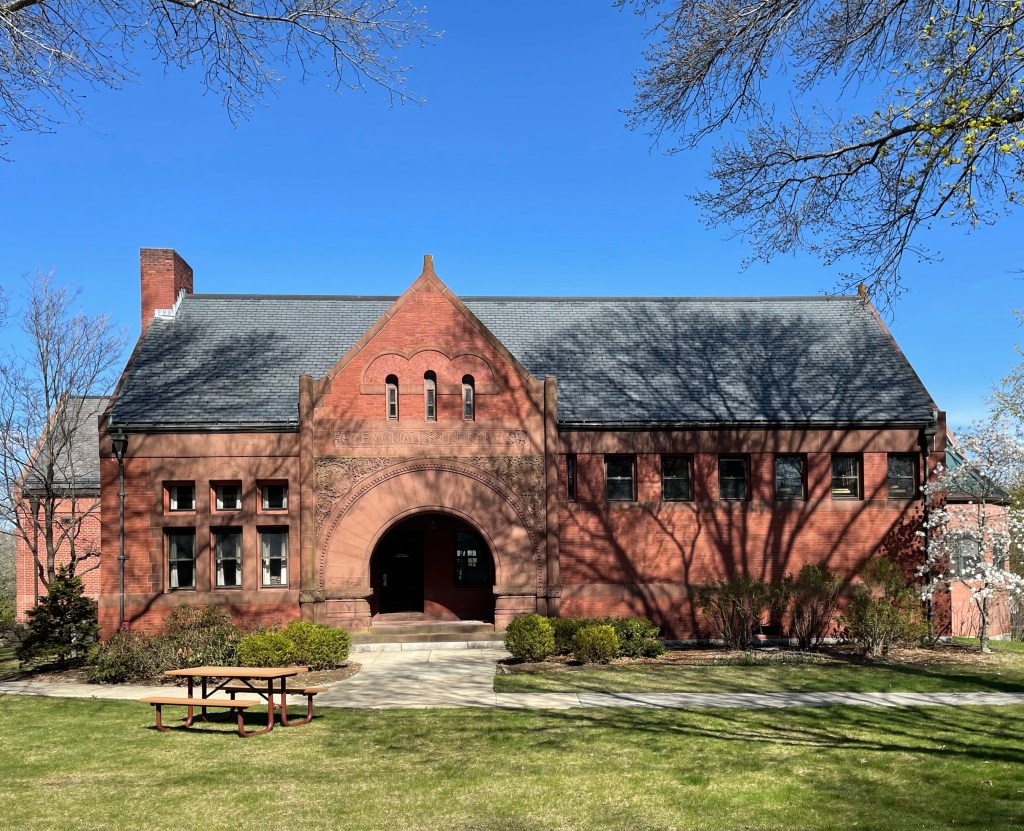
Acton Memorial Library // 1889

In 1888, William Allan Wilde, a Boston publisher who grew up in Acton, purchased land on Main Street to be used as the site for a new memorial library, in “memory of those brave and patriotic men of Acton who so freely gave Time, Strength and Health, and many of them their Lives in the war of the Rebellion, 1861-65.” The former Fletcher Homestead which was located here, was moved to a nearby street. The Richardsonian Romanesque building was designed by the Boston architectural firm of Hartwell and Richardson. The building displays traditional Romanesque materials with its brick wall surfaces, brownstone and terra cotta trim and detailing, and slate roof. The large Syrian arched entry is a hallmark in the Richardsonian Romanesque style, which works extremely well with this design.

Dutch House // 1893

Located on the appropriately named Netherlands Road in Brookline, MA, this house was actually designed as a temporary structure as part of the 1893 World’s Fair, also known as the World’s Columbian Exposition or the White City, depicted in the great book, Devil in the White City. The Dutch House was constructed in 1893 by the Van Houten Cocoa Company of the Netherlands, as a display pavilion and cocoa house. It was located at one end of the Manufactures and Liberal Arts Building (the largest building ever constructed at the time). The Dutch House as we know of it today, was greatly inspired in design by the Franeker City Hall (c. 1591) in the Netherlands. While attending the World’s Fair, Captain Charles Brooks Appleton of Brookline be.came so captivated with the structure that after the Fair, he purchased the building and had it dismantled and transported to Brookline. By the early 2000s, much of the amazing carvings on the building had fallen off, until a new homeowner had them all restored from drawings and images of the building, to the iconic landmark we see today.

Tewksbury State Hospital, Superintendent’s Residence // 1894

Located adjacent to the Administration Building at the Tewksbury State Hospital, the Superintendent’s Residence, built in 1894, combines elements of the Craftsman and Colonial Revival styles wonderfully. The home is two-stories, and built of red brick laid in Flemish bond, capped with a slate hipped roof with exposed rafters. A massive uncovered porch wraps around the home and sits atop a rubblestone foundation. Like the adjacent Administration Building, the Superintendent’s Residence was also designed by Boston architect John A. Fox. From this residence, the massive almshouse and asylum would be run by the superintendent, who oversaw day to day activities and made sure everything was running smoothly. The house appears vacant now.

Hiram P. Dinsmore House // 1894

In 1894, Hiram P. Dinsmore, a clerk at the nearby Tewksbury Almshouse, purchased land not too far from his work to build a home for his family. The well-designed late-Victorian home features a wrap-around porch, a corner tower, twin sunburst or flower motifs, and the use of shingle and clapboard siding, all hallmarks of the Queen Anne style. After Hiram’s death, his wife and children lived in the home, and it was later willed to his daughter Beatrice and her husband, both of whom worked at the Tewksbury Almshouse (since renamed Tewksbury Hospital). The home has seen some deterioration with large sections of siding completely open to the elements unobscured by paint and a sagging porch roof. Hope to see this beauty restored.