This little brick building may appear like a schoolhouse, but it was actually built to house the 1761 Town Charter for Pomfret, Vermont. The building is believed to have been built in honor of Hosea Doten (1809-1886), who was an engineer, school teacher, and land surveyor in Windsor County Vermont, with his former students constructing the building. It was built nearby the Town Hall and Clerk’s Office and features a fire-proof walk-in vault inside.
Located on the west bank of Mascoma Lake in Enfield, New Hampshire, an architecturally and historically significant collection of Shaker buildings can be found, all very well maintained. Founded in 1793, this village was the ninth Shaker community to be established in this country. At its peak in the mid 19th century, the community was home to three “Families” of Shakers. Here, they practiced equality of the sexes and races, celibacy, pacifism, and communal ownership of property. There were 132 members of the village by 1803, and by 1840 there were nearly 300 people.
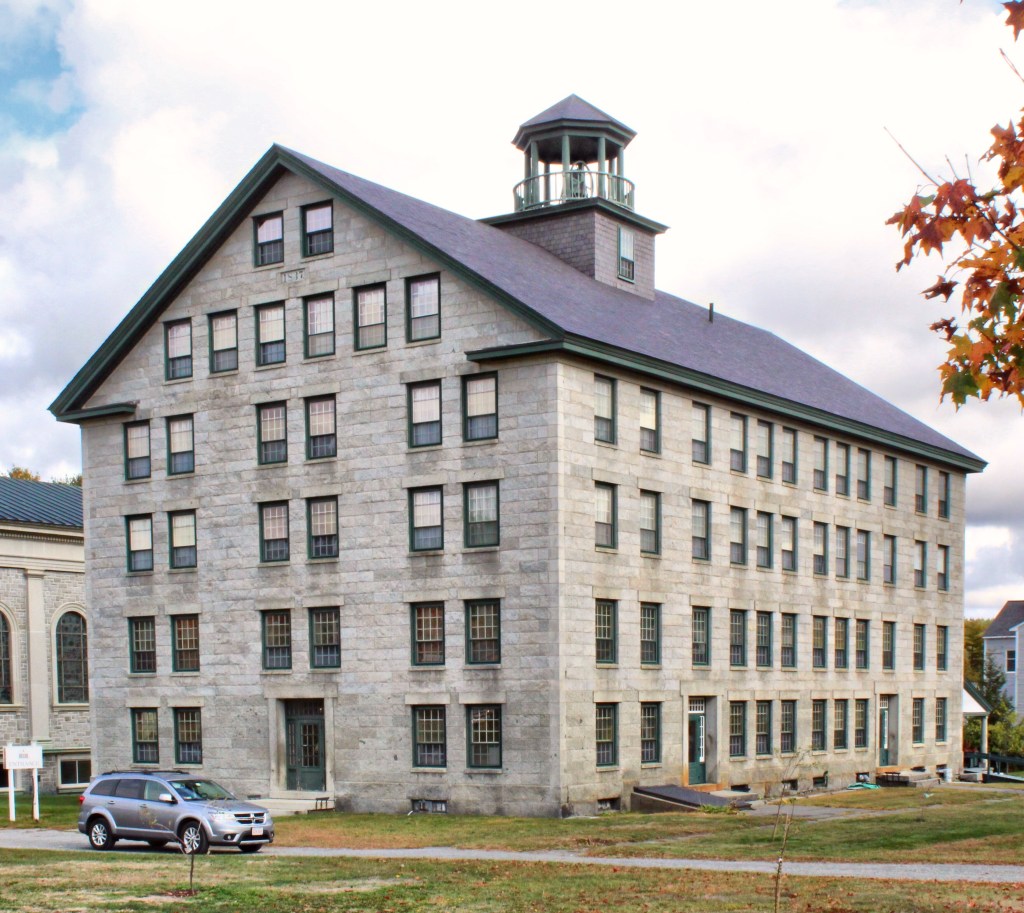
Within the village was the largest Shaker dwelling ever built in the country and the largest residential dwelling north of Boston, the Great Stone Dwelling. The Shakers here hired leading Greek Revival Architect Ammi Young to design the building. Ammi had experience in larger building projects having designed the current Vermont State House and several structures at nearby Dartmouth College. Young would later go on to be the Supervising Architect for the United States Department of the Treasury.
The Enfield, New Hampshire Library and Memorial Building, also known as Whitney Hall, is a transitional Queen Anne/Shingle Style building built in 1900-1901. Local citizens donated funds for construction of the building to house the public library, as well as a selectmen’s office and rooms for fraternal organizations (notably the Grand Army of the Republic). The second floor, known as Whitney Hall, served as a public hall and theater. Mill operator George Whitney donated $1,000 for its construction and also built the village’s first electric plant, making Enfield one of the first towns in the state to have electricity for its homes and streetlights. During World War II, the top of the tower was enclosed to spot for enemy aircraft, remaining enclosed to this day. In 1976 the building underwent major renovation and now also contains the Enfield town offices.
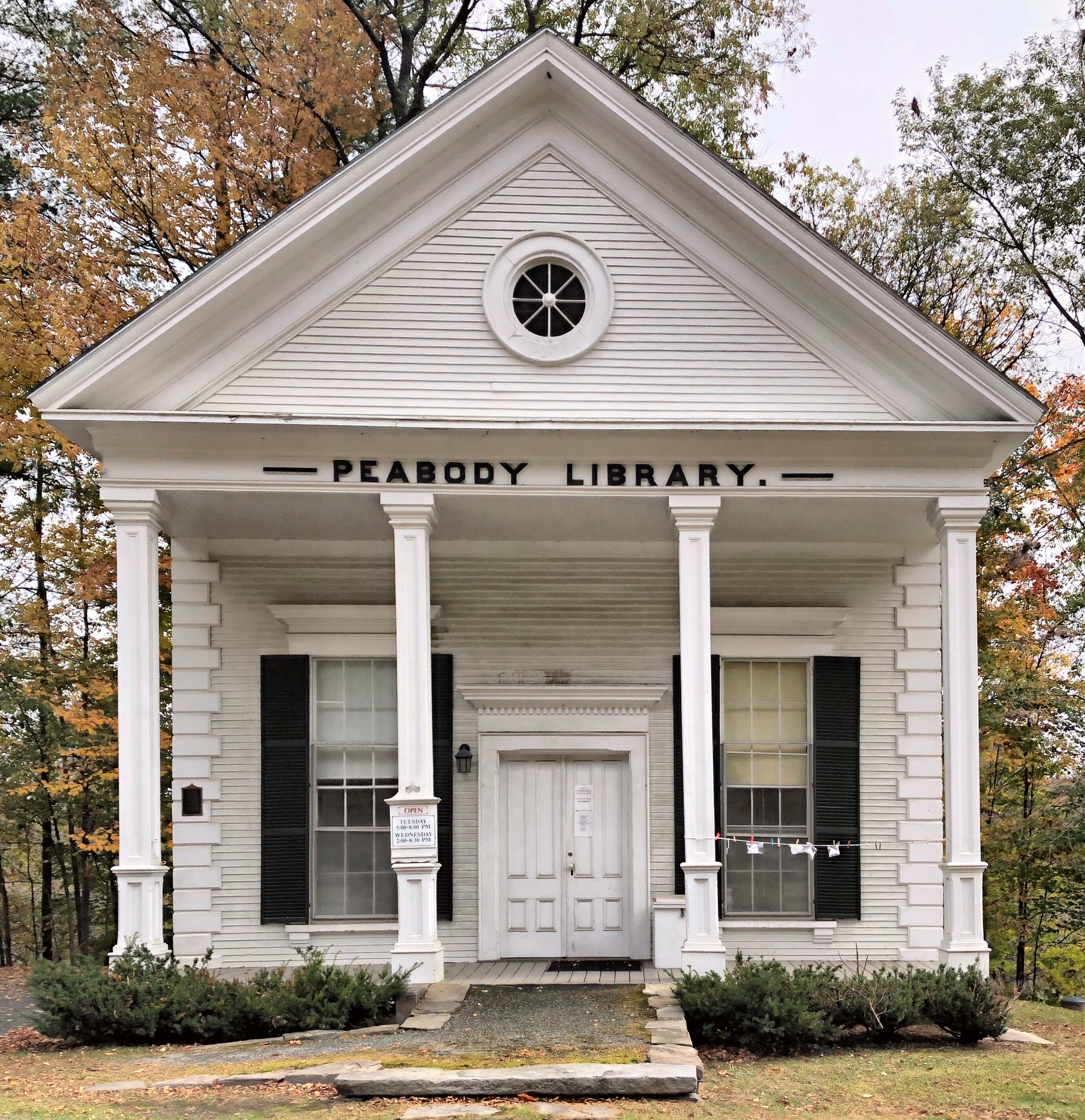
Located in the Post Mills Village of Thetford, Vermont, the Peabody Library is one of the cutest library buildings ever! The library was a gift to the community of Post Mills by George Peabody, one of the first great American philanthropists. Peabody spent some time in Post Mills as a teenager, where his maternal grandfather lived. Peabody’s grant of $5,000 paid for purchase of the land, construction of the building, and acquisition of 1,100 volumes. He also donated funds for other libraries including the Peabody Institute Library in Danvers. The library exhibits a unique blend of characteristics from both the Greek Revival and Italianate Revival styles, being an outstanding representative of the mid nineteenth-century transition in architectural fashion. Oh to see inside this little library!
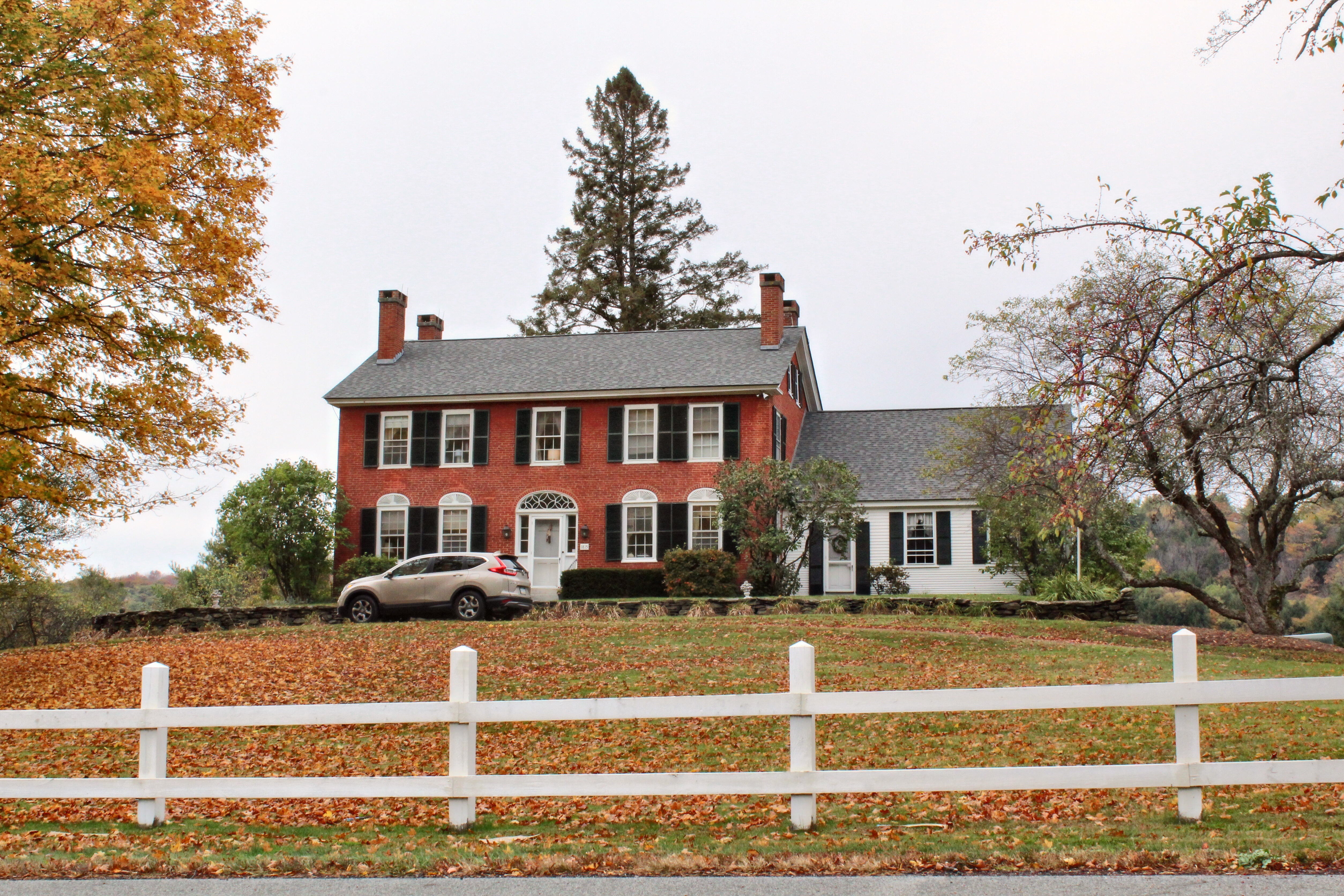
Hezekiah Porter (1783-1851) built this house in 1822 for him and his family, right in Thetford Center, Vermont. Porter was born in 1783 in Hebron, Connecticut, where he presumably learned the clothier trade, before moving to Thetford in 1806. Porter later operated a brickyard, serving as contractor to the Thetford Center Methodist Church, Town Hall and several other brick homes in town dating from the 1820s and 1830s. Porter lived on this large property with his wife and ten children until his death. The property was later occupied by Hezekiah’s son, Amos P. Porter. In 1888, Amos farmed about 200 acres and had 7 cows, 50 Merino sheep and 18 Jersey cattle!
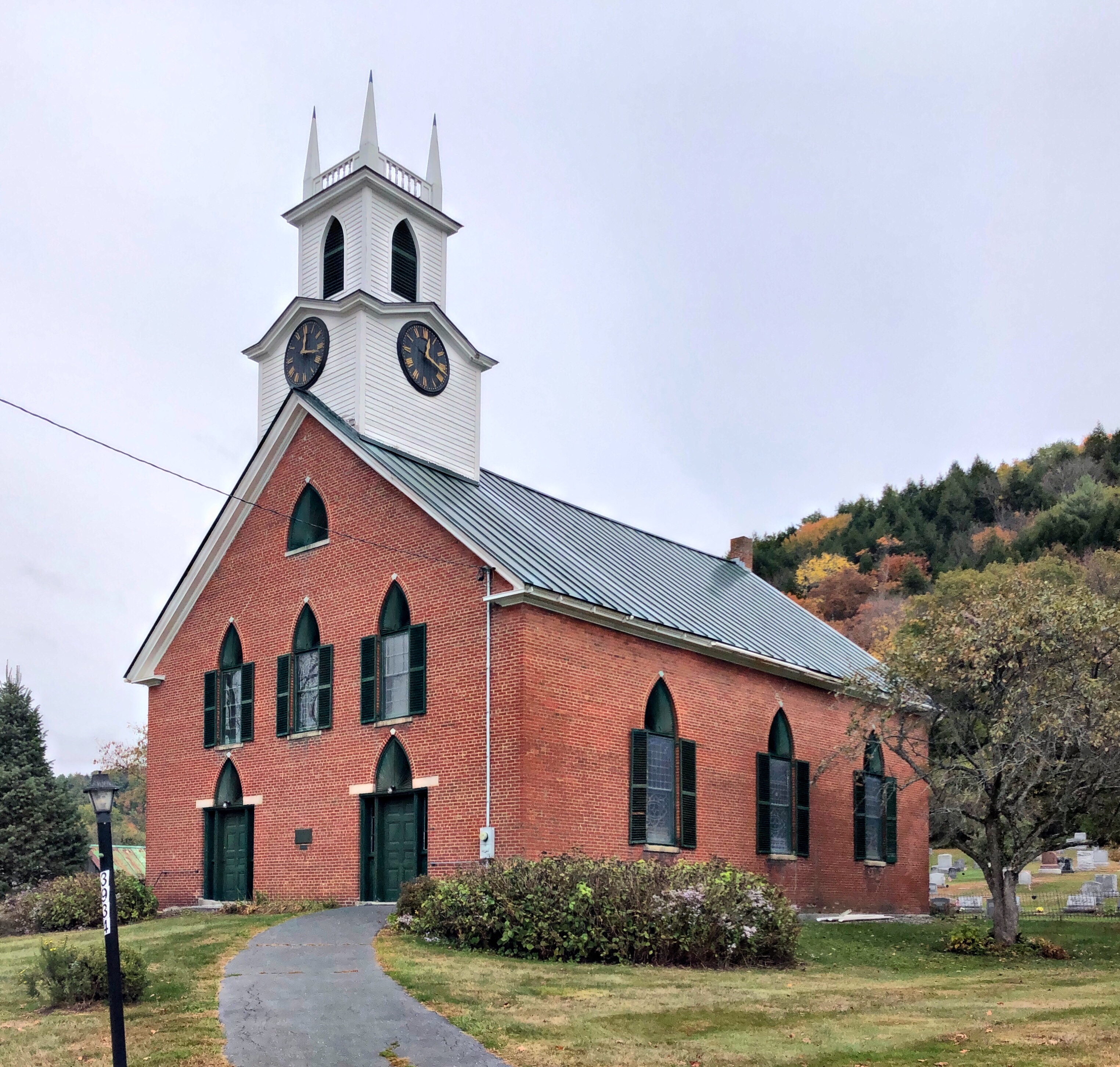
An outstanding example of the Gothic Revival style churches in Vermont, this brick, three bay, gable front church was constructed in 1838 in Thetford Center Vermont. The Gothic Revival style is expressed here primarily in the pointed louvered insets above the windows (including the pointed louvers in the steeple) and the finials at the steeple. The church building was constructed using brick made in the local brickyard owned by Hezekiah Porter. Designed to seat 250 people, it was constructed for the cost of a mere $1,400. Behind the church is the Evergreen Rest Cemetery, administered by a Cemetery Association, in which are many of the early residents of Thetford and members of the congregation and its founders.
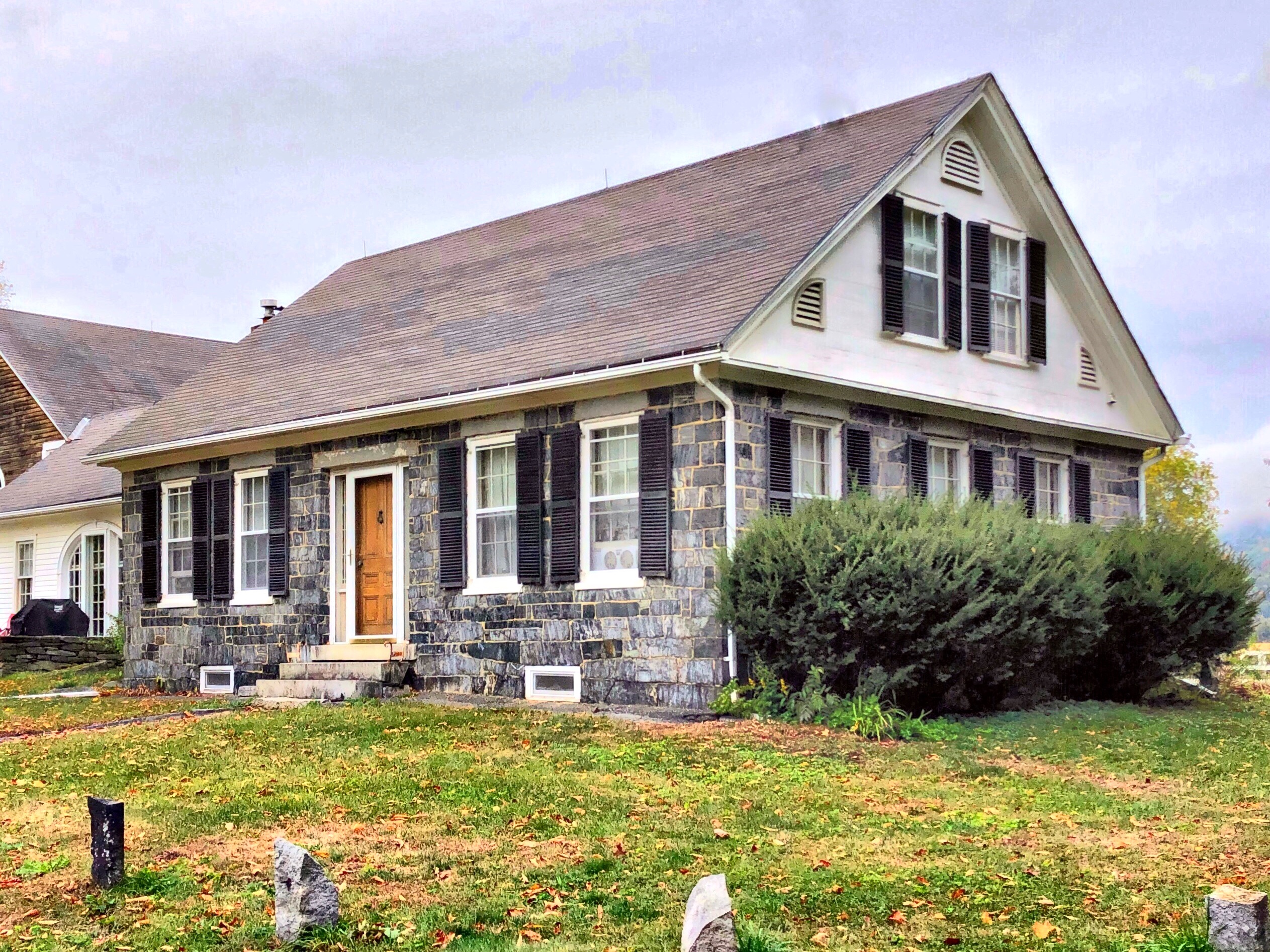
Josiah Hosford of Thetford, Vermont built this stone house for his family in about 1835. Hosford was a stone mason who built a series of stone houses in town, using stone quarried in nearby Lyme, New Hampshire. Josiah Hosford (1802-1883), was the grandson of Aaron Hosford, one of the earliest settlers in the North Thetford area. The distinguished family contributed resided and contributed to the town’s vibrant history, as ministers, teachers, artists, farmers, and tradespeople. A fire at the home in the early 1900s gutted the interior, and the owner at the time, a carpenter, reconstructed the interiors, shingled the side gables, and added on the porches.
Constructed out of stone quarried from nearby Lyme, New Hampshire, the Child Farmhouse is one of a handful of stone houses in East Thetford, Vermont. This house is a particularly fine example of a Cape Cod with Federal detailing, as translated into granite construction. The home features stone lintels over the door and window openings. It was built for Bela Child (1786-1866), likely after the death of his first wife, as a new home for his second. The family operated a massive farm along the Connecticut river.
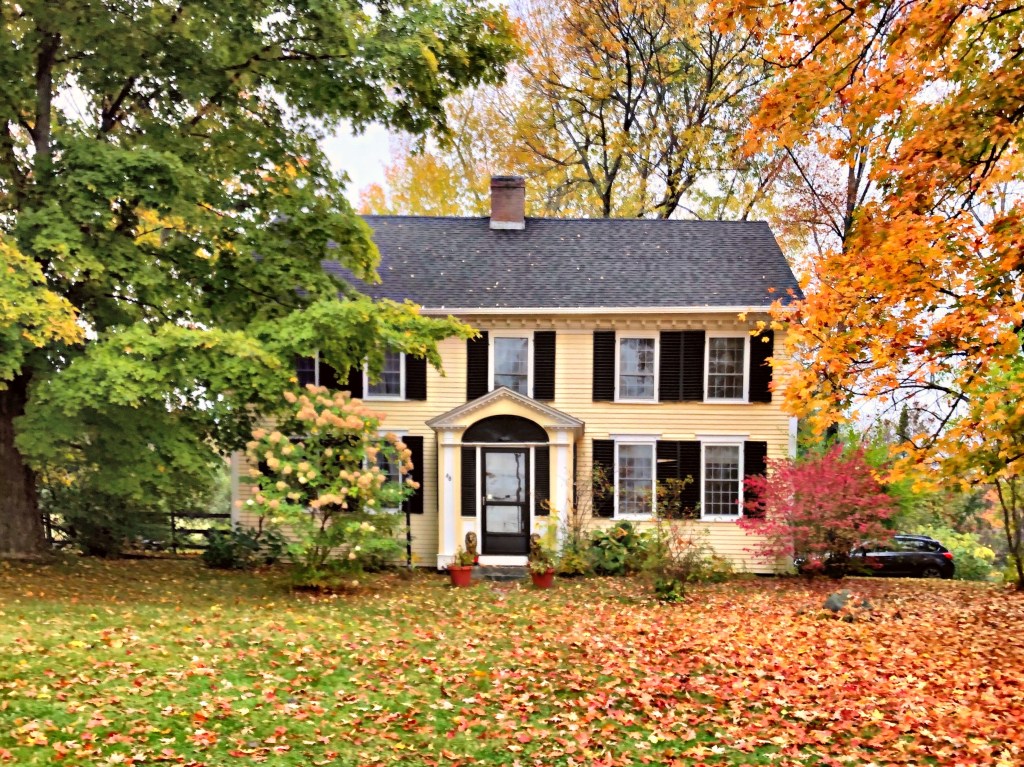
This transitional Federal house in Thetford was built around 1795 for an Isaac White. The house was later owned by Orange Heaton (who’s name perfectly fits the color of the leaves in the photo). The design is refined, yet stately with the enclosed, gabled, projecting entrance porch. Louvered panels and an elliptical louvered fan frame the door.
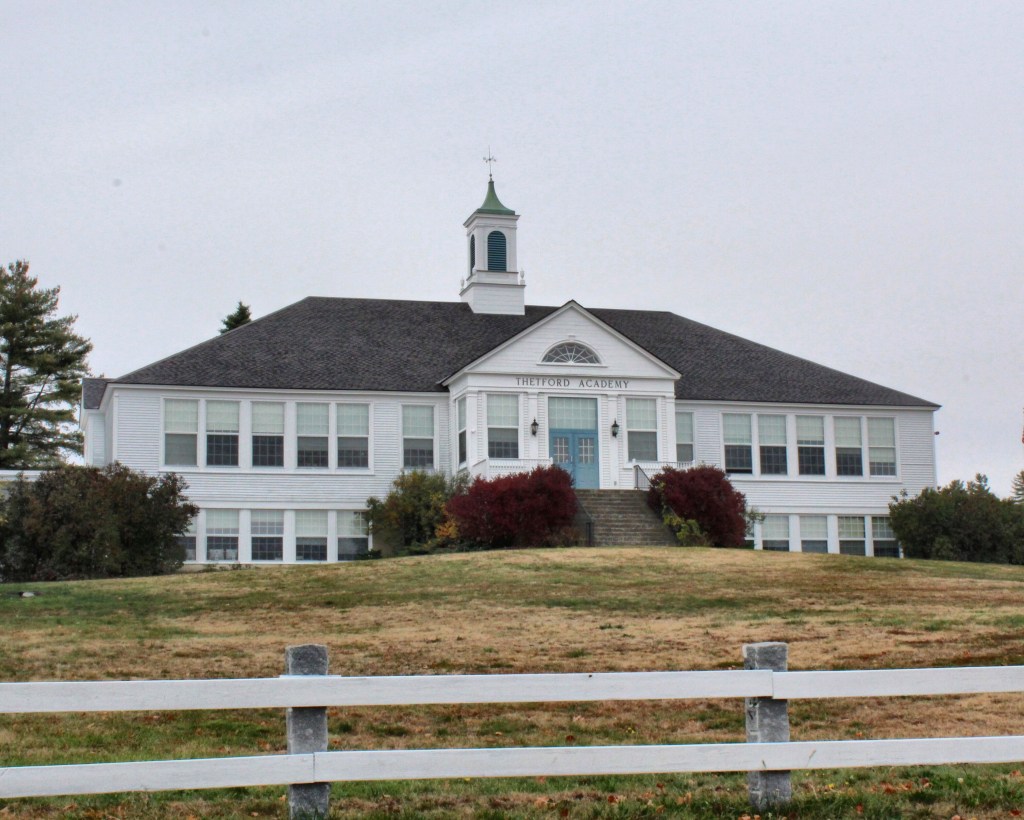
Thetford Academy opened in February 1819, after the constitution of Vermont called for free elementary schools in each town, a school in each county for studies above the elementary level, and one university for the state. These schools prepared students in classical languages, mathematics, “natural philosophy,” and the arts for entrance into colleges and universities, and careers in ministry, law, medicine, and teaching. By the time Thetford Academy was founded, girls were being admitted to some academies (usually in the summer term) for studies which were advanced beyond the common schools, but which were not intended to prepare for college. Thetford Academy admitted both boys and girls from its founding. The school thrived beginning on it’s first day of classes, growing almost annually with new buildings constructed to house new classrooms and dormitories.
The first academic building, erected in 1818 by Fitch, was crowned by a bell tower and featured separate entries for boys and girls. It was destroyed by fire on November 14, 1942. Fueled by high winds, the fire also destroyed the girls’ dormitory and the library. Undeterred, the school rebuilt nearby beginning with this Colonial Revival building, known as the White Building. Later buildings were added to create the campus we see today.
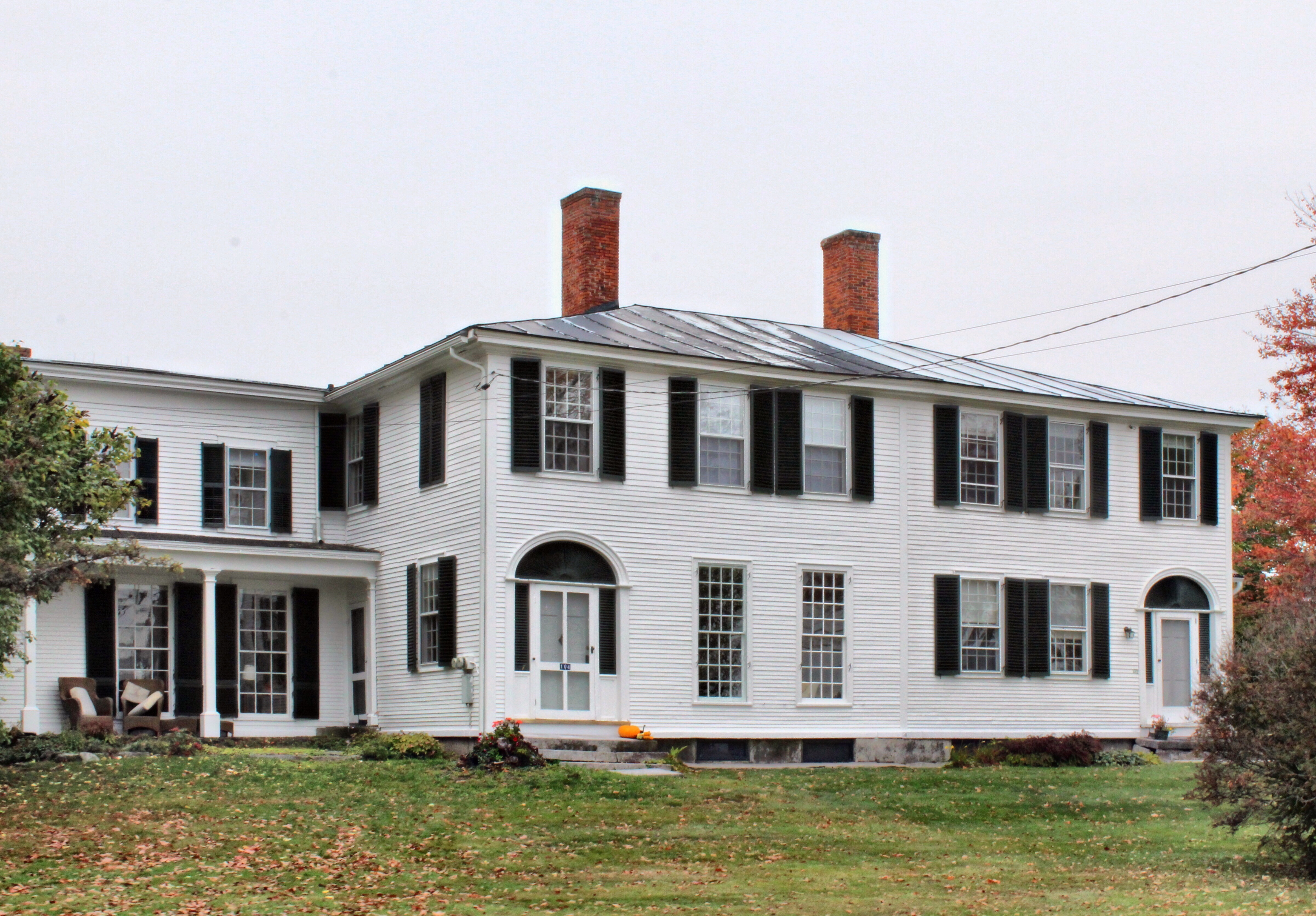
This unique double-house was constructed in 1817 for Capt. William Harris Latham and Dr. Thomas Kendrick, brothers-in-law, merchants and partners in a store which stood until it was destroyed by fire about 1845. Latham served as a Captain in the War of 1812, and later was an important benefactor of the nearby Thetford Academy, donating money and building materials for the original construction. Wallpaper from this house depicting the City of Leon was donated by a previous owner, Mrs. Charles Vaughan, to the Currier Gallery in Manchester, NH. The homes are an excellent example of the Federal style with a vertical board at the center of the main house facade demarcating the property line. Blind fan transoms and multi-light double-hung windows add a lot of charm to the historic homes.
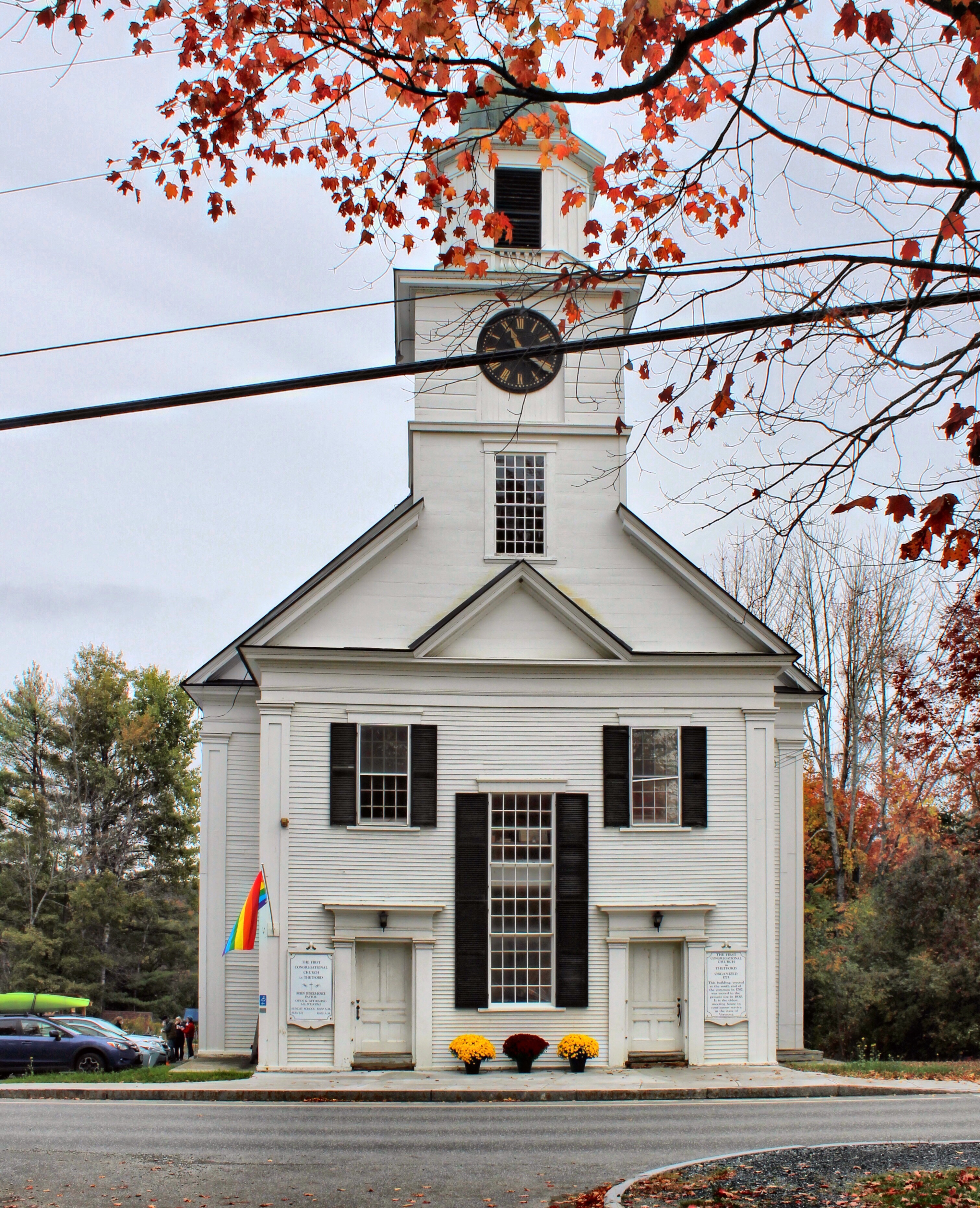
Attempts were made to organize the Congregational Church in Thetford, Vermont as early as 1771, making this congregation among the five earliest in the state. As was typical of the day, the meetinghouse was intended to serve both public and religious functions, before the separation of church and state. Following the customary dispute over the location of the meetinghouse in town, the structure was erected on the Town Common, marking the beginning of the village of Thetford Hill. Construction began on the meetinghouse in 1785, being completed within a couple years. Sometime between 1807 and 1812, the Congregational Church ceased to be supported by taxes as the separation of church and state resulted in the sale of the meetinghouse and its subsequent move in 1830, from the town-owned common to its present site just north of it. In 1830, the pavilion, tower, and pilasters were added to give the church a Greek Revival flair. The church is reportedly the oldest meetinghouse in the state still in continuous service.
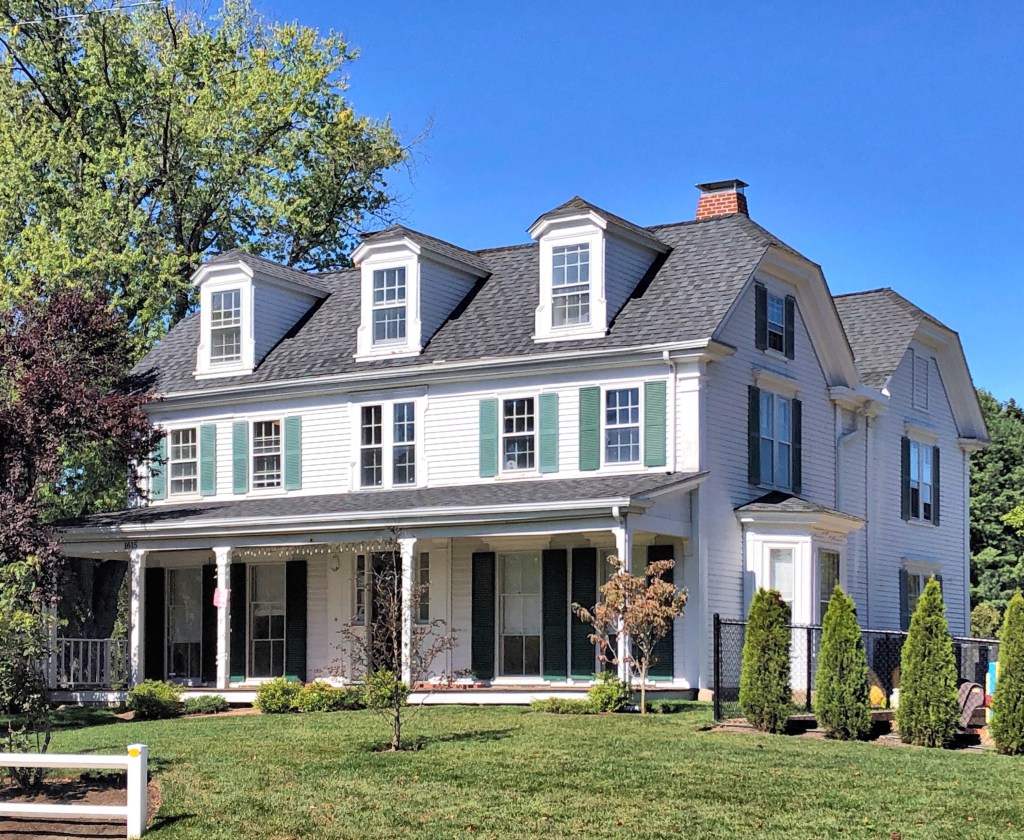
In 1688, John Staples, settled in the untouched landscape seven miles west of Boston, now known as Waban Village in the town of Newton. John was a weaver by trade but he ended up as the first public school teacher, the town clerk, a policeman, and an alderman. John married and lived in a modest farmhouse for decades here, witnessing the birth of a new nation nearby. The couple had no children of their own but raised some of Mary’s relatives including Moses Crafts, who would eventually take over the home. Craft rebuilt the house on the original foundation around 1750, constructing a colonial farmhouse two and a half stories high with five windows and two rooms across, one room wide.
Joseph Crafts died in 1821 at the age of 85, leaving no will and considerable debts owed. The Judge of Probate ordered the property to be auctioned, and Joseph’s son, Moses Crafts II, made the winning bid of $5.50 for the house, barn, and a large tract of land! In 1824, Moses Craft II sold the property to his cousin William Wiswall, who gave the house a Federal period remodeling.
By the late 19th century, the home and ample farm land were acquired by William Strong and his wife Mary. William, President of the Massachusetts Horticultural Society, used the property for some time as a nursery, with apple orchards and rose gardens. After his petitioning for a train station in Waban, he parceled up the farmland into large house lots for sale, seeing the neighborhood shifting to a suburban village. He soon after built the Strong Block, the first commercial building here.
For the small population living in the farming village of Waban in Newton, MA, every Sunday, they had to take a horse and carriage or walk to church in a nearby village. The Waban Christian Union was the first religious organization to be established in Waban, 1894-1895 after seeing a suburbanization of the village. The church was to be for services of the Protestant Episcopal Faith, though the group claimed no allegiance to the Diocese, nor was it organized according to the laws of the church. It was independently owned by a corporation that felt the need for a religious association in the community. This church structure was constructed in the summer of 1896 at a cost of $5000 with William F. Goodwin, a charter member of the group (and resident nearby), donating his services as the architect. The organization leased the space to a pastor for $200 a year, later selling it to the congregation, known now as the Church of the Good Shepherd.
The village of Waban in Newton, Massachusetts, was named after a Massachusett Chief who had previously resided atop Nonantum Hill on the Newton-Brighton line. This location is believed to have been a favorite hunting ground for Waban (the Wind) and his people. Throughout much of the 19th century, Waban remained a quiet agricultural region. As late as 1874, fewer than 20 families held title to all of its land. In the mid-1880s, however, interest in suburban developments near the Boston and Albany Railroad became increasingly widespread. Seeing suburbanization in the late 19th century and into the early 20th century.
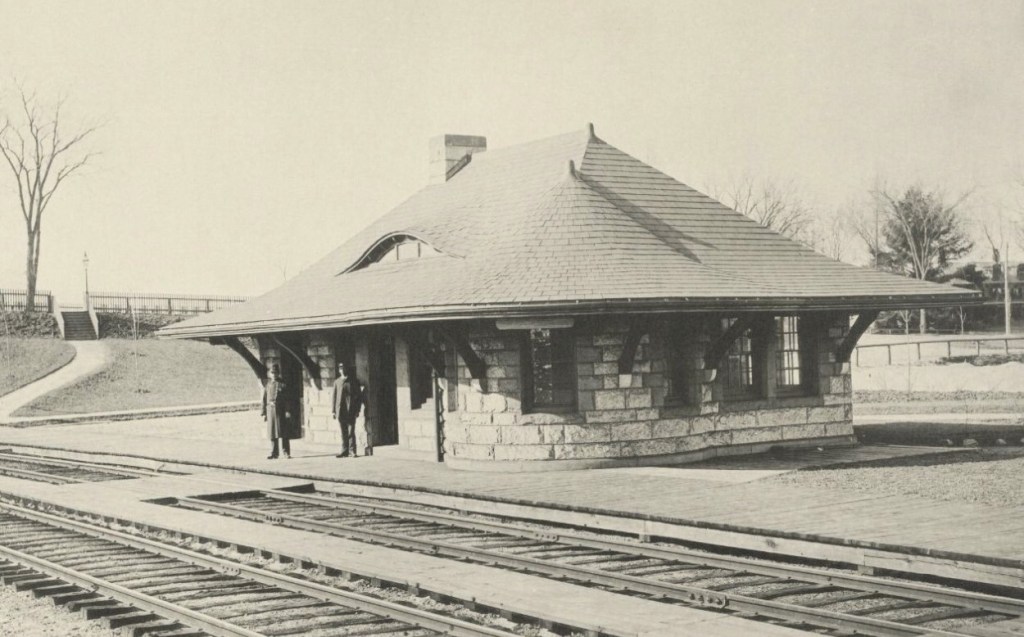
The station that allowed all the development in the early days of Waban was built in 1886. The Boston & Albany Railroad hired renowned architect Henry Hobson Richardson to design the station, and many others on branches of the various lines radiating out from Boston. The Highland Branch (which this station was on) was later acquired by the MBTA in Boston, which operated it as a Commuter line. Waban Station closed along with the rest of the Highland Branch commuter rail line in 1958 and reopened a year later in 1959 as part of the Green Line’s D Branch. The gorgeous H.H. Richardson-designed station was demolished in order to build a 74-space parking lot. They literally paved paradise, and put up a parking lot…