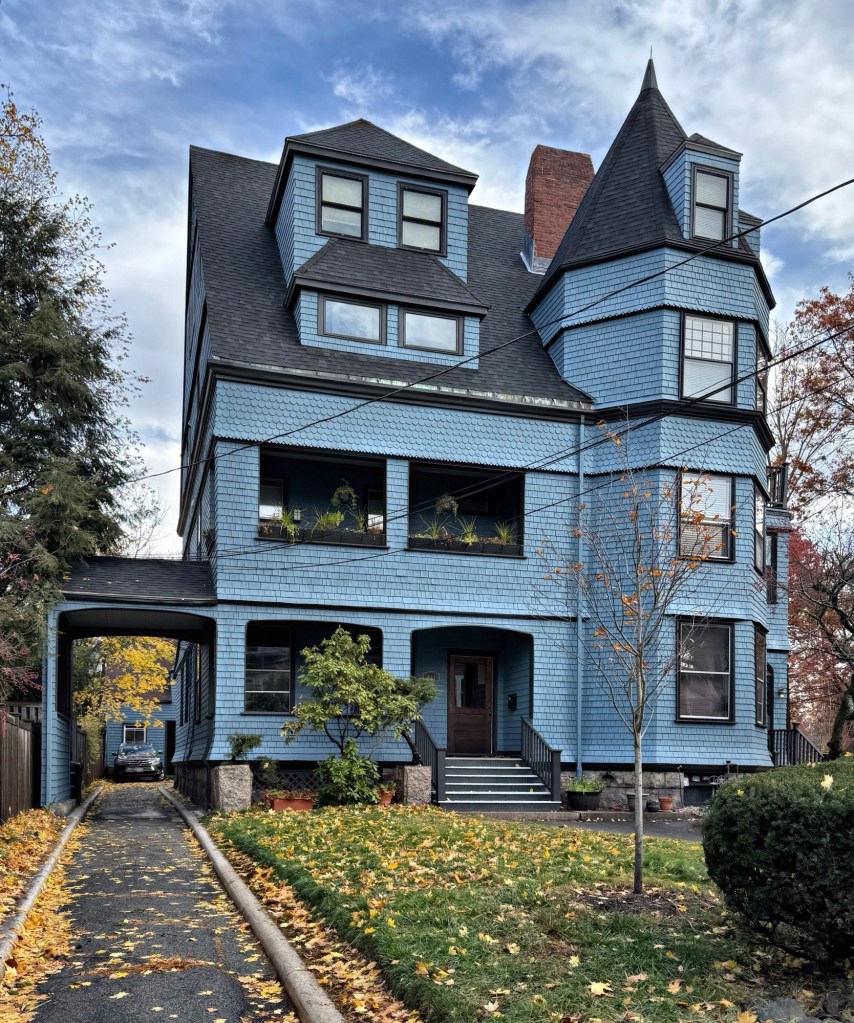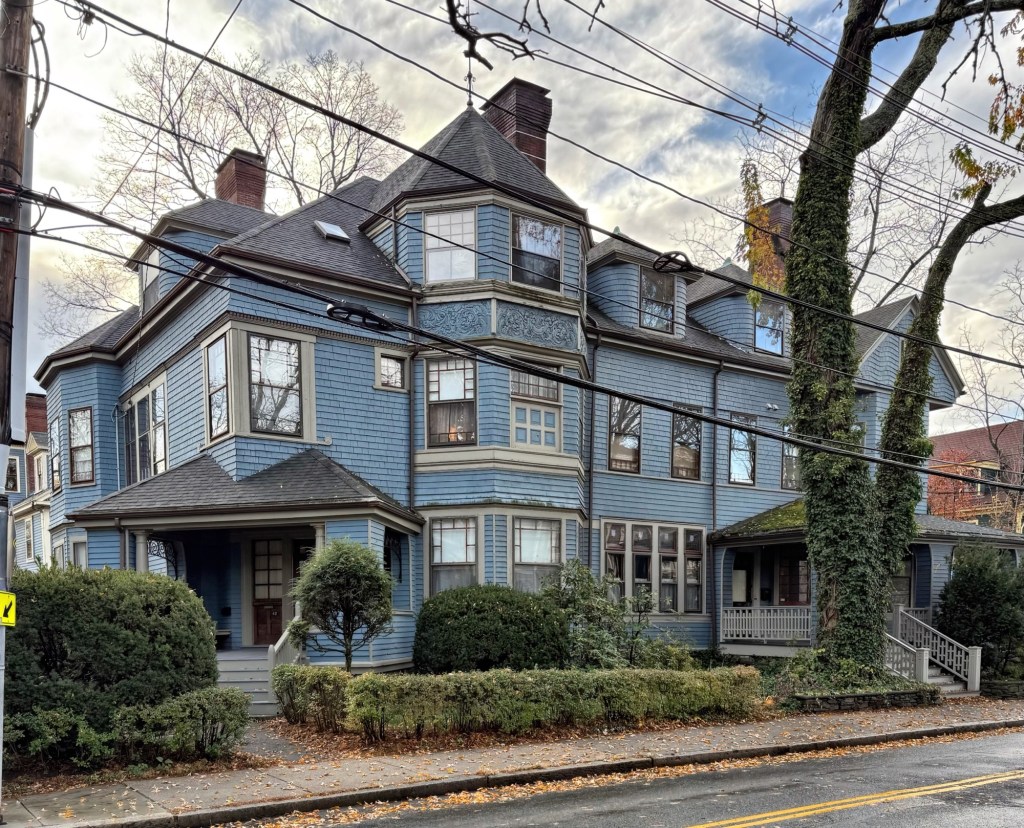
Charles H. Rutan House // 1889

In 1889, prestigious architect Charles H. Rutan, purchased a house lot from the heirs of Elijah Emerson on the family estate and oversaw construction of his own residence in Brookline Village. Charles Hercules Rutan (1851-1914) was born in New Jersey and moved to Brookline in 1874, where he worked in the office of famed American architect, Henry Hobson Richardson. After Richardson’s death in April 1886, at the height of his career, Rutan and two other senior employees, George Foster Shepley and Charles Allerton Coolidge, took charge of the studio and its uncompleted work. Soon after, the three formed a formal partnership, Shepley, Rutan & Coolidge, to succeed to Richardson’s practice, and in 1887 moved the office to Boston. From his new position as head of a prominent firm, Rutan designed this handsome Queen Anne/Shingle style mansion for his family, where he lived until he suffered from two debilitating strokes in 1912, when he and his wife moved to an apartment on a nearby street. Besides the blue color, the house retains so much of its original architectural integrity and is one of the most significant residences in the Brookline Village neighborhood.

Emerson-Arnold Double-House // c.1875

Elijah Carleton Emerson (1807-1888) was a wealthy Boston merchant, making his fortune as Director of the Second National Bank and President of the Middlesex Horse Railroad. In his late 30s, he purchased land in Brookline Village and established his estate on the land that is now Emerson Park in 1846. The bucolic setting of his estate included a pond, boathouse and adjacent cottage, but as the surrounding area continued to develop with easy access to Downtown Boston, Elijah Emerson began to develop his estate. Emerson began to build residences on his land for supplemental income. This handsome Stick style double-house was built around 1880 and rented by Mr. Emerson and was eventually occupied by his granddaughter, Tirzah and her husband, George Francis Arnold. The residence features a mansard roof, decorative brackets and applied stickwork, and a handsome porch with turned posts.

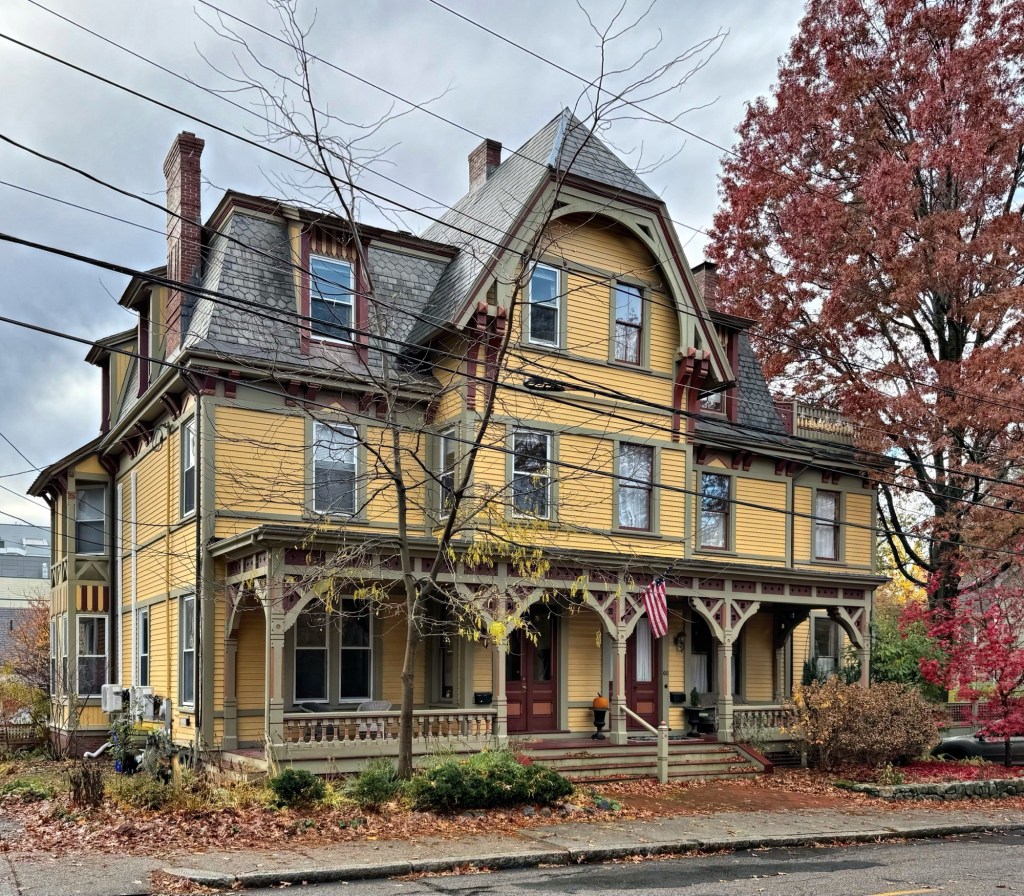
John D. Sturtevant Double-House // 1892

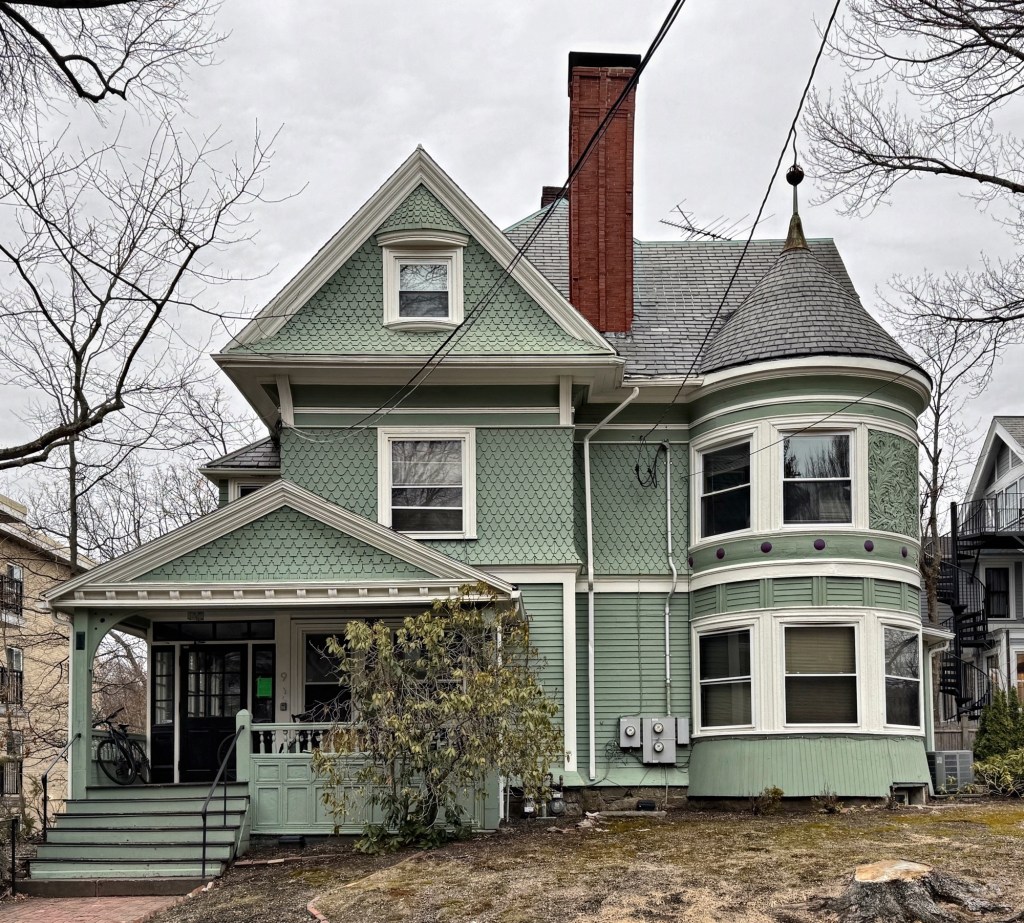
John Dean Sturtevant (1816-1889) was born in New Hampshire and became engaged there in local woolen mills, quickly growing into advanced management positions. He operated woolen mills in New Hampshire, Maine, Connecticut, and Massachusetts, and settled in Brookline where he had access to other states via excellent rail service. When he died in 1889, John’s heirs inherited their late-father’s properties, and began to develop them as Brookline filled out in the last decades of the 19th century. This handsome double-house at the corner of Cypress and Waverly streets was built in 1892 by the Sturtevant Estate, who rented the property to two families of wealthy residents. The Sturtevant Double-House is a landmark and exceptionally preserved example of the Queen Anne style, with varied siding, asymmetrical forms, complex roofline with dormers, and applied ornament in the form of carved panels.

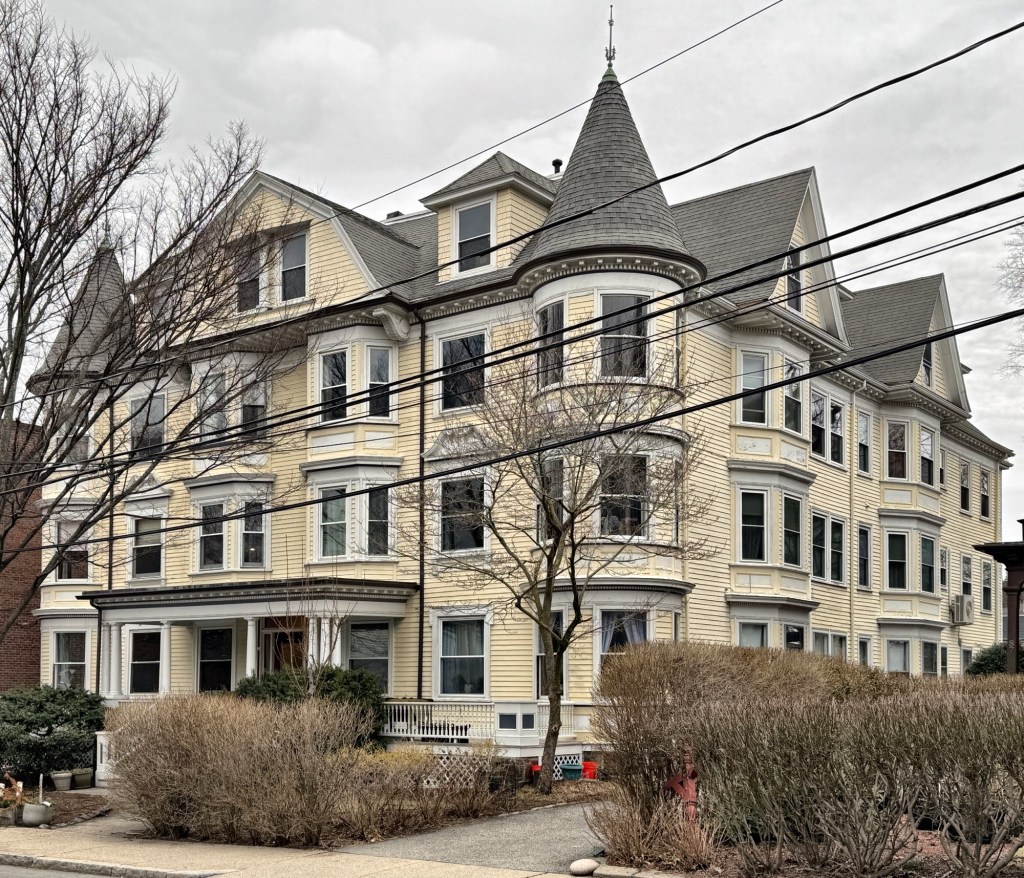
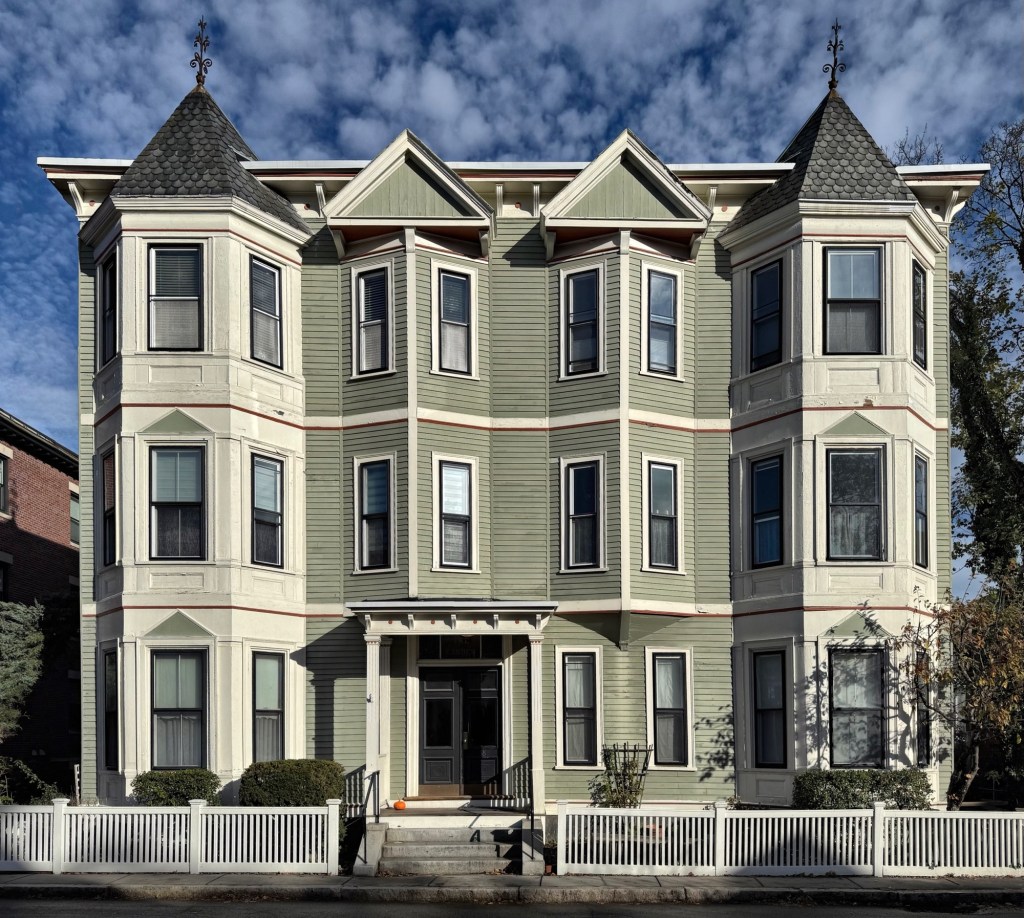
The Linden Apartments // 1885

The Linden Apartments is an early multi-family apartment building in Brookline Village that shows how density can be done tastefully. The building is located at the center of Linden Place, Brookline’s first planned subdivision which was laid out in the 1840s. By the end of the 19th century, development pressure associated with the growth of Brookline Village lead to further subdivision of the original building lots and greater density of settlement in this neighborhood. The Lindens was constructed in 1885 by and for James W. Tobey (1830-1914), a local builder, as an income-generating property. Designed in the Queen Anne style, the Linden Apartments contained six suites, all with exceptional quality materials and finishes. The façade is embellished with two octagonal bays at the ends and two angled bay windows with gables which break up the otherwise rectangular form. The building has been lovingly maintained by residents and contributes to the rich history of Brookline Village from a sleepy village to a vibrant and dense “downtown”.

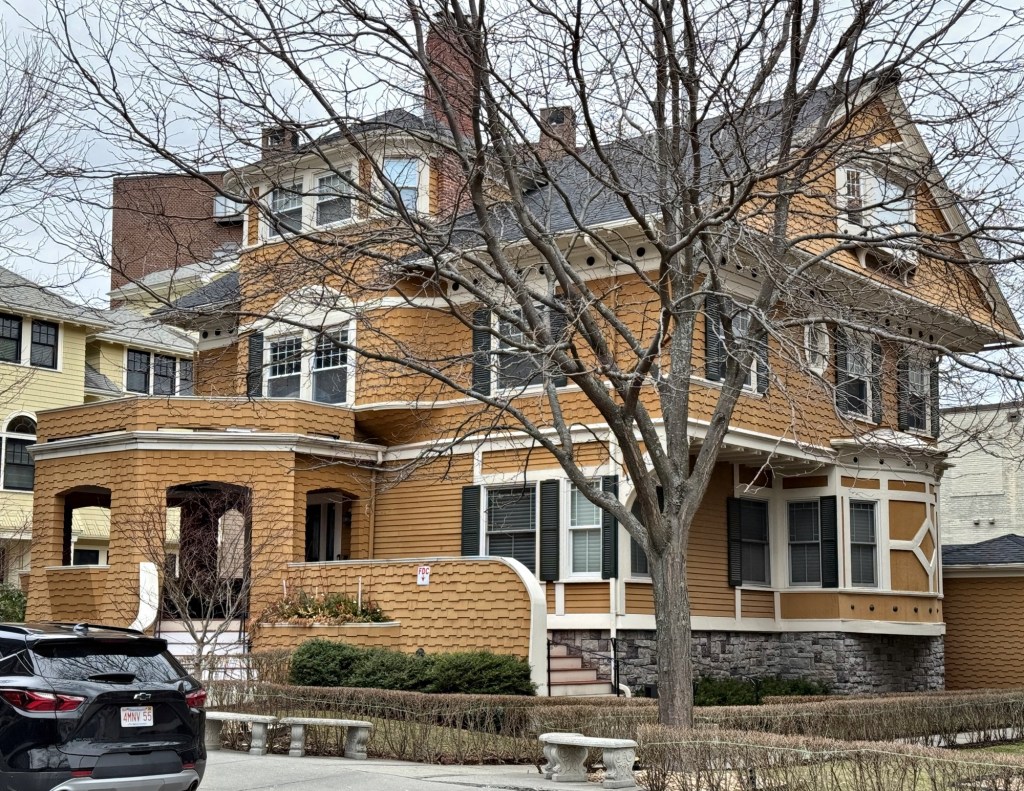
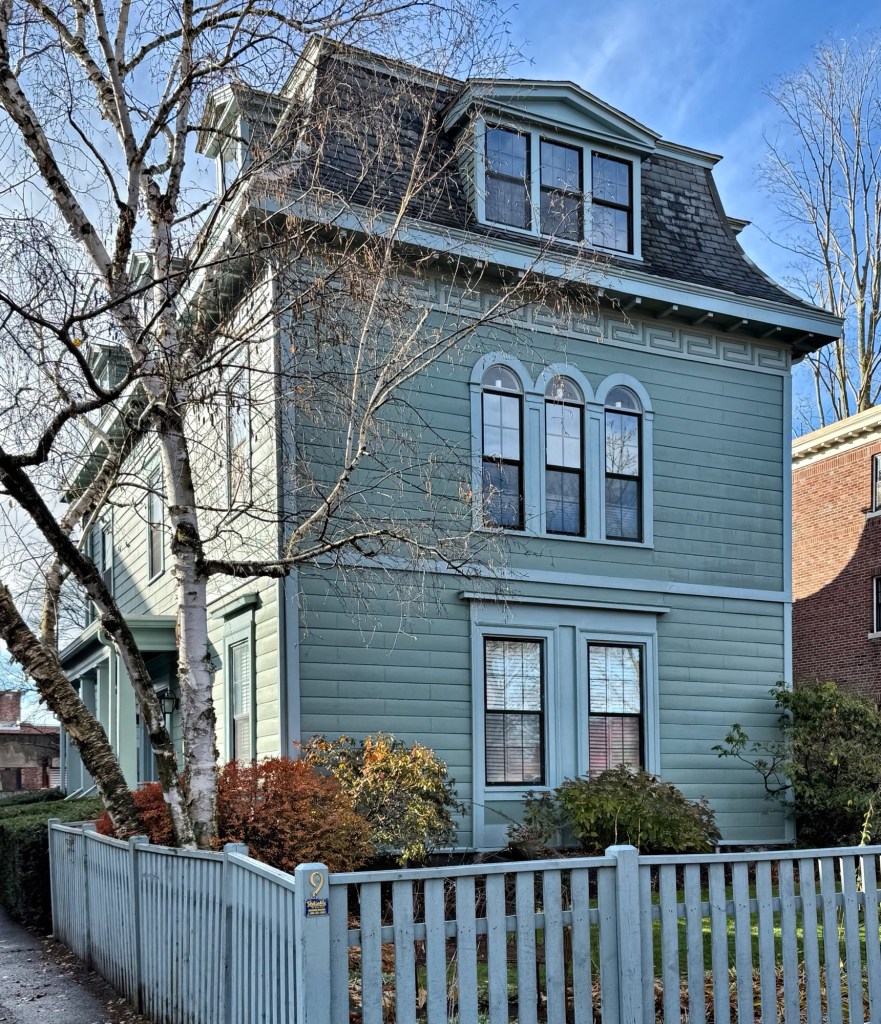
Isaac Rich House // 1846

The Lindens neighborhood, located just east of the civic and commercial core of Brookline Village, was long an apple and cherry orchard known as Holden Farm. Beginning in 1843, the area became the earliest planned development in the town and was laid out as a “garden suburb” for those wishing to escape the growing congestion of Boston. As originally conceived in 1843, it reflected the latest ideals of planned residential development for a semi-rural setting on land owned by Thomas Aspinwall Davis. The streets, parks, and house lots here were laid out by civil engineer, Alexander Wadsworth, who two years earlier, laid out plans for Mount Auburn Cemetery in Cambridge, the first “Rural Cemetery” in America. Early homes were built on speculation by John F. Edwards, an architect-builder, for Davis, who was strict about high-quality designs in the Greek and Gothic revival styles in his newly laid out neighborhood. This house on Linden Street was built in 1846 in the Greek Revival style and was purchased upon completion by Isaac Rich. Isaac Rich (1801-1872) was a prominent merchant and philanthropist and founder of Boston University. The house was modernized in the 1860s with the addition of a mansard roof and paired windows.

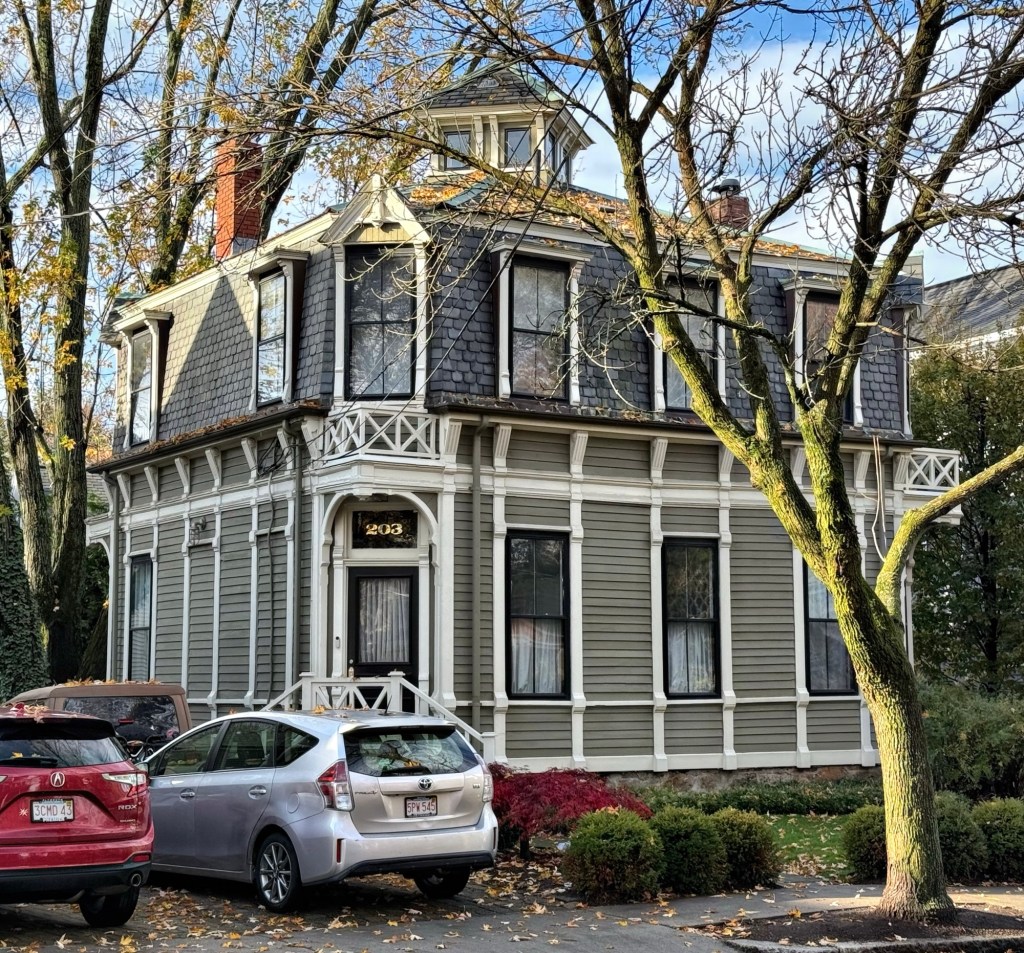
Toussaint House // 1879

In 1879, furniture-maker and amateur architect, Winand Toussaint (1826-1904), built this unique mansard roofed house at 203 Aspinwall Avenue in Brookline Village. Toussaint was born in Belgium, and immigrated to the United States about 1841, where he originally settled in Roxbury and operated a cabinetmaking business. Toussaint moved from Roxbury to Brookline about 1873, but lost his fortune in the Panic of 1874. After a few years, he found work and eventually purchased a house lot here, and designed and built this home in 1879. Winand was born into a family of architects and engineers in Europe with his grandfather being Jean Lambert Toussaint of Liege, an architect who reportedly built the first railway introduced in Belgium. He is said to have studied in France and Italy before working in furniture-making in the United States. He maintained a professional office from his Brookline house until his death in 1904. After his death, the family home was inherited by daughter, Emma Toussaint, who was unmarried and worked as a linguist and writer under the name “Portia”. The charming Toussaint House blends Second Empire and Stick styles with unique beveled corners, one of which contains the main entrance, and a belvedere at the crest of the mansard roof. Due to its unique architecture, the Toussaint House was individually listed in the National Register of Historic Places in 1985.

Saint Mary of the Assumption Rectory // 1882

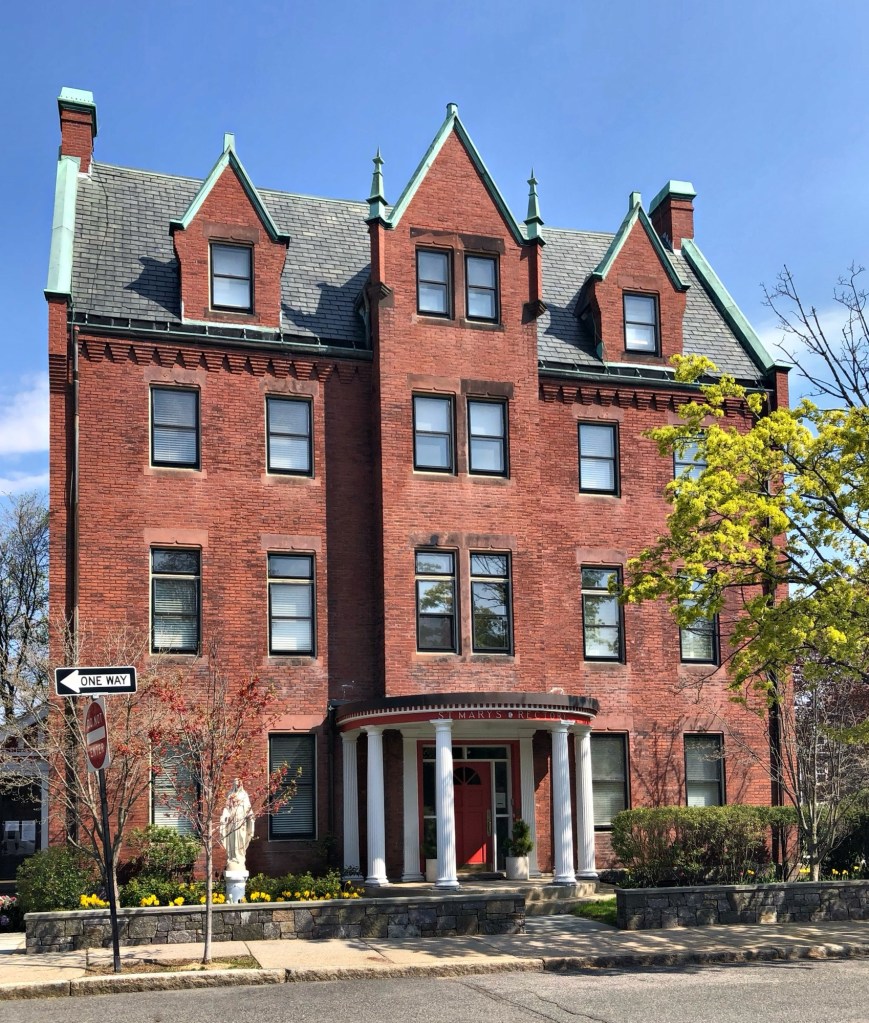
Located adjacent to the St. Mary of the Assumption Catholic Church in Brookline Village, this handsome three-and-a-half-story brick structure has served as the Rectory of the congregation since it was built in 1882. Complimenting the Victorian Gothic style of the church next door, the Rectory was also designed by the firm of Peabody and Stearns, and was the home of the priest and other high-ranking clergy men. The rectory stands out architecturally for its panel brick corbelling at the eaves, steeply pitched slate roof and copper-coated gables.

Edward Stanwood House // 1880

The Edward Stanwood House at 76 High Street in Brookline, Massachusetts, is one of the finest and exuberant examples of the English Victorian Queen Anne style, notable for its varied wall textures and materials, unique form, and applied ornament. The house was built in 1879-1880 for Edward Stanwood, who was for many years the editor of the Boston Daily Advertiser, and a children’s magazine, The Youth’s Companion. The ornate residence was designed by Clarence Sumner Luce, with interiors by Thomas Dewing. The Stanwood House features a well-preserved exterior and period-appropriate paint scheme, highlighting the bas-relief sunflower ornament and gargoyles. Of particular note is the use of hung tile siding, overlaid to give the appearance of fish scales and the roof cresting.

Charles Storrow Rental House // c.1884

This charming and quirky Queen Anne style house on Edgehill Road in Brookline was built as a rental property on the estate of Charles Storrow (1841-1927), a wealthy businessman who lived in his home next door (see last post). Like his own home, the residence was designed by Edward Clarke Cabot, his wife, Martha’s father, who utilized varied materials, forms, and roof shapes to create a unique composition unlike anything else in the neighborhood. The bulbous central tower and eyebrow and wall dormers also add intrigue to the design.

Charles Storrow House // 1884

Facade

This shingle and brick Queen Anne style house at 112 High Street in Brookline, Massachusetts, was built in 1884 for Charles Storrow and his wife, Martha Cabot Storrow from plans by architect, Edward C. Cabot, Martha’s father. The lot here is said to have been gifted to Charles from his father, Charles Storer Storrow, a prominent civil engineer and industrialist, who is known for designing and building the dam and textile mill complex in Lawrence, Massachusetts. Besides the Victorian main house, the property included a historic stable and a detached house on an adjacent lot, which appears to have been rented by Mr. and Mrs. Storrow. The property was designed by Frederick Law Olmsted’s firm, with rustic rock walls, natural topography, and large, mature plantings. The Storrow House originally had stained glass windows designed by John LaFarge, which were sold in the 1970s. 

Side elevation.