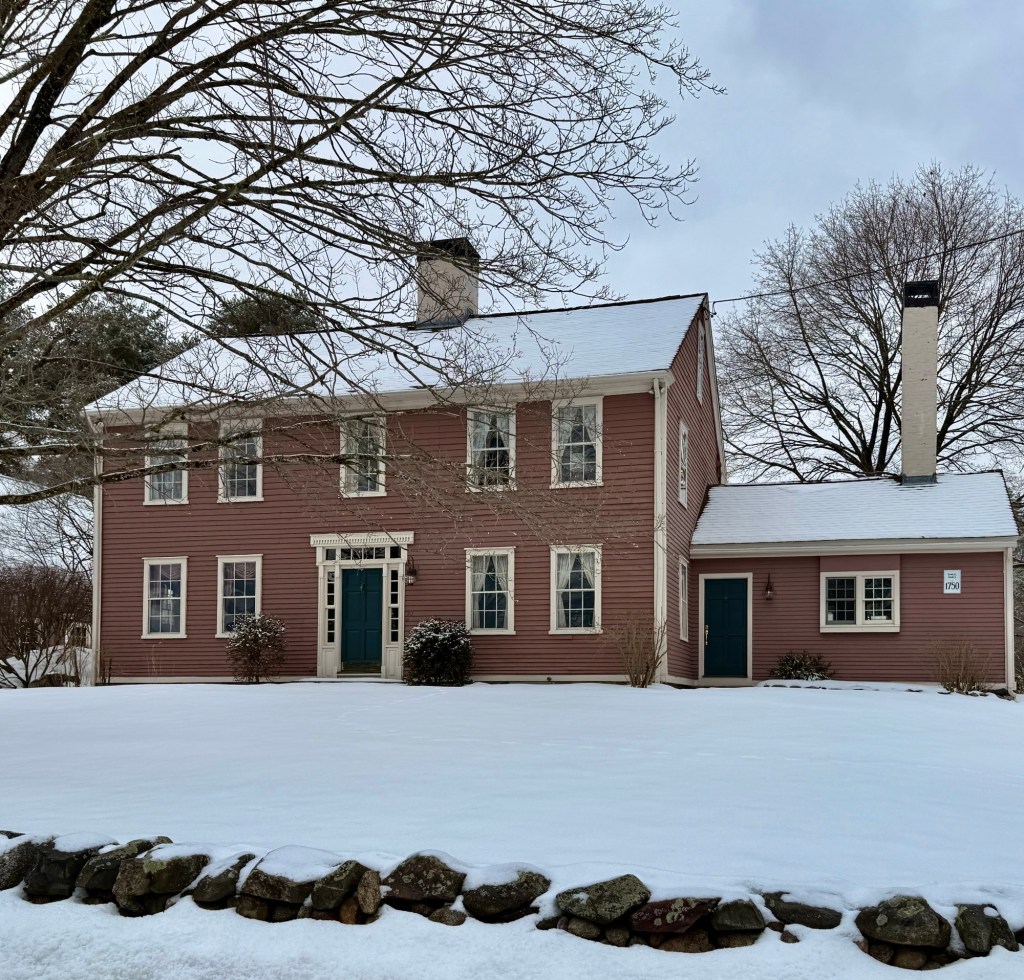
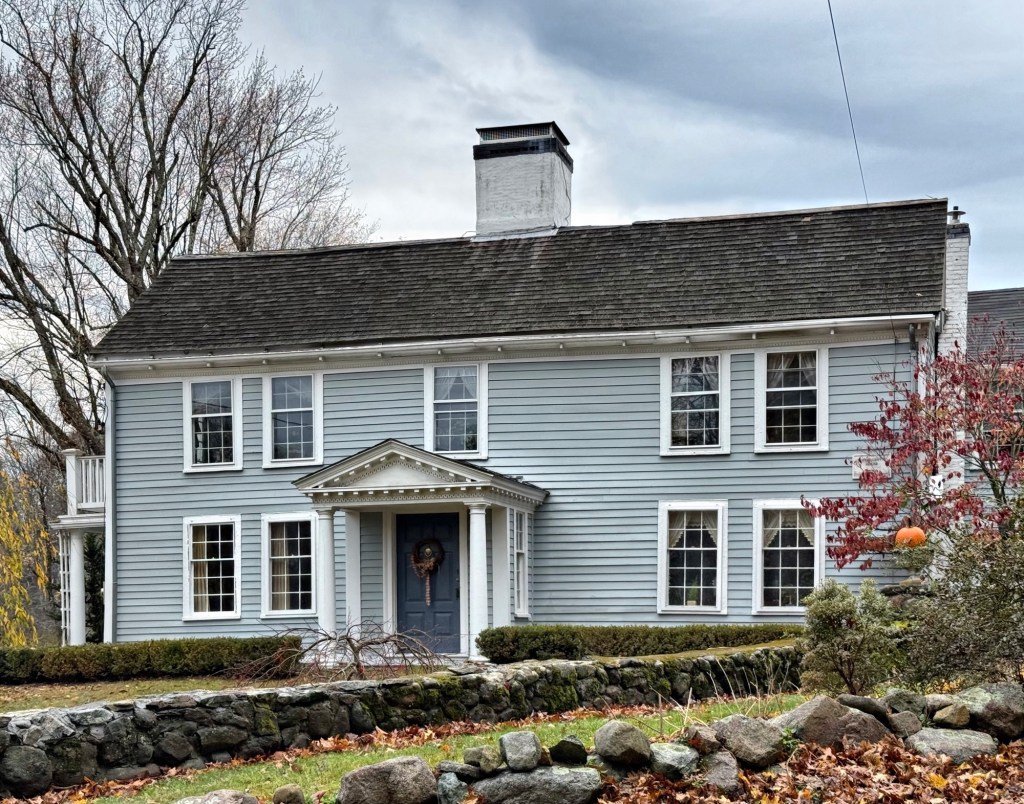
The Hawes’ in Wrentham, Massachusetts, were a prominent local family that largely settled in the western part of the town, building large farmhouses with properties bounded by rustic stone walls. This residence on Spring Street dates to the mid-18th century and was likely built for Samuel Hawes (1713-1795) around the time of his marriage to Priscilla Ruggles in 1741. After the death of both Samuel and Priscilla in 1795, the couple’s only son, David, bought out his two sisters value in the property and lived here with his family. The property was passed down through members of the Hawes Family until the 20th century, though later owners have still maintained and preserved this significant home for future generations.
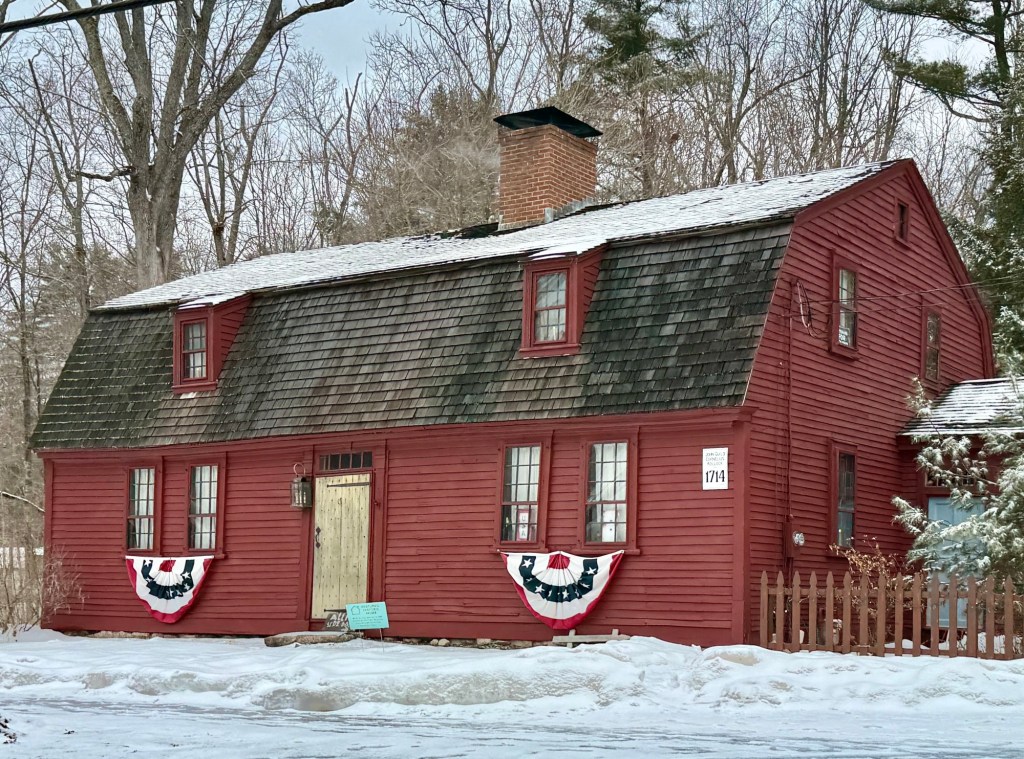
The Guild-Kollock house on East Street in Wrentham, Massachusetts, is one of the oldest and best-preserved historic homes in the suburban community. In 1674, John Guild of Dedham, was granted this lot by the proprietors and later willed the property to his son, Deacon John Guild Jr. (1649-1723). John Guild Jr. had the home built between 1682 and 1714, the first recorded document that acknowledges the existence of this dwelling, giving the home a definitive “built by” date. The Colonial farmhouse remained in the Guild family until 1804, when it was purchased by Cornelius Kollock, a Revolutionary War veteran, surveyor, Justice of the Peace, Town Clerk, Town Treasurer, and Representative to the General Court. The significant early Guild-Kollock House was documented inside and out as part of the Historic American Buildings Survey (HABS) in 1962 and has been lovingly preserved for over 300 years since its construction.
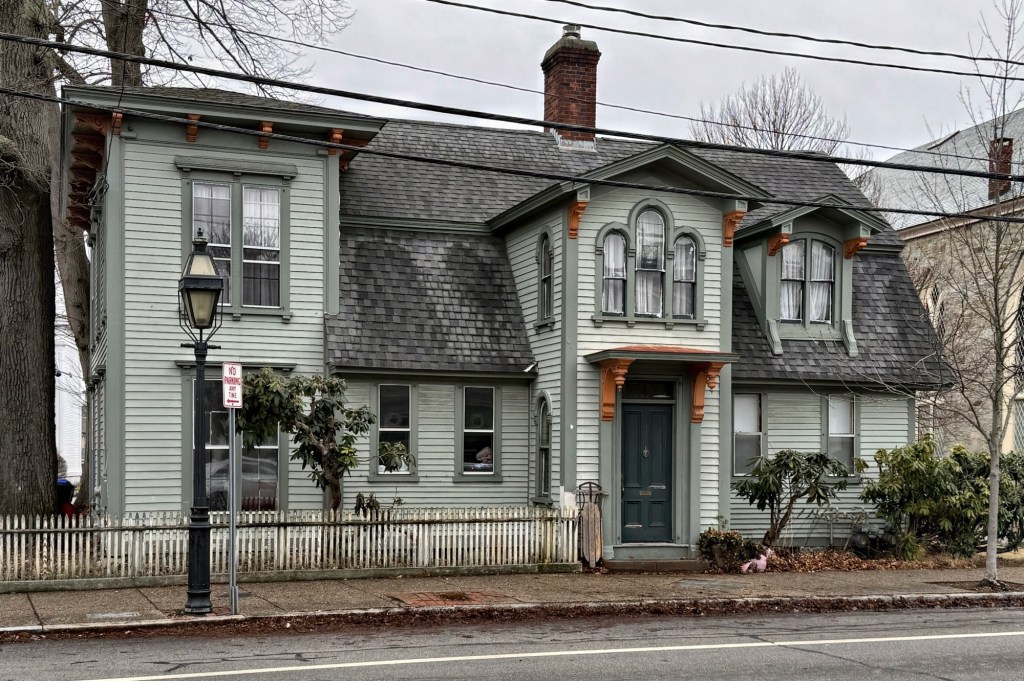
One of the most historic and architecturally unique houses in Warren, Rhode Island, is this pre-Revolutionary cottage on Main Street, that was modernized in the mid-19th century for later owners. Historians state that the house was built by Jesse Baker (1708-1751), who must have died shortly after its completion. At the time of the British burning of Warren during the Revolution in May 1778, Jesse’s widow resided here and saved the modest cottage from the hot embers of the adjacent burning Baptist Church, parsonage and arsenal by wetting every blanket and sheet in the house and spreading them over the roof of the home. The once modest, gambrel-roofed Georgian cottage, was purchased in 1868 by Dr. Joseph Merchant, a physician and surgeon, who “Victorianized” the house to the eclectic beauty we see today. Dr. Merchant added the projecting two-story corner tower, two-story front entry vestibule with Rundbogenstil tripartite window which reads like a Palladian window, projecting eaves with brackets, and stickwork in the north gambrel roof. The home was later inherited by Dr. Merchant’s daughter, Mary, and her husband, Howard K. DeWolf.
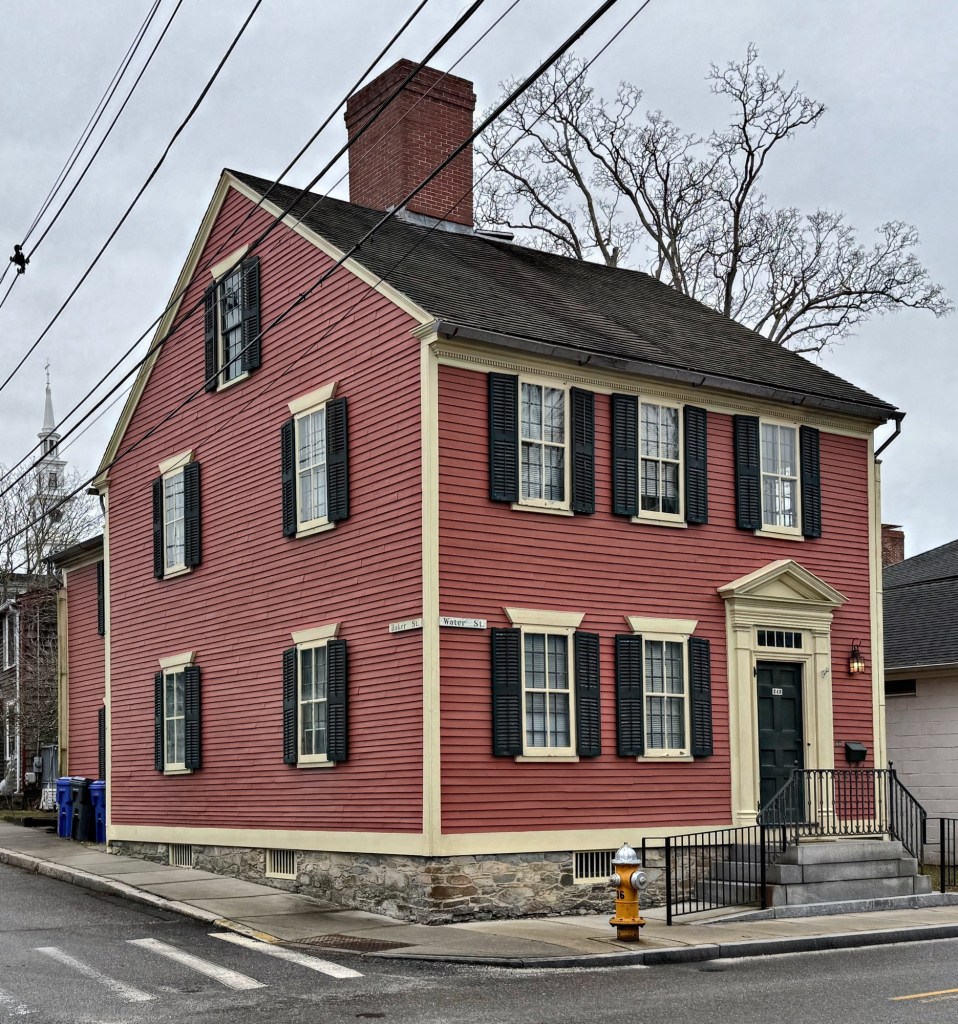
Located at the corner of Water and Baker streets in Warren, Rhode Island, this Georgian Colonial-era home oozes charm! Built by shipwright William Hill, as a three bay, two storied residence in 1761, this Colonial “half-house” was later owned by mariner William Collins who managed a wharf nearby. The home was later inherited by his son, Capt. Haile Collins (1798-1863). The two-story house with three-bay-façade and side-hall entry is a great example of a Georgian residence with raised stone foundation with entry accessed by double-run brownstone steps, massive central chimney, and the pedimented entry with transom and pilastered enframement. The home was eventually covered with asphalt shingle siding and was threatened with demolition in the 1980s until it was purchased and restored by Lombard John Pozzi, a prominent local force in architecture and historic preservation, who restored many old houses in the region.
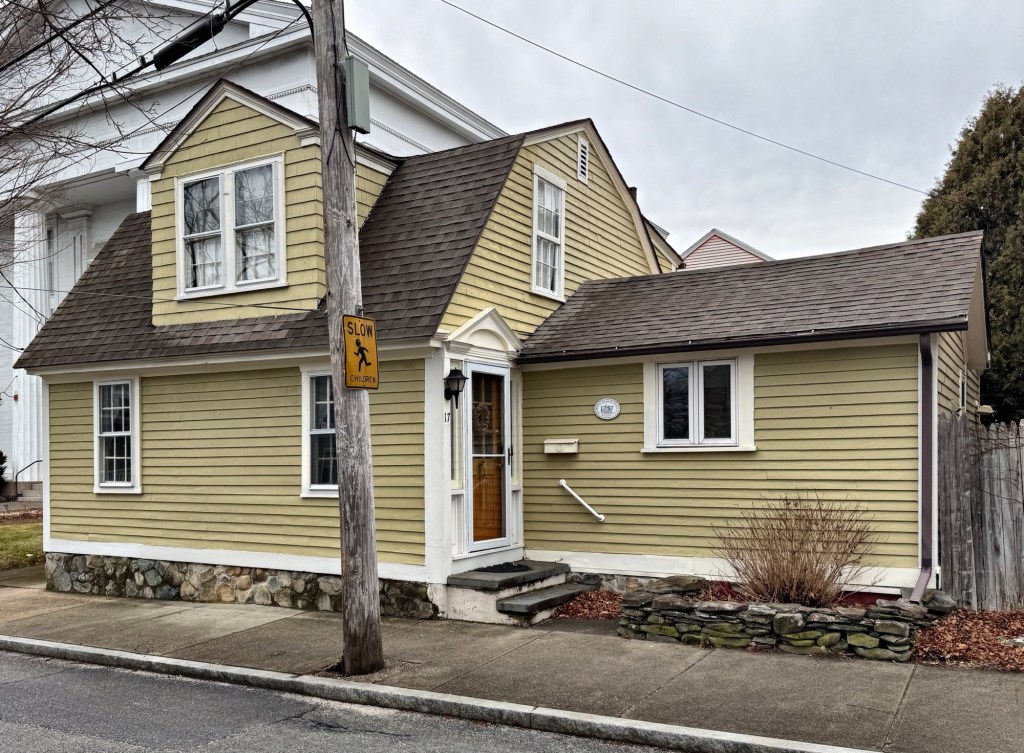
One of the pre-Revolutionary homes in the picturesque town of Warren, Rhode Island, the Easterbrooks House on Church Street is definitely one of the smallest, but oozes charm. This one-and-a-half-story gambrel roofed cottage stands across from the Town Common and adjacent to what may be the tallest building in town, the First Methodist Church of Warren. The home was built by 1757, likely by William Easterbrooks (1731-1772), and by the time of the Revolution, was occupied by Ms. Nellie Easterbrooks (1761-1853). Nellie and her mother rented a room in their home to Warren schoolmaster, John Holland, who earned the nickname “Traitor Holland”, after he had secretly been sharing news to General Pigot, the British General in charge of forces in Rhode Island. Long thought to have supported the local Patriots, it was learned that he was a loyalist, after the British and Hessian soldiers raided Warren and were leaving the town in 1778. It is said that troops stopped at this house and John Holland accompanied them, cheering alongside and leaving with them. He was never seen in Warren again. Soon after this, a young Nellie Easterbrooks, then in her teens, sought revenge against the British who pillaged and assaulted her friends and family. As the troops were leaving, she is said to have gathered a group of other angry Patriot ladies of town and captured a drunken drummer marching through town. Then they dragged their bewildered captive into a nearby hotel and locked him into a closet there. Nellie would later marry Nathaniel Hicks West (1751-1836), a Revolutionary War veteran, and received a widows pension until her death in 1853. The Easterbrooks House is a rare, intact surviving Georgian home that tells a rich history of Colonial New England and the stories during the American Revolution.
This First Period Home on in Wayland, Massachusetts, can be found at 184 Glezen Lane and is one of the community’s oldest residences. The Griffin-Malloy Homestead dates to about 1720 and is a large, single-family farmhouse that is just over 300 years old! Records state that the house was built by early settler, Samuel Griffin and possibly expanded later by his son, Deacon Jonathan Griffin. After generations of Griffin Family ownership, the old farmhouse was purchased in 1877 by Timothy Malloy (1839-1909) an Irish immigrant who settled in Wayland and operated a farm here. The house as of the 20th century, retained much of its original wood paneled walls and fireplaces, and has been lovingly preserved by generations of great stewards.
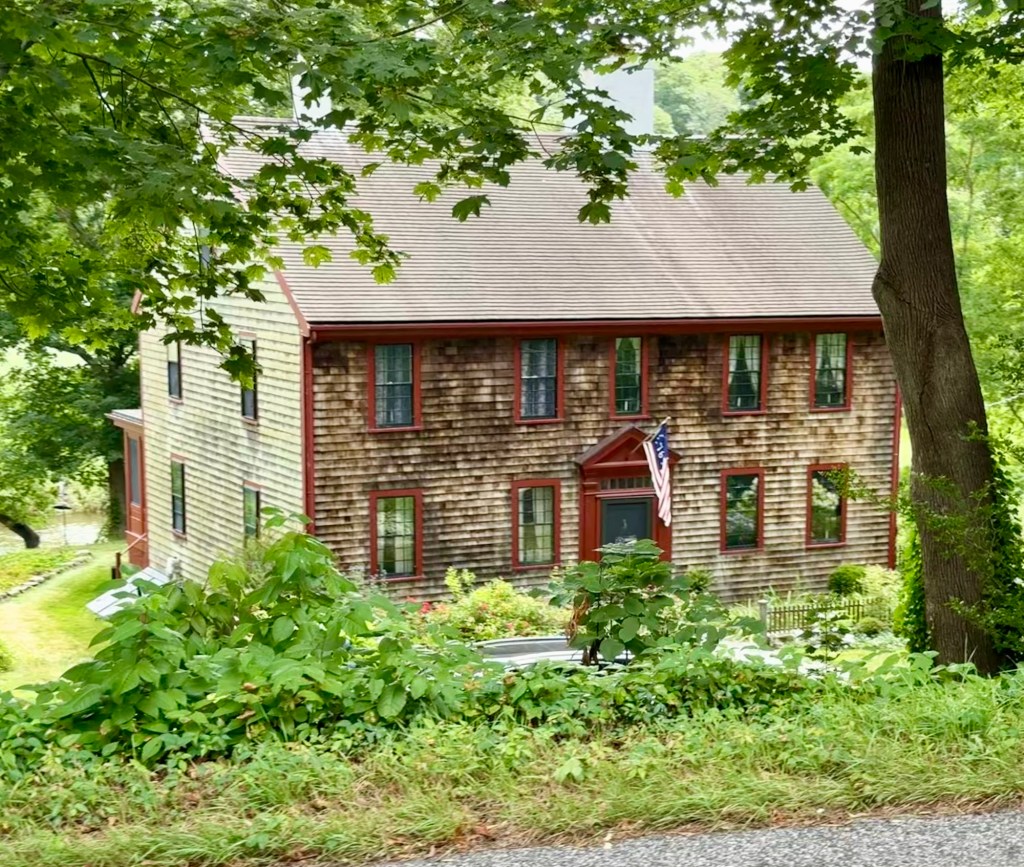
Built on the banks of the Jones River in Kingston, Massachusetts, this large residence is said to date to 1772 and was the home to a prominent ship-building family as well as to hundreds of destitute residents of the community who lived and worked here as the town’s poor house. Land (and possibly an earlier house) was acquired in 1772 by Zenas Drew (1735-1822), the son of Cornelius Drew, a wealthy shipbuilder who employed his many sons to work in the same industry, and the existing house was constructed for his family. From the house, numerous shipyards would be seen with large brigs travelling down the Jones River into Plymouth Bay and the Atlantic. After Zenas Drew’s death in 1822, the Town of Kingston acquired the property for use as the town’s almshouse or poorhouse, and likely expanded the property to its current Federal style configuration. Throughout the 19th and early 20th centuries, almshouses were a reality for society’s most vulnerable people, where these locally run institutions provided living and working conditions in a time before Social Security, Medicaid and Section 8 housing became a reality. These facilities were designed to punish people for their poverty and, hypothetically, make being poor so horrible that people would continue to work at all costs. Being poor began to carry an intense social stigma, and increasingly, poorhouses were placed outside of public view, as was the case here in Kingston outside of the town center at the banks of the river. By the 1920s and 1930s, these institutions began to close, with Kingston’s closing in 1923. The property was sold to a private owner, and has remained as a single-family residence ever since.
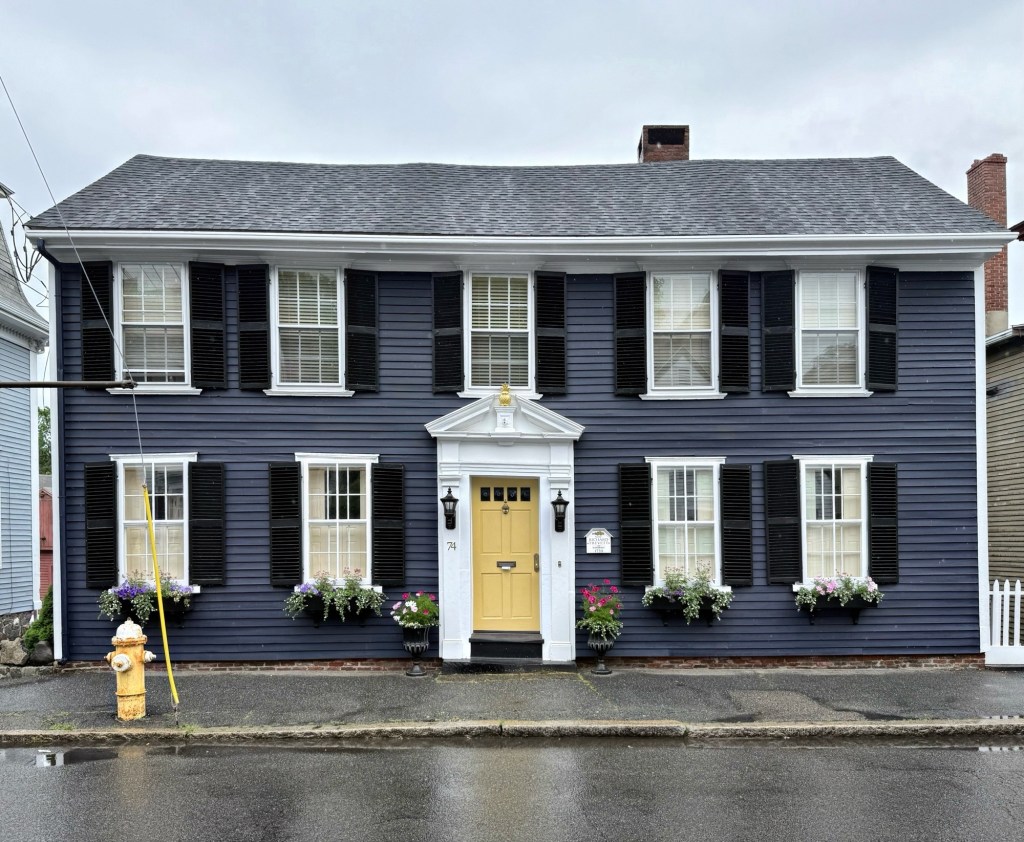
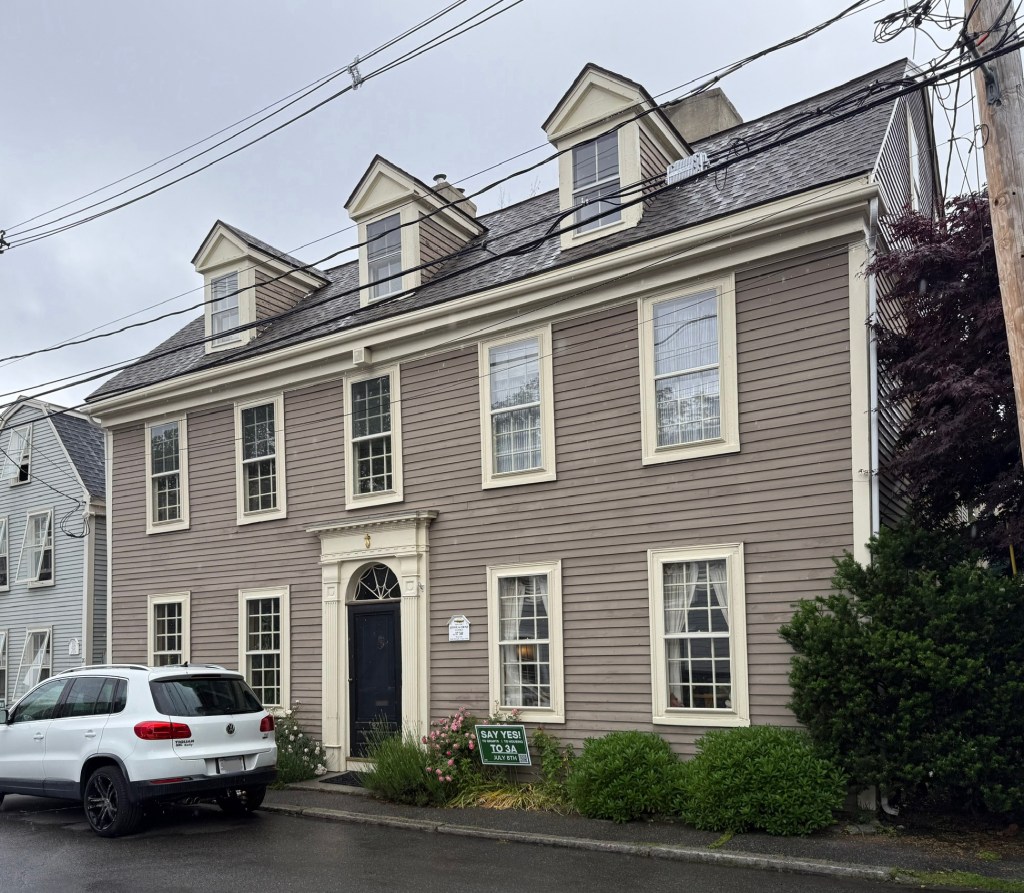
Richard Trevett Jr. (1690-1749) was a wealthy shipwright and sparmaker (a carpenter who finishes and installs spars, masts, and cargo booms) in Marblehead, and part of a wealthy shipowning family. He would build this house on Washington Street (originally named King Street before the Revolution) and reside here with his family. Trevett lived here for just a few years until the death of his father, and he sold the property, which was later purchased by Joseph Pedrick, a wealthy ship owner, who’s son, John Pedrick, built an even larger mansion down the street. By the turn of the 19th century, this house was owned by Captain Samuel Horton, a commander in the Revolution under General John Glover. After the war, Samuel Horton engaged in mercantile pursuits, importing goods from all over the world. He likely brought home pineapples similar to the pineapple motif over the doorway from plantations in the Caribbean and South America as well.
Joshua Orne (1708-1772) was born in Marblehead and attended local schools there. He would marry Sarah Gale, and they had one son together, Azor Orne, who would become a merchant, politician and patriot, fighting in the American Revolution. Sarah Gale died in 1743 and Joshua would remarry to Annis Stacey, having one child together, Joshua Orne Jr., who was a Patriot and fought in the Revolution, fighting alongside his half-brother, Azor. Joshua Orne and Annis owned a c.1663 house on this site and appear to have completely rebuilt the house or greatly modernized it around 1750. Joshua was a cordwainer and shipowner and later got involved with discussions of revolution and liberation from England. He likely inspired his sons to follow-suit and shared the same beliefs and values, though Joshua Sr. would die in 1772, not seeing the beginning of the War, nor freedom from tyranny. The house would be inherited by Joshua Jr. and later deeded to his son-in-law, John Bubier Prentiss, a shipmaster, who likely added the Federal period doorway and pedimented dormers.
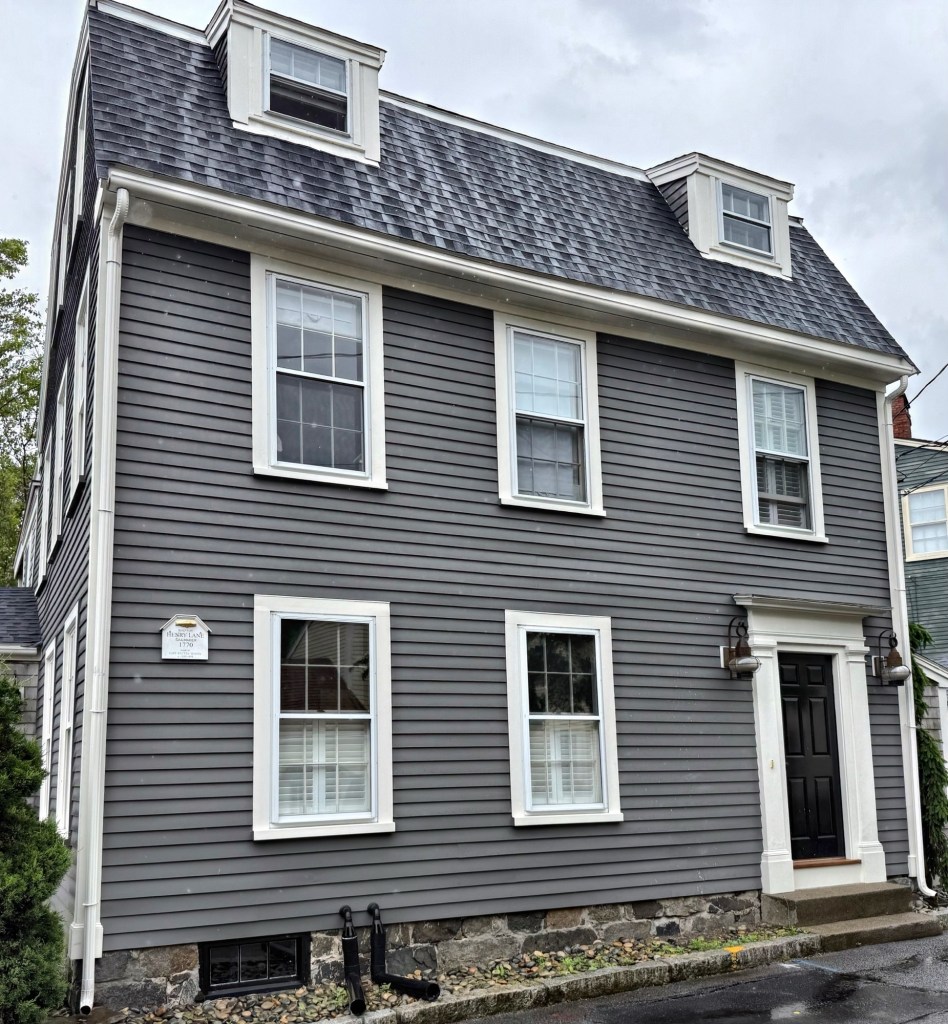
This gambrel-roofed Georgian house on Franklin Street in Marblehead was built before the American Revolution for Mr. Henry Lane, a sailmaker, but is best-known as being the home to Captain Knott V. Martin. Knott Martin (1820-1898) was born in town as was descendants from early settlers of Marblehead, and after attending local schools, became a shoemaker beginning at the age of just thirteen. After over a decade as a shoemaker, he began a butchershop and had a slaughterhouse to the rear of his property. When the Civil War broke out, Captain Knott was among the first to reach Faneuil Hall to begin duty. A Boston Globe article from 1918 detailed his finding out of the war, “Late in the afternoon of April 15, 1861, Lieut. Col. Hinks of the 8th Mass. Regiment rode into Marblehead to notify the Commanders to be ready to take the first train, the following morning to answer President Lincoln’s call for troops… I found Captain Martin in his slaughter house, with the carcass of a hog, just killed. On communication to the Captain my orders, I advised him to immediately cause the bells of the town to be rung, and to get all the recruits he could. Taking his coat from a peg… with his arms stained with blood and his shirt sleeves but half rolled down, he exclaimed, ‘Damn the hog!” In a battle at New Bern he was wounded by a spent cannonball and lost eight inches from the main bone of his right leg, becoming permanently disabled. Following his discharge from the War he was elected a member of the Massachusetts House of Representatives serving in that capacity during 1866 and 1867. He was then appointed Messenger to the House of Representatives for two more years. In May 1869 he was appointed Postmaster in Marblehead, a position he held until he retired on May 16, 1885. Knott Vickery Martin died at his home in 1898, but it has been lovingly preserved ever-since.
 Buildings of New England
