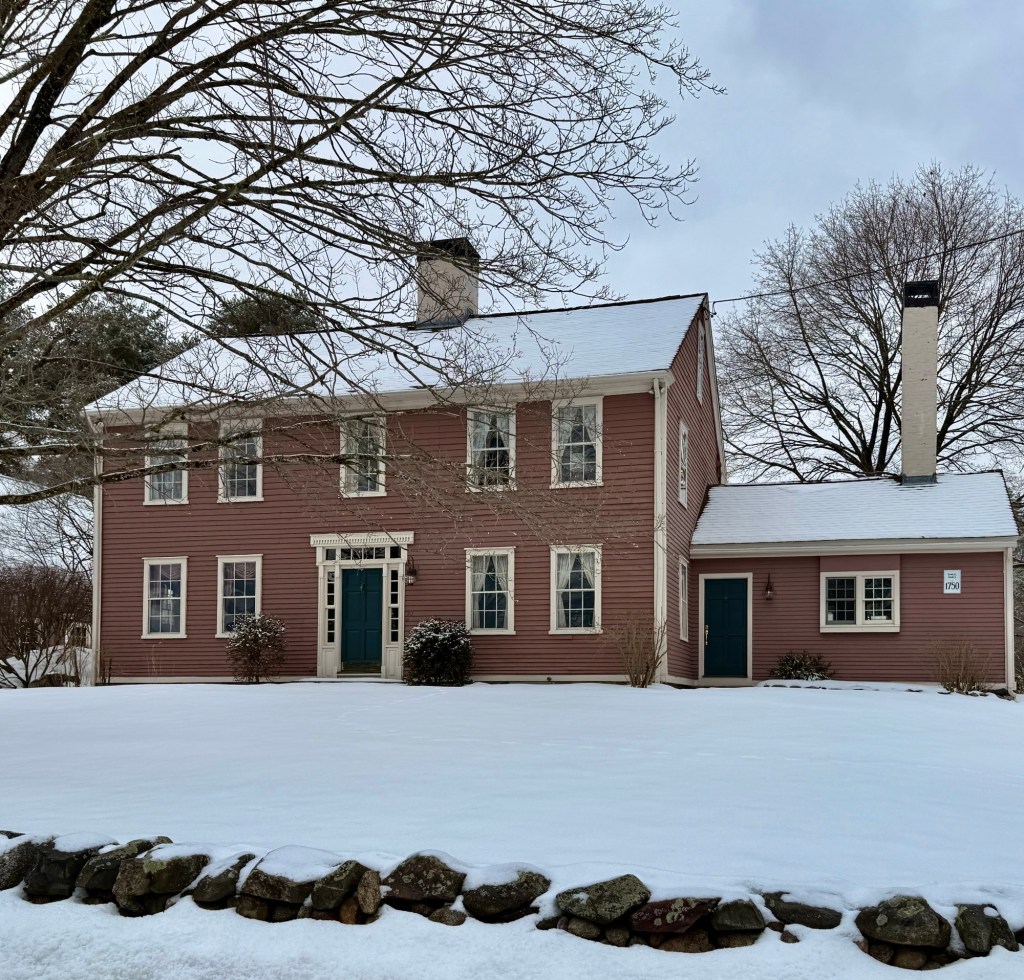
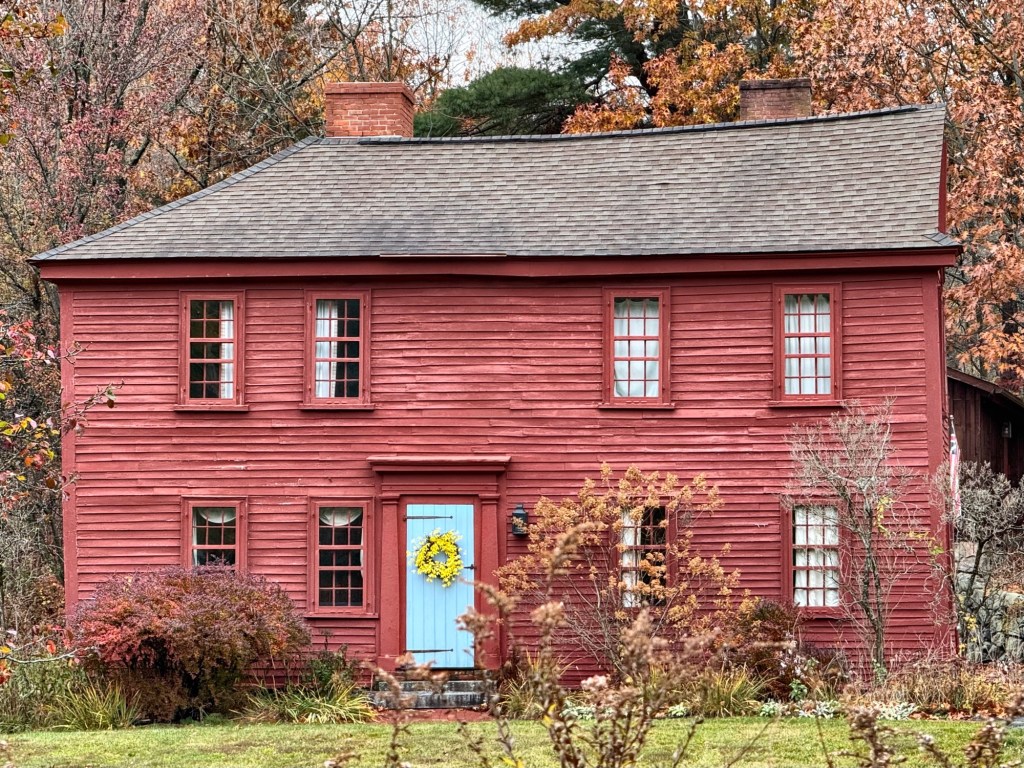
The Hawes’ in Wrentham, Massachusetts, were a prominent local family that largely settled in the western part of the town, building large farmhouses with properties bounded by rustic stone walls. This residence on Spring Street dates to the mid-18th century and was likely built for Samuel Hawes (1713-1795) around the time of his marriage to Priscilla Ruggles in 1741. After the death of both Samuel and Priscilla in 1795, the couple’s only son, David, bought out his two sisters value in the property and lived here with his family. The property was passed down through members of the Hawes Family until the 20th century, though later owners have still maintained and preserved this significant home for future generations.
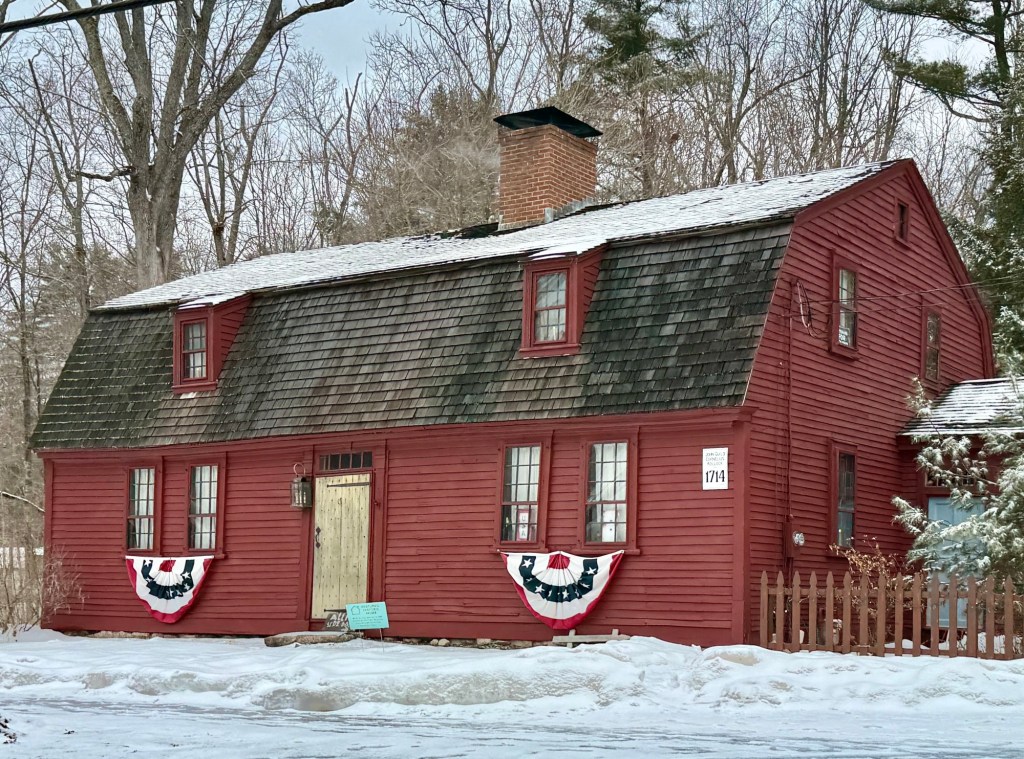
The Guild-Kollock house on East Street in Wrentham, Massachusetts, is one of the oldest and best-preserved historic homes in the suburban community. In 1674, John Guild of Dedham, was granted this lot by the proprietors and later willed the property to his son, Deacon John Guild Jr. (1649-1723). John Guild Jr. had the home built between 1682 and 1714, the first recorded document that acknowledges the existence of this dwelling, giving the home a definitive “built by” date. The Colonial farmhouse remained in the Guild family until 1804, when it was purchased by Cornelius Kollock, a Revolutionary War veteran, surveyor, Justice of the Peace, Town Clerk, Town Treasurer, and Representative to the General Court. The significant early Guild-Kollock House was documented inside and out as part of the Historic American Buildings Survey (HABS) in 1962 and has been lovingly preserved for over 300 years since its construction.
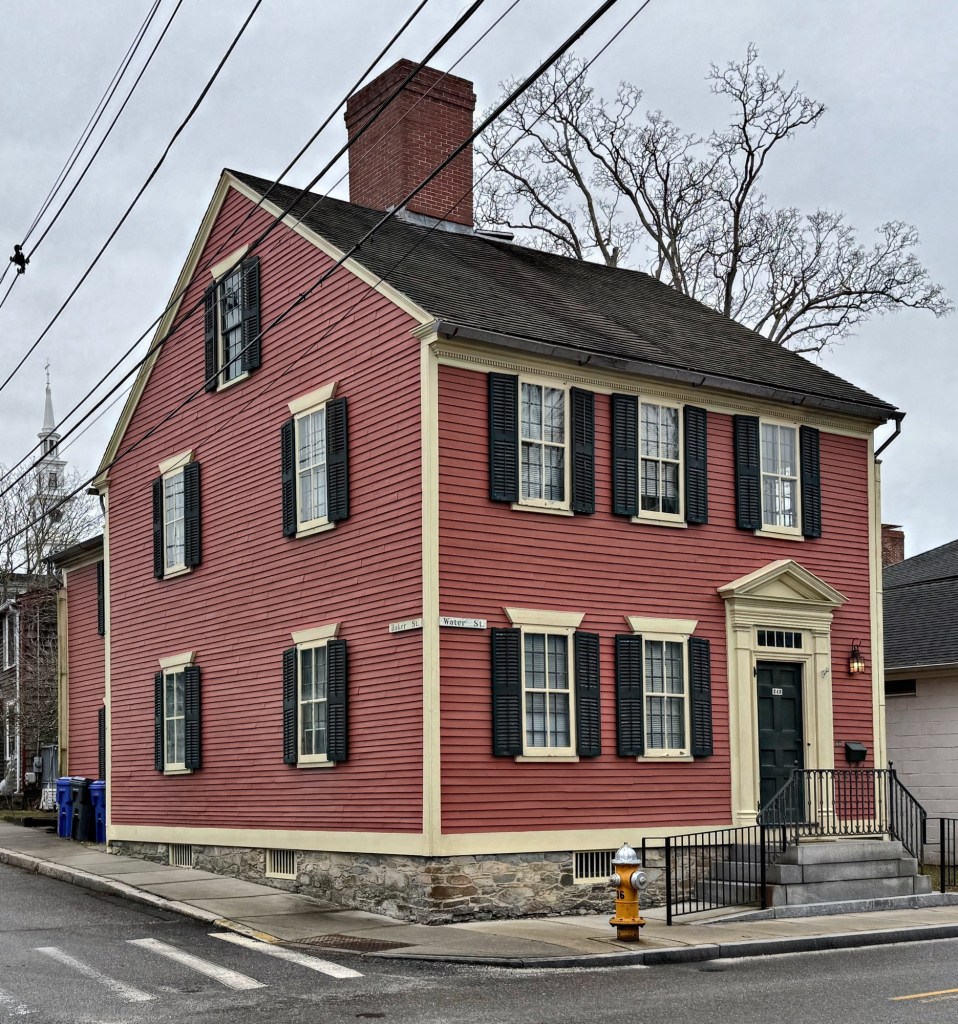
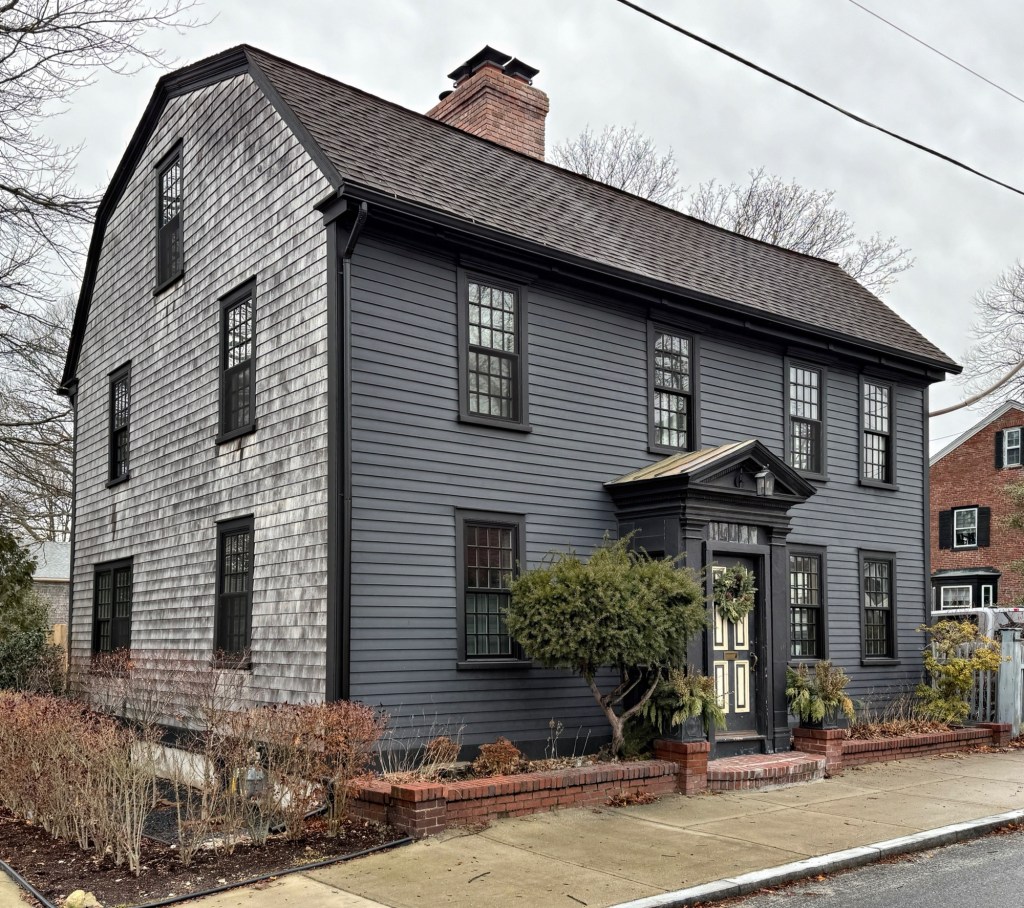
Located at the corner of Water and Baker streets in Warren, Rhode Island, this Georgian Colonial-era home oozes charm! Built by shipwright William Hill, as a three bay, two storied residence in 1761, this Colonial “half-house” was later owned by mariner William Collins who managed a wharf nearby. The home was later inherited by his son, Capt. Haile Collins (1798-1863). The two-story house with three-bay-façade and side-hall entry is a great example of a Georgian residence with raised stone foundation with entry accessed by double-run brownstone steps, massive central chimney, and the pedimented entry with transom and pilastered enframement. The home was eventually covered with asphalt shingle siding and was threatened with demolition in the 1980s until it was purchased and restored by Lombard John Pozzi, a prominent local force in architecture and historic preservation, who restored many old houses in the region.
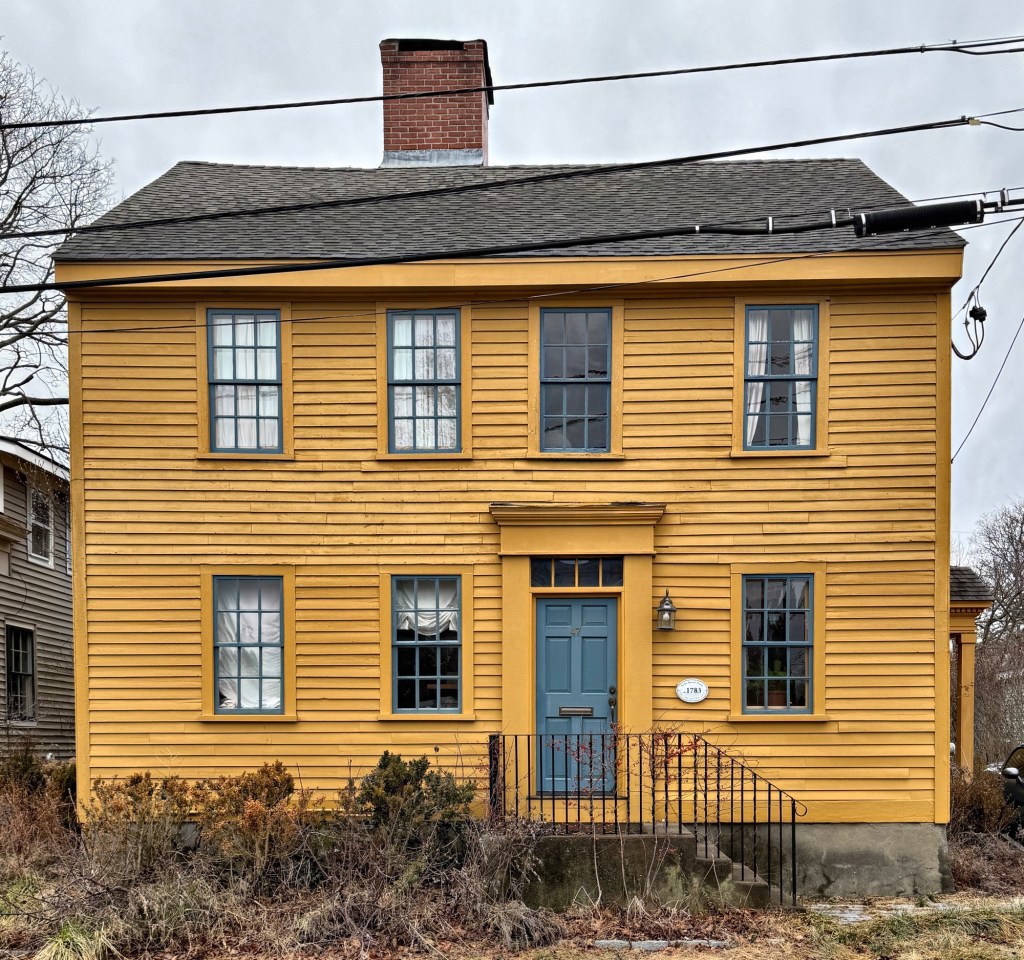
This charming house on Broad Street in Warren, Rhode Island, was built by 1783 for Rufus Barton and his wife, Prudence Cole. Rufus Barton and his family moved to New York and sold the property to Nathan Burr for $775 in 1797, who . Nathan Miller Burr sold the home to William Eastabrook two years later. Captain Eastabrook/Easterbrook had just returned from an illegal slave voyage on the “Betsey” to Africa that resulted in the enslavement of 79 Africans who were sold into slavery in Havana. He would go on to captain at least two more illegal voyages on the “Little Ann” (1806) and the “Hannah” (1807) from Bristol. These three voyages accounted for the death or enslavement of 229 people. The home has been lovingly restored by later owners, who removed the vinyl siding and replaced the cheap, vinyl windows with historically appropriate windows.
One of the more significant old homes in Warren, Rhode Island, the Gov. Josias Lyndon House on the aptly named Lyndon Street, dates to 1767 or earlier, and has connections with a colonial governor. It is not clear who originally owned this property, but the residence is best-known for its most famous resident, Governor Josias Lyndon (1704-1778), who lived here during the final years of his life with his wife and enslaved Africans. Lyndon worked as Clerk of the Assembly for the colony and in 1768, he was appointed Rhode Island’s last Colonial Governor, serving until 1769. His election is believed to have been a compromise between Samuel Ward and Stephen Hopkins, both of whom had already served multiple terms as governor. After his one term, Lyndon declined reelection and served as chief clerk for the General Assembly of the Superior Court of the County of Newport. At the time of the British occupation of Aquidneck Island (Newport), Gov. Lyndon moved to this home in Warren, where he remained until his death from smallpox in 1778. An often undertold fact about Josias Lyndon is that he enslaved a man named Caesar Lyndon. Caesar was highly literate and was entrusted to carry out Lyndon’s business, acting as both a purchasing agent and secretary. Caesar also held his own small lending business with enslaved as well as free Blacks and whites borrowing money from him. Josias allowed Caesar to marry, which he did to Sarah Searing. It is not clear if/when Caesar was granted his freedom, or if he accompanied Josias to Warren or remained in Newport.
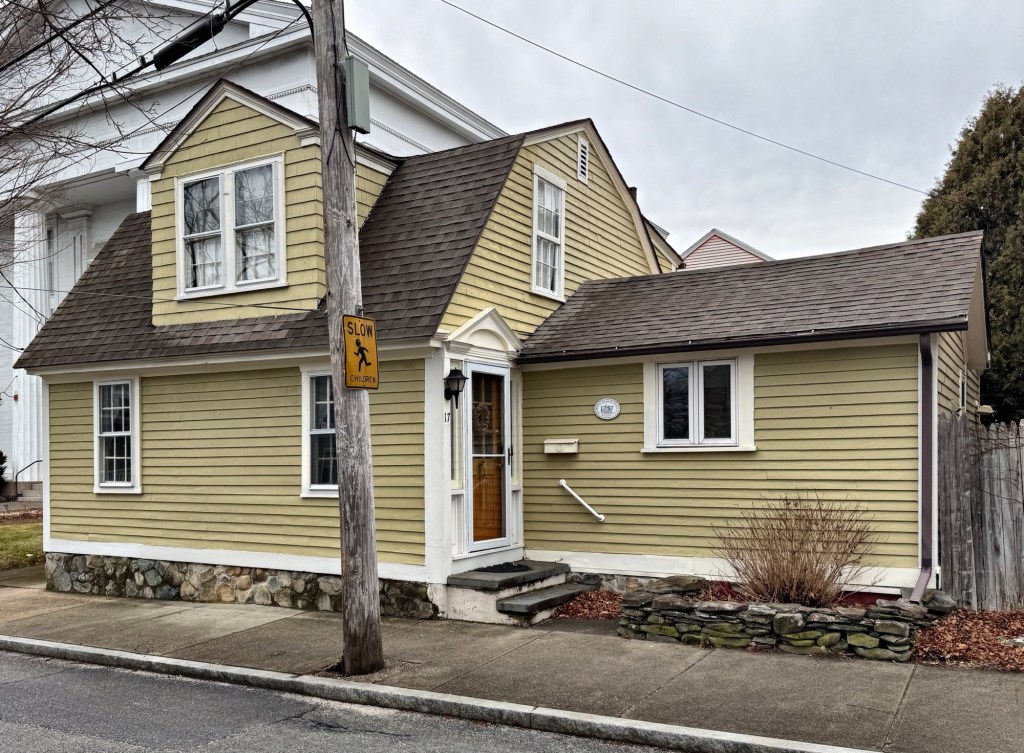
One of the pre-Revolutionary homes in the picturesque town of Warren, Rhode Island, the Easterbrooks House on Church Street is definitely one of the smallest, but oozes charm. This one-and-a-half-story gambrel roofed cottage stands across from the Town Common and adjacent to what may be the tallest building in town, the First Methodist Church of Warren. The home was built by 1757, likely by William Easterbrooks (1731-1772), and by the time of the Revolution, was occupied by Ms. Nellie Easterbrooks (1761-1853). Nellie and her mother rented a room in their home to Warren schoolmaster, John Holland, who earned the nickname “Traitor Holland”, after he had secretly been sharing news to General Pigot, the British General in charge of forces in Rhode Island. Long thought to have supported the local Patriots, it was learned that he was a loyalist, after the British and Hessian soldiers raided Warren and were leaving the town in 1778. It is said that troops stopped at this house and John Holland accompanied them, cheering alongside and leaving with them. He was never seen in Warren again. Soon after this, a young Nellie Easterbrooks, then in her teens, sought revenge against the British who pillaged and assaulted her friends and family. As the troops were leaving, she is said to have gathered a group of other angry Patriot ladies of town and captured a drunken drummer marching through town. Then they dragged their bewildered captive into a nearby hotel and locked him into a closet there. Nellie would later marry Nathaniel Hicks West (1751-1836), a Revolutionary War veteran, and received a widows pension until her death in 1853. The Easterbrooks House is a rare, intact surviving Georgian home that tells a rich history of Colonial New England and the stories during the American Revolution.
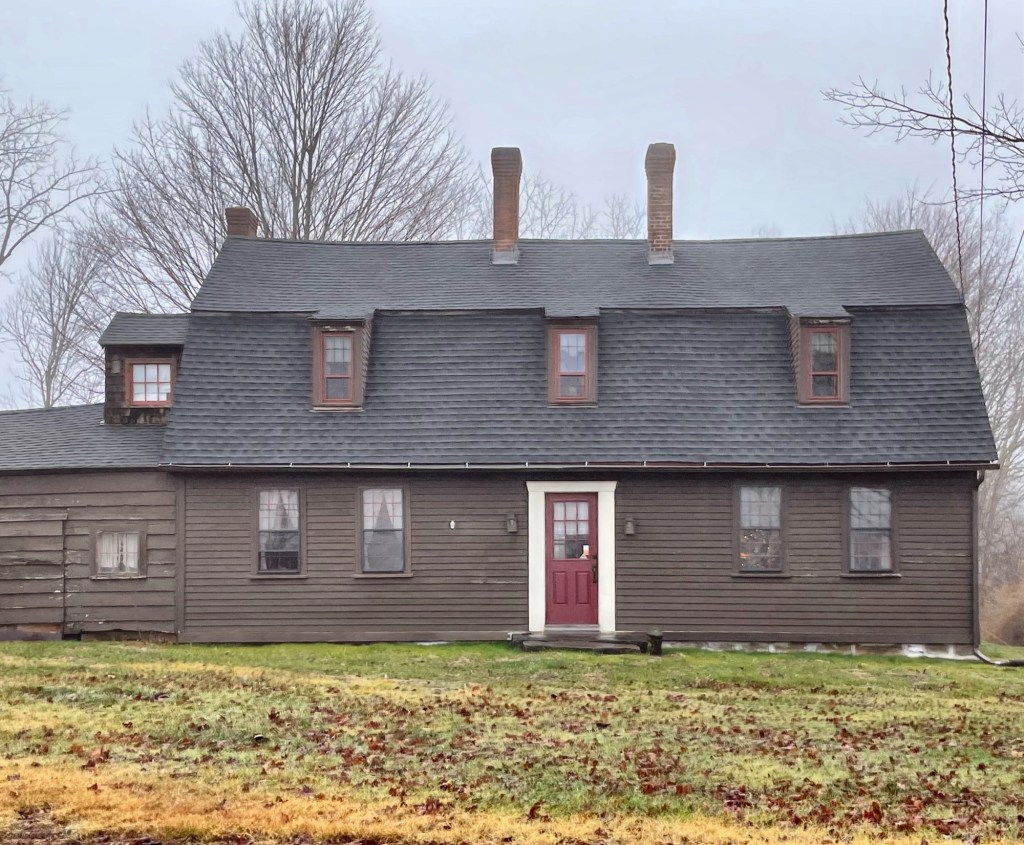
Known locally as the ‘Ye Olde Manse‘, this stunning Georgian cape house is located at the eastern edge of the town green in Willington, Connecticut. Thought to be the oldest extant house in the small, rural community, the gambrel-roofed homestead was possibly built by John Watson of Hartford, who was thought to have been an original proprietor of Willington, but was instead an assignee of George Clark who was. In the 19th century, the homestead operated as the congregational church parsonage. Today, the Georgian cape house with gambrel and saltbox roof is a single family home and has been lovingly preserved by centuries of stewards of this old manse.
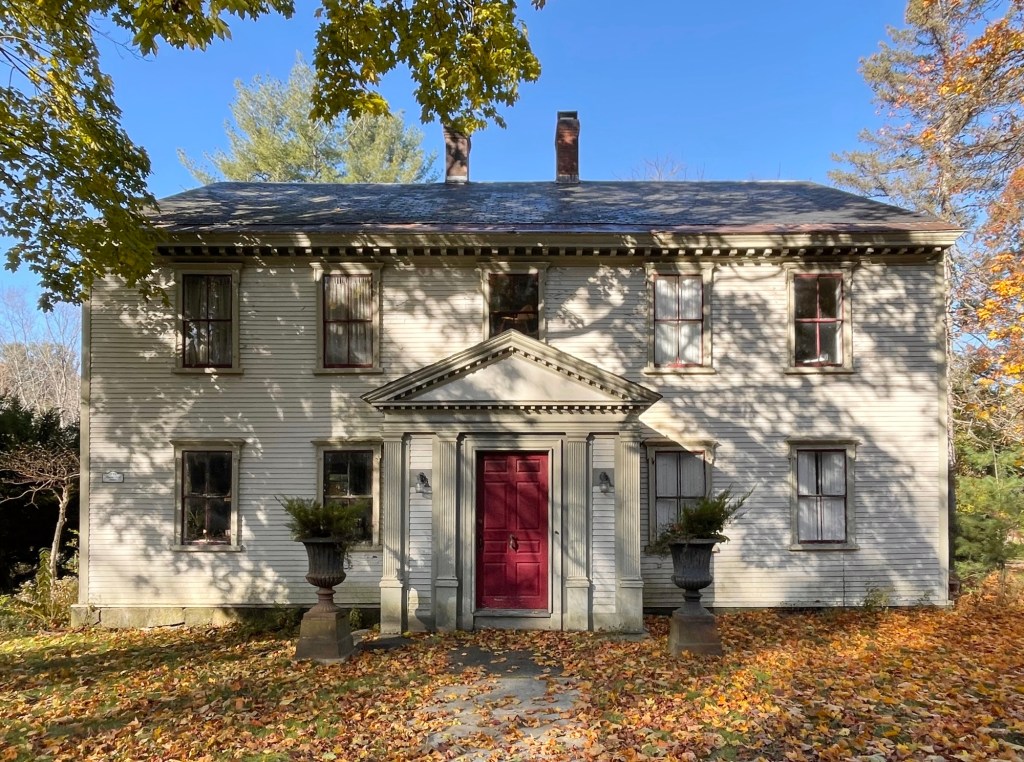
Judge John Sprague (1740-1800) was a Harvard graduate and settled in Lancaster, Massachusetts as one of only three lawyers in Worcester County following the departure of his Tory colleagues during the Revolution. From this, a young Sprague climbed the professional ladder quickly and represented Lancaster in the General Court beginning in 1782 and occasionally sat in the Senate. He was first appointed judge in 1784 and in 1798 became chief justice of the Court of Common Pleas for Worcester County. After being appointed a judge in 1784, Sprague purchased a house lot on Main Street in Lancaster and hired local housewrights Eli Stearns and Jonathan Whitney, to design and build this stately home. Judge Sprague moved from his 1771 house a short distance away, to this more substantial late-Georgian home with projecting entry with pilasters and pediment. After his death in 1800, the property was inherited by his daughter, Ann Sprague Vose and her husband, a merchant, Peter Thatcher Vose.
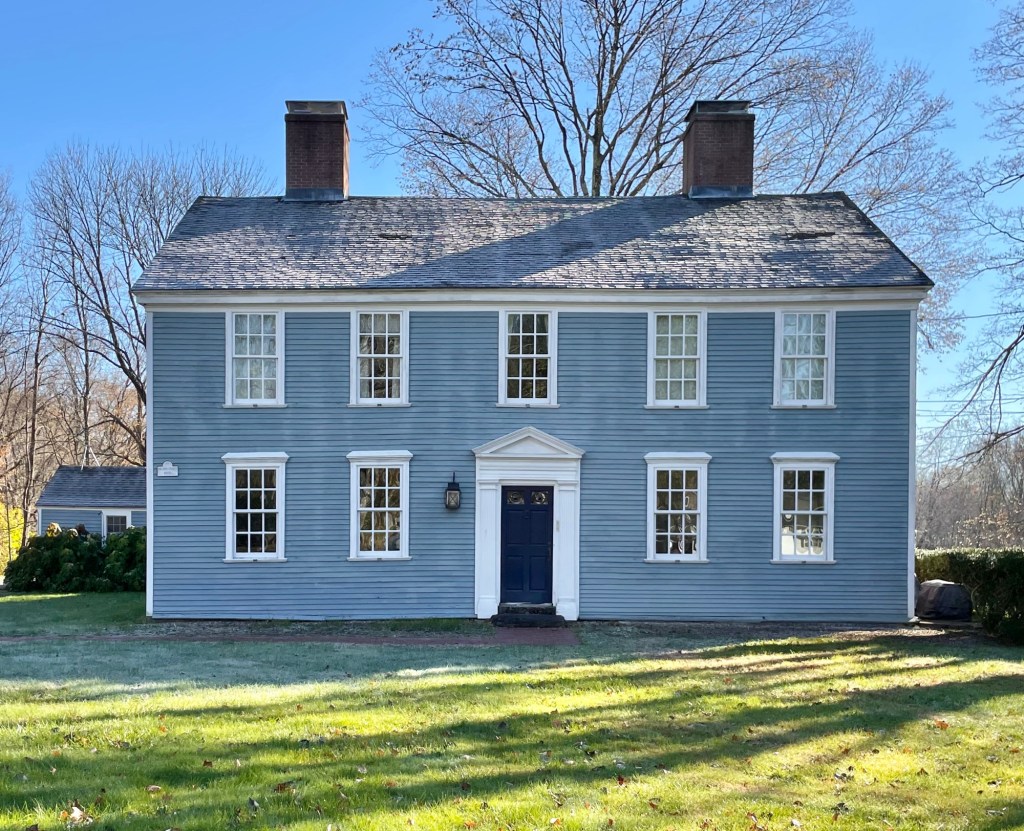
Just outside of the village center of Lancaster, Massachusetts, this Georgian style house stands out as one of the town’s finest Colonial residences. The residence was built for John Sprague (1740-1800), who settled in Lancaster and was one of only three lawyers in the county following the departure of his Tory colleagues during the Revolution. Sprague represented Lancaster in the General Court beginning in 1782 and occasionally sat in the Senate. He was first appointed judge in 1784 and in 1798 became chief justice of the Court of Common Pleas for Worcester County. He was active in Shays’ Rebellion, and later, along with John Hancock and Samuel Adams, was one of the antifederalists who converted and helped ratify the U.S. Constitution. Sprague moved to a new house in 1785, and sold this property to Daniel Waldo (1724-1808), a wealthy Boston merchant who started America’s longest-running hardware store, in Worcester (Elwood Adams). Waldo was a great-great-grandson of Anne Hutchinson, America’s first major female religious leader/dissenter. The house has had many other notable owners, all of whom have preserved this stunning five-bay colonial house for nearly 250 years.
 Buildings of New England
