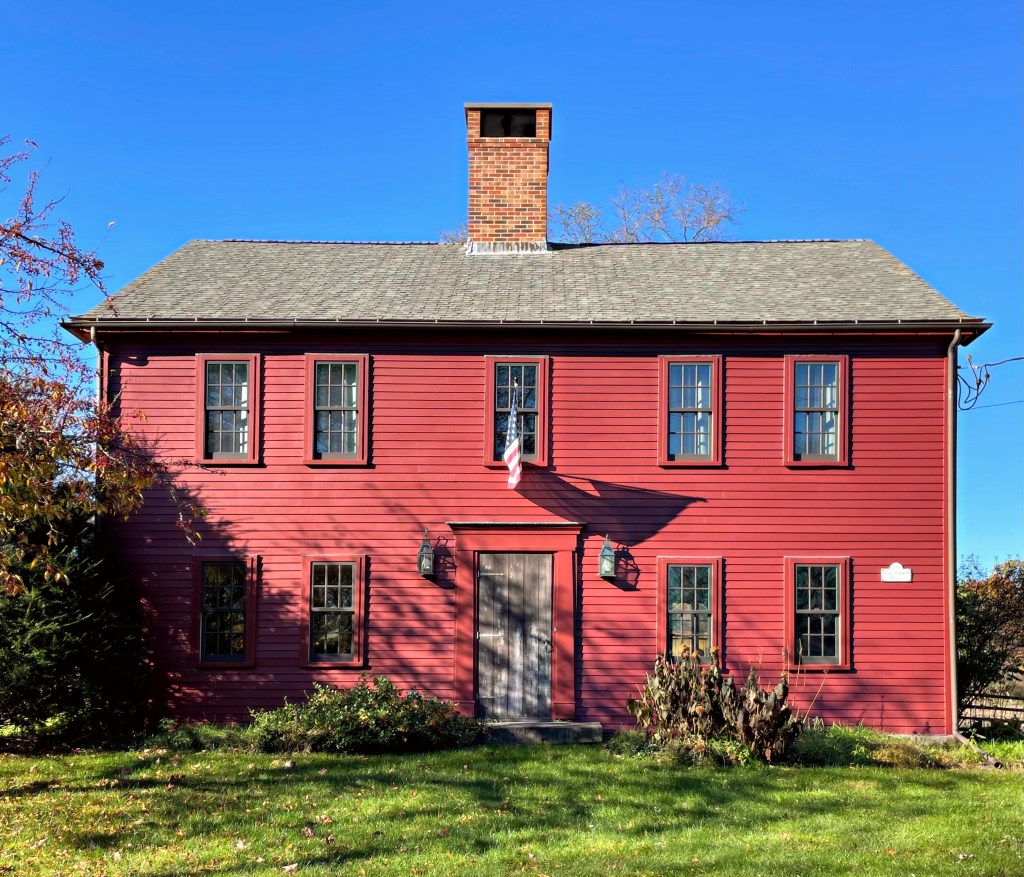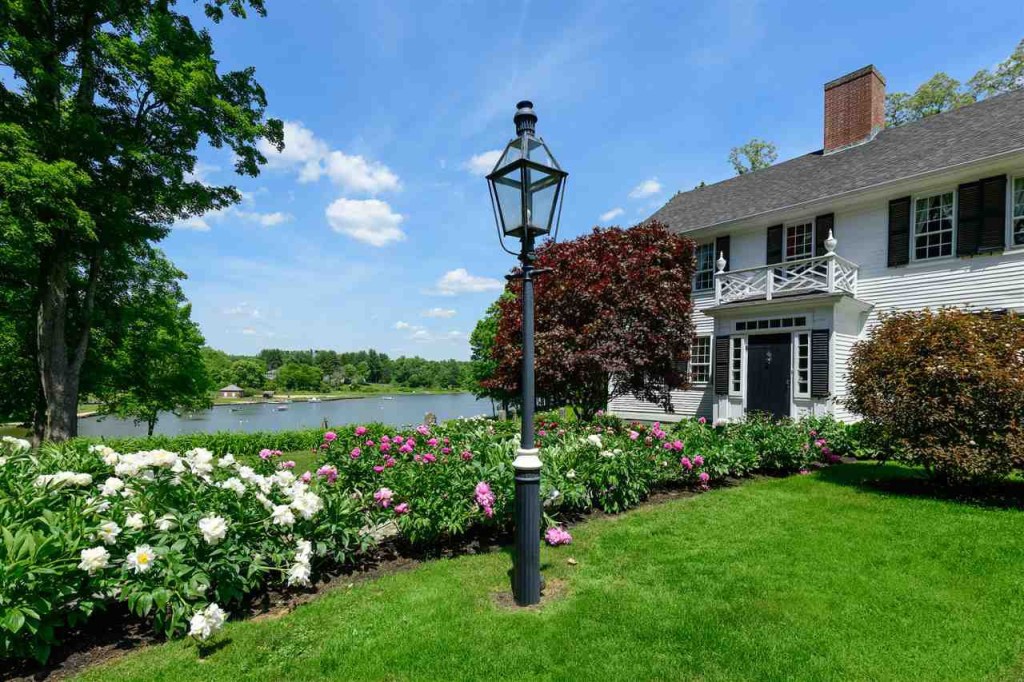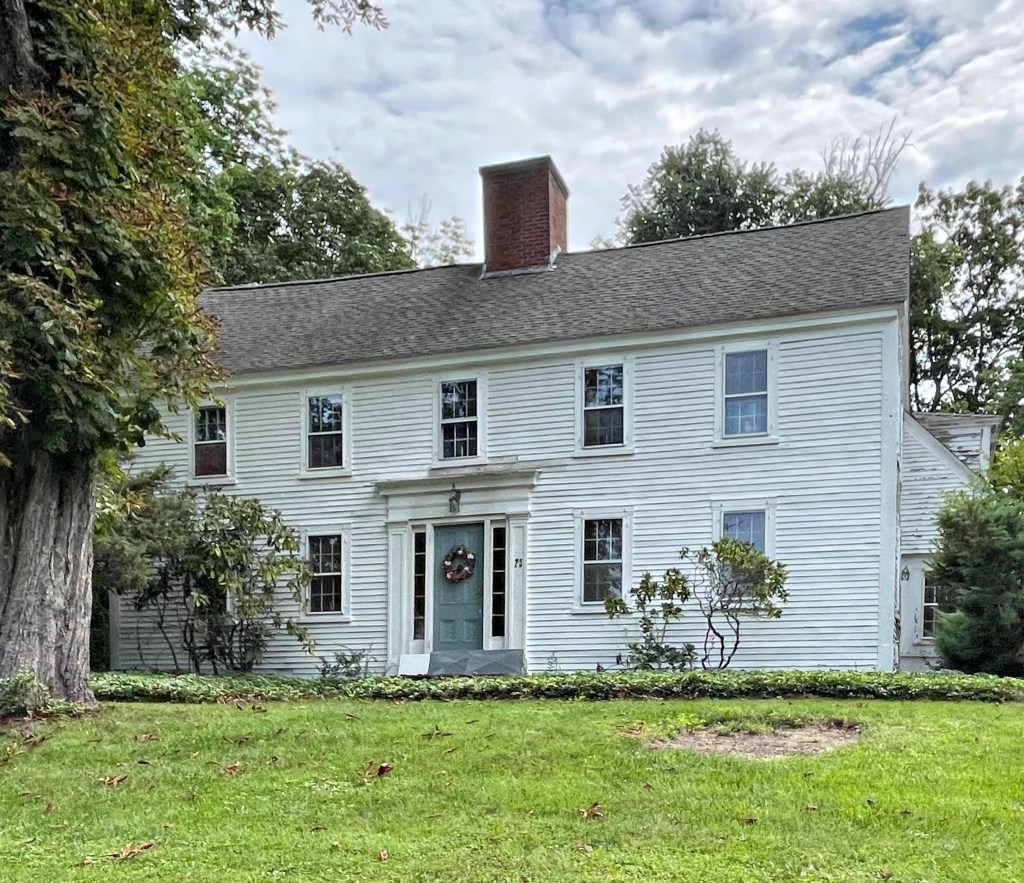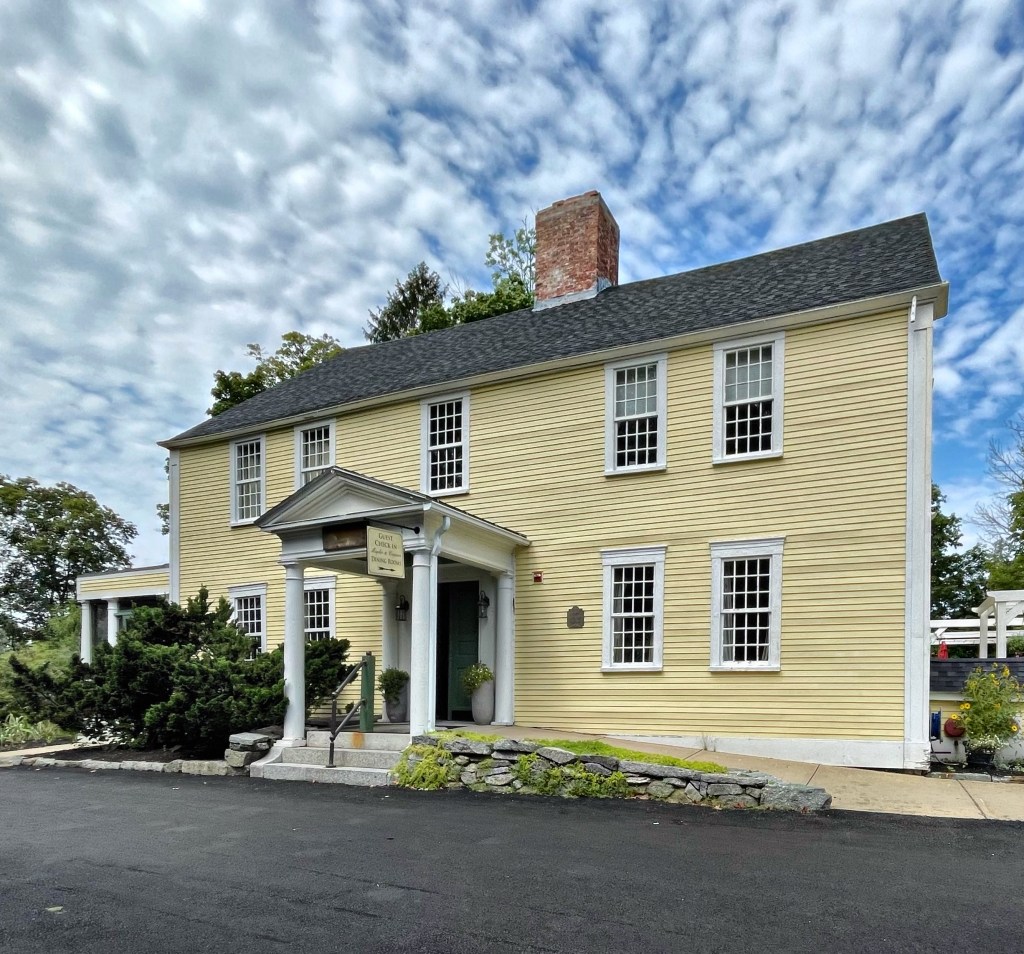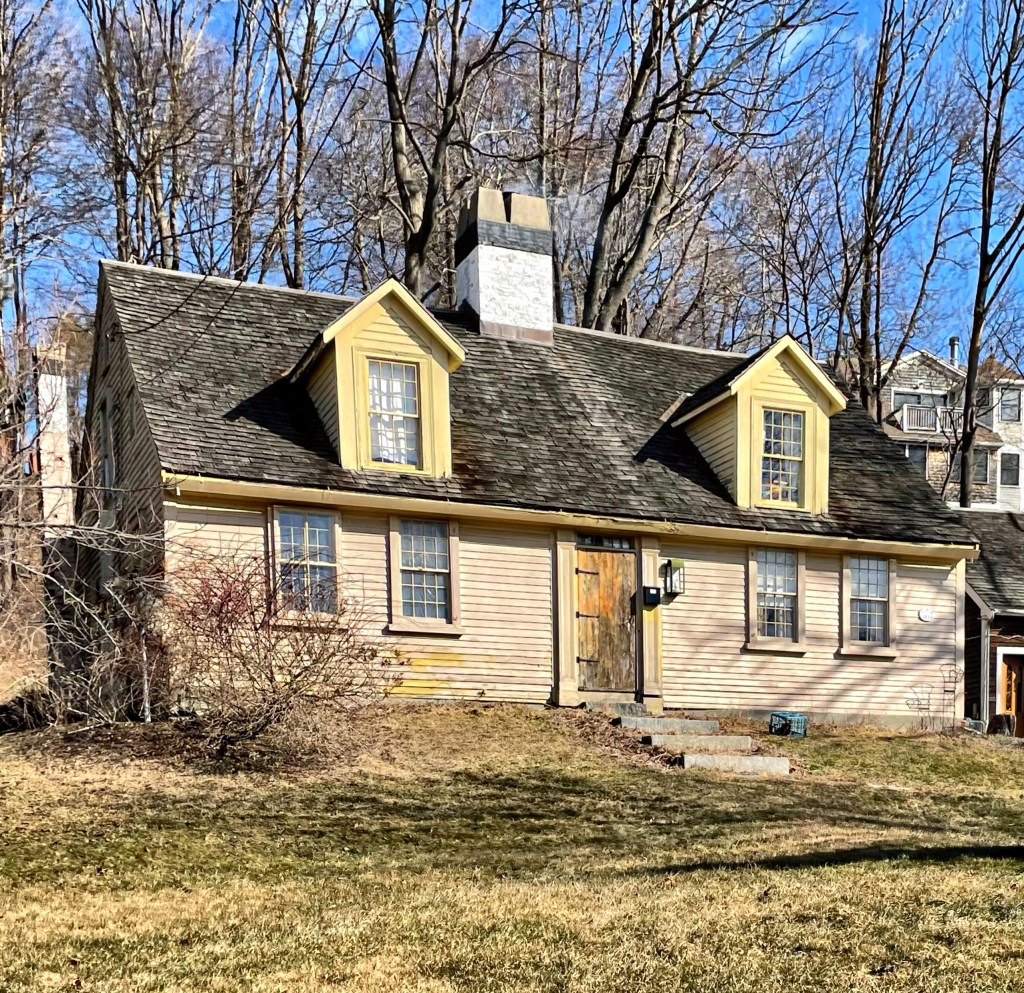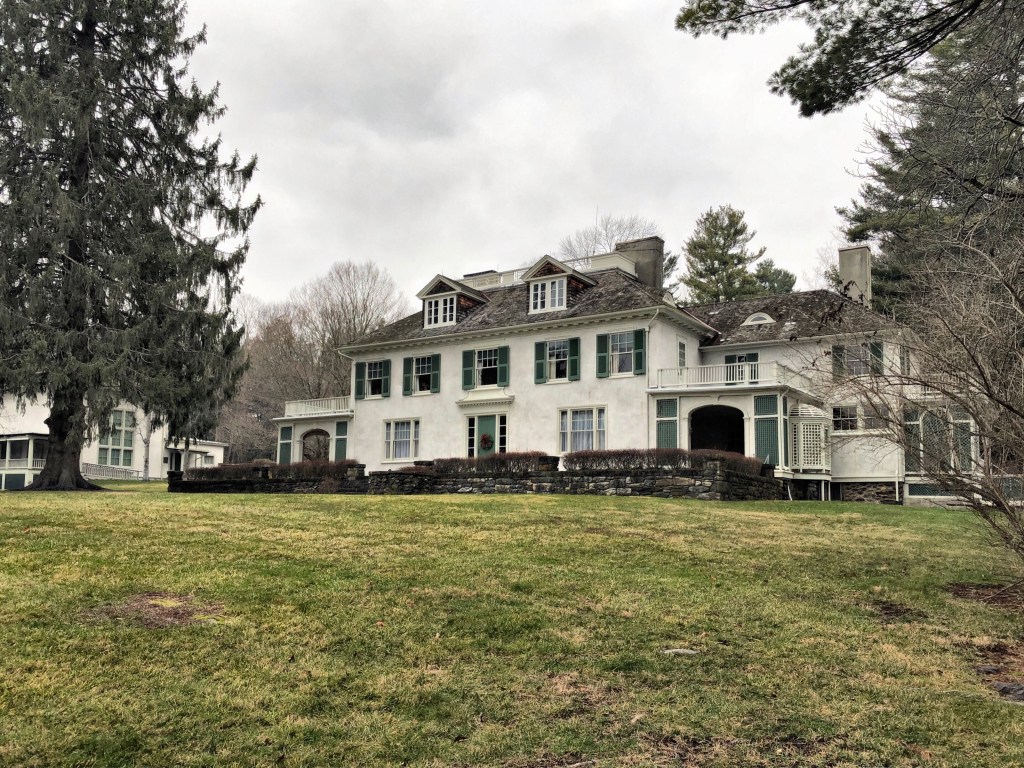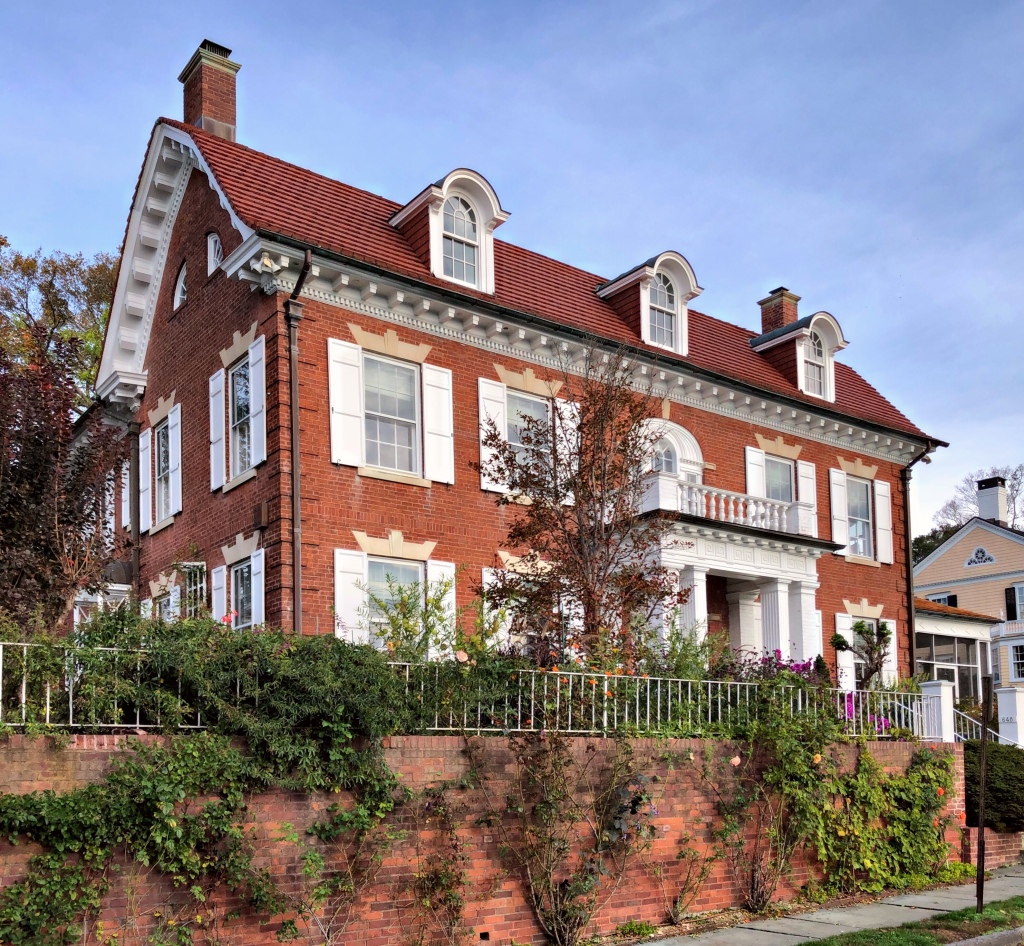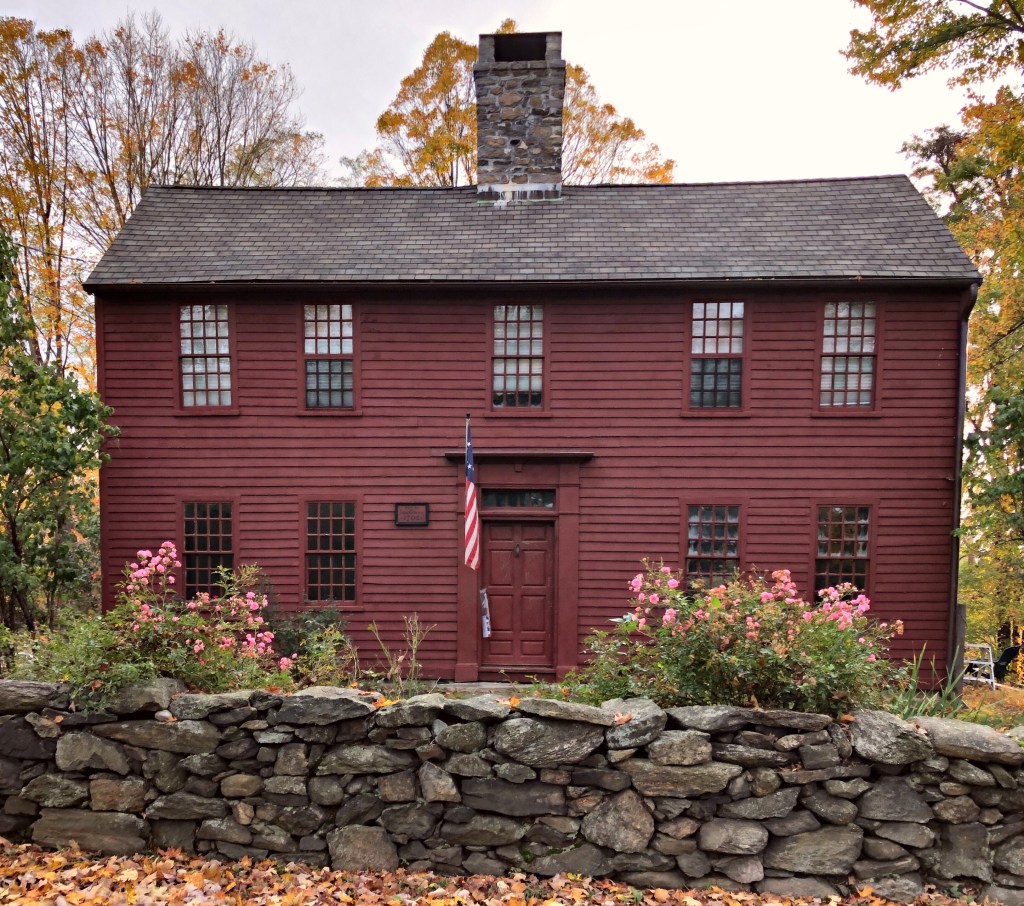
Burnham House // c.1682

Samuel Burnham bought an older house on this site, and added to it, creating a larger residence for his family (a common occurrence in early Colonial times). One thing he did keep was a 30-foot well within the building to supply the family drinking water. Interior wells were not common, but very useful on the New England “frontier” where attacks from Native American tribes were more frequent. In the event of an attack in town, a family could close their interior shutters, and wait them out with drinking water from their internal well.

God, I love old New England homes! Could you live in one that is older than the United States?

Valentine Hill House // c.1649

Valentine Hill emigrated to Boston in 1636 from England with his brother and began a successful career as a merchant and trader. In 1638 Valentine was made a member of the Artillery Company, In 1640 he took the Freeman’s Oath, and in that same year ordained as a Deacon in the Boston Church. In 1641 he was elected a Selectman serving until 1647. In 1643 Valentine received a grant of land at the falls of the Oyster River in what is now Durham, N.H. In 1649, Valentine and an associate got permission to build a saw mill on the river. Additional grants of land included 500 acres for farming. Due to issues with his businesses in Boston, he moved up to present-day Durham to manage his mills and property there. On the property, he employed “seven Scots”, who were indentured servants captured by British forces in the Battle of Dunbar, and among other industries, lumber was milled for use in the shipbuilding industry in surrounding towns. In 1649 Valentine Hill built the original homestead, a single-story house with a basement. In 1699, Nathaniel Hill, son and heir of Valentine, made a two-story addition to the house, giving the home the appearance we see today. After successive owners, the next major period of the property was early in the 1900’s, when James Frost took over the estate, completing the transformation of the grounds and turned into a Colonial Revival summer estate with extensive formal gardens, arbors and an elaborate stone wall. The property remained in the family until the 1980s, but suffered from some neglect. The house was purchased in 1997 and restored to her former glory and is now known as the Three Chimneys Inn. Interestingly, if this home can be dated with dendrochronology (aging the home based on the age of the cut timber), this home would be at least a decade older than the present oldest home in New Hampshire!

George House // c.1929

This Georgian Revival house was built in the mid-late 1920s for the George Family, who ran a construction company based out of Worcester, Massachusetts. The home was a summer retreat for the family, who acquired a prime lot on Butler Point in Marion, MA, from the Butler’s Point Associates, a group of men who developed the peninsula with the Kittansett Club and desirable house lots from plans by the Olmsted Brothers, landscape architects. The house is prominently sited and is one of the best examples of the Colonial Revival style I have seen in the seaside town. It is clad in cedar shingles as a nod to the vernacular coastal homes and larger Victorian-era summer homes seen in the village.

Major Rowland Luce House // c.1790

Built around 1790 for Rowland Luce (1756-1835), this Federal home oozes character and charm, and is located right on Main Street in one of my favorite towns, Marion, Mass. Luce was born in Tisbury on Martha’s Vineyard into a very religious family. While studying to become a Deacon like his father, the Revolutionary War broke out, and Rowland served to fight the British, leaving service as a Major. He eventually settled in Marion’s Sippican/Wharf Village and worked as a Deacon for the Congregational Church. The simple house is clad in cedar shingles and has two chimneys, a departure from earlier homes with one, large central chimney.

Simeon Wetherbee Farmhouse // c.1800

This late-Georgian farmhouse in Boxborough, Mass showcases how architectural integrity and historical context matter in historic preservation. Architectural integrity means the degree to which a building’s original design and physical composition is evident and intact. Historic contexts are the patterns, themes, or trends in history by which a specific property or site is understood and its meaning (or significance) within history is made clear. In this example, the old farmhouse retains much of its architectural integrity as it physically appears much as it would have upon its time of construction. However, the former farmland was sold off and developed as a residential subdivision, which completely obscures the historical context of the building in relation to its original use. The Simeon Wetherbee Farm remained in the Wetherbee family until the 1965, when the land was likely soon after subdivided and sold off for housing lots. A majority of the homes built surrounding this old farmhouse are classified as “Neo-Traditional” a modern take on Colonial architecture, but with cheaper materials and odd proportions. They are not a favorite among architects and historians.

Elijah Locke House // 1739

John Locke (1627-1696) settled in New Hampshire about 1640, arriving from London. He was a farmer and carpenter, and reportedly built the first church in New Hampshire. He was also a Captain in the local militia, who was constantly at odds with the people who’s land they were usurping. While working the fields at his homestead in Rye, he was killed by a native person, likely as a retaliatory attach. The attacker was soon after shot by his son, who was helping his father at the time. This Georgian home was built by John’s grandson Elijah in 1739 on family land; the date is found incised on one of the original roof beams inside.

Jones Tavern // 1732

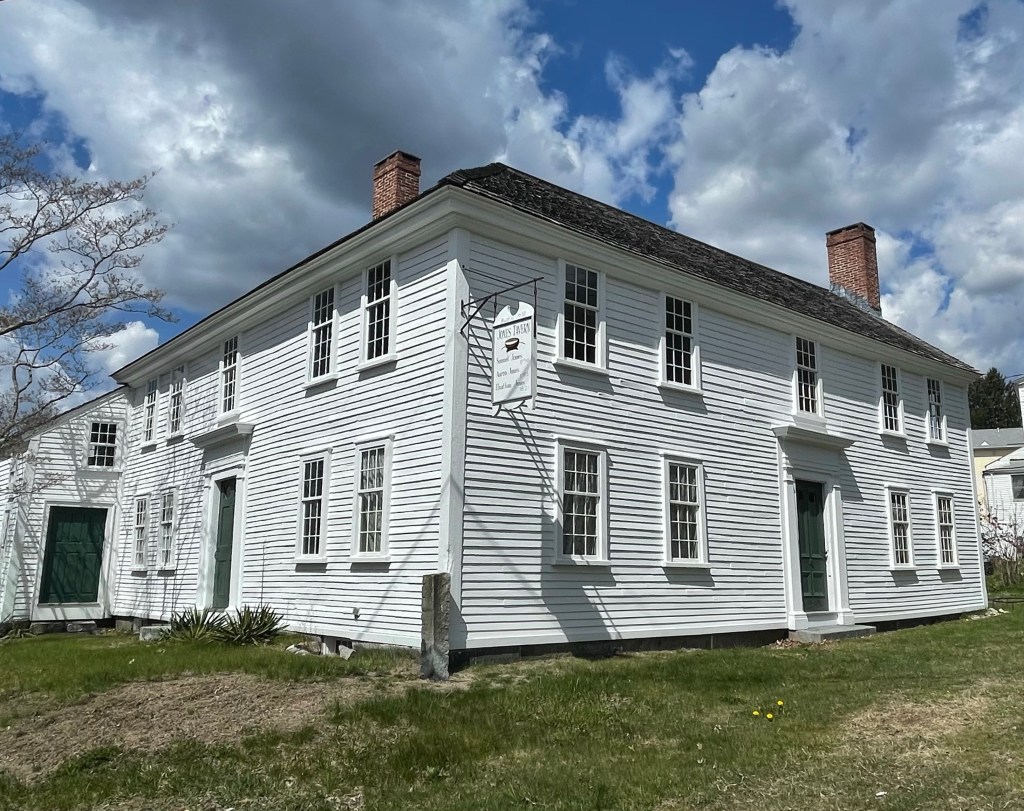
Settlement of South Acton (by colonialists) was begun in 1701 when the Jones and Knight families purchased 600 acres of a private land grant. Over the next 26 years, members of the two families established and operated mills near the Fort Pond Brook, which provided running water for operations. Samuel Jones built a home here in 1732, which as originally built, was a simple, four room central entry Georgian home with gable roof, typical of many eastern Massachusetts homes at the time. In 1750, Jones opened a tavern and general store in his house, enlarging it with a two story addition now visible on the left side. Samuel’s son Aaron Jones, a Harvard graduate and soldier who fought at the Battle of Concord nearby, took over the tavern from his father. In 1818, Aaron more than doubled the size of his establishment when he built a large, 5-bay extension and rear kitchen ell directly behind the existing structure. In addition to enlarging his property, Aaron also had it “modernized”, inserting sash windows (replacing the casement windows) throughout and adding fashionable Federal style door and window surrounds. The additions gave the building two major entries, as well as secondary access to the communal taproom. The property was then willed to his son Elnathan Jones, who operated the establishment until 1845 as both a tavern and hotel. The building remained in the Jones family until it was sold in 1946, and divided inside into multi-family use. The house was sold for salvage in 1964 after years of neglect, but was saved by Iron Work Farm, Inc., a non-profit who maintain the property to this day.

Tirrell-Cobb House // c.1750

One of the most stunning Georgian cape homes I have seen is this charming house in Hull, Massachusetts. Built in the mid-18th century, this house was acquired by Gideon Tirrell after the Revolutionary War. Gideon married Mary Loring, a descendant of John Loring, who built the home in my last post. The family appears to have occupied the home until the Cobb family acquired the house in about 1860, when Capt. Joseph Cobb and his wife, Eliza Turner settled here. He was the third “Keeper of the Lifeboat” from 1858-1876. In his role, he rowed out to sinking ships in the Boston Harbor and attempted to save any sailors still alive, often saving dozens of lives. The home was restored in the 1980s and remains one of the best-preserved in the town!

Loring House // c.1658

Likely the oldest home in the town of Hull, the Loring House has ties to the significant Loring Family, who’s descendants include individuals on both sides of the American Revolution, the US Civil War, and today live across North America, Spain, England and Australia. This house was built on land purchased by Thomas Loring (1600-1661) who came to Hingham in 1634 from England. He built a larger estate in town until a fire destroyed all his belongings, and he chose not to rebuild, but acquired property in the adjoining plantation of Hull. In Hull, he served as constable (court officer and tax collector), and raised his family there. His eldest son, John, married in 1657 and likely had this home built on his father’s vast land holdings within the year. John worked as a house-wright and likely built the home himself. He had two wives (his first wife Mary died at 39), and 15 children at the home, though some likely did not live past infancy as was common in early colonial days. John died in 1714, but left a lasting legacy in New England and beyond. Notably, his grandson was Joshua Loring, a British Loyalist who built the famous Loring-Greenough House in Boston. The old Loring House in Hull is very-well maintained inside and out and serves as a time-capsule of days past.

Chesterwood // 1901

Chesterwood is the former summer home, studio and gardens of American sculptor Daniel Chester French (1850–1931), who is best known for creating two of our nation’s most powerful symbols: the Minute Man (1871–75) at the Old North Bridge in Concord, Massachusetts, John Harvard in Harvard Yard, and Abraham Lincoln (1911–22) for the Lincoln Memorial in Washington, D.C. Daniel Chester French was one of the most successful artists of the late 19th and early 20th centuries, producing more than 100 works of public sculpture. In the fall of 1895, he and his wife drove by horse and buggy and discovered the resort town of Stockbridge. They returned the next summer and purchased the Marshall Warner farm from the family who had purchased the land from Mohican Native Americans. The French family and two maids moved into the white clapboard farmhouse the next summer. To ensure that his summer would be productive as well as restful, he improvised a studio in the barn. He asked his friend and colleague, architect Henry Bacon, to design a studio for him (Bacon would later work with French on the Lincoln Memorial). Soon, in spite of renovation, the original farmhouse was deemed inadequate and French commissioned Bacon to design a residence, completed in 1901. The family owned the home for decades, even after Daniel Chester French’s death. Much of the credit for Chesterwood’s preservation and metamorphosis from summer retreat to public site belongs to Margaret French Cresson (1889–1973), the sculptor’s daughter. After her parents’ death, she maintained the property and began to use it year-round, assembled the work of her father, and established the estate as a historic site of the National Trust for Historic Preservation.

Hollis Congregational Church // 1925

The present Congregational Church in Hollis, NH is the fourth to be located on this site and was constructed in 1925, replacing an earlier 1804 building destroyed by fire in 1923.  The church is oriented with its porticoed facade facing Monument Square and perfectly blends in with the Colonial era homes and buildings around the green to retain the integrity of one of the best town centers in Southern NH. The present church building was designed by Boston architect Oscar Thayer.

Wakeman Memorial Building // 1913

The Wakeman Memorial Building in Fairfield, CT, is one of a few buildings erected in the Southport area during the early twentieth century. The boldly proportioned central portico is supported by square Tuscan columns with an Ionic fretwork entablature and denticulated cornice, and topped by a spindled parapet and an elliptical shaped Palladian window on the second story. The red tiled gambrel roof, splaying beyond the exterior walls, is bracketed by decorative modillions. The building was constructed in 1913 through funds by Miss Frances Wakeman in memory of her grandfather, Jesup Wakeman, at a cost of fifty thousand dollars. The building was used by the Boys and Girls Club of Southport as a club house, offering sewing classes, a reading room, and offices. The building was converted to a home after the Boys and Girls Club moved to a larger facility.

Osborn House // 1772

This homestead in Fairfield, Connecticut is situated on the edge of what was formerly called Pequot Swamp, and was originally built by Stephen Osborn in 1772. It is said to be the third Colonial dwelling erected in this part of the town and was left undisturbed by the British when they burned Fairfield in 1779 and raided various sections of the country along the shore. The home was originally located a few blocks away, but was moved in the 1950s when the highway (I-95) was routed through this part of Fairfield. The saltbox Georgian home was documented prior to the move by the Historic American Buildings Survey (HABS).

Captain John Maltbie House // 1766

On July 7-8, 1779, the Red Coats marched through Fairfield torching houses to punish the locals for seeking independence. They killed locals, destroying anything they could find on their way out, setting fires to homes and civic buildings around the Green. This home was built by Isaac Tucker, later sold to Jonathan Maltbie, sea captain involved with East Indies trade. He later would fight against the British during the Revolution, and after the war, was hired as captain on one of the first cutter ships built, the Argus. During the British invasion of Fairfield, they attempted to set fire to this home three times, but it seemed to never go up in flames when they returned. The tradition holds that an elderly servant, hiding upstairs, put out the flames and saved the house from destruction, after the British Troops torched it. Burn marks apparently remain inside to this day. Since the home was built, the front door facing the street was relocated to the side, and a large multi-pane bay window was installed in its place.

Latham-Kendrick Houses // 1817

This unique double-house was constructed in 1817 for Capt. William Harris Latham and Dr. Thomas Kendrick, brothers-in-law, merchants and partners in a store which stood until it was destroyed by fire about 1845. Latham served as a Captain in the War of 1812, and later was an important benefactor of the nearby Thetford Academy, donating money and building materials for the original construction. Wallpaper from this house depicting the City of Leon was donated by a previous owner, Mrs. Charles Vaughan, to the Currier Gallery in Manchester, NH. The homes are an excellent example of the Federal style with a vertical board at the center of the main house facade demarcating the property line. Blind fan transoms and multi-light double-hung windows add a lot of charm to the historic homes.