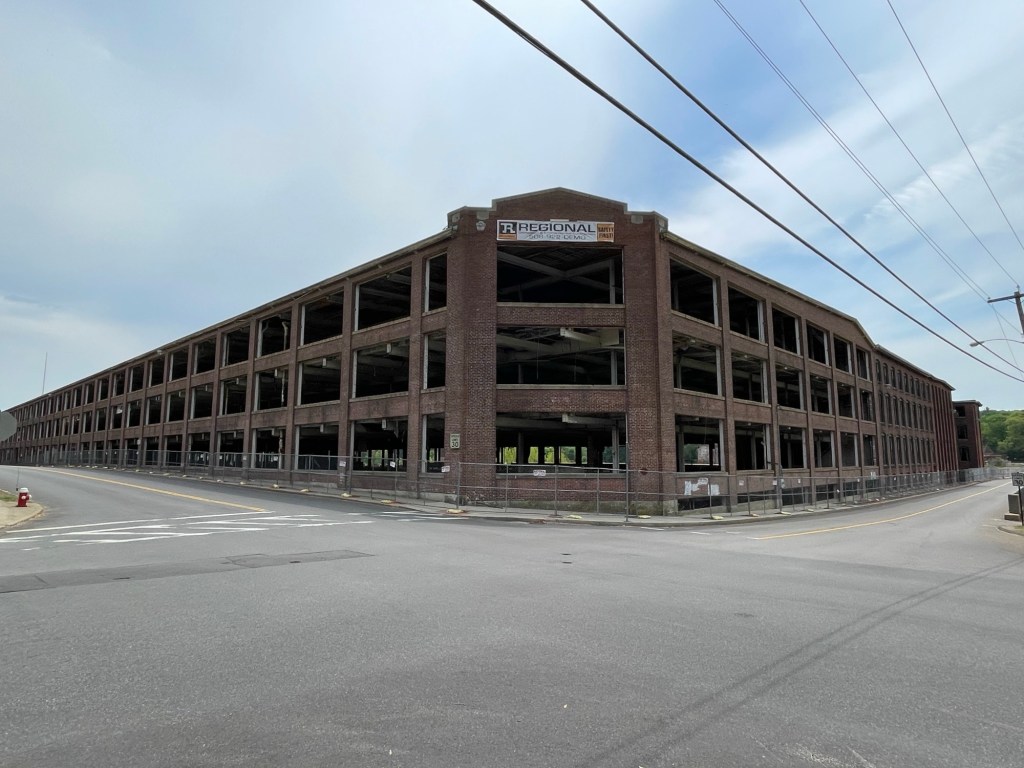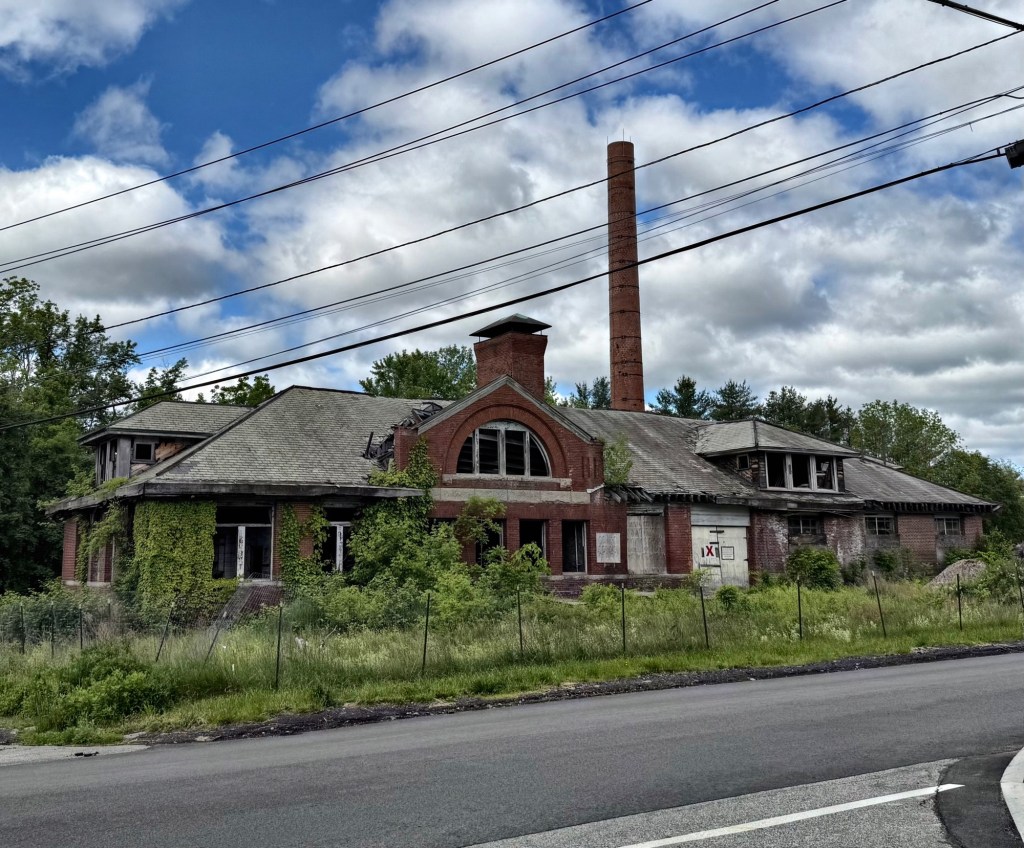
Lyman School for Boys – Manual Arts Building and Powerplant // c.1900

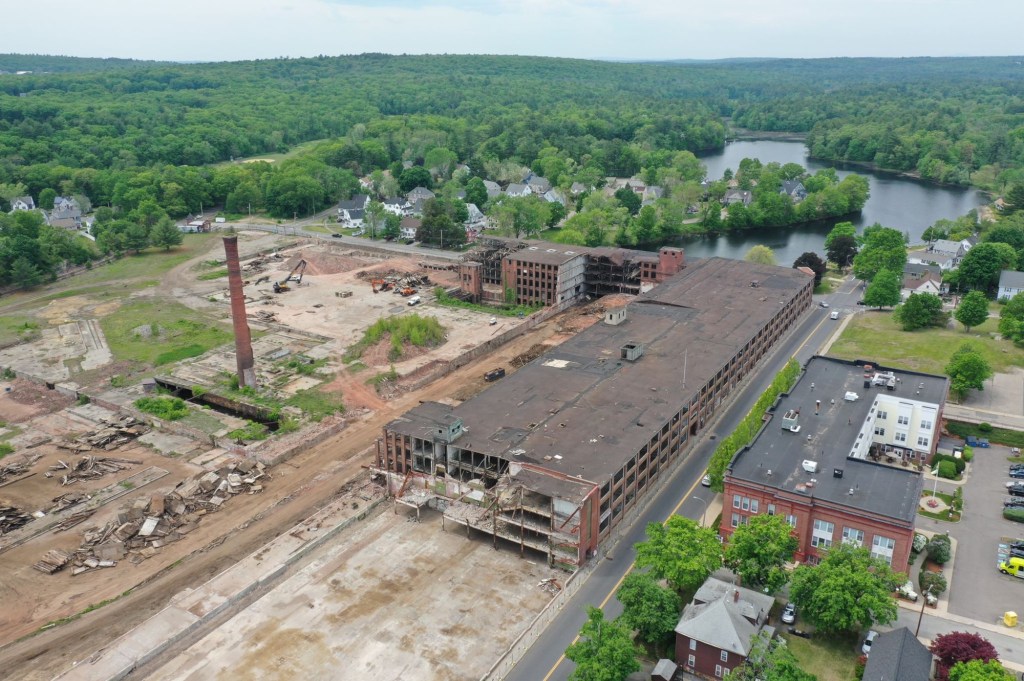
The former Lyman School for Boys was established in Westborough as the Massachusetts State Reform School in 1847, the first state-operated reform school in the country. Initially located on the eastern shore of Lake Chauncy and dominated by a single massive building, but its early history was plagued by conflict between inmates and administration. In 1885, legislative action authorized the Trustees to purchase and prepare a new site, the first in the state system to be developed on the dispersed cottage plan, the school thrived throughout the 19th century and into the 20th century until its eventual closure in about 1974. Much of the campus was designed by architect, William G. Preston, likely including this industrial building, which was used as a Manual Arts training building. Here, young men would learn trades, where upon graduation, they would be able to enter the workforce. The building appears to have been extended decades later with the addition of a powerplant wing, in a more Arts and Crafts style. The handsome building has been vacant for over 50 years and is literally a shell of its former self. With much of the old Lyman School campus razed for uninspiring replacement buildings, it would be a shame to see this building not restored and adaptively reused.

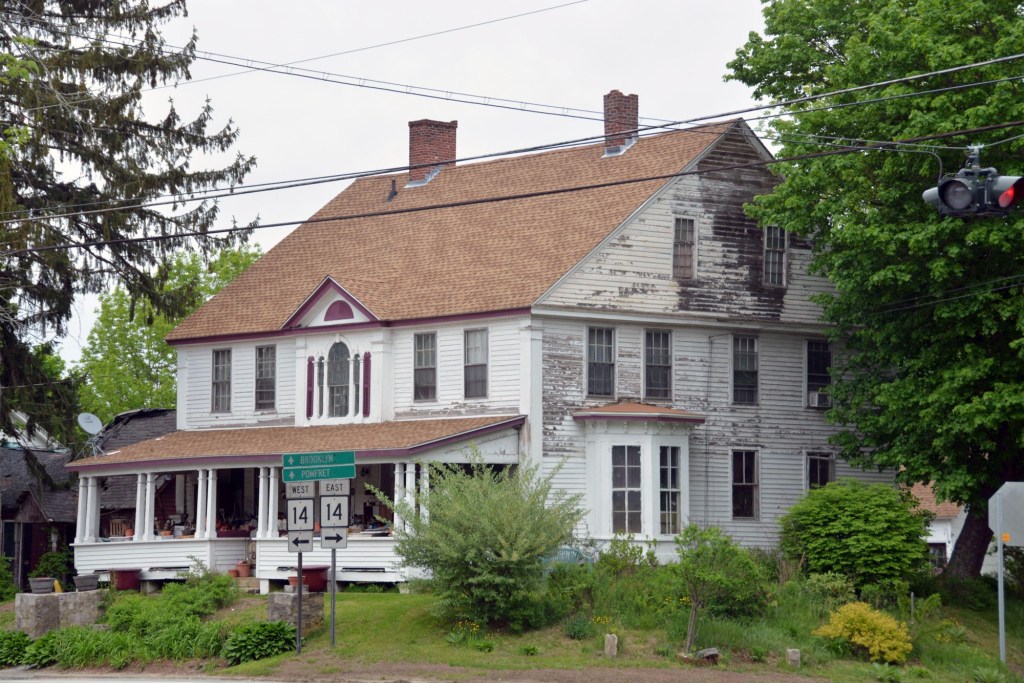
William Moore House // 1803-2019

Formerly located at the intersection of two historic turnpikes in Canterbury, Connecticut, the William Moore House was a historic and architecturally significant residence that stood over 200 years until its demolition in 2019. The large, Federal style house was built in 1803 for William Moore, a merchant who operated a store and also served as the town postmaster. The upper floor of this house at one time accommodated a ballroom where the local Masonic organization met. Later in the 19th century, the house became the home of prominent merchant, banker, and politician Marvin H. Sanger, Connecticut Secretary of State from 1873 to 1876. In 1921, it was the home of Lillian Frink when she became one of the first women ever elected to the Connecticut General Assembly, along with four other women elected that same year. The house with its projecting center pedimented bay, elaborate corner pilasters on pedestals, and elegant Palladian window represented the height of country Federal-period architecture until destroyed by a fire in 2018, leading the town to raze the building a year later in 2019. The lot remains vacant as of 2025.

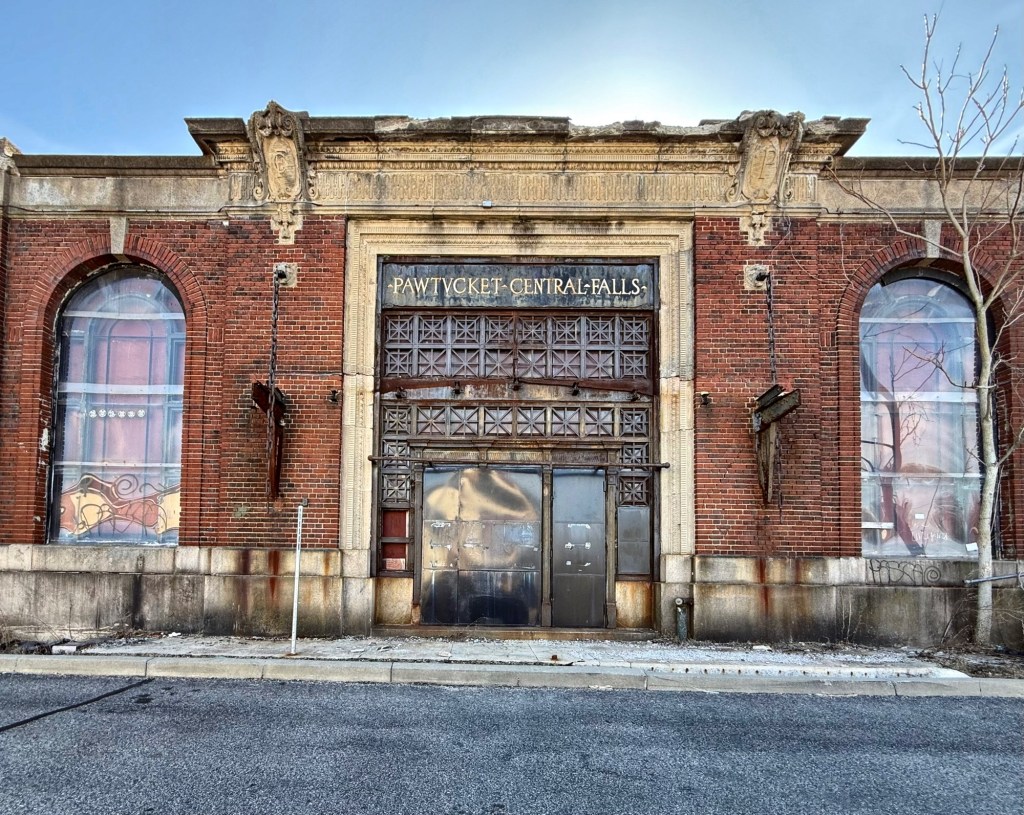
Pawtucket-Central Falls Station // 1916

The Pawtucket-Central Falls Railroad Station is a crumbling relic of a time once dominated by rail travel. This architectural landmark spans the border of the cities of Pawtucket and Central Falls, along with the tracks of the former New York, New Haven and Hartford Railroad and is one of the more unique buildings in Rhode Island. The station opened in 1916 to replace separate stations in the two cities from plans by F.W. Mellor, architect for the New Haven Railroad with Norcross Brothers of Worcester facilitating the construction over a structural steel base spanning the tracks. As many as 140 trains per day once passed under this station, but in 1959, it closed. The building was purchased by a private owner and plans failed to materialize for decades, leaving us with a crumbling masterpiece in architecture and engineering. In 2007, the lot was partially developed with the addition of a suburban, soulless CVS store and parking lot, which today, directly abuts the station. In 2023, a new Pawtucket/Central Falls station opened nearby, which has brought new calls to demolish this building, with people actively seeking grants to fund the estimated $10 Million dollar demolition.

John G. Wright Mansion // 1907-1967

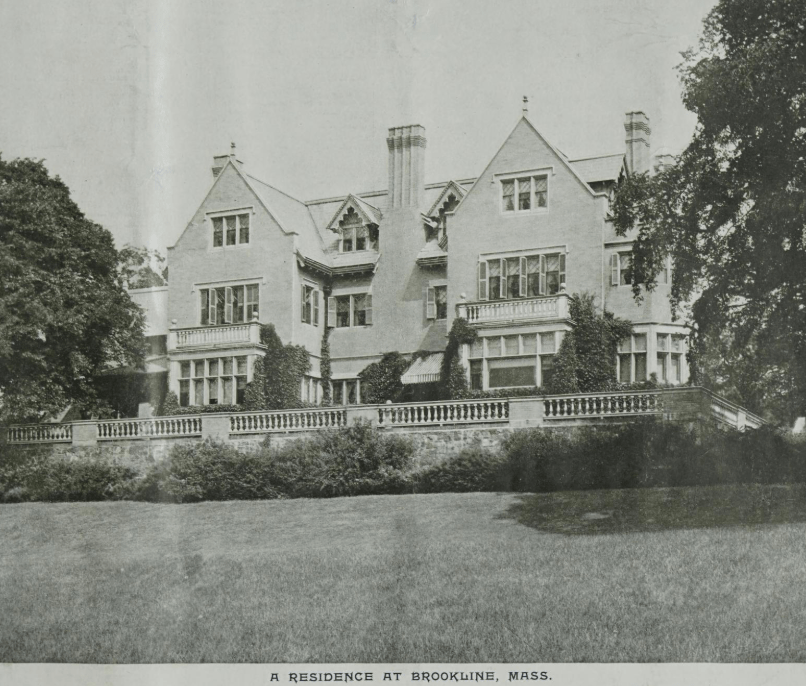
John Gordon Wright (1843-1912), was a Boston wool merchant who purchased farmland on this site in the 1890s and hired architects Chapman & Frazer, to design this stone mansion as an estate house. He previously moved into an earlier wood-frame home on the site and a decade earlier, had the architects design his carriage house and stable, which survive today as the Soule Recreation Center. The stone Tudor Revival style mansion house was massive and featured in national periodicals when completed. The estate was beautified by landscaping designed and laid-out by the Olmsted firm. In 1942, the property was purchased by the Rivers School (now located in Weston) and converted into classrooms and administrative offices for the private school. When the school moved to Weston, the Town of Brookline in 1961 bought property for recreational purposes. Sadly, in 1967, the mansion house burned down, but the carriage house and gate lodge remain as lasting remnants of a once great Brookline estate.

Hotel Pelham // 1857-1916

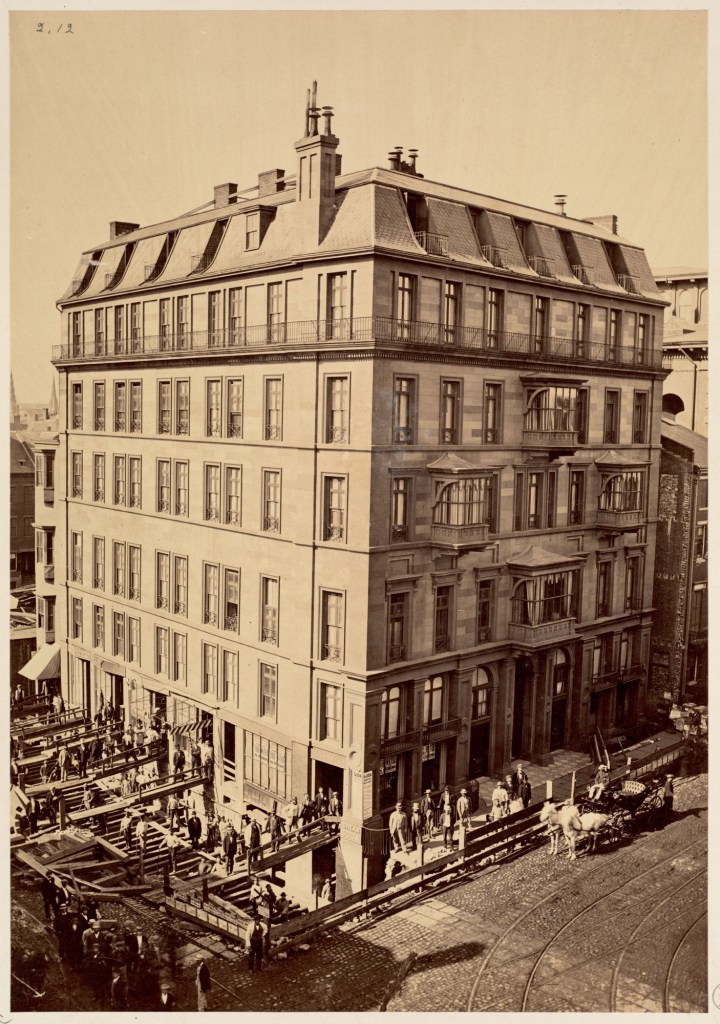
Built in 1857 at the prominent intersection of Boylston and Tremont streets in Boston, the Hotel Pelham is said to have been the first apartment building of its type in America. Seen as a high-end apartment building, not like the slum-like tenements in New York and elsewhere in Boston, the units were like French-flats for medium-term renters, rather than short-term stays. The Hotel Pelham was developed by Dr. John Homer Dix, a doctor who took a keen interest in providing healthy accomodations for city-folk. The Hotel Pelham was designed by architect Alfred Stone, as an early example of the Second Empire style, with a French Mansard roof and stone facades. Just about a decade after the building was completed, Tremont Street (which runs along the side of the building) was set to be widened. This work would require the partial (and likely full) demolition of the Pelham Hotel. Rather than see his building face the wrecking ball, Dr. Dix, in 1869, had the Hotel Pelham slid off its foundation, and moved westward thirty feet to accommodate the expanded Tremont Street. This incredible feat of engineering was undertaken by John S. Blair, with architect Nathaniel Bradlee overseeing updates to the facades and interiors. The building would survive a gas main explosion in 1897, but succumbed to redevelopment during WWI, when the building was demolished for the present building on the site, the Little Building.

Boston & Albany Depot // 1881-1958

Courtesy of Digital Commonwealth

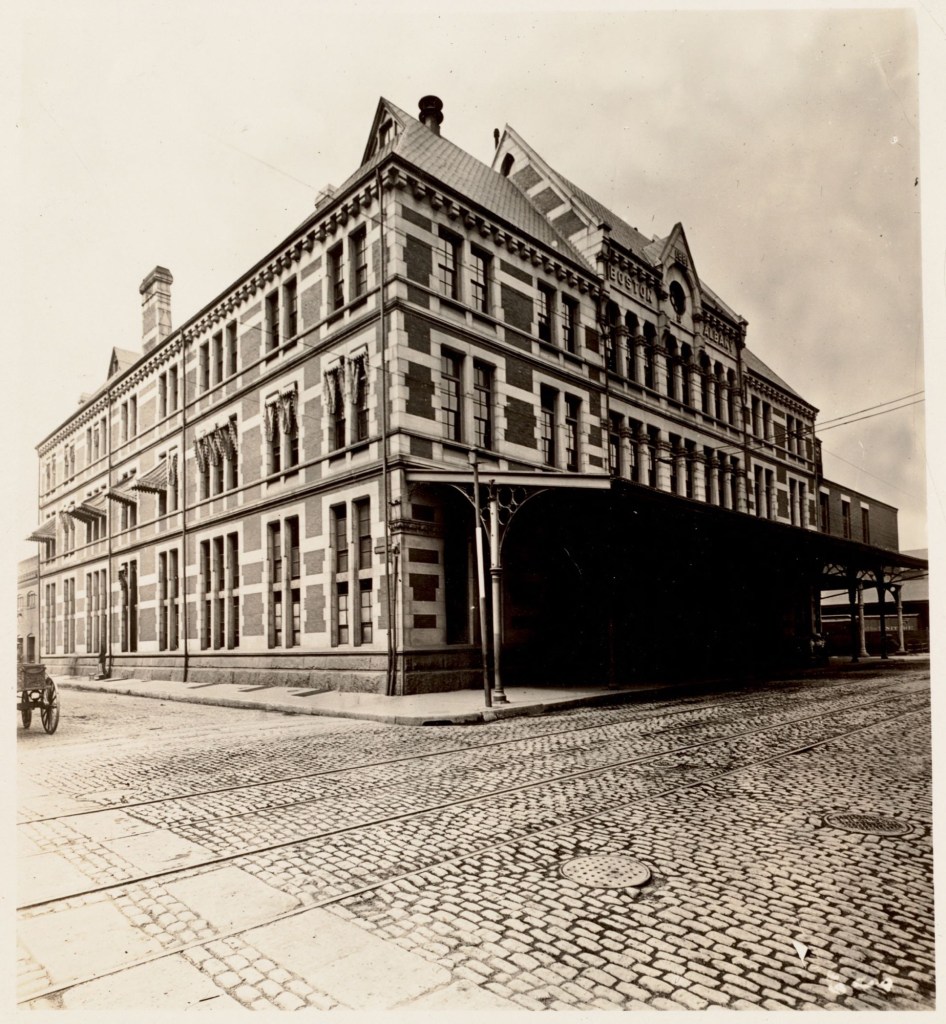
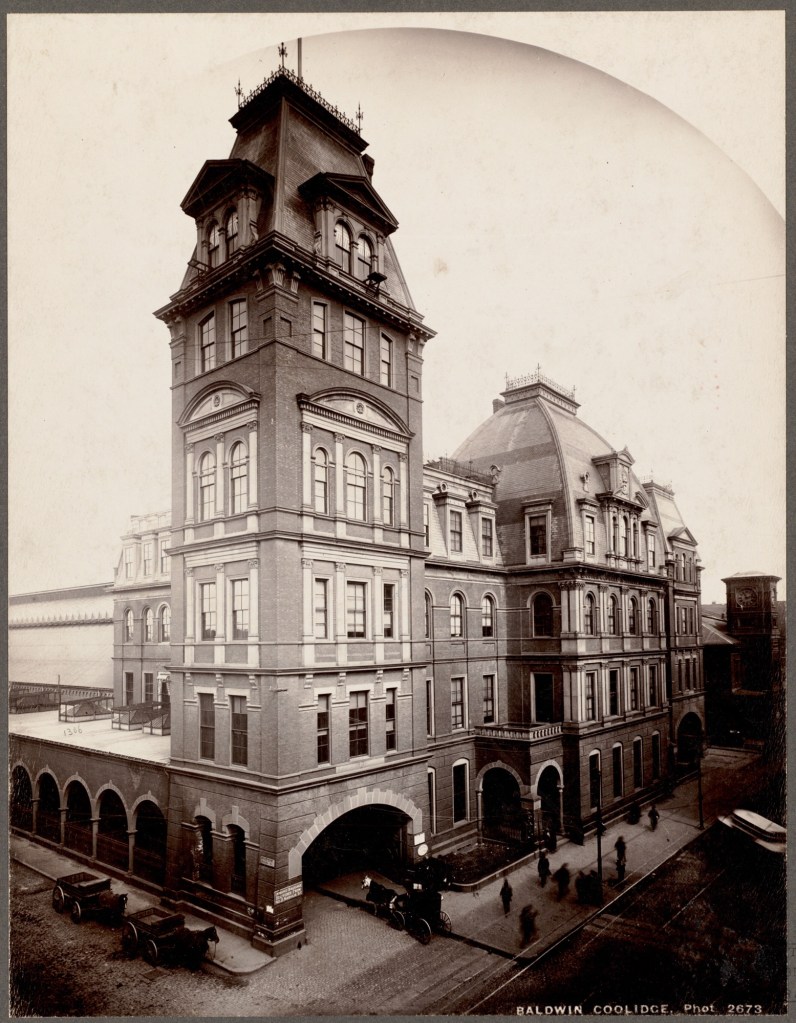
When the Erie Canal opened in 1825, New York City’s advantageous water connection through the Hudson River threatened Boston’s dominance as a historic trade center. Since the topography of the Berkshires in Western Massachusetts made construction of a canal infeasible, Boston turned to the emerging railroad technology for a share of the freight to and from the Midwestern United States. The Boston and Worcester Railroad was chartered in 1831 and construction began the next year. Stations and rail lines were built westward of Boston and would eventually reach the Berkshires and the Hudson Valley with three existing lines merging in 1867 as the Boston and Albany Railroad, becoming the longest and most expensive point-to-point railroad yet constructed in the United States. The B&A undertook a significant program of improvement and beautification in the 1880s and 1890s, when the railroad hired architect Alexander Rice Esty to design this building, the Boston passenger station which was completed in 1881, the year of Esty’s death. That same year, the B&A hired architect Henry Hobson Richardson to design a series of passenger stations, connecting suburban villages west of Boston to the city. This station was located on Kneeland Street and serviced passenger service from Boston until the new South Station, a consolidated train station of various lines, was completed in 1899. This station later became a freight and storage warehouse for the railroad until the 1950s when the building was razed for the Central Artery, signaling the death of train travel as we knew it for decades to come. The site of the former station has remained undeveloped since then.

Rockland Custom House & Post Office // 1873-1969

Photo included in HABS documentation

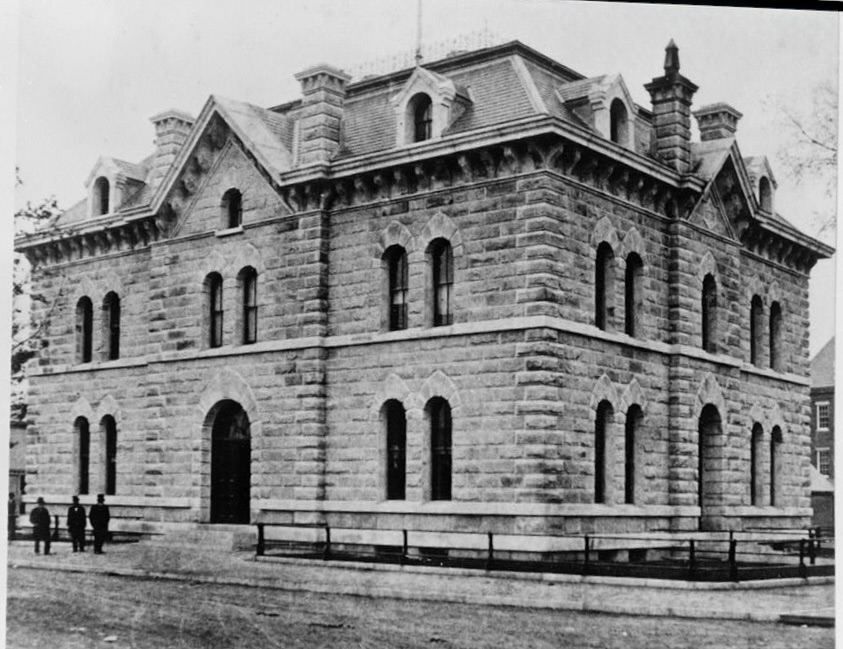
It saddens me to see photos and learn about some of the amazing buildings demolished in the name of “progress”; it is even more disappointing when said building is replaced by a surface parking lot (over 50 years later)! This great stone building was built in Rockland, Maine, in 1876 as the town’s post office and custom house by the Federal government. Relatively unknown architect Alfred B. Mullett is credited with the design as he served from 1866 to 1874 as Supervising Architect of the United States Treasury Department. The building can be classified as Italianate-Second Empire in style and is constructed of massive, rough-faced granite block walls with a shallow mansard roof above. The building was offered for sale by the U.S. Government in 1967, likely due to the upkeep costs and a shrinking local population with the dependency on maritime trade diminished. The building was ultimately razed in late 1969, with a new, uninspiring, post office built next door to this site.

Poland Springs House // 1876-1975

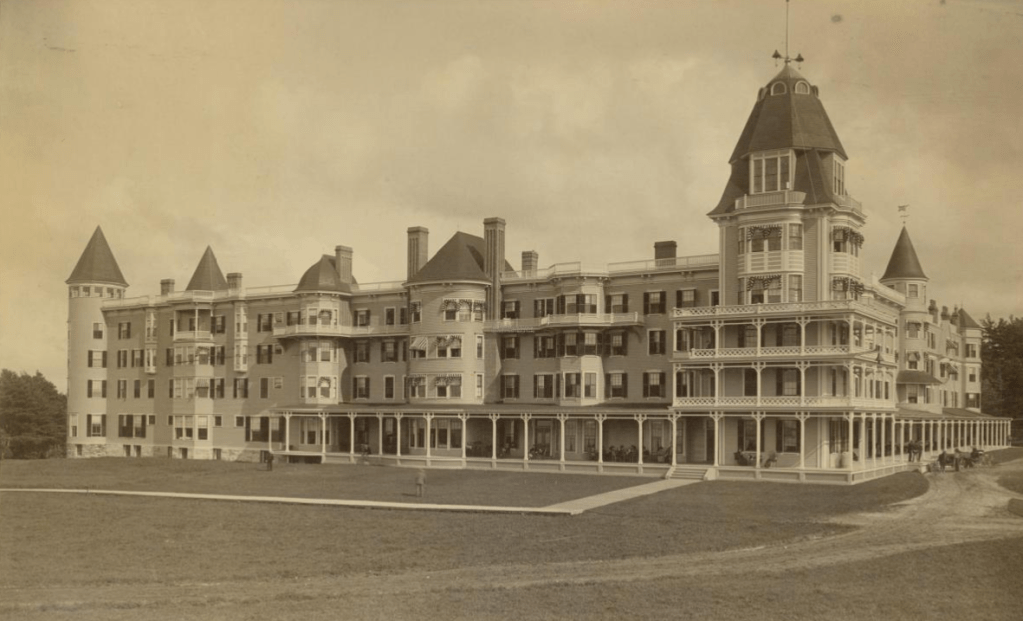
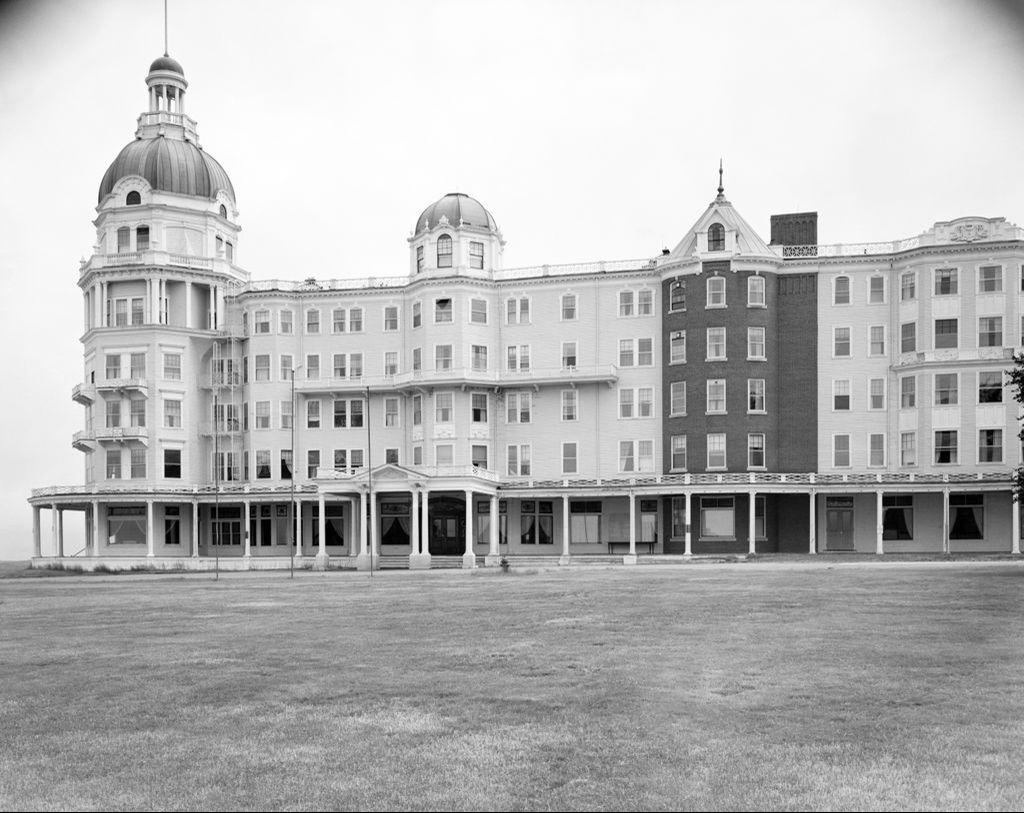
In 1844, Hiram Ricker (1809-1893) of Poland, Maine, drank spring water on his property and found that his chronic dyspepsia was cured. As a result, he began touting the medicinal qualities of the water and in 1859 started selling the water commercially. While the first water was bottled and sold in 1859, it was not until after the Civil War that Hiram Ricker and his sons began heavily promoting the spring as a destination for medical cures – and at the same time promoted the inn and resort that they were building in association with the spring. From this, the Poland Springs Resort (and Poland Springs bottled water) was born. The development saw swarms of tourists looking to escape the polluted cities for clean Maine air and natural spring water, therefore, the Ricker Family built the great Poland Spring House in 1876 to cater to resort visitors taking its waters. The original hotel was Second Empire in style and stood four-stories tall containing 100 rooms. Throughout the 1880s and 1890s, the resort building was expanded, quadrupling its size to 450 rooms as the demand for the resort increased every summer. An annex was also built nearby, named the Riccar Inn, providing even more hotel rooms for guests. By the early 20th century, the 1870s hotel was completely remodeled in the Beaux Arts style by architect Henry Wilkinson with domed roofs and sweeping verandas. After WWII, the resort saw diminishing visitors and would ultimately close in the 1960s. During a period in the 1960s, the hotel was operated as the country’s largest Women’s Job Corps Training Center, but deferred maintenance caught up to the building and it was ultimately shuttered, suffering a devastating fire in 1975, it was demolished soon after. While the large hotel no longer stands, there are many other amazing buildings on the grounds, stay tuned!

Former Boston & Lowell Railroad Depot // 1871-1927

Courtesy of Boston Public Library collections

The Boston and Lowell Railroad was established in 1830 as one of the first rail lines in North America. The first track was completed in 1835, and freight service began immediately connecting Boston to the newly established town of Lowell, which had just 6,400 residents at the time (compared to Boston which had 10x that). The original Boston depot was a modest structure, but after the Civil War, it was decided that a new station connecting two of the most important industrial cities in Massachusetts, should be built. Architect Edgar Allen Poe Newcomb and his father’s firm, L. Newcomb & Son, was selected to design a new station on Causeway Street. The French Second Empire masterpiece was built between 1871-1878. Inside, the concourse was lined with oak walls and marble flooring. The depot was added onto in 1893 and incorporated into a Union Station of multiple former lines, and ultimately demolished in 1927 for the first North Station.

Boston City Hospital Relief Station, Haymarket // 1902-1960s

Image courtesy of City of Boston Archives

In 1858, as Boston began to see a massive influx of immigration into the city and rapid industrialization, the City of Boston authorized the creation of a new hospital whose purpose was the “reception of those sick and injured: citizens of Boston who, from any cause, were unable to otherwise obtain care and treatment,” especially in cases of “acute illness and for the victims of accident or injury.” This was the Boston City Hospital, which was established in the South End, and is now known as the Boston Medical Center. The hospital was thought to be too far away for victims of injury of illness to get to promptly, so a relief station was built in Haymarket Square, replacing the recently demolished Boston & Maine Railroad Station. The new, standalone hospital building was constructed of brick and stood three stories tall and opened in 1902. On its first day of operation, doctors and staff saved the life of a man who had attempted suicide by ingesting carbolic acid. A Boston Globe reporter speculated that had the patient been  transported to the more distant Massachusetts General or City Hospitals, he would have surely died. The Colonial Revival style building was designed by the firm of Kendall, Taylor & Stevens, who specialized in medical facilities and other institutional building designs. The structure was demolished by the 1960s, when much of the Government Center/West End areas were razed for urban renewal.