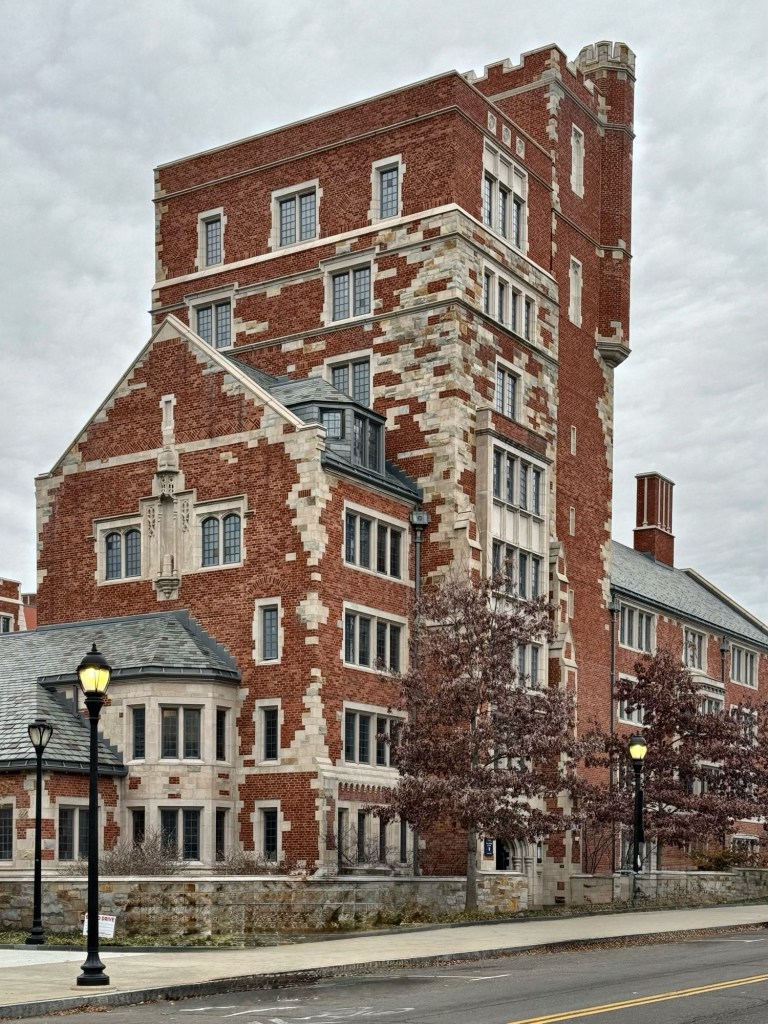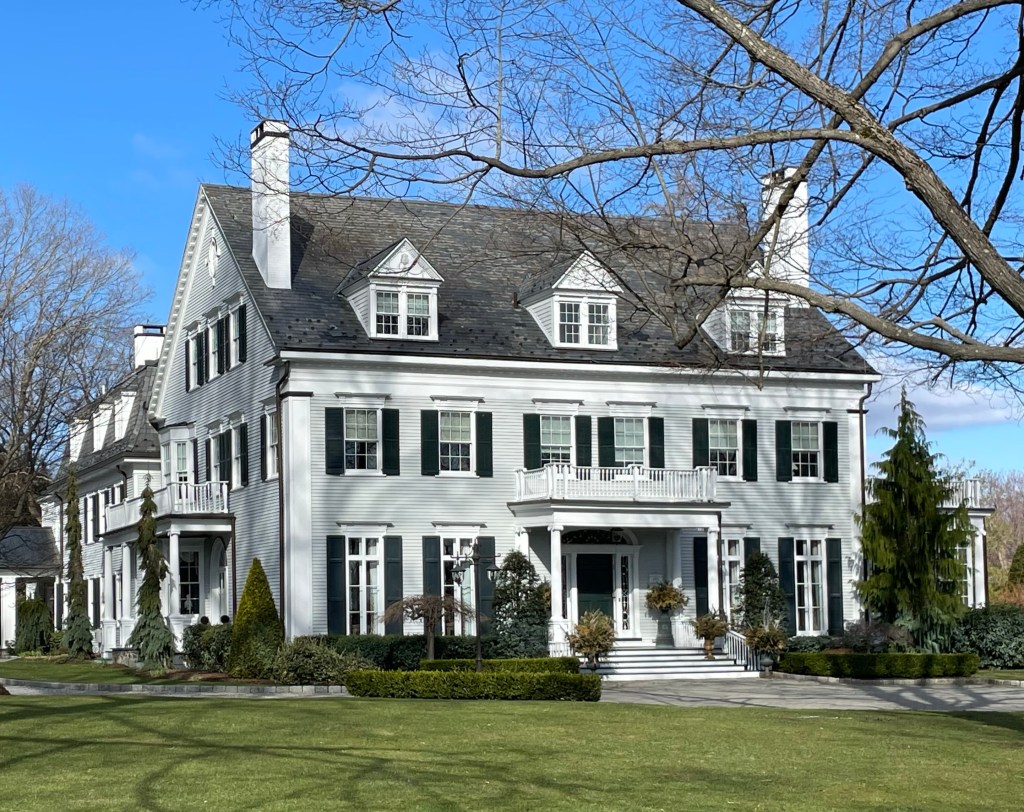
King Mansion // 1894

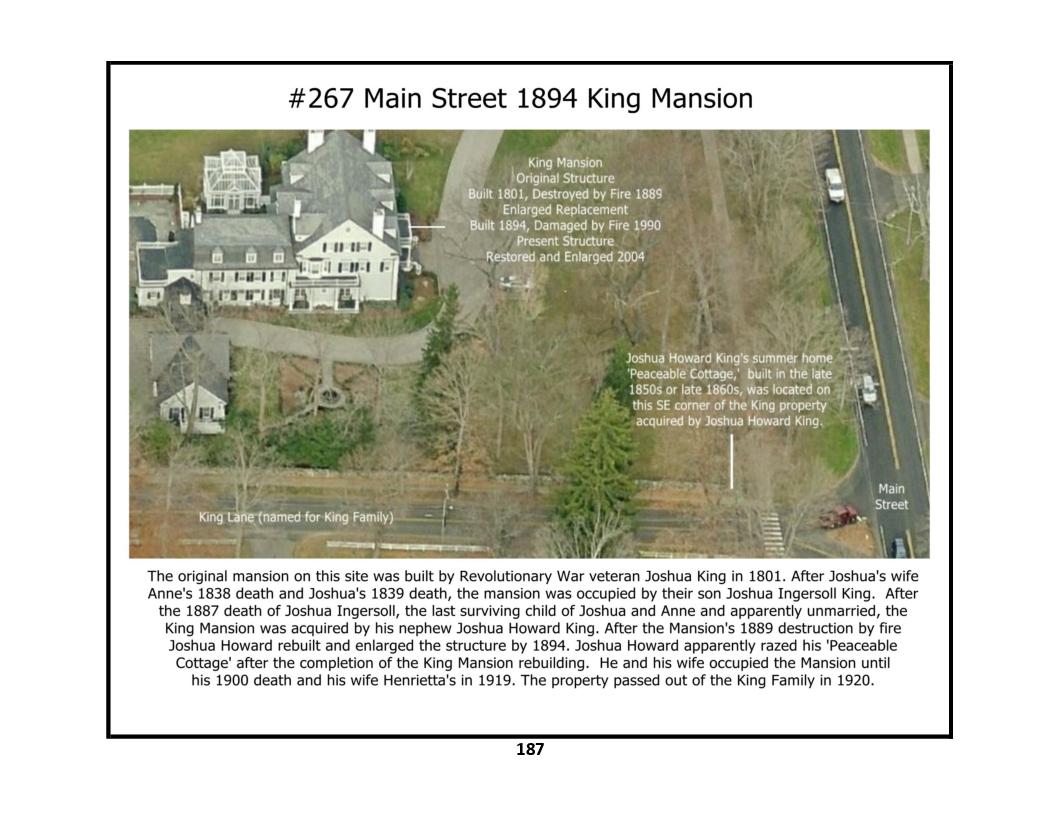
After the American Revolution, Lt. Joshua King settled in Ridgefield and built the King Mansion in 1801, a Federal style home that commanded the Main Street lot. King was born in Bridgewater, Massachusetts and fought in the Revolutionary War near the border of Connecticut and New York. After the war, he settled in Ridgefield and married one of the most eligible bachelorettes in town Anne Ingersoll. Anne was the daughter of the Rev. Jonathan Ingersoll, pastor of the Congregational Church of Ridgefield. After a long life running a store and raising a family, Joshua died in 1839, a year after his wife. The mansion was inherited by their son Joshua Jr. until his death in 1887. In 1889, a fire destroyed much of the house. When it burned down, The New York Times described it as “the grandest old mansion in the village.” It was quickly replaced by the current house, modeled after the original but larger, which was placed much farther back from the road in the Colonial Revival style. Fire damaged the house again in the 1990s, and the present structure was restored and enlarged from 2002-2004, its HUGE!

First Congregational Church of Rockport // 1805

Fondly referred to as the “Old Sloop” in town (a name conferred by local fishermen in the 1800s), the First Congregational Church of Rockport stands as one of the most prominent landmarks in the old village. The village of Sandy Bay (now downtown Rockport) had a growing population since the 1700s. Prior to 1755, churchgoers from Sandy Bay made the journey every Sunday by horse or foot in good weather to the parish in Annisquam or the First Parish in Gloucester, and in poor weather, met in a small log schoolhouse on this site. Eventually, a church building was erected in town, which was used until after the Revolutionary War. In 1805, a new meetinghouse was built where it stands today. In 1814, the British invaded Sandy Bay colony and residents rang the Old Sloop’s bell to sound the alarm. British forces fired a cannon at the bell to silence it, but hit the steeple instead. A replica cannonball can be seen to this day in the steeple as a nod to that historic event. In 1840, the people of Sandy Bay voted to establish the Town of Rockport. At that time, the meetinghouse was completely redecorated and the steeple enlarged. After the Civil War, the church was outgrown, and in 1872, the Old Sloop building was cut in half and separated by about twenty feet with an addition built in the middle. At that time the steeple was enlarged and strengthened to accommodate a new and heavier bell and the Town Clock. In 2015, the church began a campaign to replace the deteriorated steeple, which was rebuilt, faux cannonball and all!

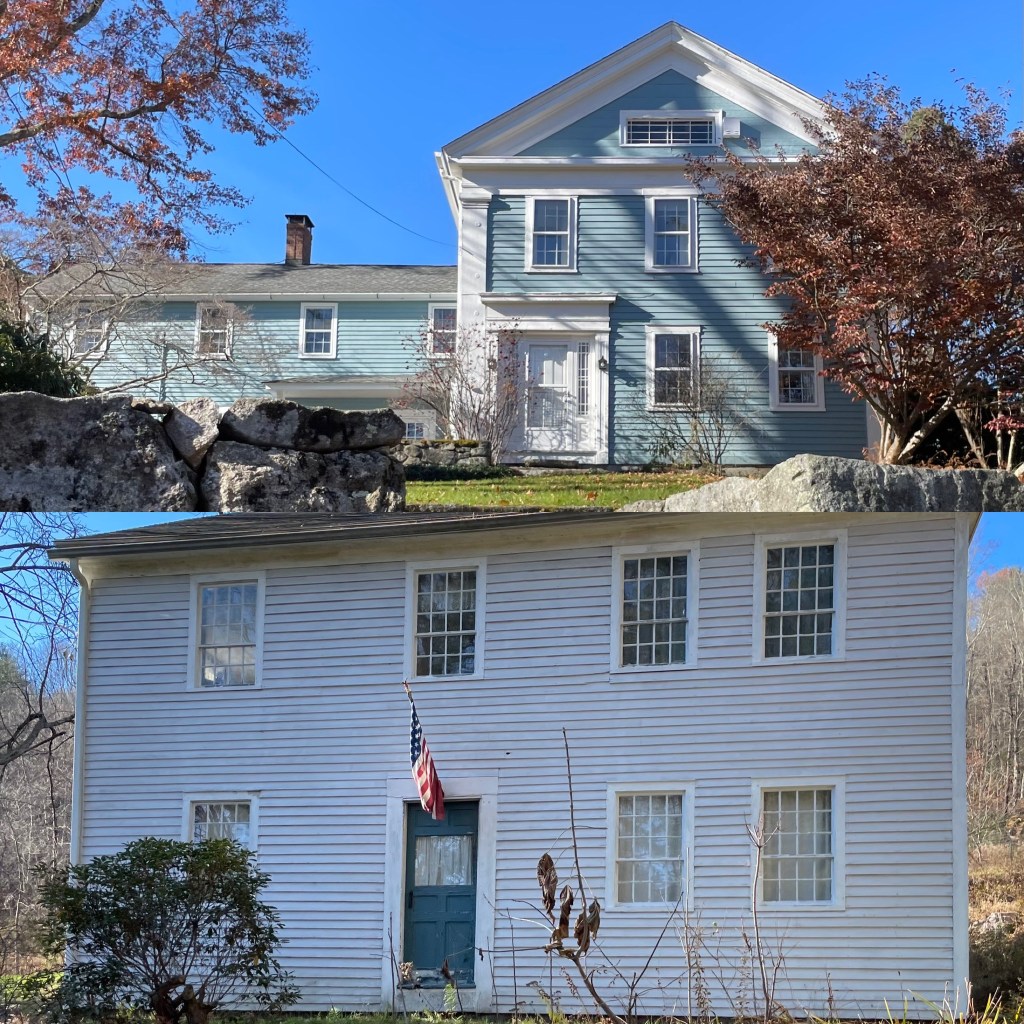
Alson and Sadosa Barbour Houses // c.1840

Alson and Sadosa Barbour (sometimes spelled Barber) grew up in North Canton, Connecticut and resided in these two homes, raising families and farming the land. The blue house was built in 1839 for Alson Barbour, who updated his earlier 1814 home which was gifted to him by his father as a wedding gift. The smaller home was outgrown by Alson, Hannah, and their 12 children (all living to adulthood) and he built this stately Greek Revival home on the quiet, meandering road. Not to be outdone by his brother, Sadosa too added onto his earlier home, also a wedding gift from his father. The 1803 house was enlarged in 1840 and given its present appearance, a modest Greek Revival home with a side-gable roof.

Which house is your favorite?

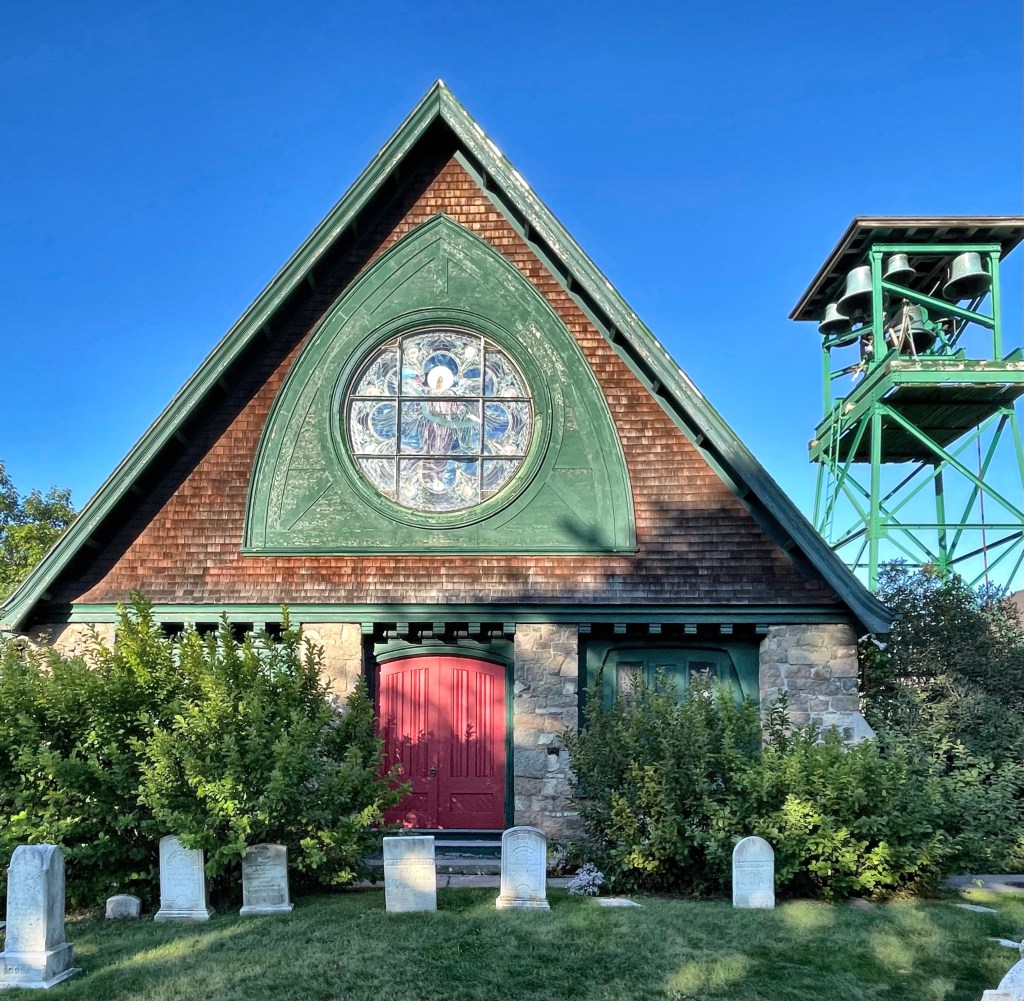
St. Saviour’s Episcopal Church // 1877

Initially erected in 1877 and enlarged several times thereafter, the St. Saviour’s Episcopal Church in Bar Harbor is an excellent example of ecclesiastical architecture in the state of Maine. The original church building had been erected in 1877-78 at a cost of about $7,000 from designs by the New York architect Charles C. Haight. Within eight years of its construction, space limitations caused the church to undertake a major expansion. Designed by the Boston architectural firm of Rotch and Tilden, this building campaign – carried out in 1885-86 – dramatically changed the church’s appearance by developing a cross shaped plan that made use of the original structure for transepts and added a larger nave, semi-circular apse, and an imposing crossing tower. The numerous building campaigns designed by both prominent and lesser known architects, have produced a rich eclectic architectural legacy that mirrors the development of Bar Harbor.

One Greenway // 2015

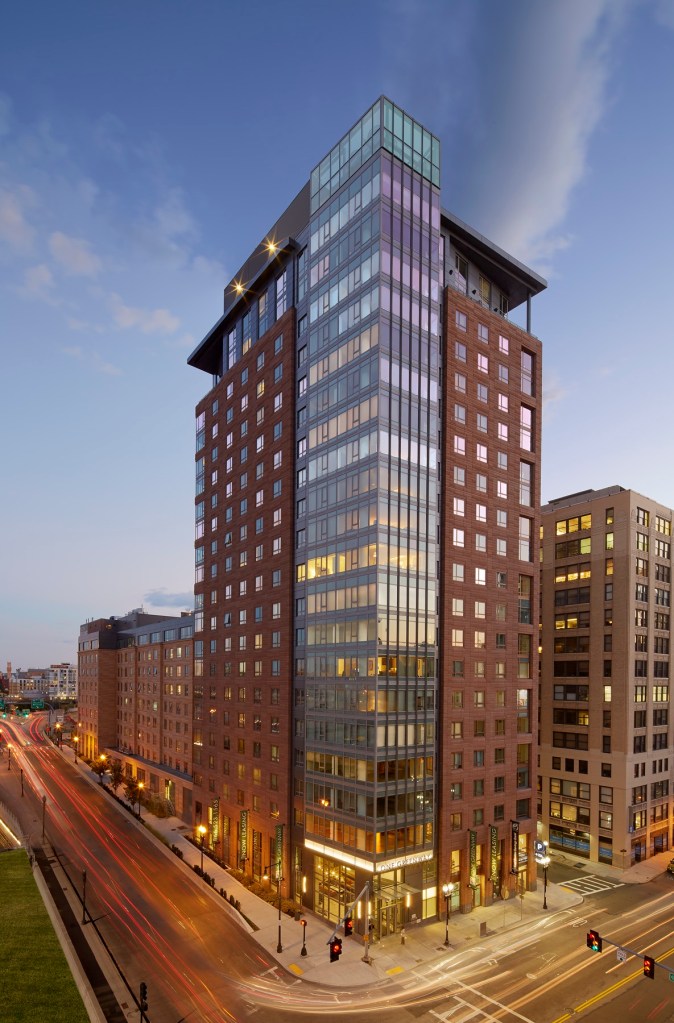
Replacing a vacant lot bordering I-93 at Kneeland Street, the One Greenway development provides much needed housing and design as one of the gateways into the Chinatown neighborhood of Boston. A result of community engagement, One Greenway is one of the largest new affordable housing projects in recent memory. The project restores the urban fabric that was lost half a century ago to the construction of major highways, which cut through the community and provides much-needed affordable housing in one of the nation’s oldest and largest immigrant communities. When the elevated highway was moved underground and the Rose Kennedy Greenway was laid out, parcels adjacent were available for reuse, and this was one of the last to be redeveloped. The building mixes 217 market-rate apartments and 95 affordable apartments, to create a mixed-income development, hopefully the future, as to not segregate affordable housing to less-desirable parts of cities. Designed by the firm Stantec, the building creates a solid street wall at the corner, and provides amazing open space at the rear in the form of a well-designed park designed by Crosby, Schlessinger, and Smallridge. The use of beige terracotta panels makes the large building more inviting, compared to the cold and sterile new apartment buildings going up all over the city and region.

Nantasket Beach Bath House // 1935

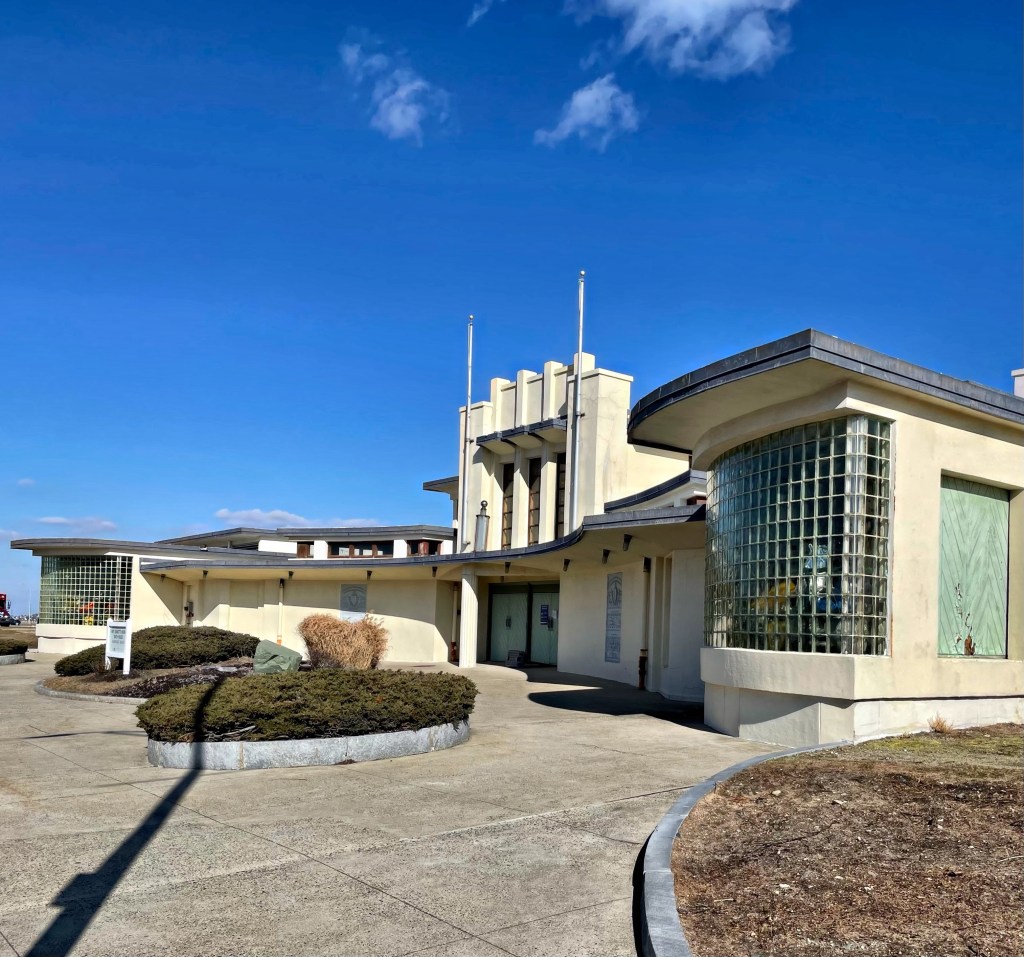
A part of any large public beach in Massachusetts is the public bathhouse, where visitors can go to the bathroom, change, and store belongings in lockers. Ever since the Massachusetts Parks System of Boston acquired land at Nantasket Beach, a bathhouse was here for visitors. The earlier building by Stickney & Austin burned down and was soon replaced. This amazing Art Moderne bathhouse features a central mass with wings adorned by glass block. The architects Putnam & Cox created a whimsical 1935 Moderne design that blends into the sandy beach. The building suffered from the salt air and cold winters and went through a massive restoration in the late 1990s, it was then re-opened and re-named after Mary Jeanette Murray, a state representative.

St. Paul’s Cathedral, Burlington // 1973

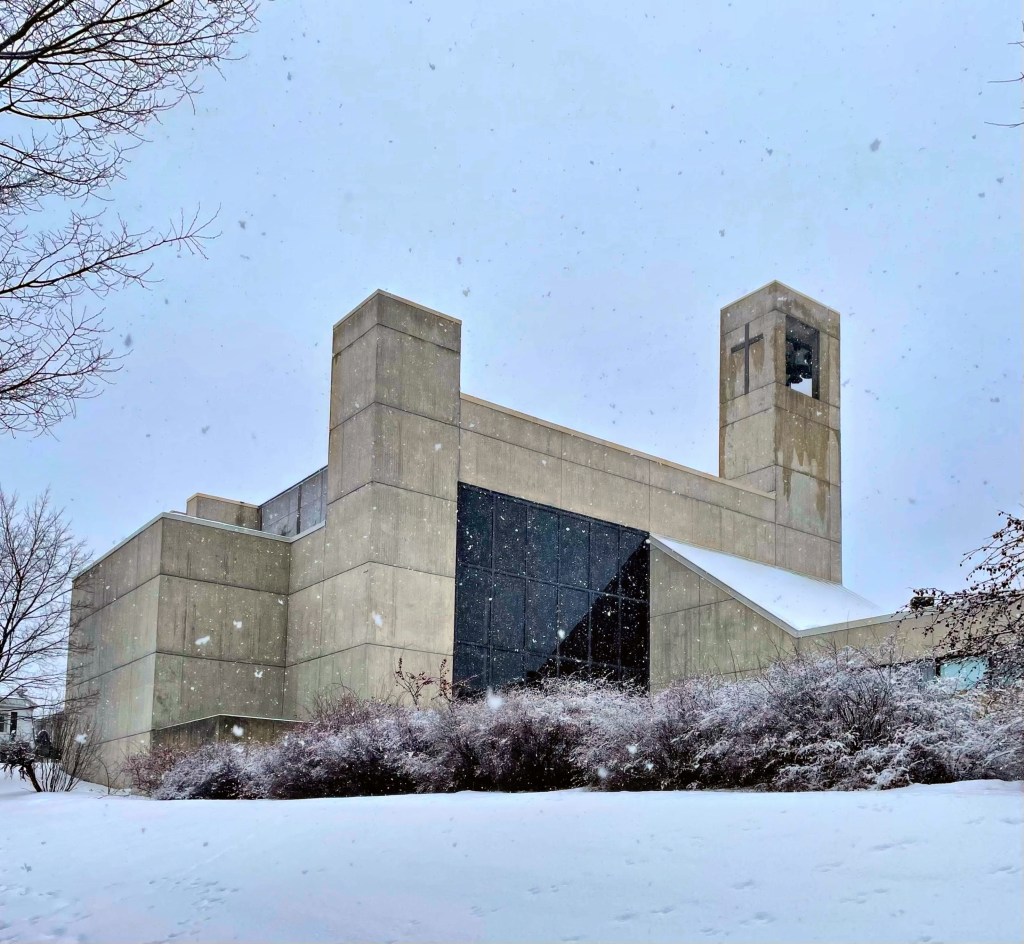
St. Paul’s Church in Burlington, Vermont, was organized in 1830, when Burlington’s population was about 3,500. About 55 Episcopalians met at a local hotel and laid the groundwork for the parish. In 1832, the fledgling parish dedicated its new building, a neo-Gothic limestone structure, which was enlarged multiple times as the congregation grew as the city did. In 1965, the Diocesan Convention voted that St. Paul’s Church be designated a Cathedral Church of the Diocese (one of two in the state). Just six years later, it was destroyed by fire, sparked by an electrical malfunction in the basement, leading to a new evolution of the church. At the time of the fire, the City of Burlington was engaged in massive urban renewal projects. As a part of this program, the City offered to swap the land on which Old St. Paul’s had stood for a spacious new tract overlooking Lake Champlain and the Adirondacks. Although the decision to change locations was a contentious one, the parish did accept the offer. When discussing designs for a new cathedral, there was a strong desire to make a new statement in architecture, diverging from the traditional Gothic or Colonial designs seen all over the country. An international competition was held to determine the architect of the new Cathedral. The winner was the local firm Burlington Associates, now Truex, Cullins & Partners. Completed in 1973, the Cathedral is made of stressed concrete. The structure stands strong and firm, yet is welcoming. Windows provide sweeping views of Lake Champlain and the distant Adirondacks.

Burlington City Hall // 1928

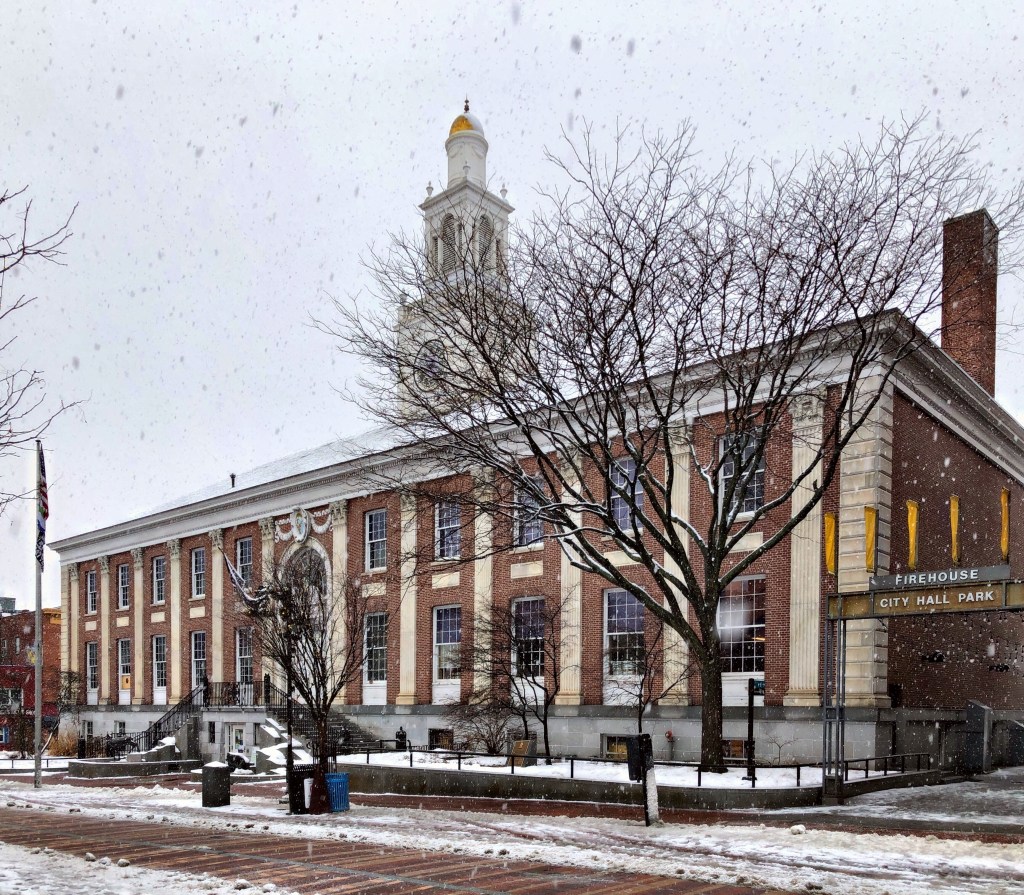
One of the largest, most grand buildings in Downtown Burlington, Vermont is its City Hall building, constructed in 1928, just before the Great Depression. The brick facade with extensive carved marble trim is Neo-classical in style, with virtually all the finish materials – brick, marble, roofing slate, and granite produced in Vermont. The building replaced the 1850s City Hall, which was poorly constructed and suffered from deterioration, exacerbated by an earthquake in 1925. Architect William M. Kendall was hired to complete the designs of the large, bold Classical building. Kendall spent his career with the New York firm of McKim, Mead & White, the leading American architectural practice at the turn of the century, and showcased the best of that firm with the design of this building.

Guerrieri Block // 1921

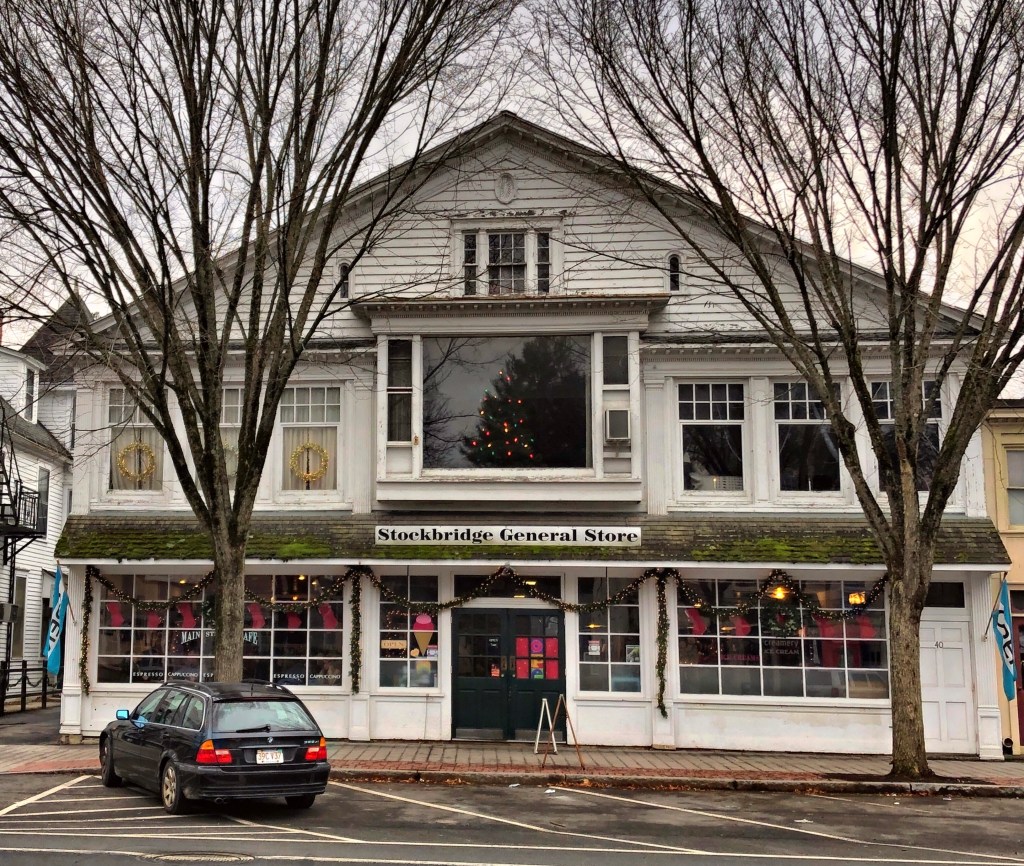
Norman Rockwell‘s ‘Home for Christmas’ painting in 1967 depicts the Main Street scene in Stockbridge, Massachusetts, and epitomizes the essence of Christmas in small towns across the country. In the iconic painting, you can find many landmarks (including the Town Offices building) that make up the quaint main street, that typifies many small New England towns. At the center of his painting, the Guerrieri Block can be seen with a Christmas tree lit up in the window on the second floor. The Guerrieri Block was built in 1921 by Antonio Guerrieri, a skilled woodworker who sold and repaired antiques in one of three street level shops in the block. He and his family lived in an apartment on the second floor. The next year he completed construction of a shop behind the block where he worked out of. In 1953, Norman Rockwell moved to Stockbridge and spoke with Antonio about using the second floor of his building as a studio. Antonio constructed a large central bay window with plate glass to flood the space with light and allow Rockwell to work while observing the street below. Rockwell used the space as his studio until 1957. The building has since been occupied as a general store.

Church of the Good Shepherd, Waban // 1896

For the small population living in the farming village of Waban in Newton, MA, every Sunday, they had to take a horse and carriage or walk to church in a nearby village. The Waban Christian Union was the first religious organization to be established in Waban, 1894-1895 after seeing a suburbanization of the village. The church was to be for services of the Protestant Episcopal Faith, though the group claimed no allegiance to the Diocese, nor was it organized according to the laws of the church. It was independently owned by a corporation that felt the need for a religious association in the community. This church structure was constructed in the
summer of 1896 at a cost of $5000 with William F. Goodwin, a charter member of the group (and resident nearby), donating his services as the architect. The organization leased the space to a pastor for $200 a year, later selling it to the congregation, known now as the Church of the Good Shepherd.