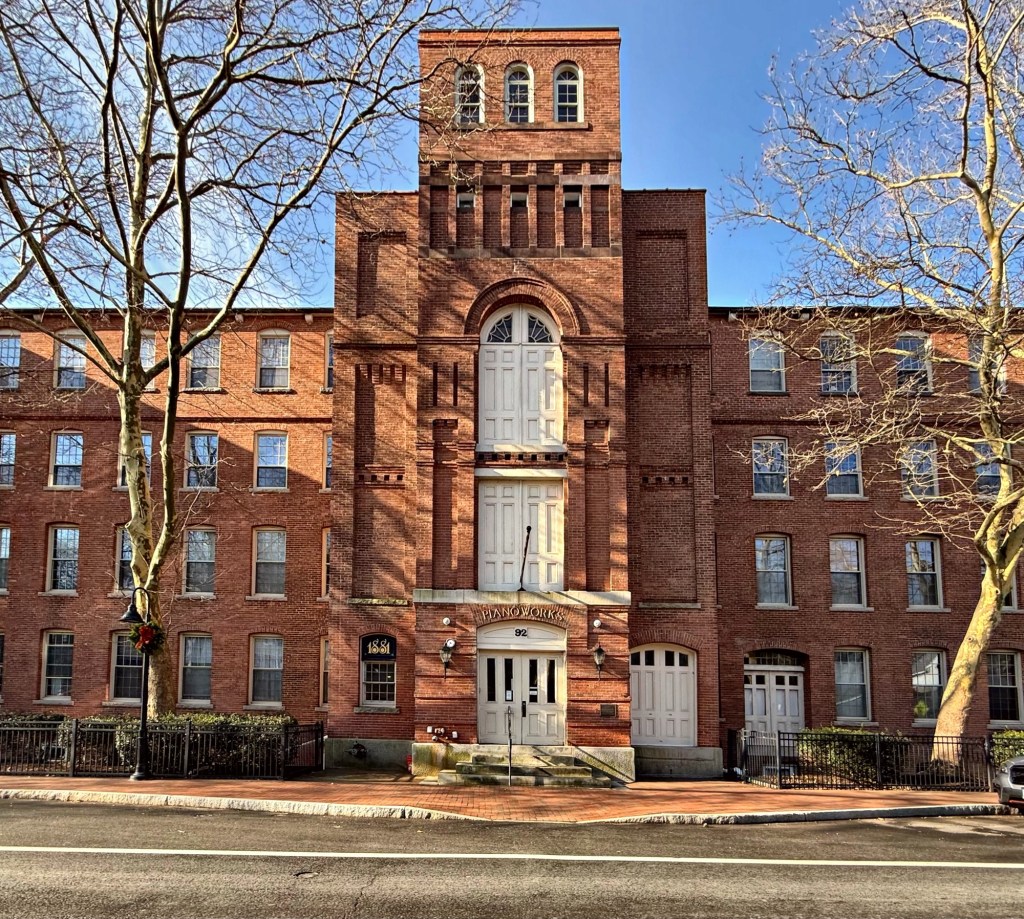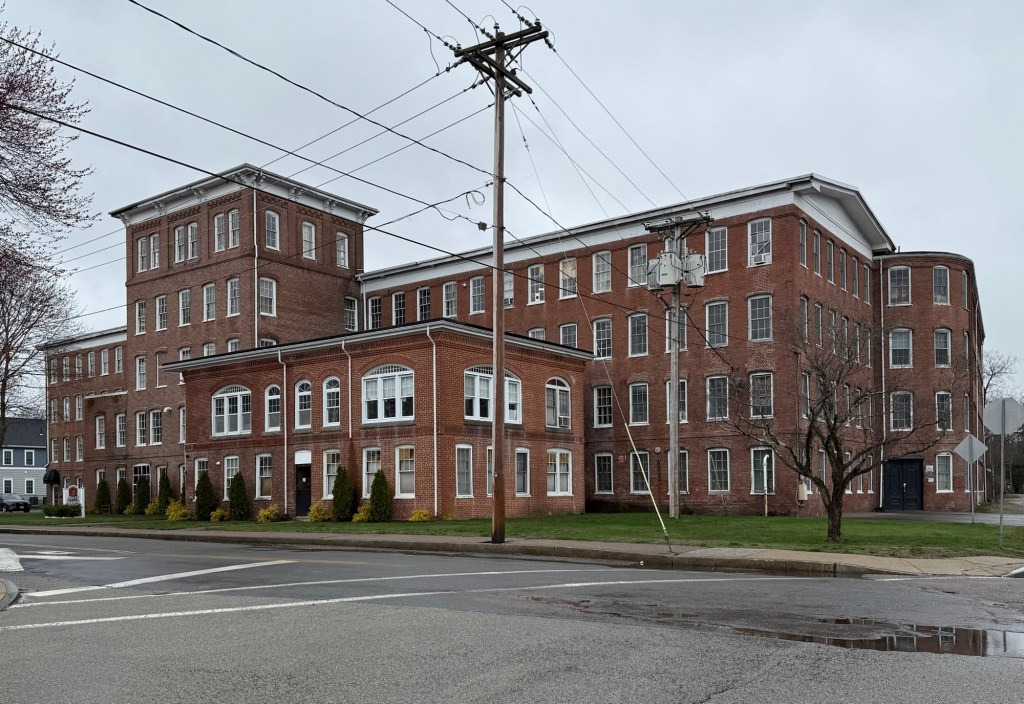
Pratt, Read and Company Factory // 1881

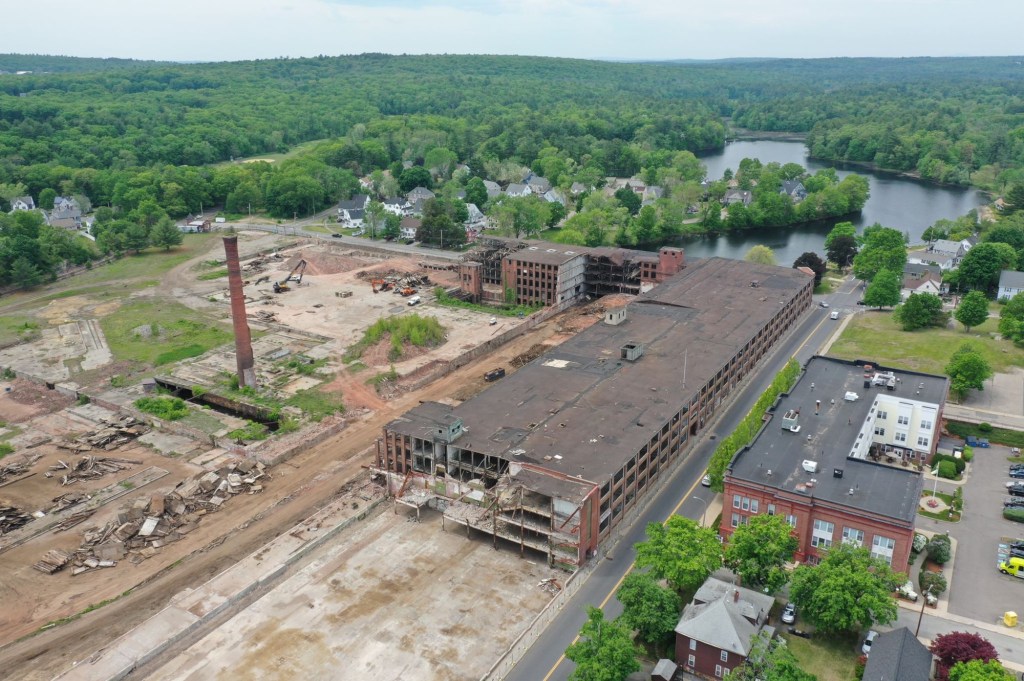
The Pratt, Read & Company Factory, located on Main Street in Deep River, Connecticut, was once the largest producer of ivory products in the world. The company was established in 1863, when Julius Pratt, George Read and their corresponding companies, merged to become Pratt, Read and Co. In 1866, the newly organized company built a new factory on this site. The business manufactured ivory combs, collar buttons, and toothpicks and specialized in the production of piano and organ keys. That factory burned in 1881 and as a result, over 160 employees were out of work. A year later, in 1882, the present factory was built of fireproof brick construction. The company, like many others, imported ivory from King Leopold’s Congo, where atrocities against indigenous people were common. The original Pratt, Read and Co. factory had an ornate pyramidal tower, which was removed in 1914. In 1936, the company merged with Comstock, Cheney & Co. and moved all operations to Ivoryton, CT. The Deep River factory was used for various manufacturing purposes throughout the rest of the 20th century until it was converted to condominiums as the appropriately named Piano Lofts.

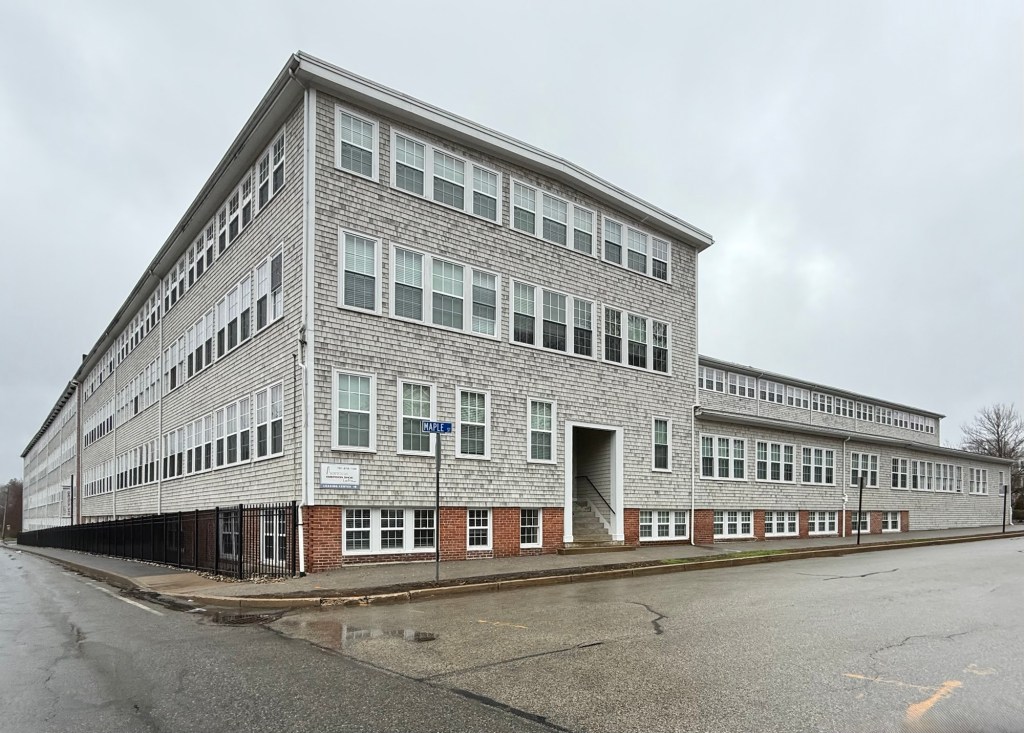
Emerson Shoe Company Factory // 1894+

Prior to its establishment as an independent town in 1874, Rockland, Massachusetts, was part of “Old” Abington. The town became best-known for its number of shoe manufacturing companies, even more significant as the town is said to have provided nearly half of the Union Army’s footwear during the Civil War. In the late 19th century, due to increased connectivity of Rockland to regional markets, business boomed, and this site on Maple Street, adjacent to the railroad, was purchased for a new factory. The first factory here was constructed in 1894 for the local Hall, Gallagher & Foulke Shoe Company, who would dissolve after just two years, selling the site to George W. Hall, one of the original trustees. In 1906, the Emerson Shoe Company, burned out of its Brockton factory caused by a disastrous fire, began operations as a tenant in the former George W. Hall factory in Rockland. With continued expansion, the Emerson Shoe Company soon became one of the largest employers in Rockland. The factory was enlarged numerous times through the 1920s. The company would eventually close, even though, by the late 1920s, Rockland and six neighboring communities were manufacturing 27% of all shoes worn in the United States. However, most likely due to the aging of the original founders and labor issues, Emerson Shoe was sold. After various other uses, including as an artist’s colony of studios, the building was restored and converted into residential loft-style housing.


Arnold Shoe Factory // 1875

Moses Noyes Arnold (1844-1919) was born in Abington, Massachusetts and began making shoes in his free time, a task that would make him his fortune later as an adult. After serving in the Civil War and mustering out in 1863, he began a shoe-making business from his father’s property before renting a small factory space in town to increase operations. His company continued to grow and it was decided that Arnold would build his own factory in town. In 1875, Moses N. Arnold began the building of the main wing of the present brick shoe factory near the railroad station in North Abington. As the M. N. Arnold Shoe Company grew, five additions were made until it attained its present capacity of 3,000 pairs of shoes daily. The company weathered the collapse of the stock market in 1929 but the economic instability took its toll on the company, leading the company to sell in 1931 to the Stetson Shoe Company of South Weymouth. This factory was sold at auction and later in 1943, was purchased by The Abington Company which manufactured, installed, and serviced vacuum cleaning systems for textile factories. The handsome brick, Italianate style factory remains in a great state of preservation, and showcases the type of factories built all over New England following the Civil War. 

Pawtucket Hair Cloth Mill //1864

Despite its name, this handsome mill structure, known as the Pawtucket Hair Cloth Mill, is actually located in Central Falls, Rhode Island. The building, located on Roosevelt Avenue on the banks of the Blackstone River, is a great example of a Civil War-era mill, built for one of the many wool and cloth companies in New England. Begun in a small factory across the street in 1856, this business became successful after the acquisition of patents for weaving haircloth (most of the raw material for which originally came from Russian horse markets) for upholstery, crinolines, and inner linings. The company is said to have once been the largest producer of haircloth in the world. The Italianate style mill stands pretty much as built, besides the tower that has lost its low pyramidal cap. The building was one of the first commissions by great Rhode Island architect, William Walker, who was just 34 at the time of designing this large, and complicated structure.

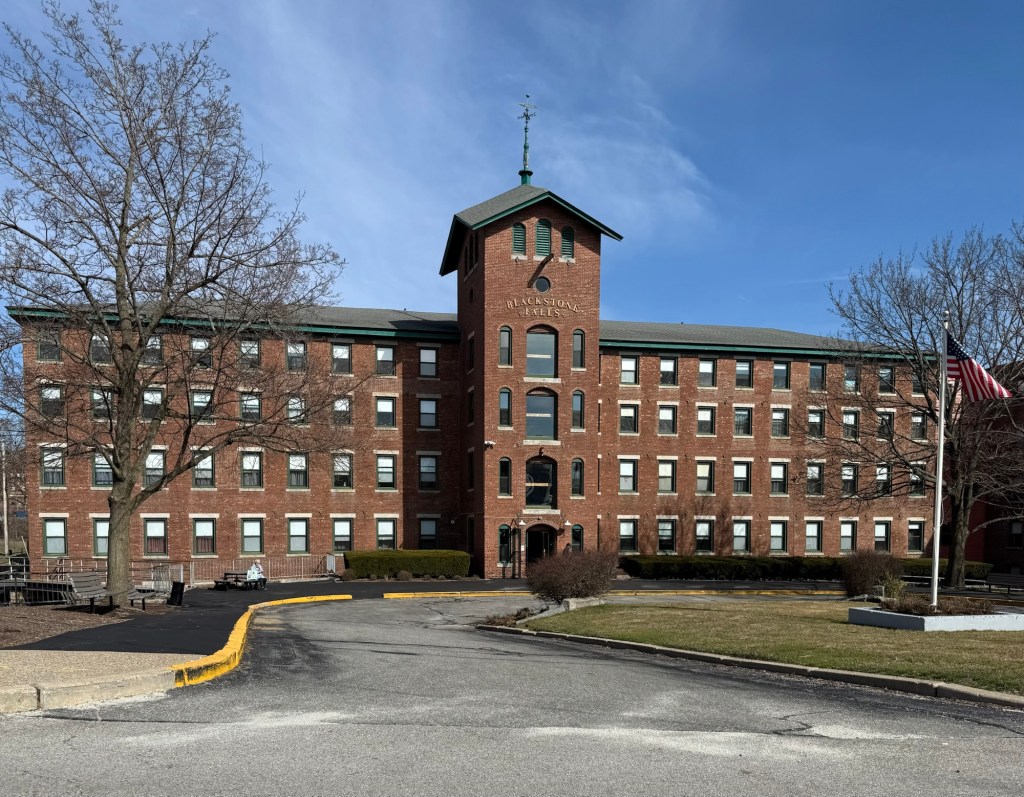
Valley Falls Mill // 1849

The Valley Falls Mill sits along the Blackstone River in Central Falls, Rhode Island, and is one of the many significant industrial complexes which facilitated the development and growth of the city. The main building in the complex is the four-story rectangular building, constructed in 1849. To meet the requirements of fire resistance, the mill was constructed with load-bearing brick walls and heavy timber columns. Samuel B. and Harvey Chace, sons of Fall River mill owner Oliver Chace, built the mill on this site, influenced not only by the availability of water power, but also by the completion the same year of the Providence & Worcester Railroad, which passes by the mill on its east side. The mill was designed for the manufacture of a variety of cotton products. The Valley Falls Company merged with another industrial concern in 1929, and this mill was subsequently closed the following year. After decades of little-to-no use, the significant Valley Falls Mill was converted into senior housing in 1979 following its listing on the National Register of Historic Places. It ranks as one of the earliest mill conversion projects in New England and while some details were lost, it preserves a significant piece of local history and meets a much-needed demand of housing.

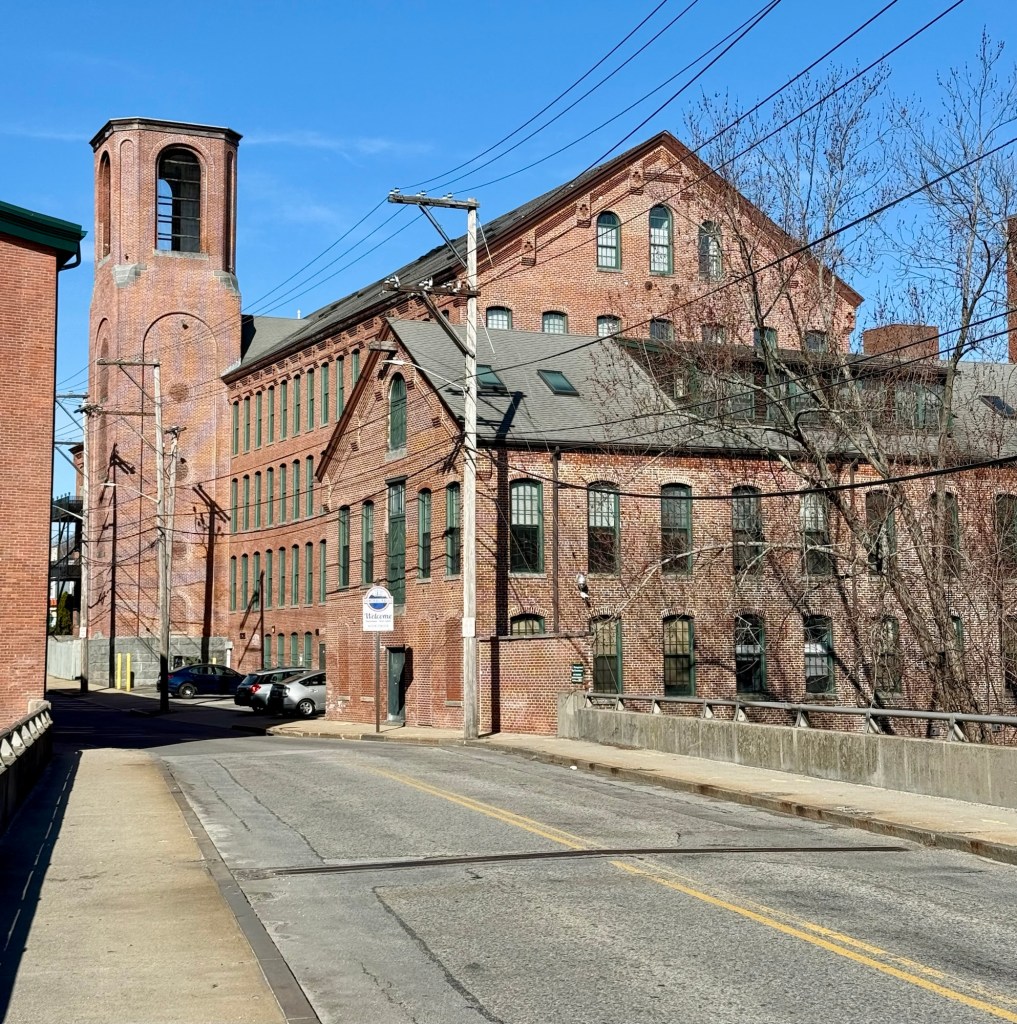
Fales & Jenks Mill // 1863

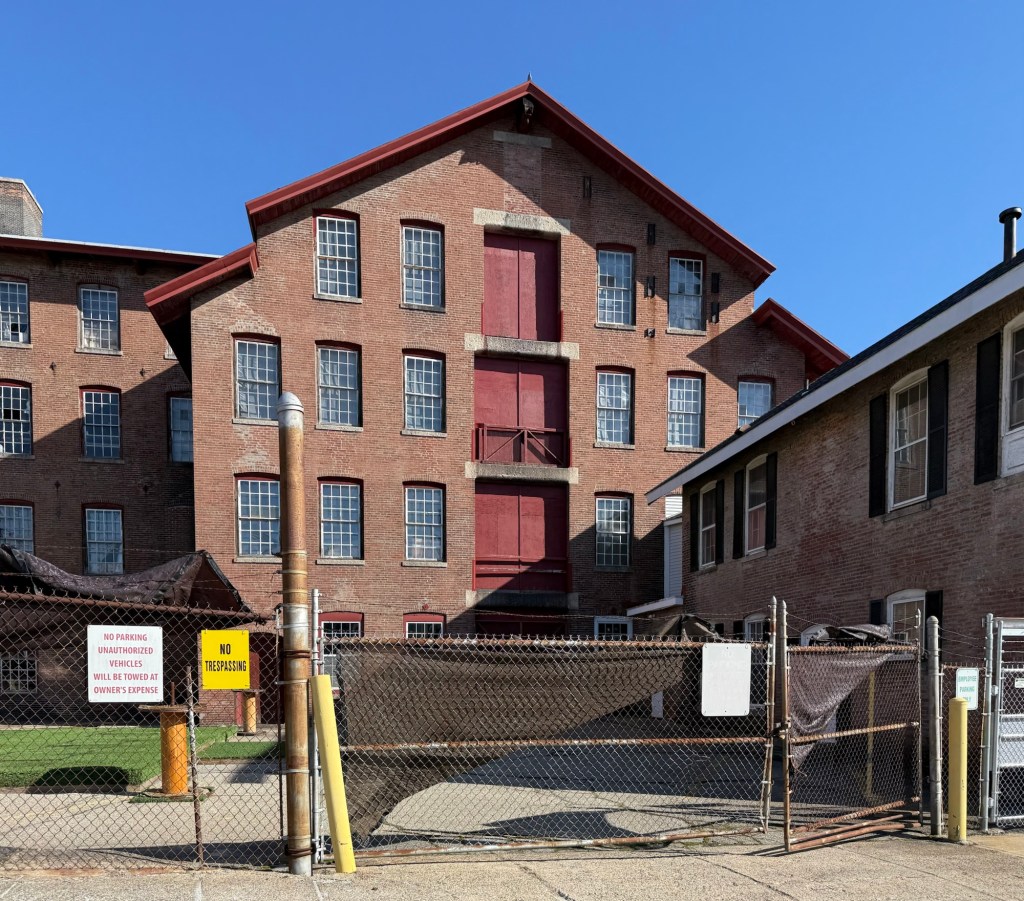
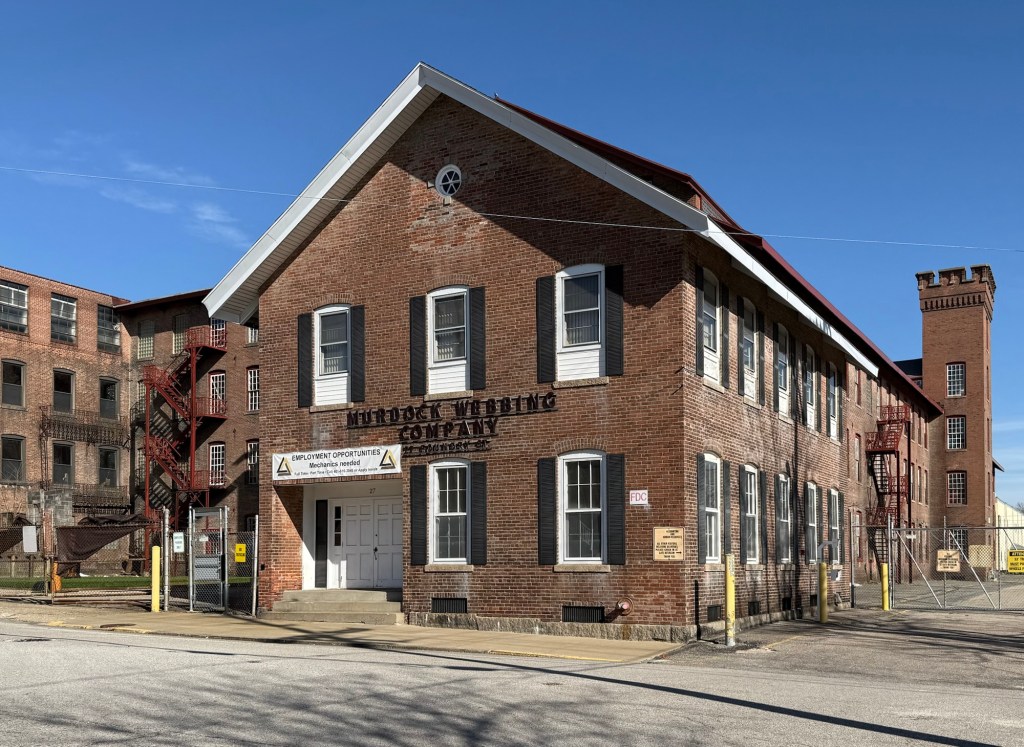
One of the largest mills in Central Falls, Rhode Island, is this complex tucked away on Foundry Street. Constructed in phases beginning in 1863, the site was originally owned by the firm of Fales & Jenks, manufacturers, and it was the first major factory in the town to not be built on a river, but on the railroad, showcasing a shift in the transportation of goods along with the increasing availability of steam power, relieving mill owners from having to build on the rivers. Fales & Jenks manufactured textile machinery here for just a few years until they moved to Pawtucket, and the complex was purchased by A. & W. Sprague in 1865 and after slight enlargement, was used as a flax mill until the Spragues’ failure in 1873. In the late 19th century, the mill was occupied by the U.S. Cotton Company. The oldest buildings are brick with granite lintels under a monitor roof. Later additions include a massive brick factory with a tower with castellated parapet. The small, two-story gable-roofed building at the corner was the mill office. The complex is today owned and maintained by the Murdock Webbing Company.

Ames Manufacturing Company Complex // 1847+

Until the early 19th century, Chicopee, Massachusetts, was little more than an agricultural district of Springfield (from which it separated in 1848). Several early mills began to harness the power of a 50-foot drop-off in the Chicopee River, but it was not until the introduction of outside capital from Boston-based industrialists, that Chicopee became an industrial powerhouse. The Dwight textile mills which quickly developed required a wide variety of related manufactures. Edmund Dwight, owner of the Dwight Mills procured brothers Nathan Peabody Ames and James Tyler Ames to relocate their edge tool business from Chelmsford to Chicopee, they did. In 1834, the Ames Manufacturing Company was incorporated with a capital of $30,000 and buildings were erected along the Chicopee River, just east of the Dwight Mills. By 1835, the company was creating works in brass and bronze, and in 1845, an iron foundry was added. The company used the foundries for casting statuary and producing cannons and cannonballs for the US Military. Additionally, the bronze doors of the East Wing of the United States CapitolDaniel Chester French‘s Minuteman statue at the Lexington-Concord bridge and the large equestrian statue of George Washington at the Boston Public Garden were cast at the Ames Factory. After a period of decay in the latter half of the 20th century, the largest buildings of the complex were restored and converted to housing, today known as Ames Privilege.

Fisk Rubber Company Offices // c.1916

The Fisk Rubber Company was founded in Chicopee, Massachusetts, in 1898 by Noyes Wilson Fisk, who purchased the Spaulding and Pepper Company in 1895 and renamed it to the Fisk Rubber Company. The company originally produced bicycle tires and other rubber items, later branching out with automobile tires in 1899 which proved to be an impressive success. The company’s “Fisk Tires” became a household name, especially popular among early automobile owners for their durability and performance. At its peak, the company employed thousands of workers, contributing significantly to the local economy of Chicopee, as well as other branch factories in in New Bedford, Massachusetts, Jewett City, Connecticut and Pawtucket, Rhode Island. The firm grew rapidly, and an entire complex was built here in Chicopee, centered around this building, constructed around 1916 as the Administrative Offices for the company. Architect George B. Allen designed the building in the Classical Revival style. During the Great Depression, Fisk Rubber was crippled by competition and eventually was acquired by United States Rubber (later Uniroyal) in 1940. Uniroyal, Inc. closed their Chicopee plant in 1980, and the complex sat largely unused for decades, with a majority of buildings demolished in recent years. Hopefully this lovely building, instrumental to the growth of Chicopee and America as we know it, will be preserved for generations to come.

Norwood Press Complex // 1897

Now that is an interesting example of adaptive use… What do you think of this?

The Norwood Press was formed in 1894 by several companies which consolidated to form a company that covered all aspects of the book-making process. AII three companies had been located in Boston, but were lured to Norwood by free land offered by the local Business Association along with tax incentives that were too good to pass up. The underutilized land was quickly redeveloped in the 1890s with the several-building complex built on Washington Street in Norwood, Massachusetts with the largest building (pictured) constructed in 1897. By 1904,the press room of this plant was one of the largest in the U.S.,producing nearly seven million volumes ranging from 100 to 1,600 pages each. By 1917, the Norwood Press employed 600 workers in town! The Romanesque Revival style brick factory stands out for its five-story clocktower with (now enclosed) arches and corbelling. The Norwood Press closed after WWII and the plant was purchased by the Northrup Company. Today, the warehouse is under new ownership and is used as a storage facility, with many of the windows enclosed for the storage units.

Lowney Chocolate Factory // 1903

The Lowney Chocolate Factory is a historic industrial complex in Mansfield, Massachusetts and was established there after town officials took advantage of rail access provided by the Boston and Providence Railroad and enticed businesses to establish themselves in Mansfield. The Walter M. Lowney Company was a chocolate and candy business founded in Boston in the early 1880s by Walter M. Lowney, who started his business by manufacturing chocolate bonbons. The company built offices and factories in Boston, Montreal and here in Mansfield, where they would ship out boxed sweets to stores all over the country. The Mansfield factory was designed by the architectural and engineering firm of Dean & Main in 1903. The firm was
comprised of partners Francis W. Dean and Charles T. Main, who had offices in Boston and specialized in mill design and engineering from 1893 to 1907, originally designing Lowney’s Boston factory in the North End. A later fieldstone addition was added in 1910 and housed the company’s office and shipping facilities. After Walter Lowney died in 1921, the Walter M. Lowney Company continued to operate under the ownership of Lowney’s wife. In the 1930s the factory property was wholly purchased by the Rexall Drug Company, who renamed the Lowney company, United Chocolate Refiners. The Mansfield factory was later owned by Nabisco to make chocolate for oreo cookies for a number of years until it again changed hands. The factory had been largely empty since 2010 until it was recently converted to mixed-income housing (the best kind of redevelopment)! Who doesn’t love a happy ending?