Corbett House // c.1789

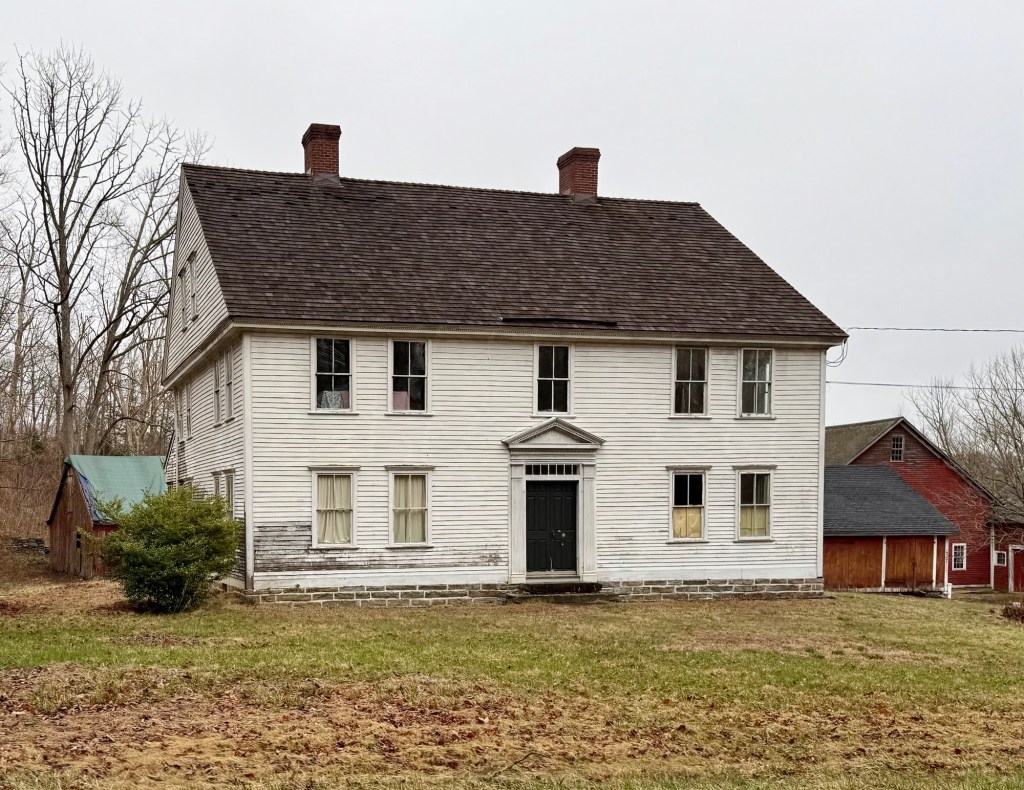
The Corbett House is a charming Federal-period house in Westborough, Massachusetts, and was the birthplace of Henry W. Corbett, an important figure who helped develop Portland, Oregon in the 19th century. This house was built around 1789, the year that Henry’s parents, Elijah and Malinda Corbett, married. The property was farmed for years until Elijah Corbett began an axe manufacturing company here, becoming the first edge-tool manufacturer in Westborough. The rear ell was likely added in 1815 for this purpose. Elijah retired and the family sold the property in 1831 to Lawson Harrington, who continued the business until around the time of the Civil War. The Corbett family settled in New York, where Henry would engage in business. By the mid-19th century, westward expansion and opportunity took hold, and the Oregon Territory became a U.S. territory, leading Henry to establish business there, followed by many of his siblings. Corbett set sail from New York on the long voyage through the Straits of Magellan around Cape Horn up the Pacific Coast to Portland with $25,000 worth of goods to establish business in this new territory. Henry would become City Treasurer of Portland, member of the city council and chairman of the Republican Oregon State central committee. In 1867, he was elected as a Republican to the United States Senate, serving until 1873. Who would have guessed that this house in Westborough would have connections to the growth of Portland, Oregon!?

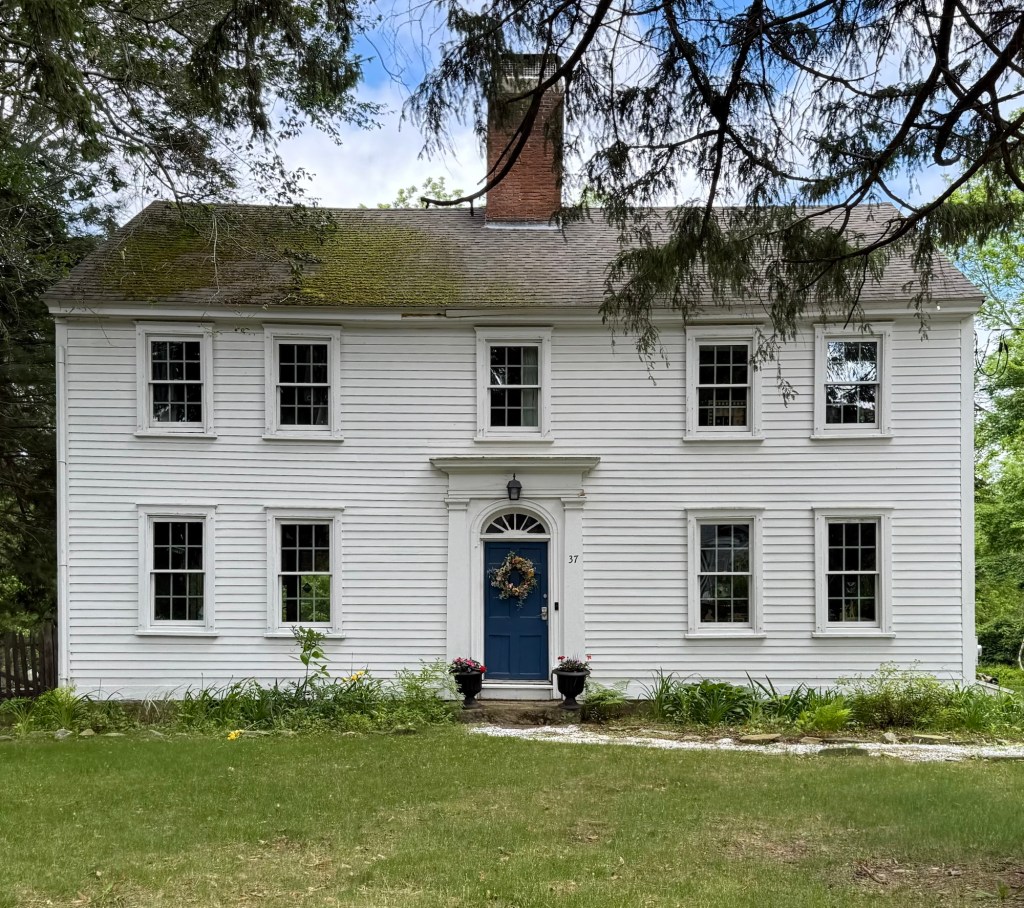
Rice-Harrington House // c.1731

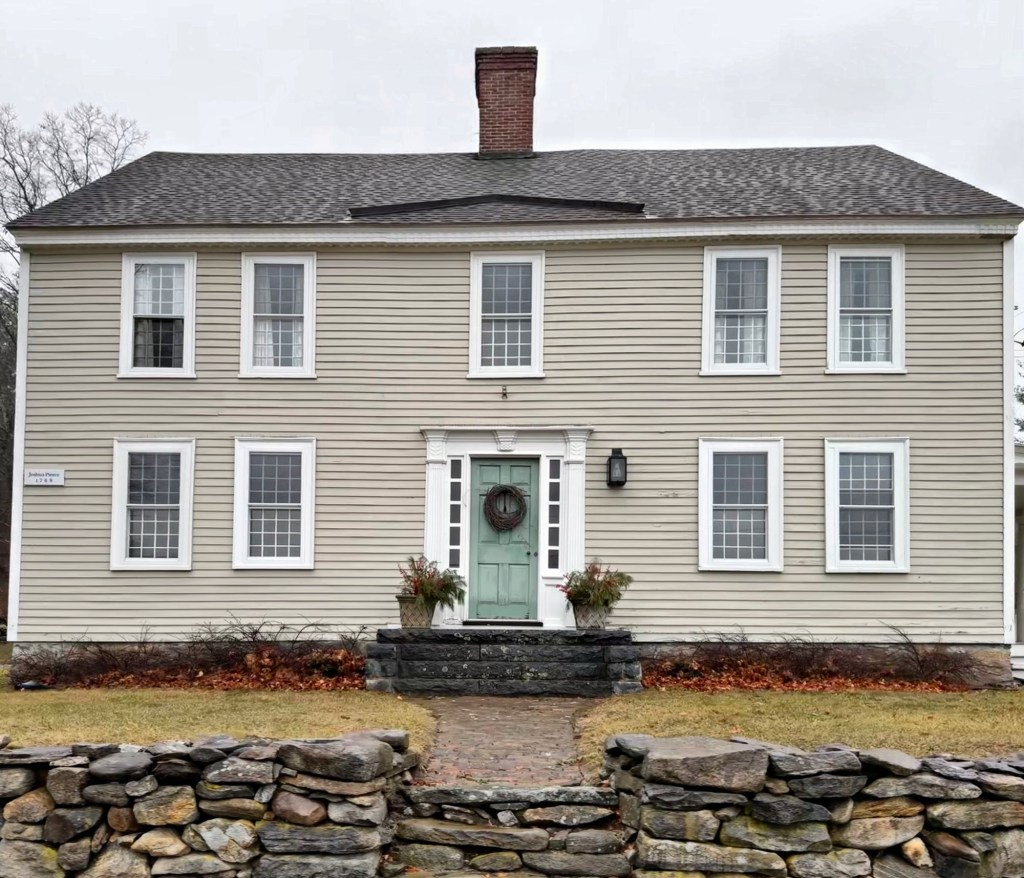
This charming Federal style house sits on Maynard Street in Westborough, Massachusetts, and according to local records, dates to the early-mid 1700s. The property was originally owned by Eliezer Rice (1703-1767), a farmer and town constable, and likely built around the time of his marriage to Persis Newton, who died in 1746 during childbirth. After Eliezer’s death, the property was owned by an E. Harrington, who likely rotated the earlier structure 90 degrees and built the Federal style residence facing the street, utilizing the 100-year old house as a rear kitchen ell, or completely modernized the old residence, retaining the central chimney. The Federal house features a symmetrical facade, pilastered entry with fanlight transom window, and a large central chimney.

James Adams Farmhouse // c.1785

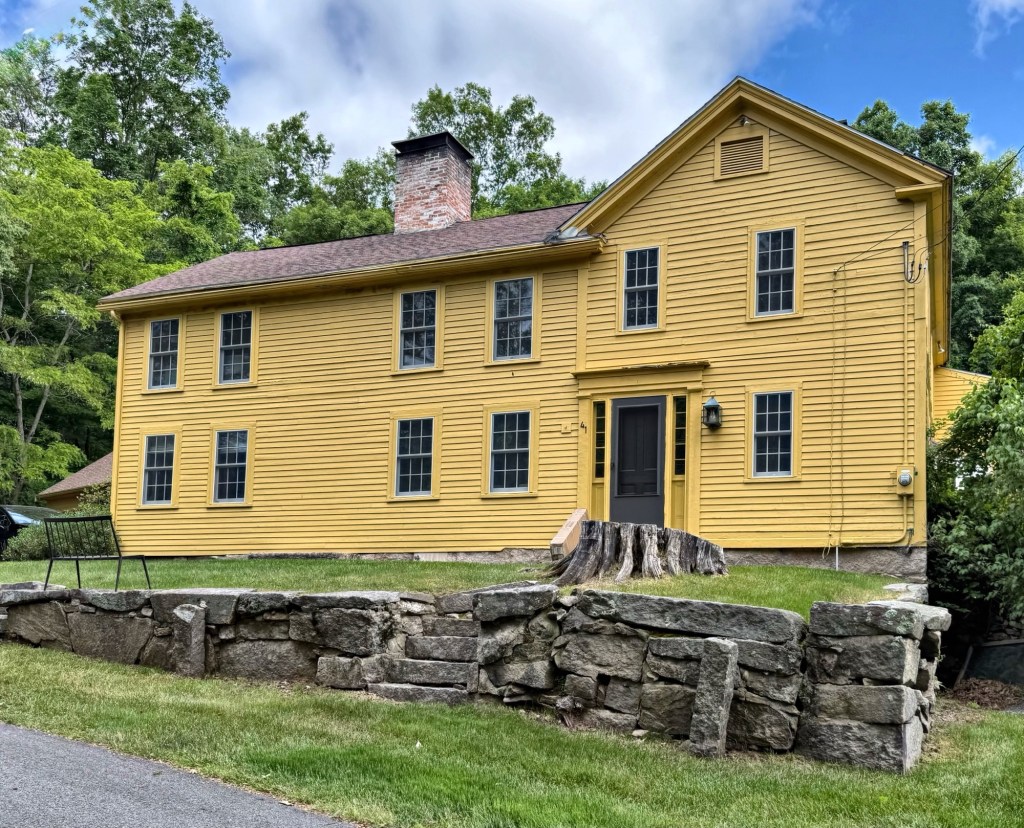
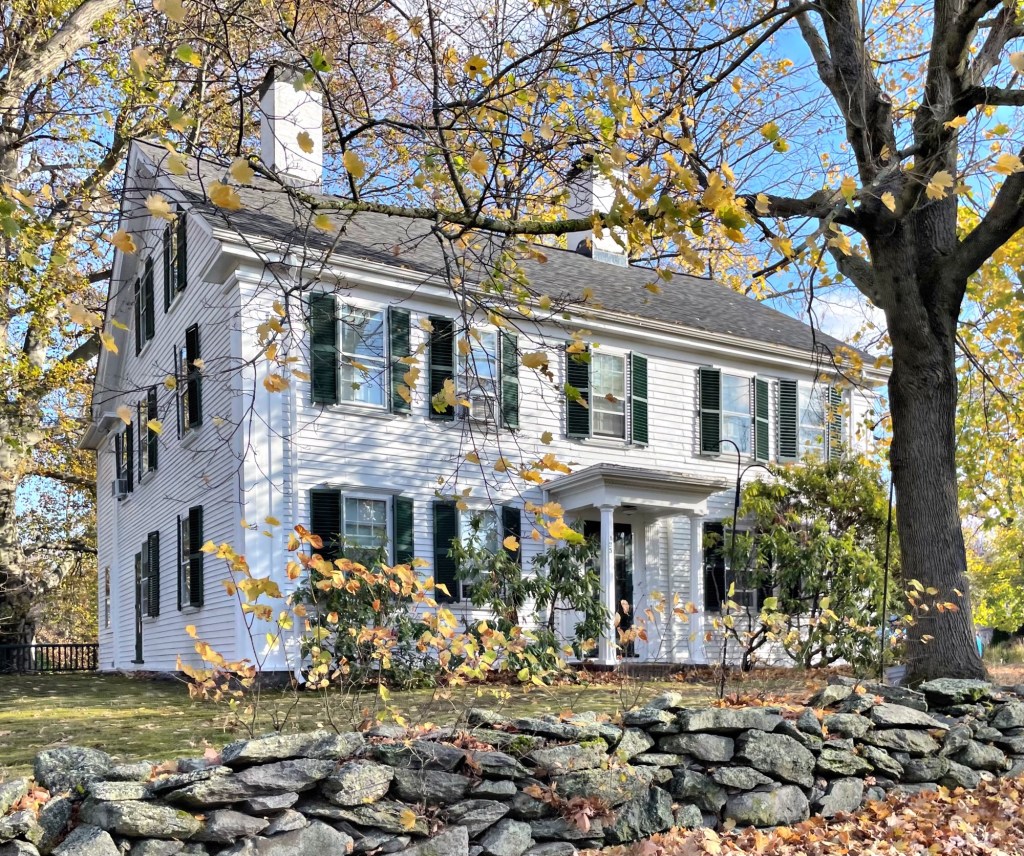
This handsome New England farmhouse is located in rural Canterbury, Connecticut, and showcases the type of farmhouses available to local wealthy residents in the late 18th and early 19th centuries. The construction dates to about 1785, just after James Adams, a Lieutenant in the American Revolution, purchased land here. The property remained in the Adams Family until 1859. The structure rests on
a fieldstone foundation and is sheathed with clapboards. The Georgian farmhouse incorporates a five-bay facade with central entry with five-light transom and a large stone central chimney and jettied gable ends on the sides.

Asa Bacon Farmhouse // 1783

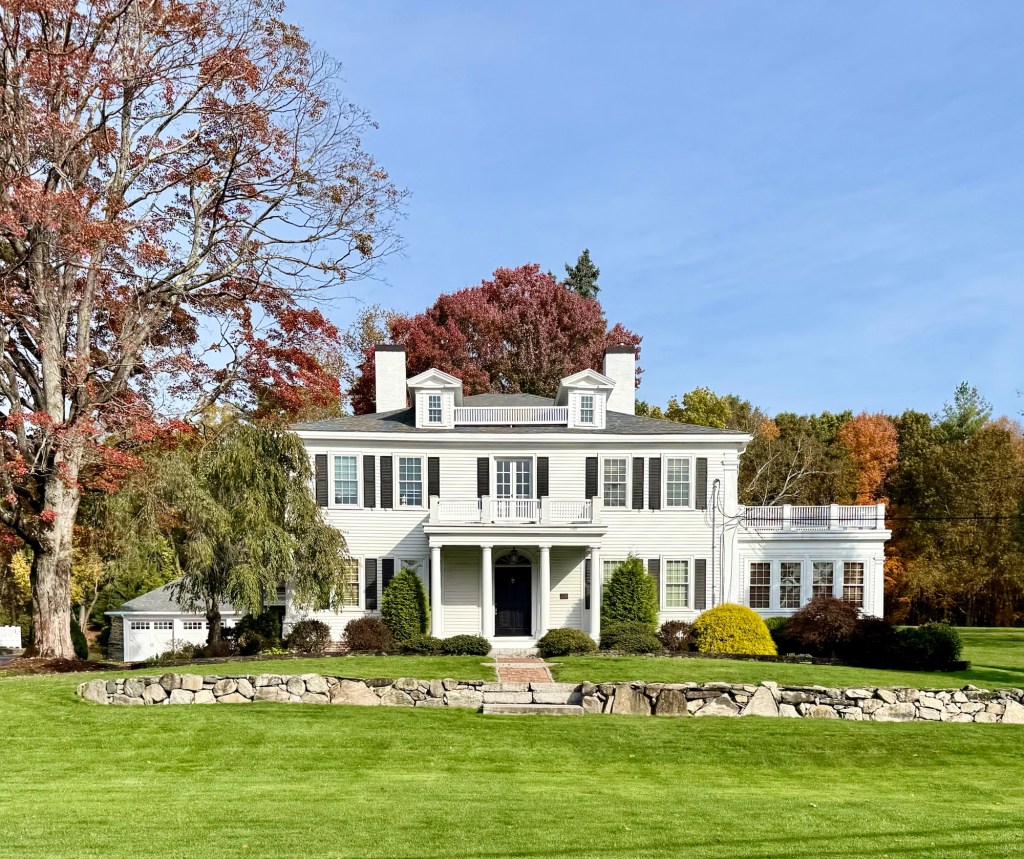
Located in northern Canterbury, Connecticut, this rural farmhouse was built following the American Revolution, showcasing the emergence of the Federal style from the Colonial Georgian type farmhouses before. The house dates to 1783 and was built by Captain Asa Bacon (1735-1819), a wealthy farmer and captain in the Revolutionary War. The home was also occupied by his son, Asa Bacon Jr. (1771-1857) a Yale educated lawyer who practiced law in town before moving to Litchfield. Asa Jr. was a turnpike promoter, advocating for turnpikes through the formerly sleepy agricultural town, opening it up to trade and commerce. The early Federal-period home features a five-bay facade and central entry with triangular pediment and fluted pilasters. The house appears much like it would have when originally built besides the Victorian-era two-over-two window sashes installed in the late 19th century. The farm even retains a few 19th century barns, likely built when the windows were replaced by later owners.

Pierce Homestead // c.1750

Built before the American Revolution, this large Georgian residence is one of the oldest extant houses in the charming town of Cornwall, Connecticut. Located on Popple Swamp Road just outside the central village, the Pierce Homestead dates to circa 1750 (the sign dates the house to 1768, but information from the town history mentions a house there earlier) and is a stellar example of a simple, two-story Georgian house with five-bay facade and 12-over-12 sash windows. This property was purchased by Joshua Pierce in 1748 and included over 300-acres of farmland, the farmhouse was likely built within a matter of years. The house was likely expanded and modernized by his son, Seth Pierce, who inherited the property in the 1790s. The farm remained in the Pierce Family for generations and was lovingly restored in the 20th century. It is a great example of a well-preserved 18th century farmhouse in Litchfield County, Connecticut.

Jackson-Richards Farmhouse // c.1768

This historic home at the edge of Newton Centre is believed to have been built by 1768 by Abraham Jackson, a descendant of one of the earliest settlers in what would become Newton. Abraham took out a mortgage on three acres of land and woodlands, a dwelling house and barn. In 1782, the property was acquired by Aaron Richards (1750-1823), a Revolutionary War veteran and carpenter, who likely modified the residence into the Federal style form and design we see today. Aaron Richards would farm the land here until his death. The farmhouse would be bought and sold and the property subdivided in the 19th and 20th centuries, diminishing the farm and woodland which once surrounded the residence. For a period after the Civil War, the property was owned by the Boston Children’s Aid Society as a Girl’s Home, used as a boarding house to raise orphaned girls from the Boston area, teaching them skills to increase their hopes of adoption or moving out on their own. The property was reverted to a residence by the 20th century and is significant as one of Newton’s few extant 18th-century farmhouses.

Robert Frost Farm // c.1820

Robert Frost, the famed American poet is best known for his realistic depictions of rural life in New England. Frequently honored during his lifetime, Frost is the only poet to receive four Pulitzer Prizes for Poetry, and in 1961, he was named poet laureate of Vermont, one of his favorite places to write. Though his writing is often beautiful, Robert Frost did suffer tragedies. His beloved wife, Elinor, died in 1938, causing him to resign from a teaching position at Amherst College. In the fall of 1940, the Frost family experienced another tragedy when Robert’s only son Carol committed suicide at 38 years of age. Robert Frost, who suffered from depression himself, would buy this farm in rural Ripton, Vermont, that year. The farm was a respite to escape to nature and be free from painful memories of the past. Frost chose the site eight miles from Middlebury College, and two miles from the Broad Loaf Inn, where each summer the college sponsored the Bread Loaf Writers’ Conference, the oldest and most prestigious writers conference in the country. The farm he purchased was established by and known as the Homer Noble Farm. The farmhouse seemingly dates to the early 19th century, and the property was added to by a cabin built for Mr. Frost to write and occupy when spending summers on the farm. The property would serve as his country retreat for summers away from his main residence in Cambridge, Massachusetts, until his death in 1963. The property is now owned by Middlebury College. The grounds are open to the public during daylight hours.

Bartlett House and Barns // c.1840

We featured Ashford, Connecticut, so now it’s time to explore some of neighboring Eastford! Settled in the early 1700s, the eastern portion of Ashford separated from its parent town in 1847, and became the town of Eastford. Prior to this, light industry, such as the production of cotton batting, twine, and wooden handles, complemented what would remain a predominantly rural agricultural community well into the 20th century. The winding back roads are lined with charming farmhouses bounded by rugged historic stone walls, making the town retain its rural feel. When driving through, I stumbled upon this postcard-worthy historic farm complex. Historic maps show that the property was owned by D. Bartlett in 1869, which appears to be Daniel Bartlett (1812-1898). The Bartlett property is enhanced by two historic barns sited nearby on a bluff overlooking the fields, which were likely once lined with trees or crops. By the 1900s, the property was owned by Nicholas and Clementine Dechand, the small road leading up to the farmhouse was named after the couple.

Michael Richmond House // c.1814

When the town of Ashford laid out a road across the land of Abner Richmond, he saw it as an opportunity to gift the newly organized plot across the road to his eldest son, Michael and his new wife, Polly as a wedding gift. Michael Richmond (1786-1881) built this Federal style house across the street from his father (see last post), likely employing the same builder, who employed similar design elements for both homes. In early life Michael learned saddle-making and afterward engaged in the manufacture of cloth, also axes. He was also engaged in staging and turnpike building, and in the mercantile business, until he retired at 60 years of age. He was a man of all trades! The house is now home to BOTL Farm, a pasture-based, sustainability-focused livestock farm that raises pigs, lambs, goats, and chickens ethically. Gotta love seeing farming coming back to Connecticut’s “Quiet Corner”!

Norwood-Babson Farmhouse // 1799

Located in northern Rockport, Massachusetts, you will find this charming Colonial-era farmhouse set amongst the backdrop of ocean cliffs and granite quarries. At the tip of Pigeon Cove, adjacent to the present-day Halibut Point State Park, James Norwood purchased land and would erect this house by 1799 for his family (possibly built from an older dwelling formerly on the site). After James’ death, the property was willed to his daughter and son-in-law and sold a few times until 1820, when it was purchased by David Wallis Babson who raised his family here. As granite-quarrying became a lucrative trade in Rockport by the early-mid 19th century, David’s son Joseph bought twelve of the Babson Farm acres from other family members to organize a stone cutting business here. The property would leave the Babson Family decades later, but retained the family name until today. Edwin Canney would purchase the remaining 70-acre Babson Farm, selling it to the Rockport Granite Company. For the next thirty years, industrial-scale mining and shipping would redefine Halibut Point over the next thirty years. The quarries are now a State Park, and the former Norwood-Babson farmhouse remains intact as a significant piece of the town’s earlier history.