Westborough Unitarian Universalist Church // 1850

The Unitarian Universalist Church of Westborough, Massachusetts is architecturally significant as an excellent example of a ecclesiastical building in the Greek Revival style, but it is also significant historically as it tells a richer history of the community and New England as a whole. The Congregational Church has its roots in the first church in Westborough, established in 1724 under Reverend Ebenezer Parkman. The Religious Freedom Act of 1811 and the official separation of church and state in 1825 encouraged a diversity of religious views in Westborough and a branching out from the first church both spiritually and since churches needed new houses of worship. As a result, the local church in Westborough split due to differing beliefs, with the Congregationalists building a church and a few years later, the Unitarians building this church, both in variations of the same architectural style. The UU Church in Westborough was built by 1850 and was expanded as the congregation grew. The building remains nearly identical to when it was built except for the steeple, which in 1921, was in such bad repair that it had to be removed. Less than a decade later in 1930, member Isadore Forbes donated the funds to have the steeple rebuilt and a bell installed. 

Congregational Church of Westborough // 1834

The Evangelical Congregational Church of Westborough, Massachusetts, has its roots in the first church in Westborough, established on Powder Hill in 1724 under Reverend Ebenezer Parkman. The Religious Freedom Act of 1811 and the official separation of church and state, encouraged a diversity of religious views in Westborough and a branching out from the First Church. As a result the church here split in 1834, with some members forming the Evangelical Society, and those who remained, became the First Congregational Unitarian Society. The newly formed Evangelical Congregation built this church at the corner of West Main and Church streets in 1834 and the building is a typical 1830s Greek Revival style religious building in the state. In 1869, the church was remodeled, where the first floor was jacked up to provide basement meeting rooms.

Lane-Smith-Bailey House // 1848

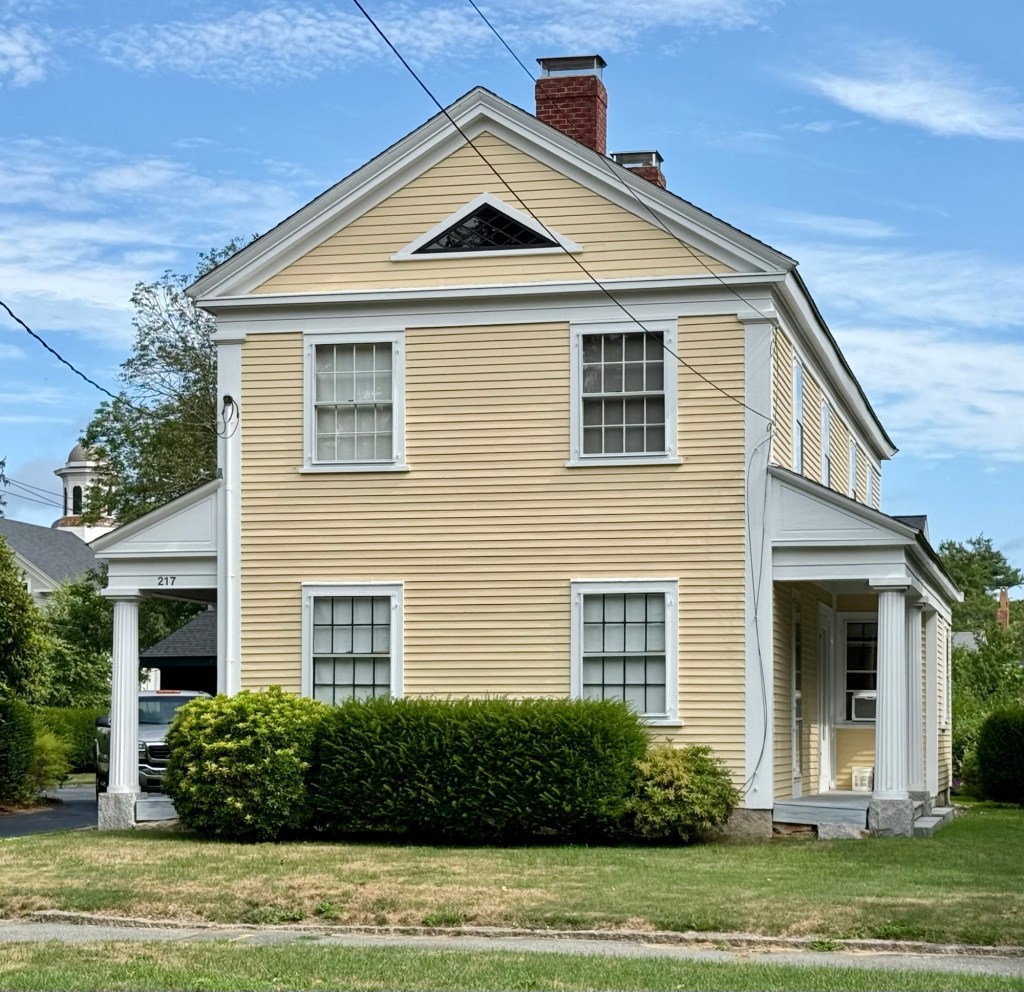
The most colorful house in Rockland, Massachusetts can be found on Union Street, the town’s busiest corridor, lined with houses and buildings of all ages and styles. The Lane-Bailey House was built in 1848 for Marshall Lane, a shoe manufacturer in town. The Greek Revival style residence features a gable roof oriented towards the street, which reads as a pediment and a full-length columned porch that wraps around the side of the home. The property was purchased in the early 20th century by William Andrew Grant Smith (1863-1908), a wealthy jeweler, who apparently added a second floor to the house, up from a 1-1/2 story cottage, and likely added the wrap-around porch at this time. Jumping ahead to the turn of the 21st century, the prominent house was owned by Brad and Sam Bailey, who painted the residence bold colors, added a wishing well and birdhouses to the front yard, and replaced the traditional grass lawn with crushed seashells. In an article talking about the house, Brad Bailey stated, “We do it because lots of things in life [that] are dull. Our house shouldn’t have to be.” Despite the polarizing thoughts and opinions from those who walk or drive by, the house is loved and certainly causes people to stop and smile!

First Congregational Church of Abington // 1849

Abington, Massachusetts was first settled by Europeans in 1668 and was officially incorporated in 1712. Its namesake was is said to have been set by Governor Joseph Dudley as a tribute to Anne Bertie Venables, Countess of Abingdon, wife of the second Earl of Abingdon, who helped Dudley secure the governorship of the Colony of Massachusetts from Queen Anne. Governor Dudley noted in its decree that, “the Town be named Abingdon”. A marginal note on the document gave the spelling as “Abington” with a “t”, which has served as the spelling ever-since. At the center of town, this handsome church is the fourth edifice of the Congregational Church Society in Abington, Massachusetts, and replaced the third church, which was occupied for just thirty years until 1849, when this Greek Revival structure was built. Located a stone’s throw from its former home, this church showcases the increase in membership and relative wealth of the congregation by the middle of the 19th century. The structure with its flushboard siding and bold Doric pilasters, features an arched center entrance and multi-stage tower containing a clock and enclosed belfry.

Westminster Meetinghouse // 1770

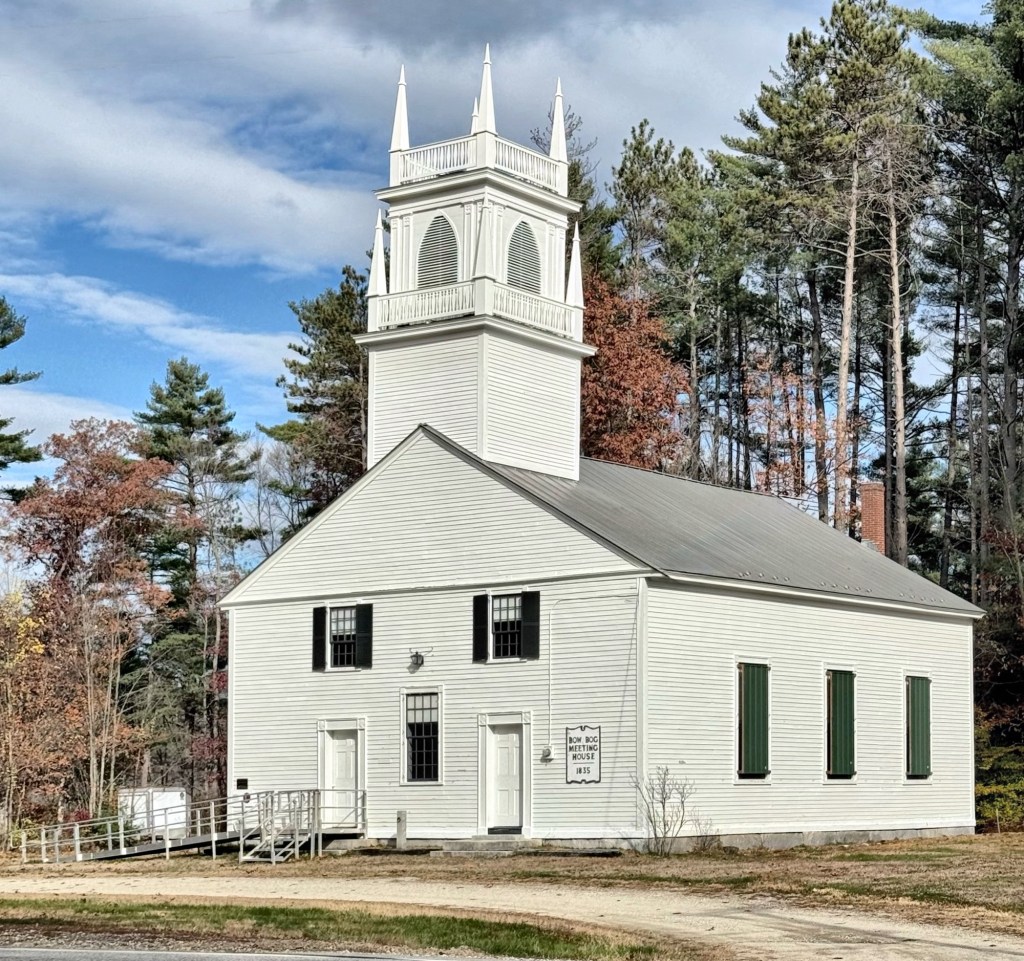
The Westminster Meetinghouse (aka the Westminster Congregational Church) was built in 1770 by Canterbury, Connecticut residents who in the 1760s, created a separate religious jurisdiction, the Westminster Society, due to their reluctance to travel long distances to Canterbury village for required religious services. Local resident John Parks donated land to be used as a public green, as well as a site for a cemetery and this meetinghouse. Sherebiah Butts, captain of the local militia, was engaged as master builder and architect, who along with his sons and other helpers, constructed the church by 1770. The original church, originally a square-plan meetinghouse, initially faced east, but was rotated to face south by around 1840, when the entire structure was remodelled in the prevailing Greek Revival style. The church is said to be one of the oldest continually utilized meetinghouses in Connecticut.

Scotland Universalist Church – Shetucket Grange Hall // 1843

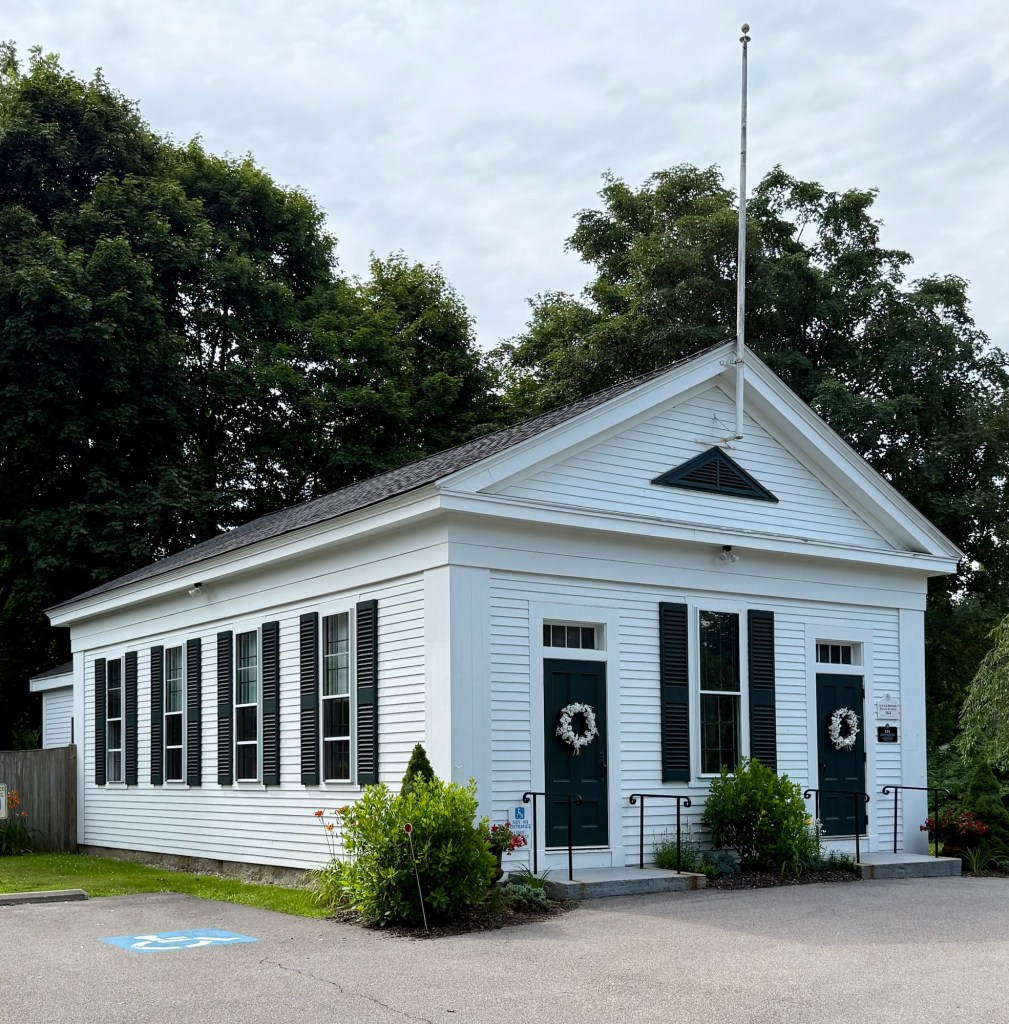
This charming, Greek Revival style building near the town green in Scotland, Connecticut, was built in 1843 as a Universalist Church for area residents who split off from more Congregationalist beliefs. By the end of the 19th century, populations shifted heavily to industrial centers where work was more plentiful, the church appears to have lost much of its membership and the building became a local grange hall. The Shetucket Grange was organized in June 1887, and was a meeting place for local farmers and their families to promote the economic and political well-being of the community and agricultural pursuits. Today, the building is owned by the town, but it’s use is unclear. Greek Revival in style, the building retains much of its original architecture, from its simple form, facade with two entrances flanking a central hung window, and pilasters framing the bays.

Scotland Congregational Church // 1842

The main visual anchor of the charming town green of Scotland, Connecticut, is this building, the Scotland Congregational Church. Built in 1842 as the congregation’s third building, this Greek Revival style edifice features stately proportions, temple-front with four large Doric columns supporting the portico, and a two-stage belfry. The chapel (some say it was converted from the original town hall) was acquired by the congregation in 1867, and has remained in its new location ever since. Later alterations include the stained glass windows and clock in the pediment, which dates to the early 20th century.

Payson-Fettyplace House // 1845

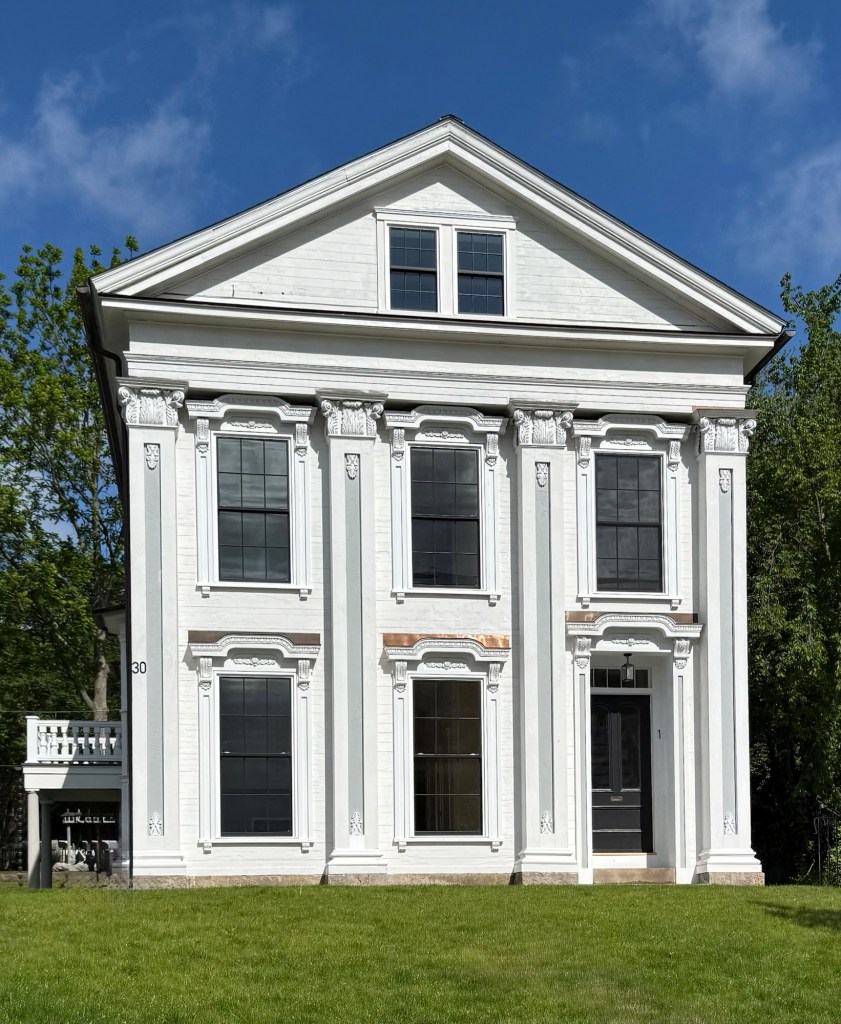
Behold, one of the finest, and well-preserved Greek Revival style homes in Salem. This is the Payson-Fettyplace House on Winter Street, built in 1845 with its gable facing the street to create a pediment, a wide entablature and cornice, and pilasters on the flushboard façade, which together make the building read more like a Greek temple than a residential home. The residence was built for Edward H. Payson, a bank officer, and his wife, Amelia, who lived in the home for only two years before moving into a larger residence across the street just two years after this house was completed. The property was sold to a Carleton Dole of Maine and again sold in 1850 to Thomas J. Fettyplace. The Fettyplace family were based out of Marblehead and many of them relocated to Mobile, Alabama, to make money in the cotton and shipping industry in the South. Thomas purchased this home in Salem for his mother who spent her final years here until 1861. After the Civil War, the Fettyplace brothers would move back north and this home remained in the family until 1912. The house is now a bed & breakfast known as the Amelia Payson House, named after the original owner.

Conway-Trumbull House // 1848

Built in 1848 for Rev. James Conway of Salem, this stunning Greek Revival home on Winter Street blends architectural integrity with a bold pop of color! James Conway was born in Ballinamore, Ireland and moved to the United States and was ordained as a Catholic priest. He was a missionary with the Penobscot Tribe in Maine, before preaching in Lowell and later in Salem, Massachusetts. When he moved to Salem, he had this house on Winter Street built with flush board siding, paneled side-hall entry, and moulded window surrounds with corner blocks. Conway would later sell the property to Edward Trumbull, a Salem merchant and later to Ebenezer Putnam. It was likely Putnam who added the oversized second-story bay window on the facade of the house.

Bertram-Jewett-Hale House // 1842

This lovely brick house on Winter Street in Salem was constructed for Capt. John Bertram in 1842-3. John Bertram (1795-1882) as a boy had his first job as a cabin boy and would work his way up to become a commander, ship owner and investor. He was extensively involved in shipping around the world including to Zanzibar, South America, and California and later he invested in railroads and real estate. He retired from actively commanding boats at age thirty-six with a vast fortune which he would become a philanthropist, giving much of it to charitable causes and his home city of Salem. Captain Bertram continued to own this property until 1855, when he moved to his new house on Essex Street, which he later gifted to the City of Salem as its public library. By the time of his death in 1882, he donated funds to the Salem Hospital, Old Men’s Home, Home for Aged Women, and various colleges and scholarships. Bertram sold this Winter Street house to John Jewett in 1855 for $10,000. Jewett began his career as a cabinet maker in Beverly in 1817 and subsequently became a dealer in mahogany, fancy woods, furniture and grain. Jewett died in 1874 and the property was sold by his heirs to Henry Appleton Hale in 1890. Engaged in the hardware business, Hale also served as president of the Salem Gas Light Company and as a vice president of the Salem Five Cents Savings Bank. Mr. Hale also served the country during the Civil War, and was shot in the face at Antietam on September 17, 1862. The bullet knocked out his front teeth and sliced off a piece of his tongue. Despite the severity of his wound, he recovered and returned to the regiment months later, and mustered out in 1865 following another injury. Henry A. Hale died in 1927. The property is significant not only for its owners, but also for its architectural quality and integrity. The transitional Federal-Greek Revival house features a recessed entry with original leaded sidelight and transom windows, brownstone trimmings, and alterations (likely by Hale) from the second half of the 19th century, including the projecting bay and arched window in the gable.