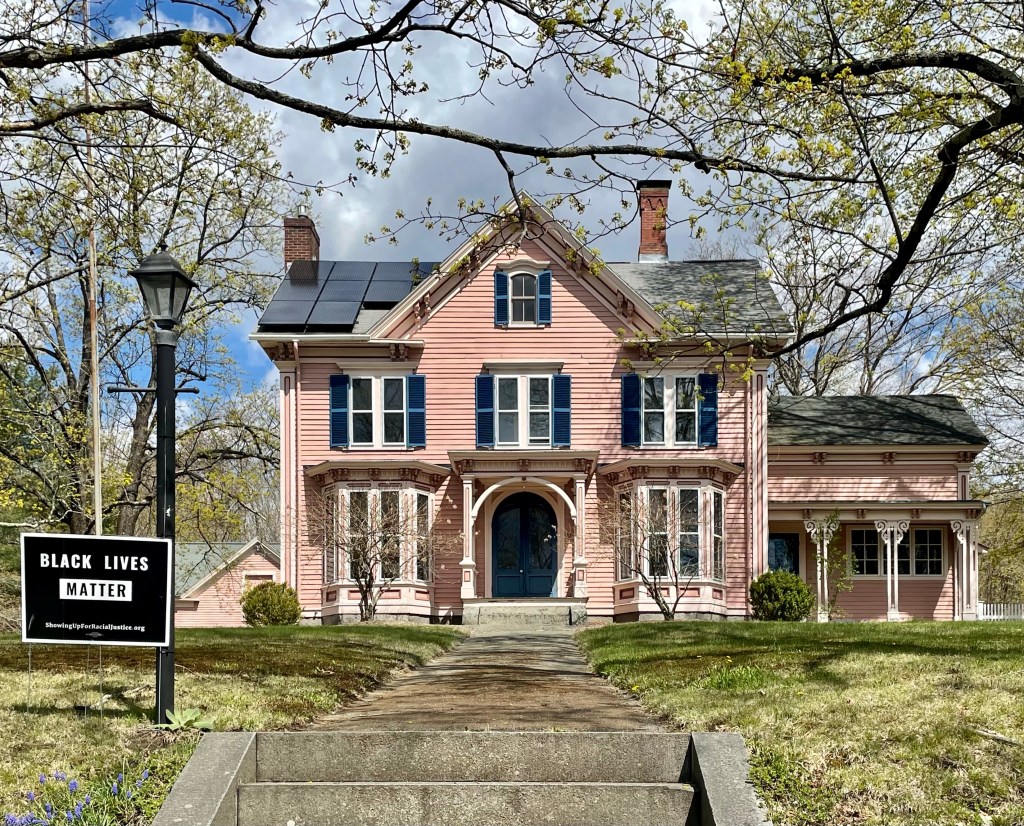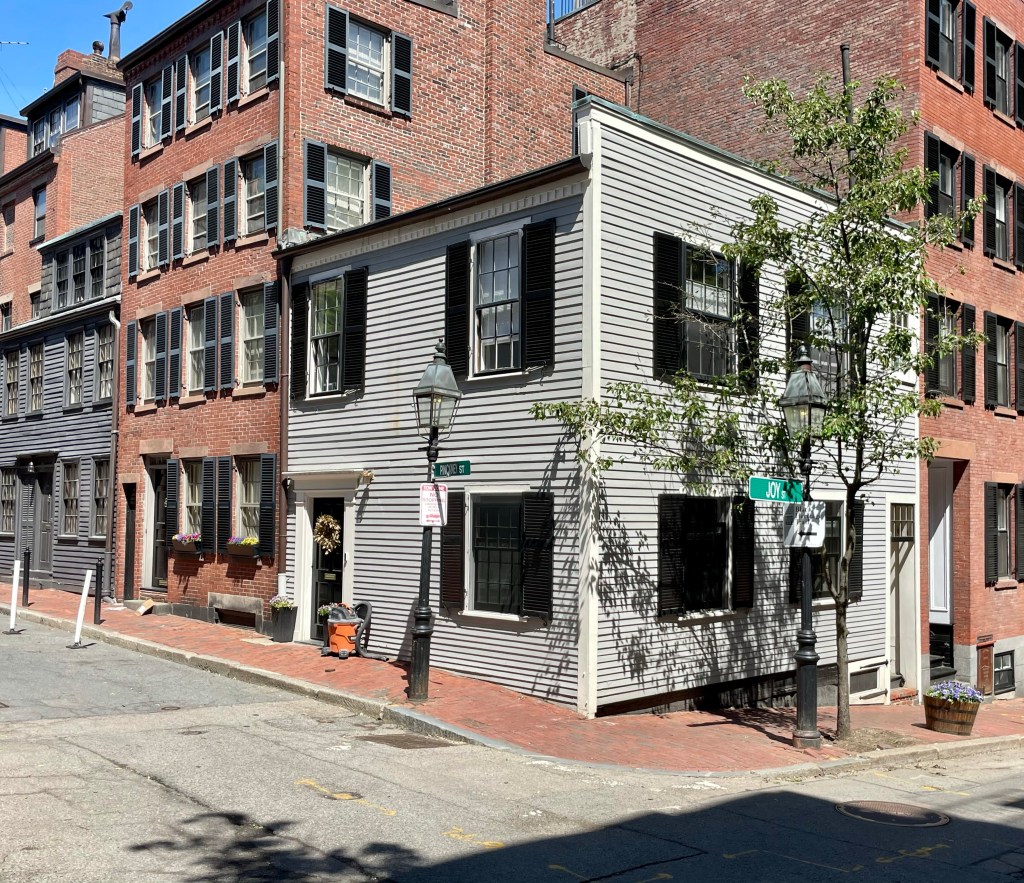
Glapion-Middleton House Ell // c.1800

Less than a dozen wood-frame buildings exist on Beacon Hill in Boston, and this curious building is one of them, and also happens to be one of the oldest structures in the neighborhood! Built by 1800, this structure was constructed as an ell/addition to the Glapion-Middleton House at 5 Pinckney Street in Boston. The Glapion-Middleton House (previously featured) was constructed in 1787 after two Black men, George Middleton and Louis Glapion and their wives, built a small double house in the abolitionist center of Boston, Beacon Hill. In recent years, some have speculated that due to this living arrangement and other accounts, that Glapion and Middleton were in-fact gay men, but this is unsubstantiated. After the home was constructed, a two-story, five-bay ell was constructed which connected the home to Joy Street at the corner. The ell served as additional space for the two families and they appear to have had a workshop or store in part of the building. In 1855, owners demolished the center bay of the ell and erected a brick townhouse, similar to others in the neighborhood. The ell in this building was occupied as a store for the majority of its life and became an Italian restaurant and soon after a “Boyer’s Creamery Luncheon”. The property has since been converted to a residence.

Nott Memorial Hall // 1858

The 16-sided Nott Memorial Hall is one of America’s most dramatic High Victorian buildings, is the centerpiece of the Union College campus (and a major reason for my stop in Schenectady when driving through New York). Union was the first non-denominational institution of higher education in the United States, and the second college established in the State of New York. Eliphalet Nott became college president in 1804, and envisioned an expanding campus to accommodate a growing school. In 1806 a large tract of land was acquired to the east of the Downtown Schenectady, on a gentle slope up from the Mohawk River. In 1812 French architect Joseph-Jacques Ramée, equally skilled in landscapes and structures, was then hired to draw up a comprehensive plan for the new campus. Ramée worked on drawings for about a year, and construction of two of the college buildings proceeded quickly enough to permit occupation in 1814. The Union College campus thus became the first comprehensively planned college campus in the United States! As part of Remee’s plan for the campus, a round, Neo-Classic “pantheon” building was proposed at the center of campus (a prescendent for Thomas Jefferson’s plans for the University of Virginia just four years later). The building never materialized in Unions early days. Construction finally began on the building in 1858, based on designs by Edward Tuckerman Potter, grandson of President Nott, but apparently took nearly 20 years to complete due to the Civil War and funding issues. The Nott Memorial as completed, is 89 feet in diameter and capped with a ribbed dome. The dome is sprinkled with 709 small colored glass windows, making it one of the finest buildings on a college campus in the United States!

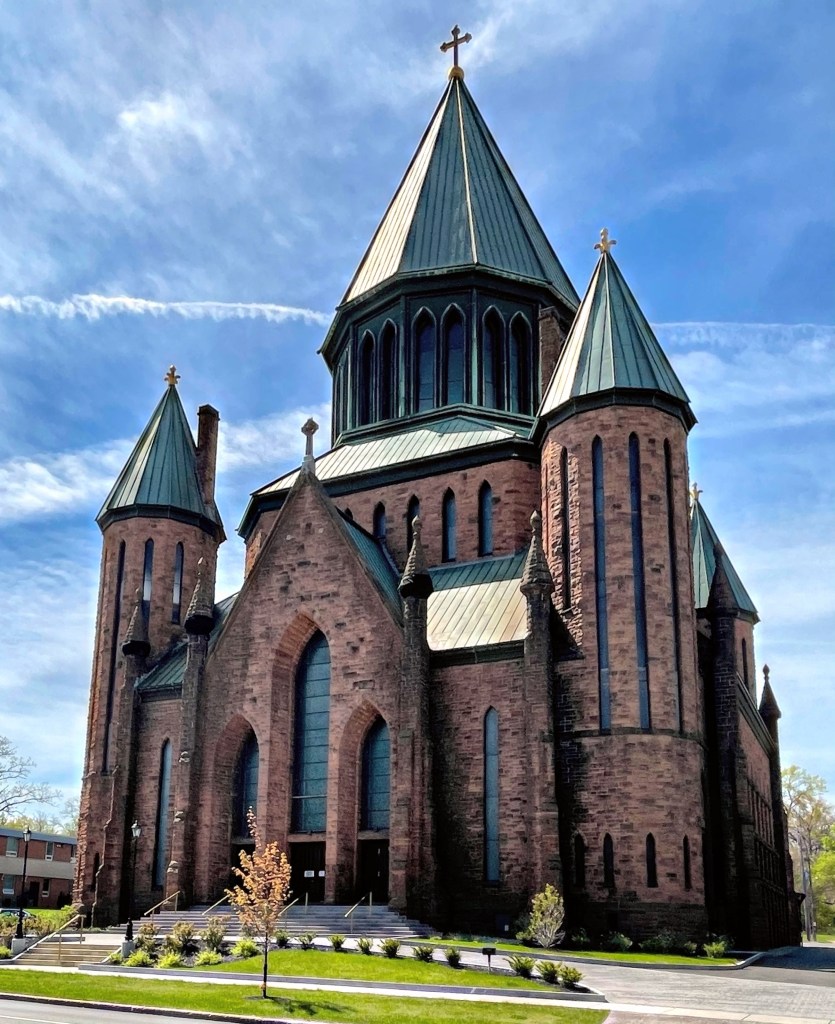
St. John the Evangelist Church // 1900

St. John the Evangelist Church in Schenectady, NY is probably the most imposing church I have ever seen (outside of European cathedrals). The church began in 1898 when Monsignor John L. Reilly purchased land across from Union College’s campus to erect a new church. He began collecting donations to fund a church suitable for Schenectady, and visited Europe to seek inspiration for the design. He worked with architect Edward Loth of nearby Troy, NY on the design which resulted in this massive 120’x130′ structure. The stone church has a small tower at each of its four corners with a central spire reaching 230′ high. The center spire was constructed of steel and glass to cast light onto the sanctuary below (sadly has been replaced with a metal roof). This is definitely one of the more memorable churches I have ever seen! What do you think of it?

Paine Furniture Building // 1914

Located on Arlington Street between St. James and Stuart streets in Boston’s Back Bay, this gorgeous masonry commercial block stands as a testament to the amazing architecture built in Boston in the early 20th century. The Paine Furniture Building was constructed in 1914 to house the extensive showroom, offices, and manufacturing operations of the Paine Furniture Company. Founded in 1835, the company was at one time the largest furniture manufacturer and dealer in New England and had a nationwide business. The company was founded by Leonard Baker Shearer, who was joined in business in 1845 by John S. Paine. Upon the death of Shearer in 1864, the name of the firm was changed to Paine’s Furniture Company, a name which stuck until the company closed in 2000. The architects for the building, Densmore & LeClear, were very busy in the early decades of the 20th century and designed many iconic buildings nearby and in towns surrounding Boston through the 1940s.

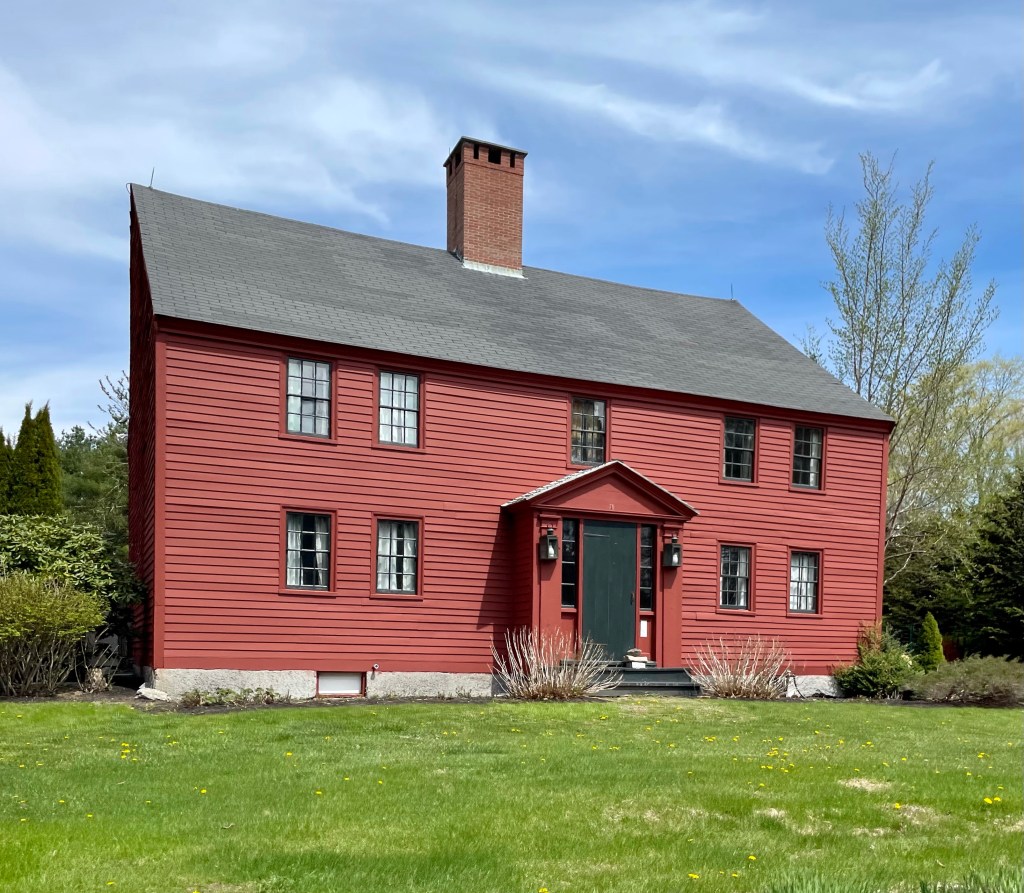
Elijah Locke House // 1739

John Locke (1627-1696) settled in New Hampshire about 1640, arriving from London. He was a farmer and carpenter, and reportedly built the first church in New Hampshire. He was also a Captain in the local militia, who was constantly at odds with the people who’s land they were usurping. While working the fields at his homestead in Rye, he was killed by a native person, likely as a retaliatory attach. The attacker was soon after shot by his son, who was helping his father at the time. This Georgian home was built by John’s grandson Elijah in 1739 on family land; the date is found incised on one of the original roof beams inside.

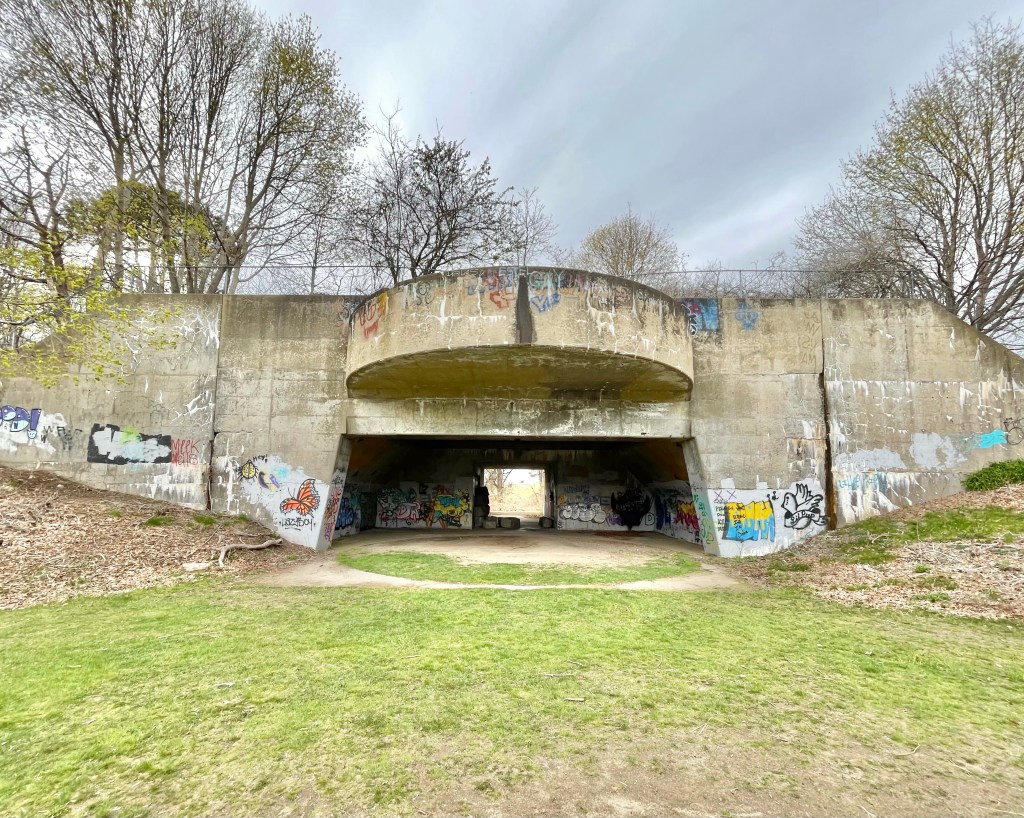
Fort Dearborn // 1943-1961

Odiorne Point in Rye New Hampshire was owned by the Odiorne Family from at least 1800, when the family built a farmhouse on the land. The peninsula juts out into the Atlantic Ocean, just south of Portsmouth, and it was seen as a strategic position by the United States Government, to protect the Portsmouth Naval Shipyard. With the advent of World War II, the United States Government deemed it necessary to improve the fortifications commanding the approaches to the Portsmouth Navy Yard, so the Government acquired this property and named it Fort Dearborn. Giant 16” coast defense guns and other equipment were installed to protect the coast from the impending German advance into North America. The Government acquisition on Odiorne’s Point included Mr. Odiorne’s home and 24 other properties, with many fine old homes on the coast demolished to make way for military facilities, but the Odiorne house was converted to a barracks. When The Nazi forces were beat in Europe, the fort was deactivated and all the guns were removed. In the Cold War period, the U.S. Air Force took formal possession of 45.3 acres at Odiorne’s Point in 1955, which it had been using since 1949 as the Rye Air Force Station. By 1961, the defensive use of the site was not as important, and the site was sold to the State of New Hampshire as a State Park. Today, you can explore the park and the decaying concrete batteries up close, which is a favorite excursion of mine.

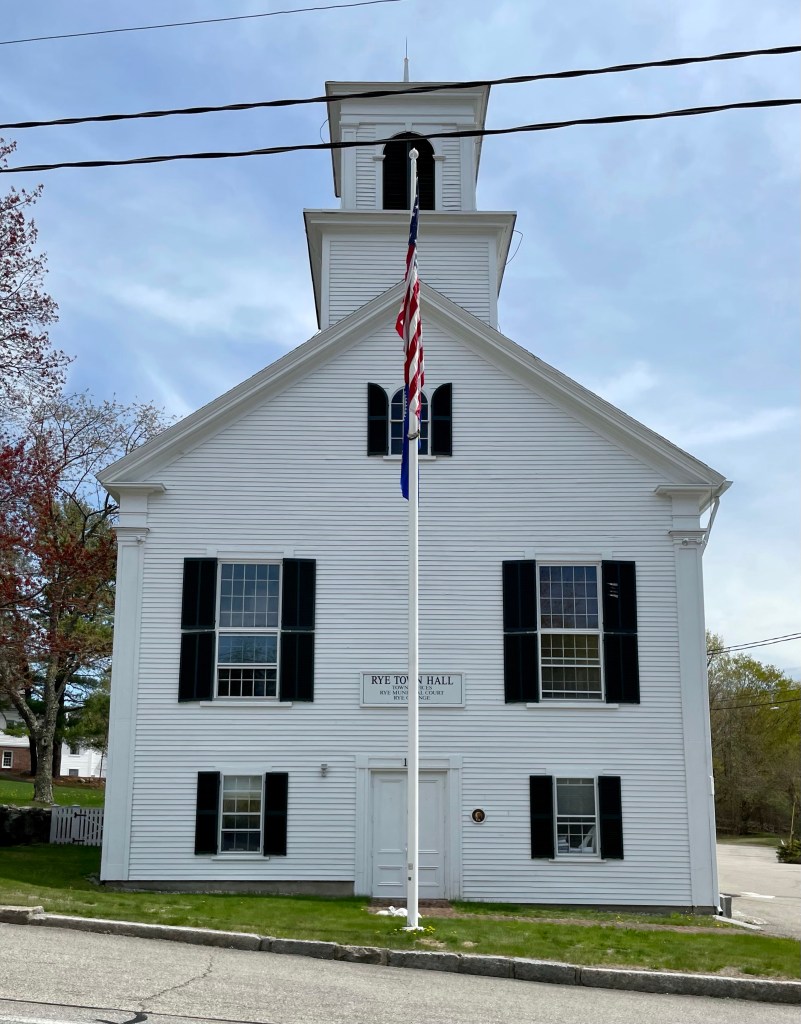
Rye Town Hall // 1839

Rye, New Hampshire sits on the short coast of the state, between the busy towns of Portsmouth and Hampton, and provides a respite from the swarms of tourists and beach-goers alike. Modern-day Rye was the first settlement in New Hampshire by Europeans, and was originally named Pannaway Plantation, established in 1623 at Odiorne’s Point (more on that later). The settlement was eventually abandoned for Strawbery Banke, which became Portsmouth, the historic port town we know today. The town was later a village of New Castle, and was known as Sandy Beach Village, before it was called “Rye”, for Rye in Sussex, England, and incorporated as its own town in 1785. The town met in a Meeting House until it purchased an old 1839 Methodist church in town. In 1873, the building was purchased by the town of Rye for $1000, with an additional $2658 spent on renovations, which added a new ground floor to increase the height from 1.5 stories to 2.5 stories, added 10 feet in depth to the building, and the two-stage tower and belfry. The Greek Revival building has long been a landmark in town, hosting dances, concerts, whist parties, singing schools, oyster parties and immunization clinics, beyond the typical governmental functions. There were calls to demolish the building for a modern town hall, which saw resistance (thankfully) and now the town has agreed on a land-swap with a bank, demolishing an old house to take over the bank building, turning it into some town offices.

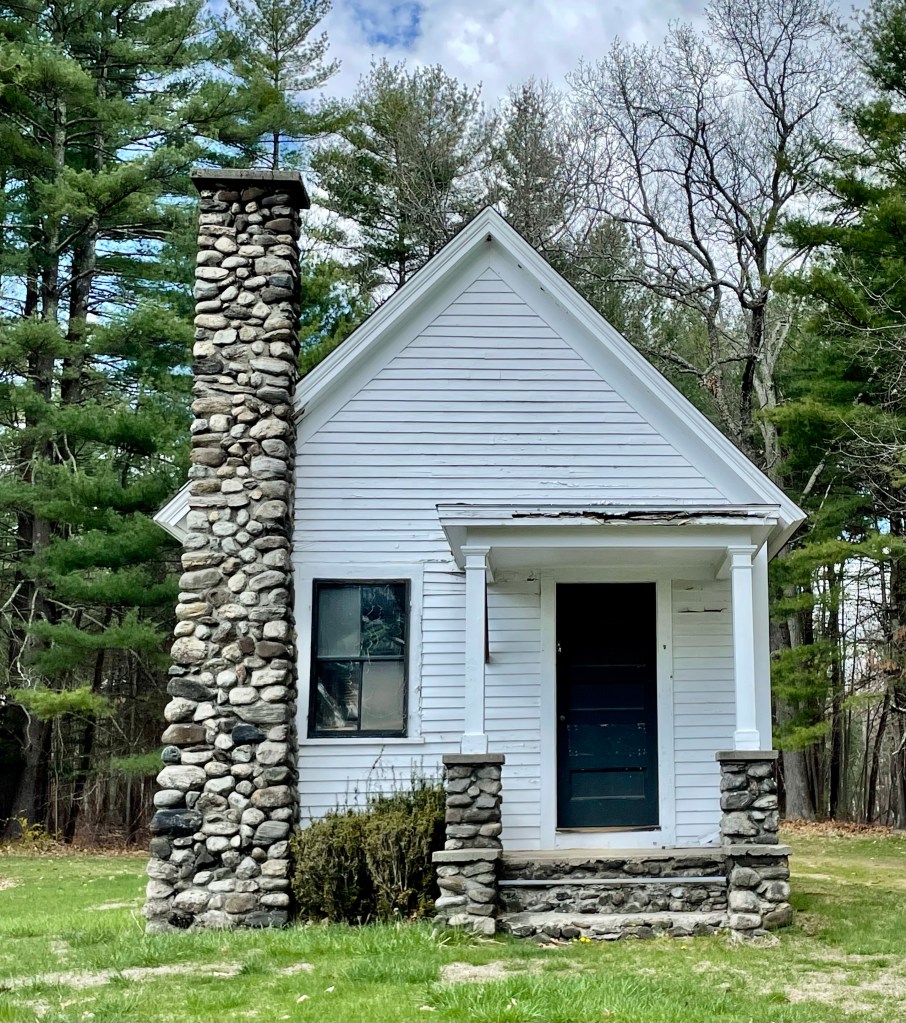
Mount Hope Cemetery Chapel // 1908

Mount Hope Cemetery in Acton was laid out in 1848 as the third municipal burying ground for the town. Before that, there was a need for a cemetery between the West and South Acton villages, closer to the developing parts of town, without a cemetery of their own. The cemetery was laid out with paths following a grid pattern, with land tapering off towards the rear. The cemetery, used by many prominent families of Acton, was without a chapel for over 50 years until funds were donated by George C. Wright a wealthy resident who lived nearby (featured in the last post). Town officials proceeded to build a small building that was apparently was quite different from the vision that Mr. Wright had for the building, but Mr. Wright generously agreed to accept what had been done and presented it to the town. At the 1909 annual town meeting, the town formally acknowledged the gift. It saw some use as a chapel in the early days, but has since been used for storage and an office for groundskeeping.

Henry Tuttle House // 1873

This large Italianate house in Acton was built in 1873 for Henry Waldo Tuttle (1847-1916), who ran a grocery store business in town with his father, James Tuttle. The business did quite well as Henry built this massive home around his 26th birthday, likely around the time of his marriage. The exuberant Italianate home features a wide central gable and a projecting central entrance porch accessed by double entrance doors. The home has a detached stable to the left of the home too!

Dr. Skinner “Lottery” House // c.1800

In 1794, four men from Acton, Abel Conant, Dr. Abraham Skinner, John Robbins and Horace Tuttle, jointly purchased a $5.00 ticket in a lottery run by Harvard College to raise funds for the construction of Stoughton Hall in Harvard Yard. This house, built for Dr. Abraham Skinner, is one of the four, and is the most grand of the four. Dr. Skinner was the third physician to practice in Acton and the first to arrive from out of town. He came to Acton in 1781 from Woodstock, Connecticut, and continued in practice until his death in 1810. The Federal style home is nearly square with five bays on all sides, with the facade and rear being slightly less crowded. The main entry includes a pediment with dentils, 4-pane side lights and a 4-panel, wooden door with elongated, rectangular, top panels. A similar entry, without sidelights, centers the south elevation. Time to buy some lottery tickets!