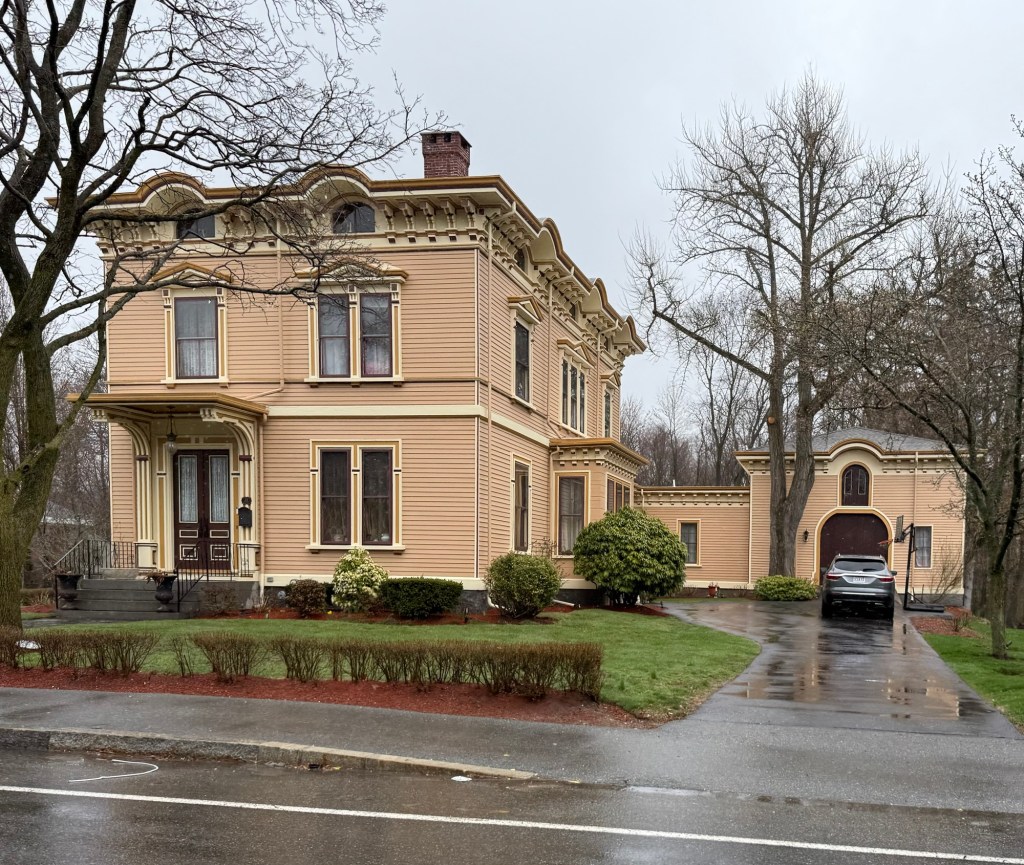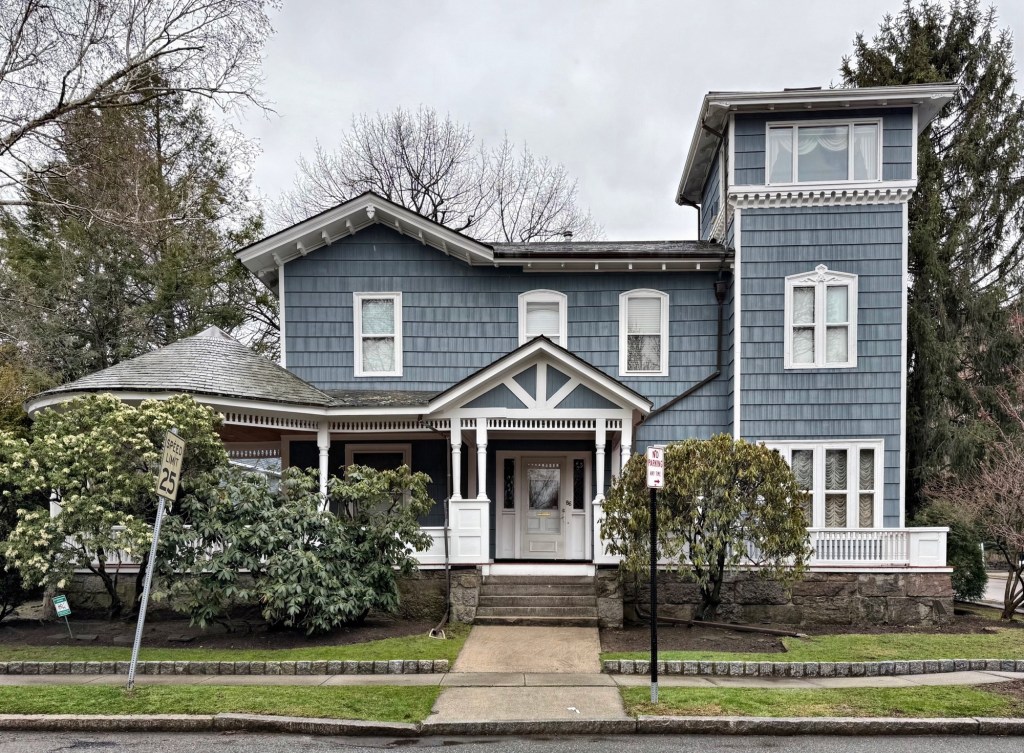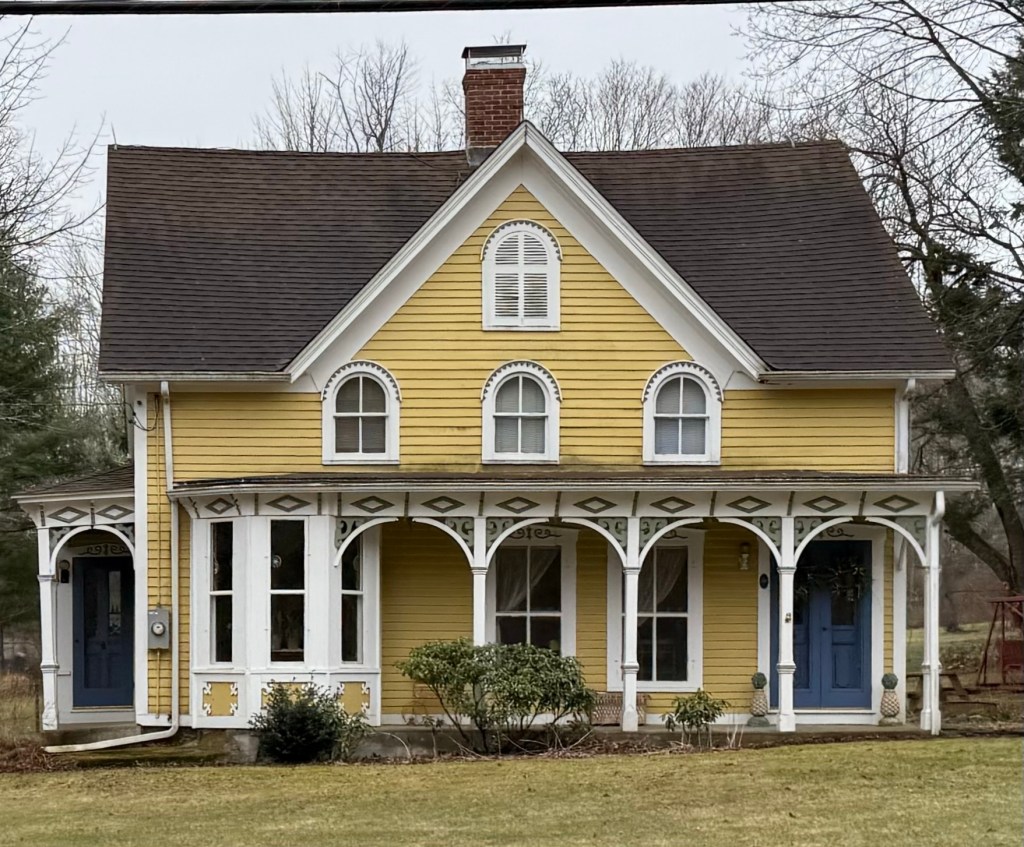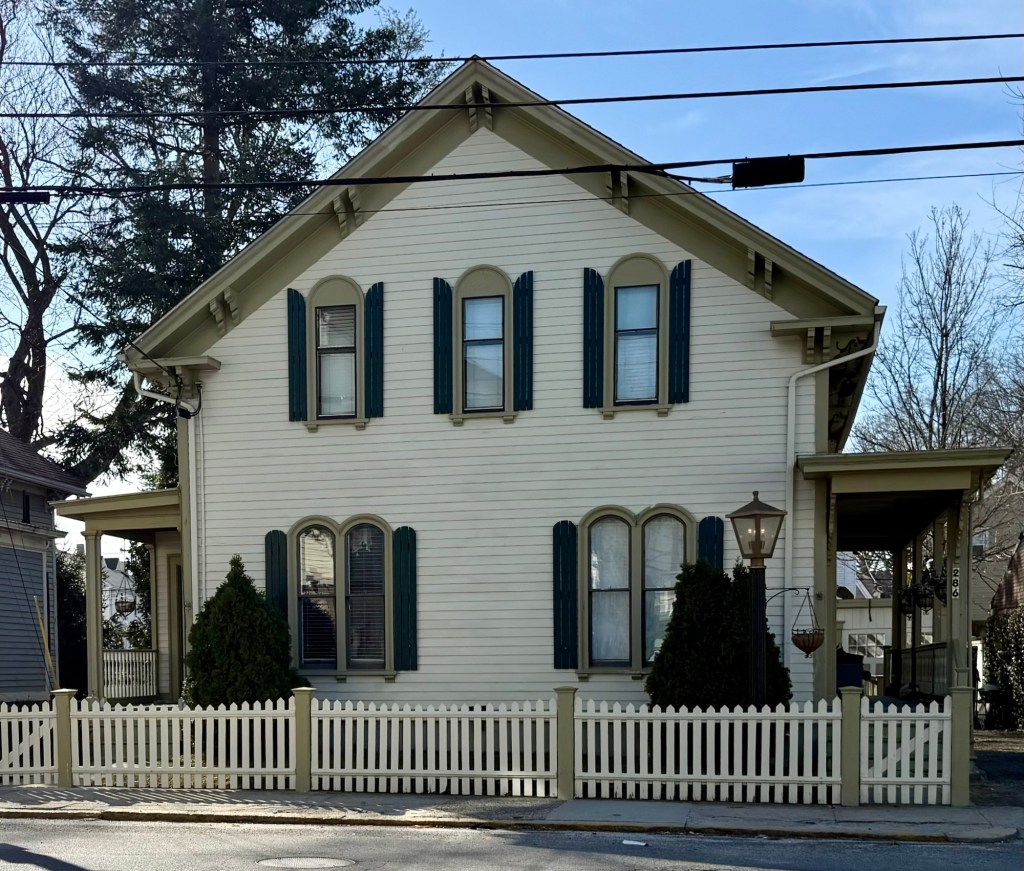
Perit House – Horchow Hall // 1859

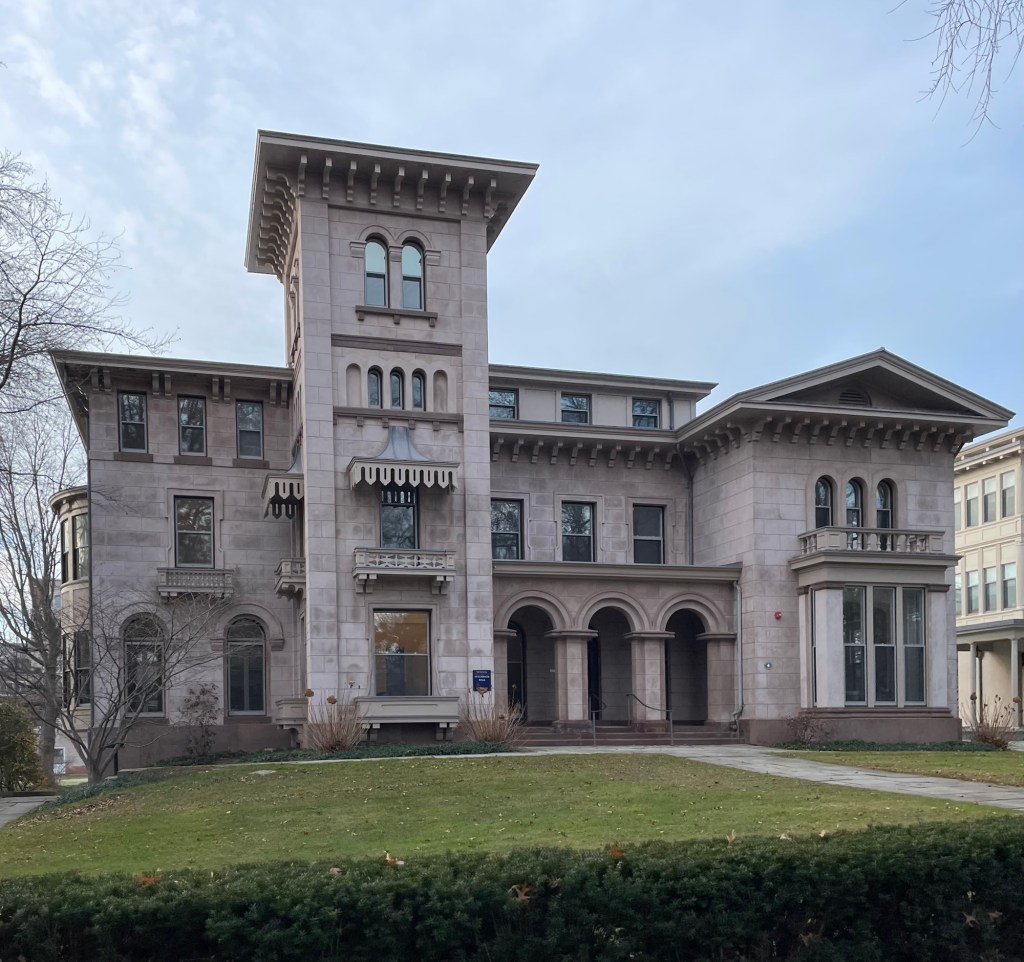
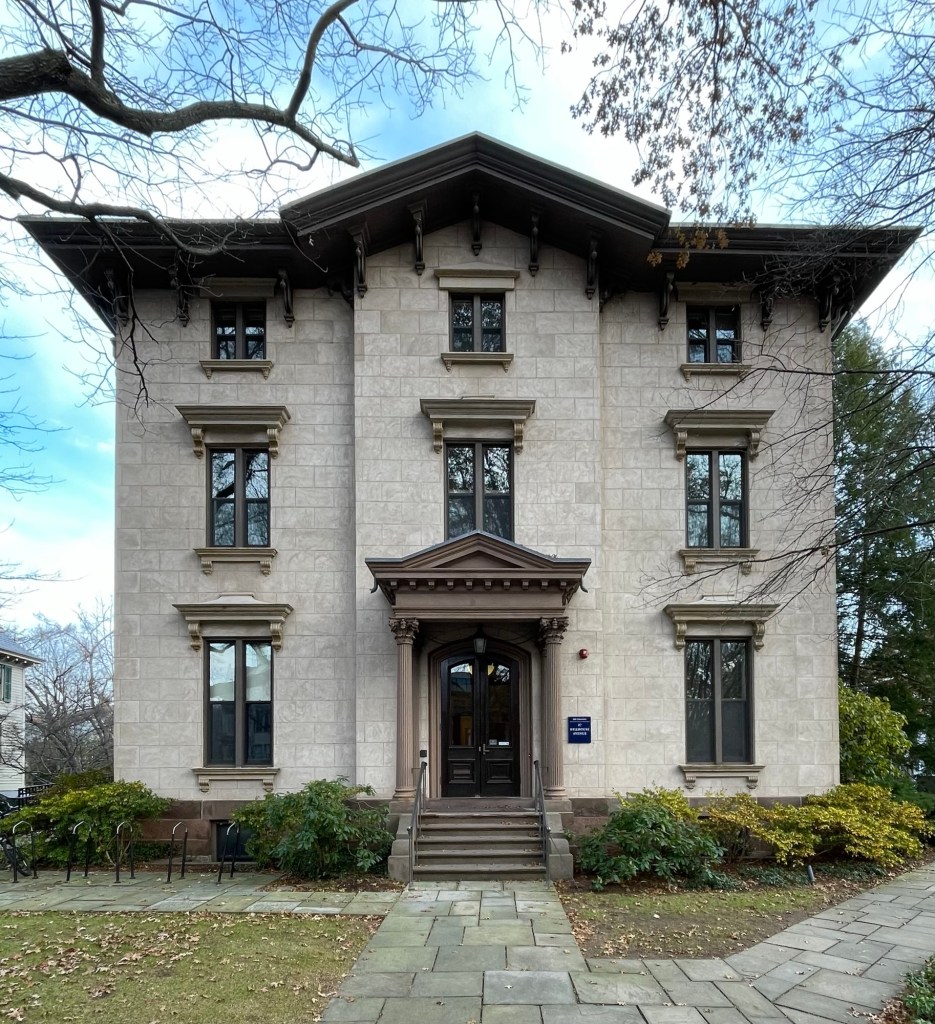
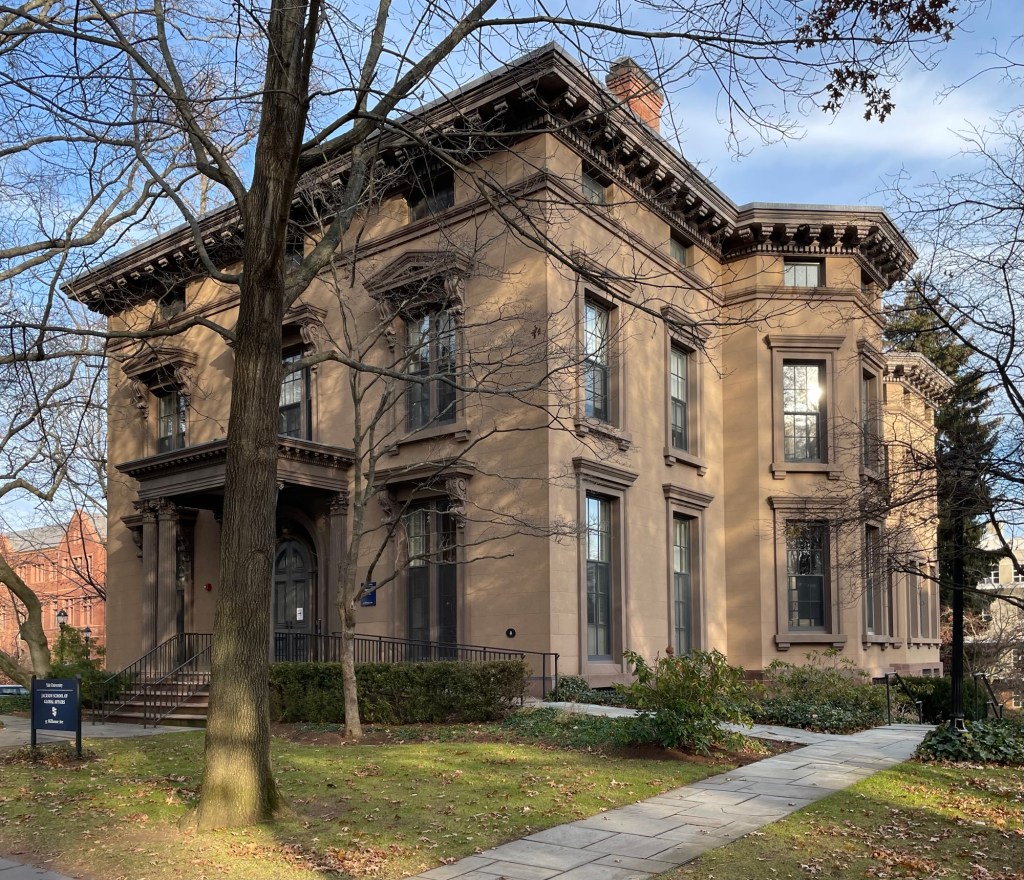
This Italianate Villa style mansion on Hillhouse Avenue in New Haven, Connecticut, was built in 1859 for Pelatiah Webster Perit (1785-1864), a successful New York City shipping merchant and president of the New York Chamber of Commerce. Perit split his time between New York and New Haven and would hire architect, Sidney Mason Stone, to design this home on Hillhouse Avenue in New Haven. The brownstone residence is notable for its elaborate scroll brackets supporting the window pediments and front entry portico with arched doorway with rope moldings. The mansion was occupied by Perit for just four years until his death in 1864, and it was later owned by Henry Lucius Hotchkiss, a businessman. Like nearly all buildings on Hillhouse Avenue, the building was acquired by Yale University and is now known as Horchow Hall, and is part of the Yale School of Management.

Graves-Dwight House // c.1862

Hillhouse Avenue in New Haven, Connecticut is lined with stunning 19th- and 20th- century mansions showcasing the evolution of styles and architectural taste for the wealthiest residents. This is the Graves-Dwight House, a high-style Italianate mansion built around 1862. The residence was built for John Samuel Graves (1807-1892), a local businessman and politician who was a founder of the New Haven Gas Light Company. The architect is not known, but the house is the work of a skilled designer with immense attention to detail. The highly ornamented exterior features a symmetrical facade, bracketed cornice and window hoods, a recessed third-floor balconette with segmental arch pediment above, and bold, period-appropriate paint scheme. The residence was later owned by James McLaren Breed Dwight, a lawyer, and his wife, Cora Tallmadge Dwight. Since the 20th century, the property has been owned and preserved by Yale University, and is now home to the Archaeology Department.

John T. Andrew Carriage House – Cornwall Historical Society Building // c.1865

This ornate carriage house on Pine Street in Cornwall, Connecticut was built by John T. Andrew around 1865 adjacent to his late 18th century home in the village. Andrews was born in Bethany, Connecticut in 1811, graduated from Yale College in 1839, becoming a minister and later a teacher. For health reasons he left both professions and turned to farming and stonework. After Andrews’s death the property was purchased in 1890 by Charles Marsh, a local undertaker, and his wife Inez. In 1954 the barn was converted to a home by their daughter, the town librarian Emily Elizabeth Marsh, a charter member of the Cornwall Historical Society. In 1966, the Society raised funds to buy the building from her estate, but could do little to adapt it for their specific exhibit and storage needs. The Society restored the exterior to its original appearance, down to the brackets, round arched windows and cupola.

General John Sedgwick House // 1860

The Major General John Sedgwick House is located in Cornwall Hollow, Connecticut, and stands out as one of the finest residences in this part of the state in a rural setting. The house was built by 1860 for General John Sedgwick (1813-1864), who was born in a house standing on this site, which had been built by his grandfather, a veteran of the Revolutionary War. In 1859, the Sedgwick family homestead burned to the ground. Sedgwick, then already well established in his military career, took leave to oversee construction of its replacement. This house was built, apparently on the foundation of the old house, in 1859–60. The work was done by Cyrus Marsh, a local builder, in the Italianate style with decorative brackets, window mouldings, hoods, and a large columned entry portico. Major General Sedgwick was active in many campaigns, and during the American Civil War, he was killed by a sharpshooter at the 1864 Battle of Spotsylvania Court House, he was the Union Army’s highest-ranking casualty of the war and never got to reside in his Cornwall home.

Foster Mansion // c.1860

This large, Italianate style mansion is located at 417 Sharon-Goshen Turnpike, the main street through West Cornwall Village, Connecticut. The house was built around 1860 for Stephen Foster (c.1816-1863) a merchant and railroad contractor who had constructed a portion of the Housatonic Line railroad near West Cornwall. He and his wife, Helen, previously lived in a Greek Revival style house across the road until they moved into this stately residence. Mr. Foster would not get to enjoy his mansion long as he died in 1863. Helen Foster remained at the home until her death in 1875. The high-style Italianate residence was likely built by master-carpenter C. W. Marsh, and features all the hallmarks of the style: overhanging eaves with decorative brackets, elaborate window and door moulding, two-over-two windows, and a shallow hipped roof with dormer.

Amos Beckwith Mansion // 1861

To conclude this series on Stimson Avenue houses in Providence, I will showcase the grand dame of Stimson Avenue, the Amos Beckwith Mansion. Built in 1861, the large estate was essentially a country villa when built, as this section of Providence was sparsely developed before the Civil War. Amos Beckwith (1822-1890) was the son of Truman Beckwith and, like his father, was a wealthy cotton broker. He hired architect Alpheus C. Morse to design the house, which is an Italianate Villa, with prominent four-story tower. thick moulded trim, projecting eaves and balconies supported by large brackets and corbels, and the rounded arch windows. In 1882, Beckwith subdivided his land in the area to make half the building lots on Stimson Avenue. Amos Beckwith lived in the home with his wife, Clara, until her death in 1879. Unknown to many, Amos would secretly remarry his housekeeper, a fact that came out after his death when discussions about the estate were raised. Maria Sherman, the 35-year-old housekeeper, stated she was in the will. It is not clear if the family fought this claim and who inherited the property, but what an interesting story!

Harris Sayles House // c.1860

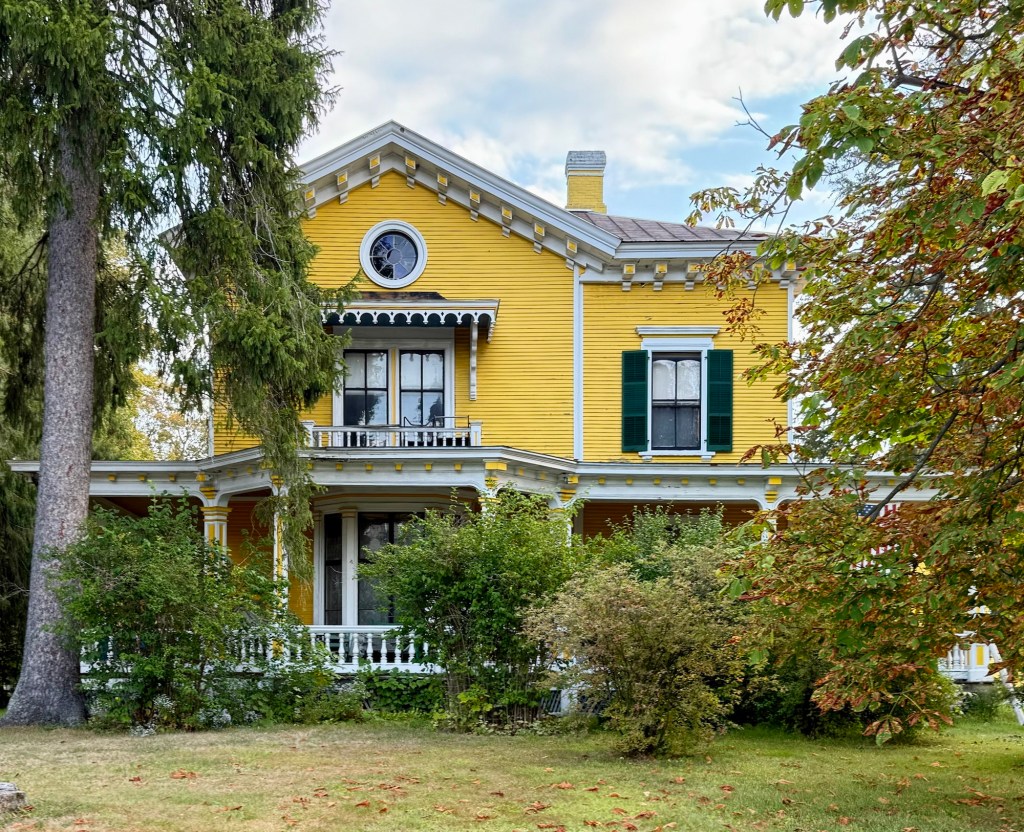
This handsome Italianate style house is located on Dog Hill Road in Killingly Center, Connecticut. The house appears to date to the years just before the Civil War and historic maps show that the property was owned by Harris Sayles, a co-owner of the large woolen mill in nearby Dayville. The home was built for Harris and his wife, Phebe. The house stands out for its two-tiered gallery of porches with large chamfered posts and paired brackets and has some Classical corner pilasters and door surrounds noting the transitional period from Classical Greek Revival style to the romantic Italianate style.

Warren Potter Mansion // 1865

In 1865, Warren Potter, a Rhode Island-based manufacturer, built this Italianate style mansion in the Dayville section of Killingly, Connecticut for his family. Potter was employed at the Sayles Woolen Mill in a manager role and clearly did well for himself to afford such a home. Characteristic of the style, the Potter mansion features bracketed eaves and window lintels and round-arched tripartite windows over the center entrance. At the entry, the original round-arched doorway with glazed surround has survived in good condition and is a showstopper!

John Achorn House // c.1855

This stately Italianate style house is located at 46 Pascal Avenue in the quaint coastal town of Rockport, Maine. Built around 1855 by and for John Achorn (1825-1898) a ship-joiner and carpenter in town. Due to his profession in carpentry, Achorn is the likely culprit as the builder who designed the house and detailed the delicate pendant brackets, Palladianesque window, and the addition of the flushboard center bay.

Captain Oliver Amsbury House // 1858

Oliver Amsbury (1812-1867), a master mariner and resident of Rockport, Maine, built this large home on the crest of one of the hills overlooking the harbor. The residence is an excellent example of the Italianate style with segmental door and window hoods, a round arched window in a unique Palladian center bay window, and large brackets at the eaves. After Captain Amsbury died in 1867, the house was purchased by Charles F. Richards a lime manufacturer and later a treasurer of the Camden Savings Bank. The old Amsbury house is well-preserved and one of many old sea captain’s houses in the Pine Tree State!