This charming little Greek Revival house has a lot of history, tied to literature and the whaling industry that shaped Edgartown in the 19th century. The home was built in around 1830 for Captain Valentine Pease (1797-1870), a master mariner and captain of the Acushnet, a prominent whaling vessel which often departed from New Bedford. In 1841, Captain Valentine Pease, his crew, and a 21-year-old Herman Melville shipped out of New Bedford 1841 for eighteen months as Melville’s only whaling voyage. Melville took part in the hunting and killing of whales and in harvesting and processing whale oil aboard ship. He endured gales and calm, experienced excitement and boredom, followed ship’s discipline, all the while absorbing the lore of the veteran seamen who made up the Acushnet’s diverse and colorful crew. It is speculated that Valentine Pease was an inspiration for the character of Captain Ahab in Melville’s book “Moby Dick”.
Believe it or not, living on an island in the 19th century wasn’t as easy as you may think. Before this bank building was constructed in 1855, all banking was done off-island. The bank was constructed to house the newly formed Martha’s Vineyard National Bank, whose first president was Dr. Daniel Fisher, who made his money as a merchant and operator of one of the largest whale and sperm oil processing facilities in the country. The bank relocated to Vineyard Haven and the Edgartown National Bank was created to fill the void in town. Amazingly, the building is still to this day occupied by a bank, Rockland Trust, seemingly adding to the continuous occupancy of the building by banking facilities for well over a century. The structure is one of the oldest brick buildings in town and is a late iteration of the Greek Revival style.
Located north of downtown Oak Bluffs, this oceanfront summer estate exemplifies the grandeur of Martha’s Vineyard at the end of the 18th century. This home was built in 1890 for Frank A. Ferris, a Manhattan meat dealer who processed and shipped his product to wealthy customers, markets, luxury hotels and restaurants all over the east coast. His processing plant on Mott Street in Manhattan remains an excellent example of Romanesque Revival architecture in the city. He lived at 5 Russell Terrace in Montclair, NJ, and in summers, stayed in this waterfront mansion overlooking the Atlantic. His summer home is a great blending of the Queen Anne and Shingle styles, both very common at the time.
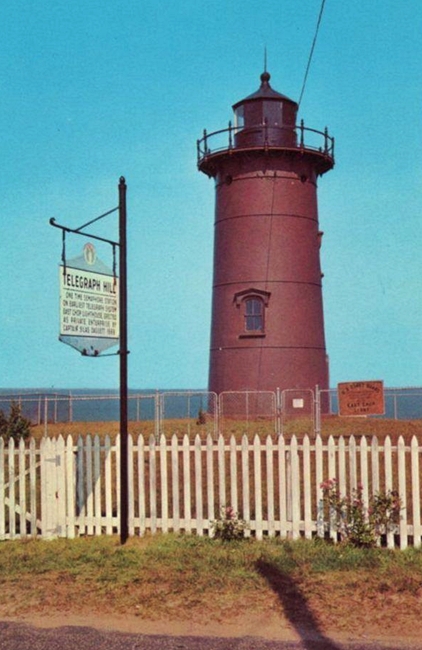
Is anything more “New England” than a historic lighthouse? Whenever I think of symbols of New England, lighthouses, Saltbox colonial homes, and lobster comes to mind. Located just north of Oak Bluffs, the East Chop Light was built to guide the hundreds of ferries every summer, picking up and dropping off passengers to the island. One of the many definitions of “chop” is the entranceway into a body of water. Knowing this, it seems natural that the two lighthouses flanking the entrance to the harbor at Vineyard Haven on the north shore of Martha’s Vineyard are respectively known as East Chop Lighthouse and West Chop Lighthouse. In 1878, a one-and-a-half-story dwelling and a cast-iron tower were under construction at the station. The forty-foot-tall, conical tower was similar in style to several other New England lighthouses constructed during the late 1800s. The lighthouse was painted white at first, but in the 1880s it received a coat of reddish-brown paint and became popularly known as the “Chocolate Lighthouse.” In 1988, it was returned back to white, as the dark color was causing excessive heat and condensation in the tower. East Chop Lighthouse remains an active aid to navigation, although the Fresnel lens was replaced by a modern beacon in 1984. The land surrounding the tower was sold to the town of Oak Bluffs in 1957 for use as a park.
Located on Trinity Park in Wesleyan Grove (aka the Martha’s Vineyard Camp Meeting Association), this 1878 church served the year round Methodist community in Oak Bluffs. The Trinity Methodist Church is a towered, Victorian Gothic structure of some distinction. Edward M. Hyde, a Methodist minister who had trained in architecture and art, designed it. The property that the church and Parish House sit on belongs to the Association, but the buildings are maintained by the congregation. Interestingly, should the congregation disband, the buildings would return to the Association.
One of the most unique buildings I have ever seen is the Union Chapel in Oak Bluffs on Martha’s Vineyard. The chapel, built in 1870 in the American Stick Style, is in the form of an Octagon, very unique for churches. Built as an inter-denominational house of worship, it is significant as the first non-sectarian religious building to be erected in a community that until 1870, was noted primarily for its strong association with the Methodist Church and its summer camp meeting (Wesleyan Grove) assemblies. The Chapel offered islanders and seasonal visitors regardless of religious affiliation not only an opportunity to worship but a gathering place for cultural activities. According to historic images, the chapel once had more elaborate stick work and finials, since removed, likely due to storms and general maintenance concerns. The chapel was designed by island resident Samuel Freeman Pratt (1824-1920) who had no known architectural training besides working as a wood carver in Boston, yet his work is characterized as having a dynamic and festive style. Pratt’s other major contribution to Oak Bluffs’ architecture, the Sea View Hotel, was erected at the head of the wharf in 1872, but burned down in 1892.
Located on the iconic Circuit Street in Oak Bluffs, this Eclectic Victorian cottage has a storied past related to Black history on the island. Even though Oak Bluffs was a relatively safe place for African Americans to be, there were still limits on their rights. In some parts of Oak Bluffs there were laws that said that certain property could only be owned by whites. The island became a vacation spot for thousands every summer in the 19th century and seeing a lack of options for Black travelers, Mrs. Georgia O’Brien and Ms. Louisa Izett began to operate an inn for people of color. The inn was one of two such residences in Oak Bluffs and has since been listed on the African American Heritage Trail of Martha’s Vineyard. The home has since been named the Tivoli Inn and retains much of the original gingerbread trim. In recent years, Martha’s Vineyard was given the nickname, “The Black Hamptons,” due to its popularity as a place for wealthy African-Americans to vacation, it remains a very diverse island in summer months.
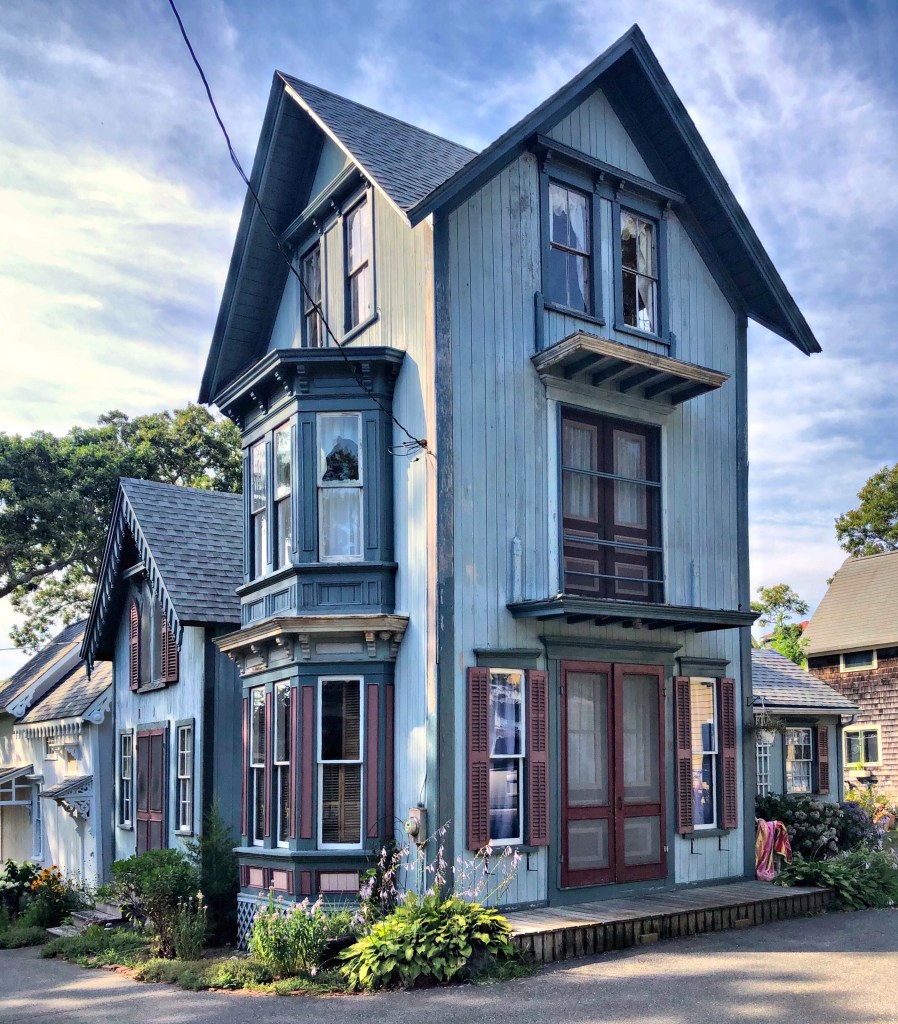
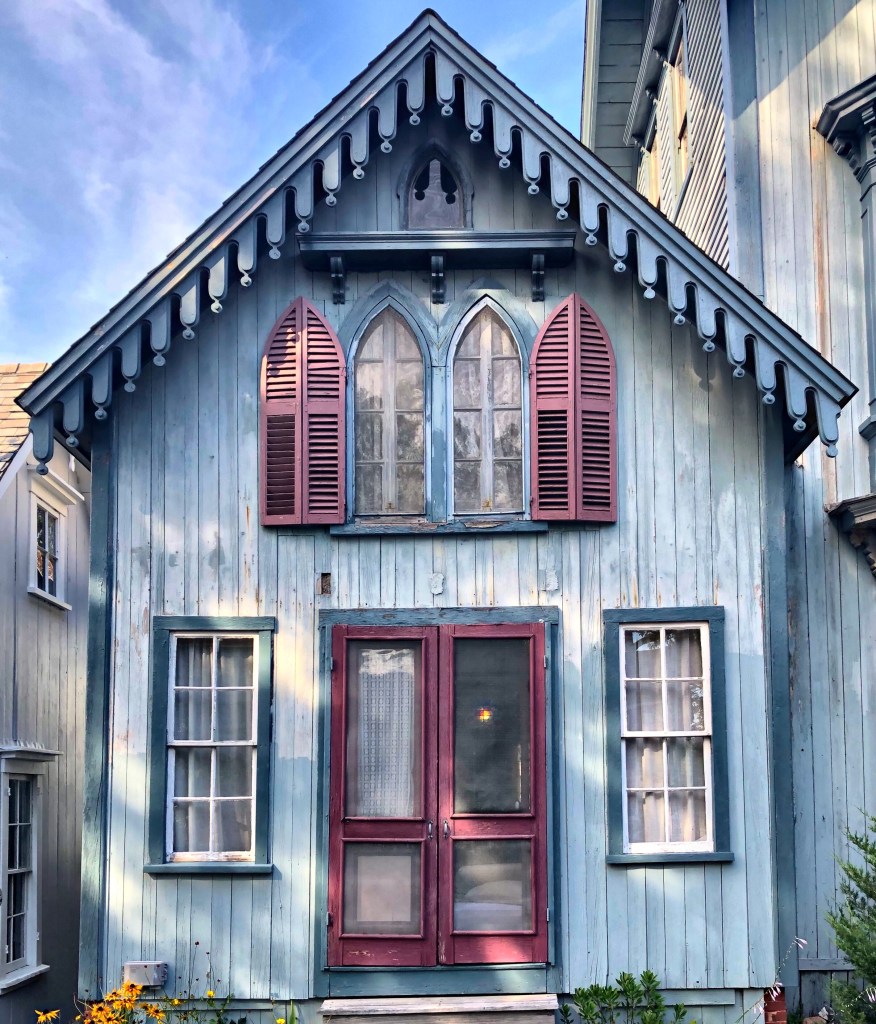
Tall Timbers is one of the more unique cottages in the Wesleyan Grove development, a religiously oriented summer community in Oak Bluffs on Martha’s Vineyard. The cottage was actually built in two phases. The small two story cottage was built first before 1870 and features gothic bargeboard, lancet windows, and paired doors. It was purchased around 1870 by William Newell, of Rhode Island, who had a three-story wing added to serve as a summer cottage. The addition is notable for the full-length vertical boards that rise through the entire three stories without a break like trees after harvesting, likely the inspiration for the name of the cottage. William Newell was a manufacturer of brass fixtures and ran a foundry in Central Falls in Rhode Island. Mr. Newell was active in politics and early in his career joined the cause of the anti-slavery party, which was likely solidified in his experiences in the ethnically diverse Martha’s Vineyard.
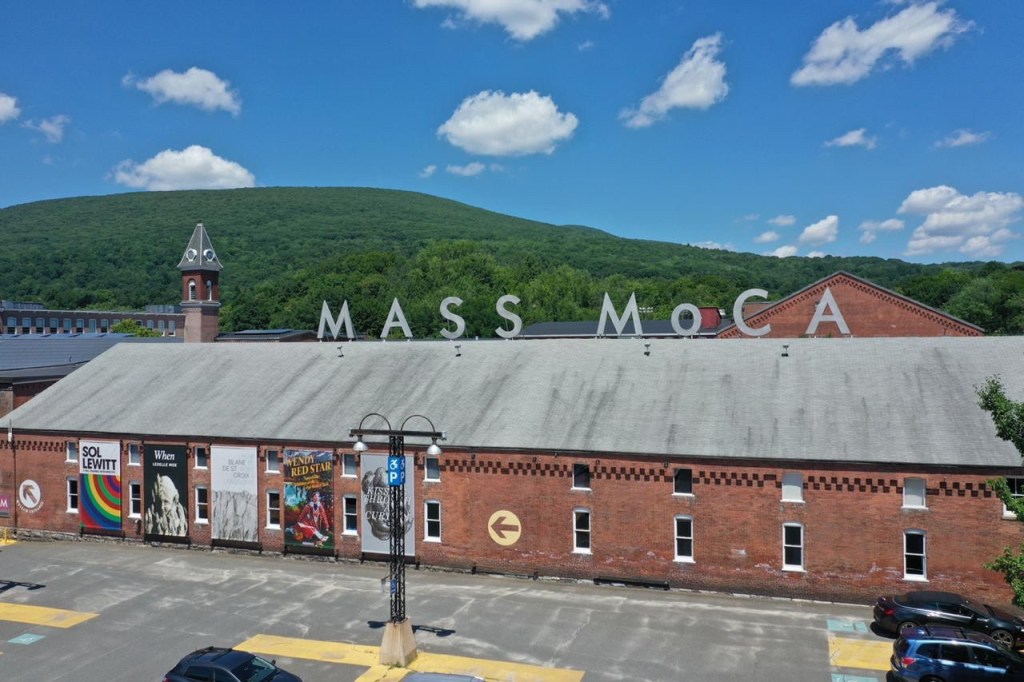
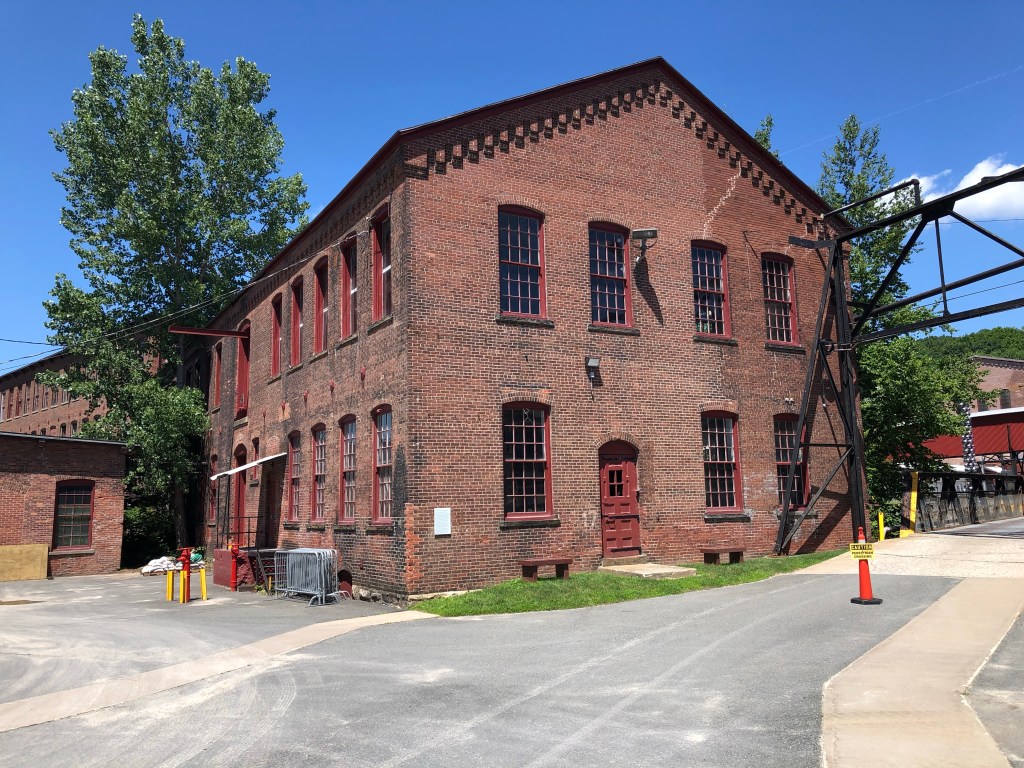
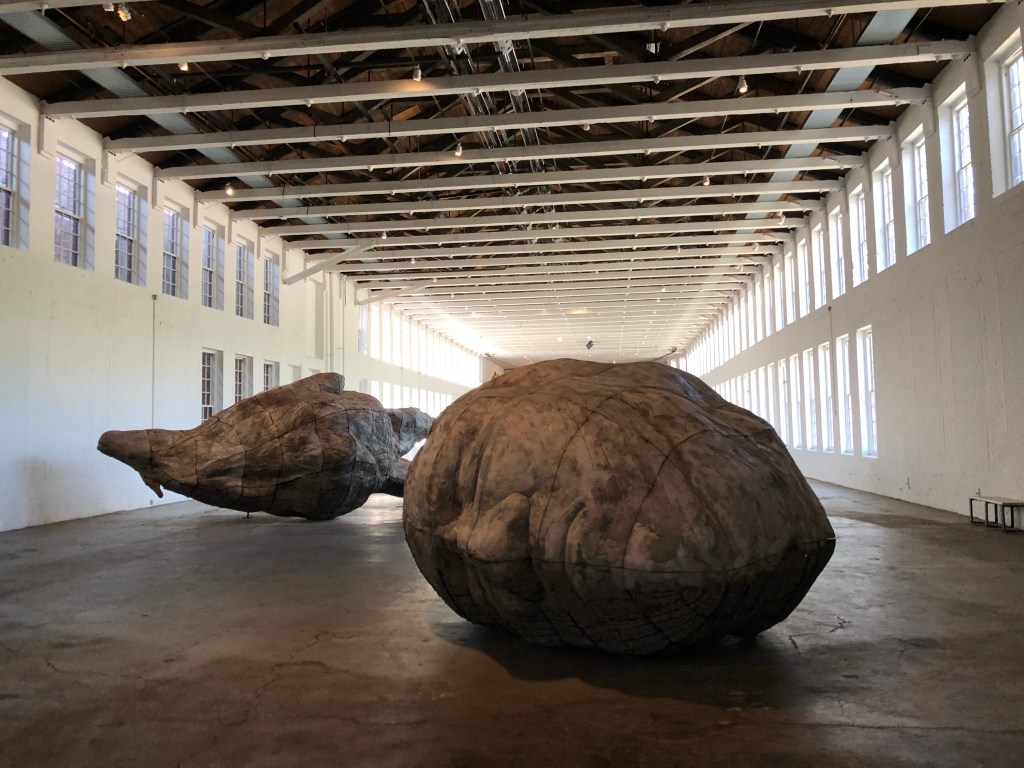
On a last-minute trip to the Berkshires, I couldn’t help but stop at the recently re-opened Massachusetts Museum of Contemporary Art (Mass MoCA) in North Adams. Being a huge nerd for industrial history and repurposed mills and factories, it was an absolute treat to walk through the large brick and steel buildings and wings lined with steel casement windows providing the perfect scenery for some amazing artworks. What is now known as Mass MoCA, – one of the premier art museums in New England – was once Arnold Print Works, a one time world leader in textile manufacturing with offices in New York City and Paris.
The Arnold Print Works were built on the Hoosac River near the center of North Adams. The company was the town’s largest industry during the city’s economic heyday from the Civil War until the early 20th century. The company was founded in 1861 by the John, Oliver, and Harvey Arnold, who began production of printed cloth at an existing cotton mill. At the dawn of the American Civil War, the newly formed company became flush with money due to government contracts for manufacturing Union Army uniforms. The company expanded after the war until a fire destroyed nearly all of the wooden buildings on the site. After the fire, a majority share of the company was purchased by Albert Charles Houghton, who became the first mayor of North Adams, and he oversaw the expansion and prosperity of the company, starting with new buildings of fire-proof construction.
By the early 20th century, many textile and cotton manufacturing shifted to the American South severely crippling the mill’s profits. In 1929, Sprague Electric Company moved to North Adams from Quincy, Massachusetts, and began buying the Arnold Print Works buildings. The print works moved much of its operation to nearby Adams and concentrated on a few particular products in its North Adams plant. The print works was finally sold in 1942 for just $1.9 million dollars, a far departure from its once prosperous past. The plant was shortly thereafter acquired by Sprague Electric Company.
While largely leaving the building exteriors as they were, Sprague made extensive modifications to the interiors to convert the former textile mill into an electronics plant. Sprague physicists, chemists, electrical engineers, and skilled technicians were called upon by the U.S. government during World War II to design and manufacture crucial components of some of its most advanced high-tech weapons systems, including the atomic bomb.
[Outfitted with state-of-the-art equipment, Sprague was a major research and development center, conducting studies on the nature of electricity and semi-conducting materials. After the war, Sprague’s products were used in the launch systems for Gemini moon missions, and by 1966 Sprague employed 4,137 workers in a community of 18,000, existing almost as a city within a city. From the post-war years to the mid-1980s Sprague produced electrical components for the booming consumer electronics market, but competition from lower-priced components produced abroad led to declining sales and, in 1985, the company closed its operations on Marshall Street.] (Mass MoCA History)
The complex sat vacant briefly before the Williams College Museum of Art, led by its director, Thomas Krens—who would later become Director of the Solomon R. Guggenheim Museum—advocated for a museum space for contemporary art that would not fit in traditional art galleries. The nearby Arnold Mills seemed like a perfect, yet daunting task to repurpose. Bruner/Cott Architects of Cambridge were hired to repurpose the mills and oversee the massive adaptive reuse project which today totals nearly 300,000 square feet of galleries and art venues.
The Massachusetts Normal Art School was one of the many Richardsonian Romanesque buildings constructed in the Back Bay, but it did not survive like so many others did. The building’s history goes back to the 1860s, when wealthy Bostonians petitioned for the Commonwealth of Massachusetts (State Government) to assist with the founding of new institutions to enhance the quality of life in the state. Due to this, the legislature funded three major institutions including the Massachusetts Institute of Technology (1860) and the Museum of Fine Arts (1870), and founded in 1873, the Massachusetts Normal Art School. The Normal Arts School was tasked with training future teachers for public schools and budding professional artists in the arts, with courses ranging from drawing to architecture. The Commonwealth of Massachusetts rented space in various buildings in Downtown Boston before they appropriated $85,000 and hired the firm of Hartwell & Richardson to design and oversee construction of the new school at the corner of Newbury and Exeter Streets. The Richardsonian Romanesque building was constructed of red brick and brown freestone, featured entrances on both street facades, and held gallery spaces inside for members of the public to view the work created at the school. The school outgrew the original building, which could comfortably fit just 100 students, and in 1929, a new building was constructed at Brookline and Longwood Avenues. Before moving one more time to its current location in 1983, the school was renamed to the Massachusetts College of Art and is best known as MassArt today. The original school in Back Bay was demolished in 1967 and was home to a surface parking lot before the existing building was constructed.



 Buildings of New England